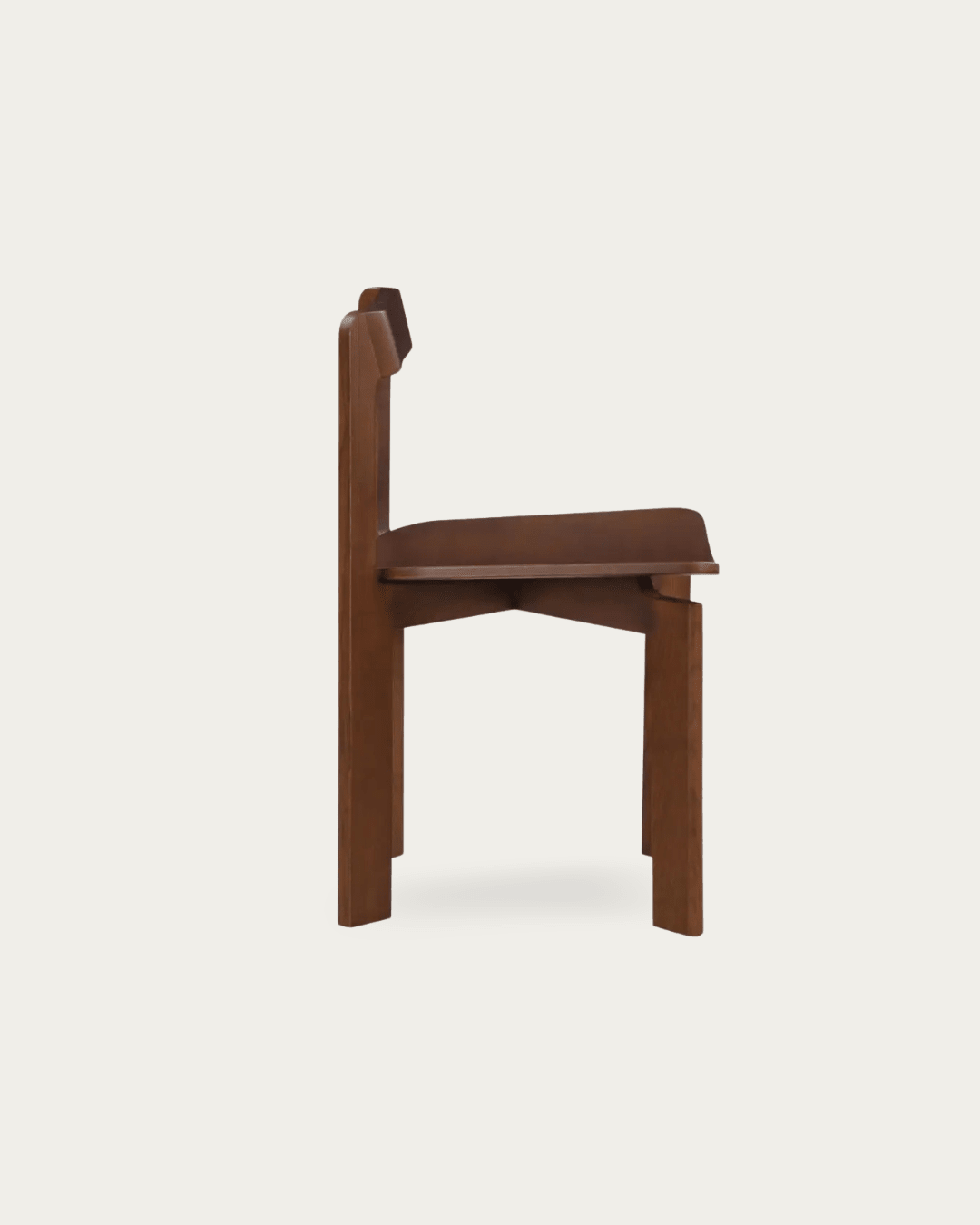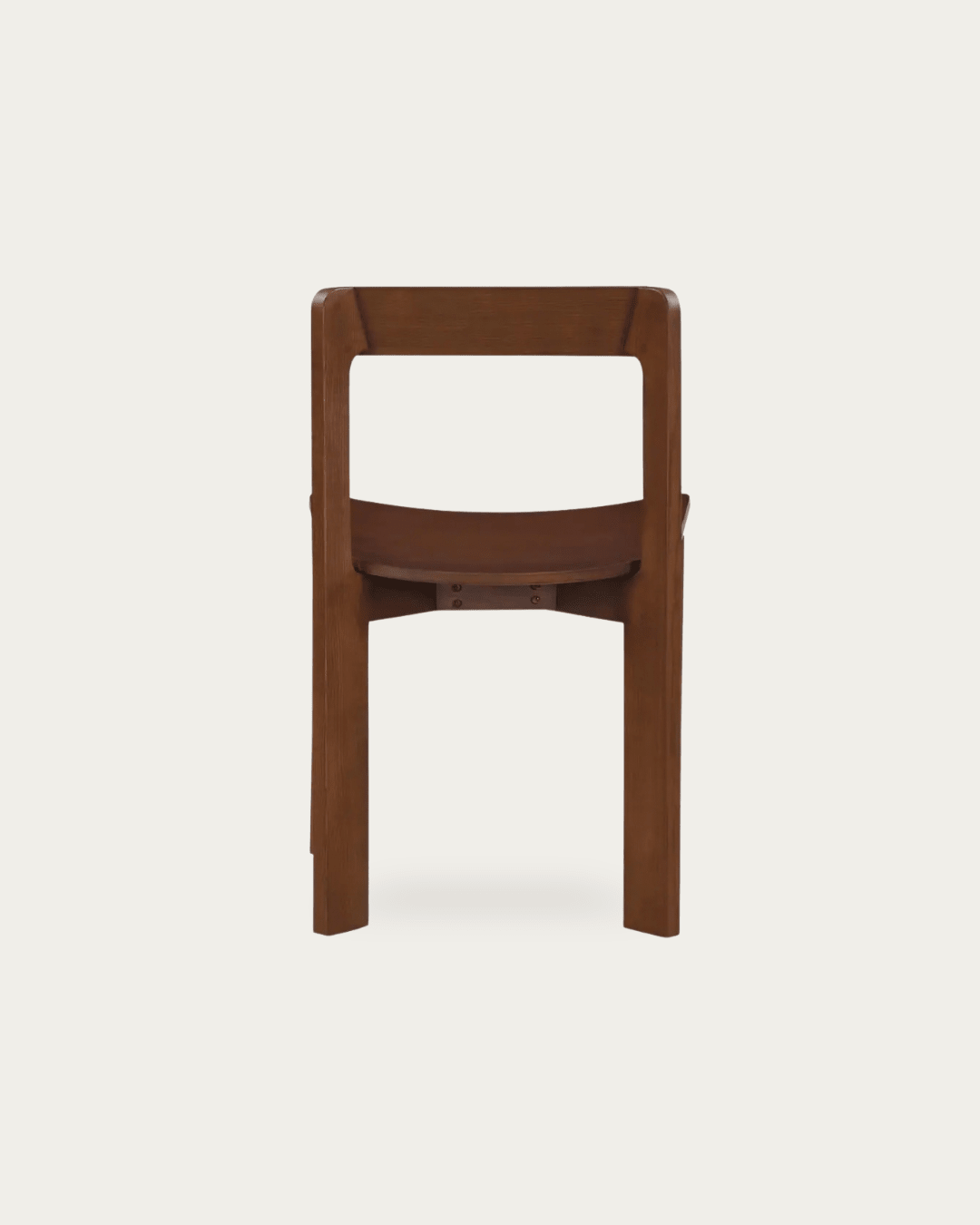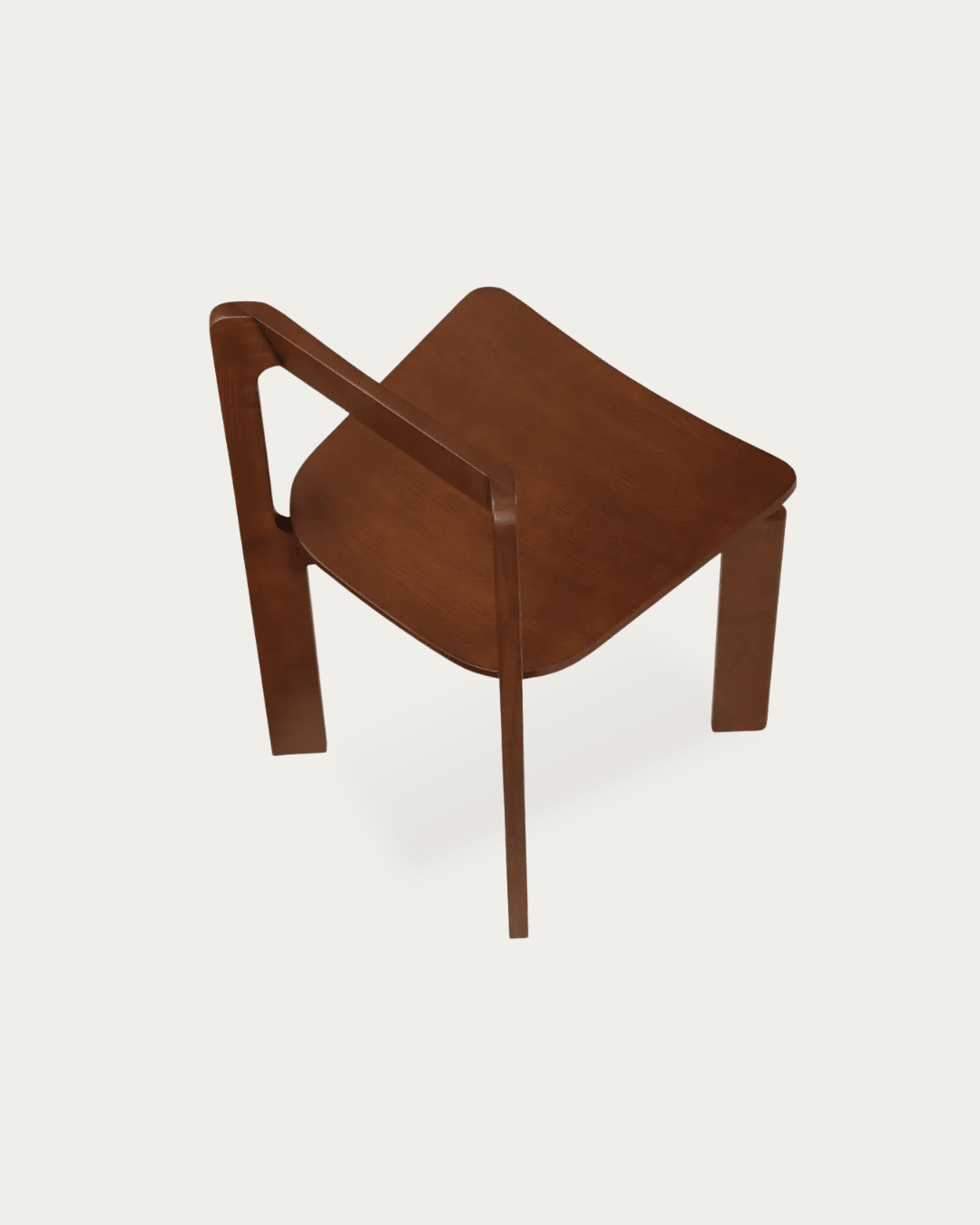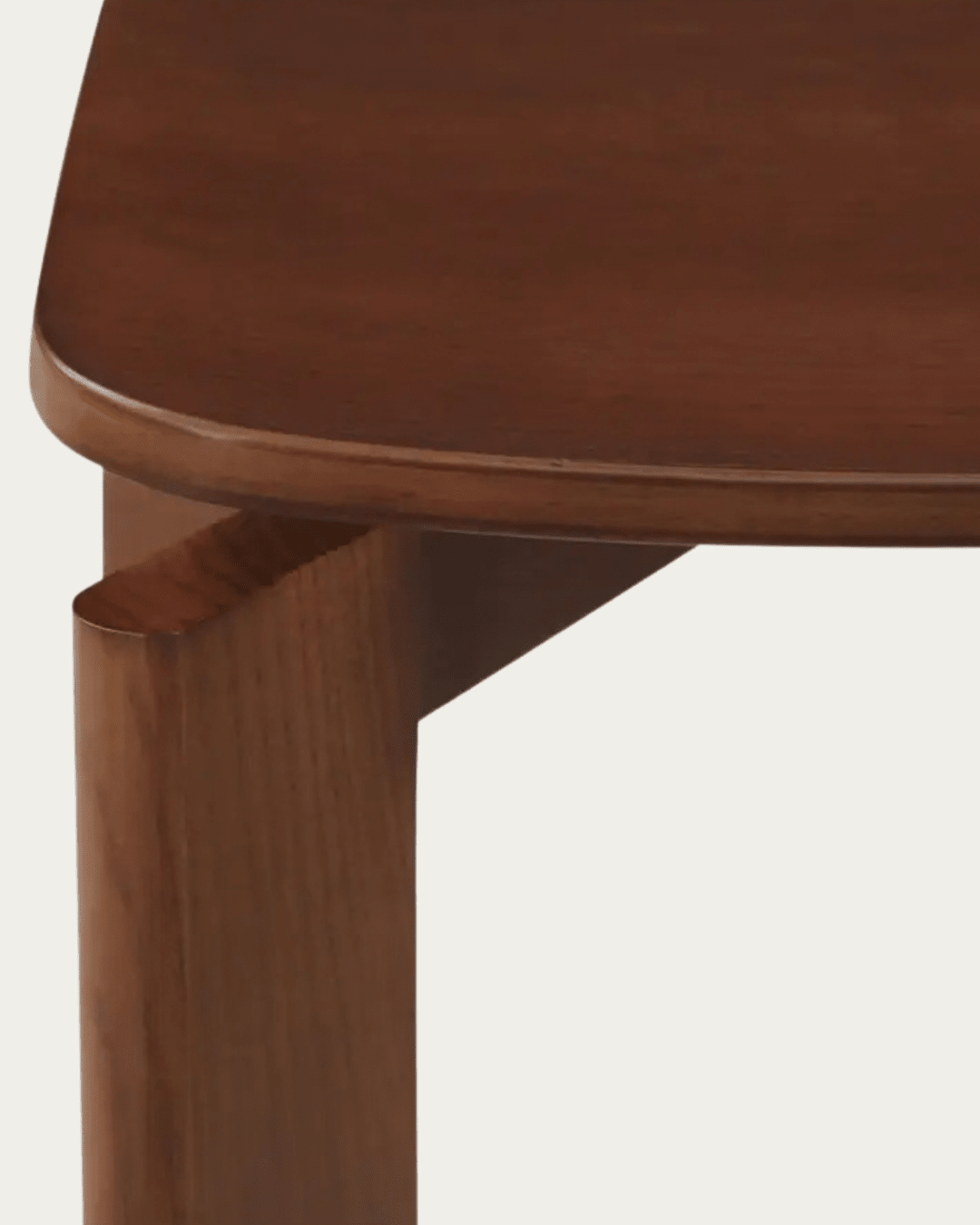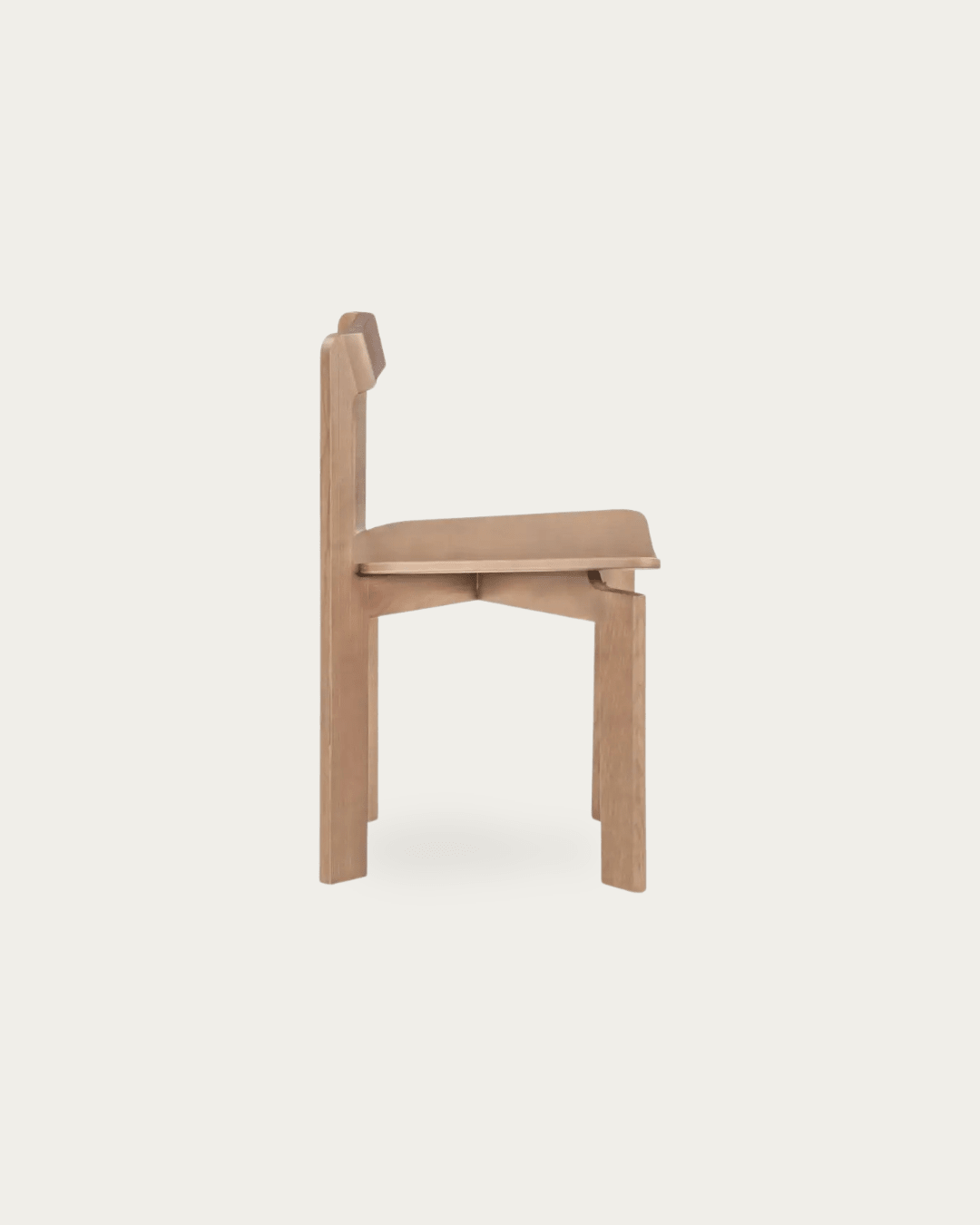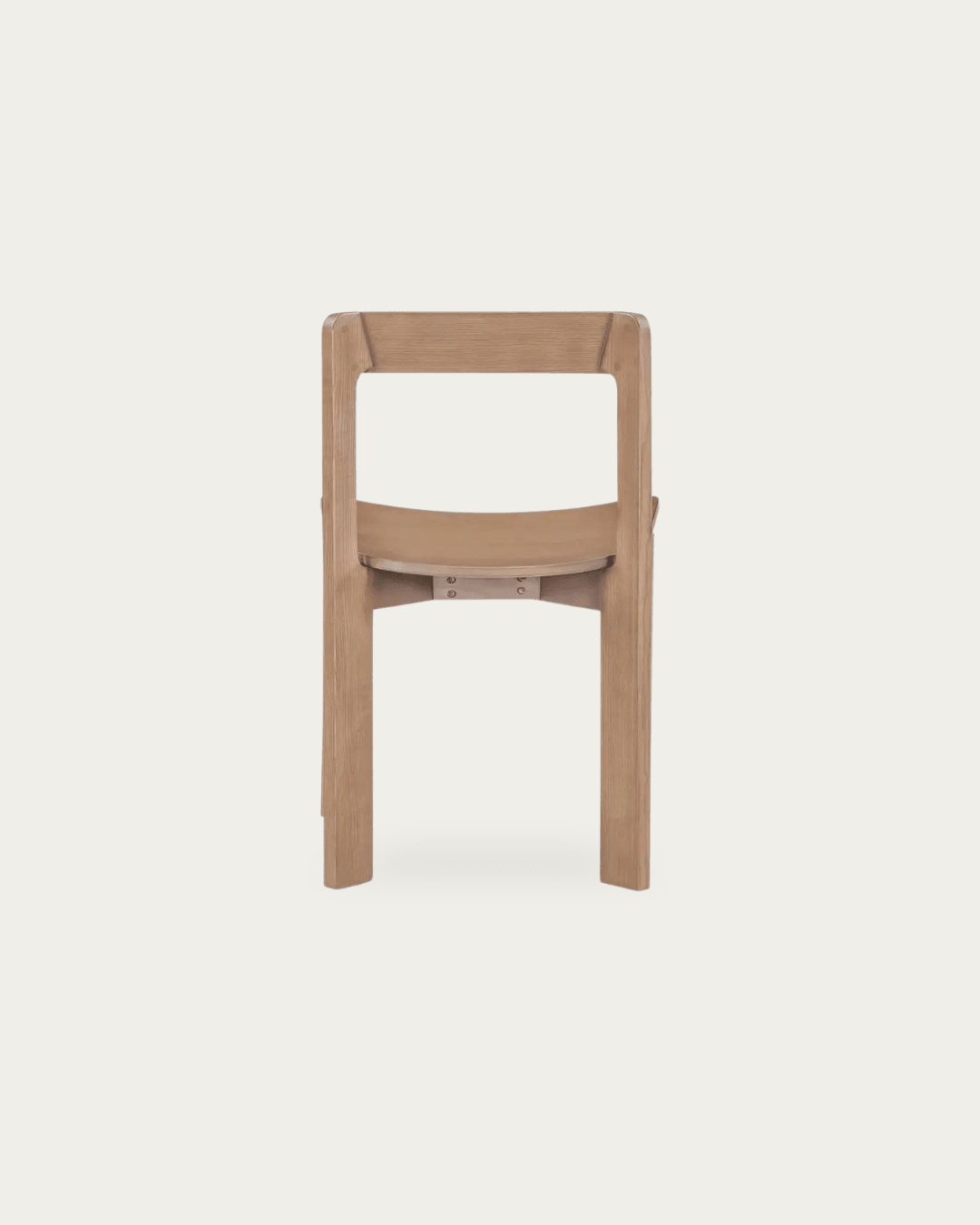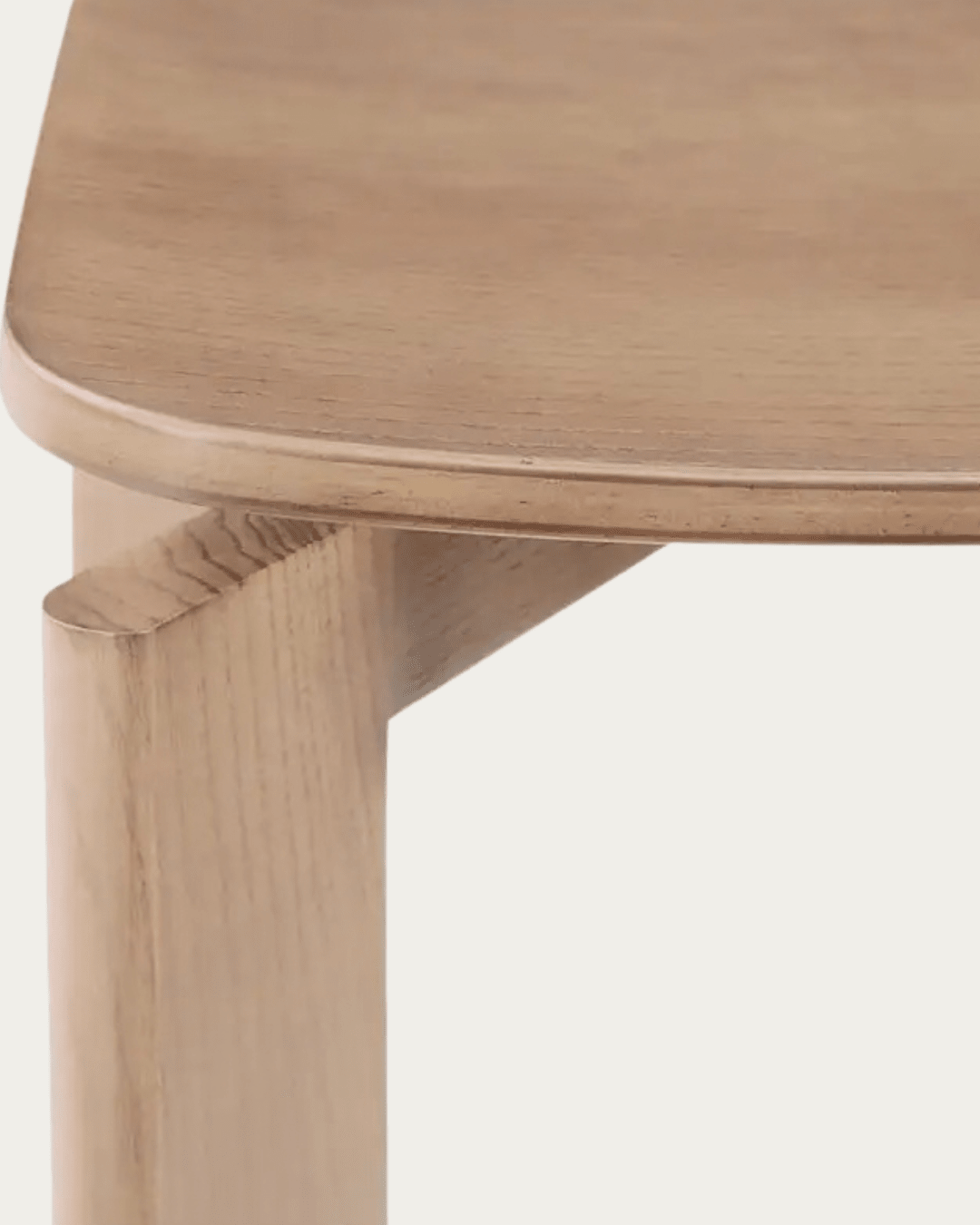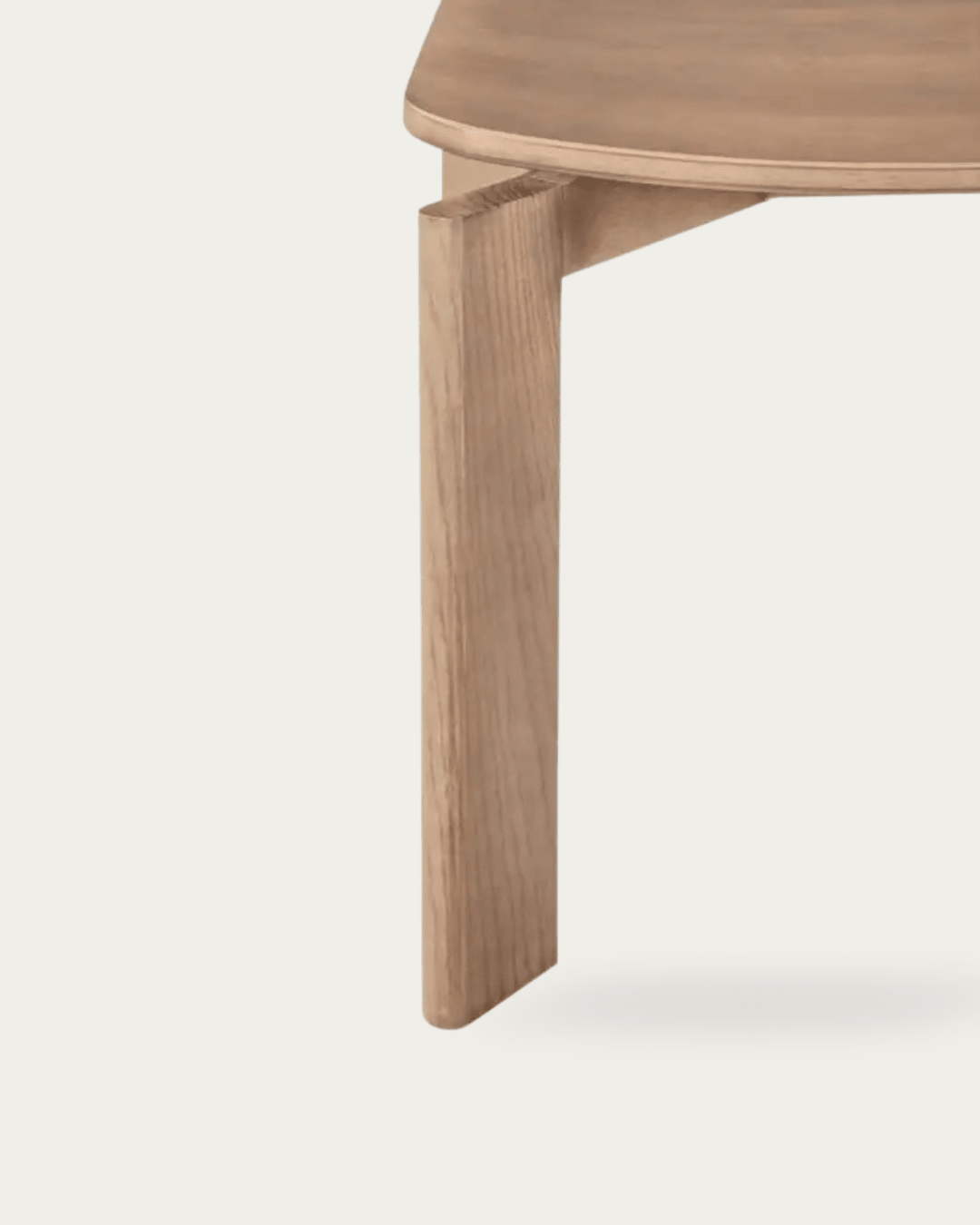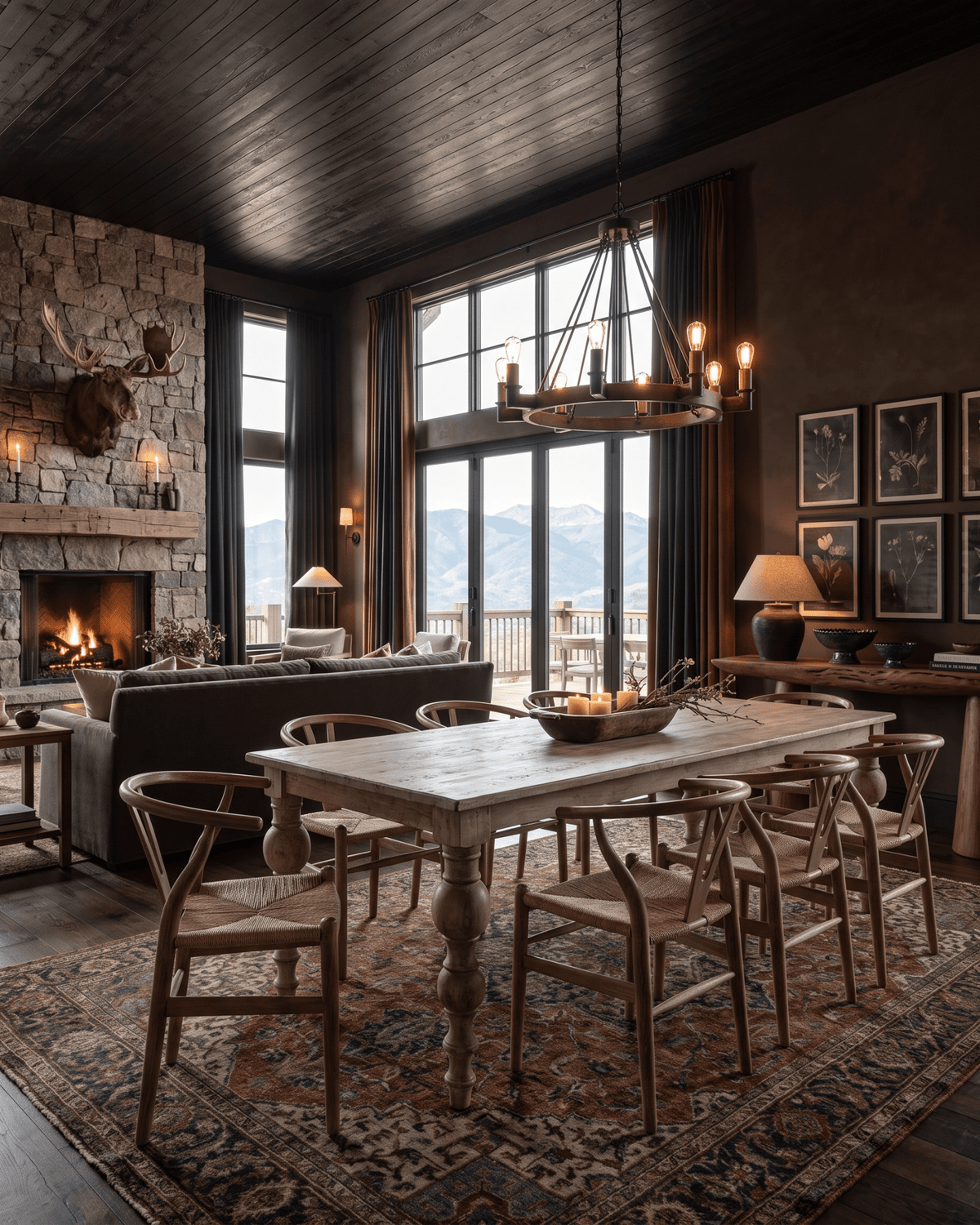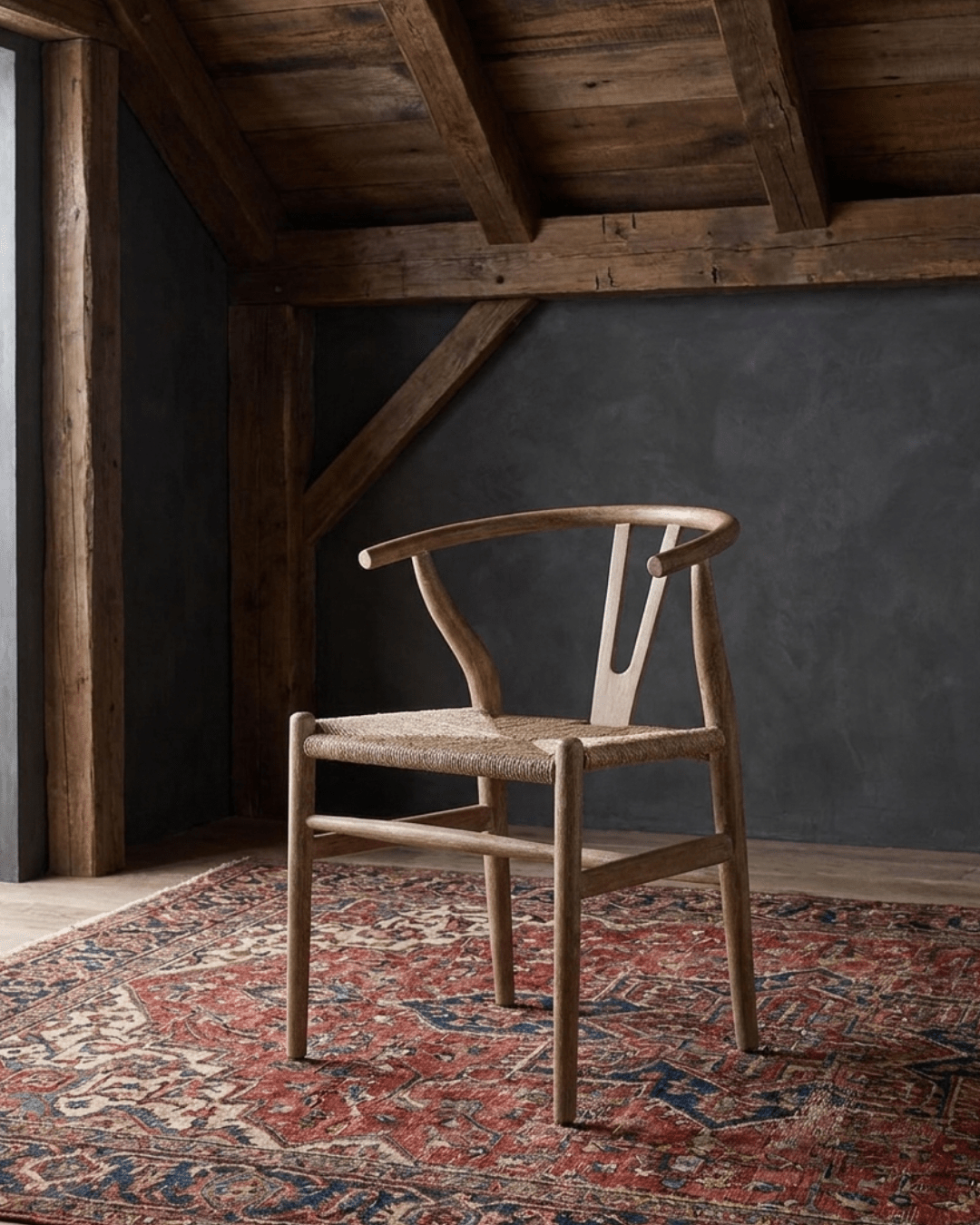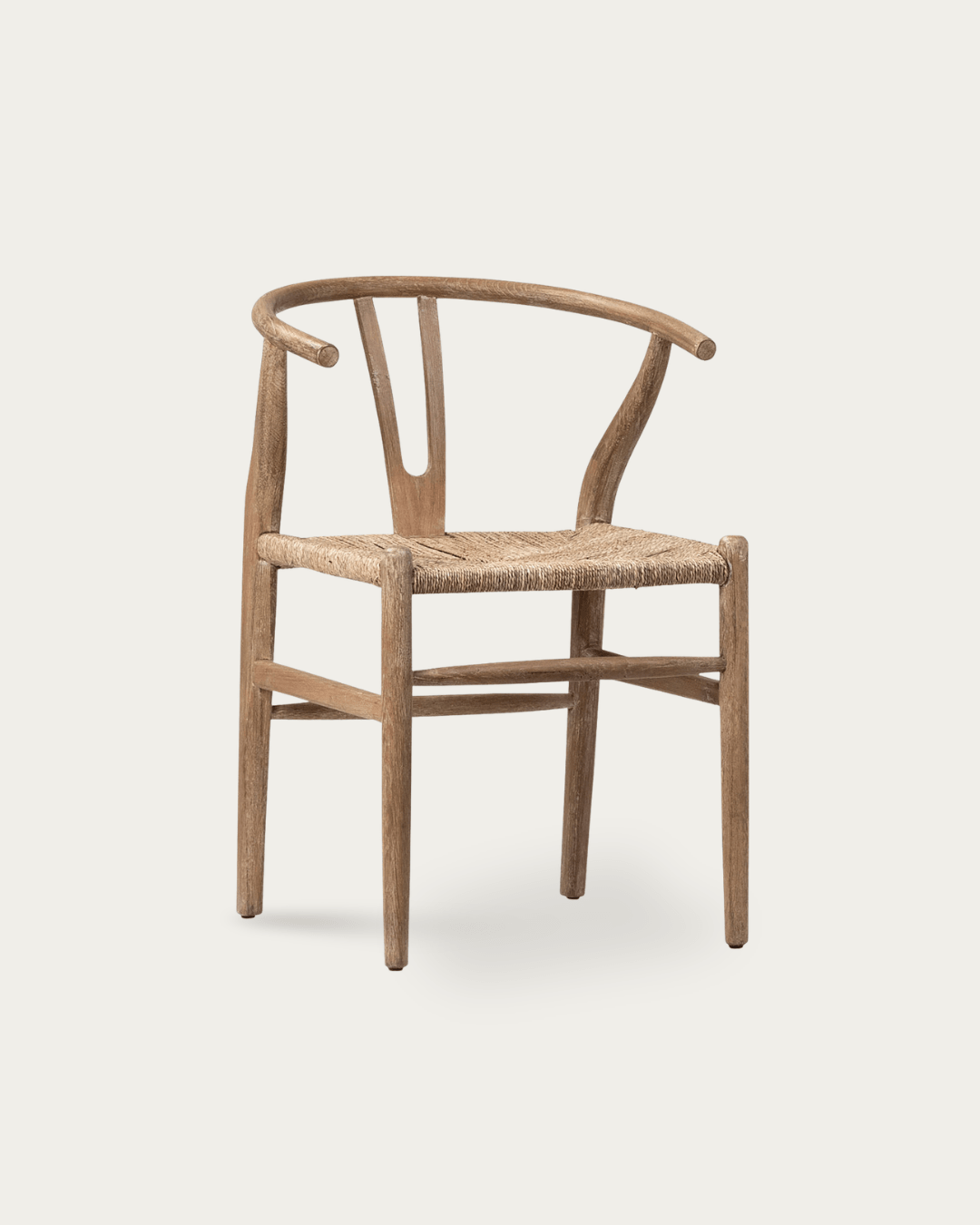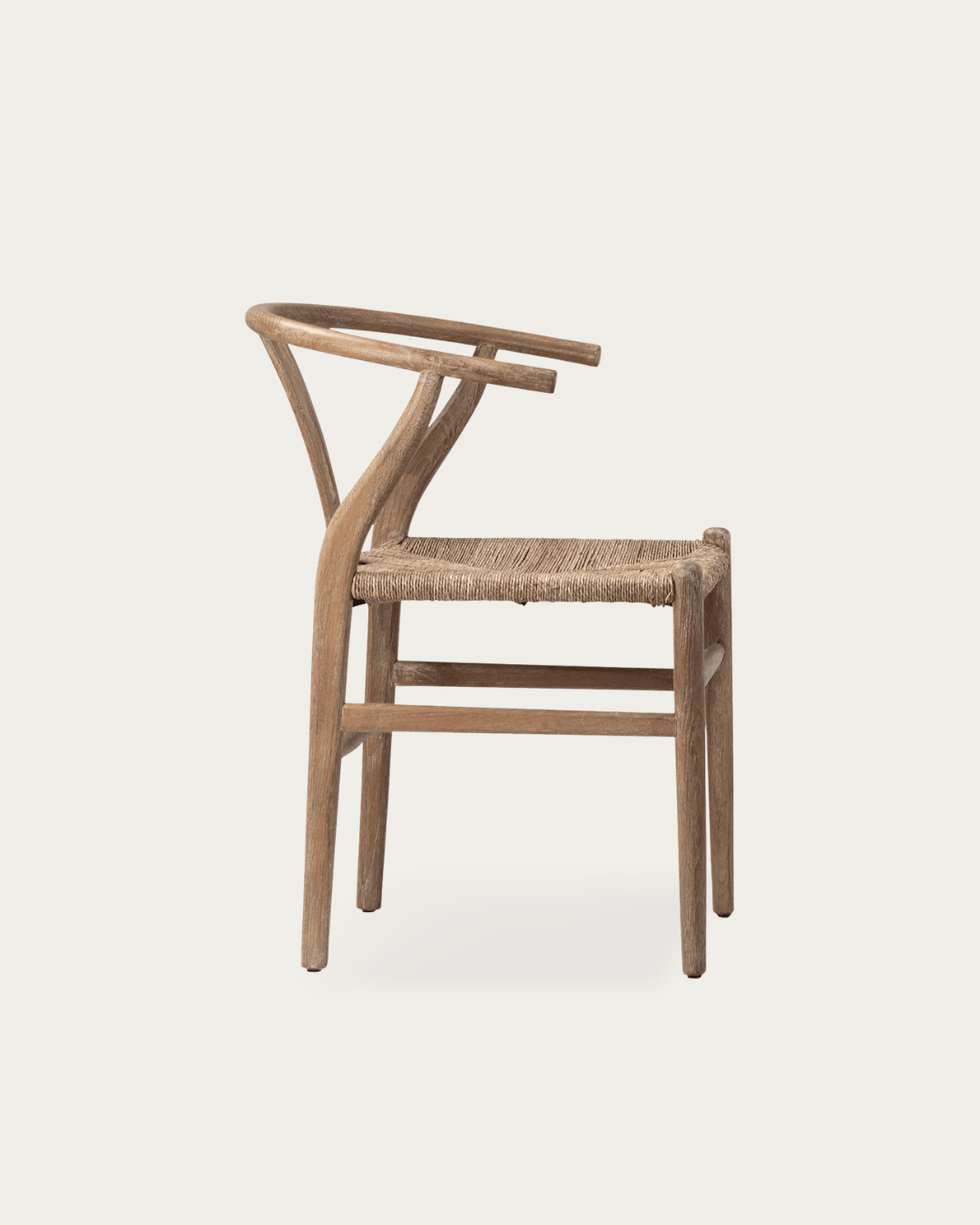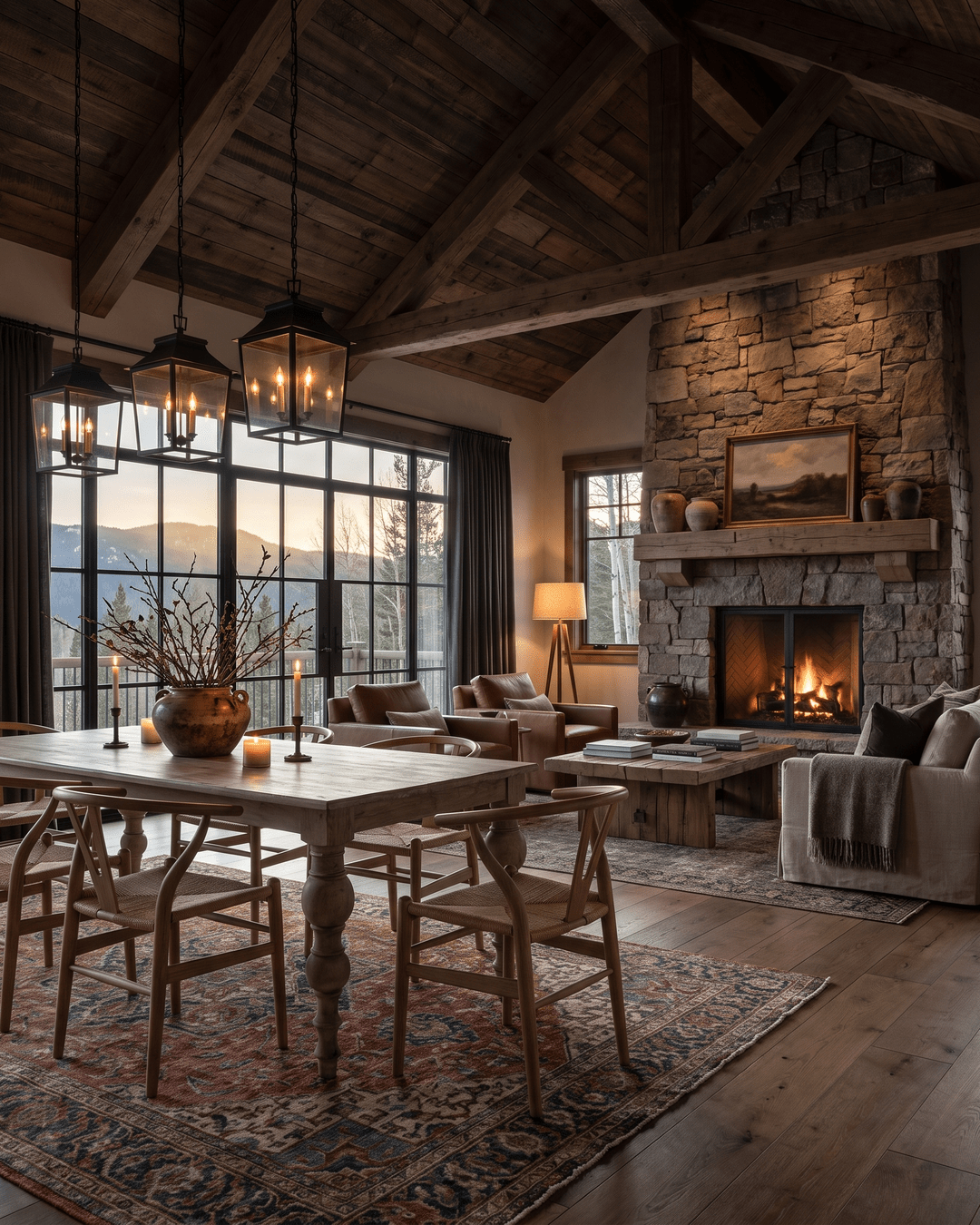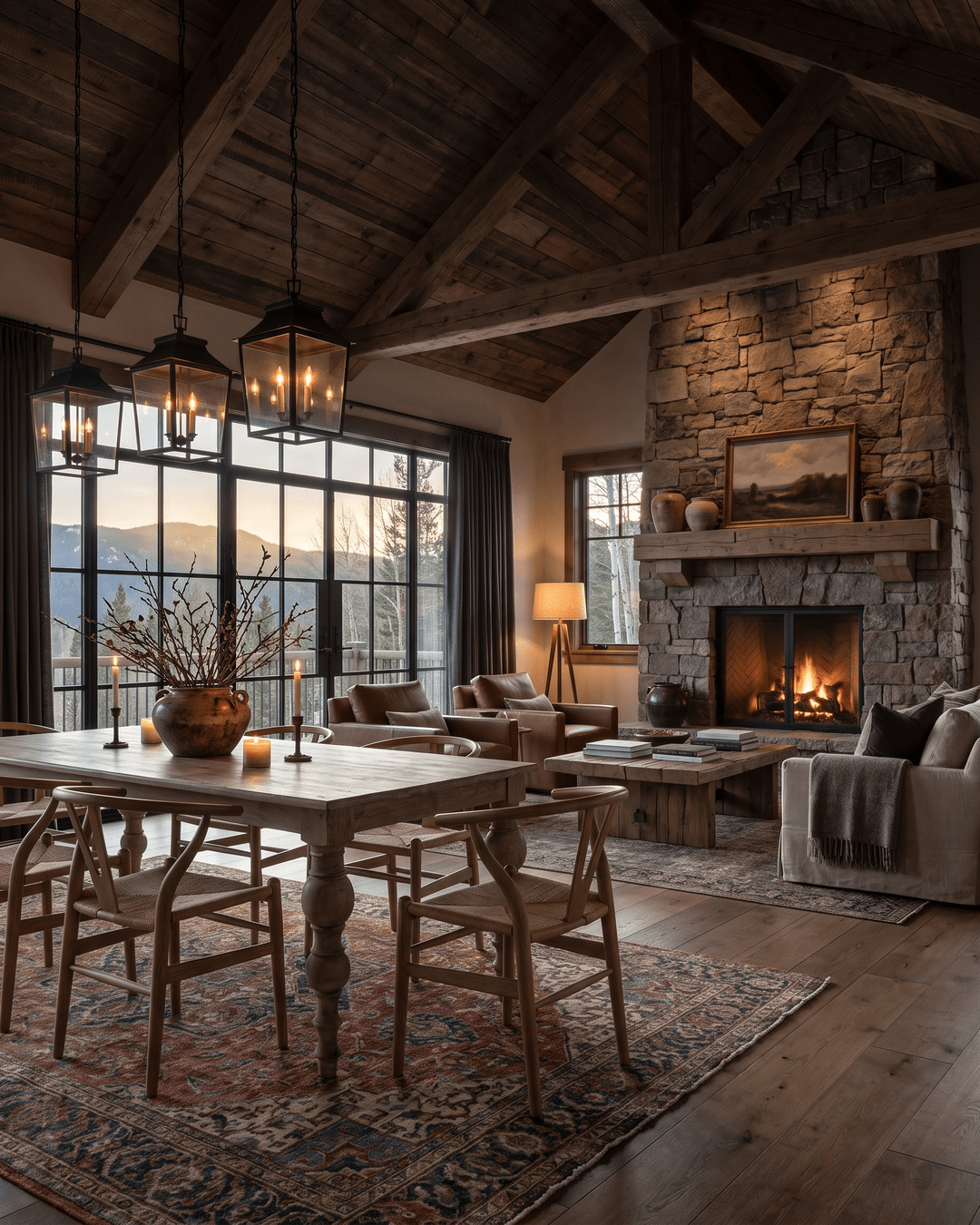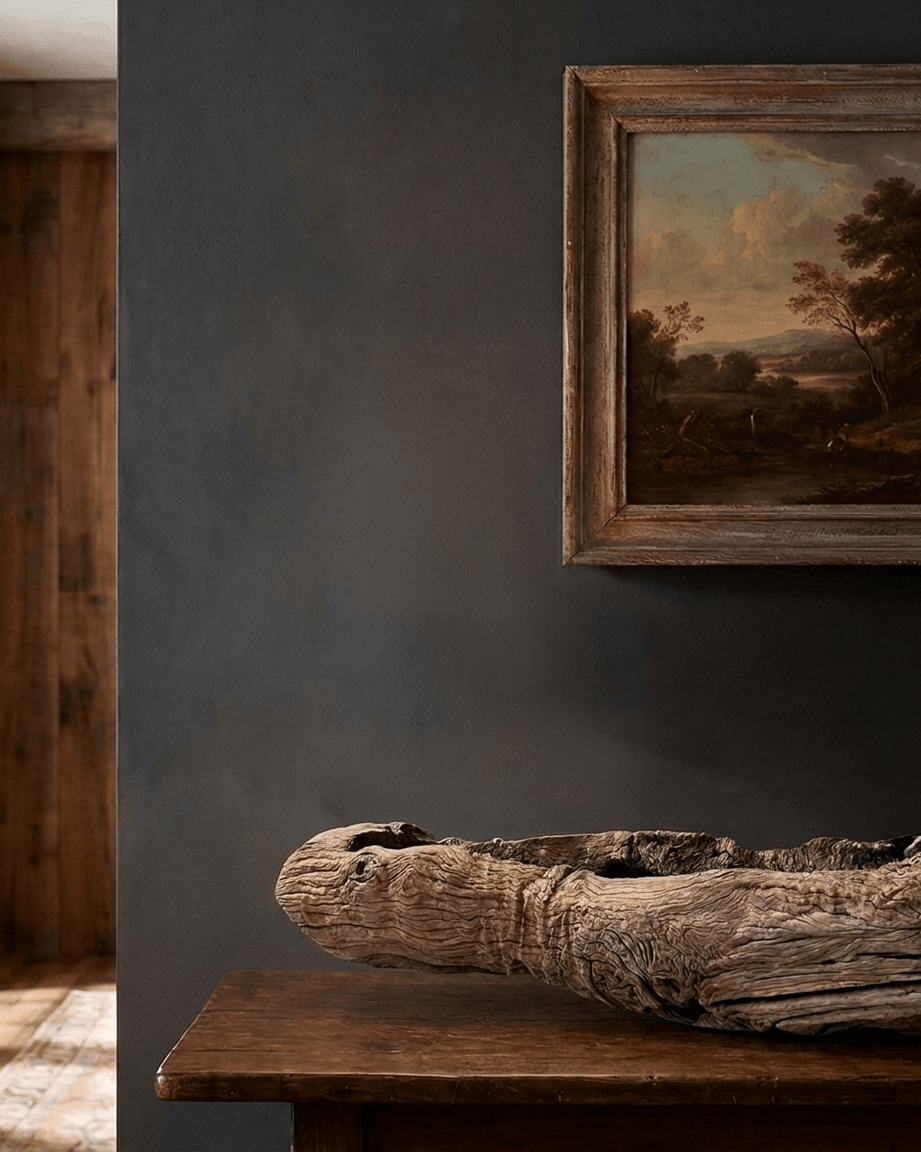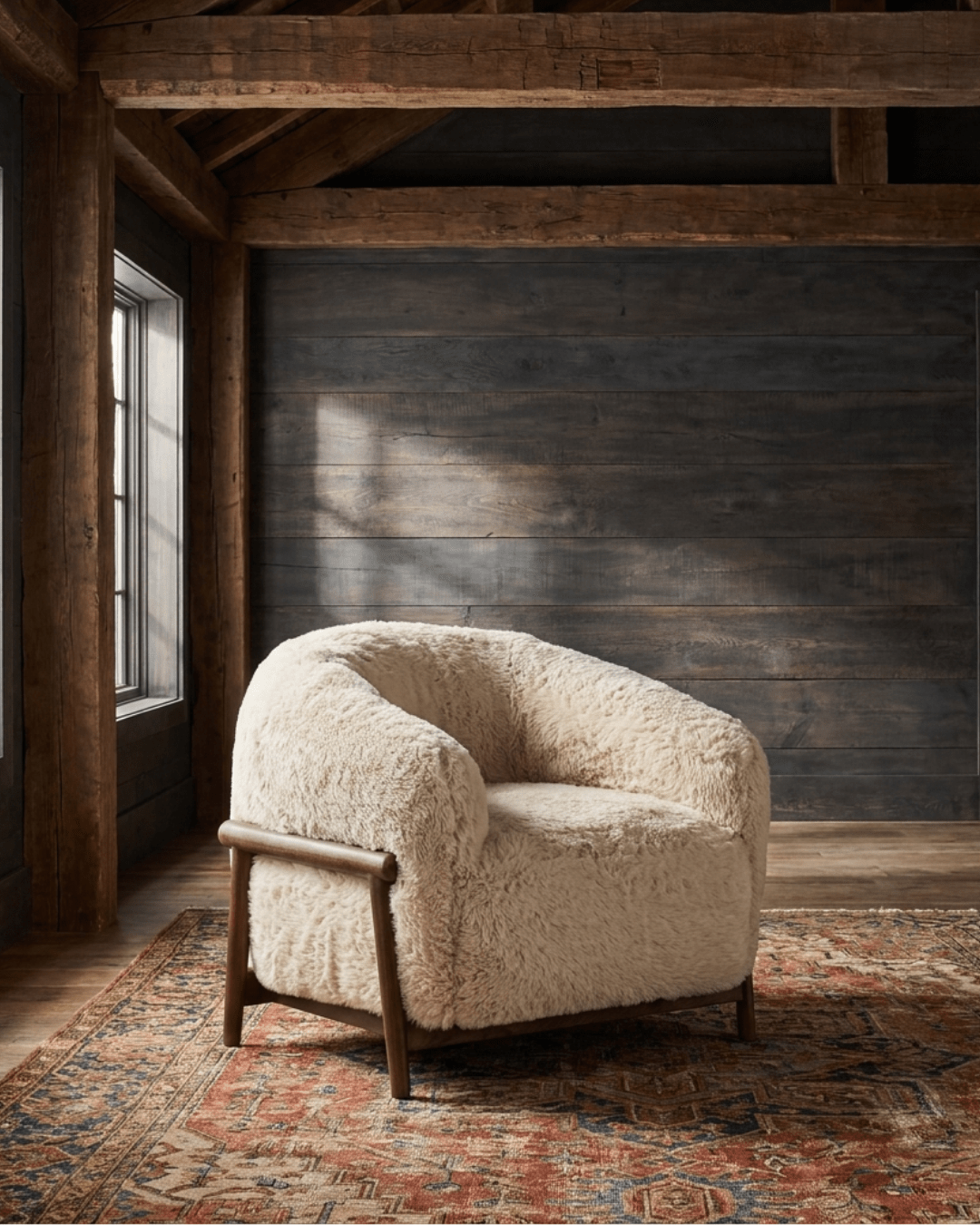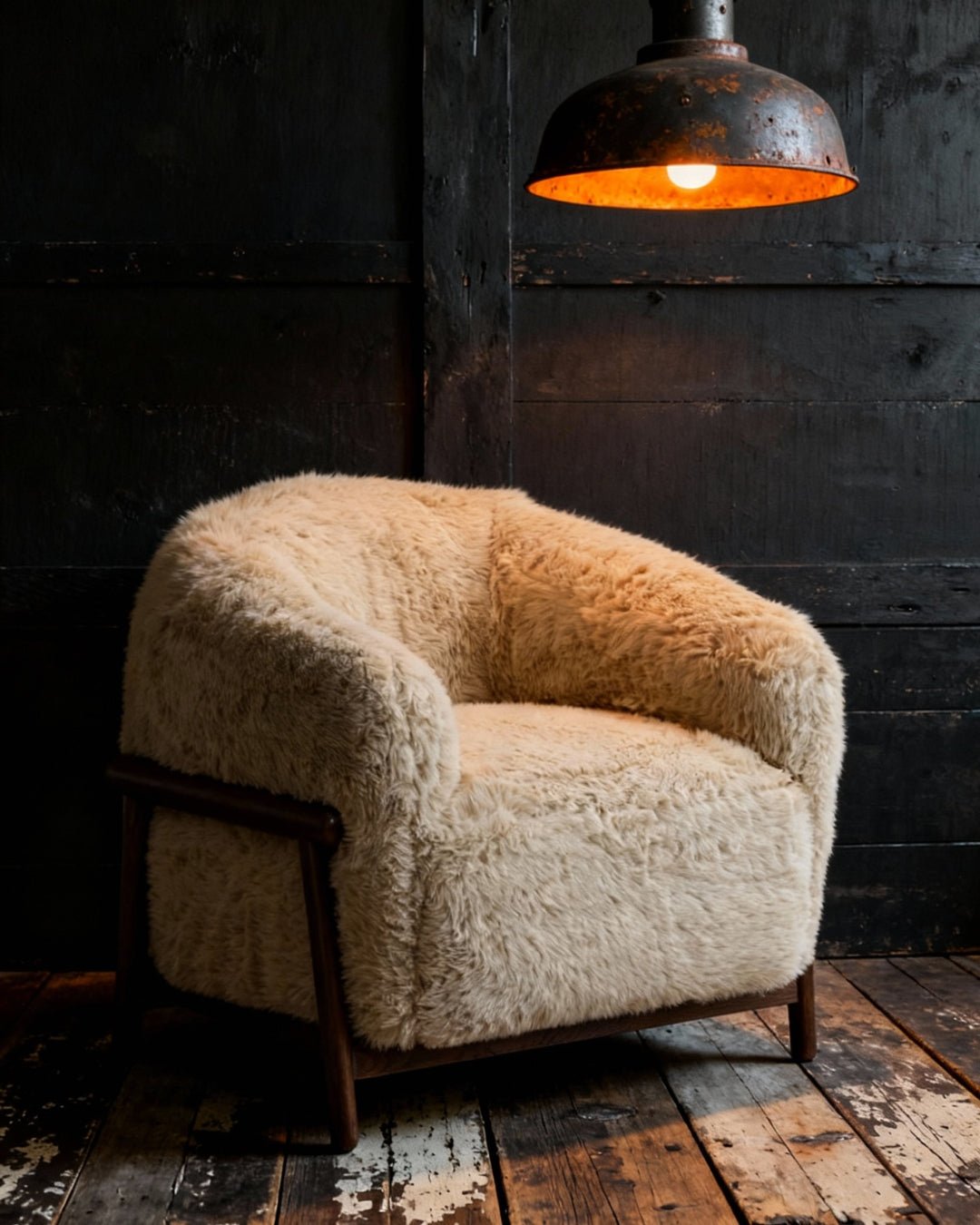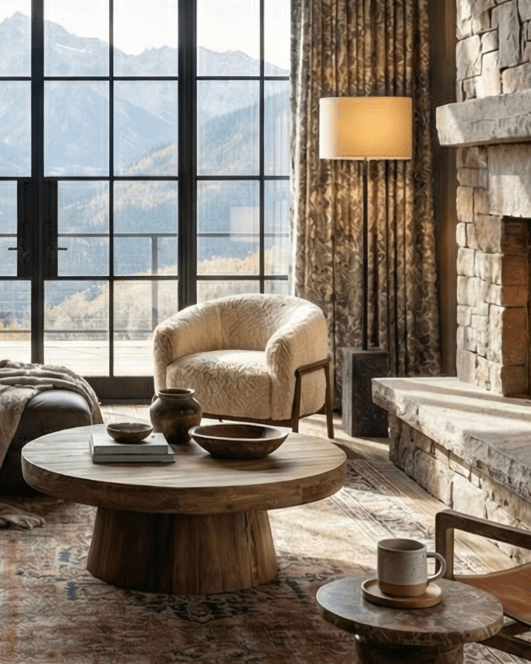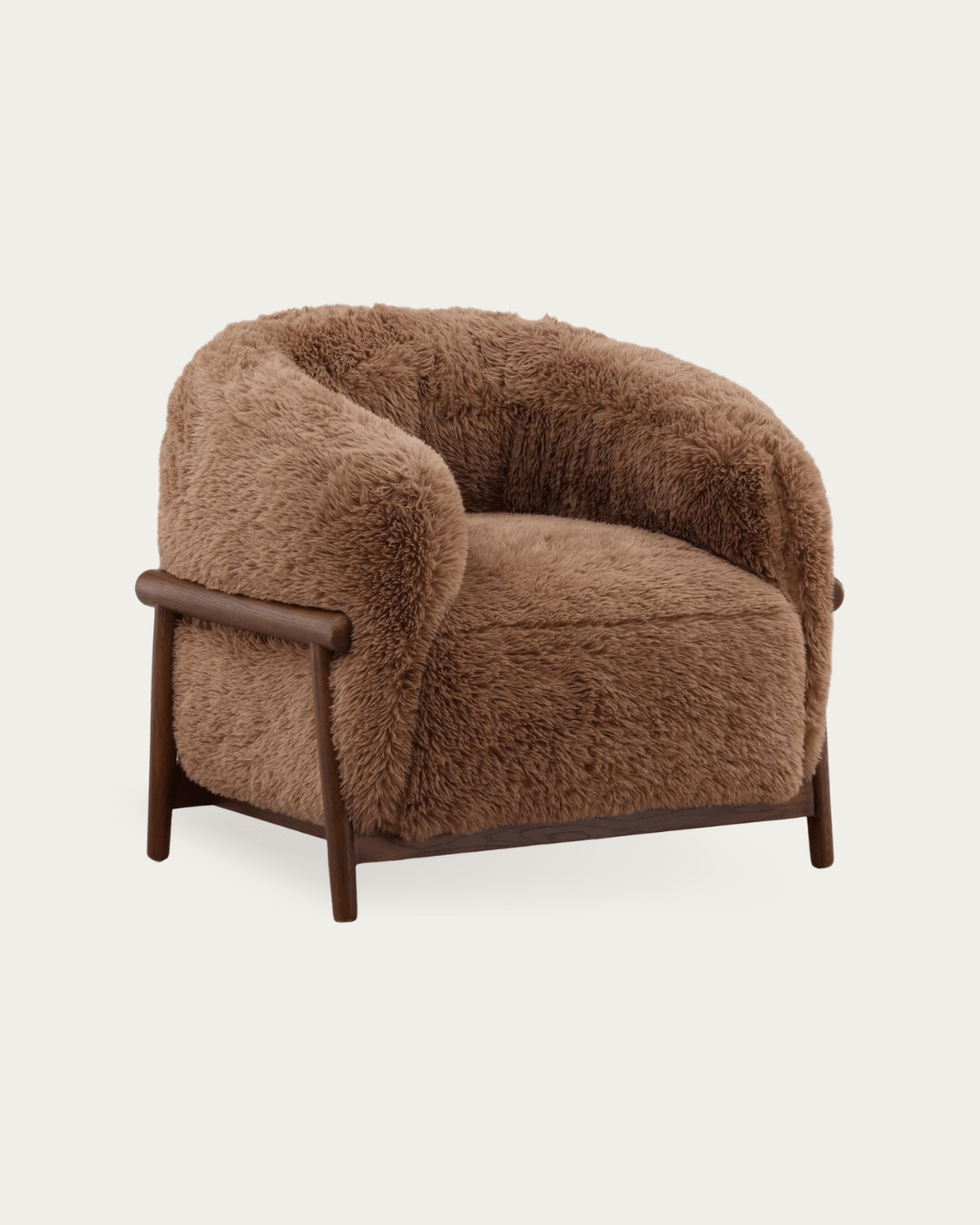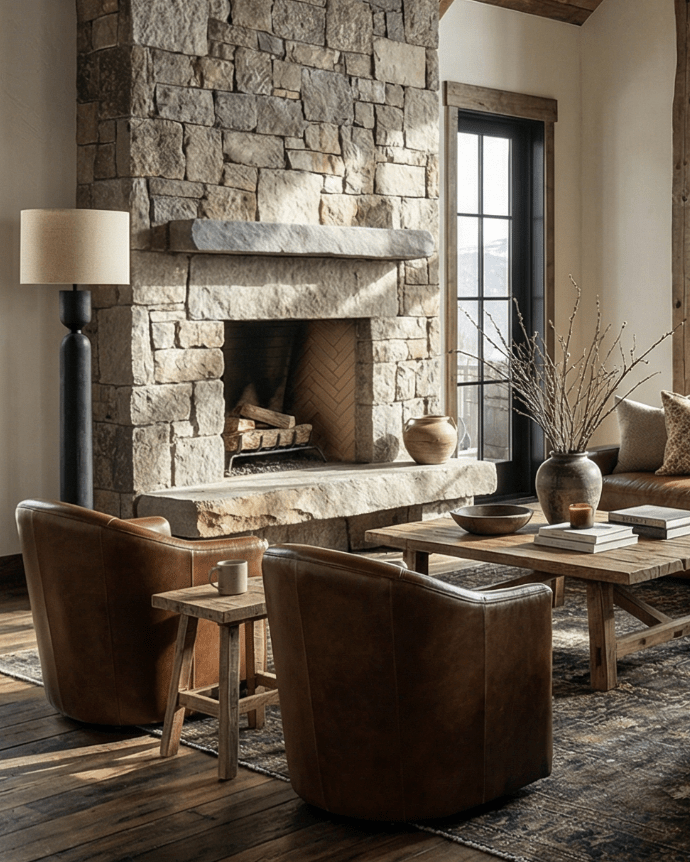









Before moving furniture around again, stand at the entrance to your living room and look straight ahead.
Where does your eye go?
More importantly, where does it have nowhere to go?
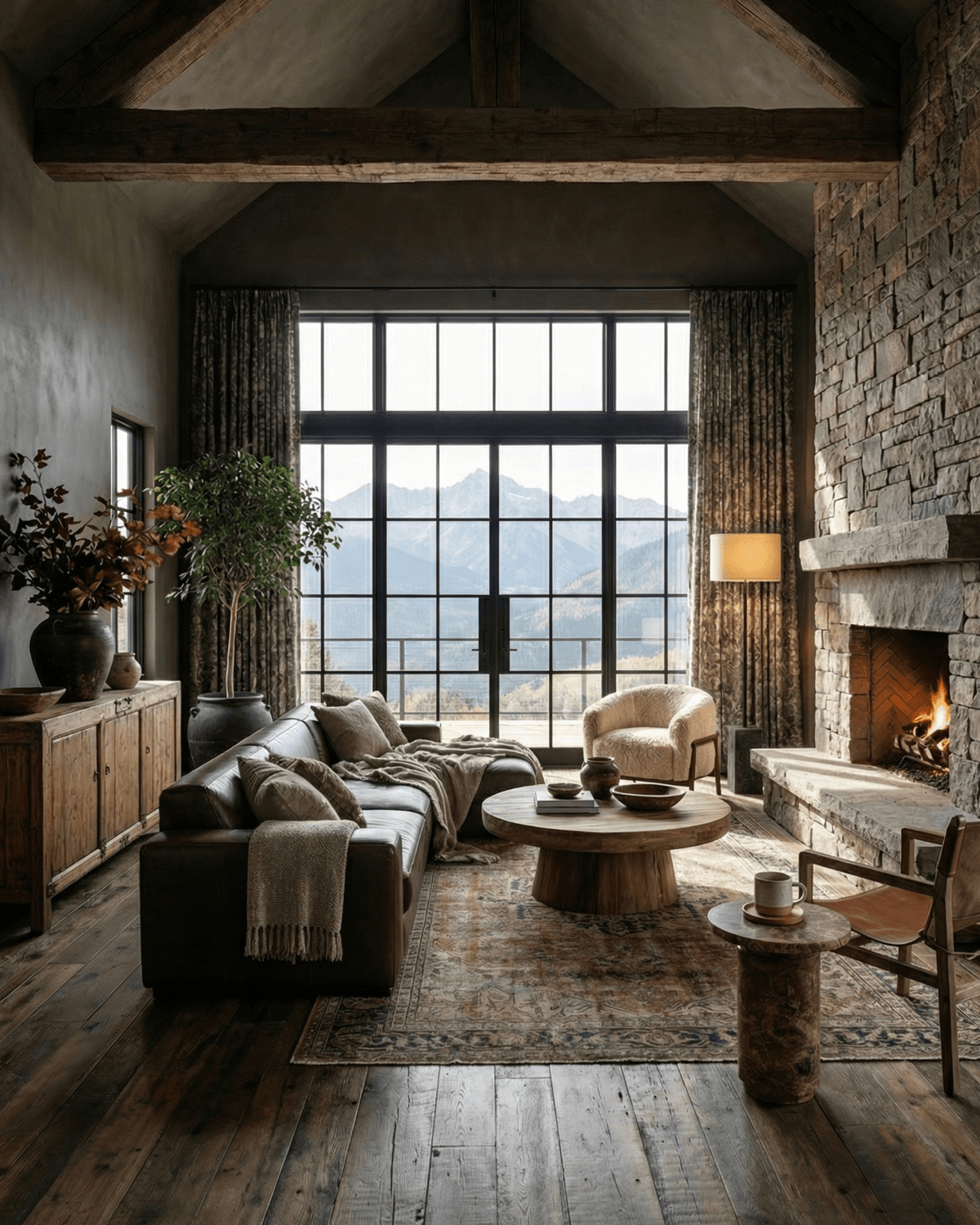
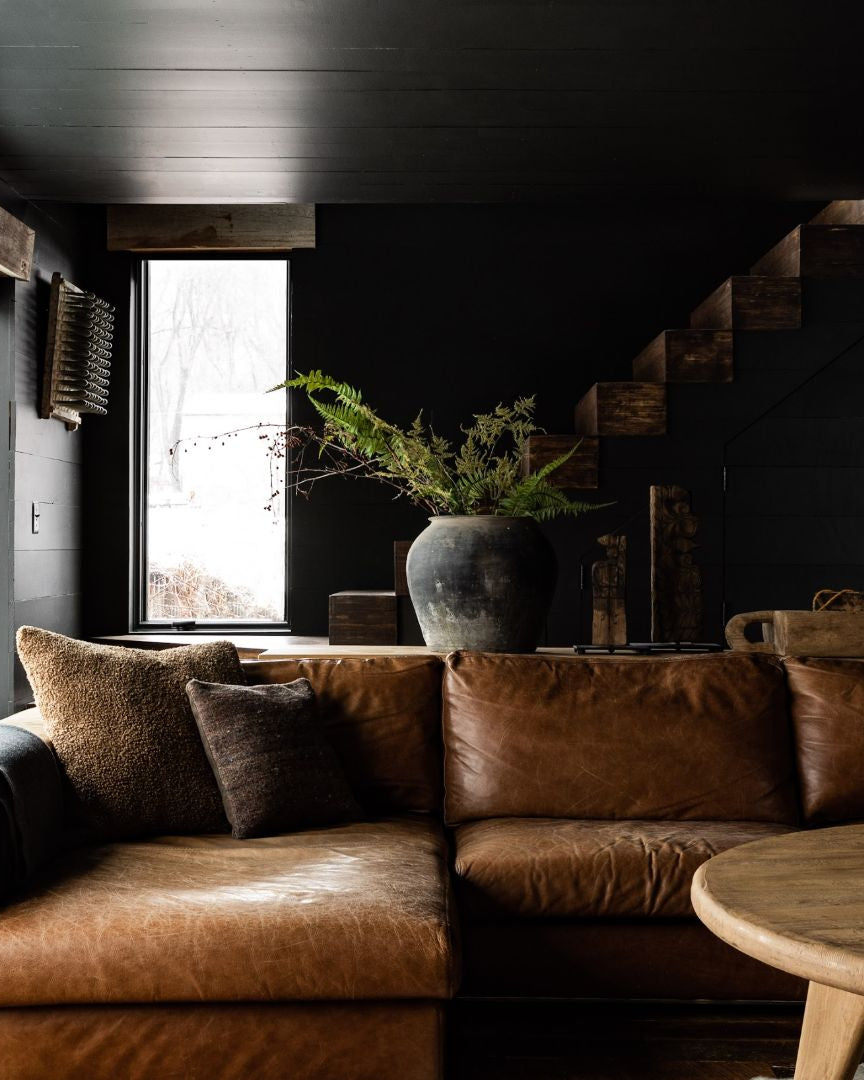
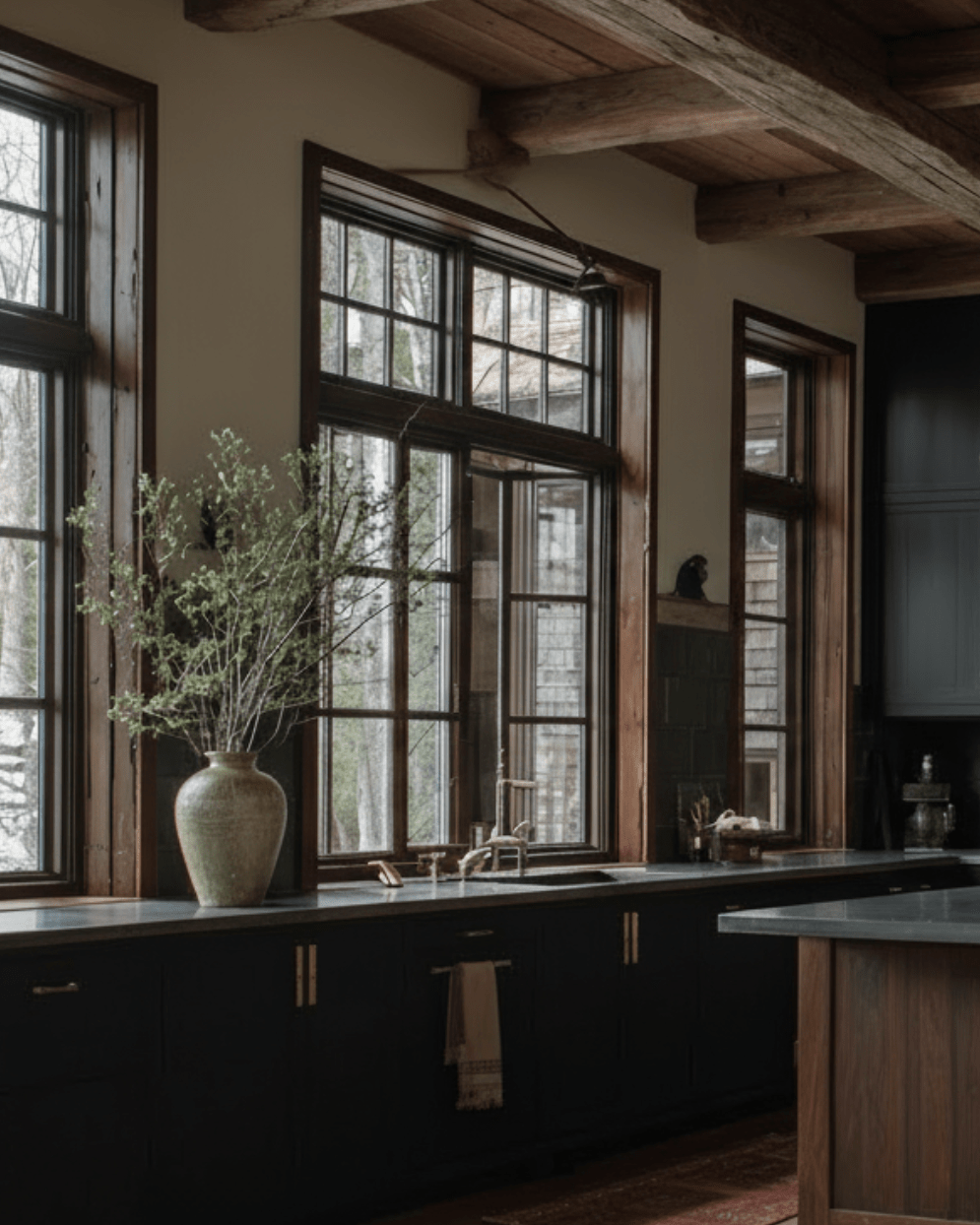
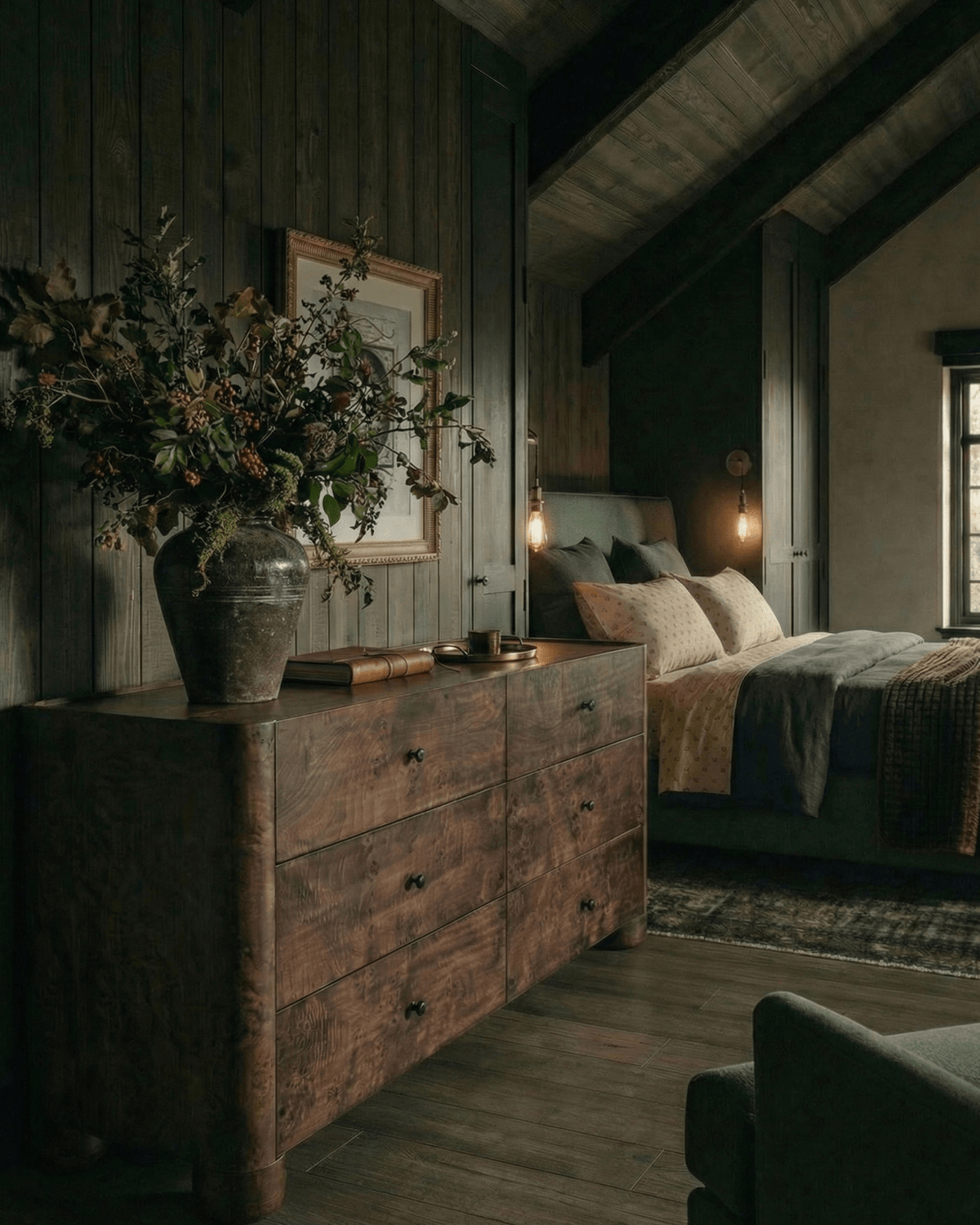
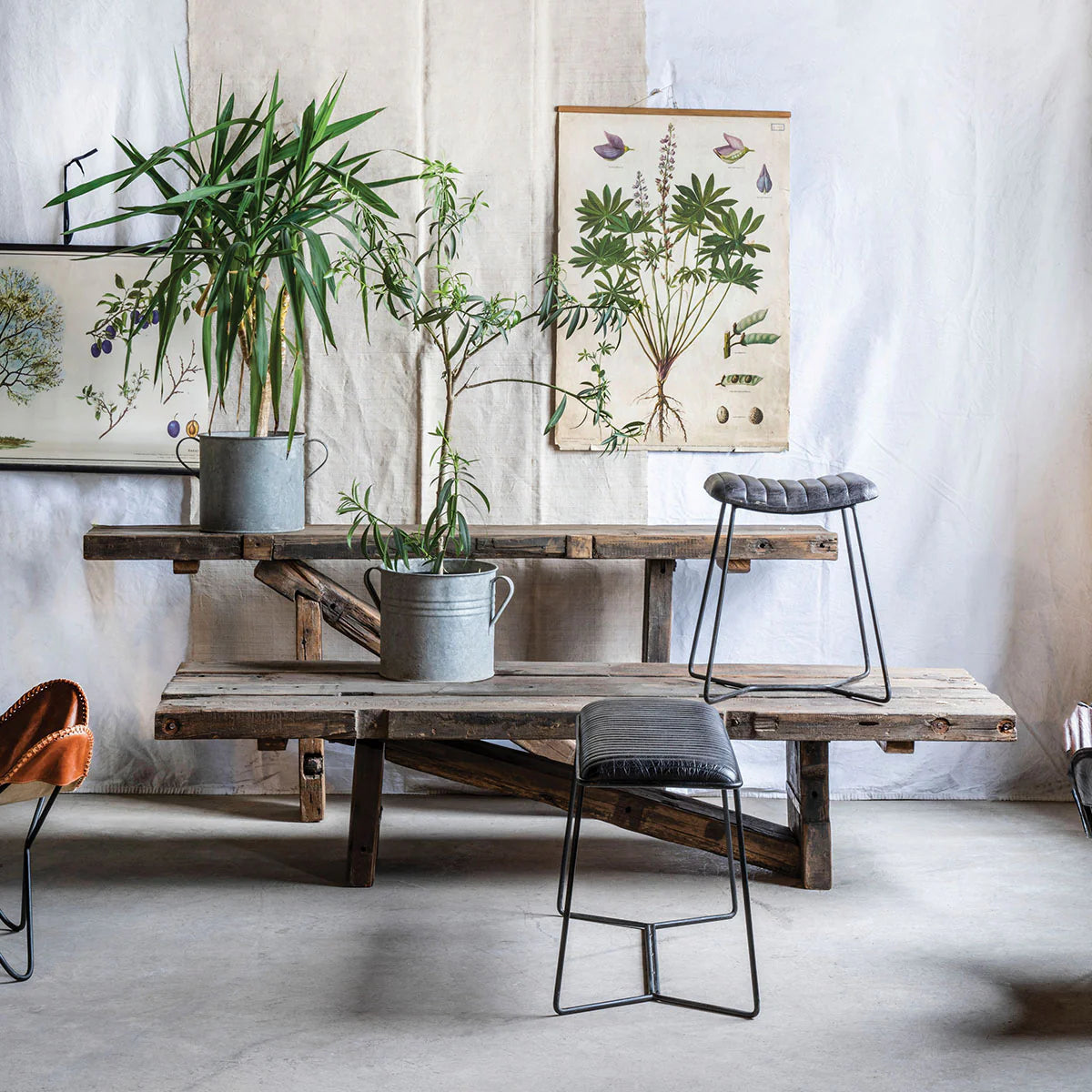
That's the useful question when deciding where black furniture belongs. Because darker pieces create stronger contrast against lighter surroundings, they can act like visual stopping points. A black coffee table can define the center of a seating area. A black lounge chair can hold an otherwise empty corner. A small black side table can connect two parts of the room that feel visually unrelated.
Instead of asking where black furniture is supposed to go, follow your sightlines and put contrast where the room needs definition.
Explore Hello Norden's black furniture collection and consider where your room could use a stronger visual stop.
Start at the Doorway, Not the Sofa
Furniture placement often begins from inside the room.
Try doing the opposite.
Stand where you naturally enter the living room and look across the space. This first sightline tells you a surprising amount about the room's visual hierarchy.
Does your eye immediately hit the back of a sofa?
Does it slide toward a bright window and ignore everything else?
Does one side of the room feel dense while the other disappears?
A darker piece can redirect that first impression.
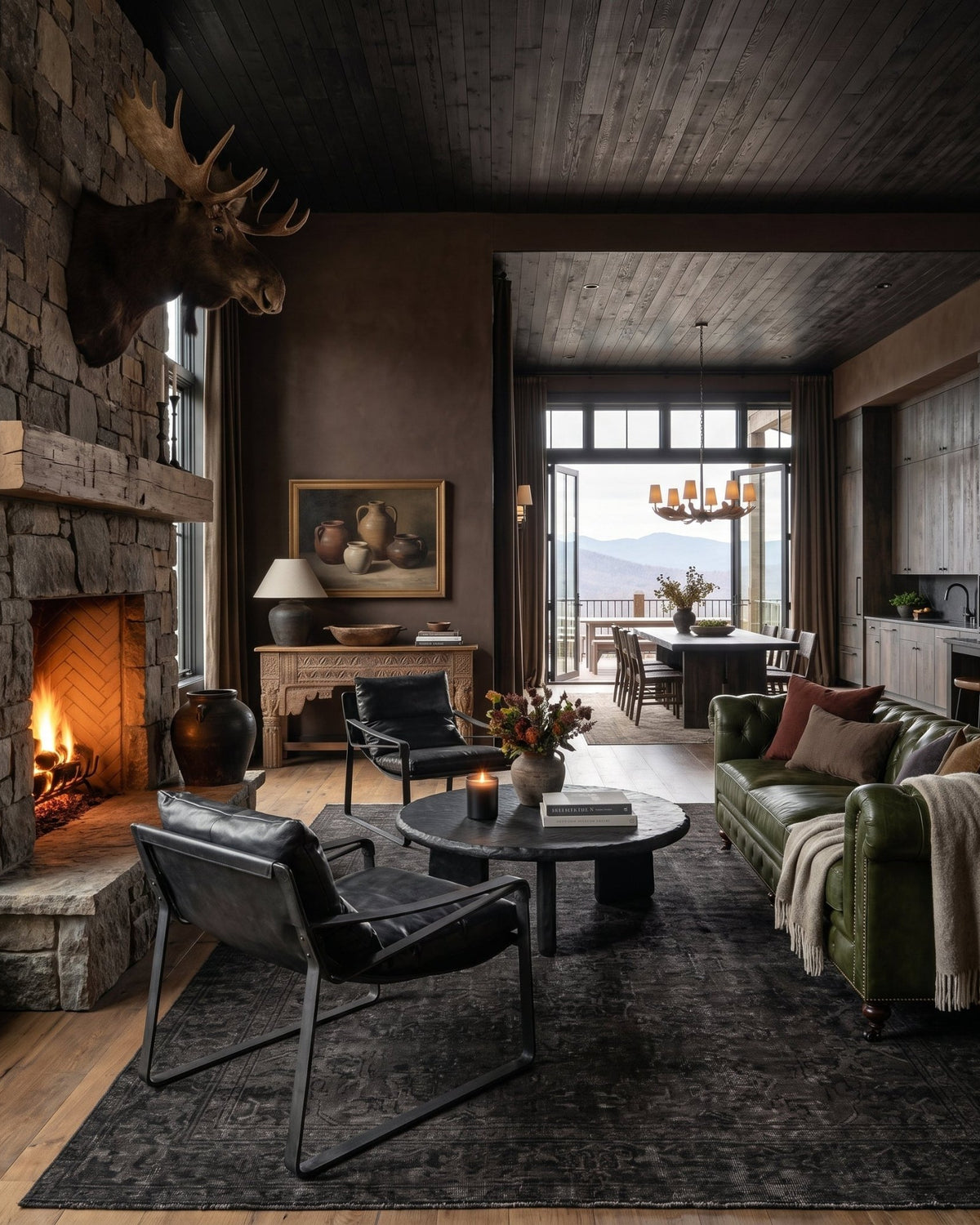
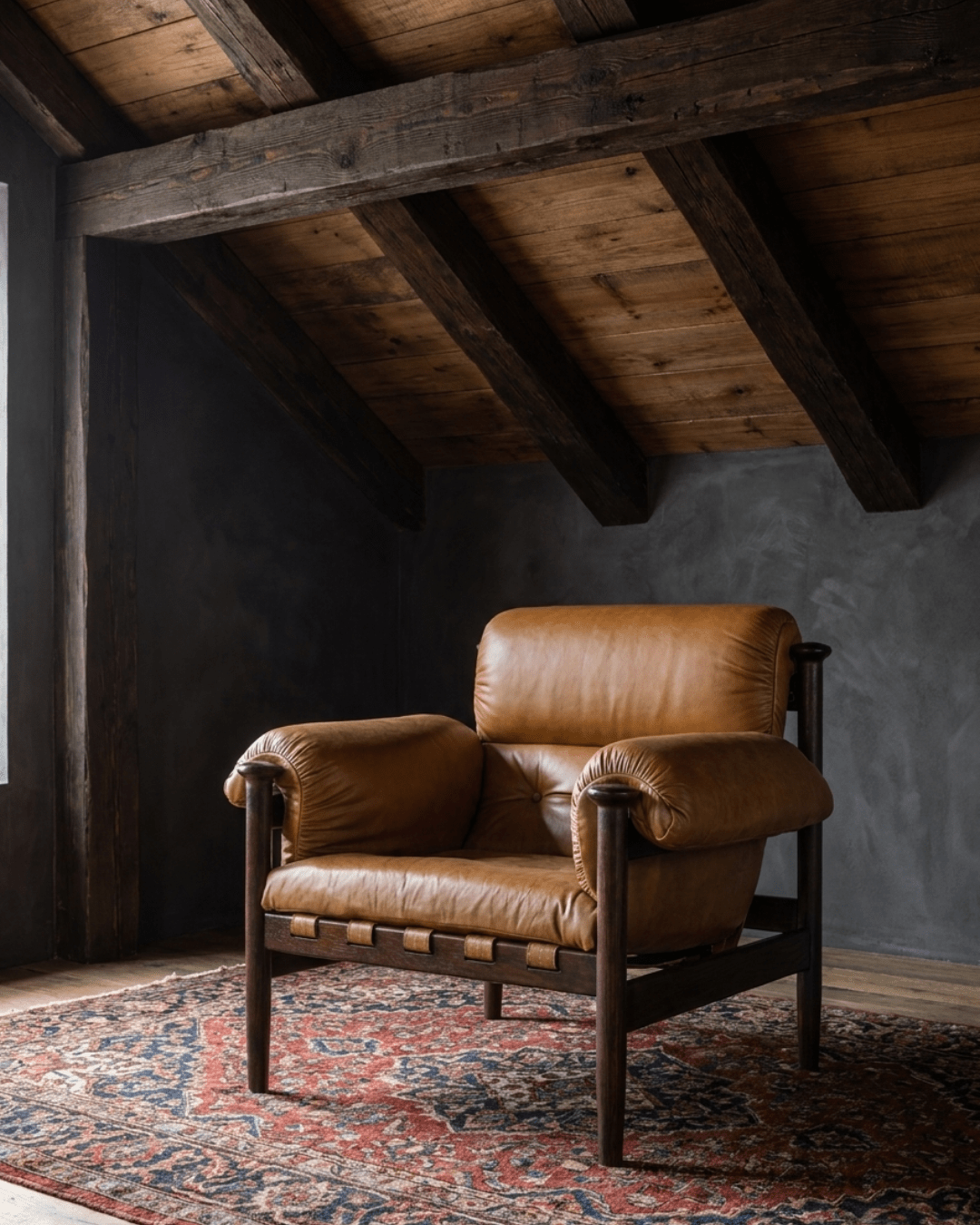
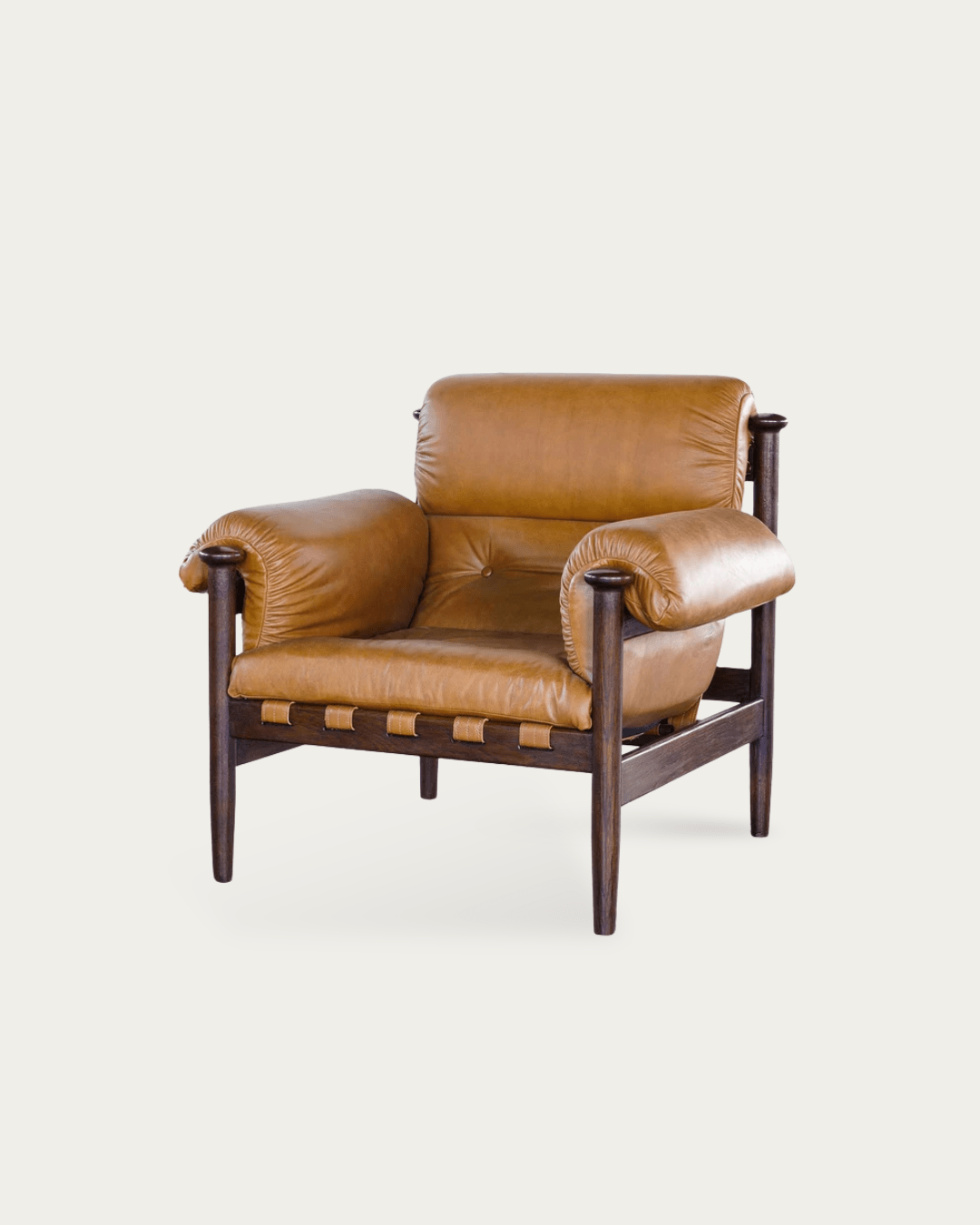
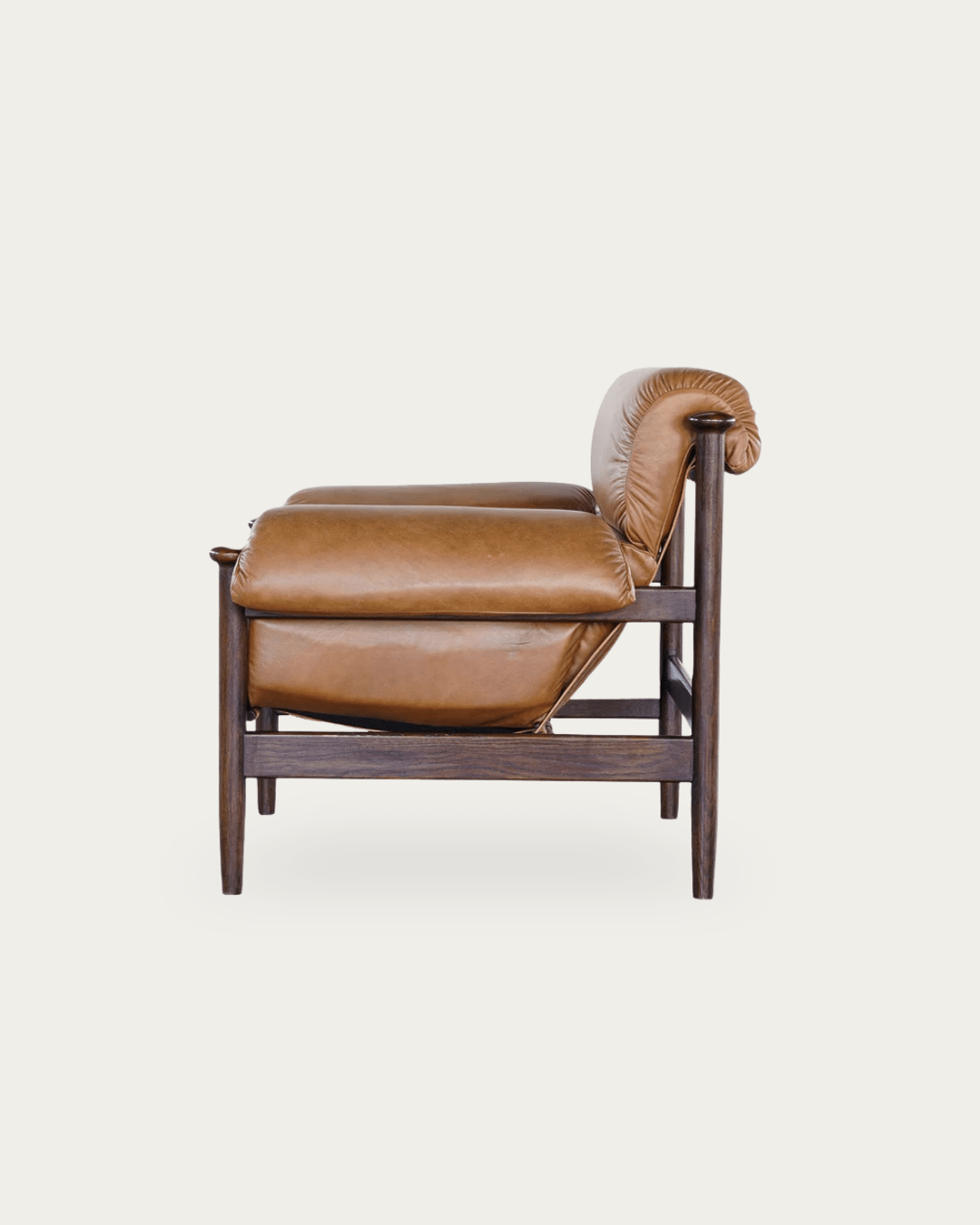
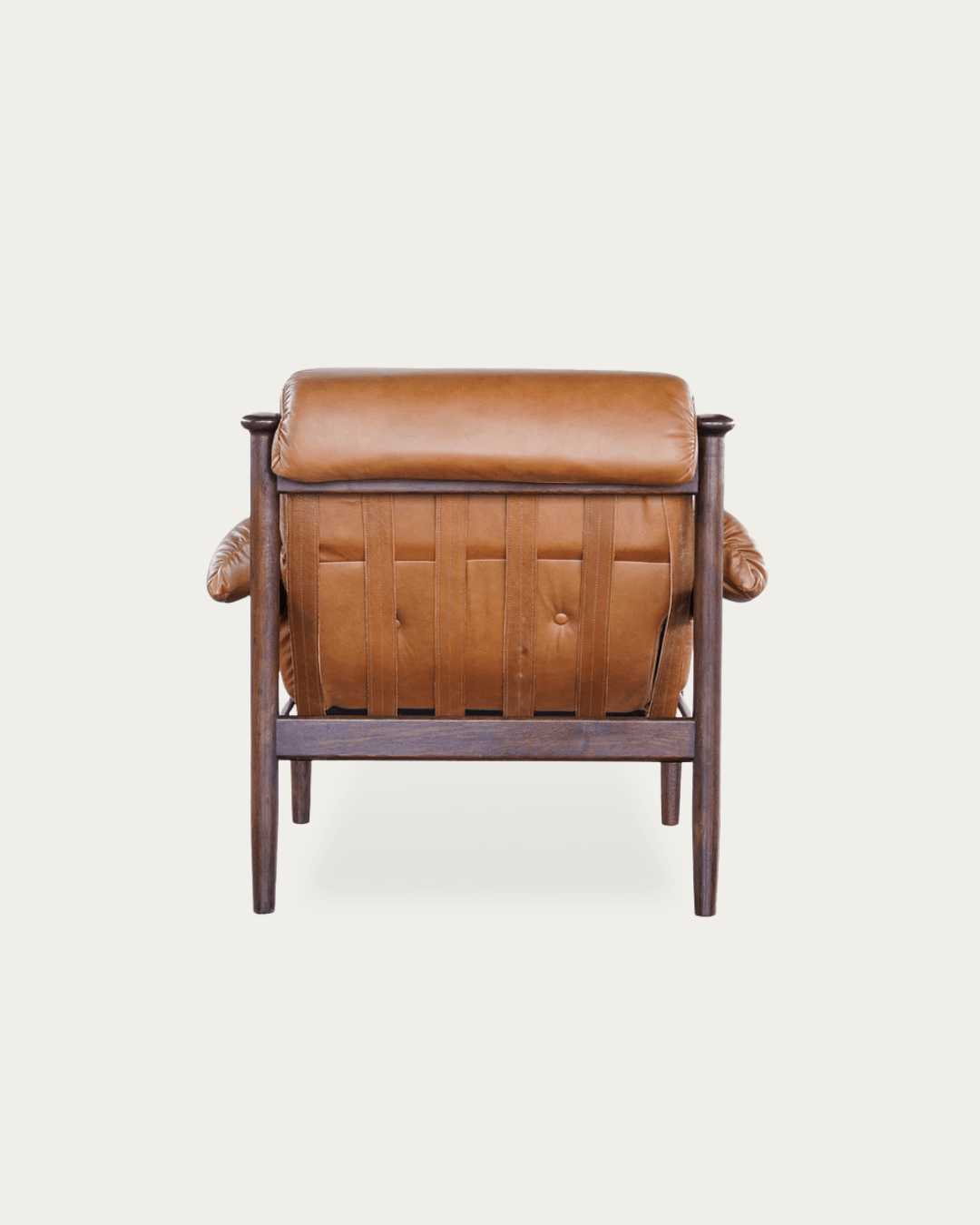
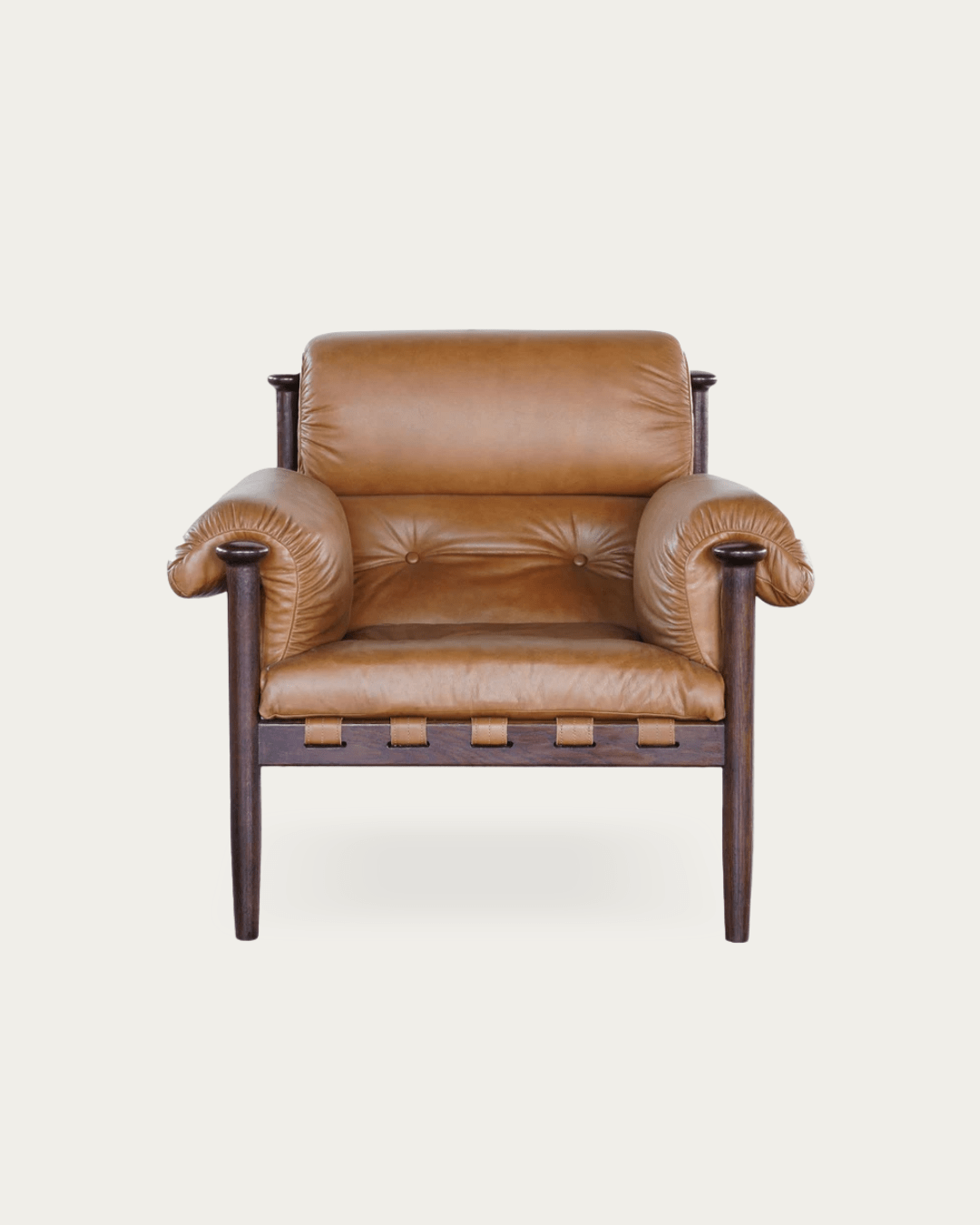
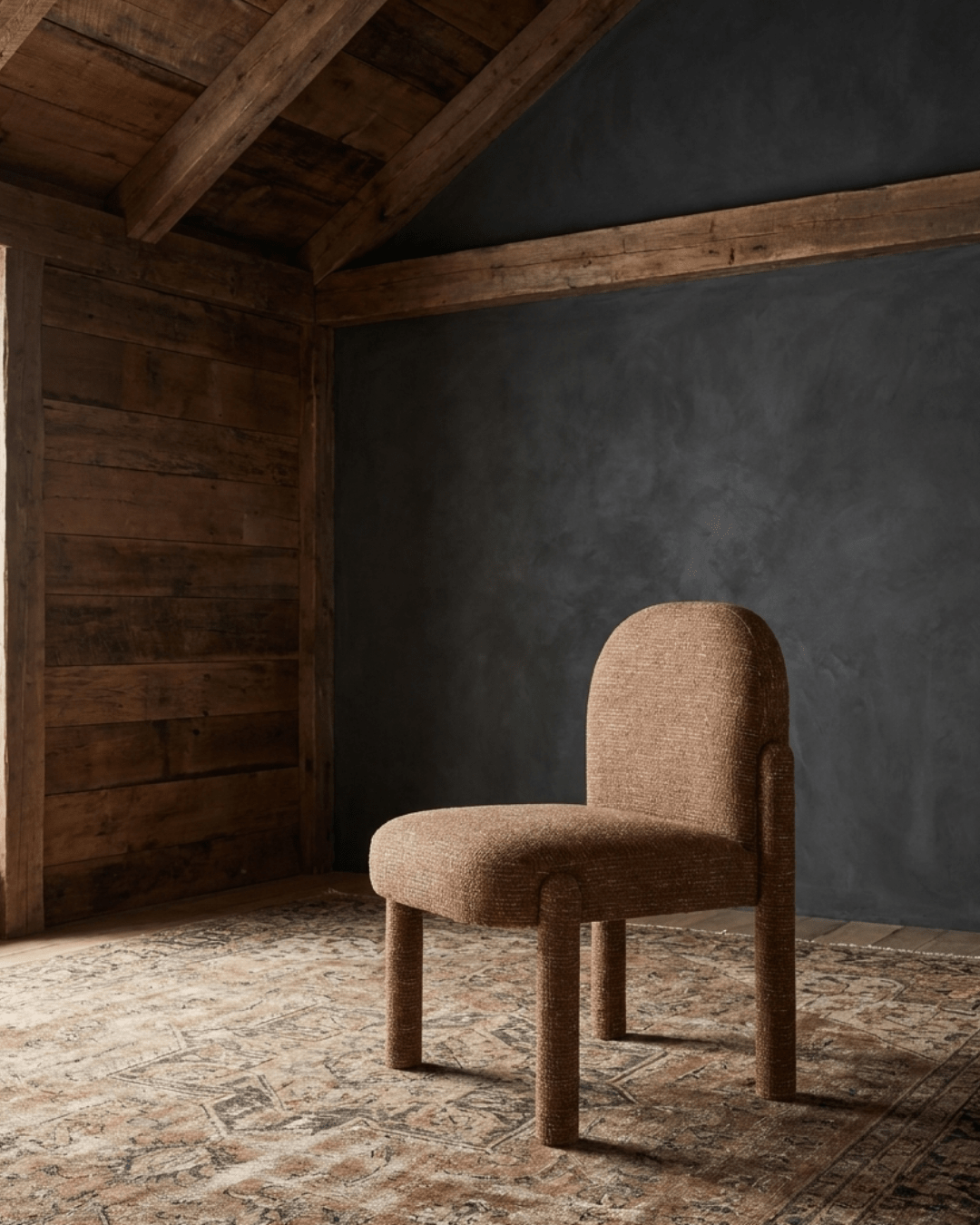
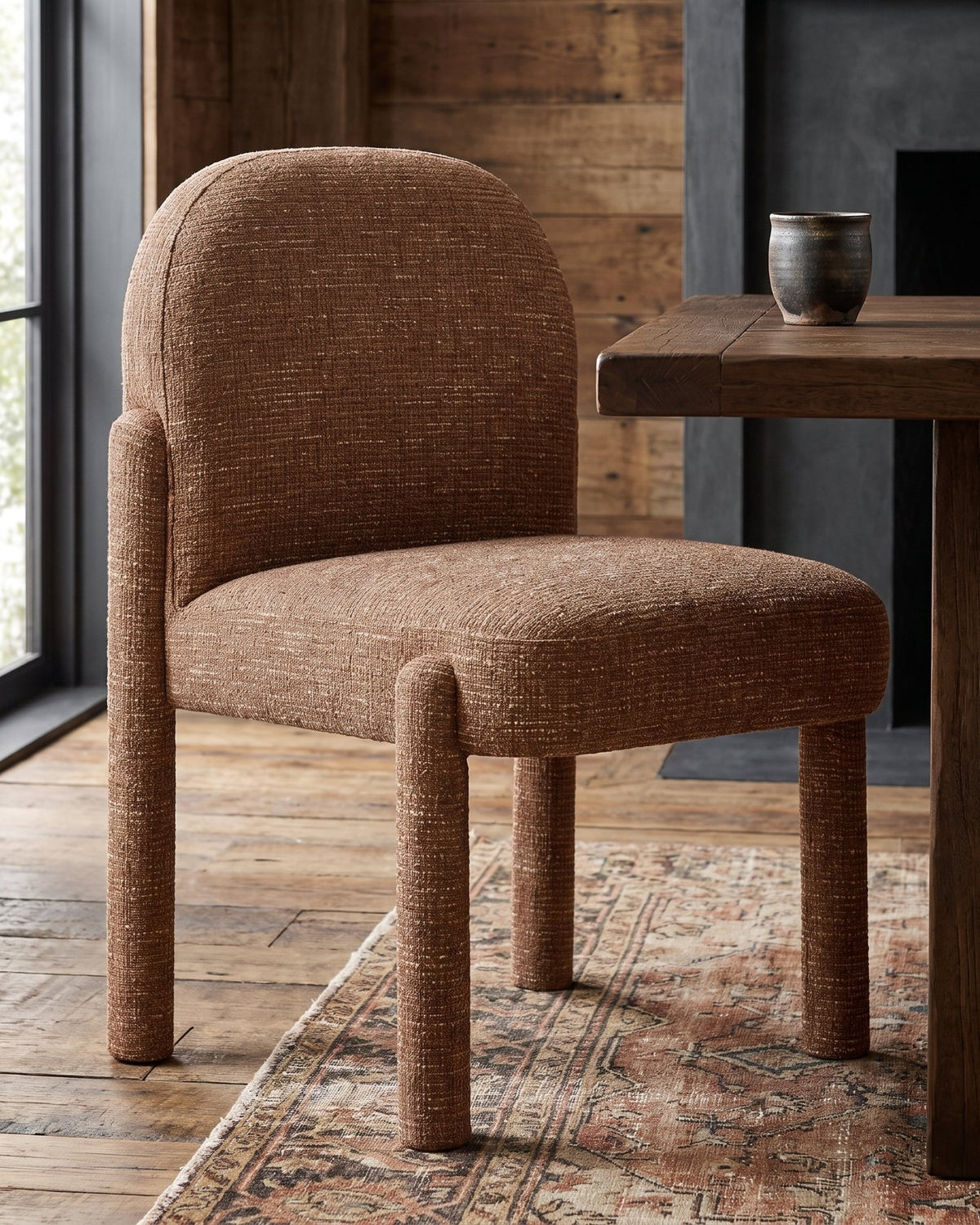
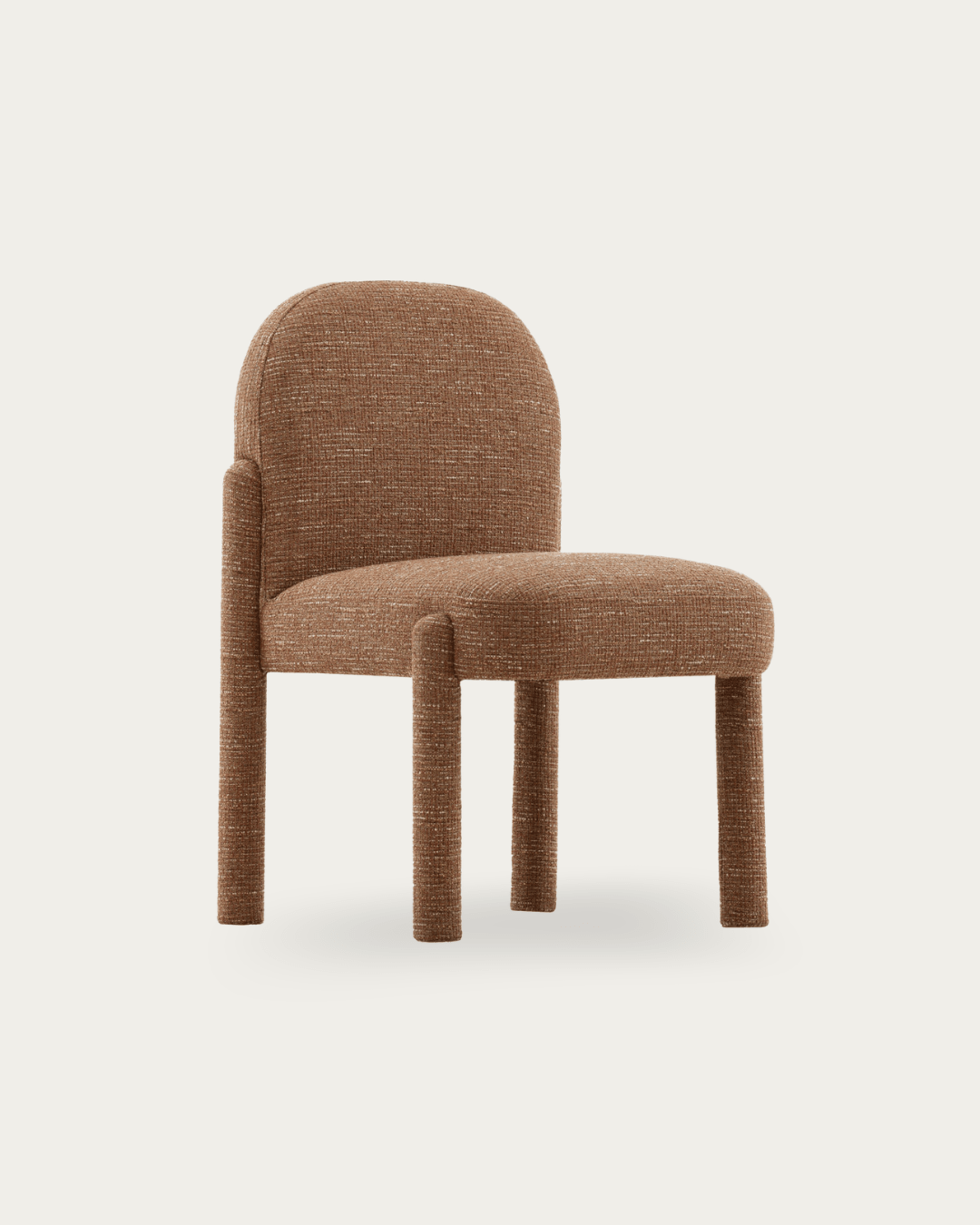
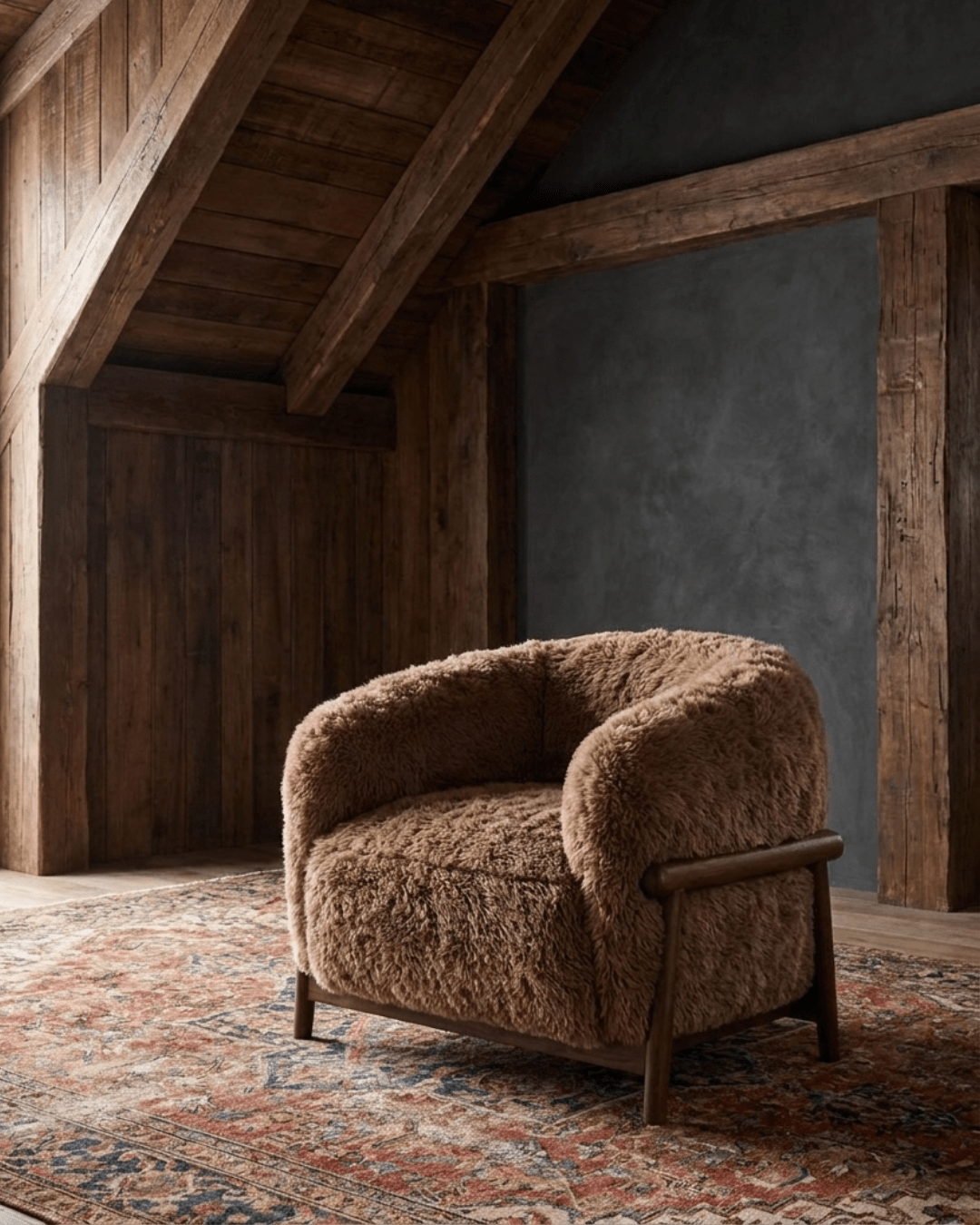
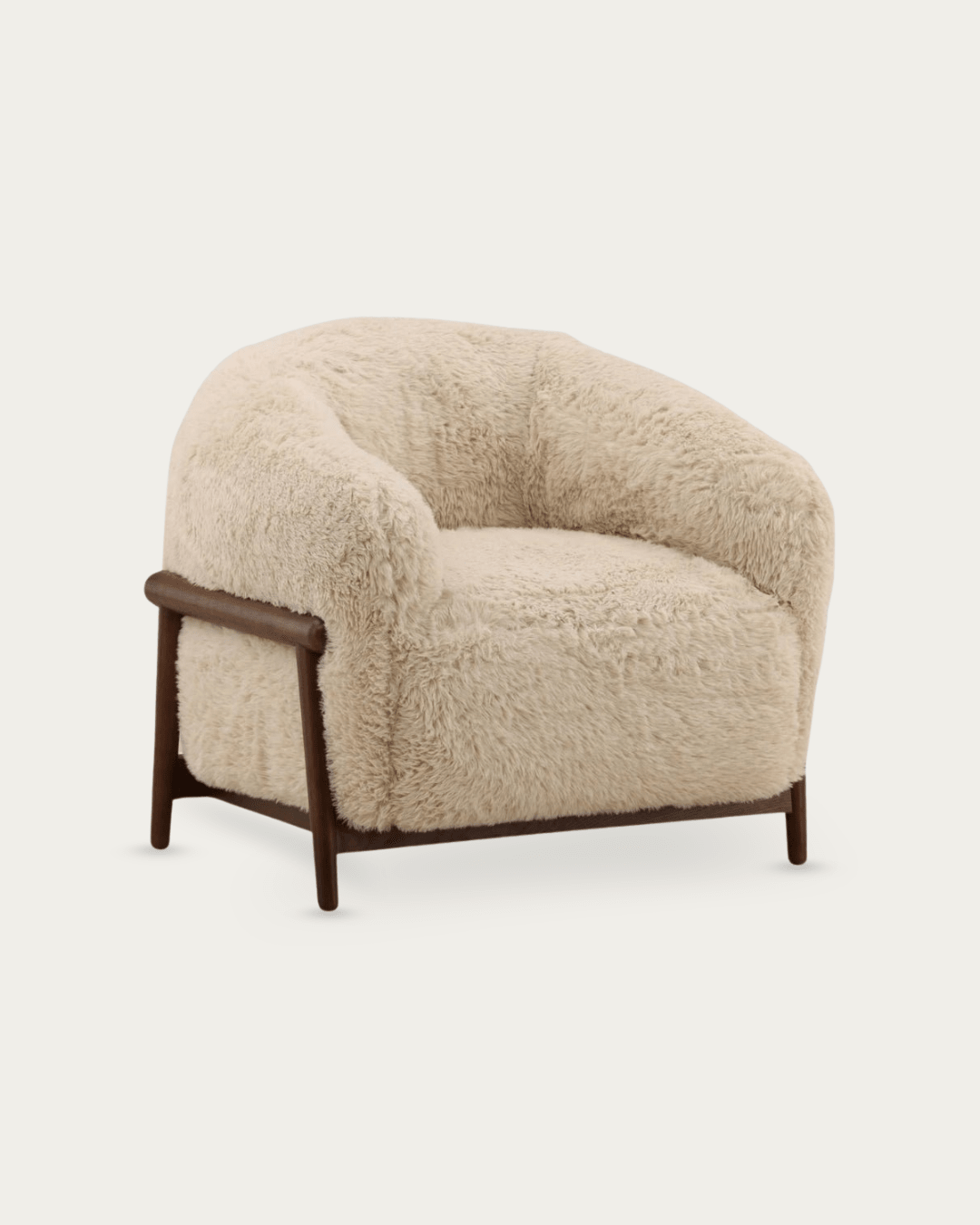
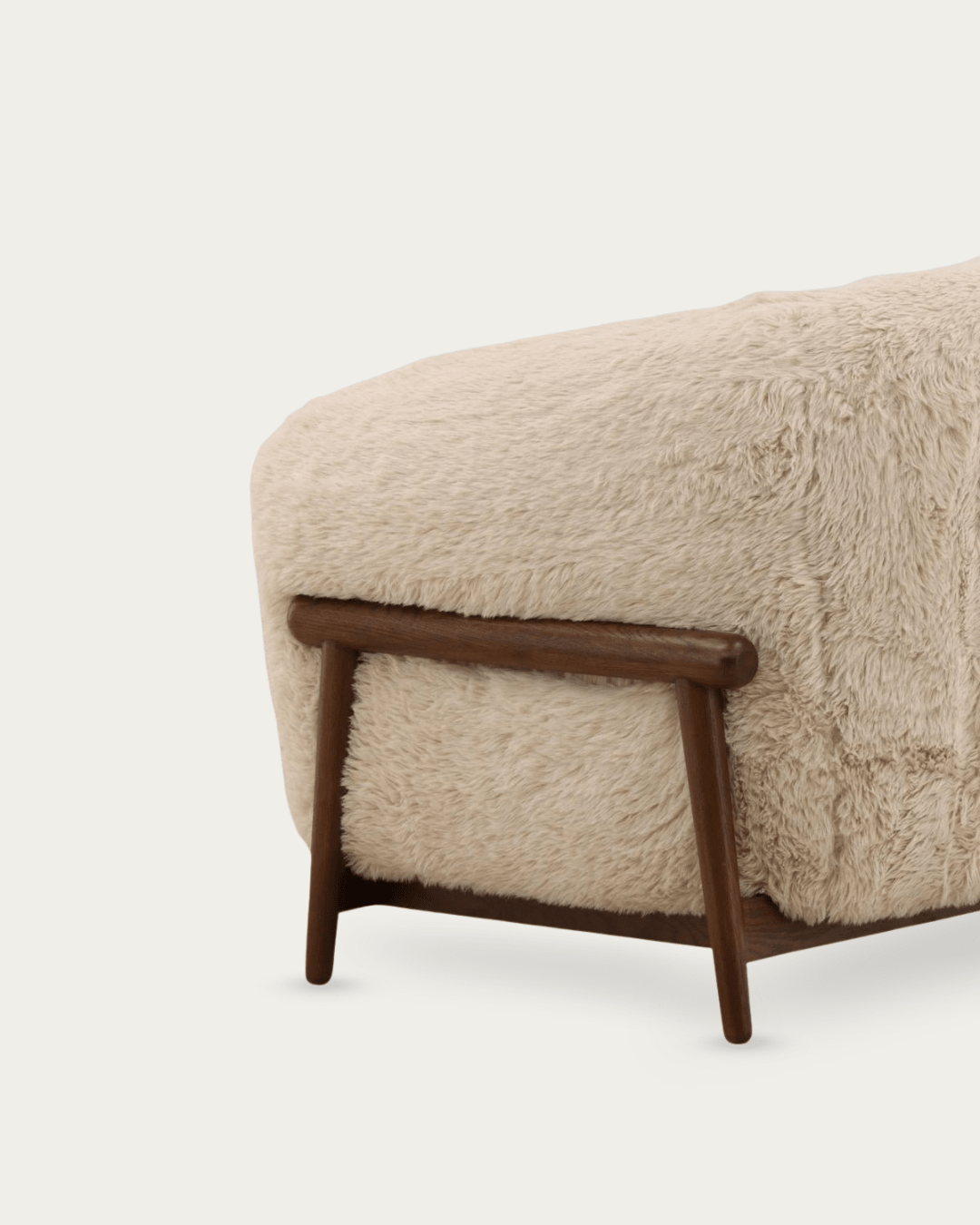
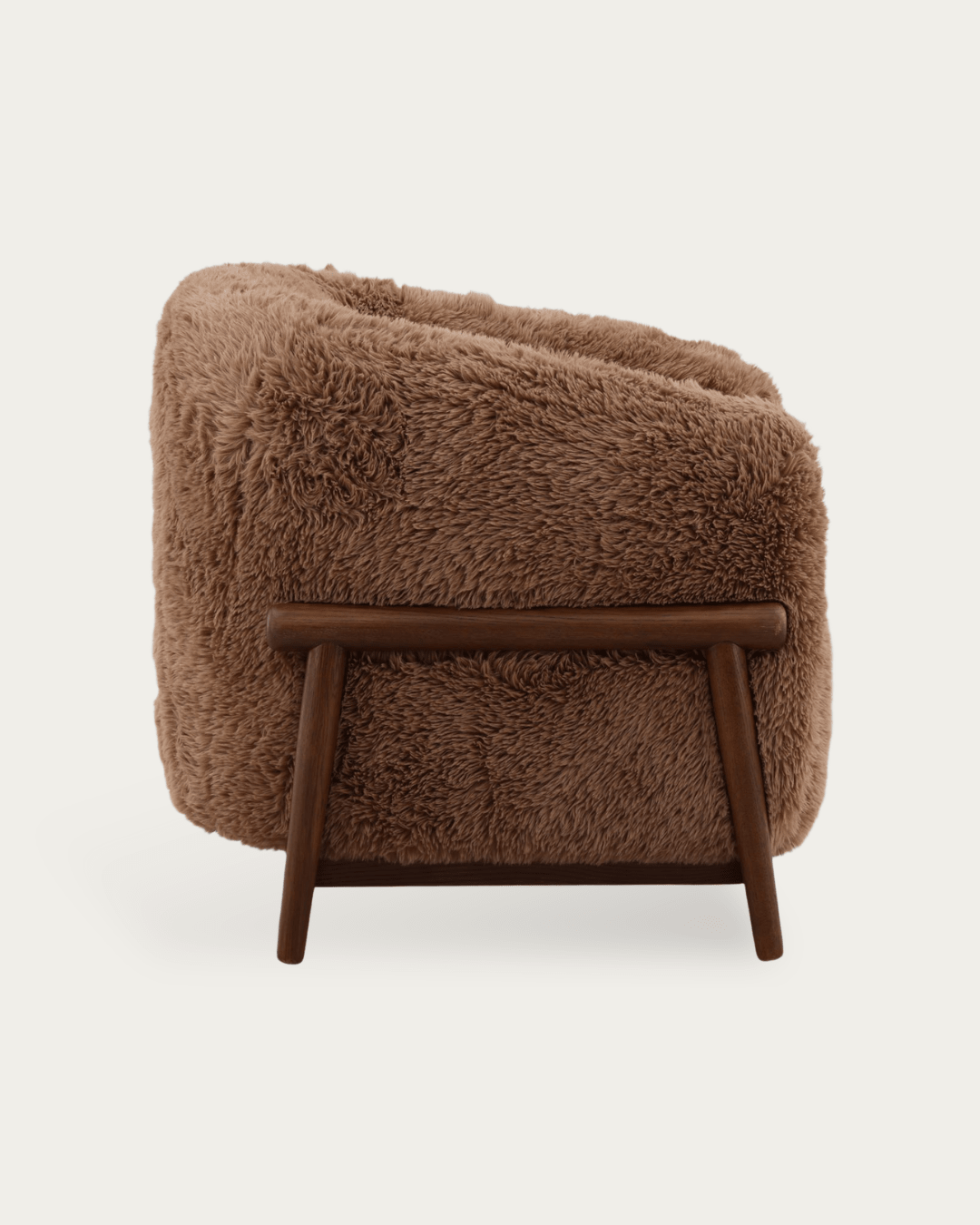
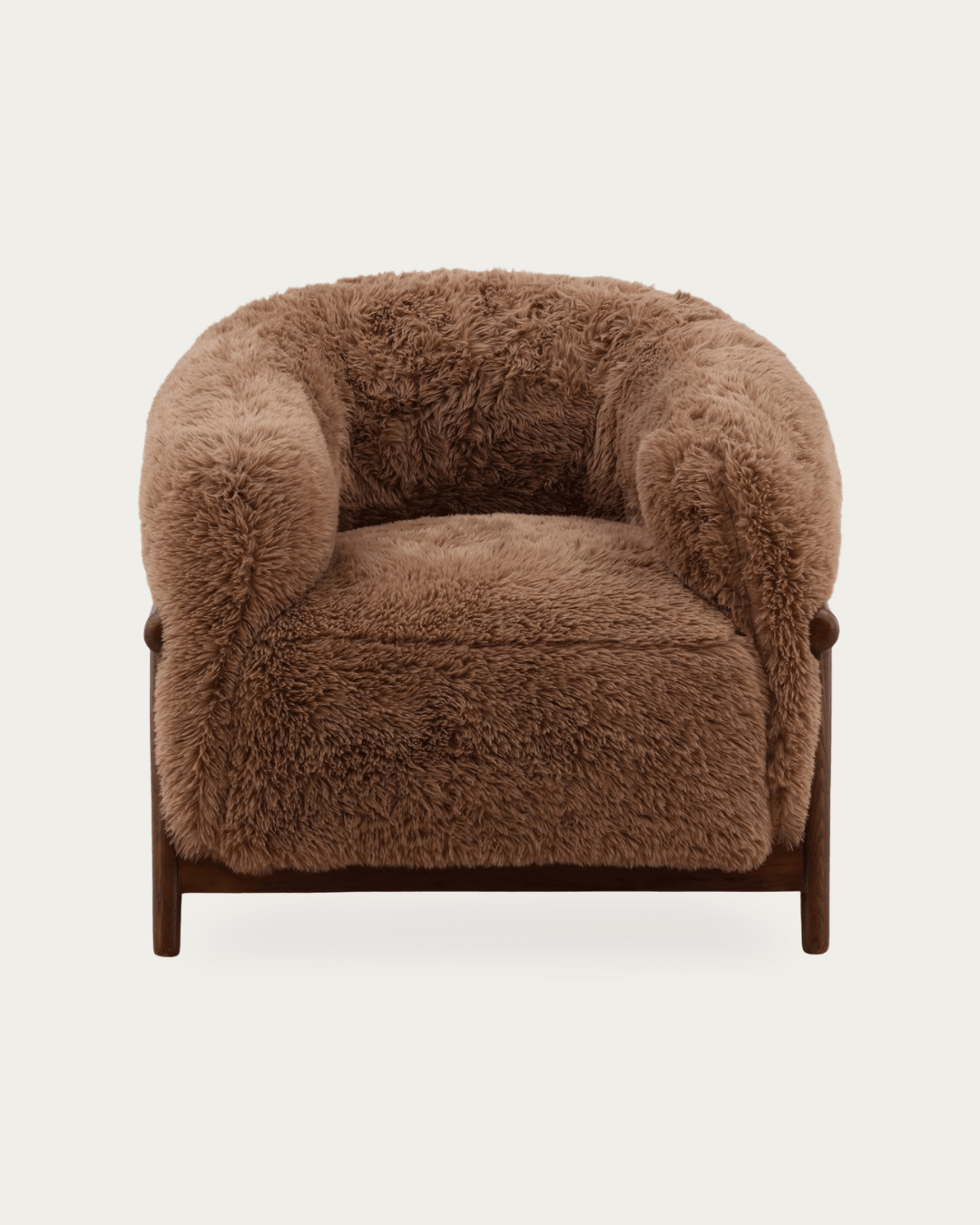
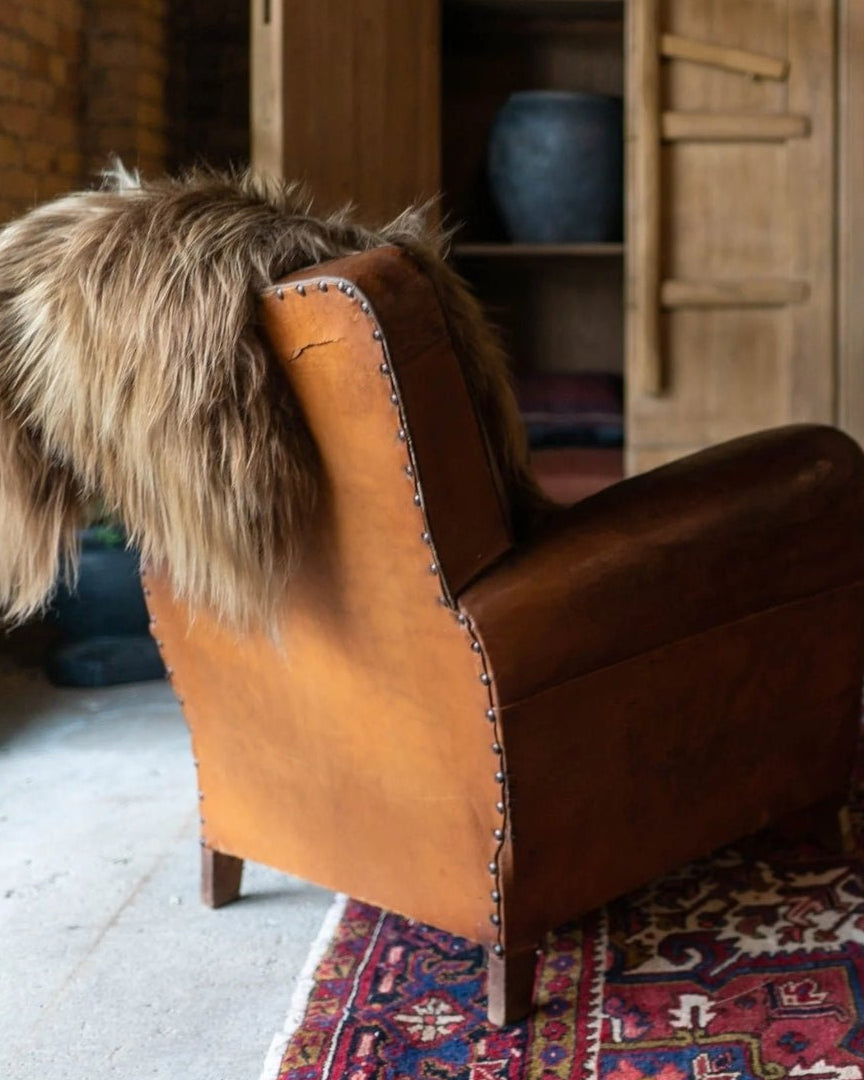
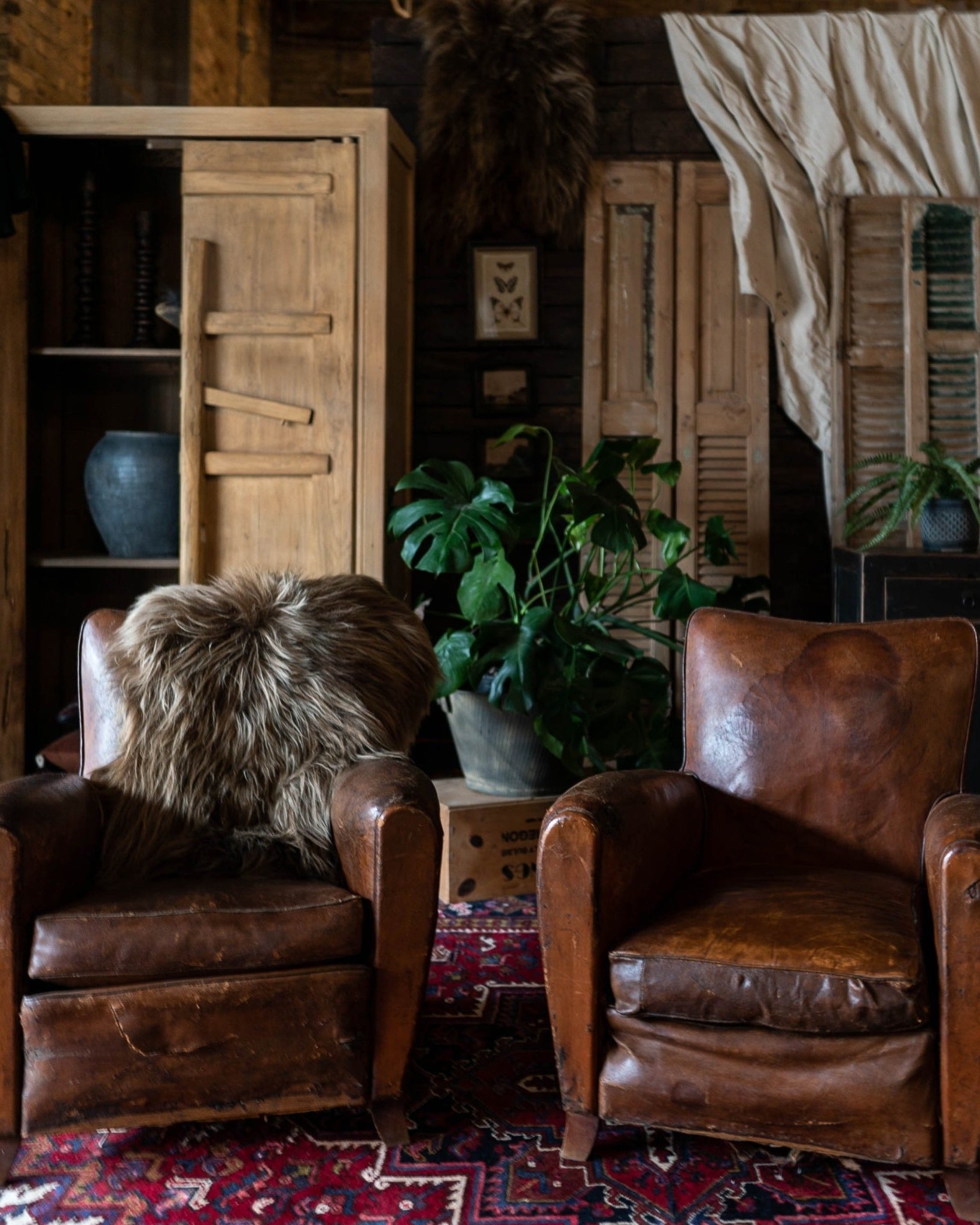
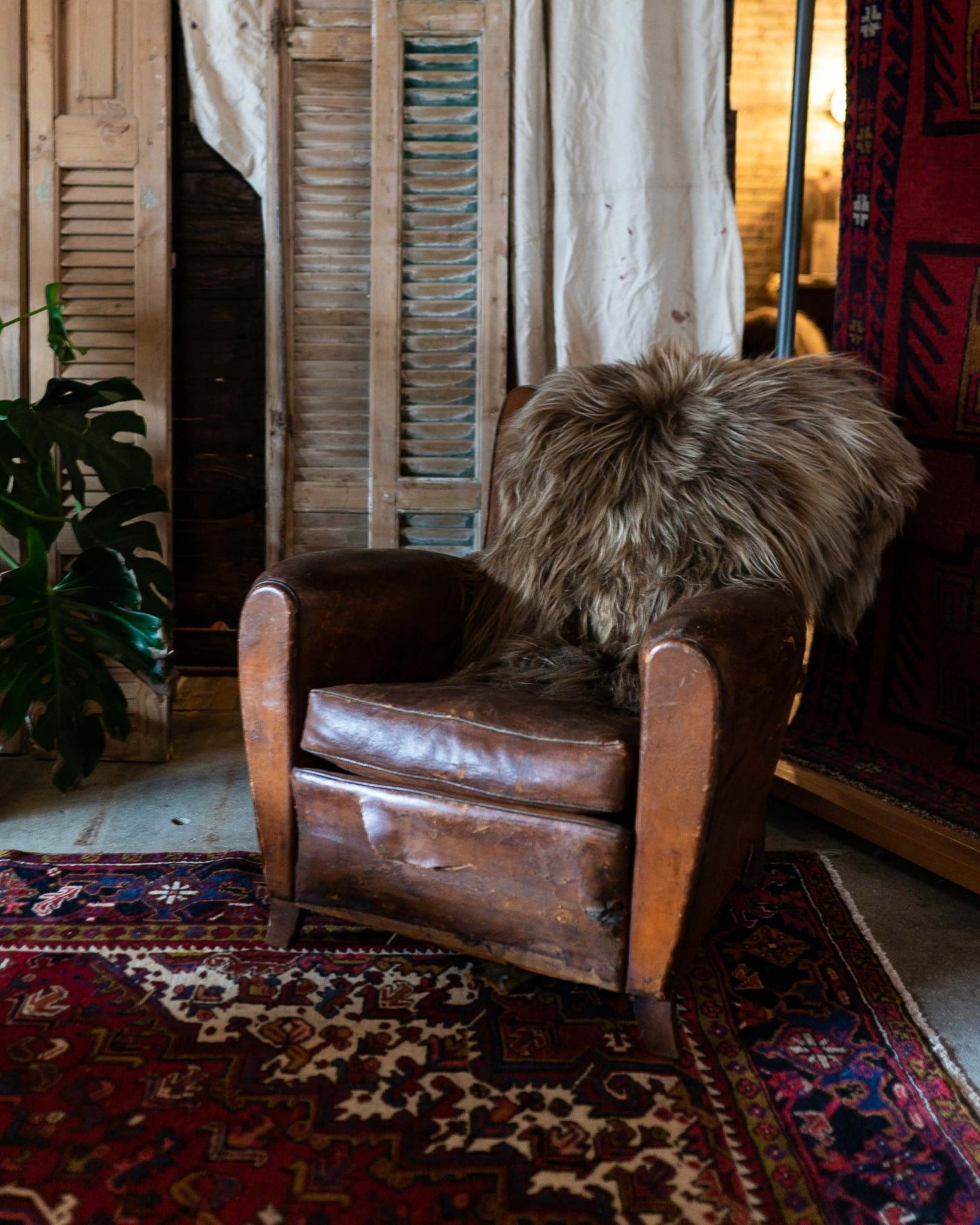
The Gustav black leather chair, for example, can give an open corner enough visual presence to register from across the room. The Laneetra lounge chair can serve a similar role where the layout needs a defined seating destination.
Your First Visual Stop Should Make Sense
The first thing you notice doesn't necessarily need to be the largest piece.
It should, however, help explain the room.
A dark chair beside a window can tell the eye, "There's a seating area here."
A black coffee table can immediately establish the center.
Random dark furniture pushed against an unrelated wall doesn't offer the same clarity.
Placement gives contrast to a job.
Put a Black Coffee Table Where the Center Feels Weak
Some living rooms have plenty of furniture but no obvious center.
A pale sofa sits on a pale rug.
Two chairs float nearby.
Everything technically surrounds the coffee table, yet the entire arrangement feels visually loose.
This is where a black coffee table can work particularly well.
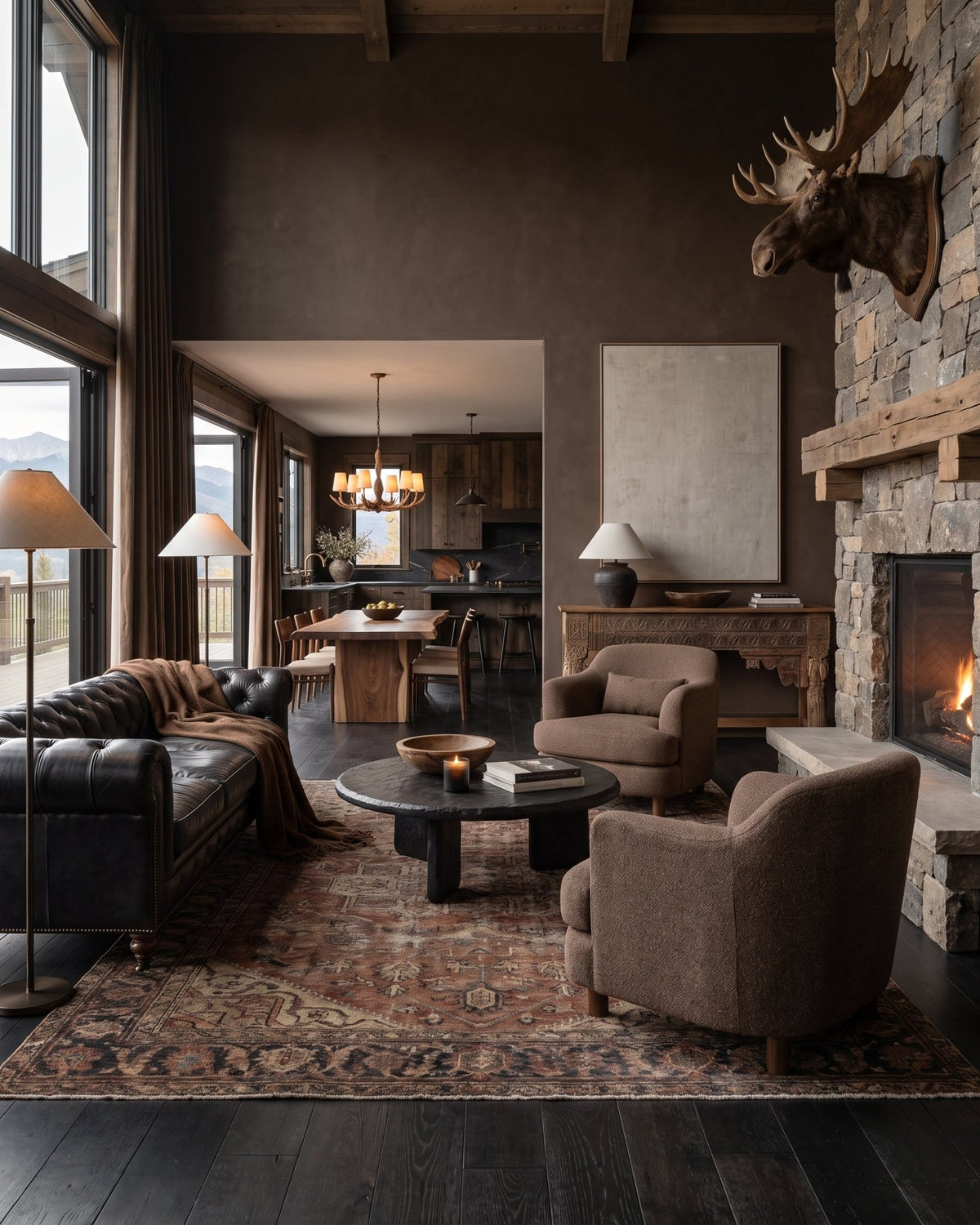
The Alvhild coffee table can create a strong low anchor within lighter surroundings, while the Hedvig wood coffee table introduces dark contrast with the added variation of visible wood texture.
Center the Seating Zone, Not Necessarily the Room
These aren't always the same thing.
In an open-plan home, the architectural center of the room may sit somewhere between the living and dining areas.
Your coffee table doesn't care.
Its job is to relate to the seating.
Position it according to the sofa and chairs rather than forcing it onto an imaginary centerline through the entire space.
Once the seating zone has a clear anchor, the room usually becomes easier to read.
Use a Black Lounge Chair Where Your Eye Slides Past
Every living room has areas that visually disappear.
Often it's a corner.
Sometimes it's the space beside a fireplace or a large window.
You look toward it, but there's nothing substantial enough to hold your attention.
A black lounge chair can change that because it combines dark contrast with vertical scale.
Unlike a coffee table, which anchors the lower visual field, a lounge chair occupies more of your natural sightline.
The Holmes wingback leather chair can give a taller area a stronger presence, while the Edgar swivel lounge chair adds functional flexibility when the chair needs to address more than one direction.
Give the Chair Something Worth Facing
Placement shouldn't only solve the view of the chair.
Think about the view from it.
Can the person sitting there join the conversation?
See outside?
Turn toward a fireplace?
Read comfortably?
A black chair placed purely to fill a visual hole isn't doing enough.
The best position solves both the room and the person using it.
Put Dark Furniture Opposite Visual Competition
Sometimes the problem isn't an empty area.
It's an overloaded one.
Imagine one side of the living room contains a dark fireplace, built-in cabinetry, television, and shelving. The opposite side has pale upholstery against a light wall.
Your attention keeps getting dragged toward the architecture because nothing elsewhere has comparable visual weight.
A black furniture piece can create a counterpoint.
Not a mirror image.
Not forced symmetry.
Just enough presence to keep one side from controlling the entire room.
Balance Is About Perceived Weight
A small dark object can sometimes balance a much larger pale object because contrast gives it additional visual presence.
That's why balancing a room by measurements alone doesn't always work.
You have to look at color, material, texture, height, and surrounding negative space together.
The eye reads the whole package.
RUTED Tip: Stand in three places: the doorway, the sofa, and the farthest corner.
Notice where your eye stops from each position.
If all three views lead directly to the television, congratulations: your TV has successfully become CEO of the living room.
Give it some competition.
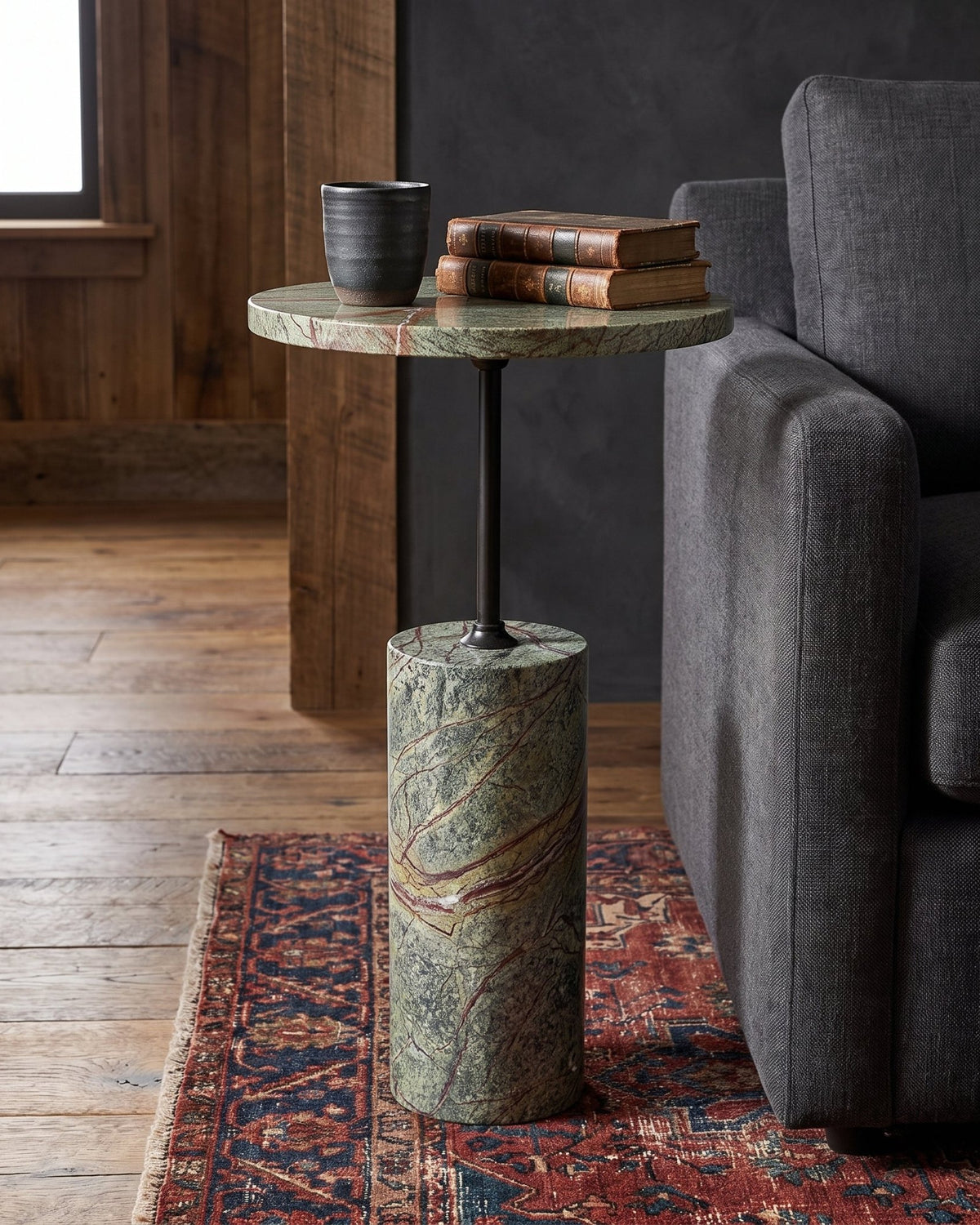
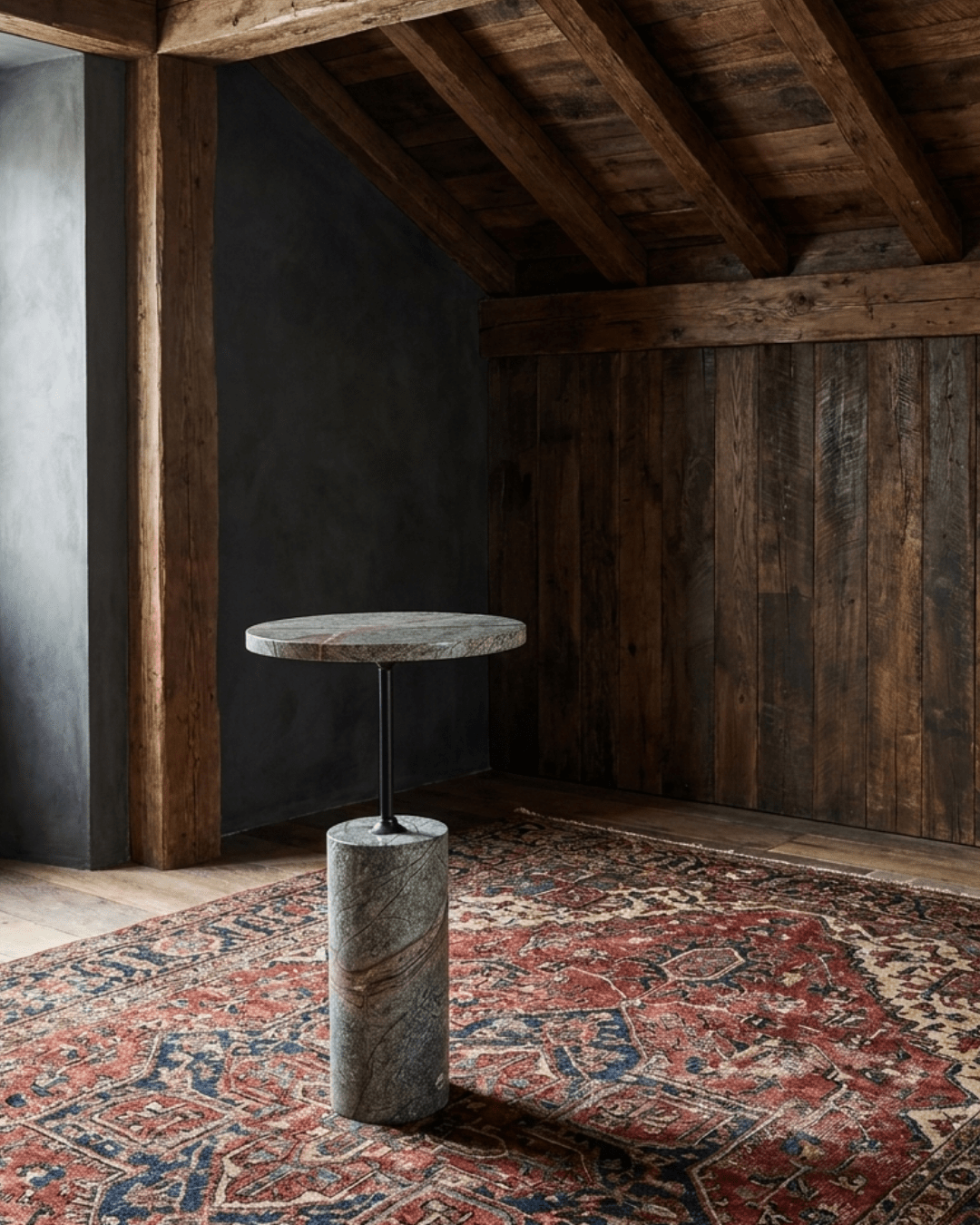
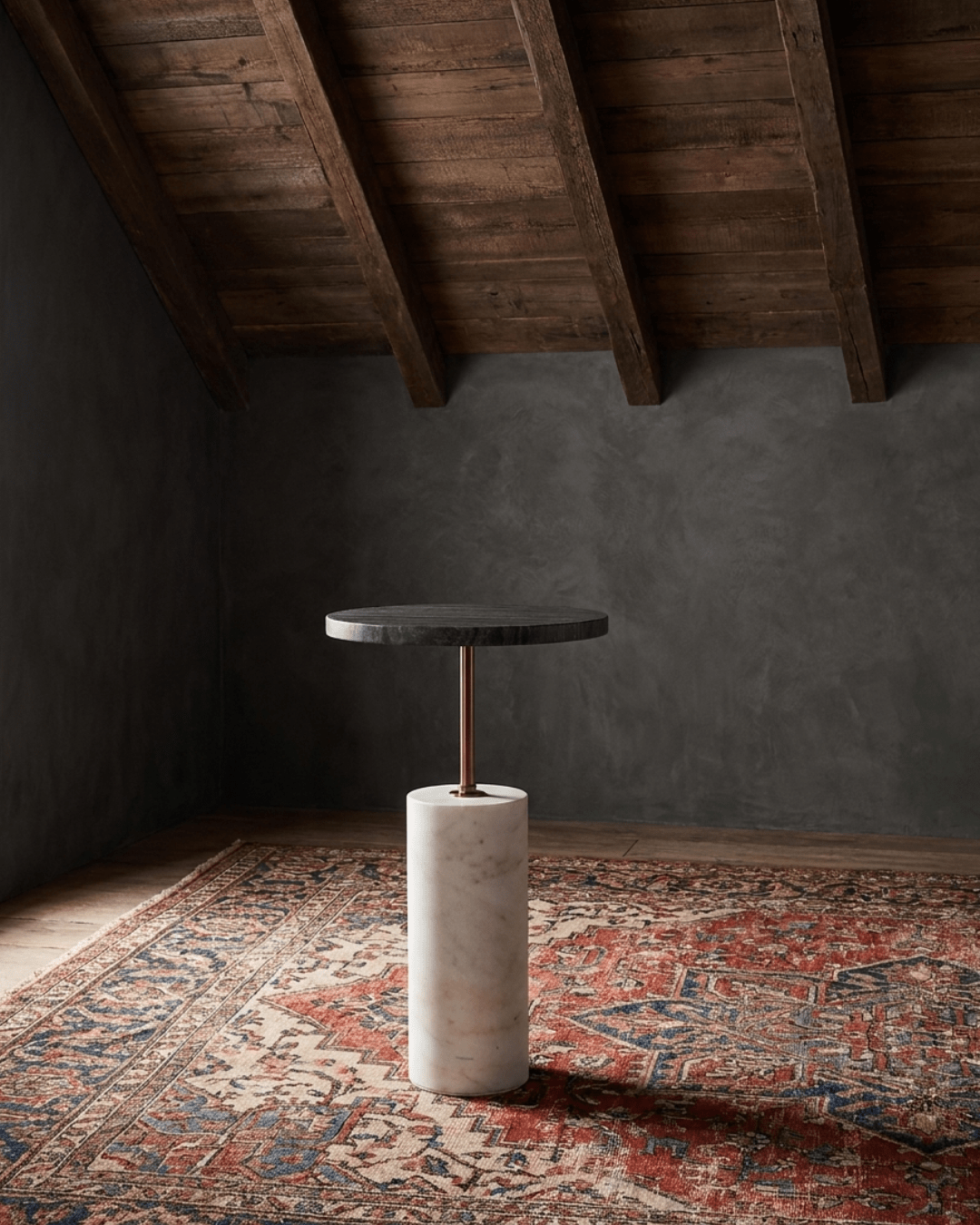
Use a Black Side Table to Bridge a Visual Gap
Not every problem requires another large piece of furniture.
Sometimes the room has two strong anchors with nothing connecting them.
Perhaps there's a black coffee table in the center and a dark lounge chair across the room. Both work individually, but the distance between them makes the contrast feel disconnected.
A smaller dark object can create a visual stepping stone.
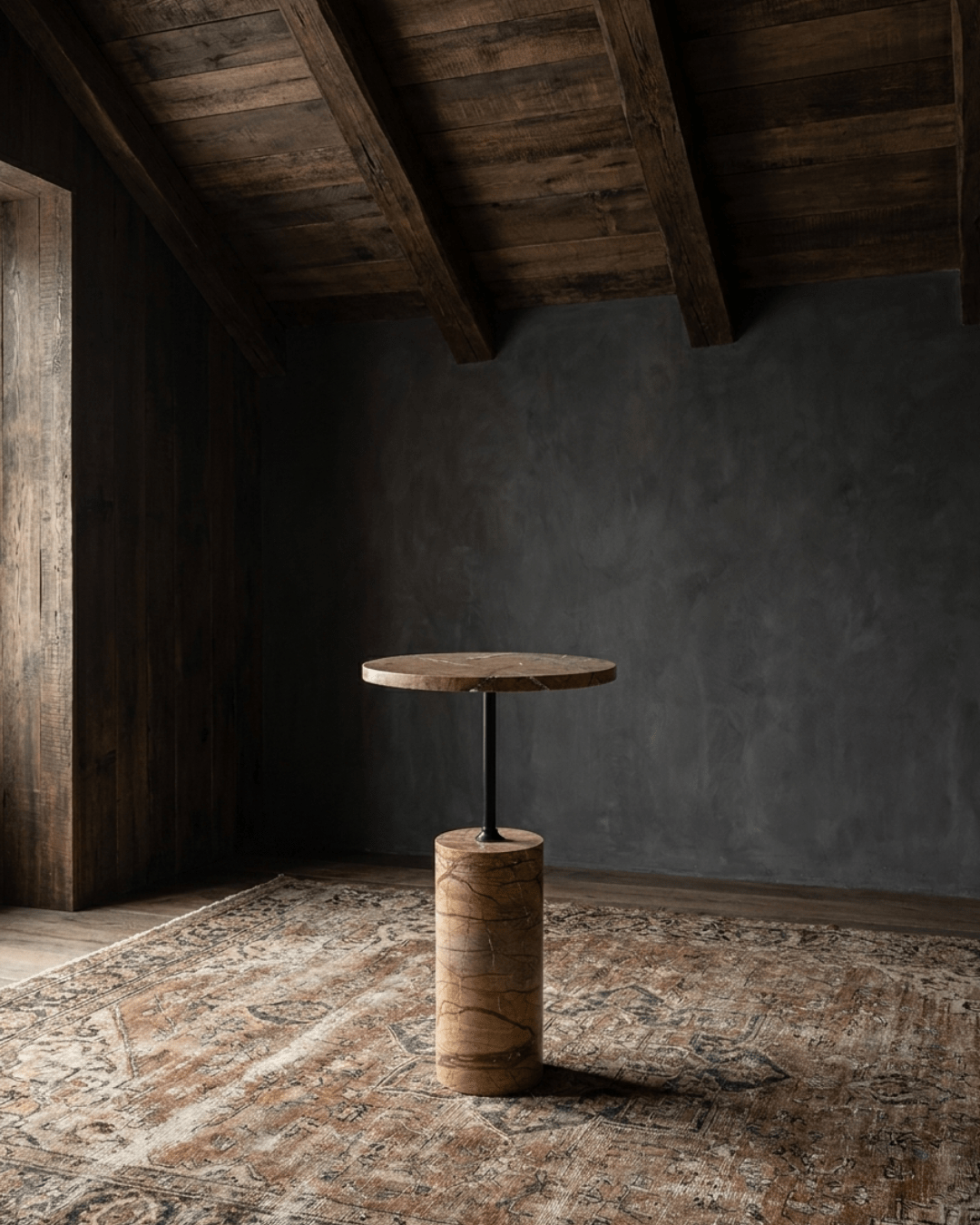
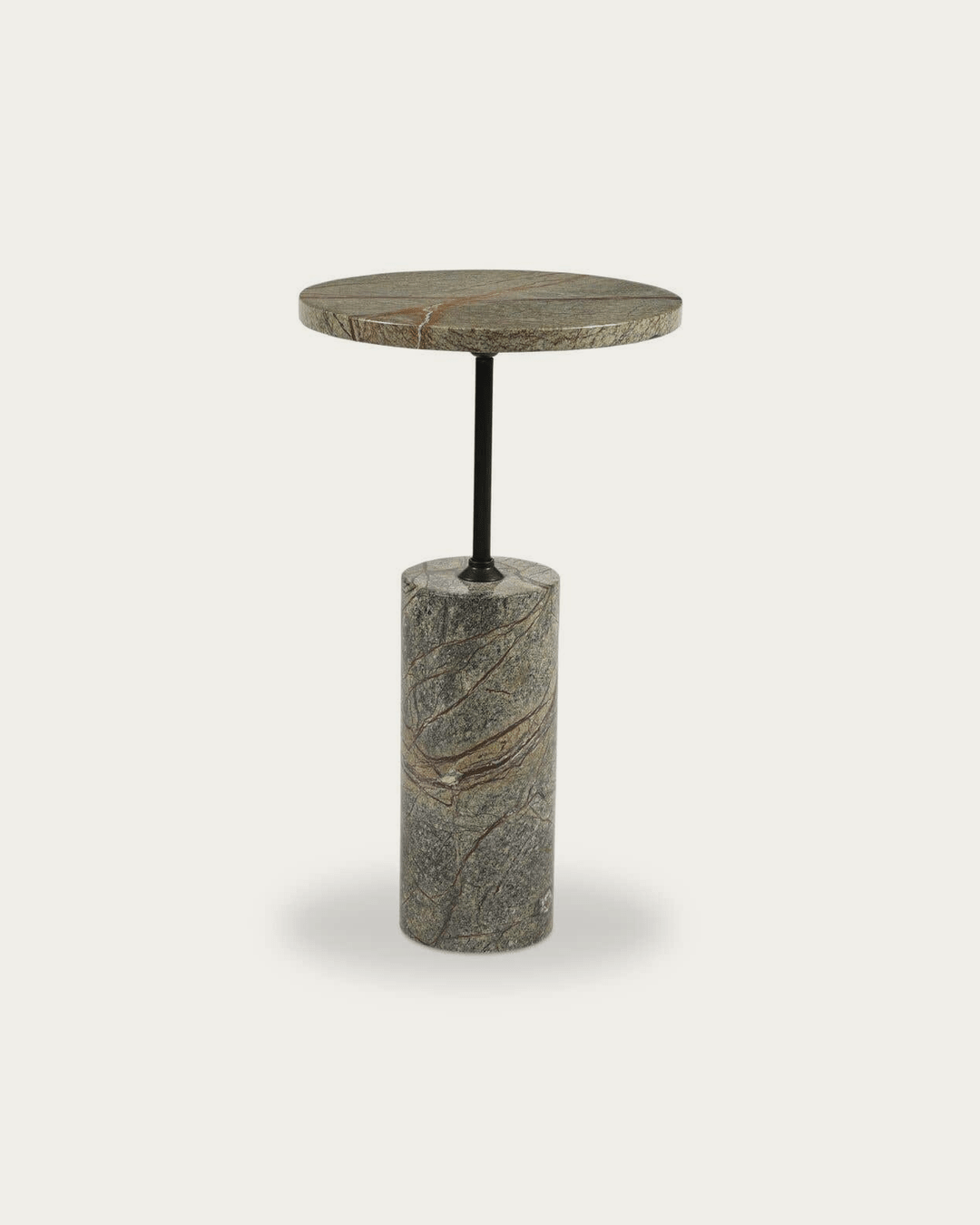
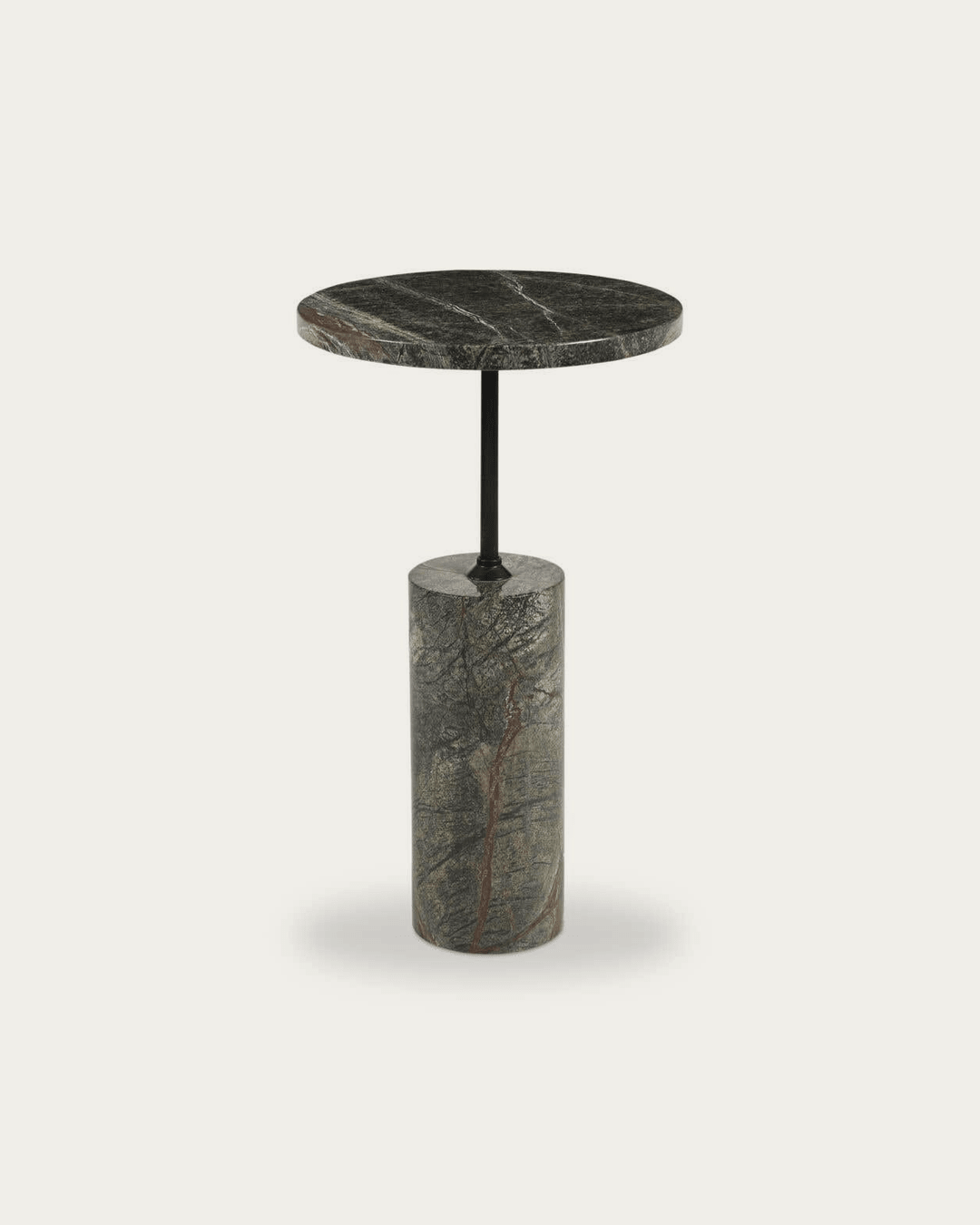
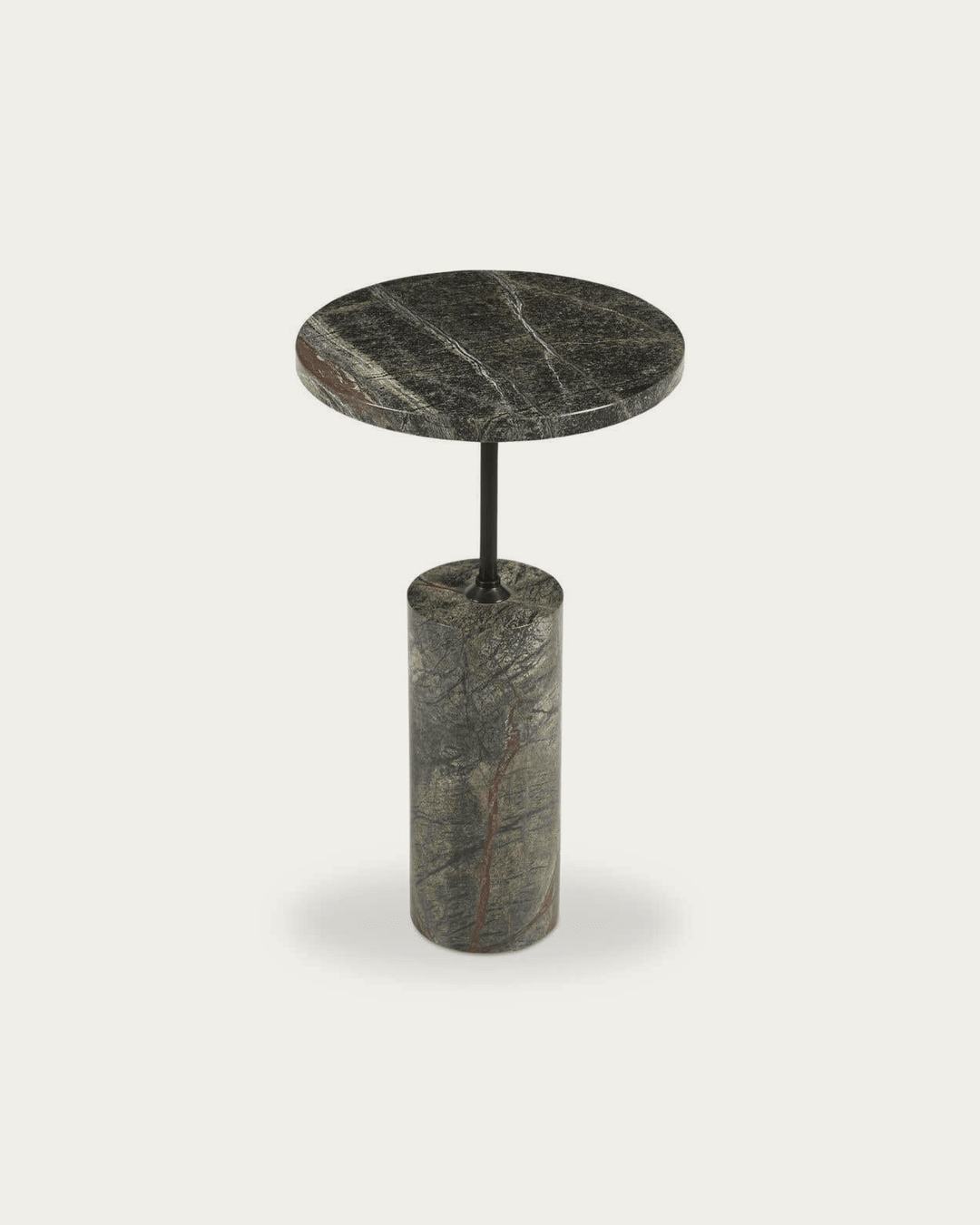
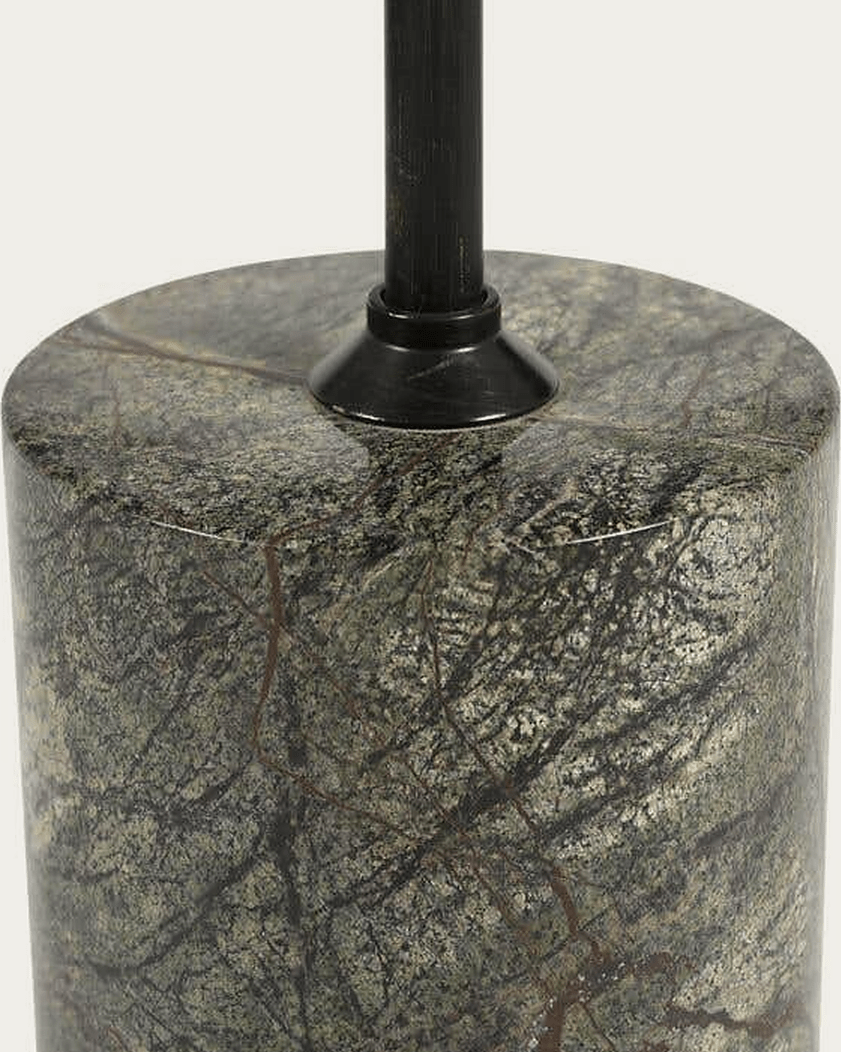
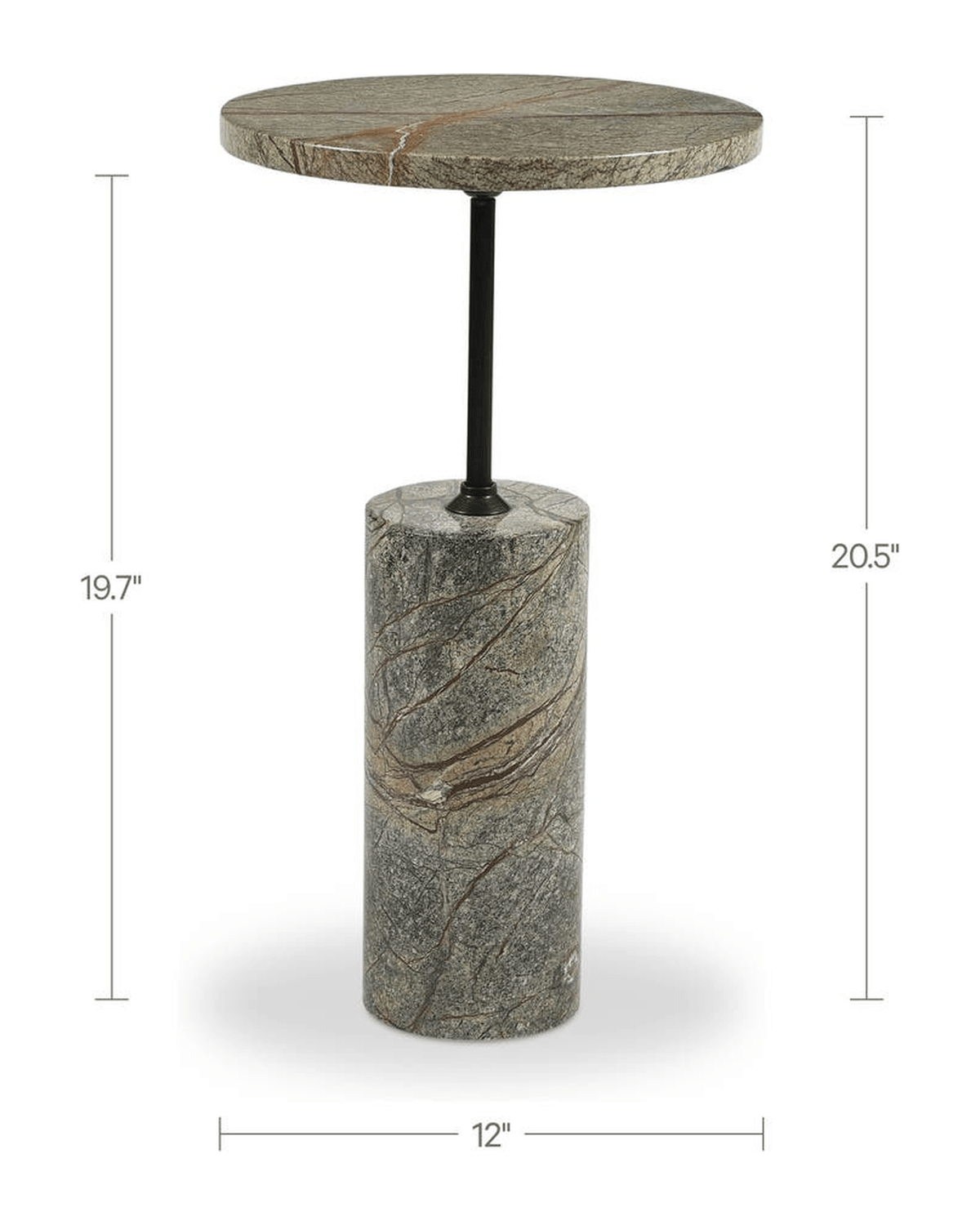
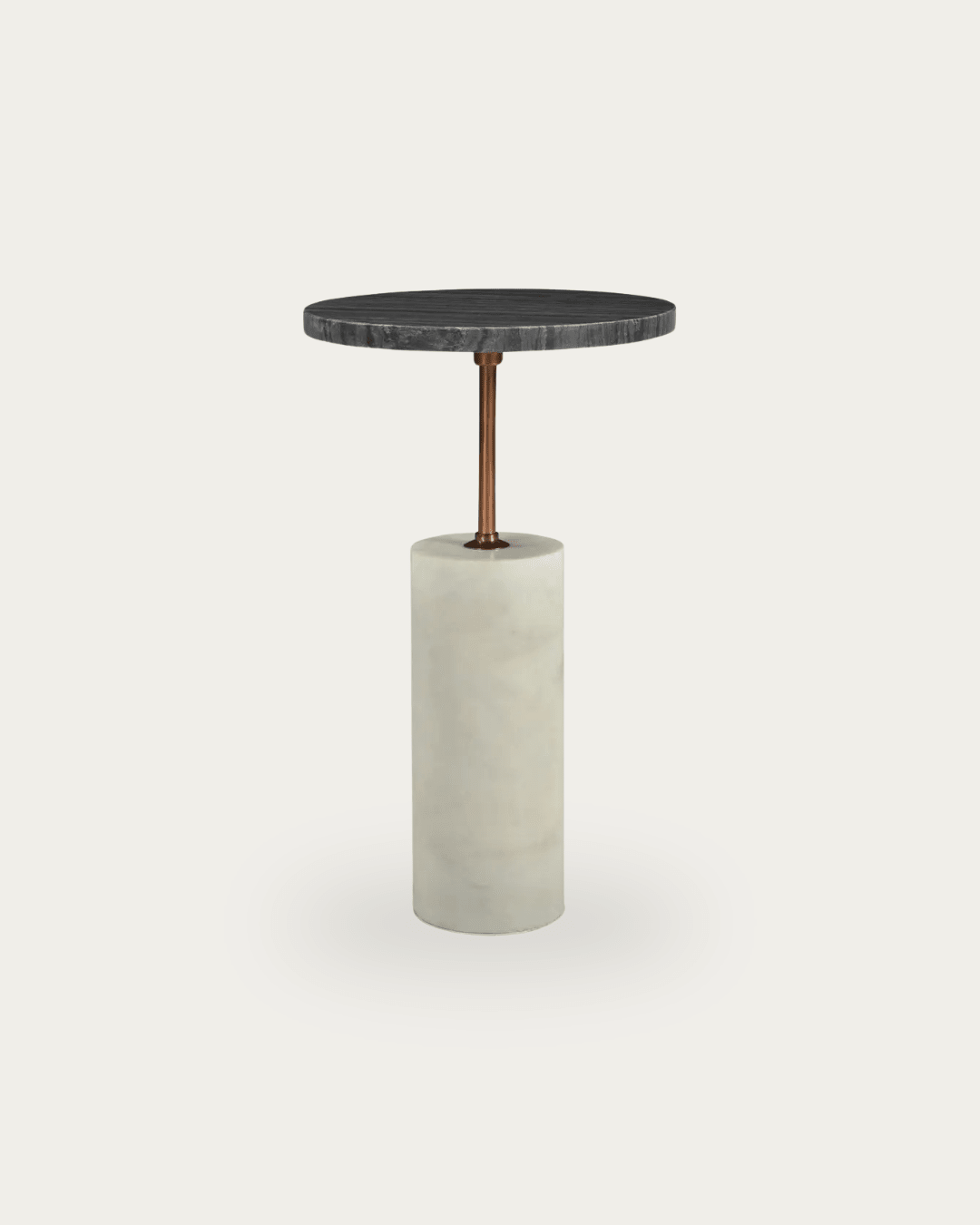
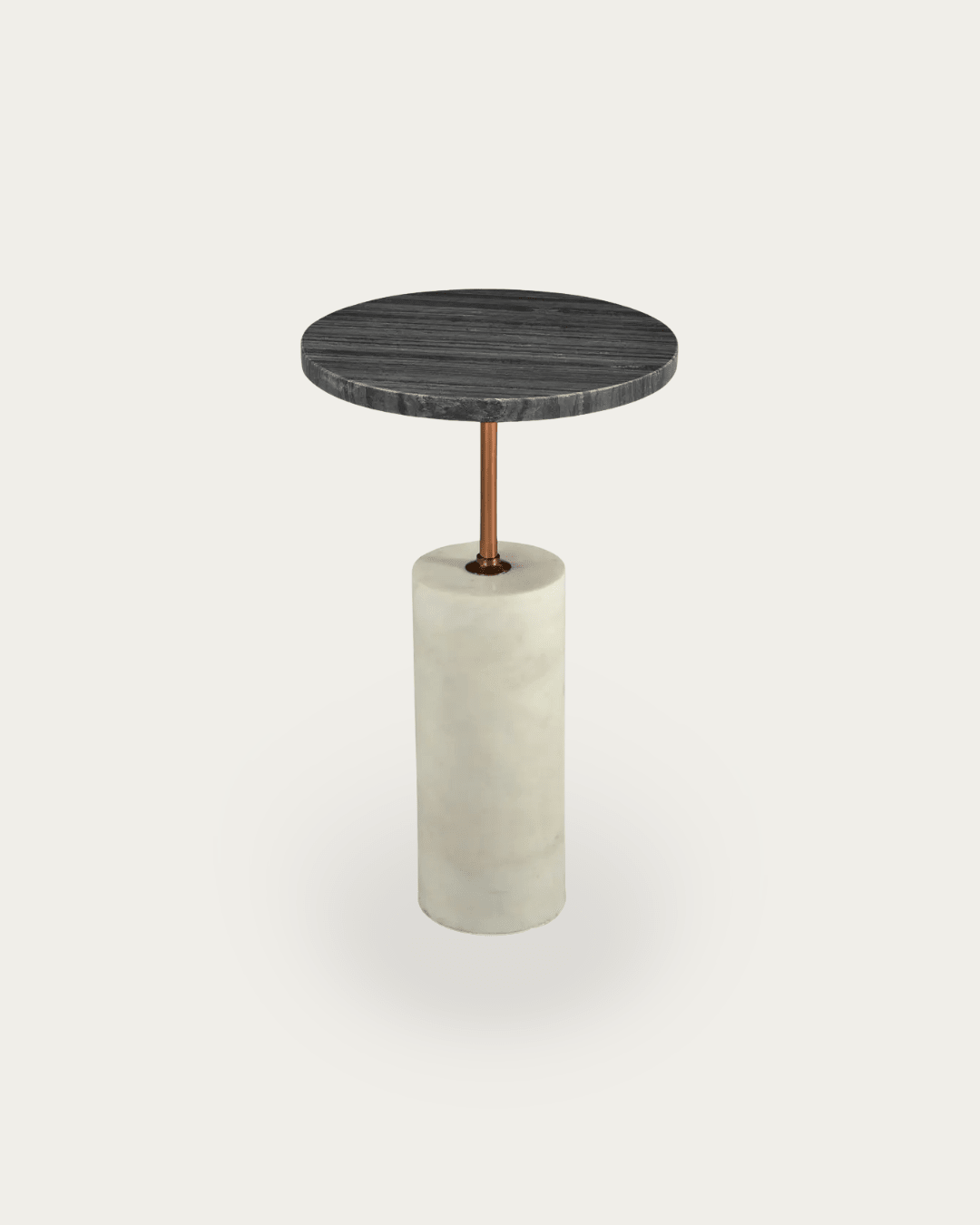
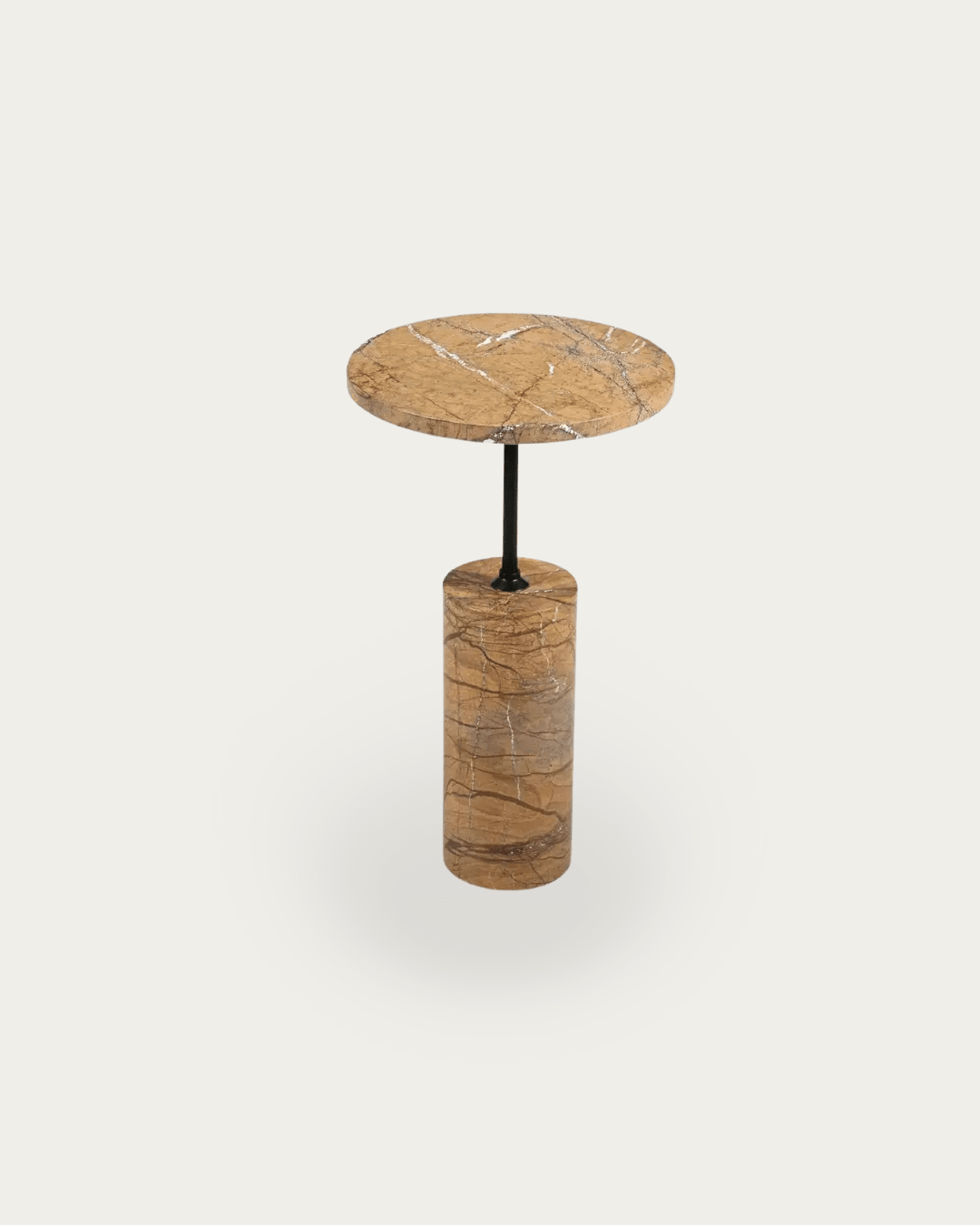
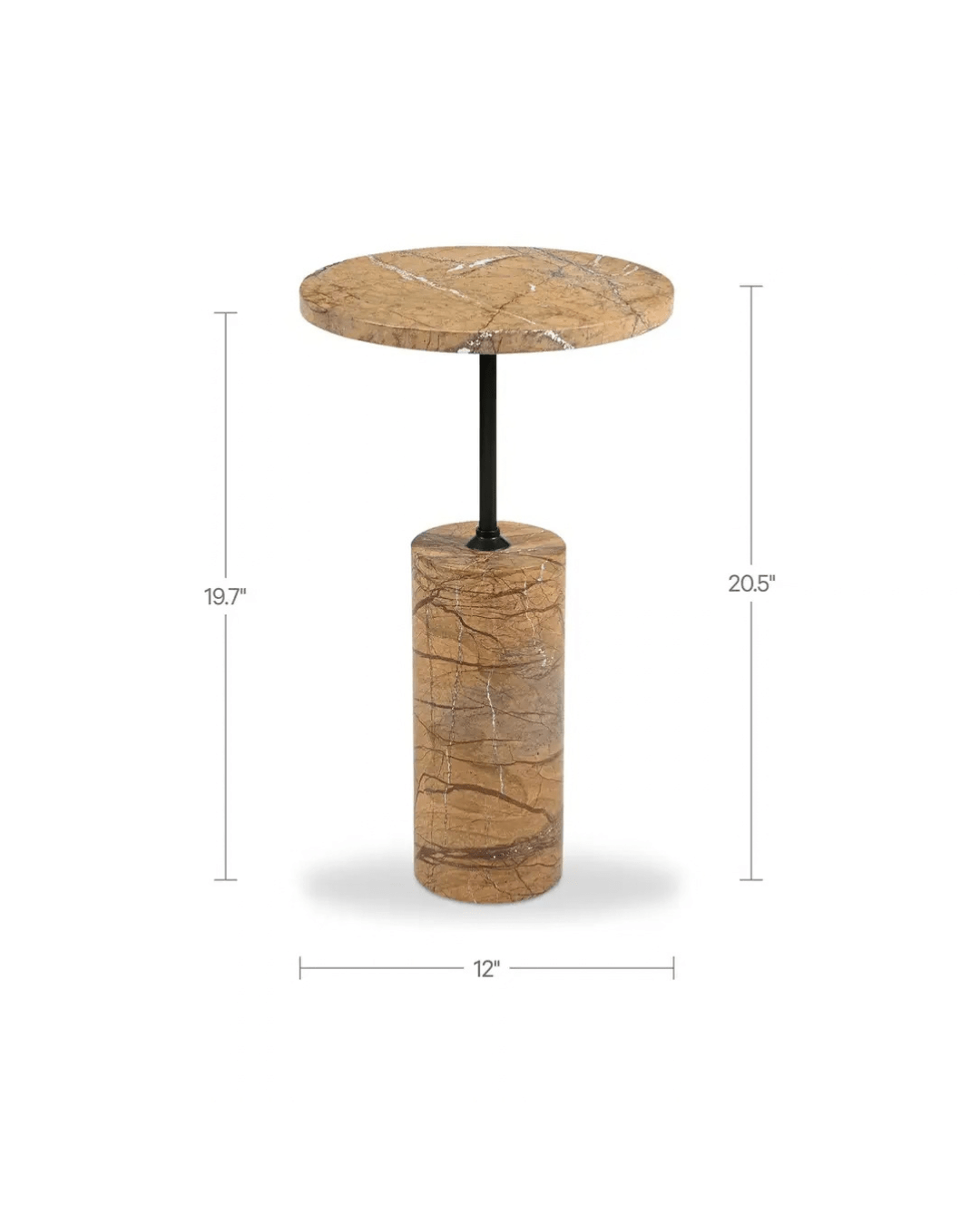
The Yrla side table can repeat the tone beside lighter upholstery without introducing another dominant mass.
Think of It as Visual Punctuation
Large black furniture creates the major stops.
Smaller pieces create commas.
They give the eye somewhere to pause before moving toward the next larger anchor.
This is why you don't necessarily need matching furniture.
The repeated dark tone is often enough to create the relationship.
Don't Put Black Furniture Where the Room Is Already Heavy
Dark furniture is useful precisely because it carries visual weight.
So don't automatically add it to the area that already has plenty.
If one corner contains a dark fireplace, black shelving, a large plant, and heavy window treatments, another black chair may only make that side denser.
Look across the room instead.
Where is the visual counterweight?
Could a dark coffee table bring some attention toward the center?
Would a black side table give a pale sofa more definition?
Could a lounge chair make an unused corner participate in the room?
Good placement isn't about filling gaps indiscriminately.
It's about distributing attention.
Leave Enough Space Around Strong Contrast
Black furniture becomes easier to read when its silhouette is clear.
That requires negative space.
A dark chair pushed tightly between a sofa and wall can merge visually with everything around it. Pull it slightly forward and suddenly you can read its entire shape.
The same applies to coffee tables.
A black table surrounded by enough visible rug feels defined. An oversized one squeezed tightly into the seating arrangement can turn the entire center into one dense block.
Empty Space Isn't Wasted Space
This can be difficult when you're trying to make a room feel finished.
Empty areas can seem like problems waiting for furniture.
They aren't.
Negative space separates shapes, clarifies circulation, and gives visually substantial pieces room to do their job.
Sometimes the best placement adjustment is moving something six inches away from everything else.
Let Material Decide How Strong the Stop Should Be
Black isn't one visual experience.
Black wood, stone, metal, and leather all behave differently.
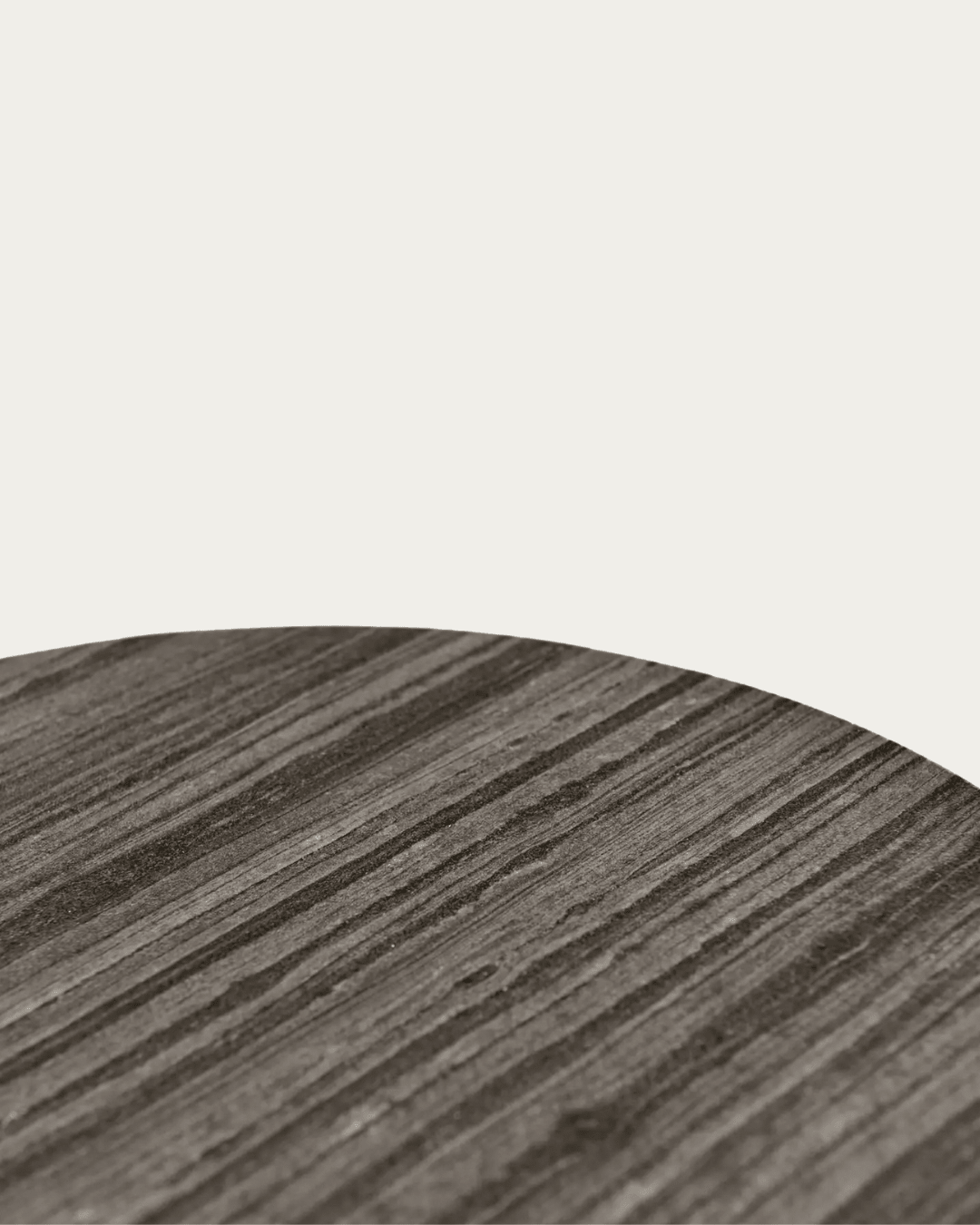
Wood grain creates subtle lines and tonal changes.
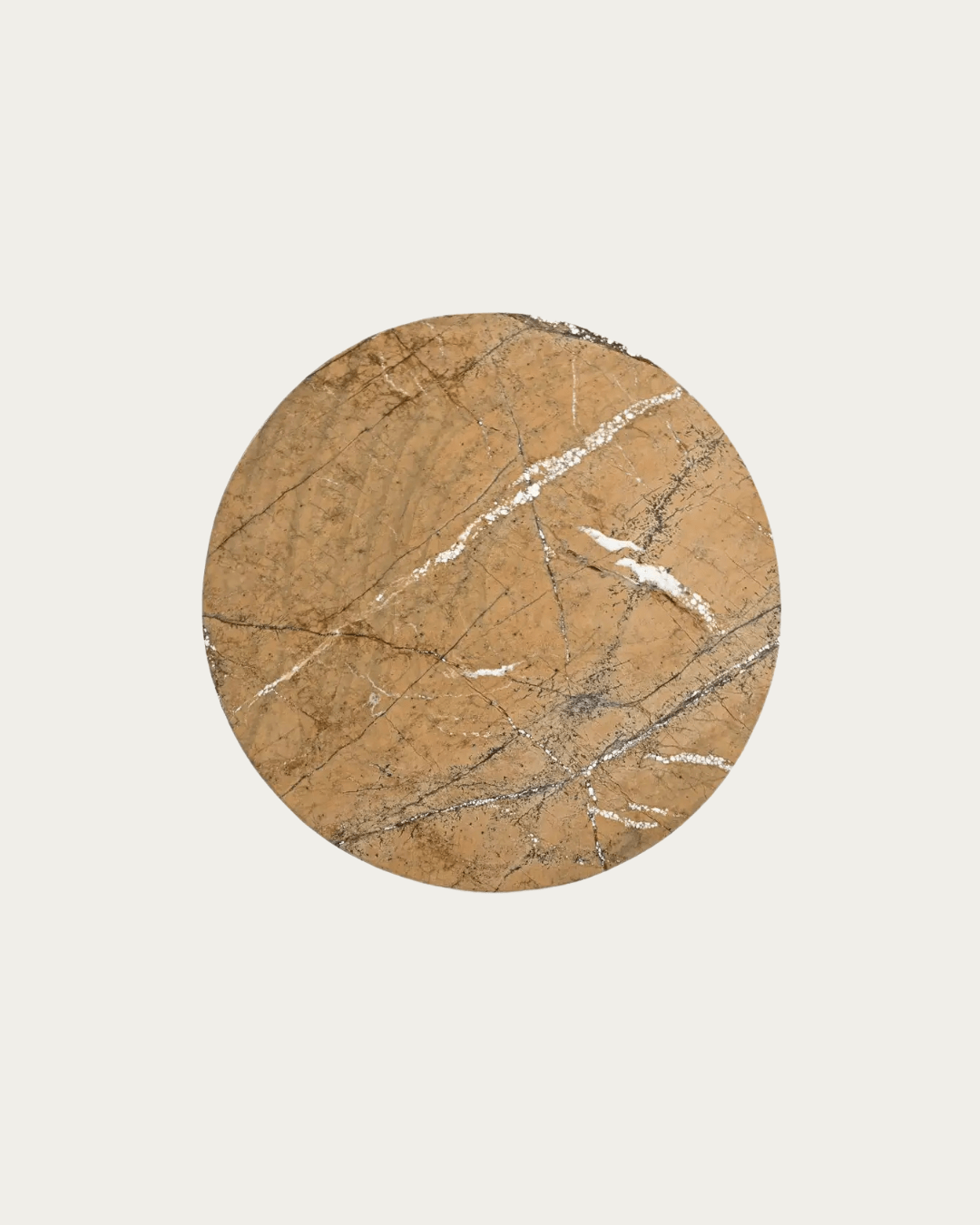
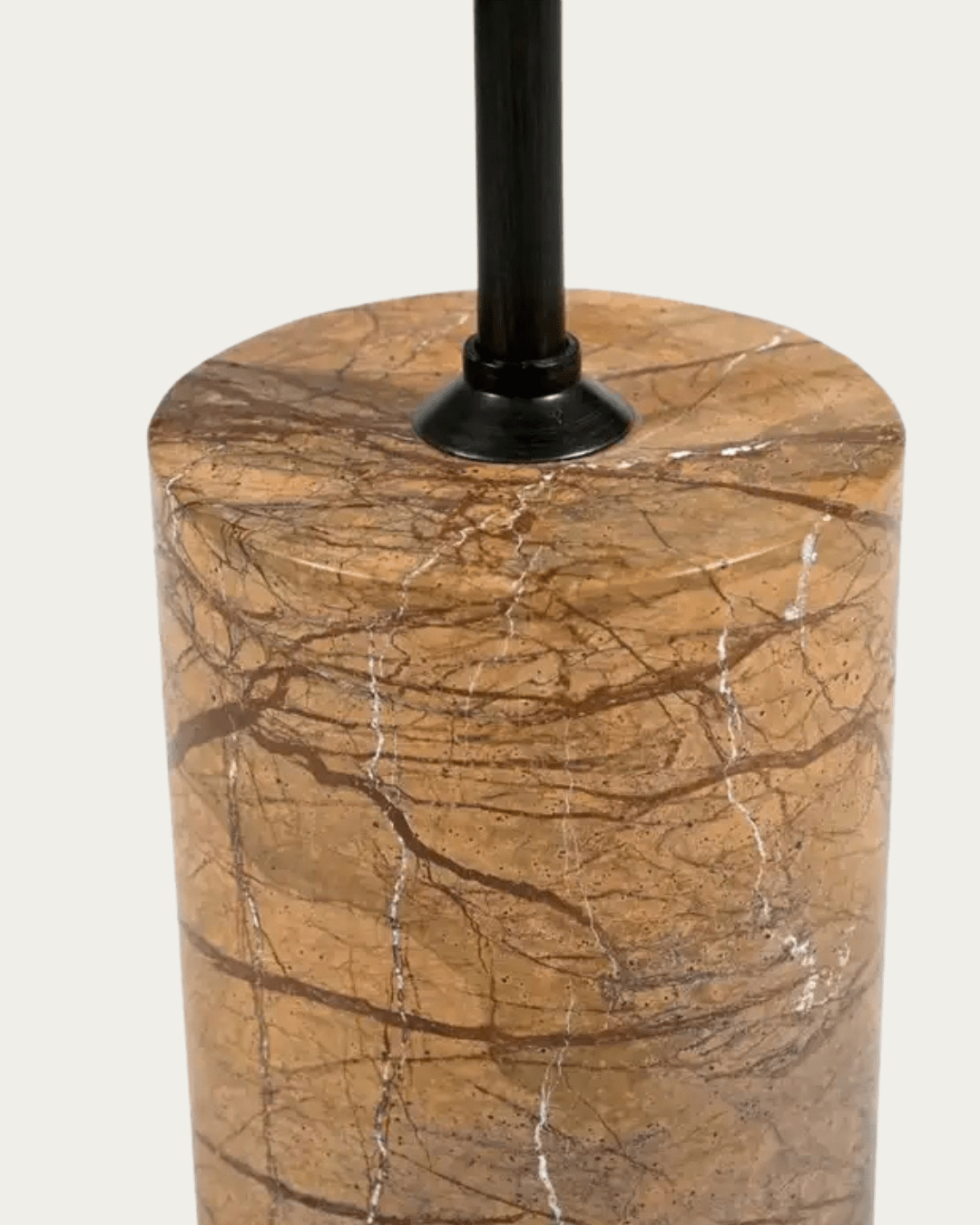
Stone introduces natural patterns.
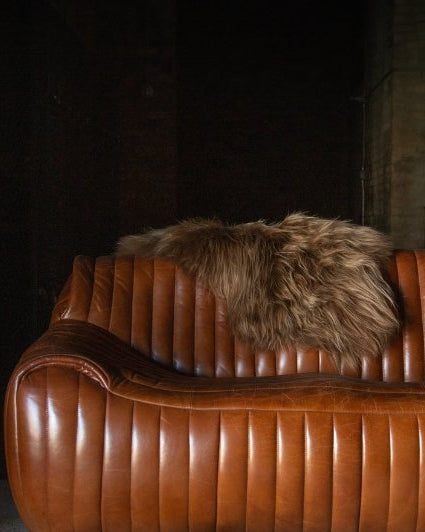
Leather reflects light differently across smooth areas, folds, and edges.
A very flat matte-black surface may read as a stronger, uninterrupted shape than a black material with visible variation.
The Signe stone and wood coffee table demonstrates how multiple materials can break up a darker form, while the Falk coffee table offers another way to introduce a defined central anchor.
The stronger the contrast, the more carefully you should consider where that piece sits.
If the Perfect Spot Needs the Wrong Size, Fix the Proportion
Sometimes you know exactly where the room needs an anchor, but standard furniture dimensions create another problem.
The chair is too small for the corner.
The piece you want overwhelms the available wall.
The proportions work in theory but not in the actual architecture.
That's where customization becomes useful. Hello Norden's Made to Order line allows scale, material, and finish to become part of the placement conversation rather than something you have to work around afterward.
Hello Norden Take: Don't choose the furniture first and spend six months trying to convince the room it belongs there. Start with the space, then solve for the piece.
Use Sightlines Instead of Symmetry
Symmetry can be useful.
It can also become a shortcut.
Two matching chairs opposite the sofa.
Two identical tables on either side.
Everything centered.
Done.
But real rooms often have asymmetrical architecture: windows on one wall, a fireplace off-center, an open doorway, a staircase, or furniture serving multiple functions.
Following sightlines allows the furniture to respond to those conditions.
A black chair may belong slightly off-center because that's where the eye needs to stop.
A coffee table may align more closely with the sofa than the room itself.
A side table may work on only one end because that's where it's actually useful.
Balance doesn't require mirroring.
It requires relationships that make visual sense.
Your Eye Should Move, Not Get Trapped
There's one final test.
Walk into the room and notice what happens.
Your eye should find an anchor, move toward another element, notice texture or architecture, and continue around the space.
If it immediately hits one black object and stays there, that piece may be carrying too much visual responsibility.
If your eye slides through the entire room without stopping anywhere, you probably need stronger definition.
Good black furniture placement sits between those extremes.
It gives attention direction without demanding all of it.
Put Black Where the Room Needs a Full Stop
There isn't one correct wall, corner, or furniture layout for black.
That's precisely the point.
Instead of following a placement formula, look at what your room is already doing.
Find the weak center.
The overlooked corner.
The visually overloaded wall.
The pale area with no definition.
The disconnected pieces that need a bridge.
Then decide whether a black coffee table, side table, or lounge chair can solve the problem.
Dark furniture works best when it has a reason to be where it is. It can define a seating area, counterbalance architecture, connect distant elements, or simply give your eye somewhere useful to stop.
You aren't decorating with black.
You're directing attention.
Explore Hello Norden's black furniture collection and start with the part of your room your eye keeps skipping.