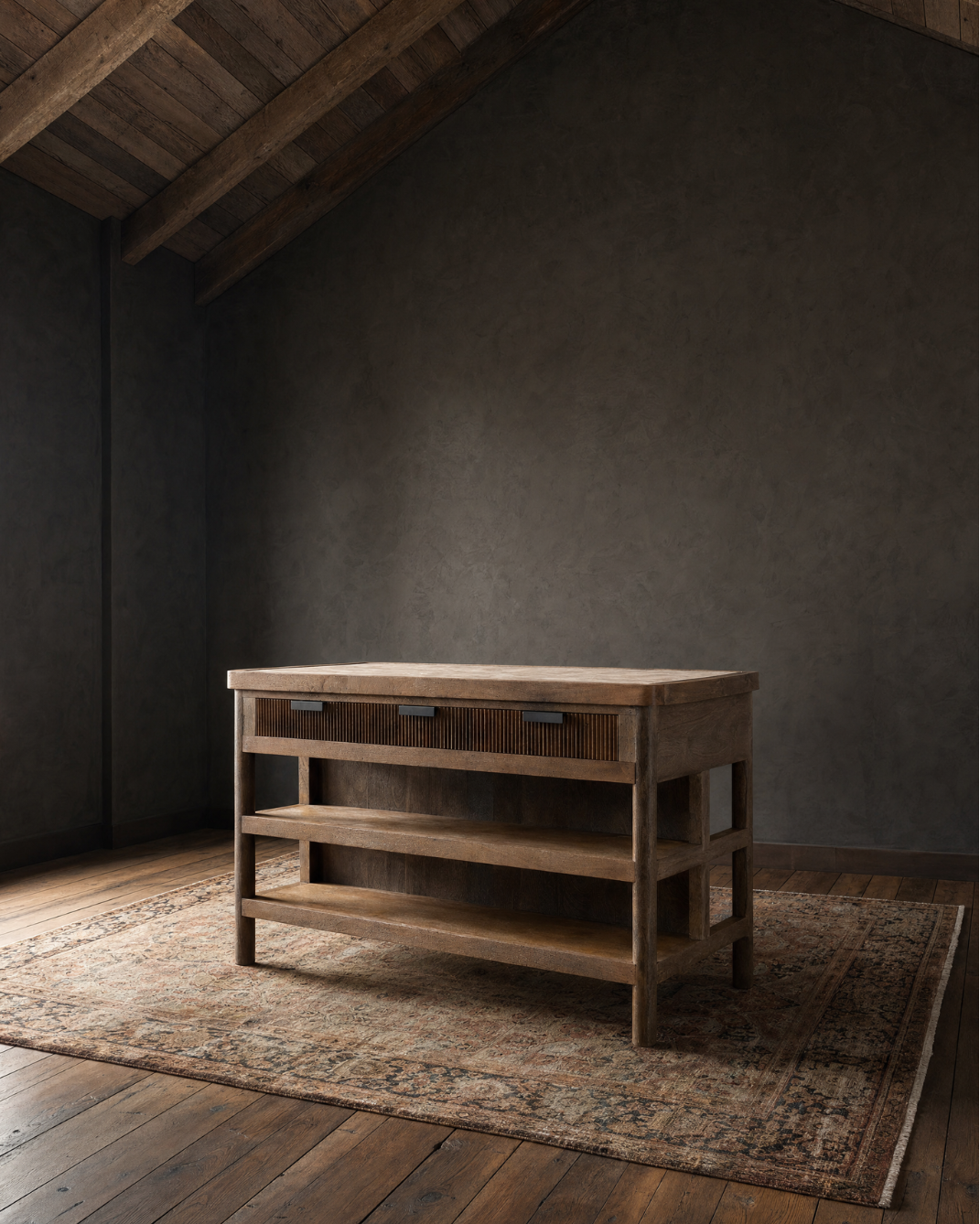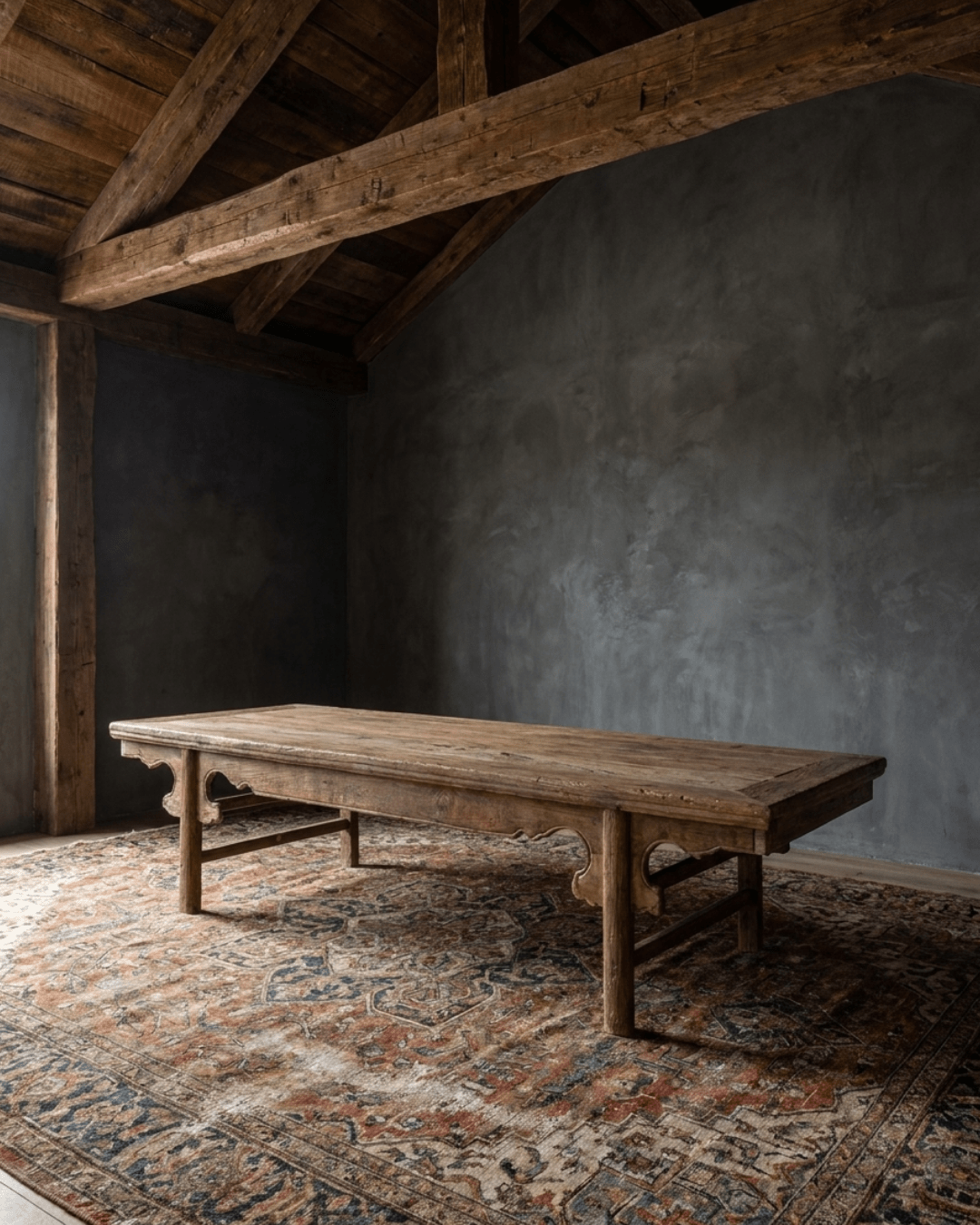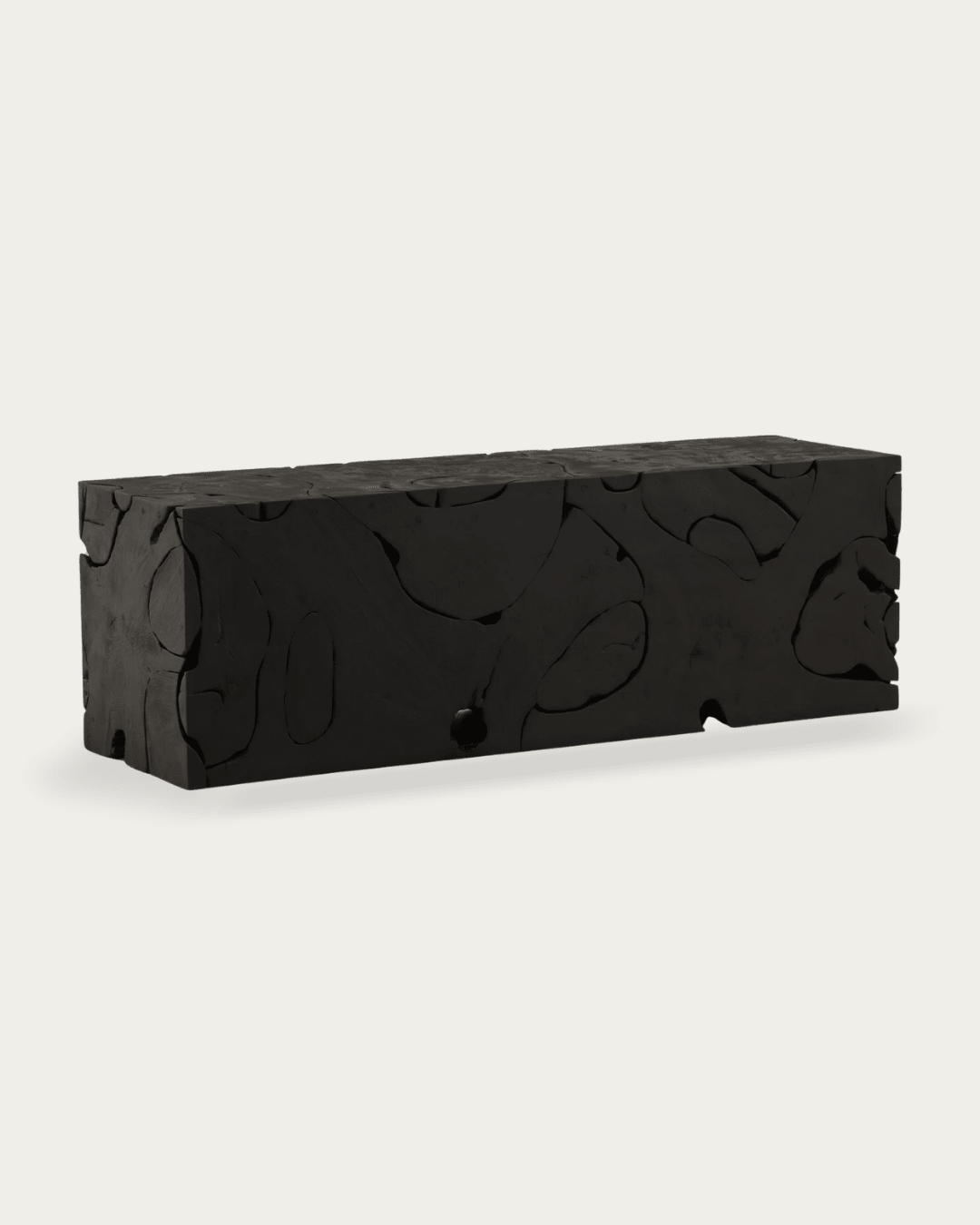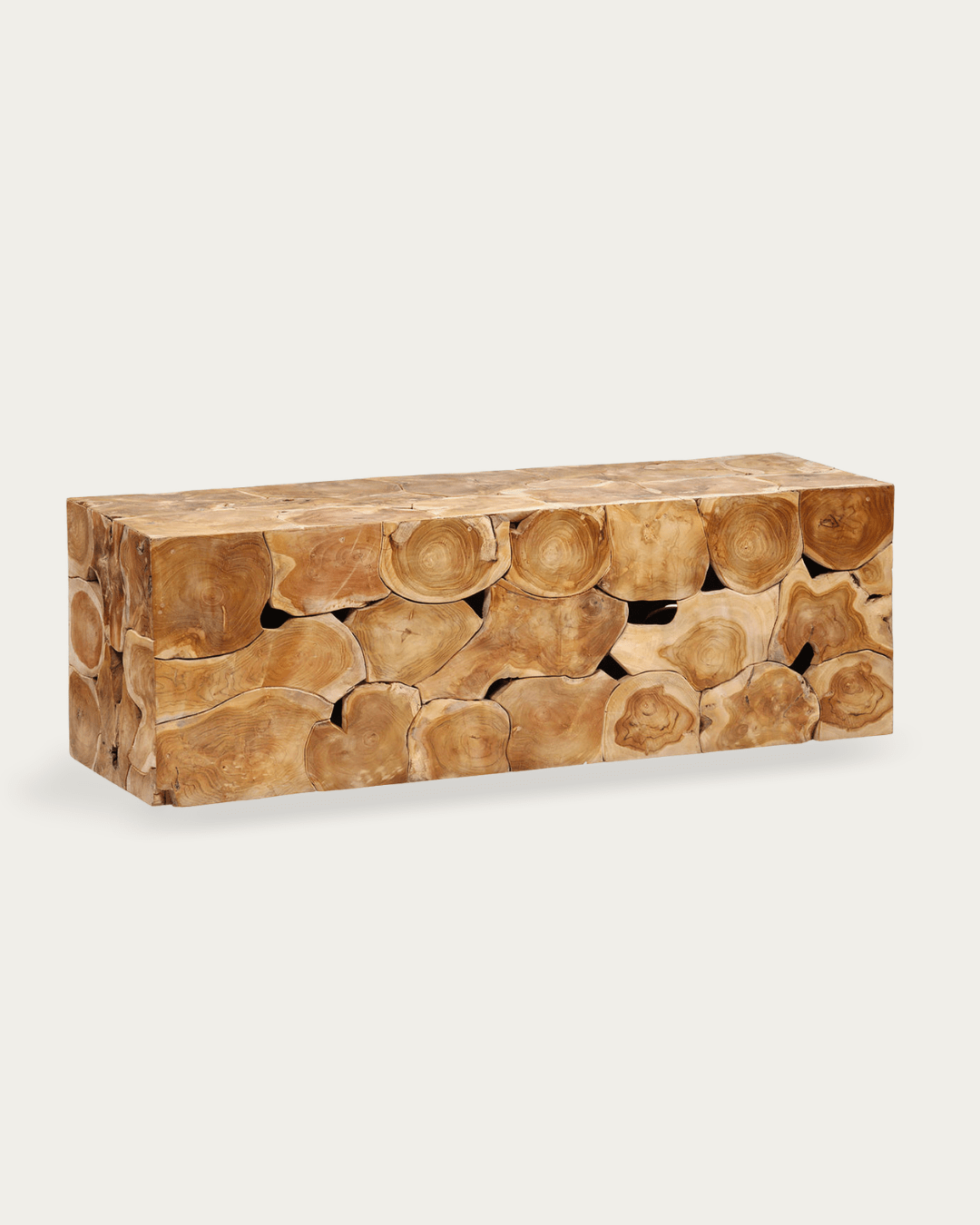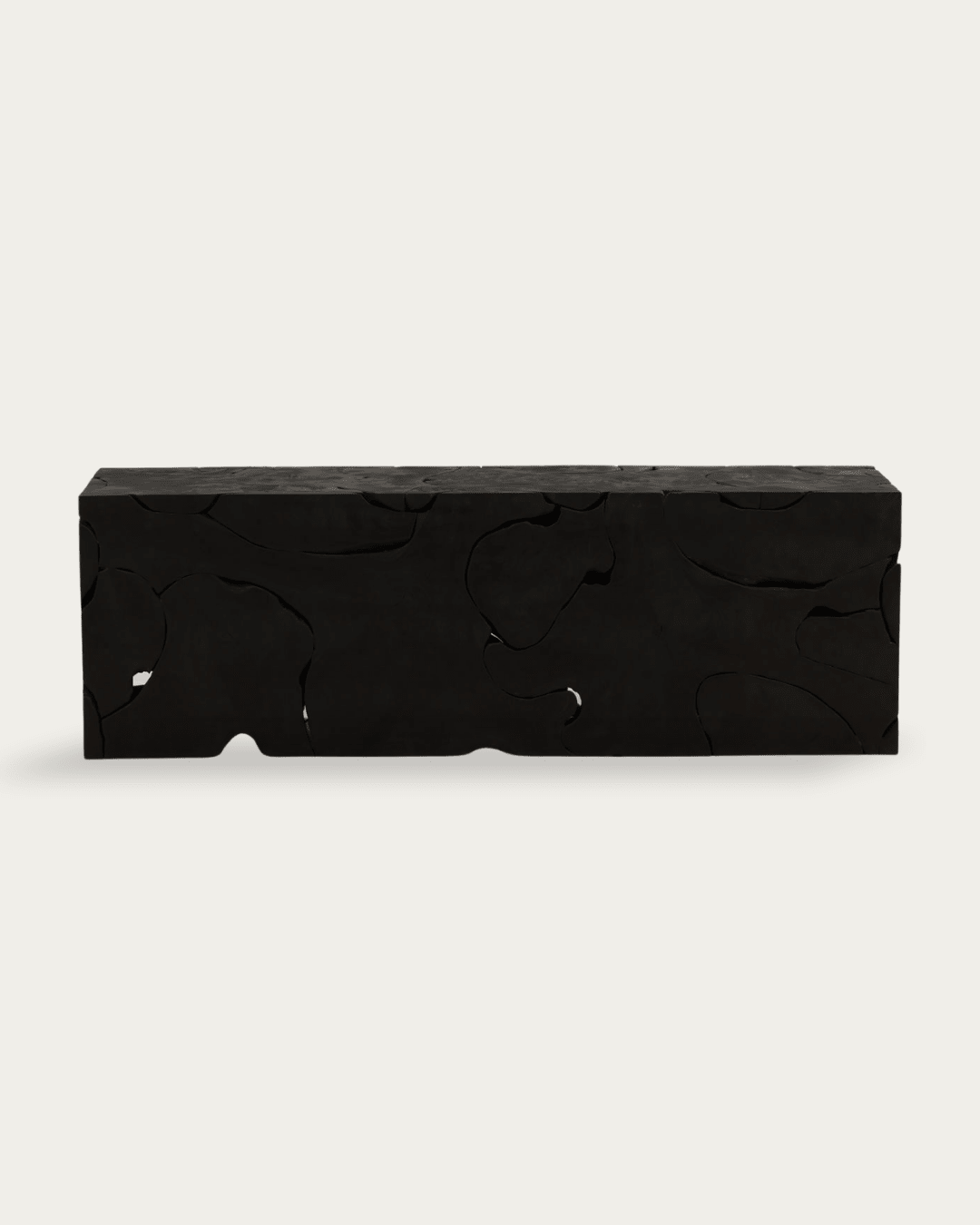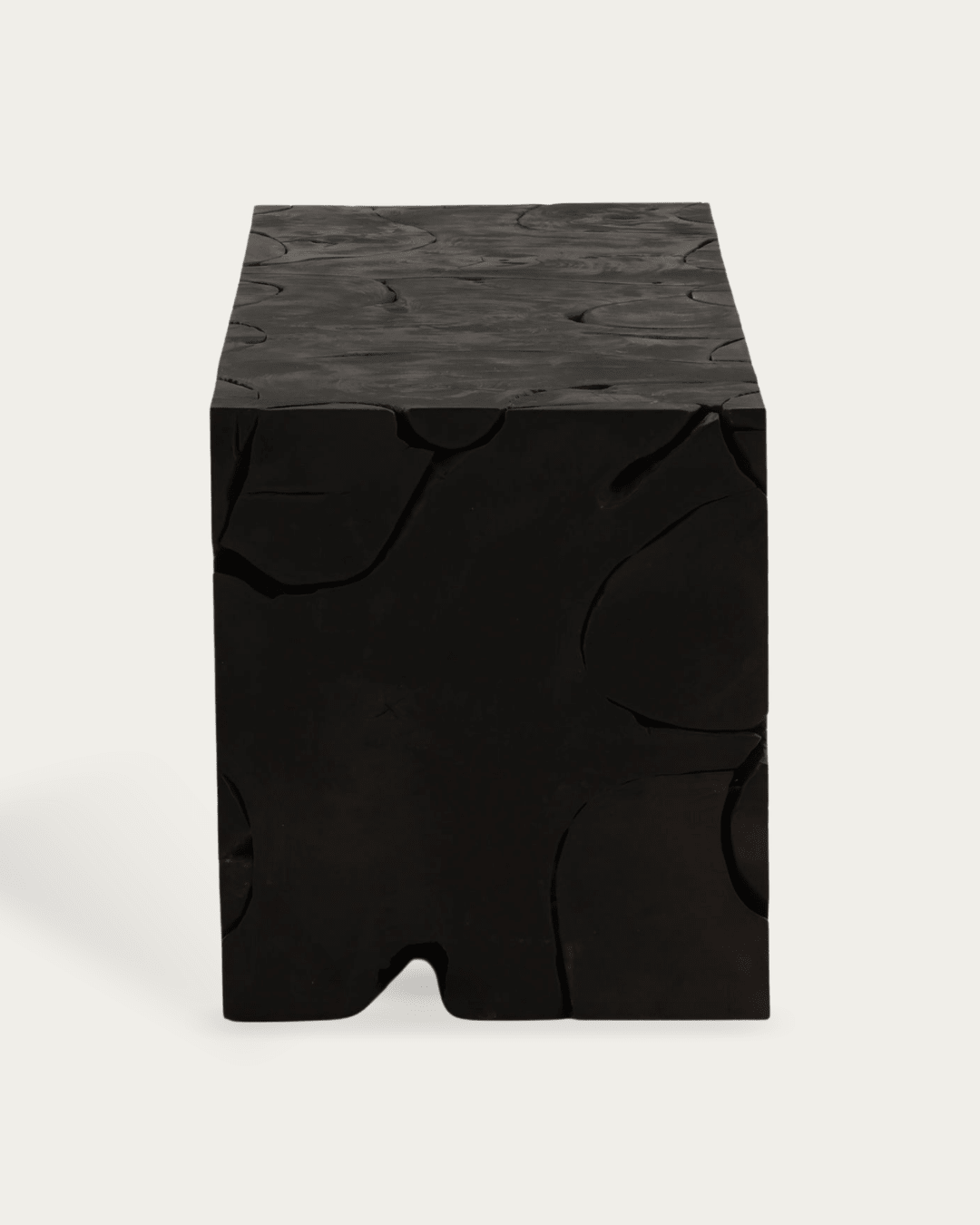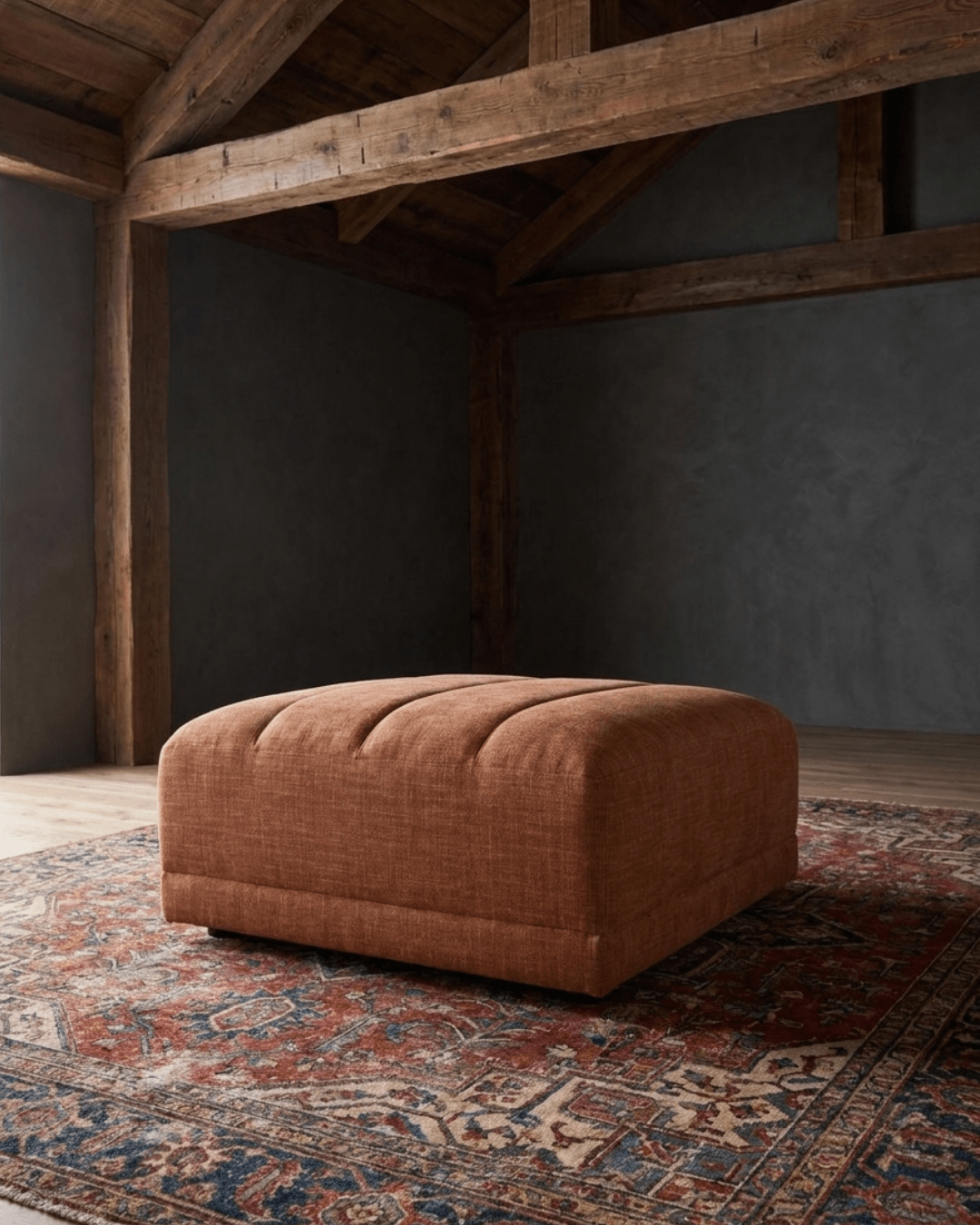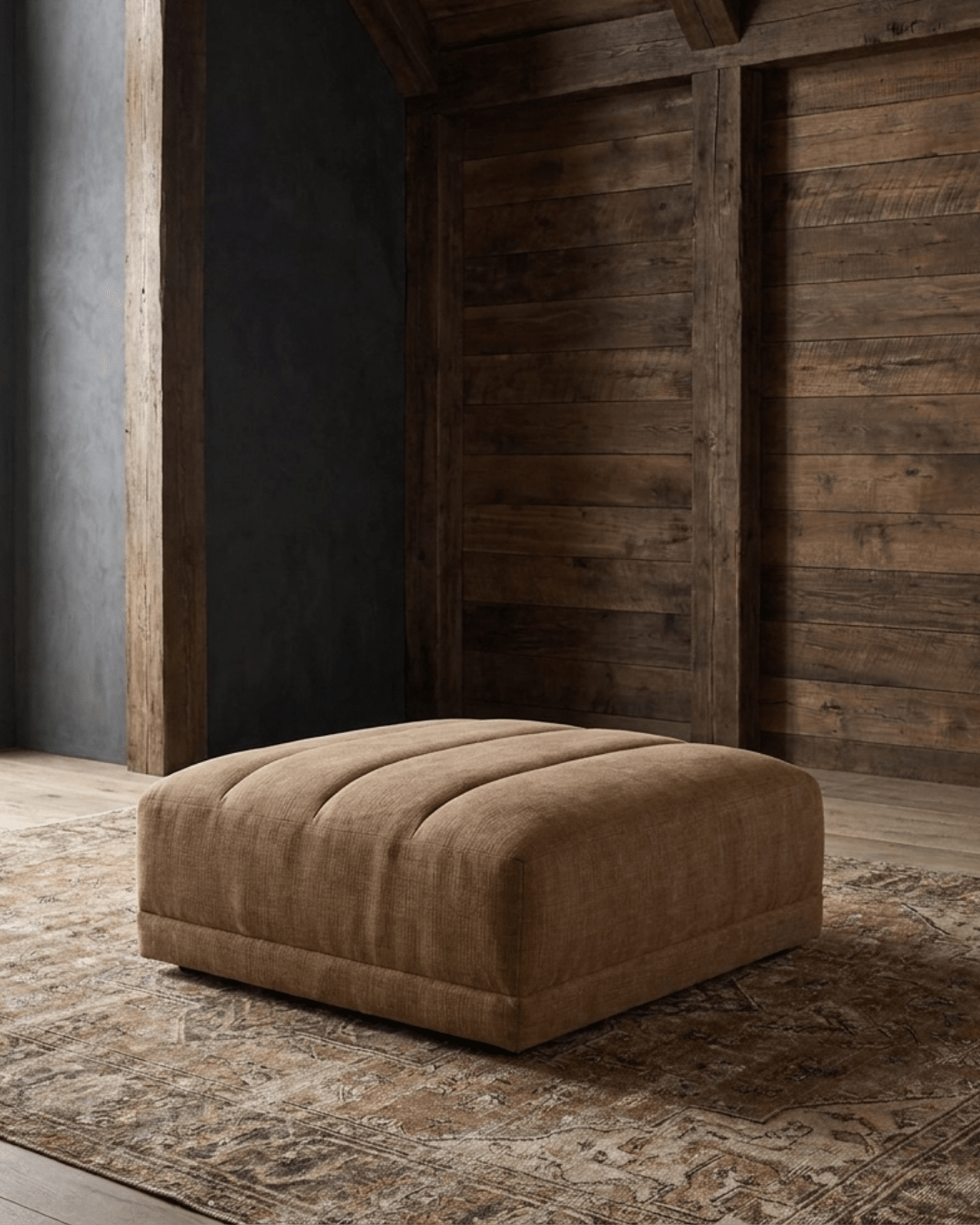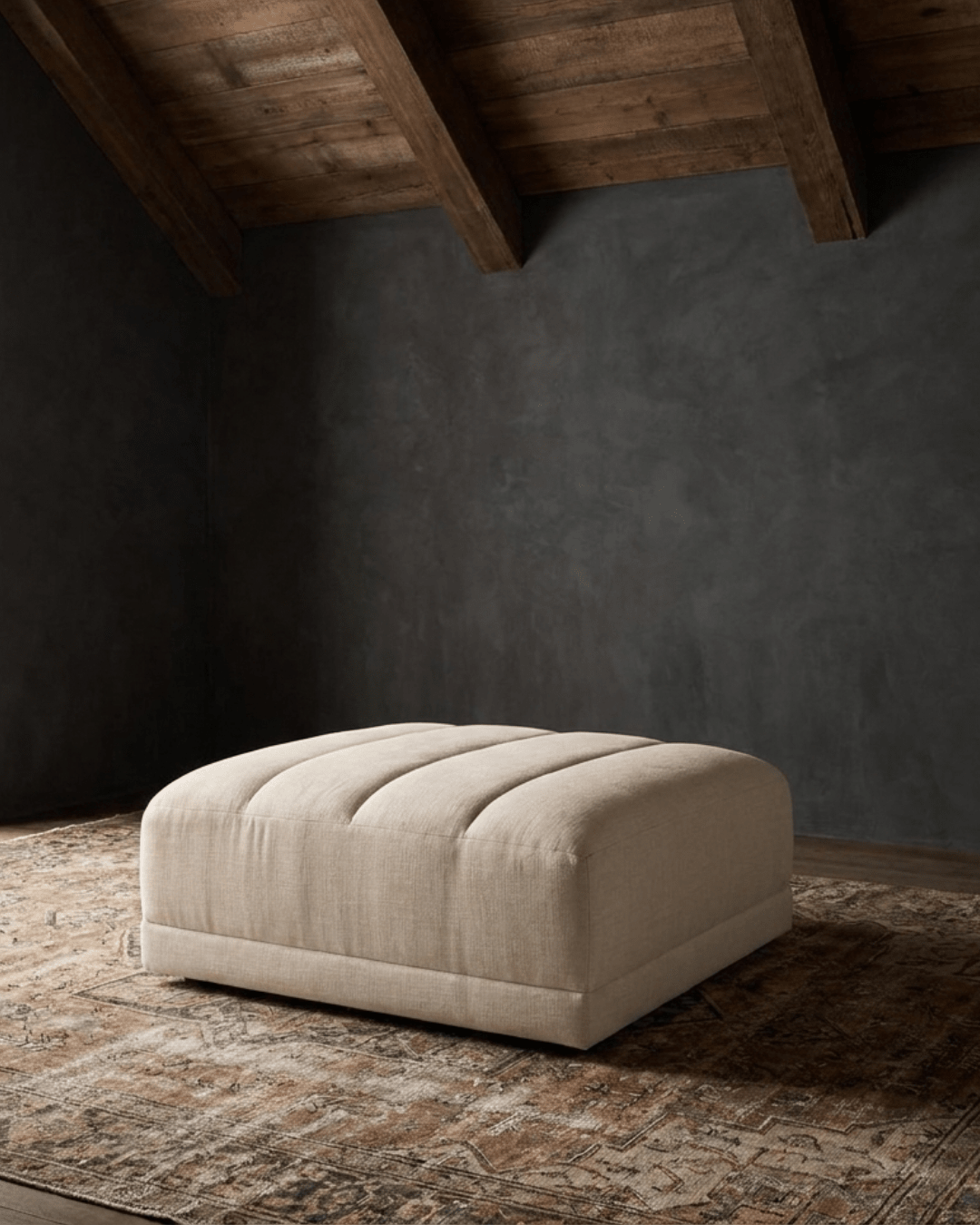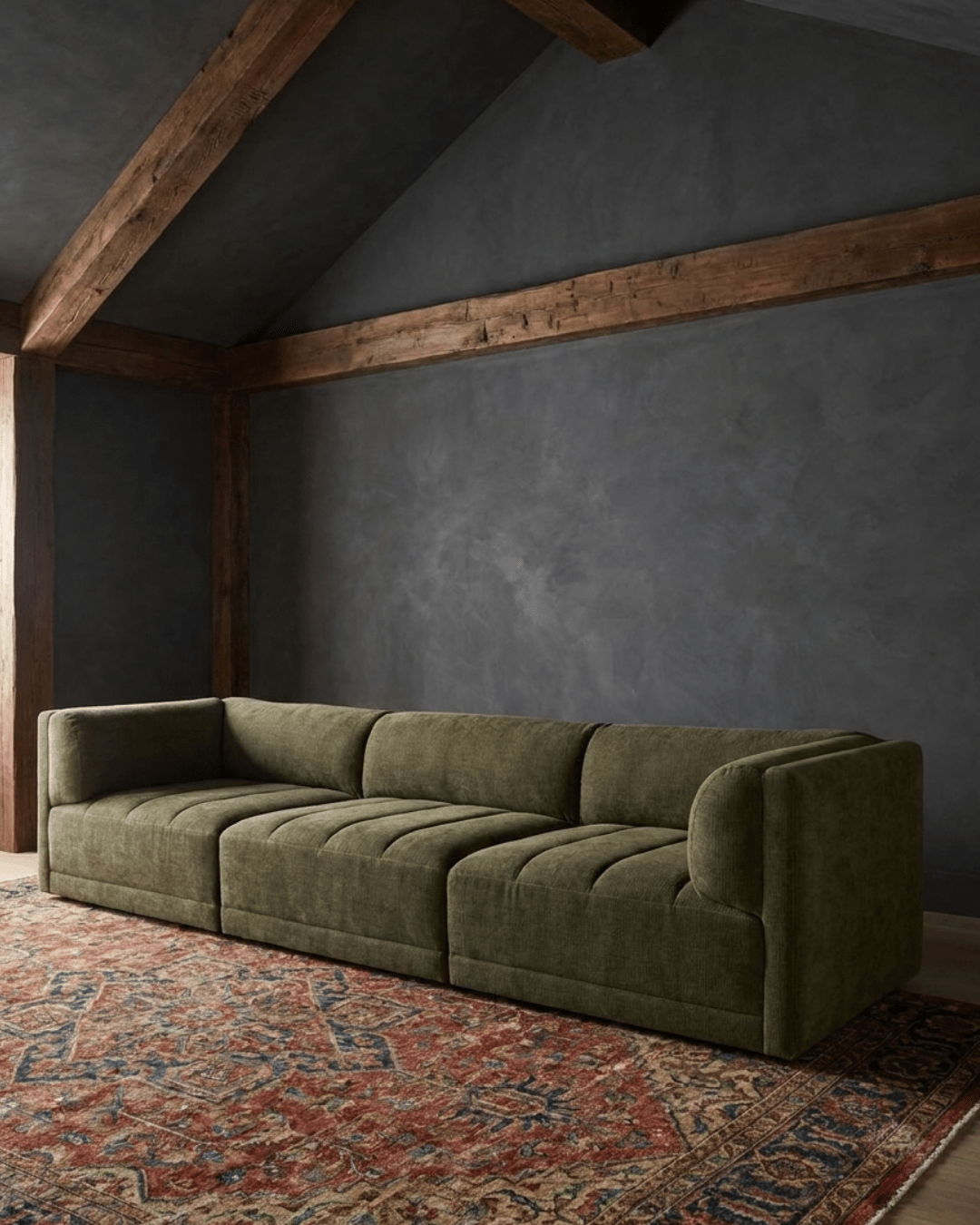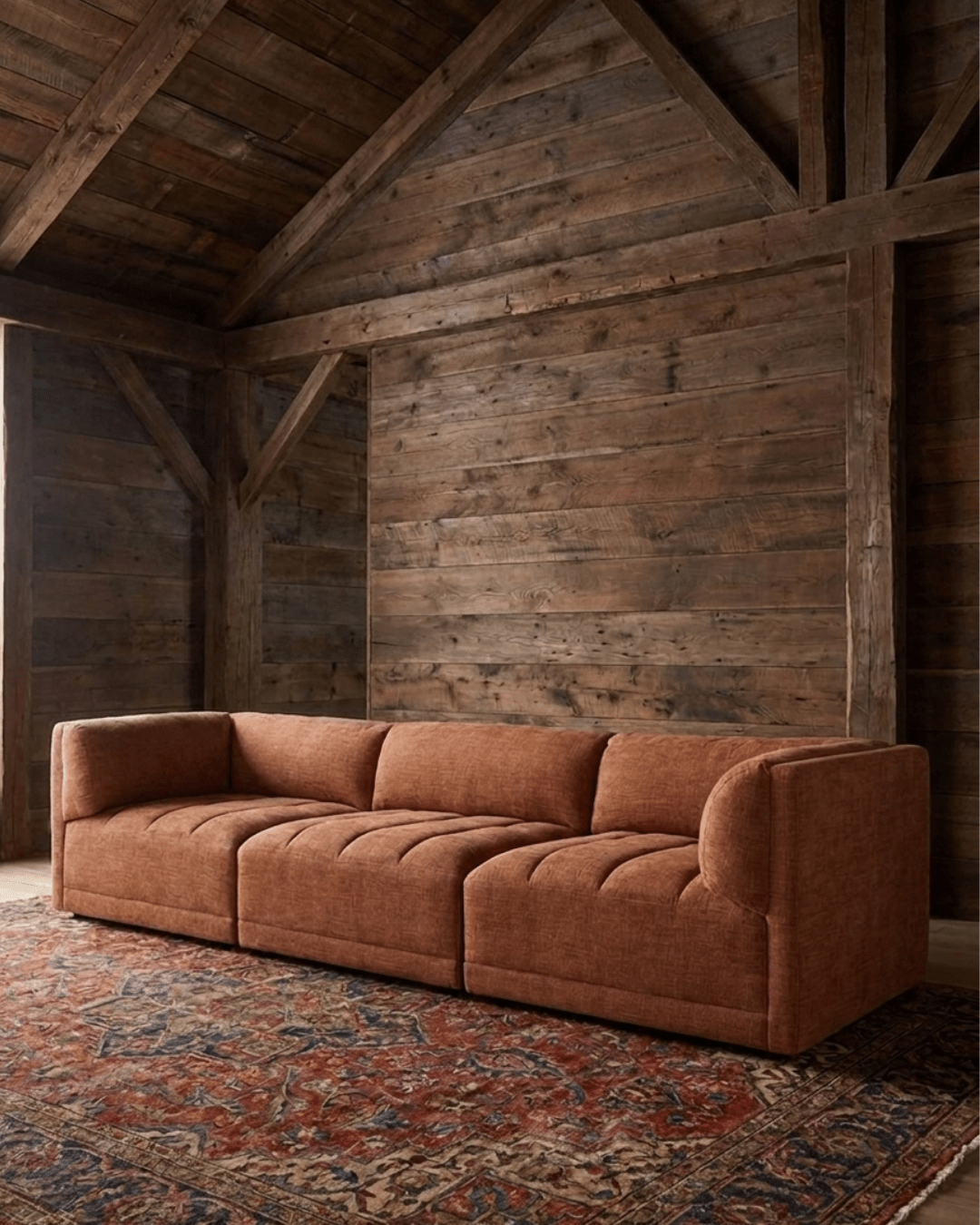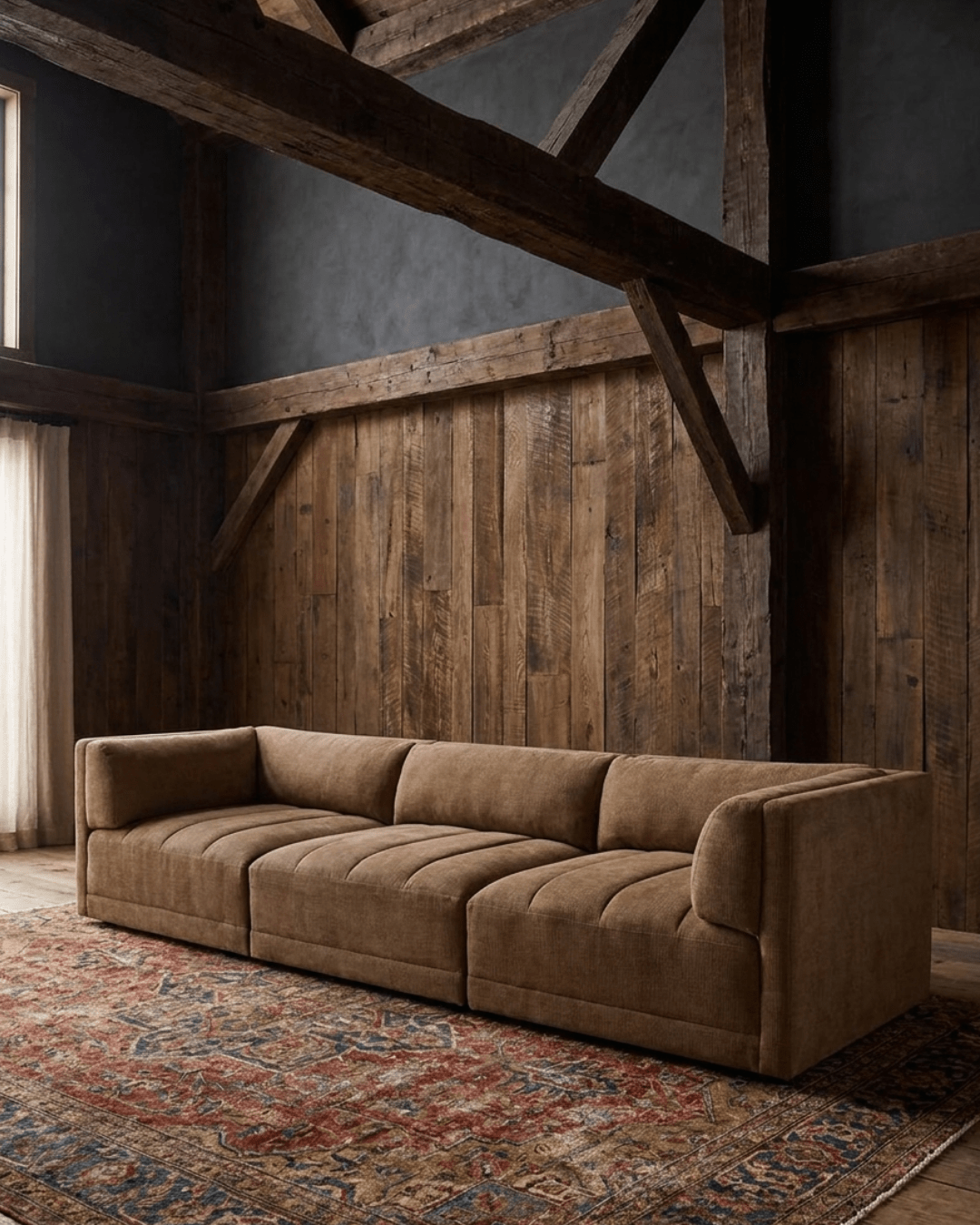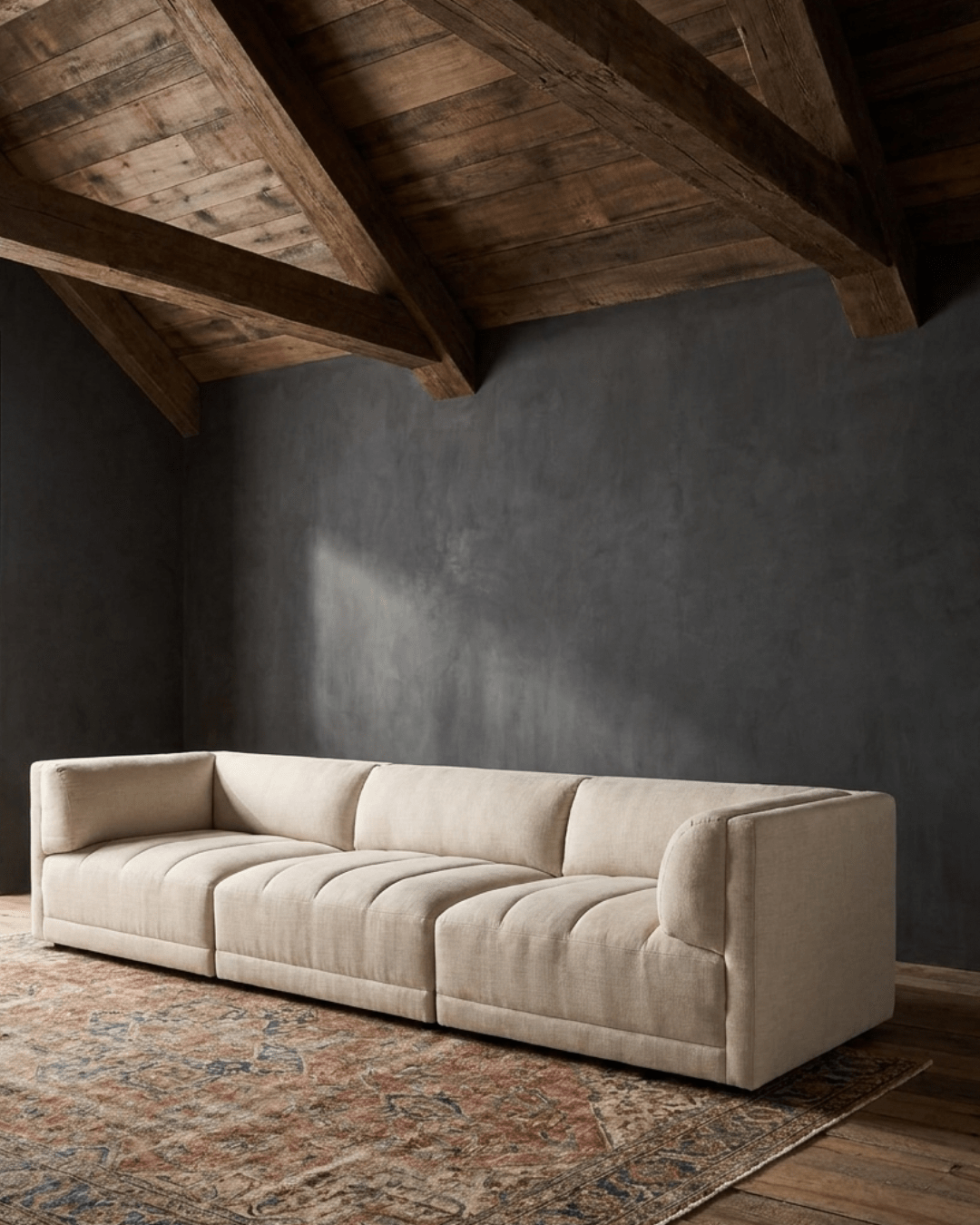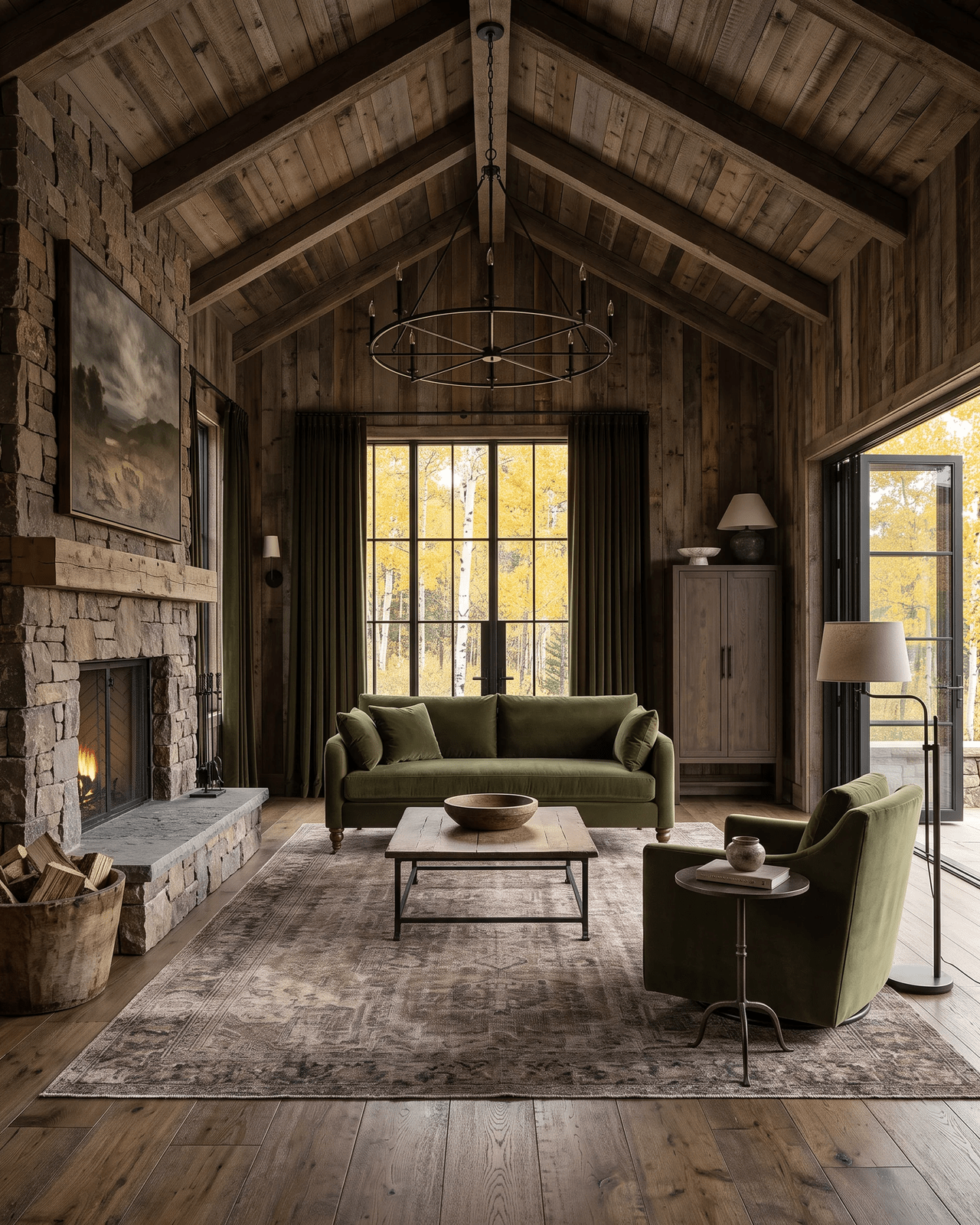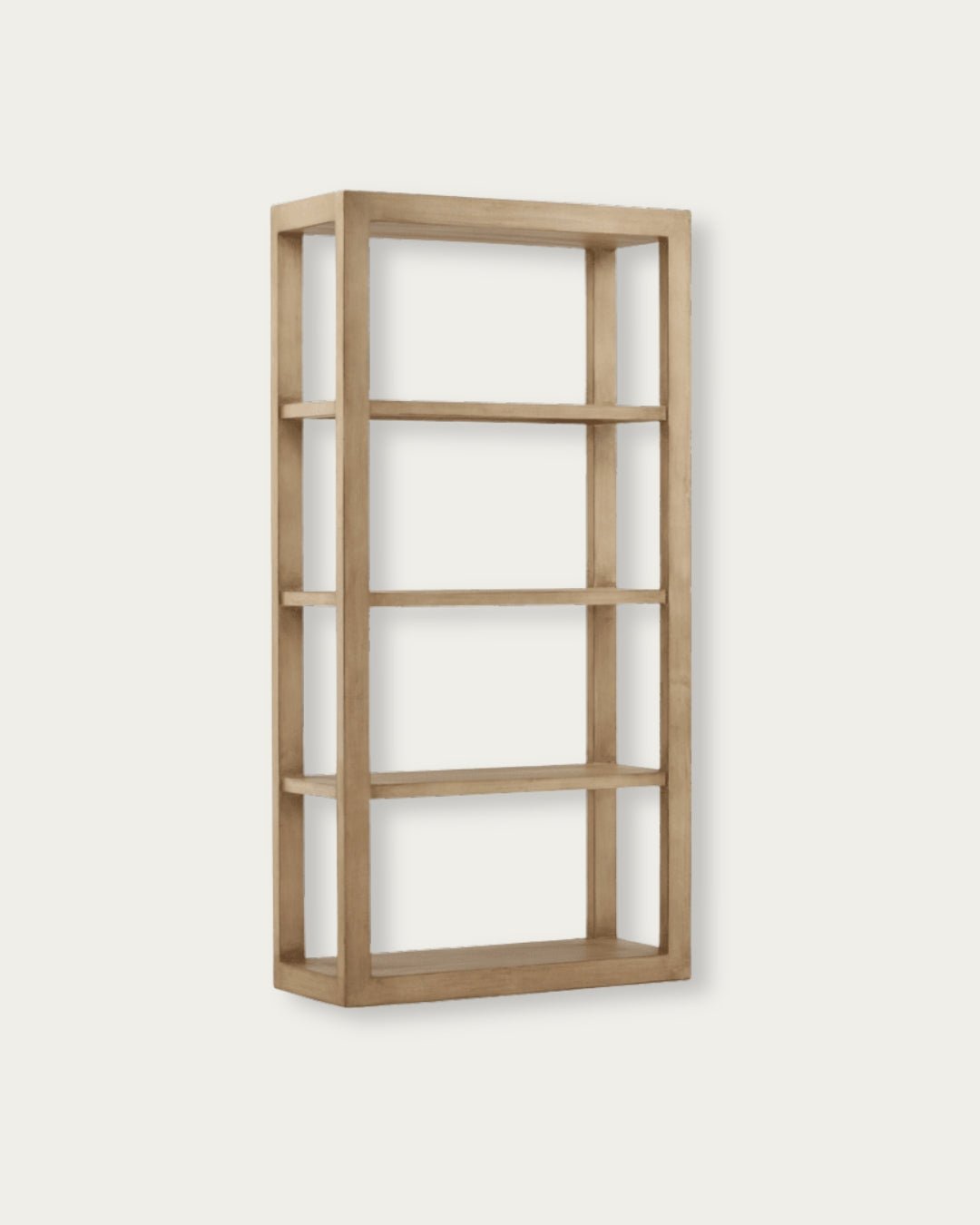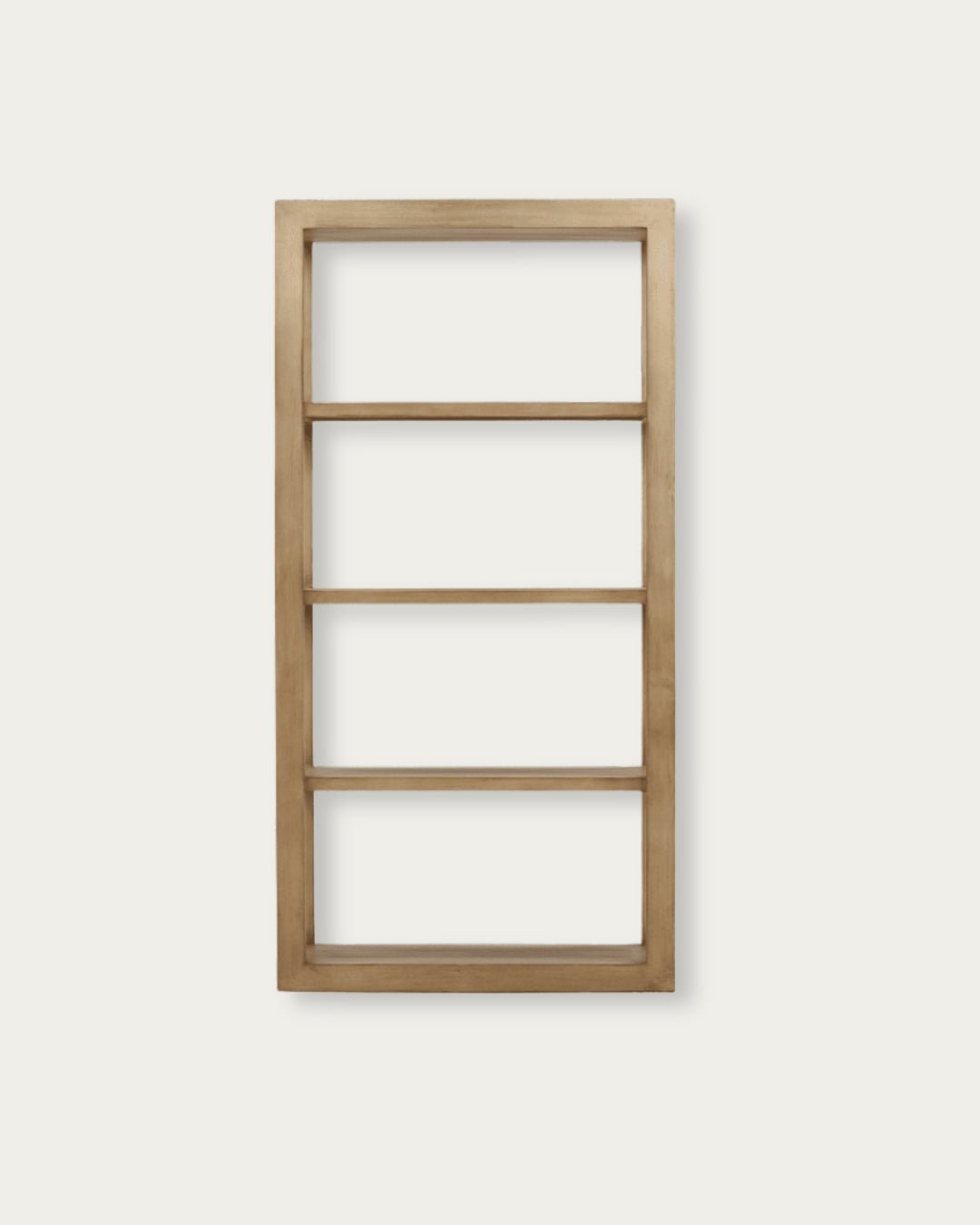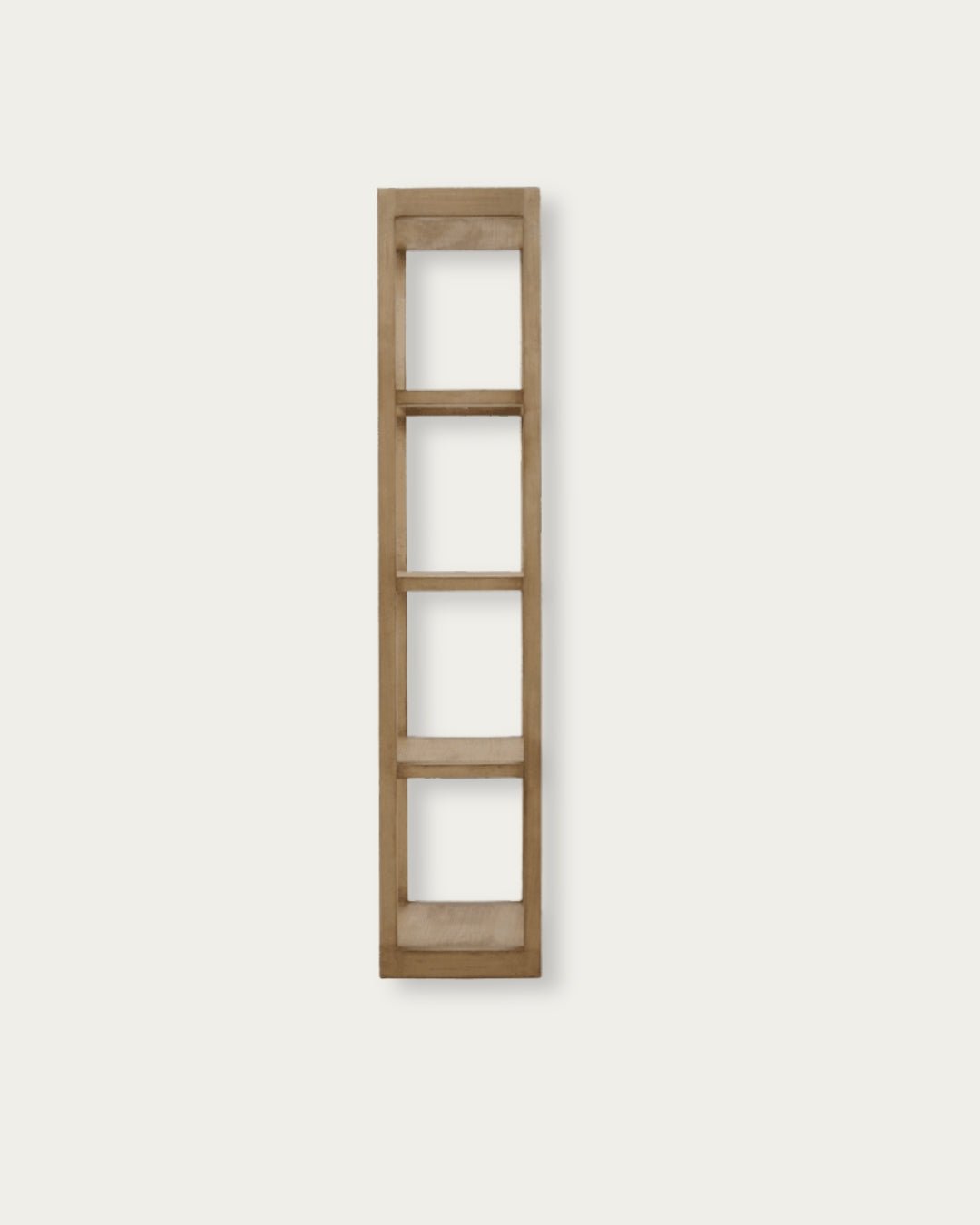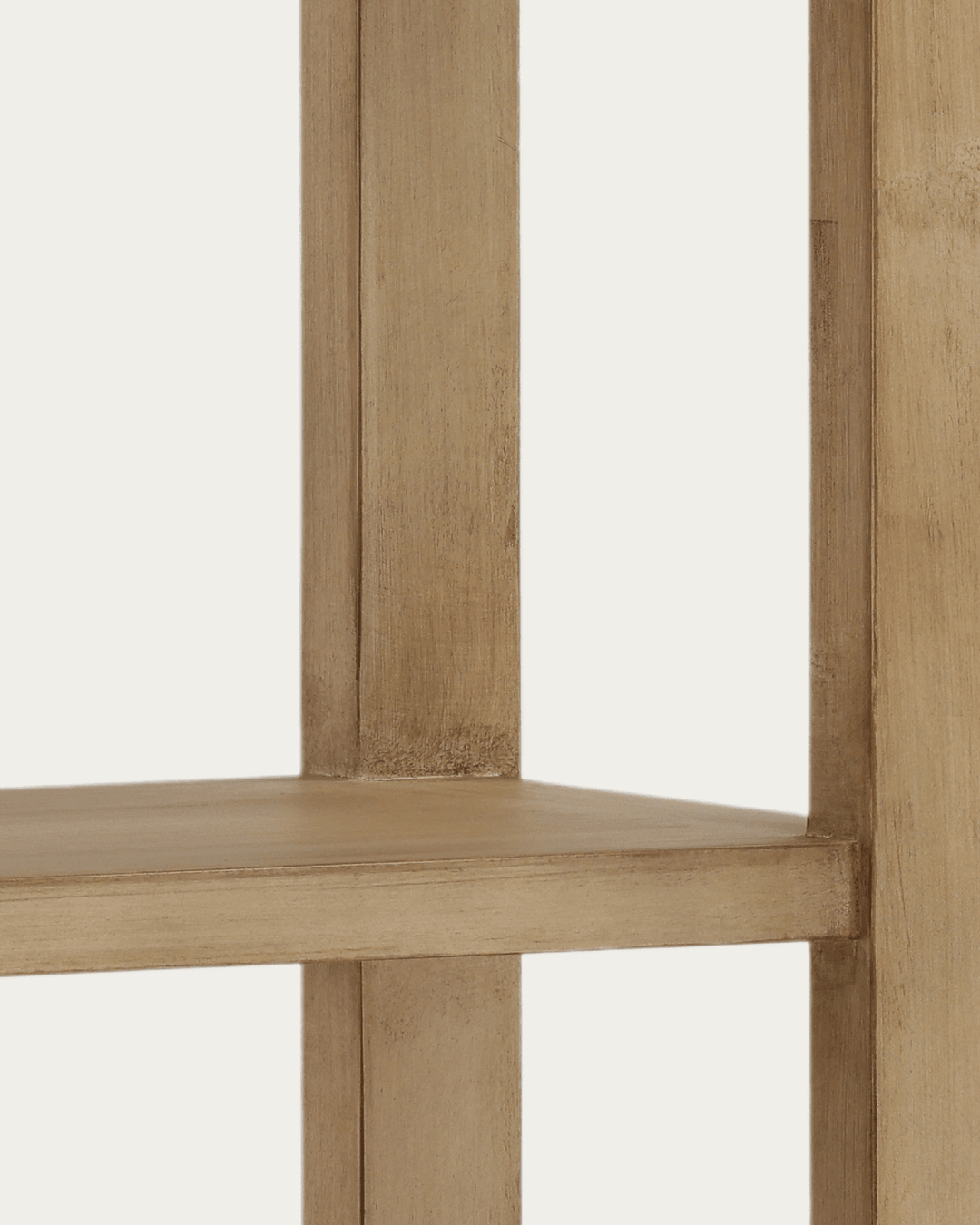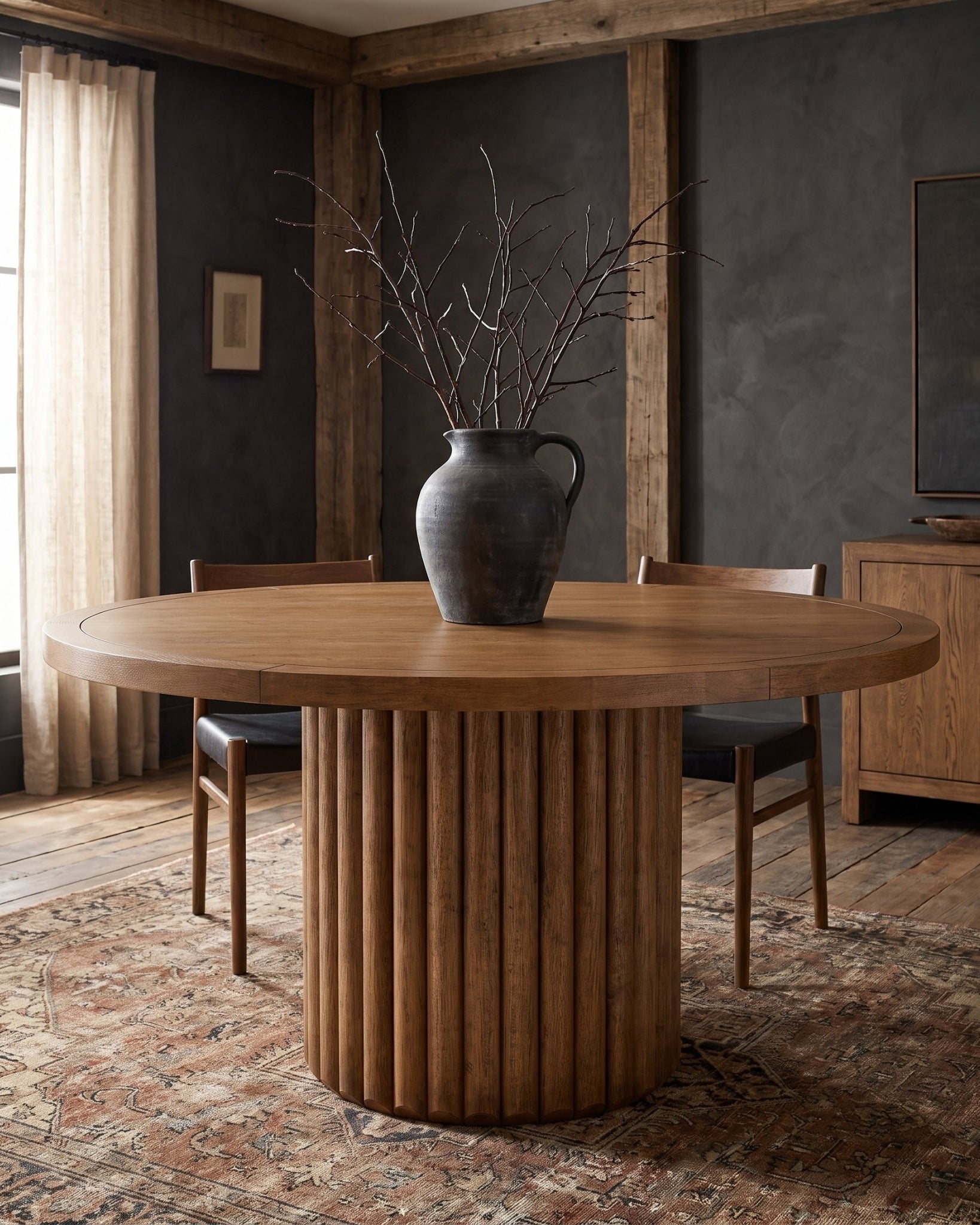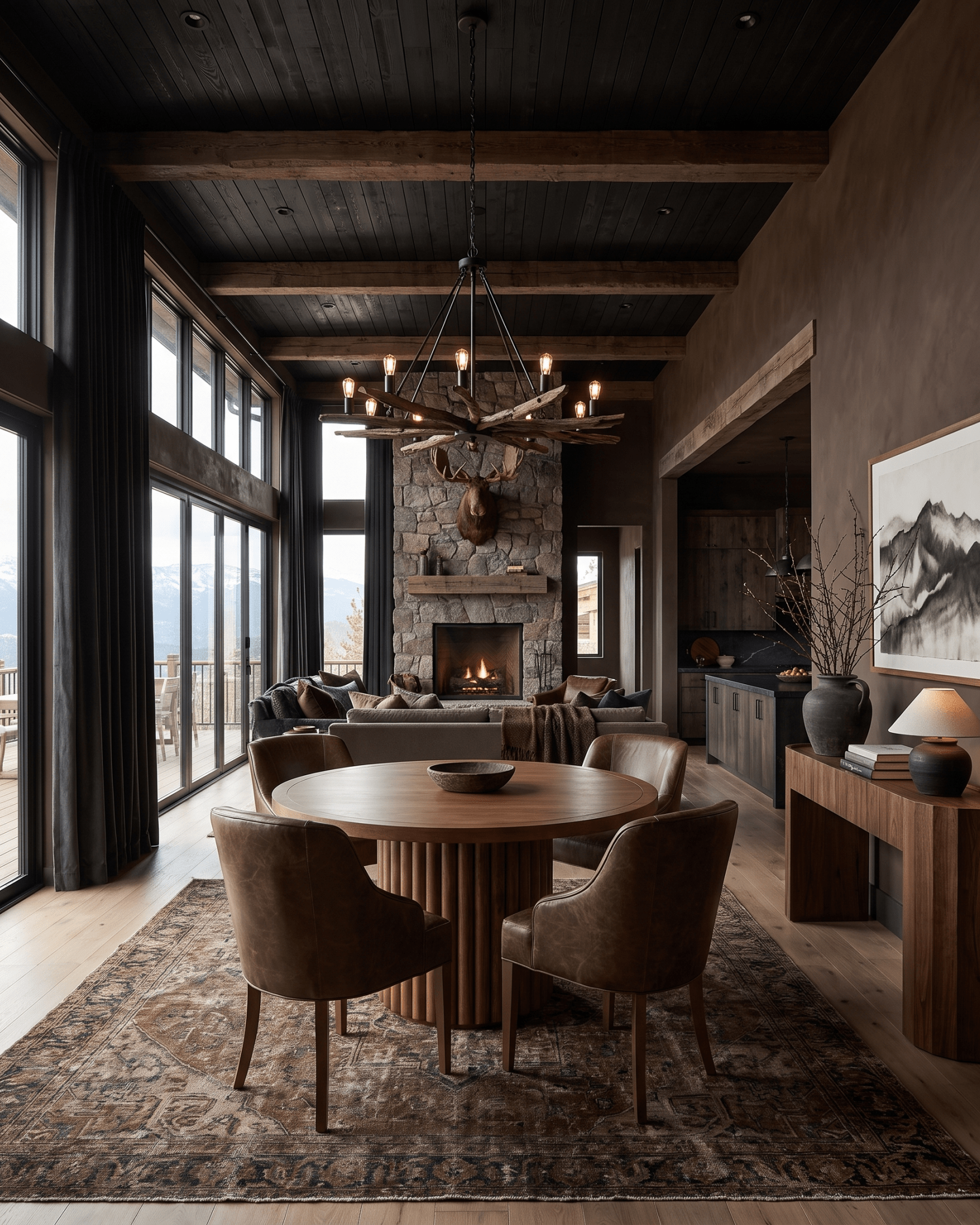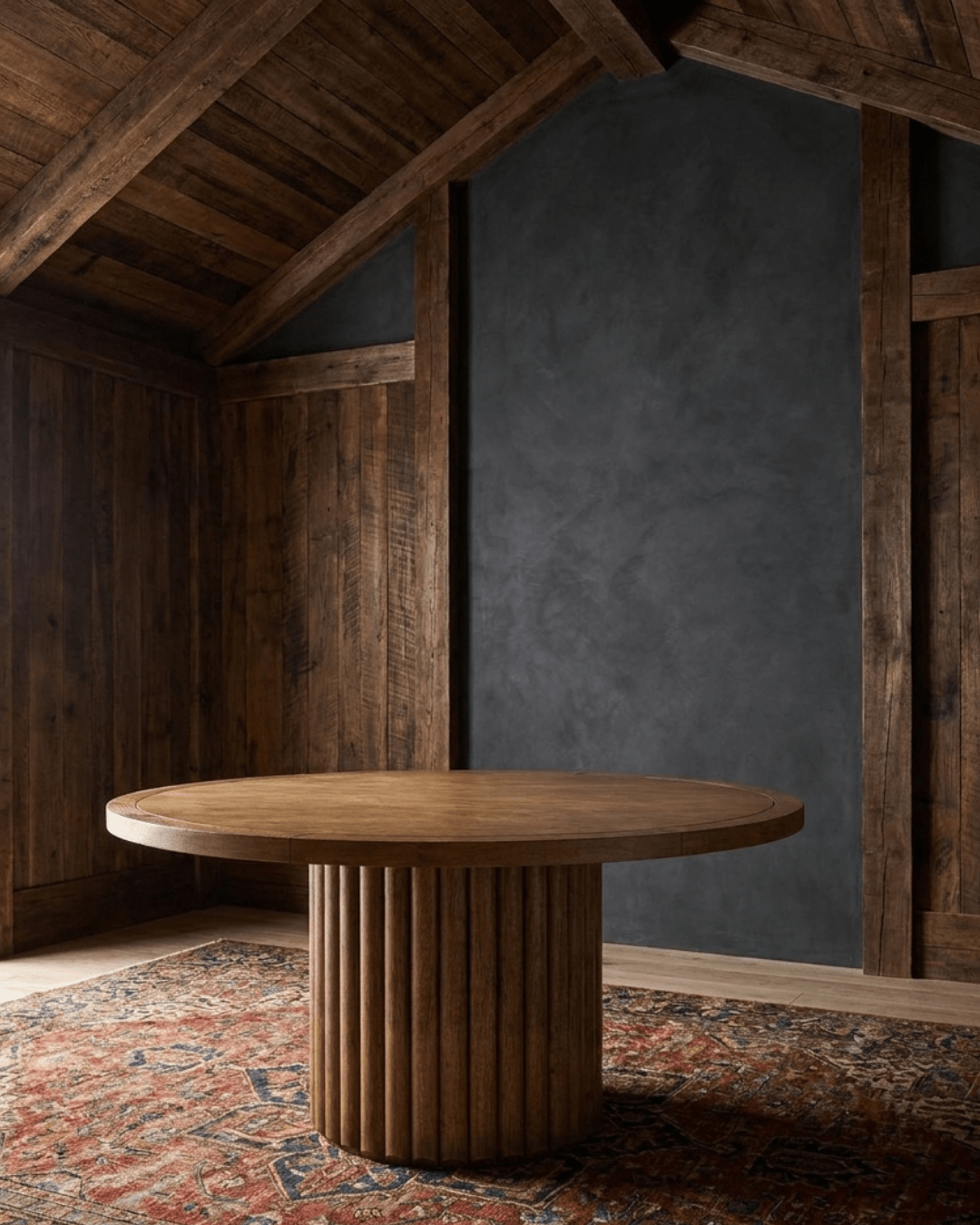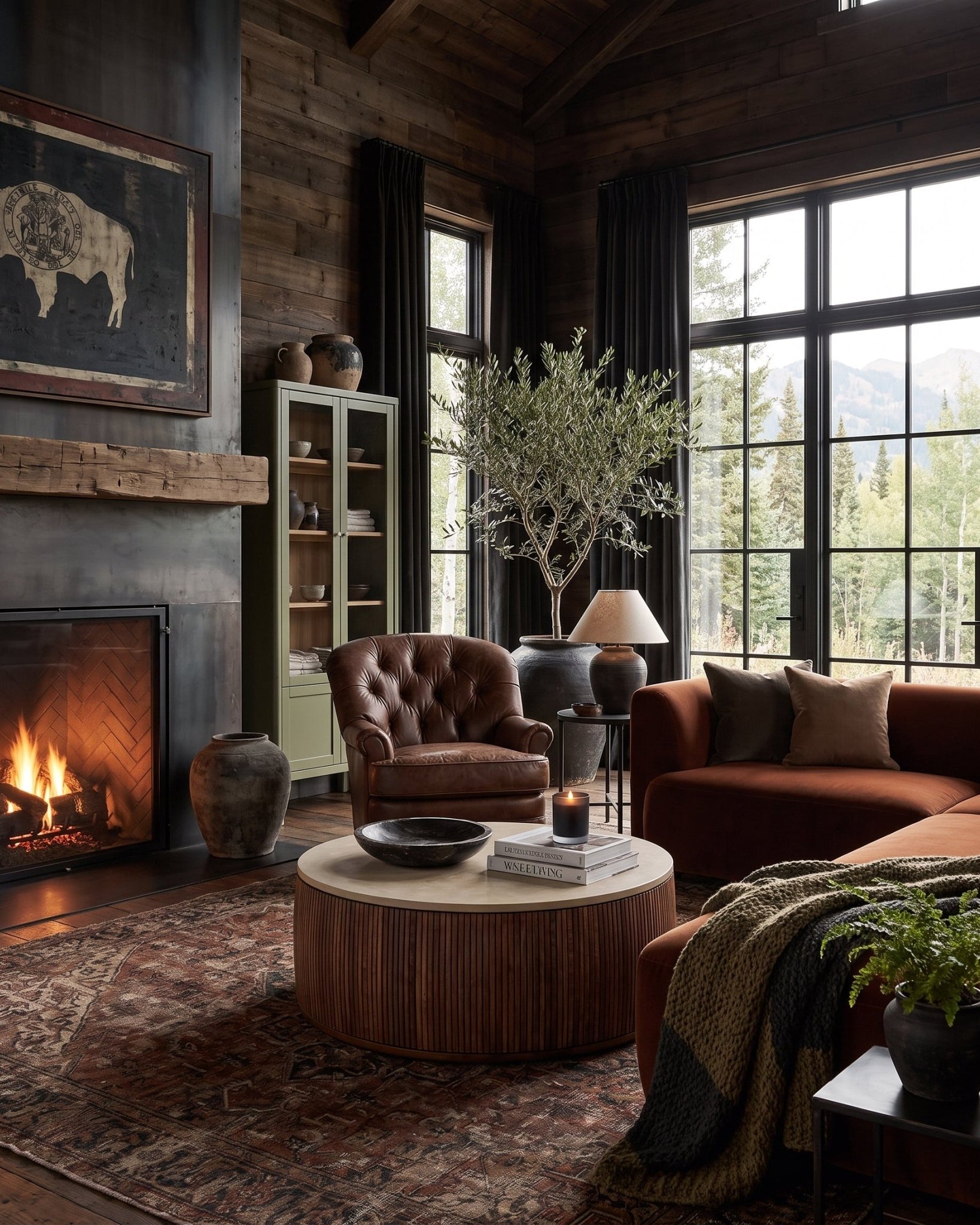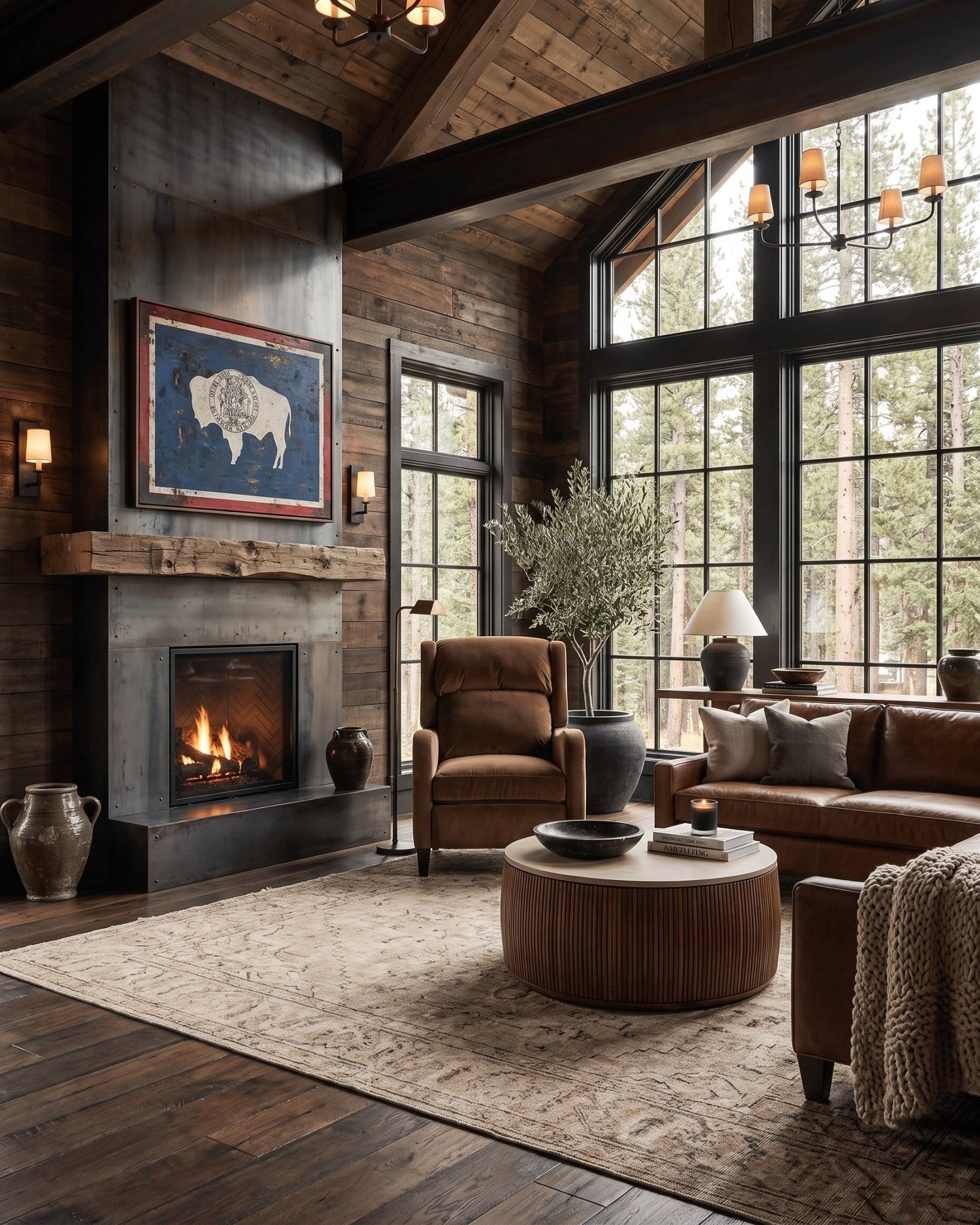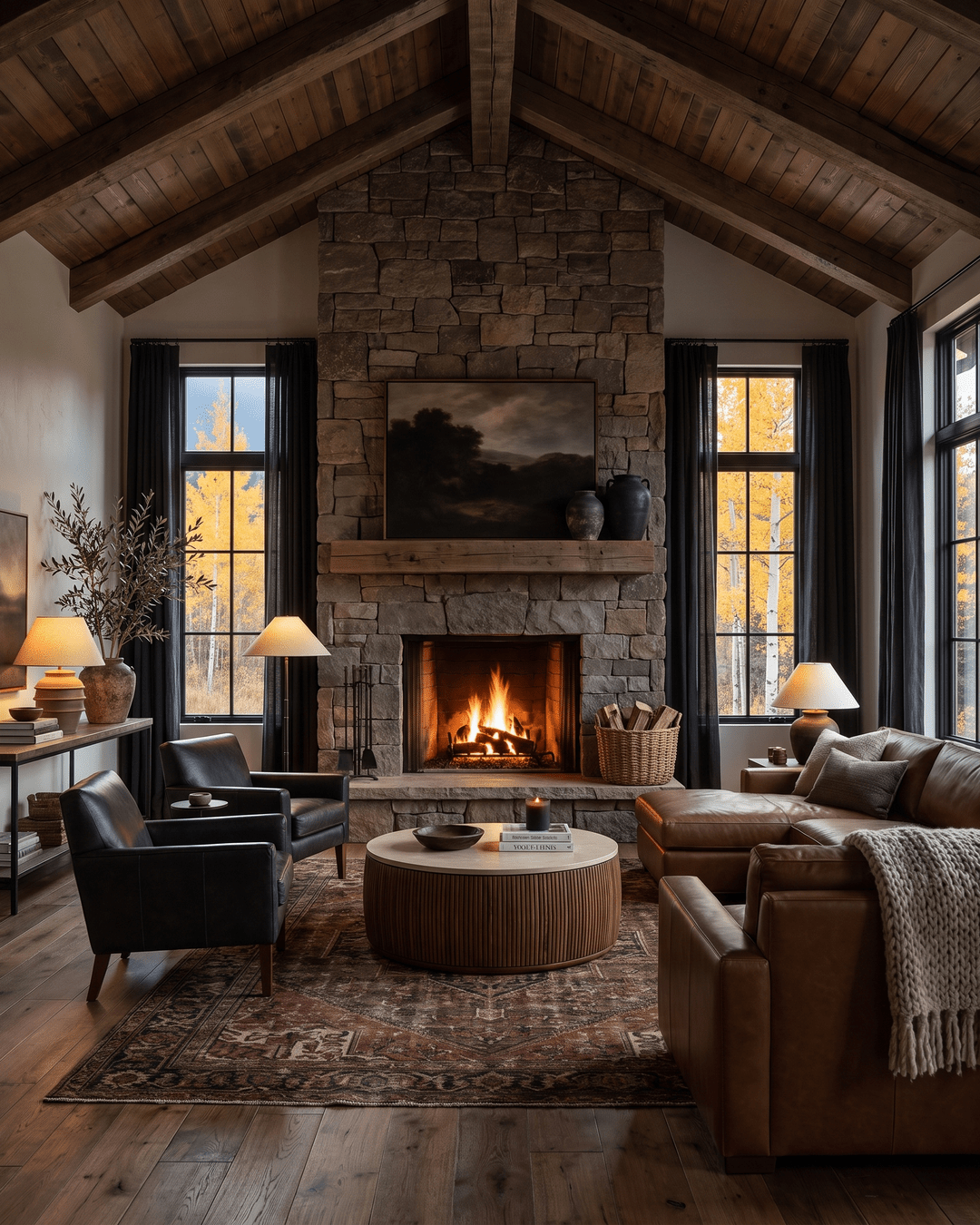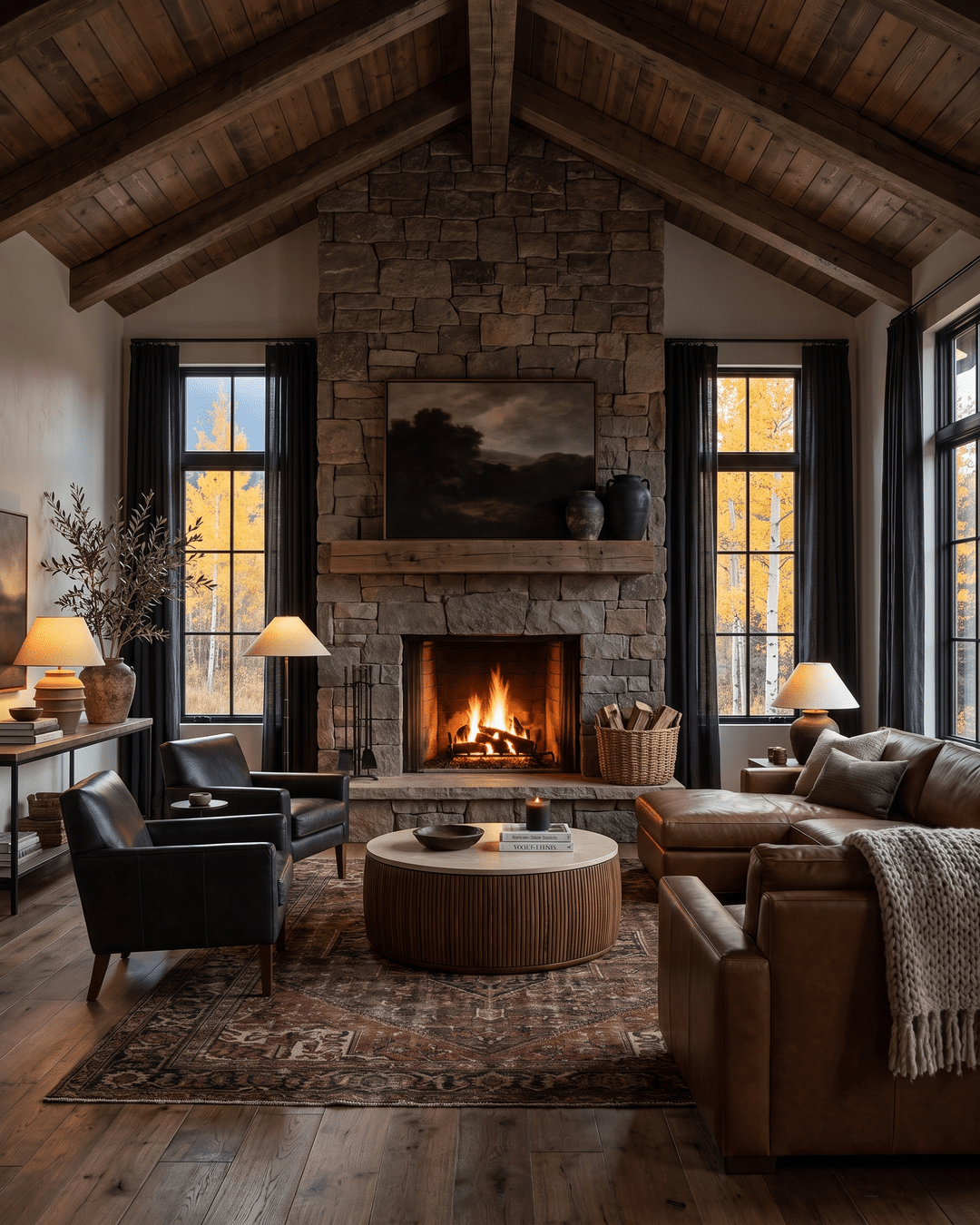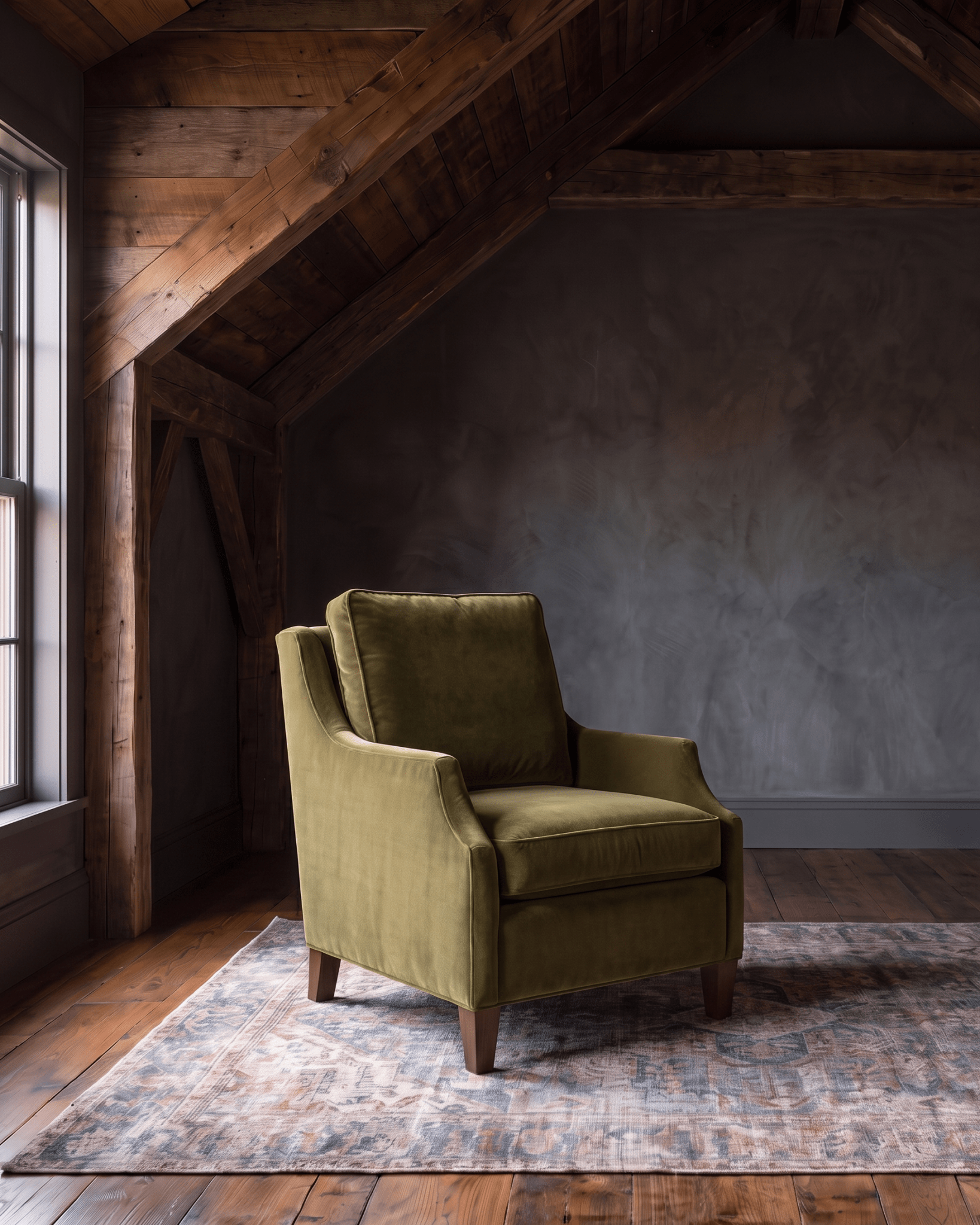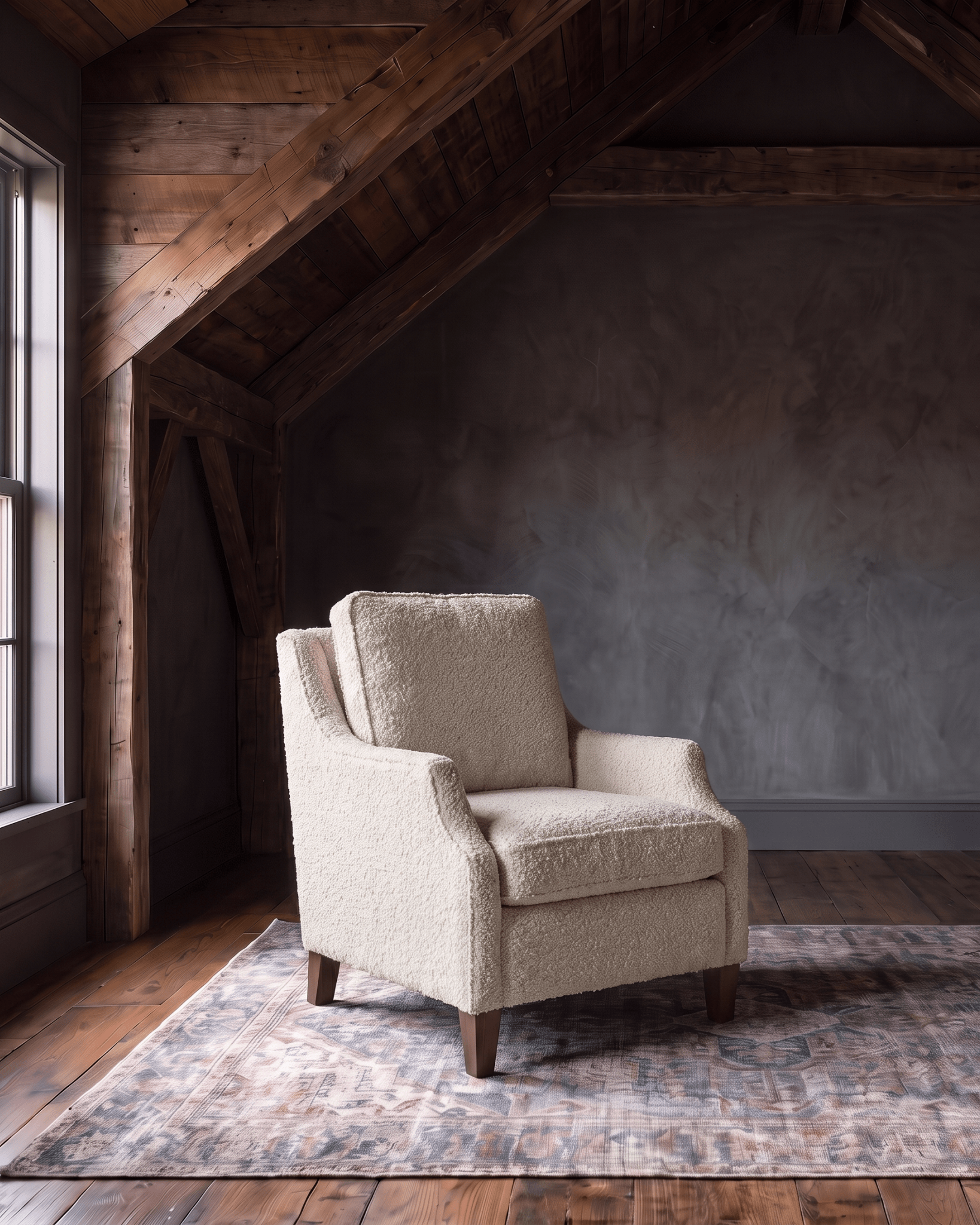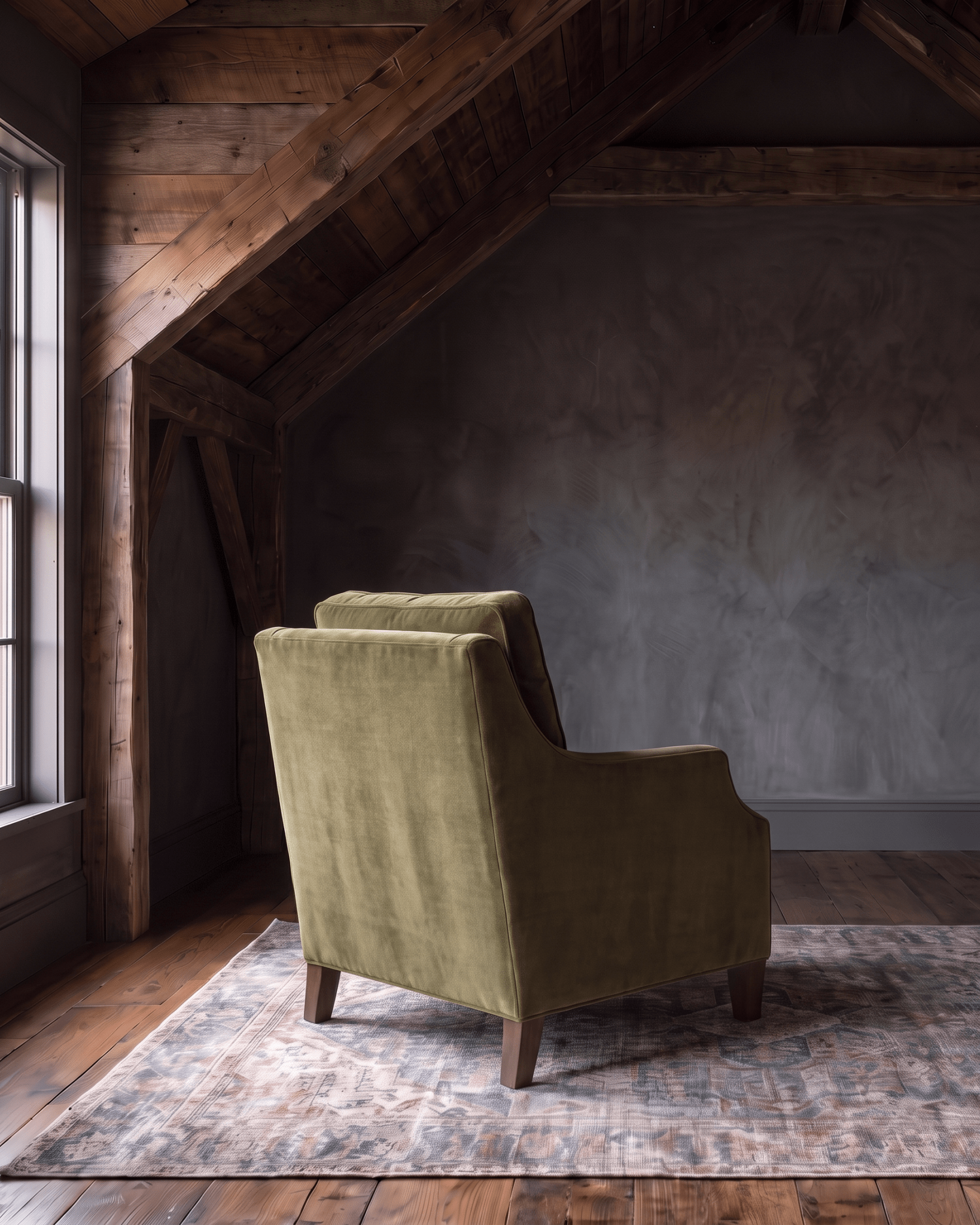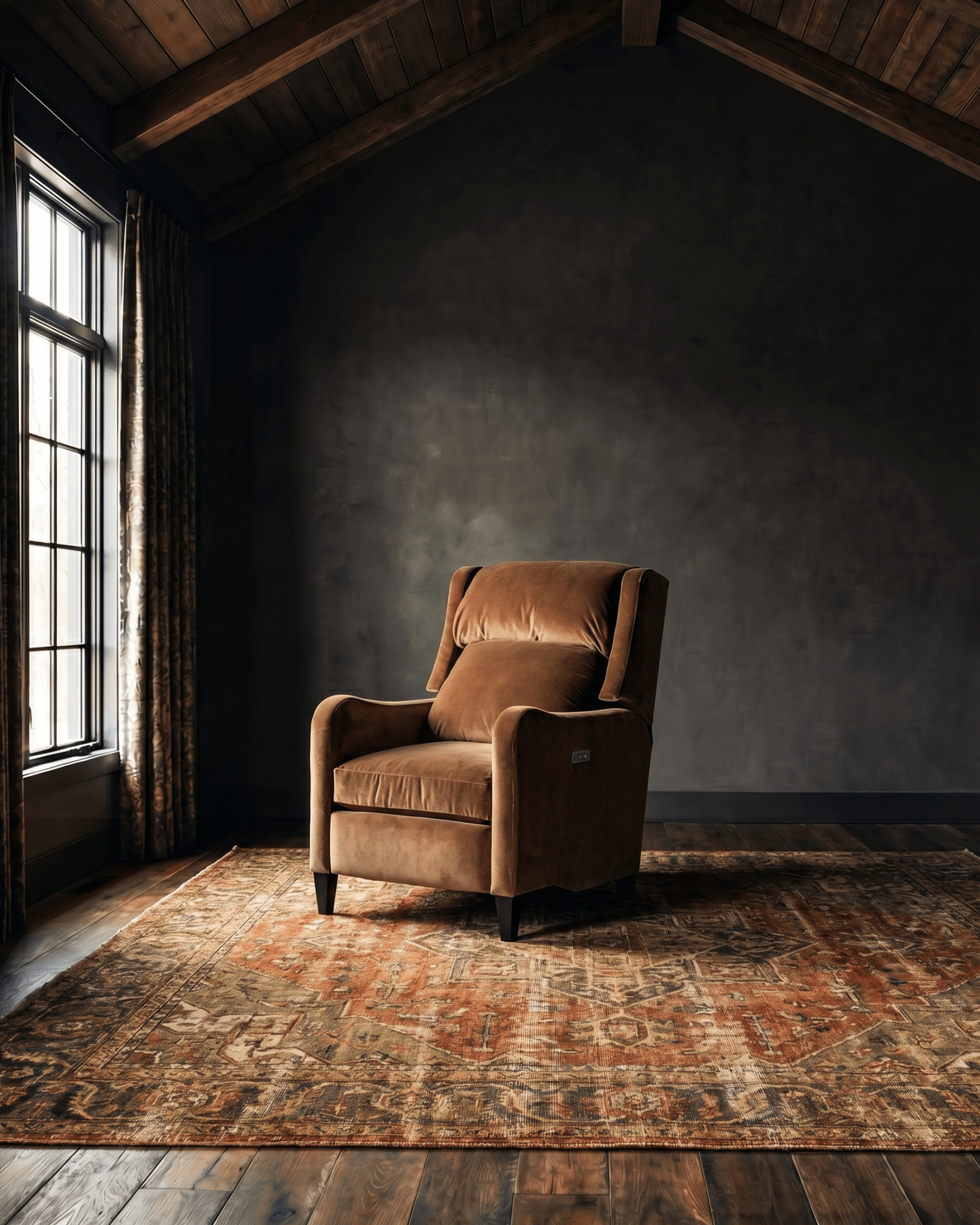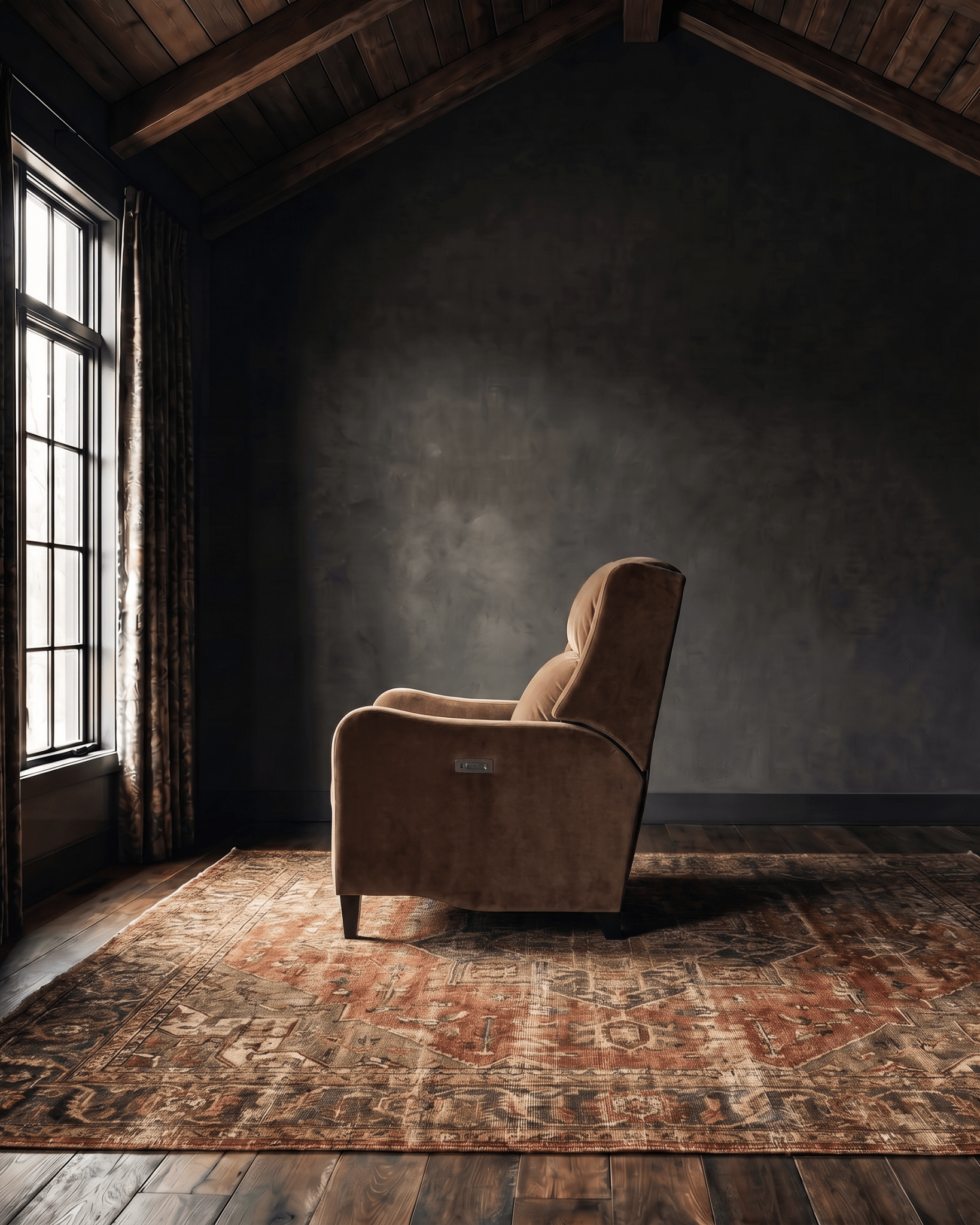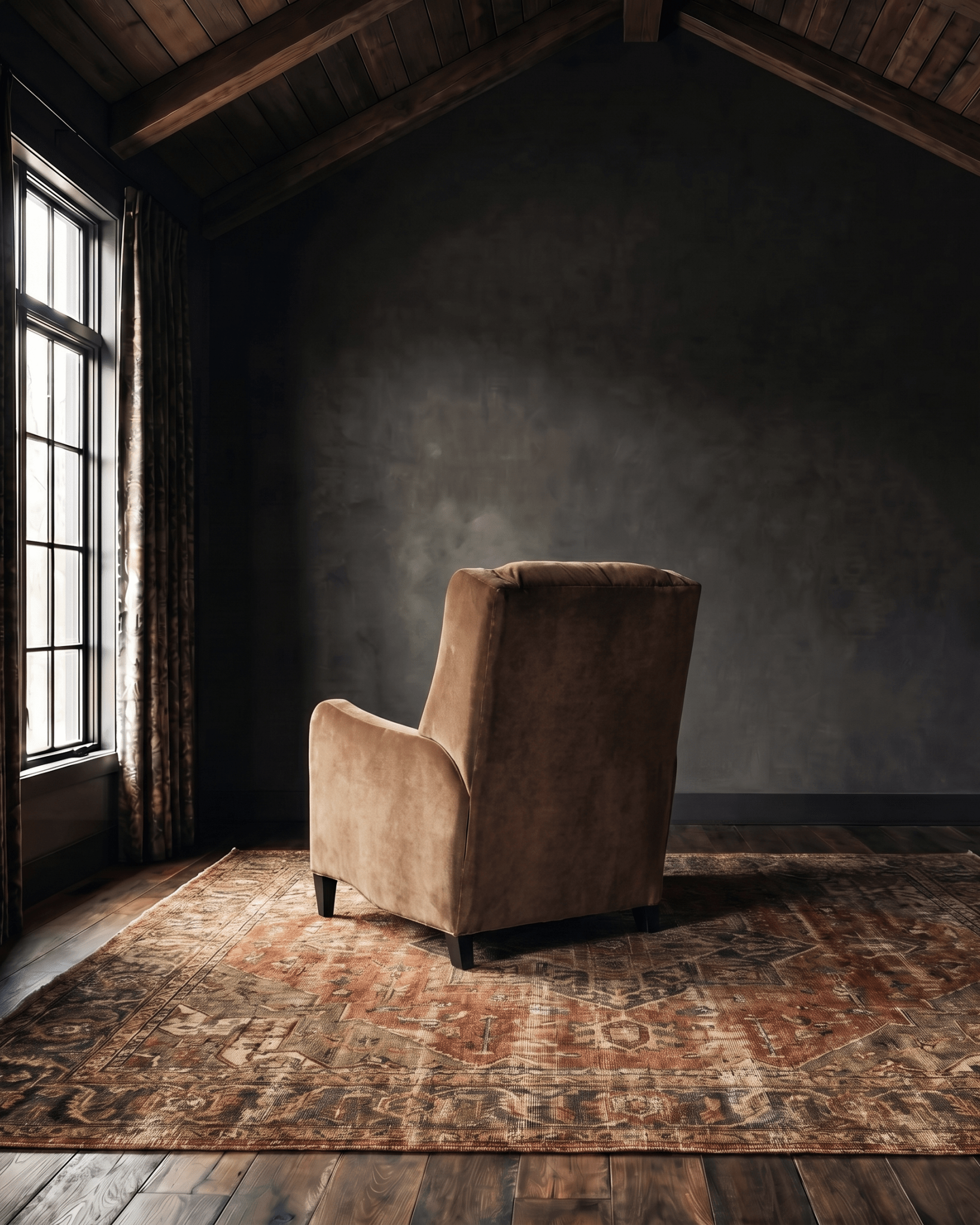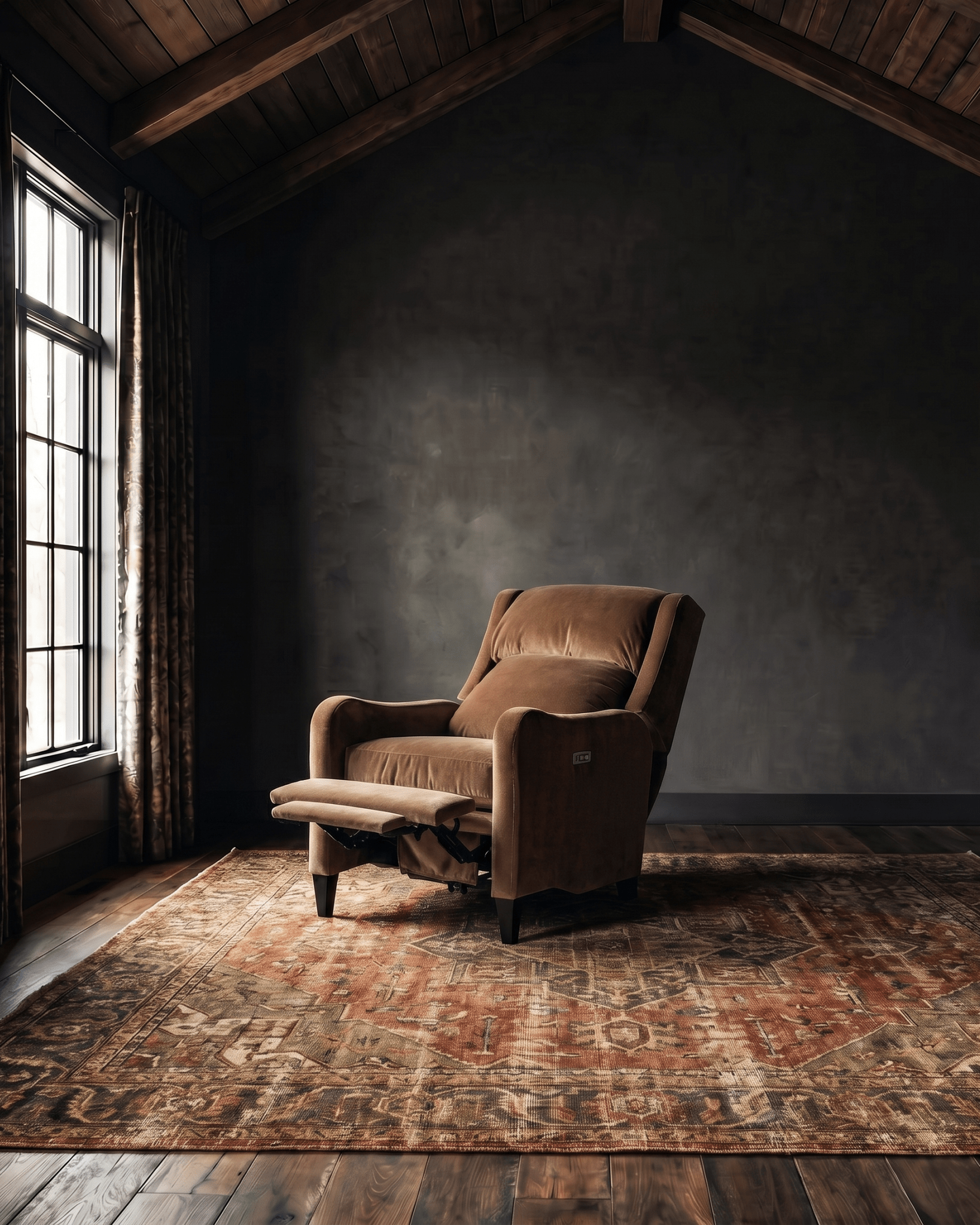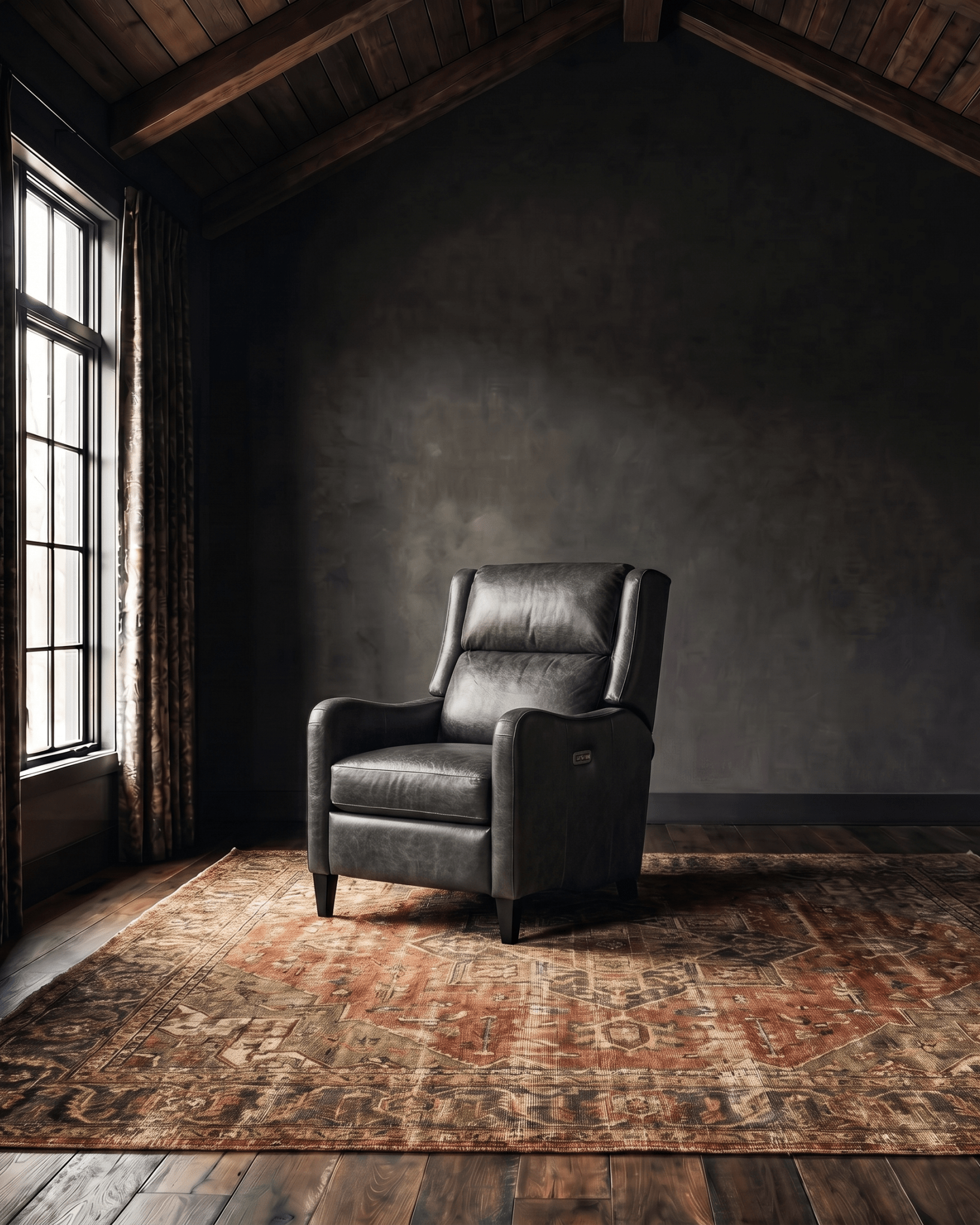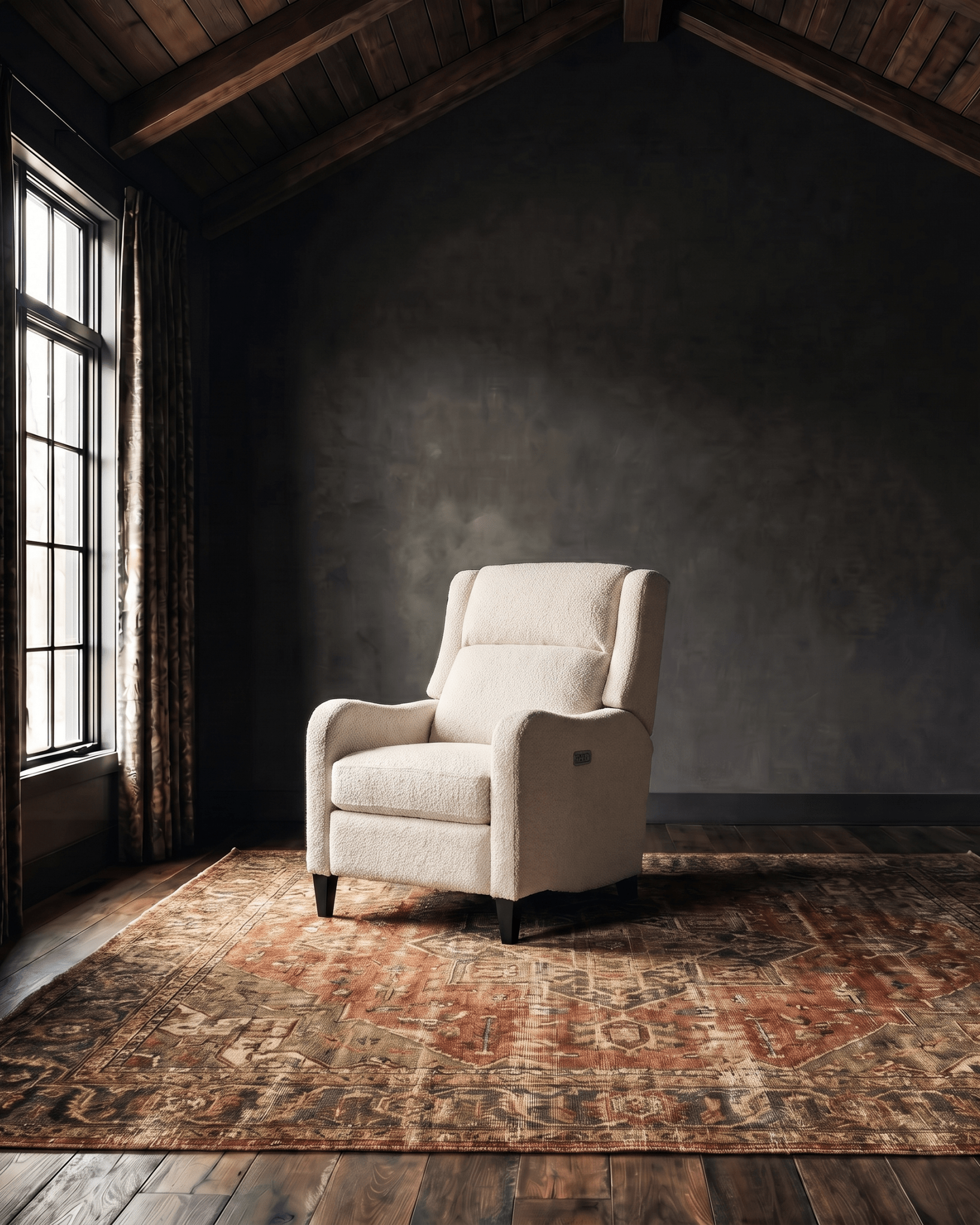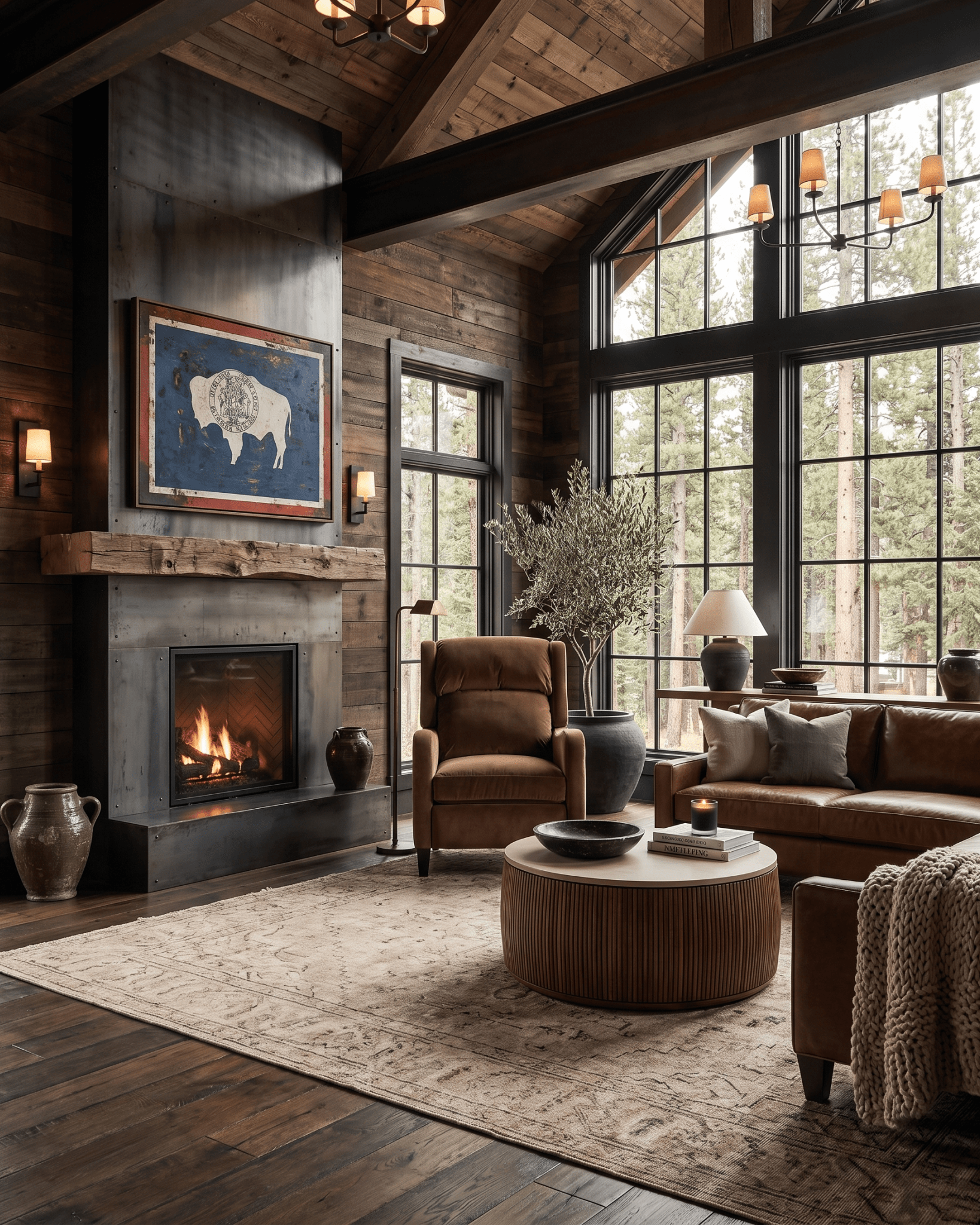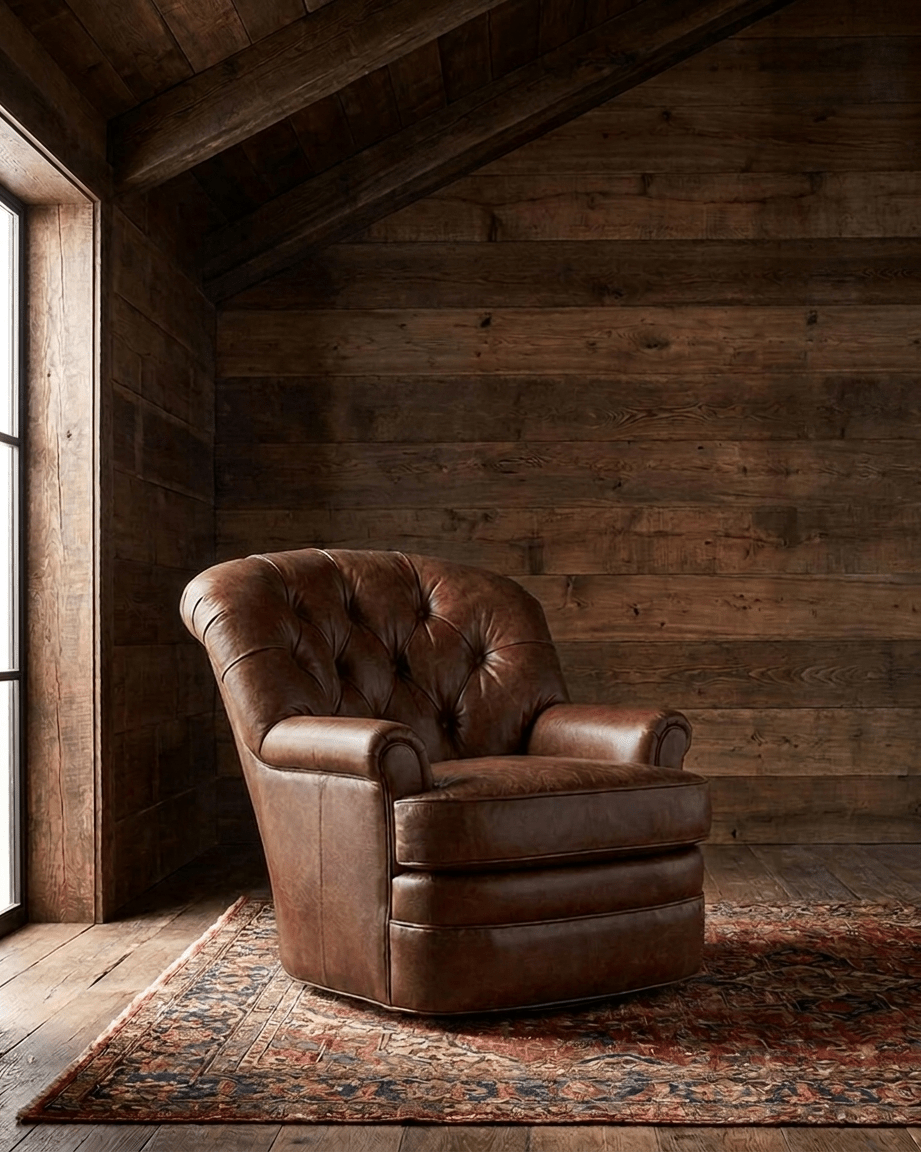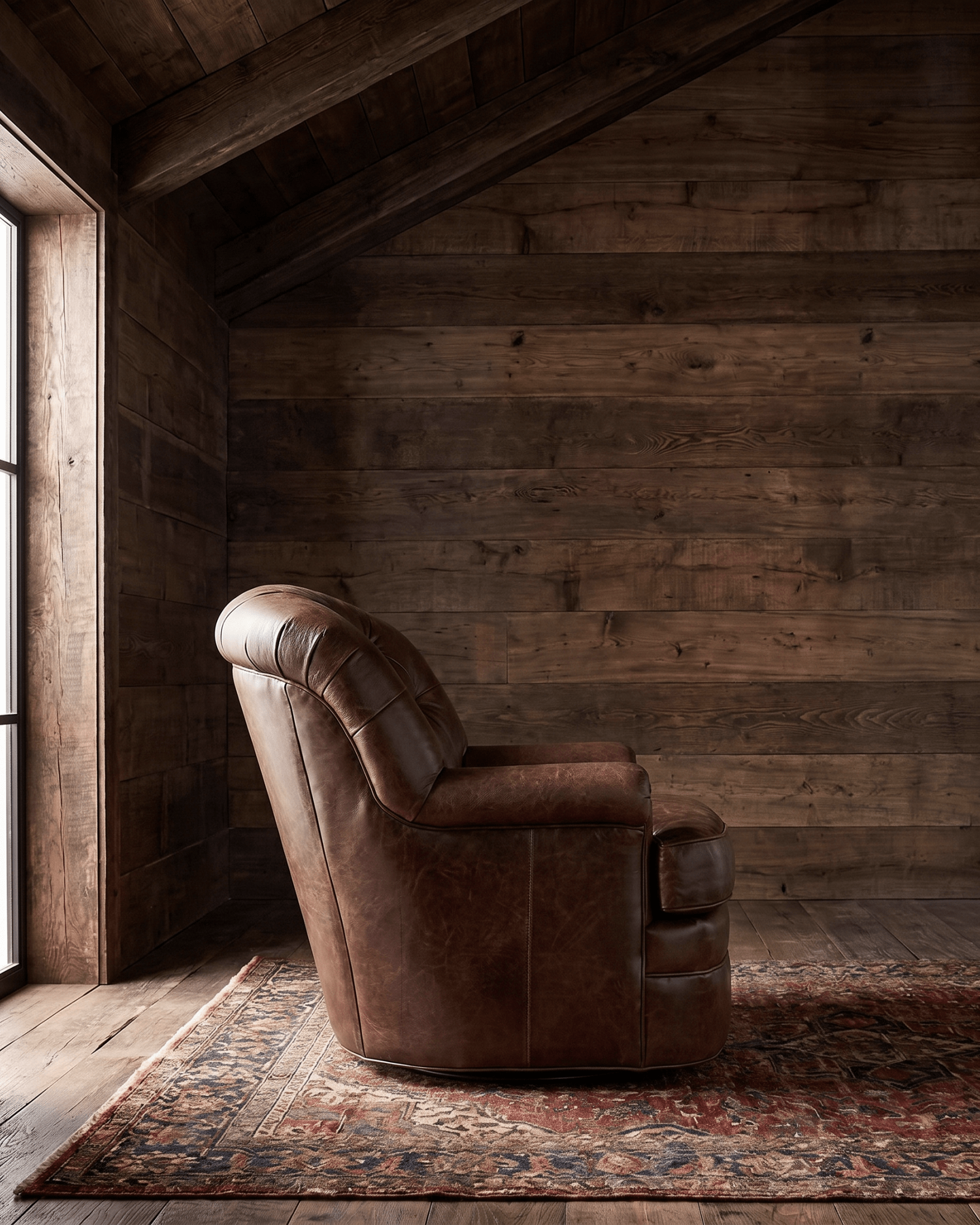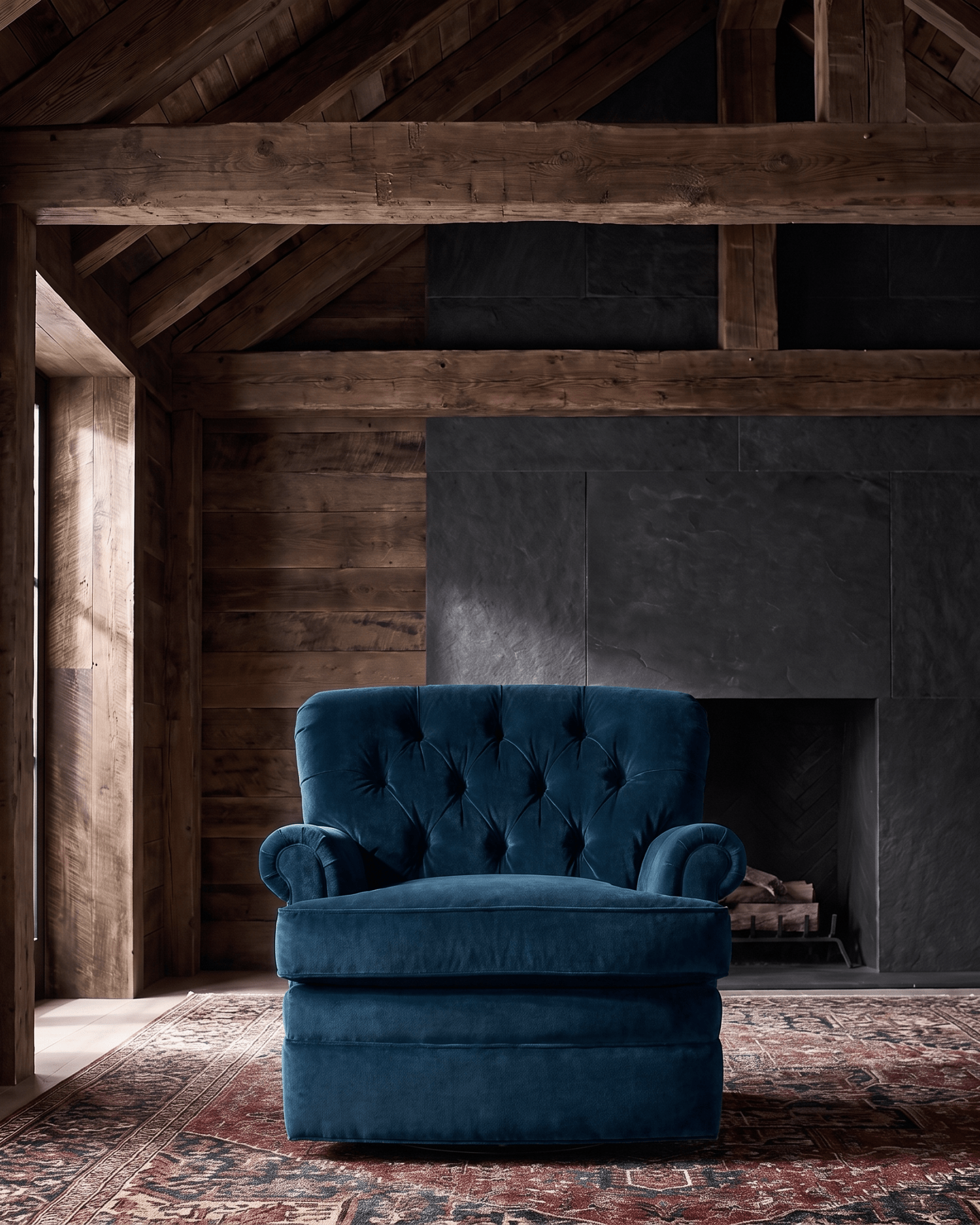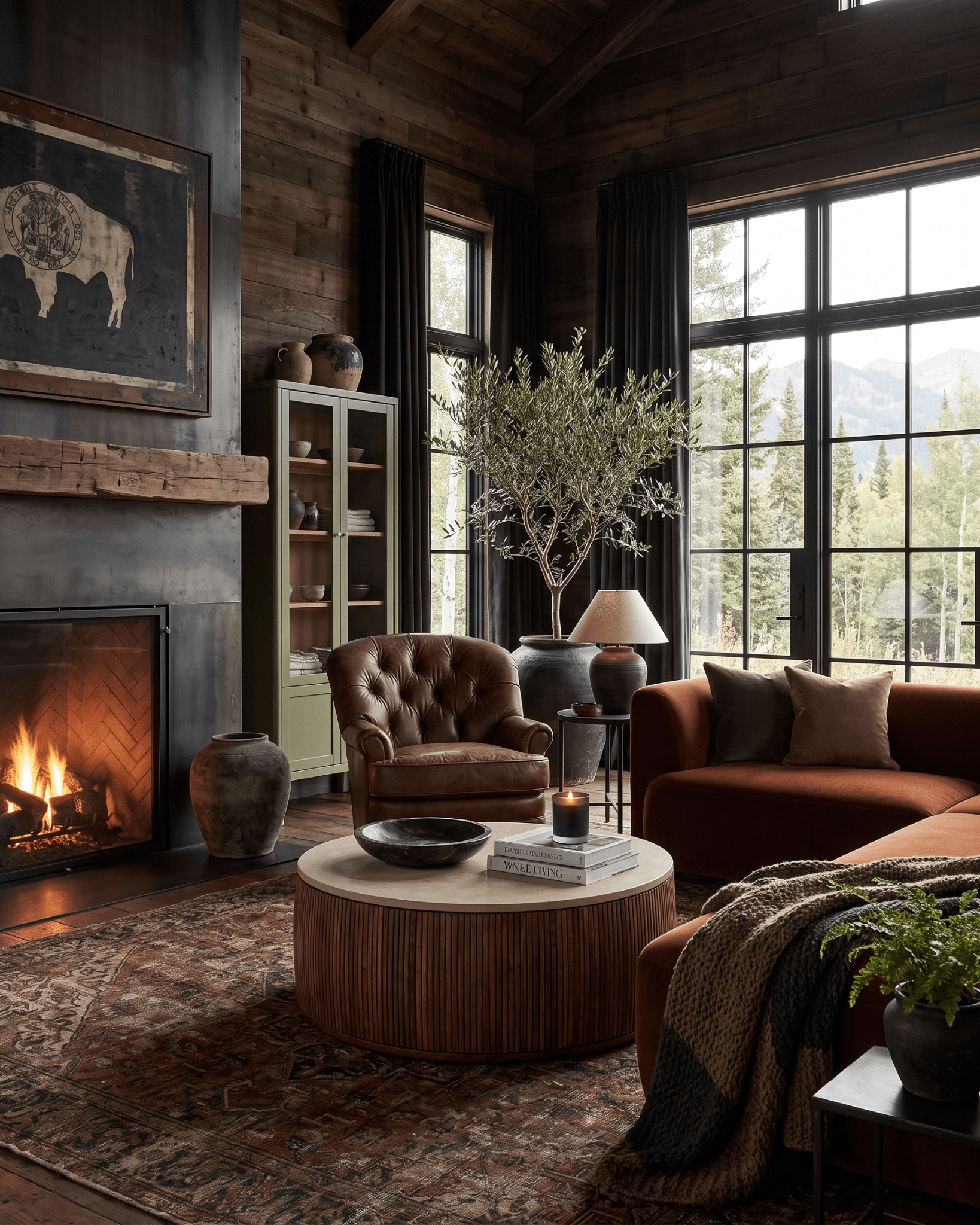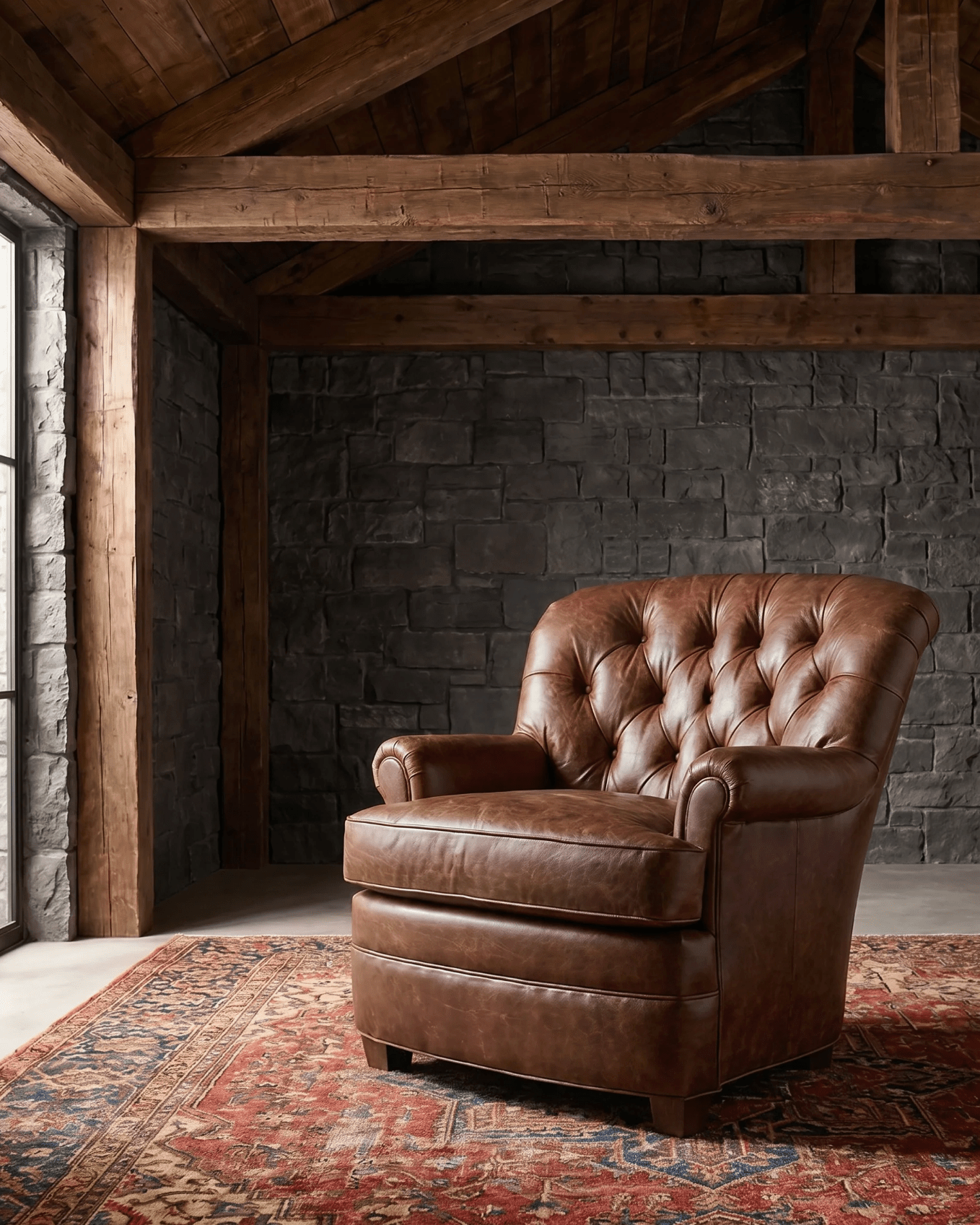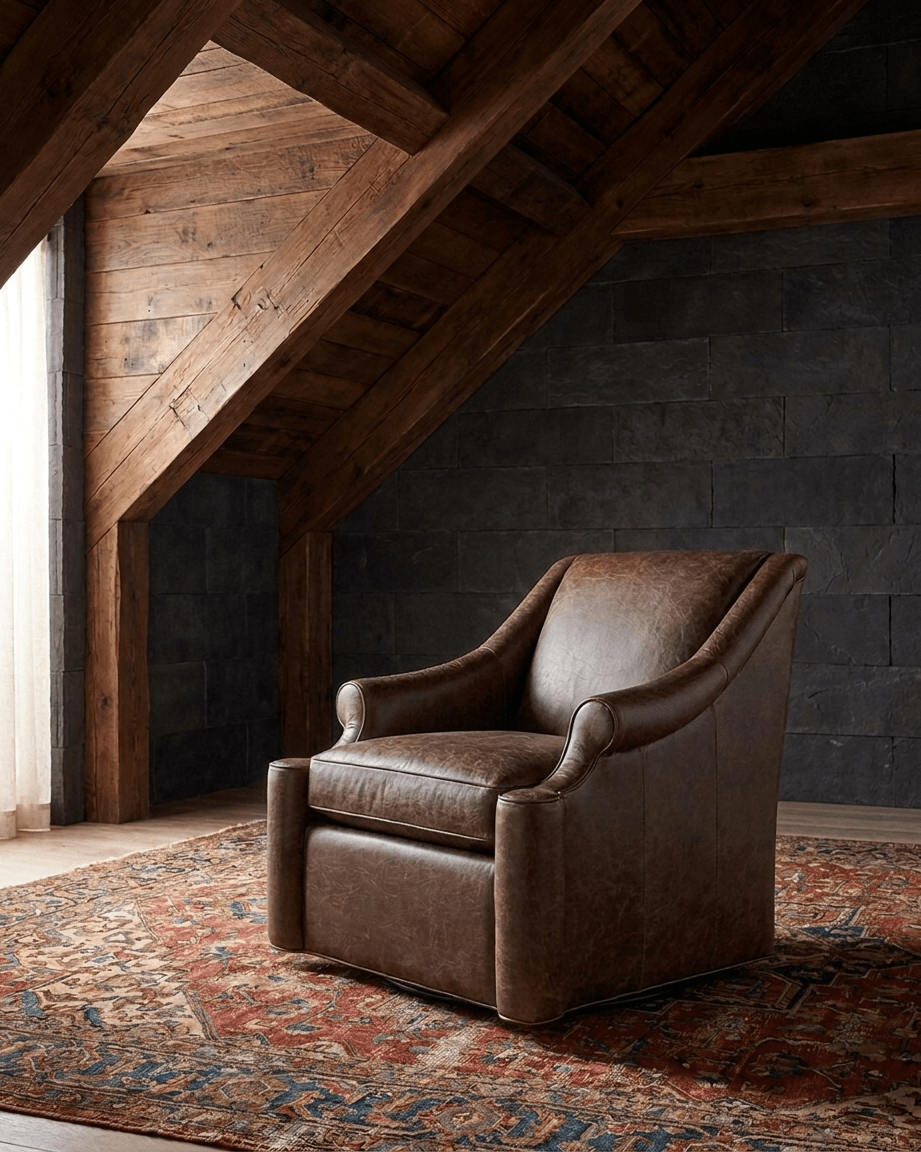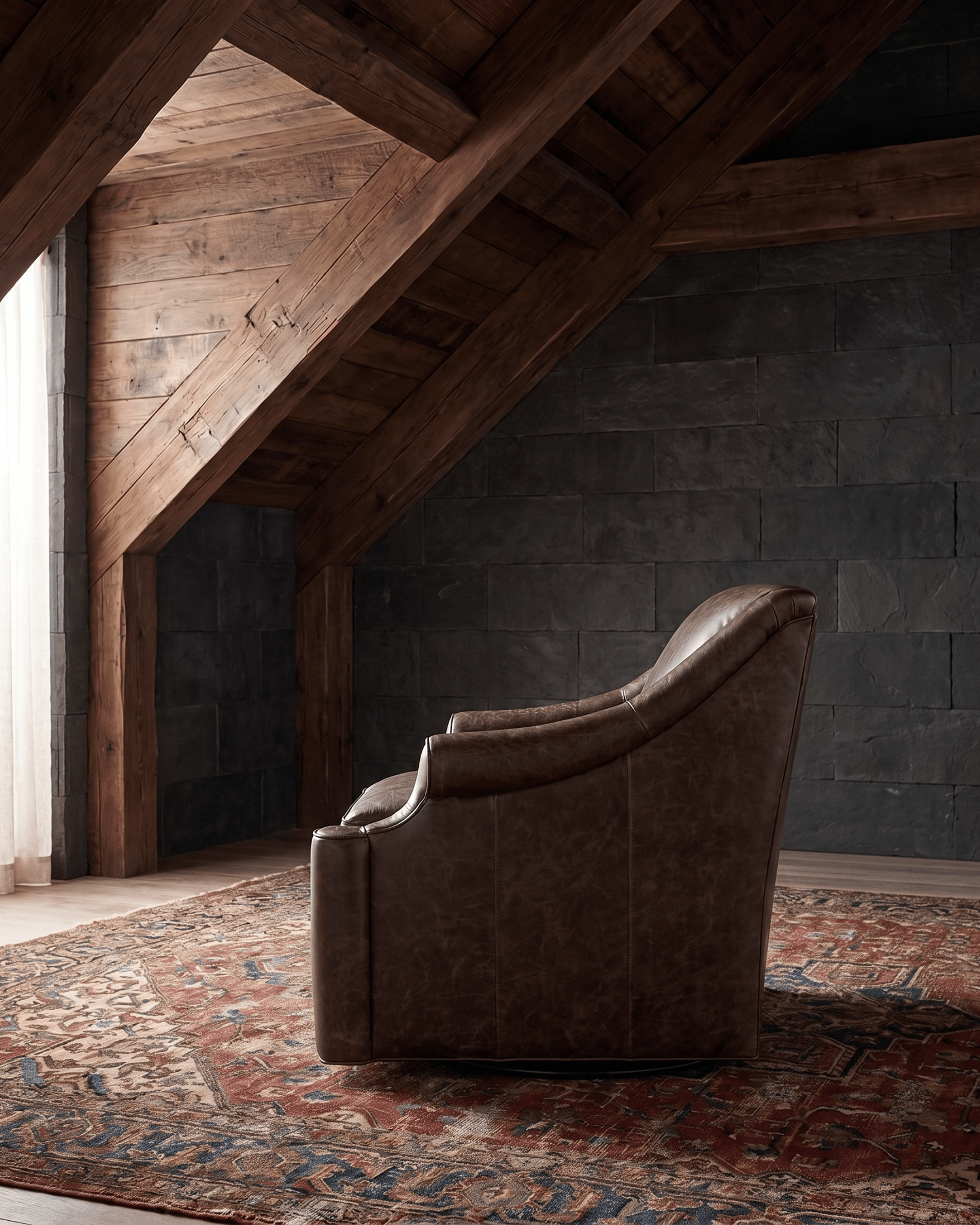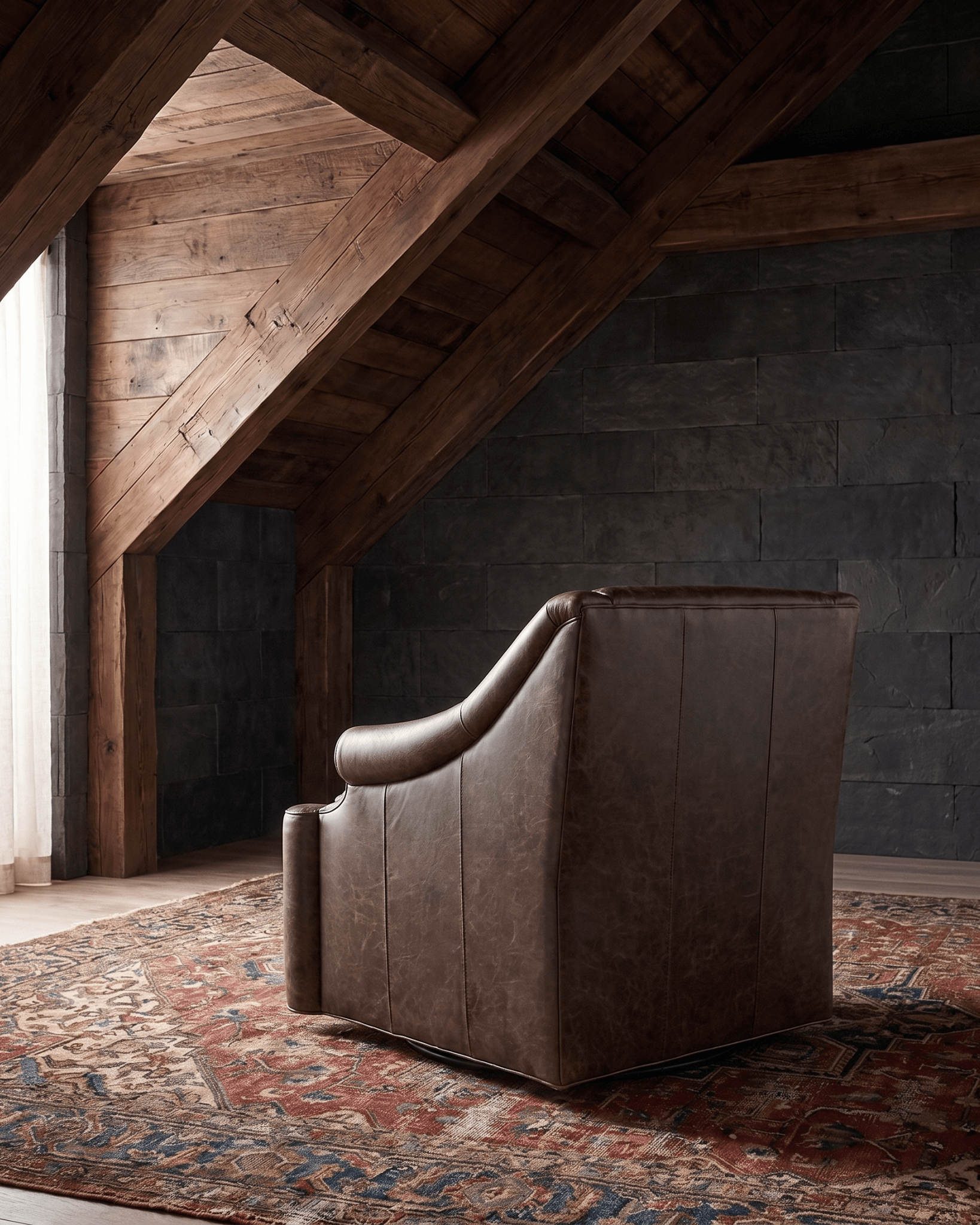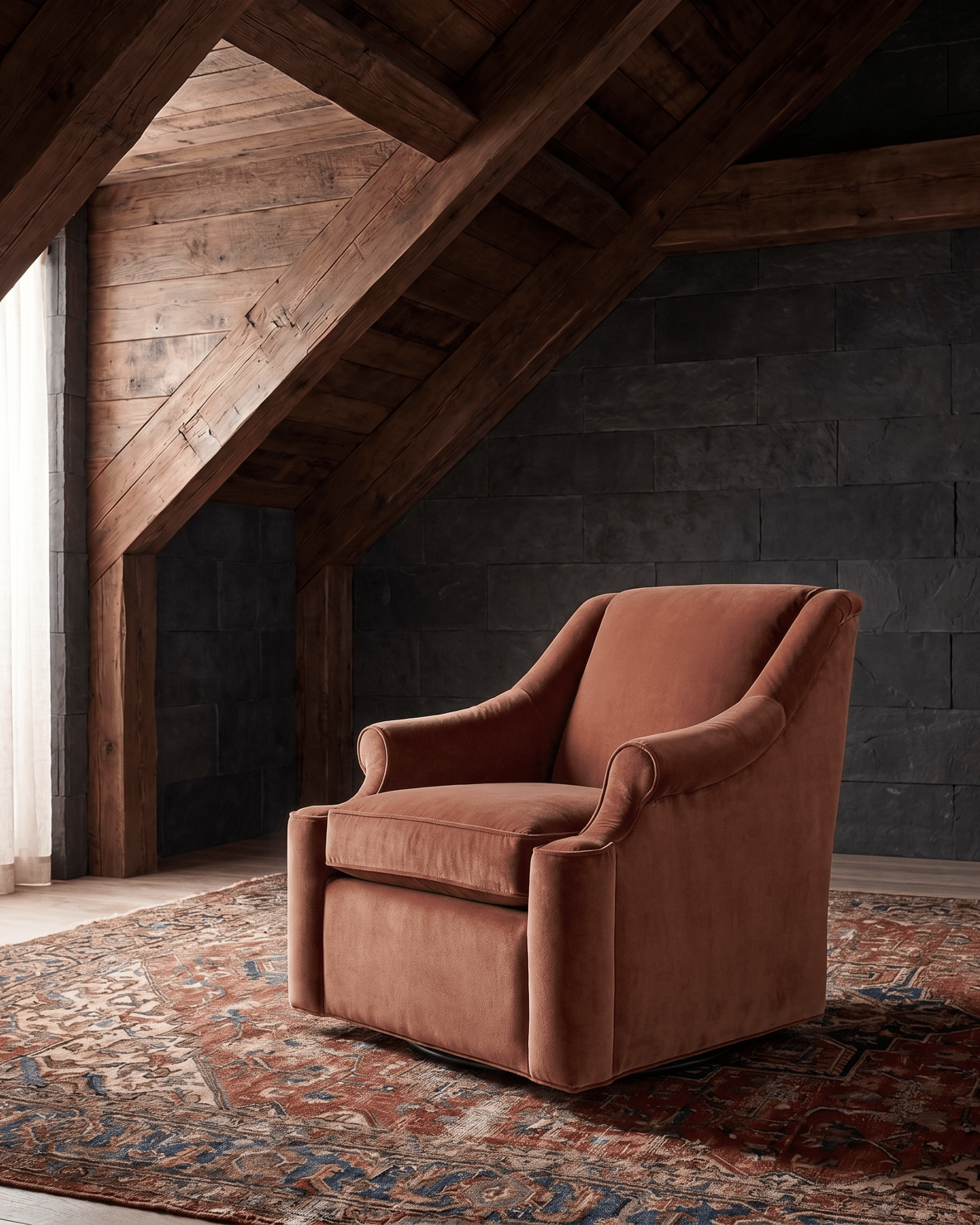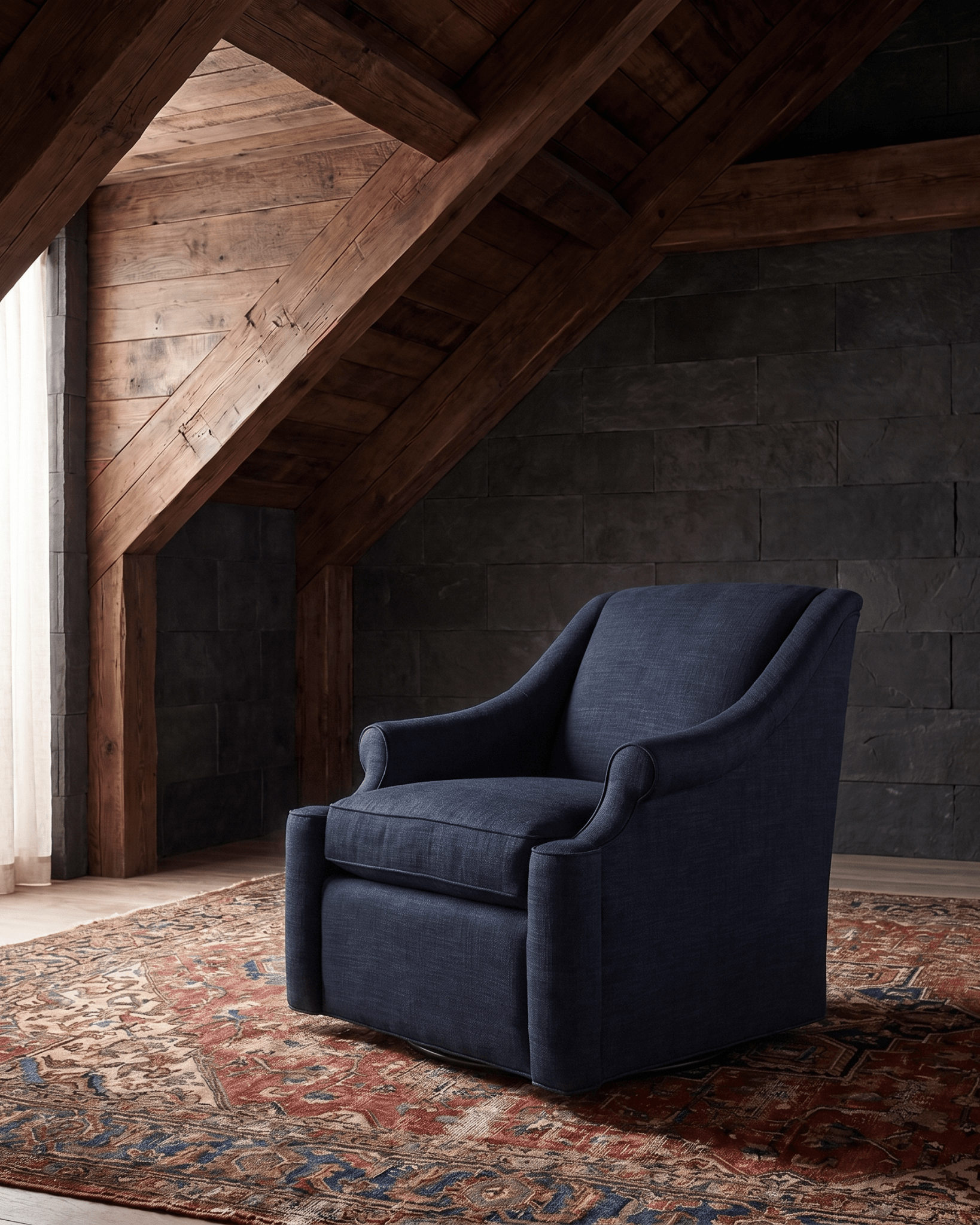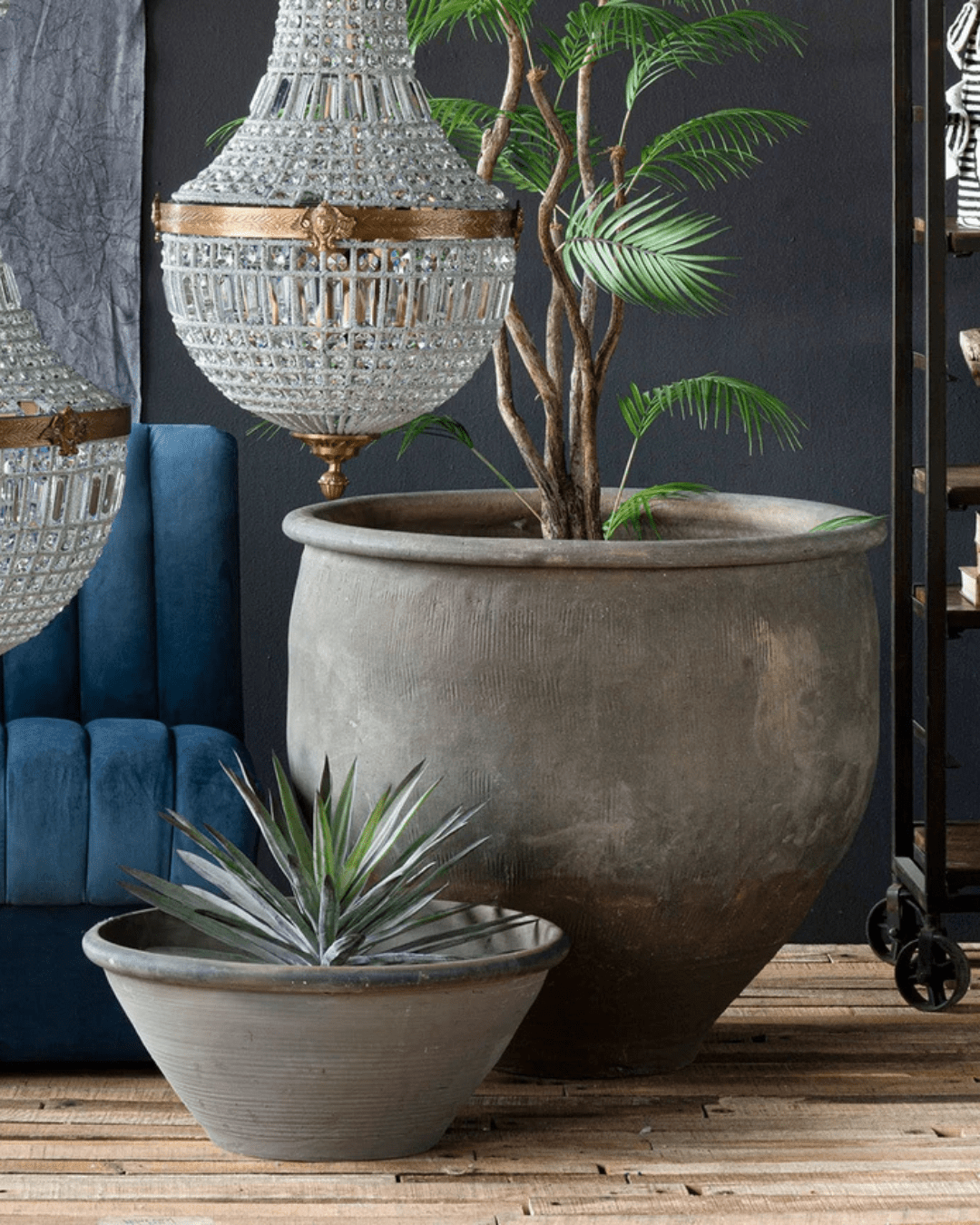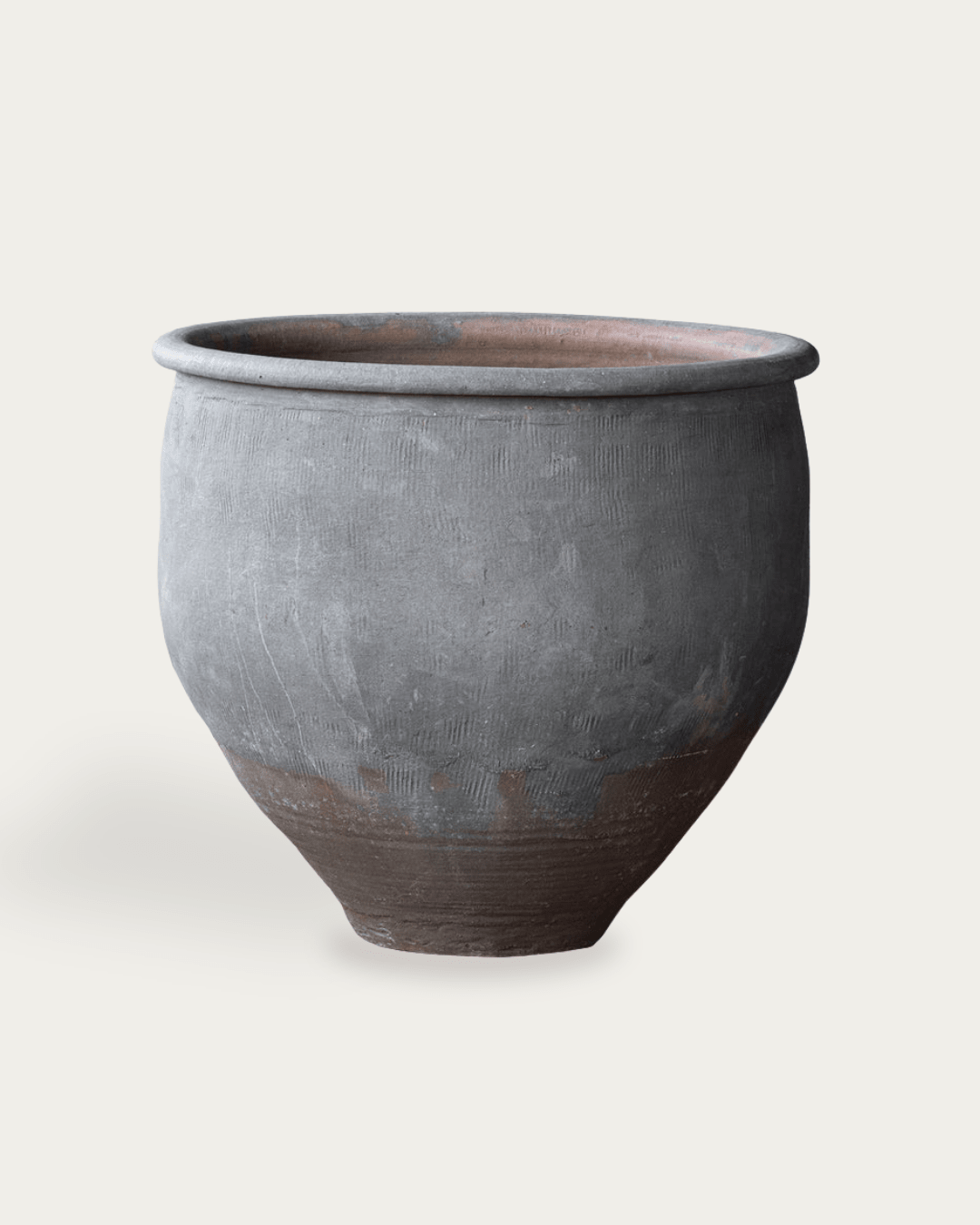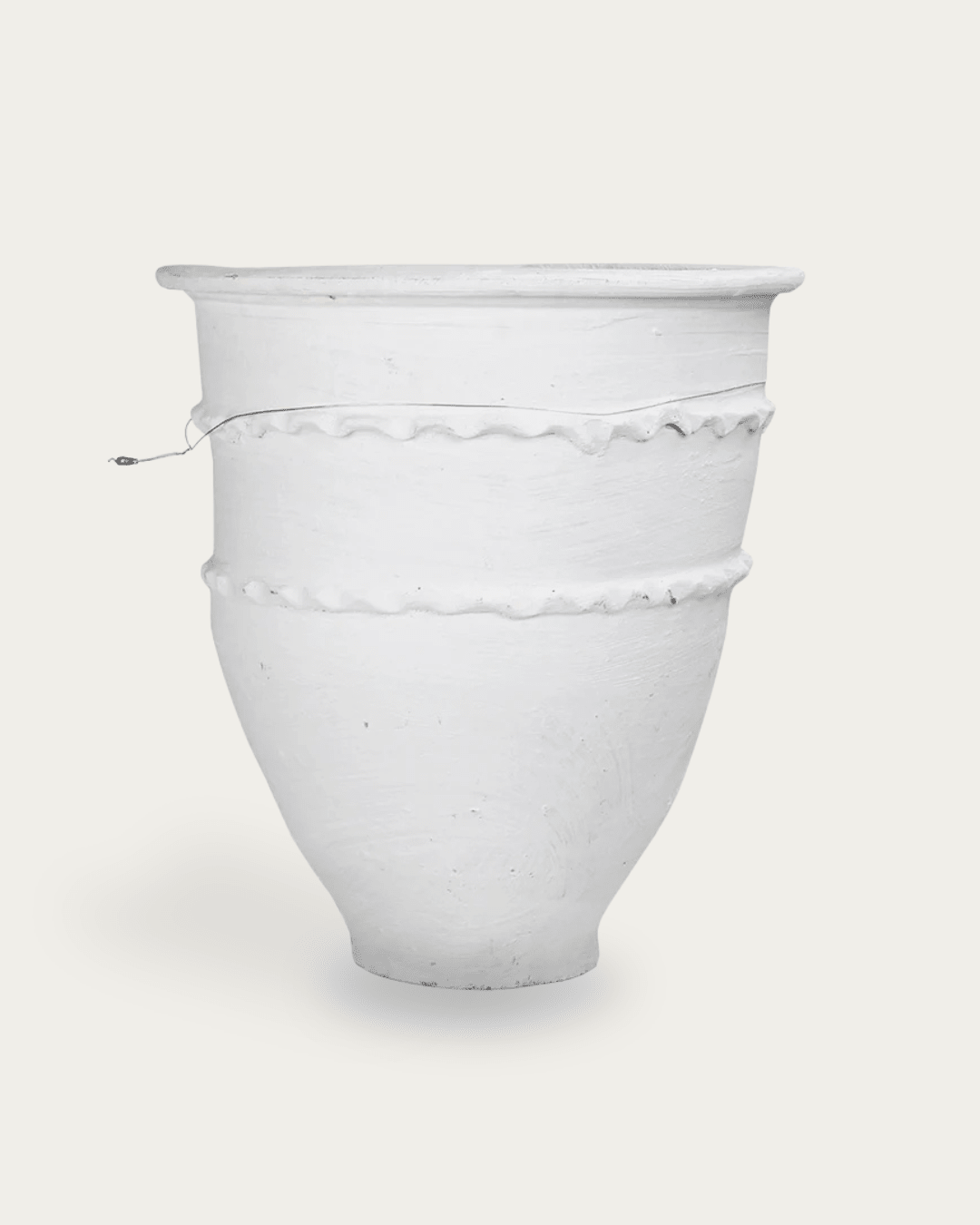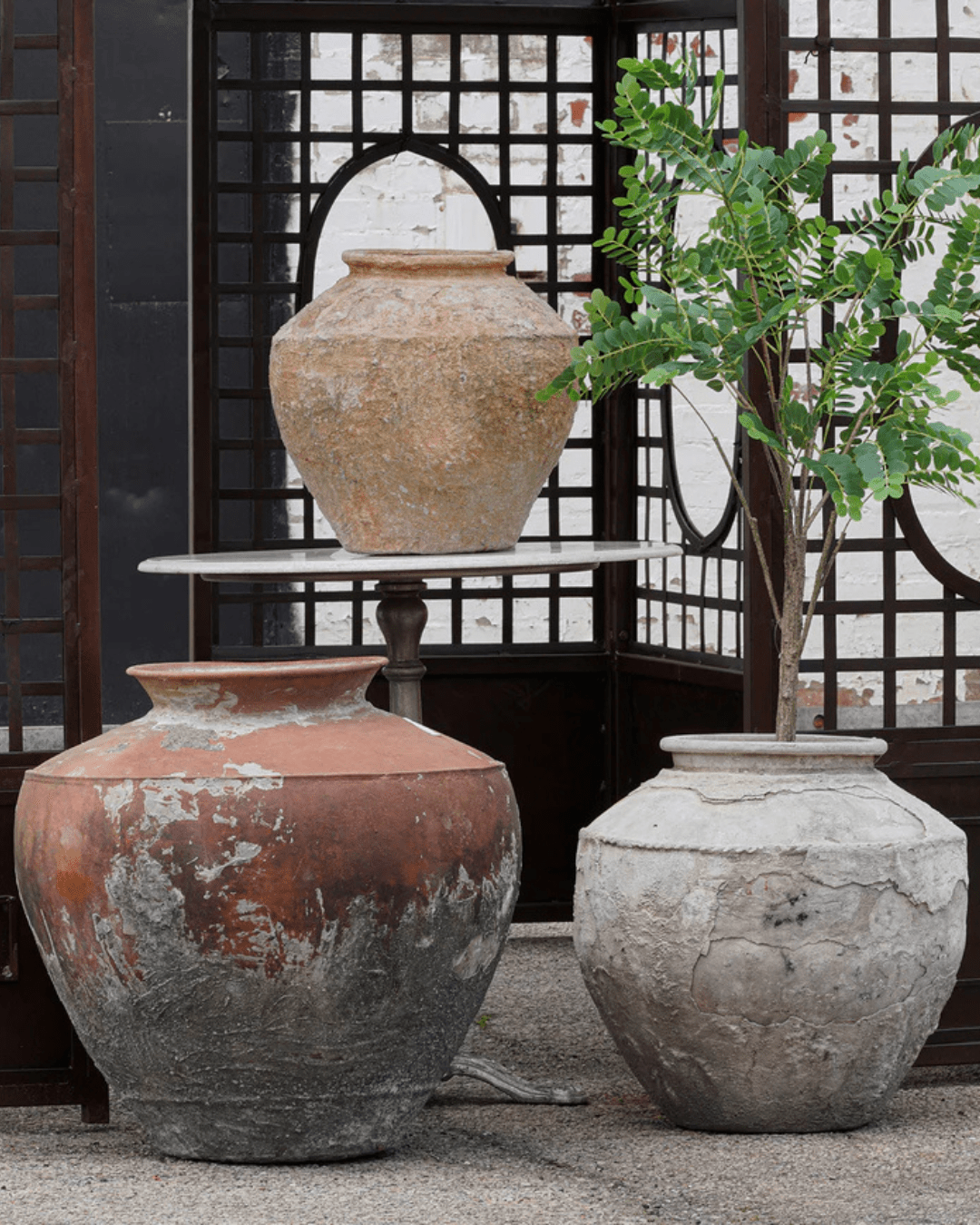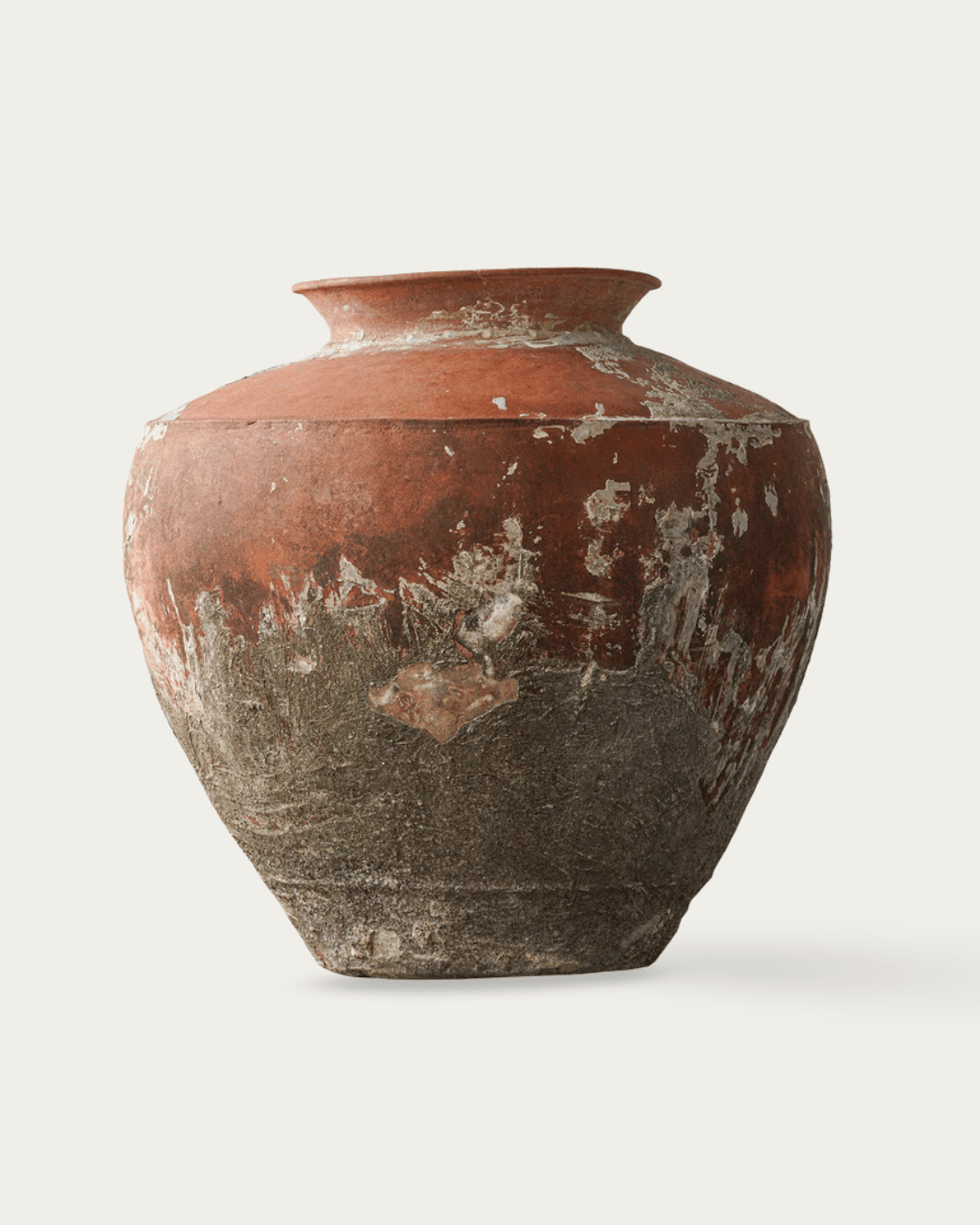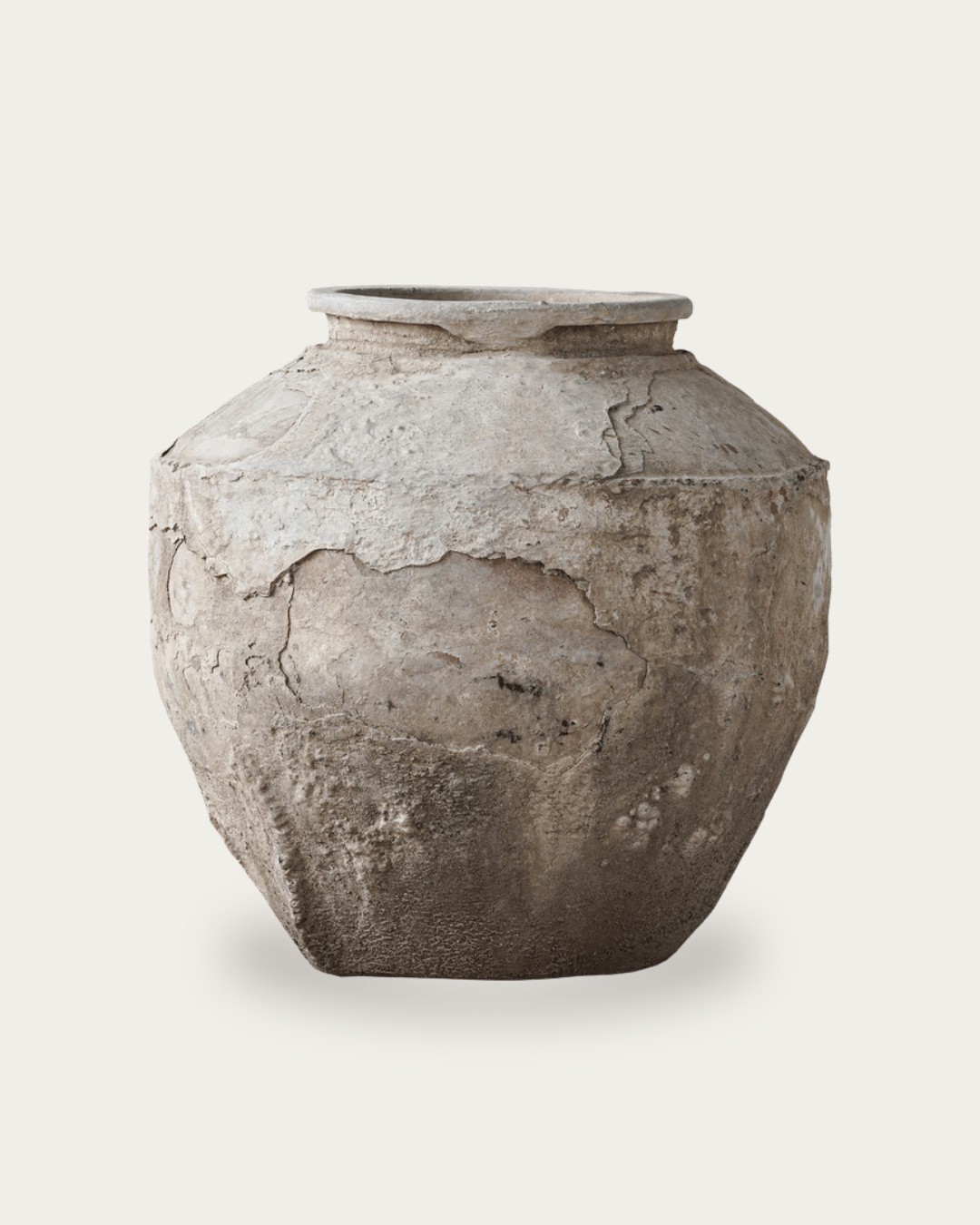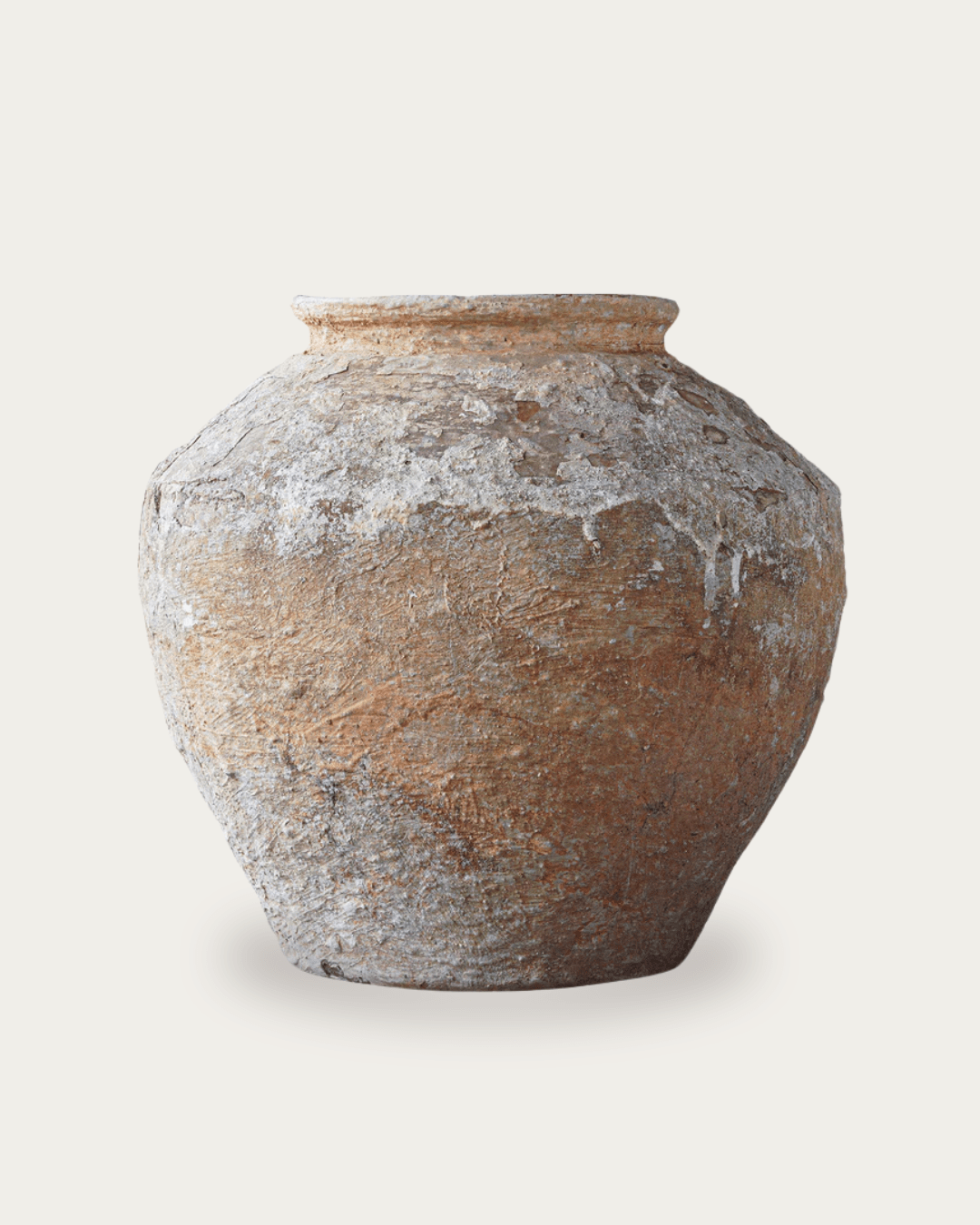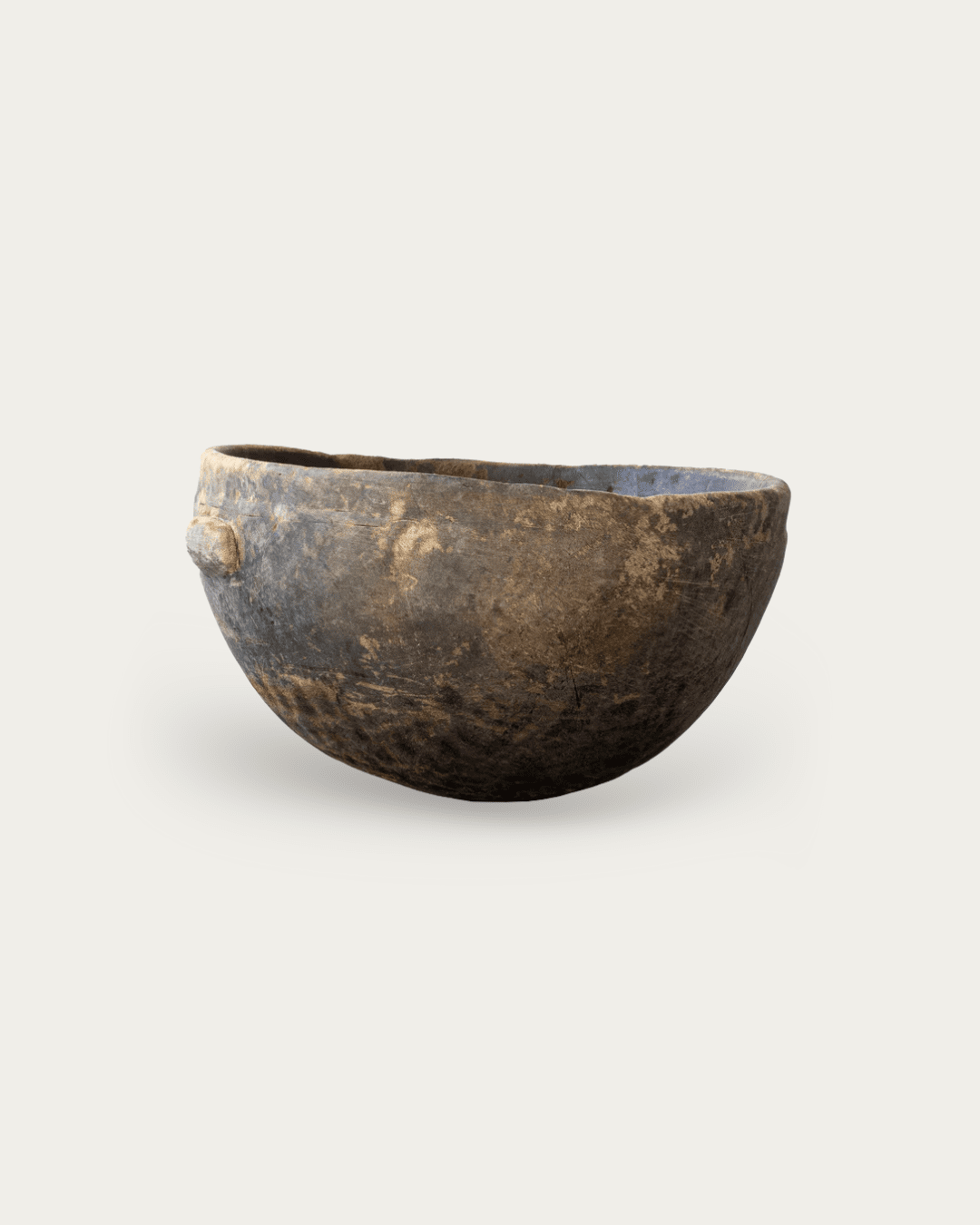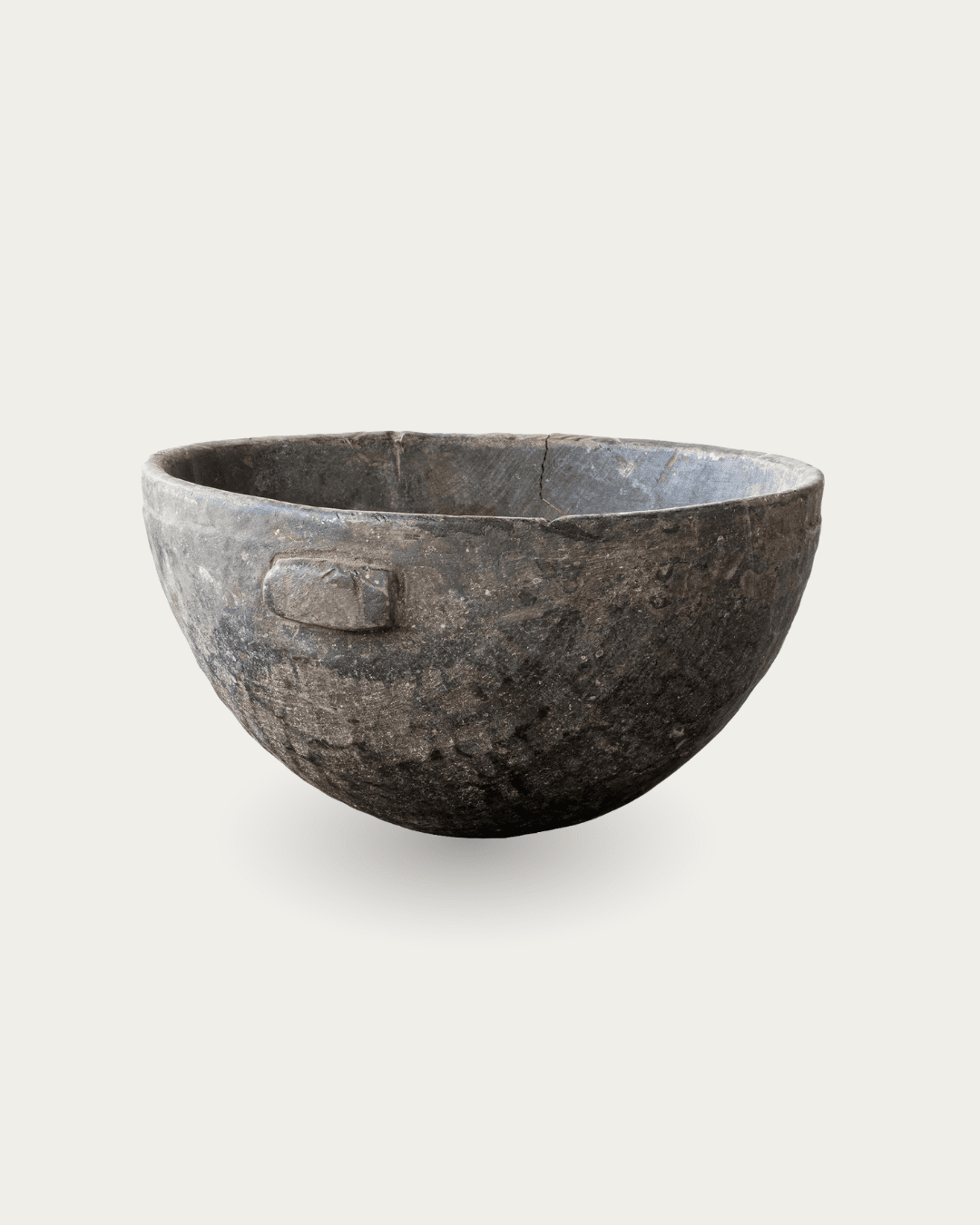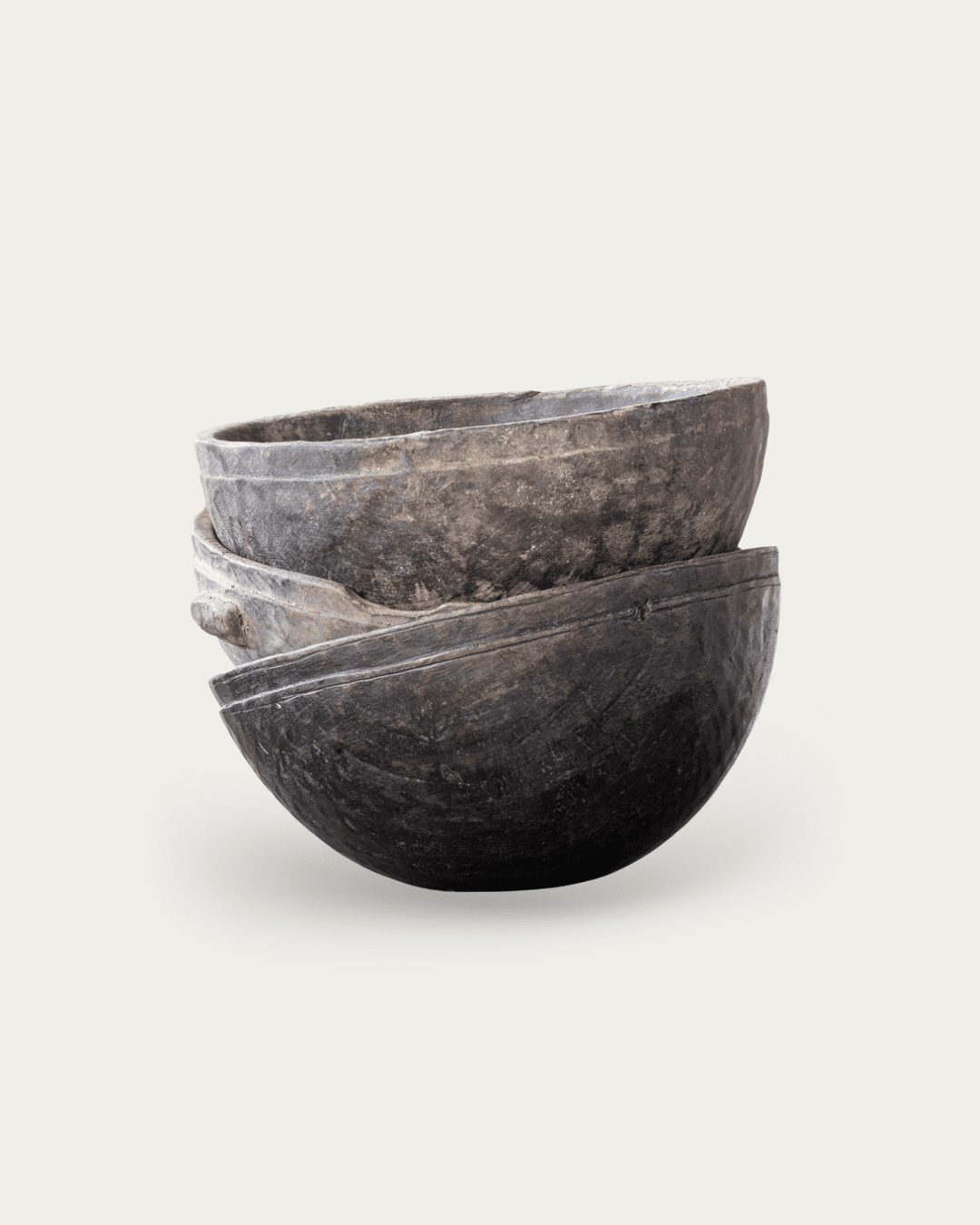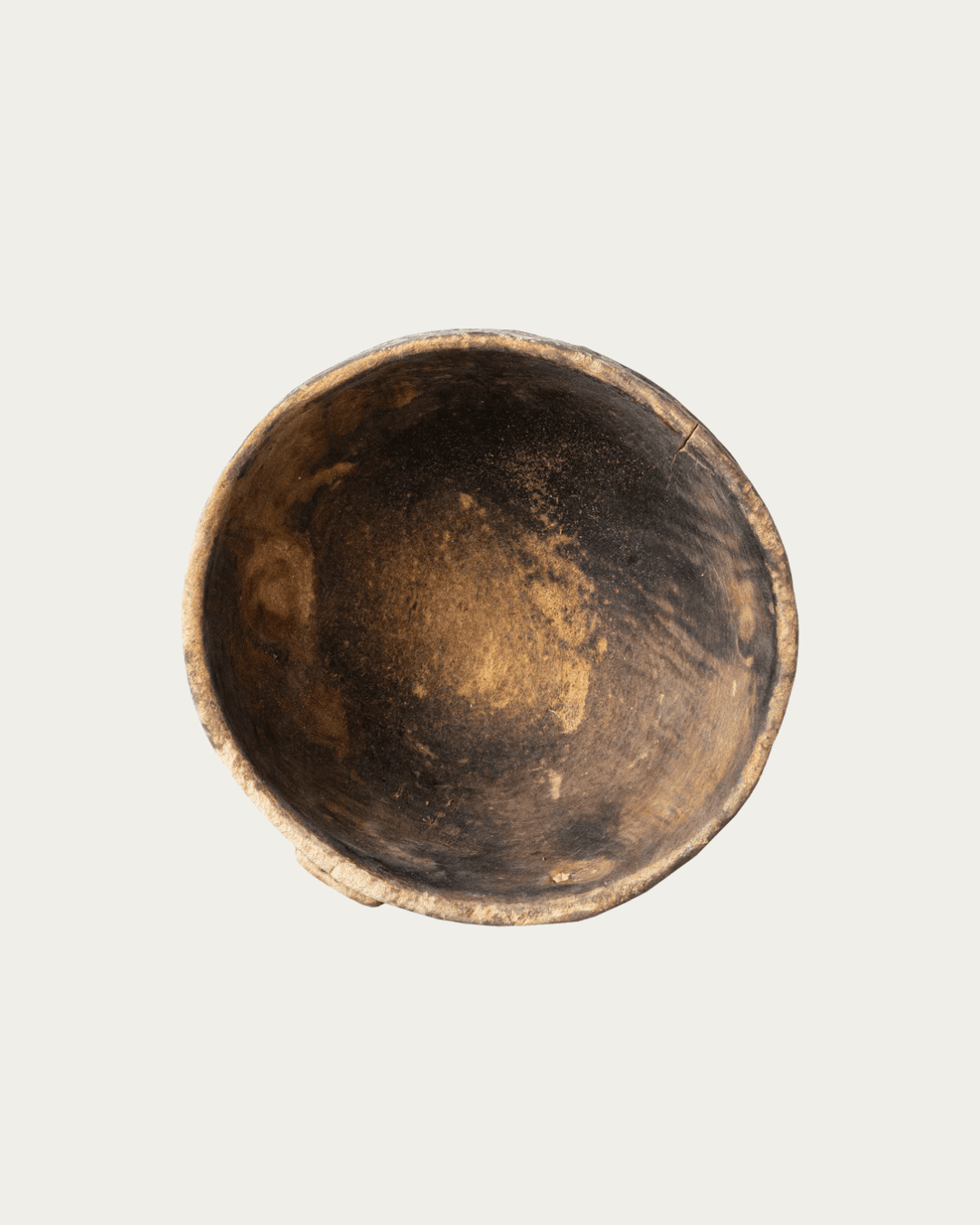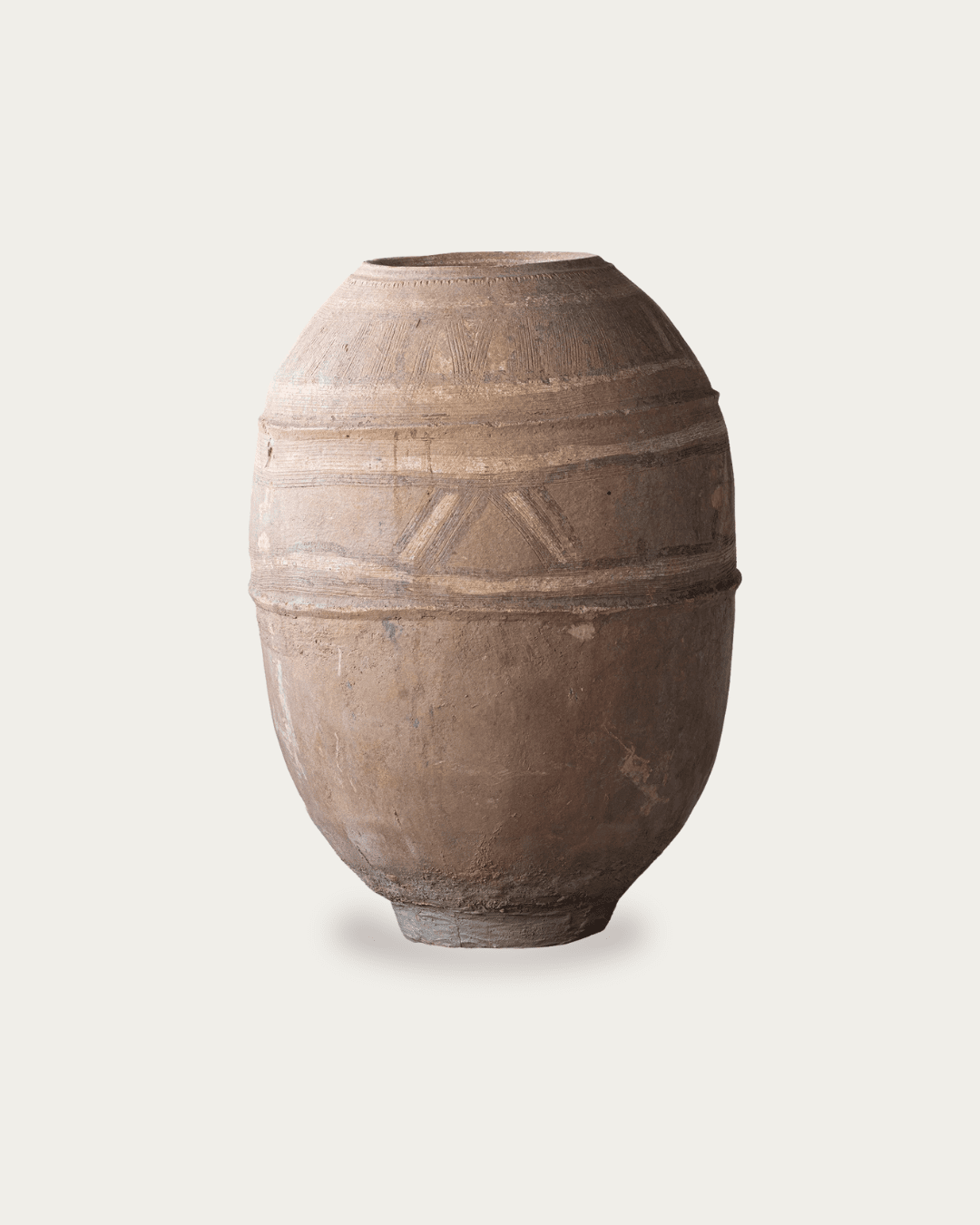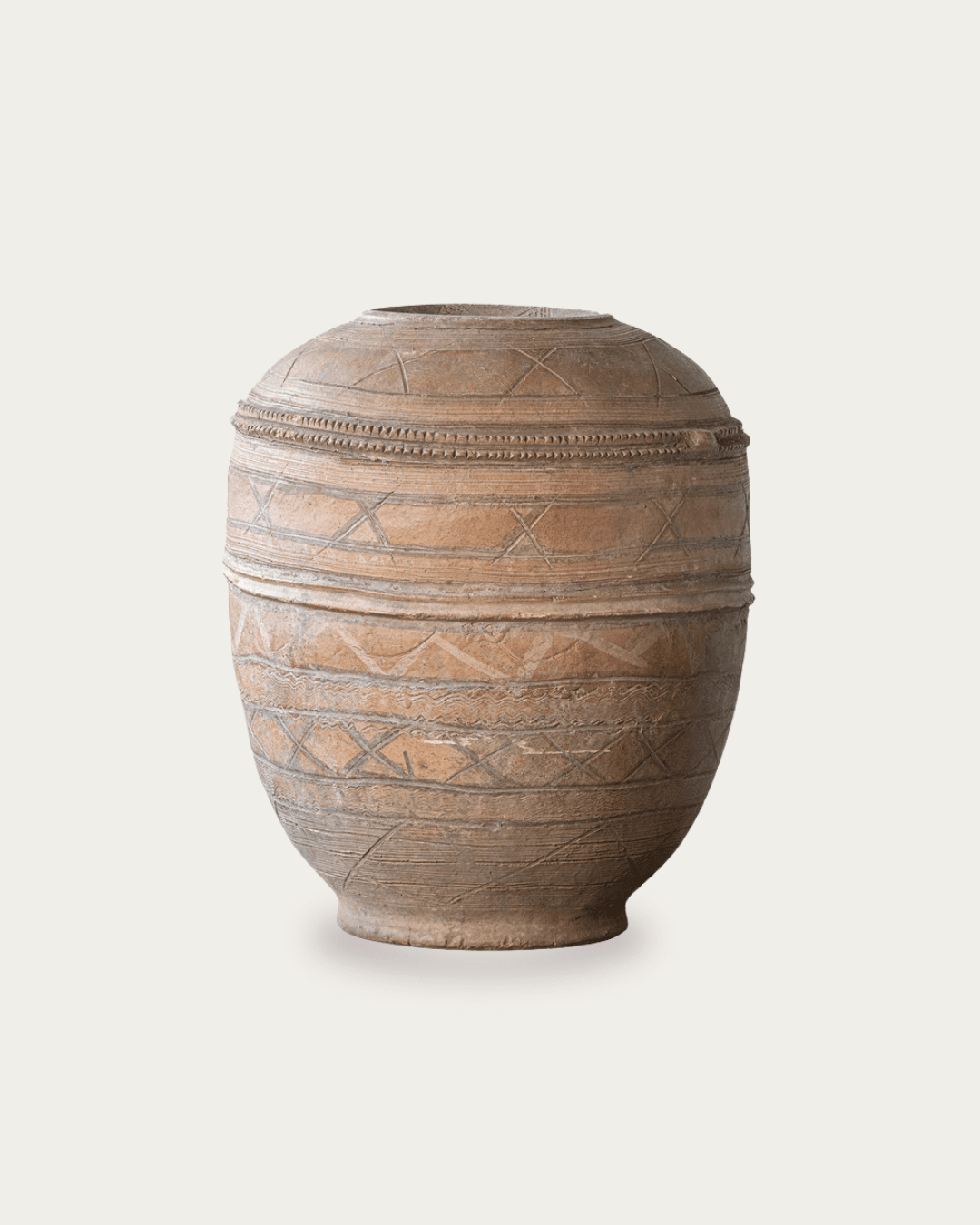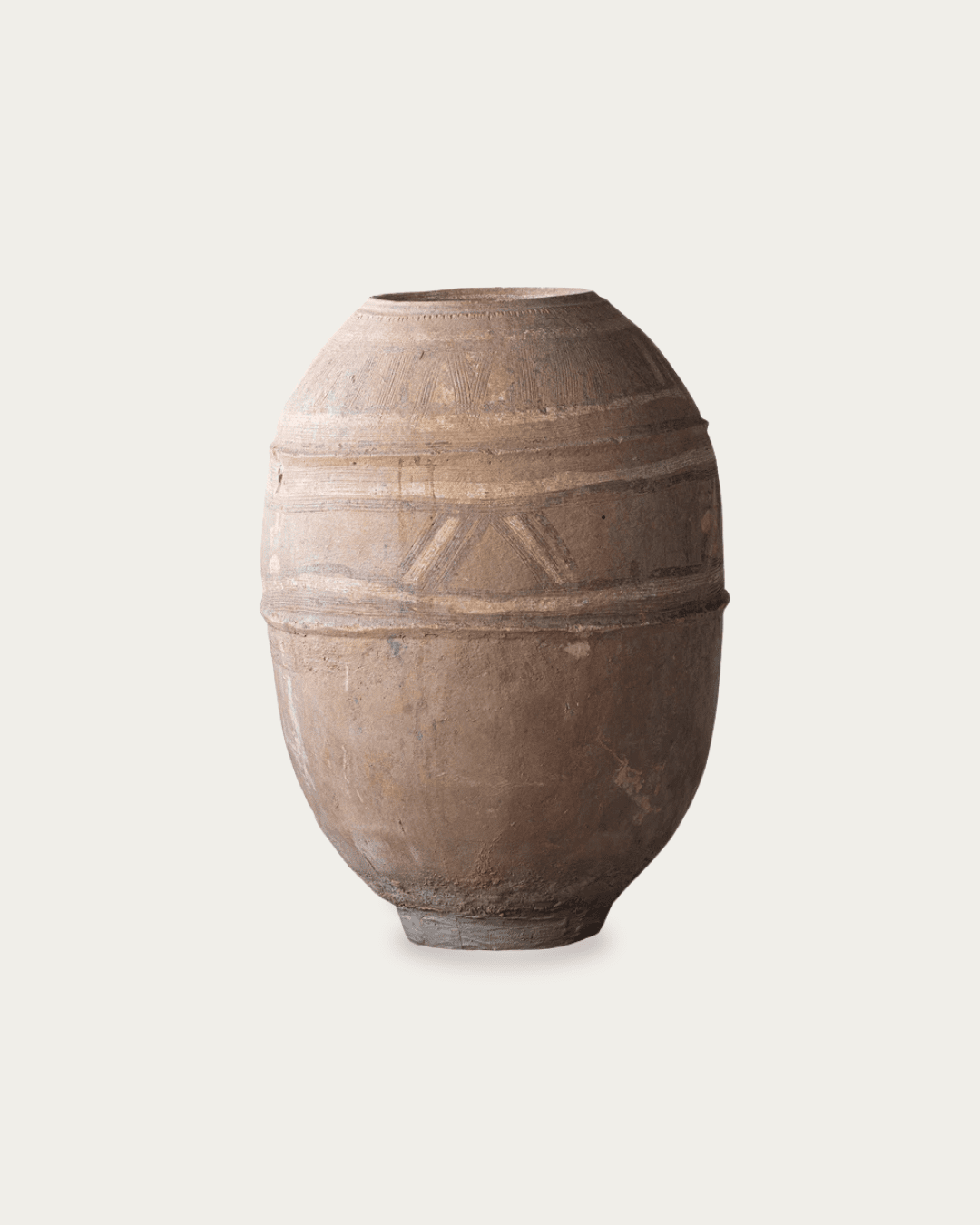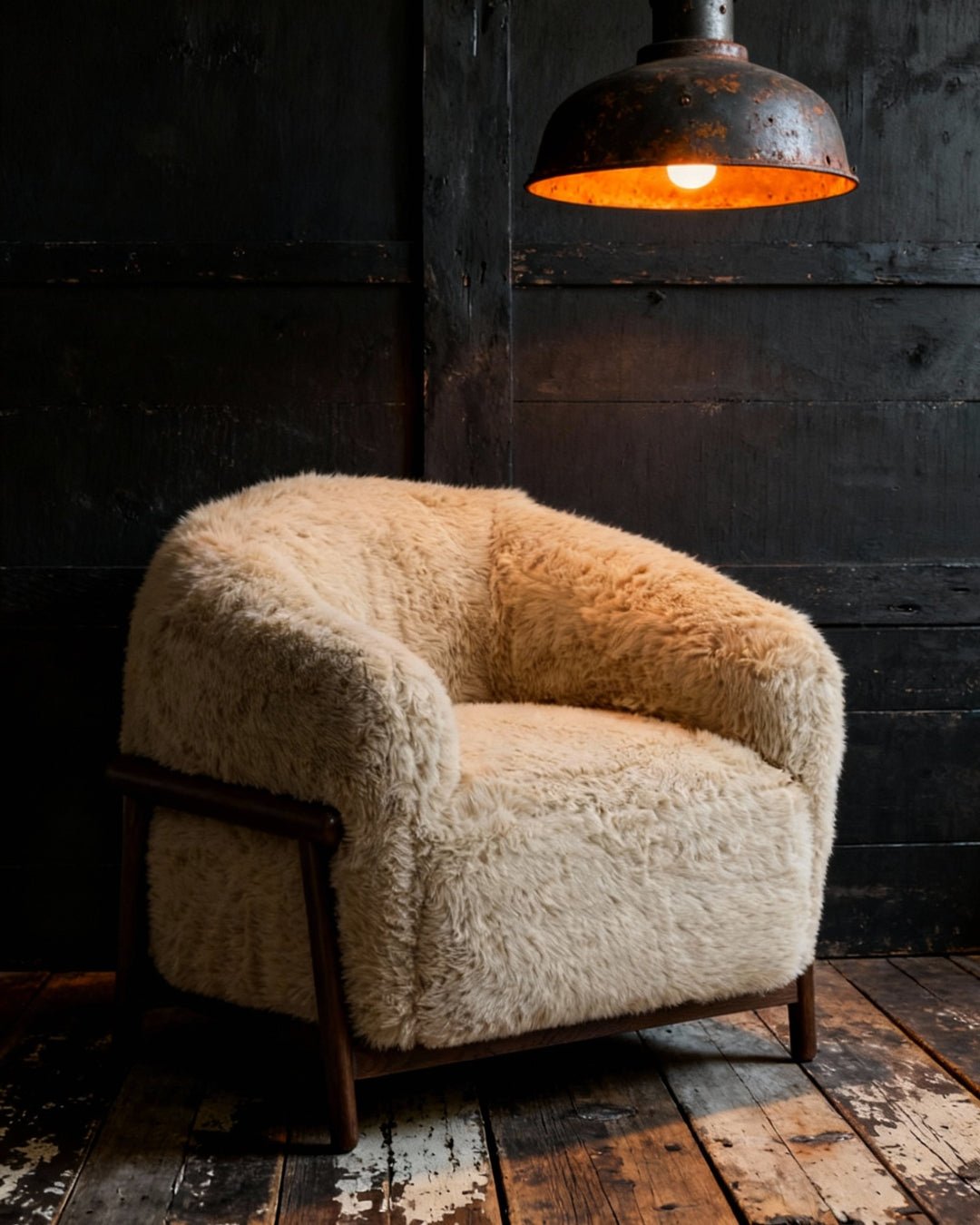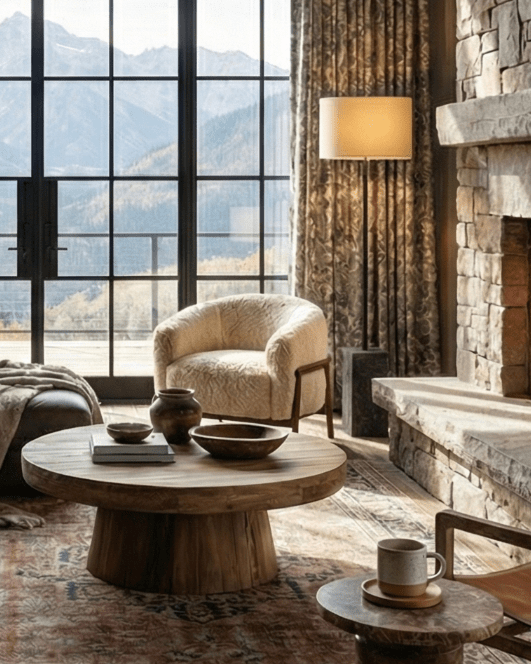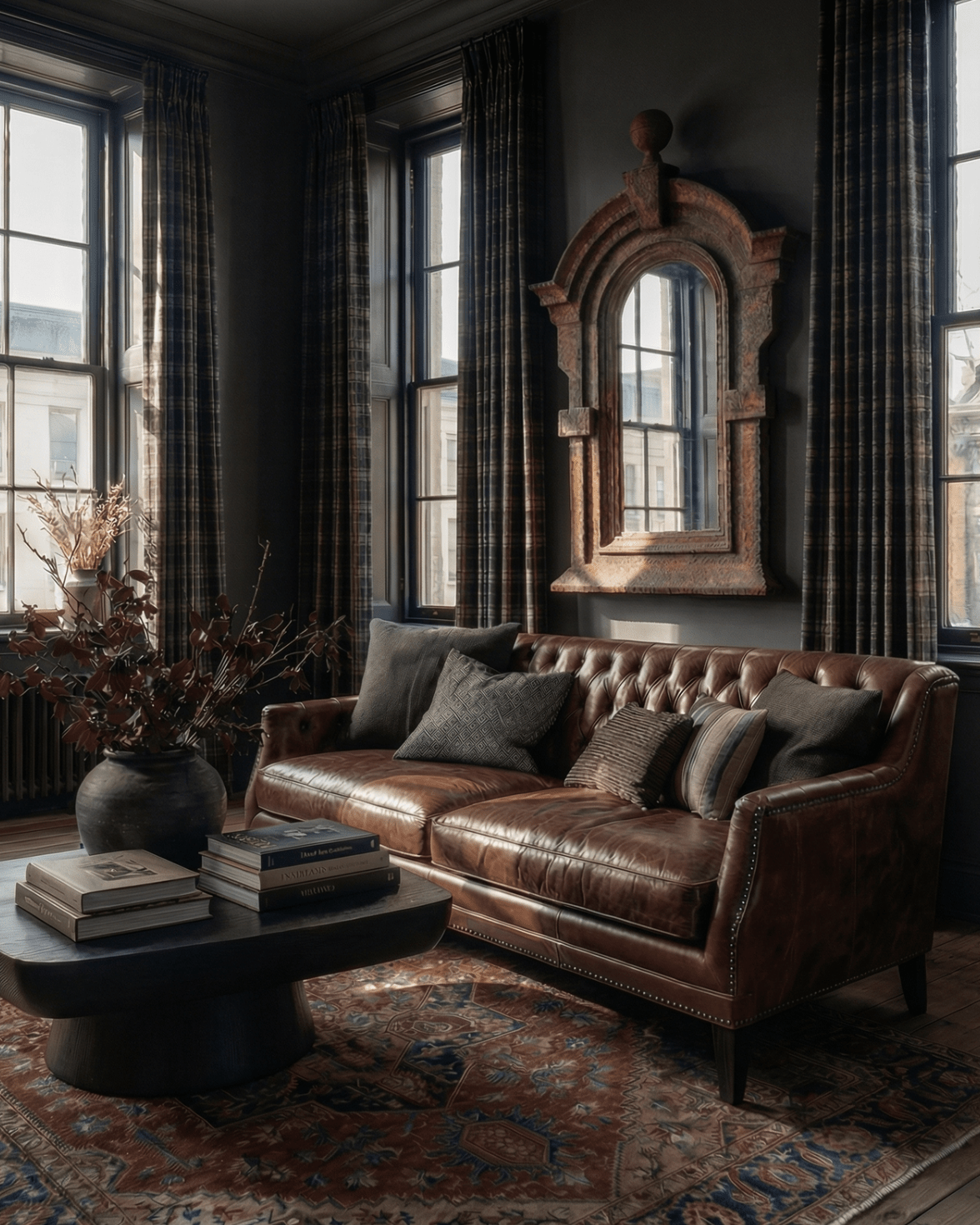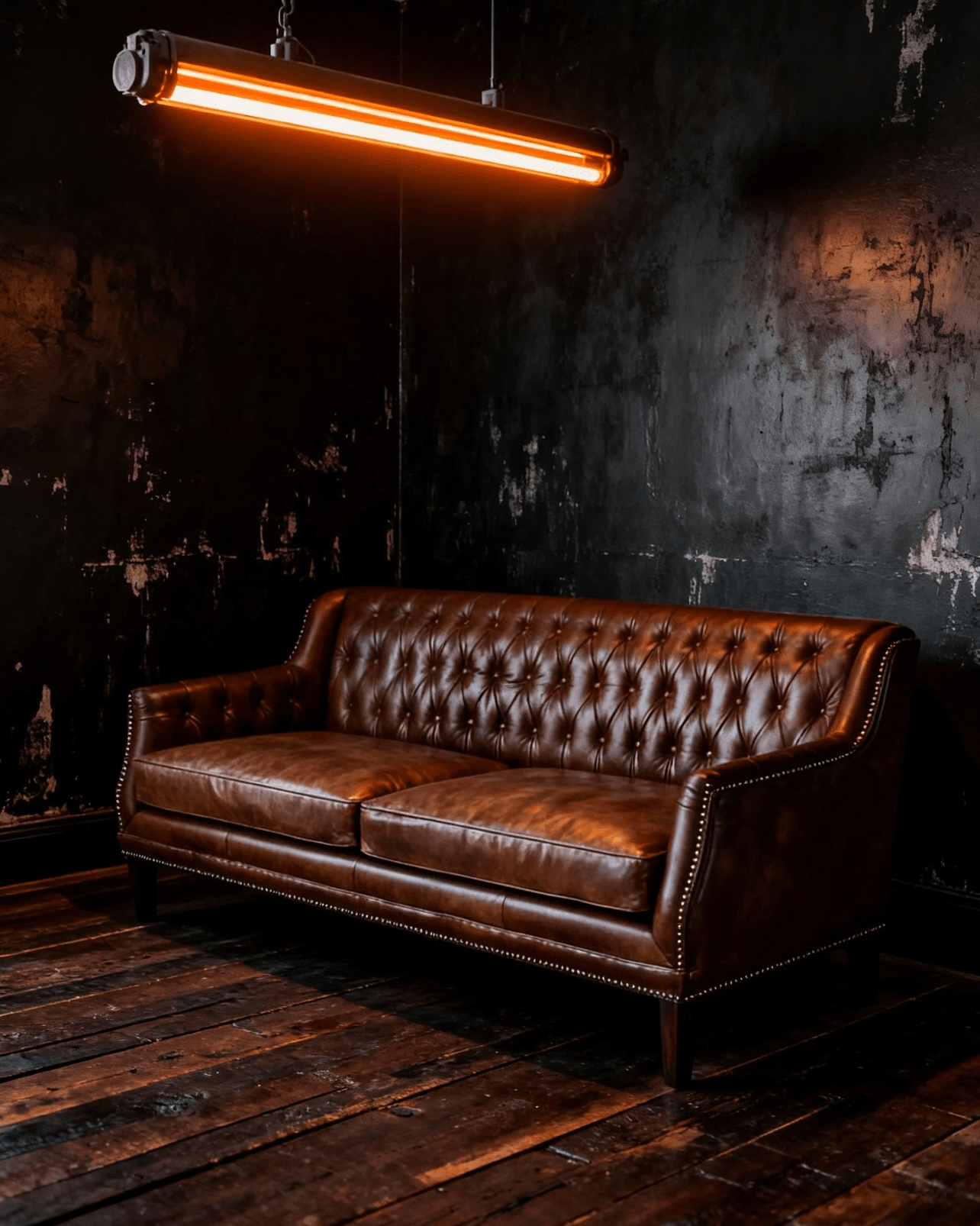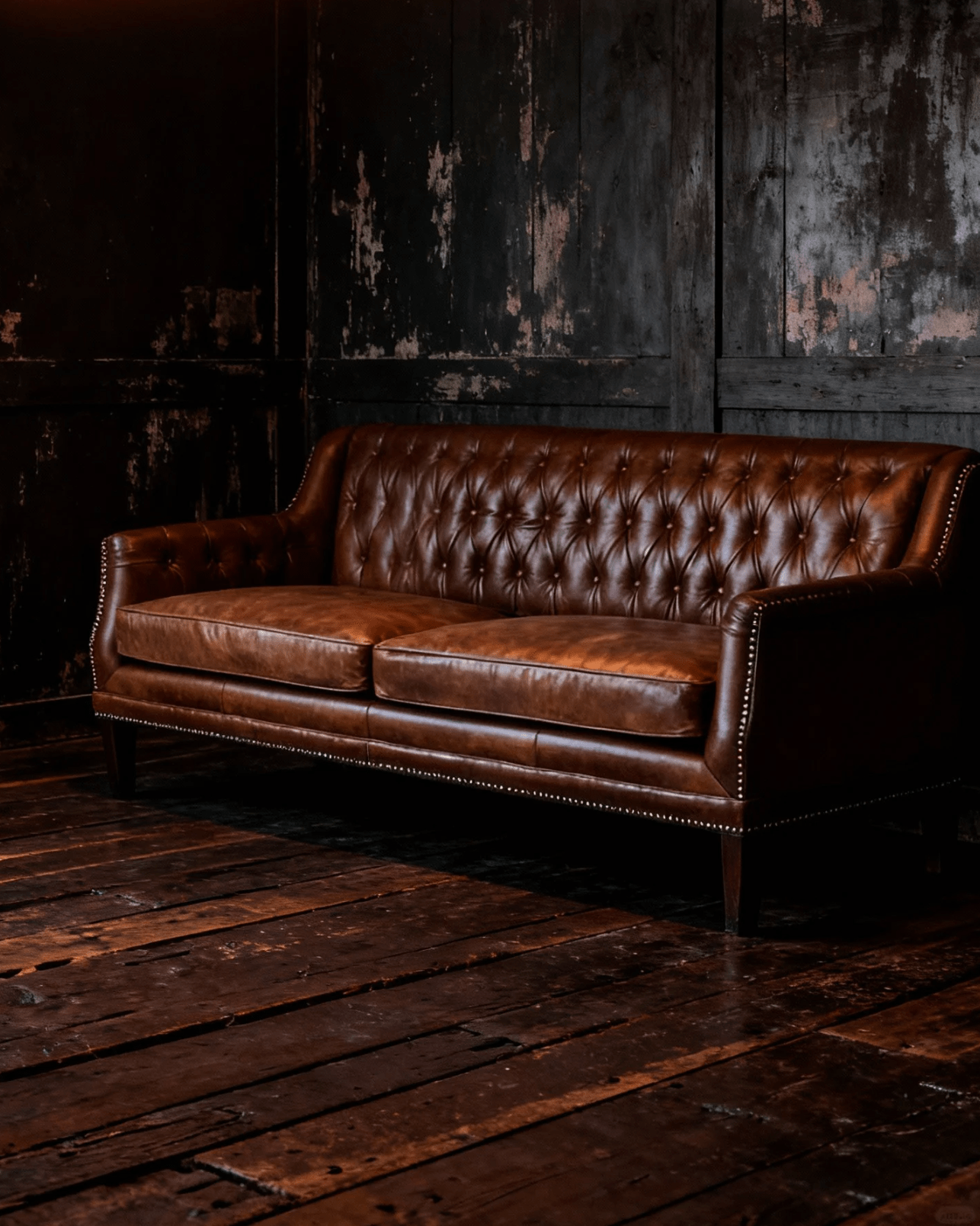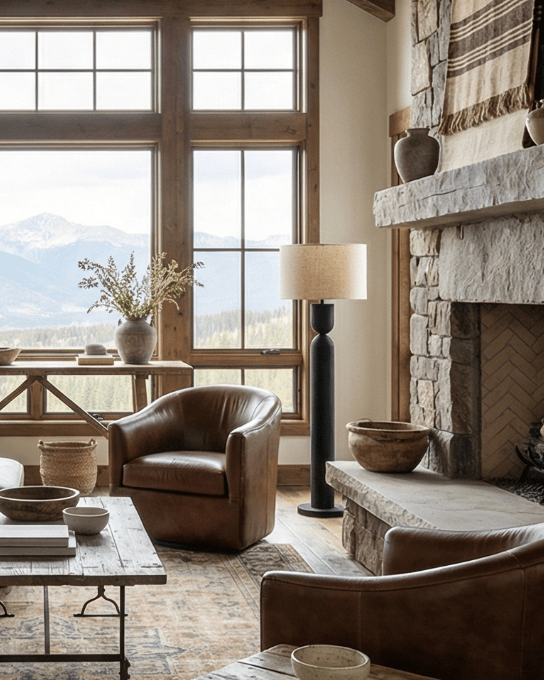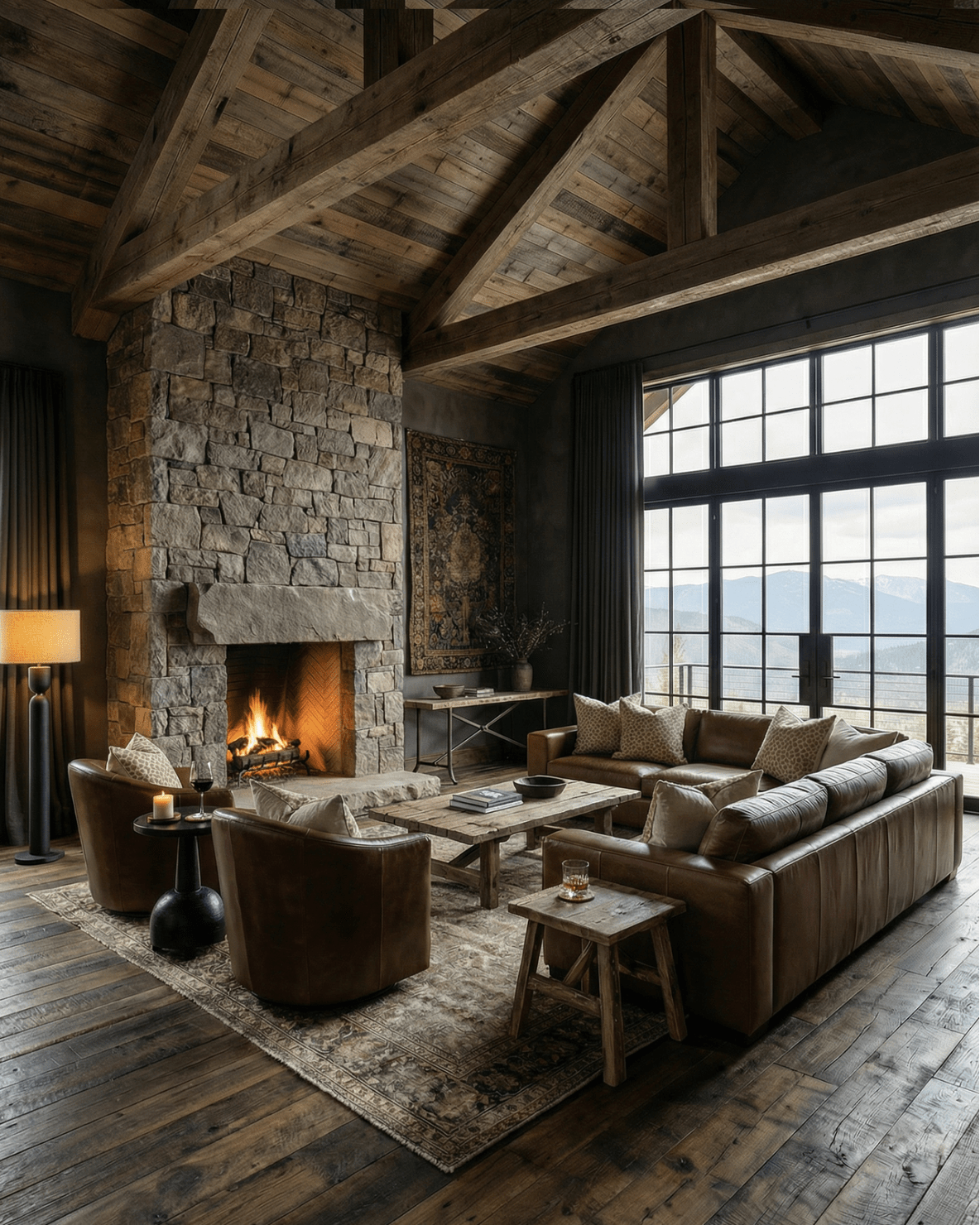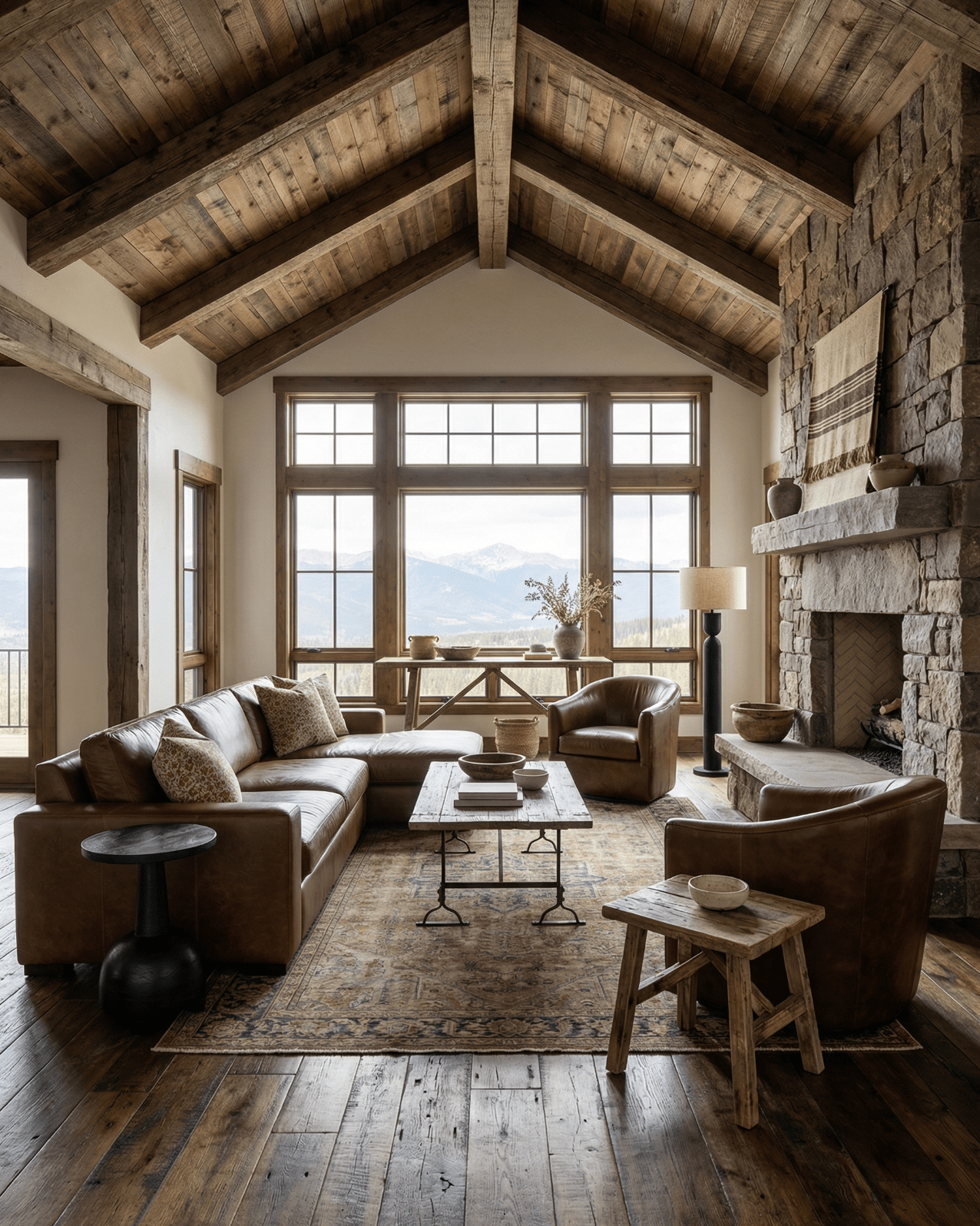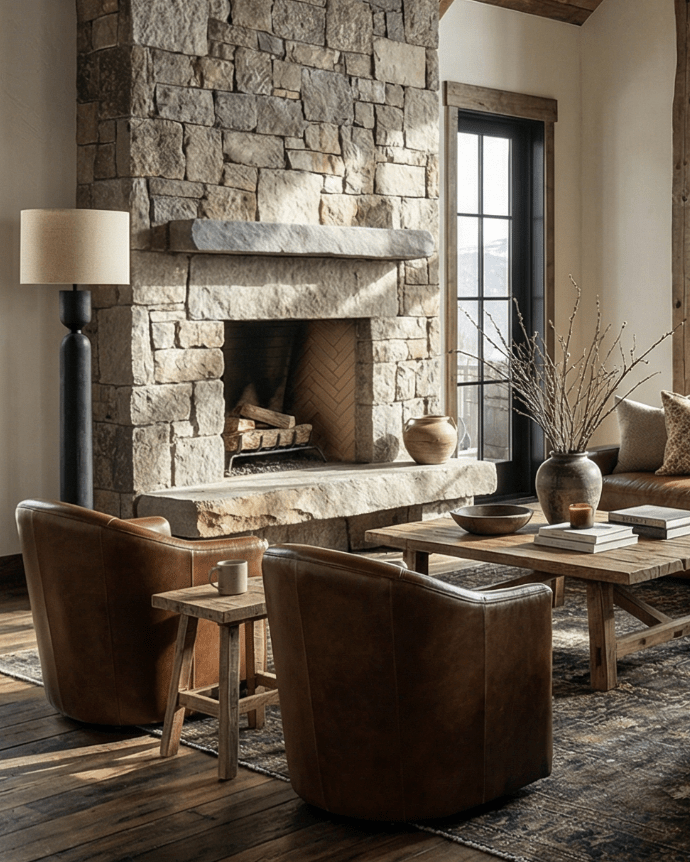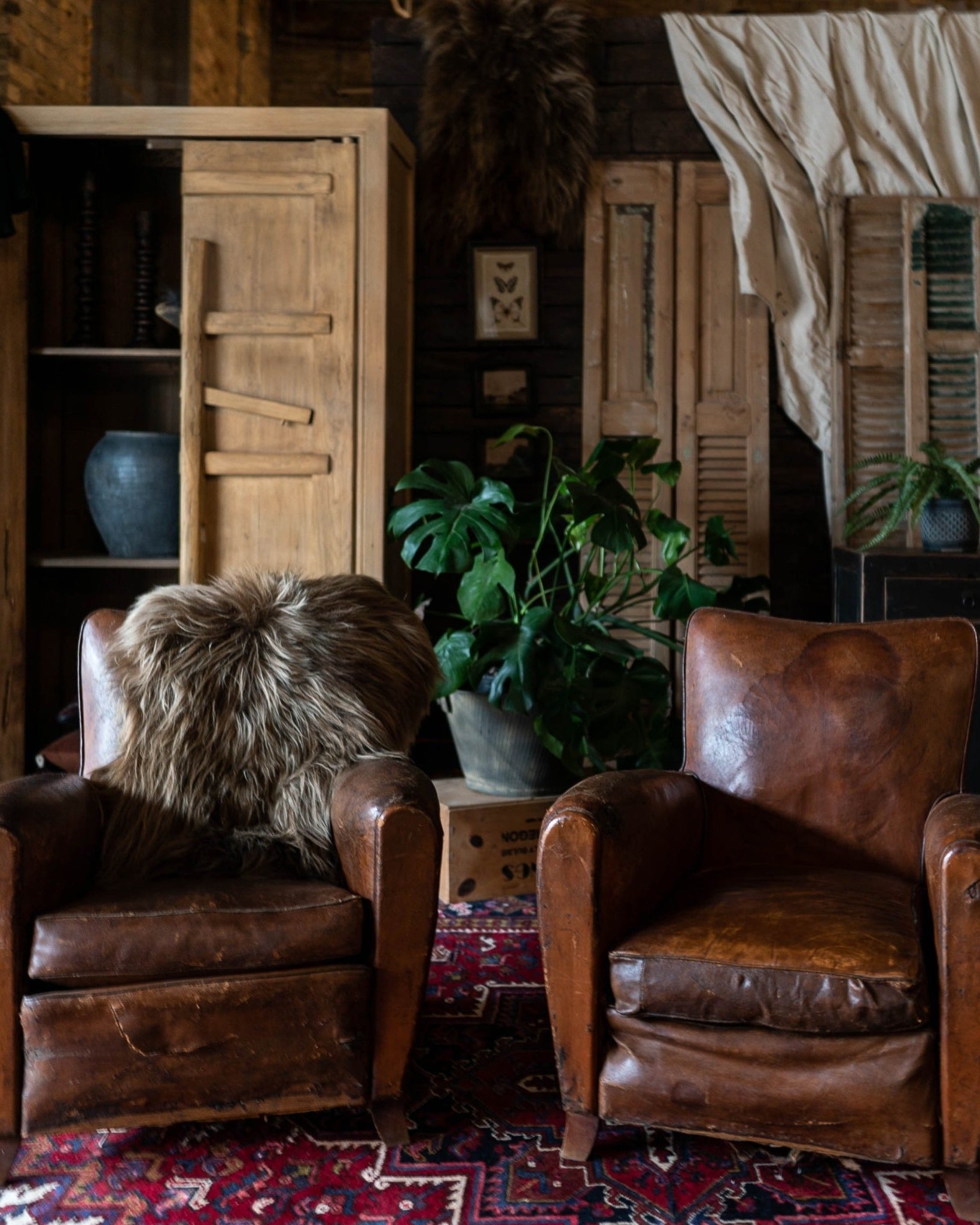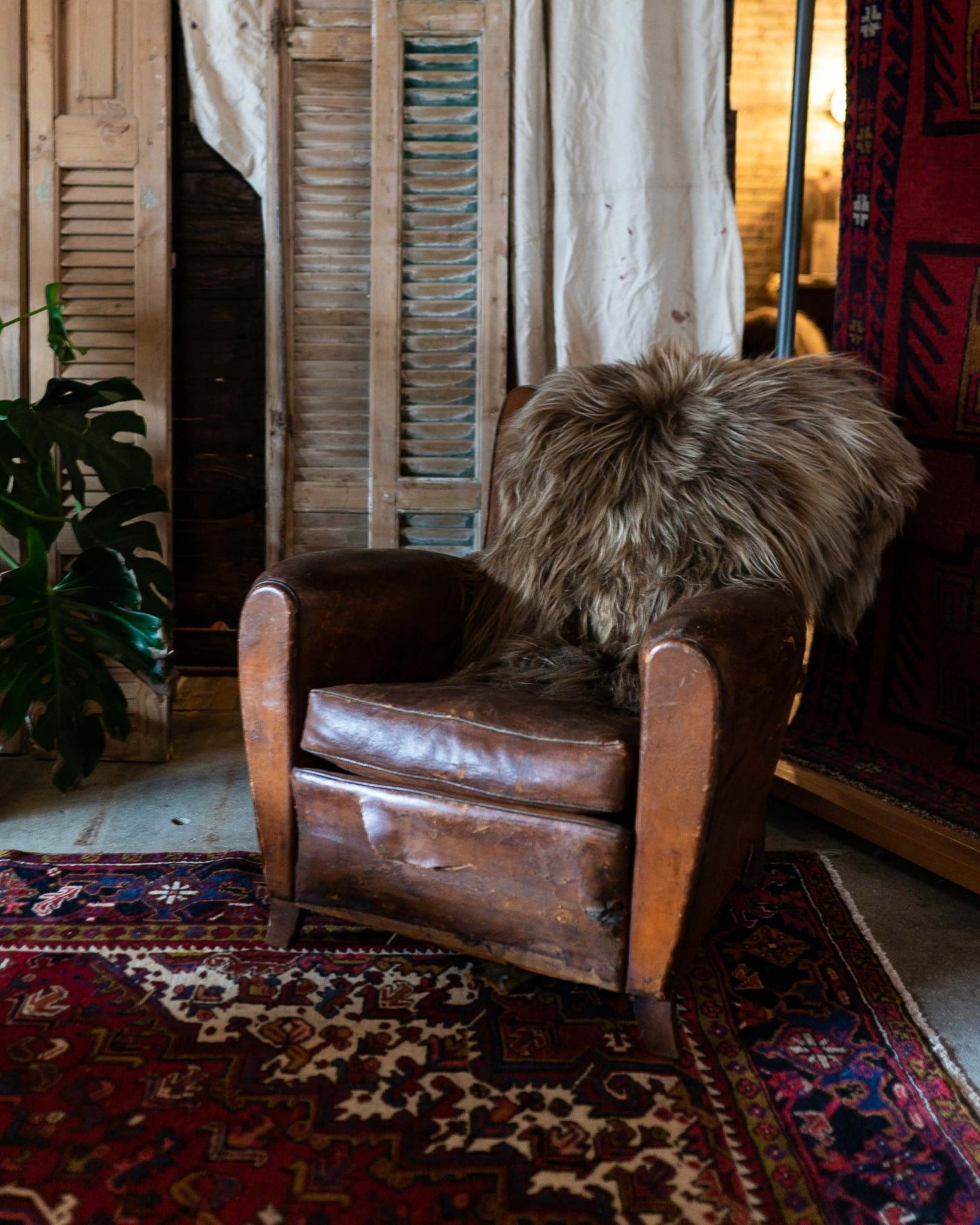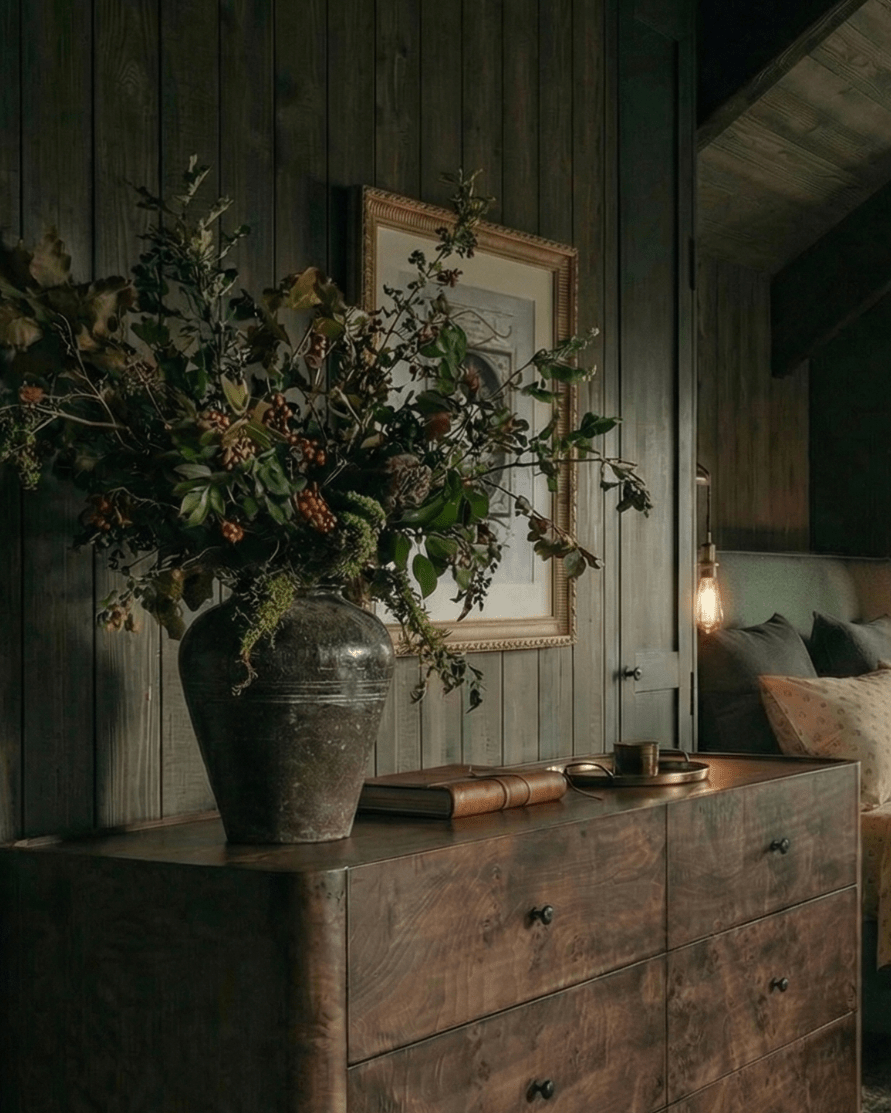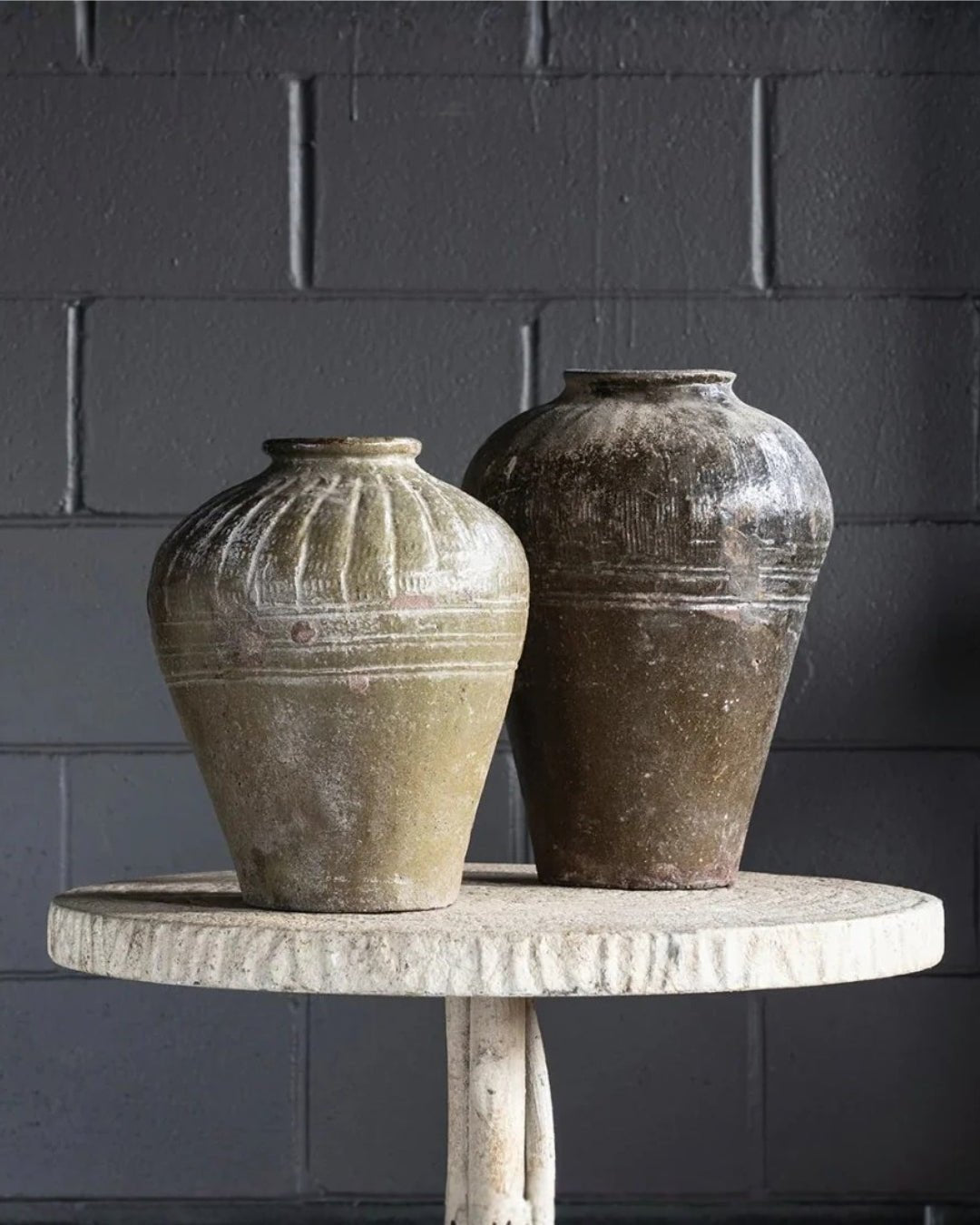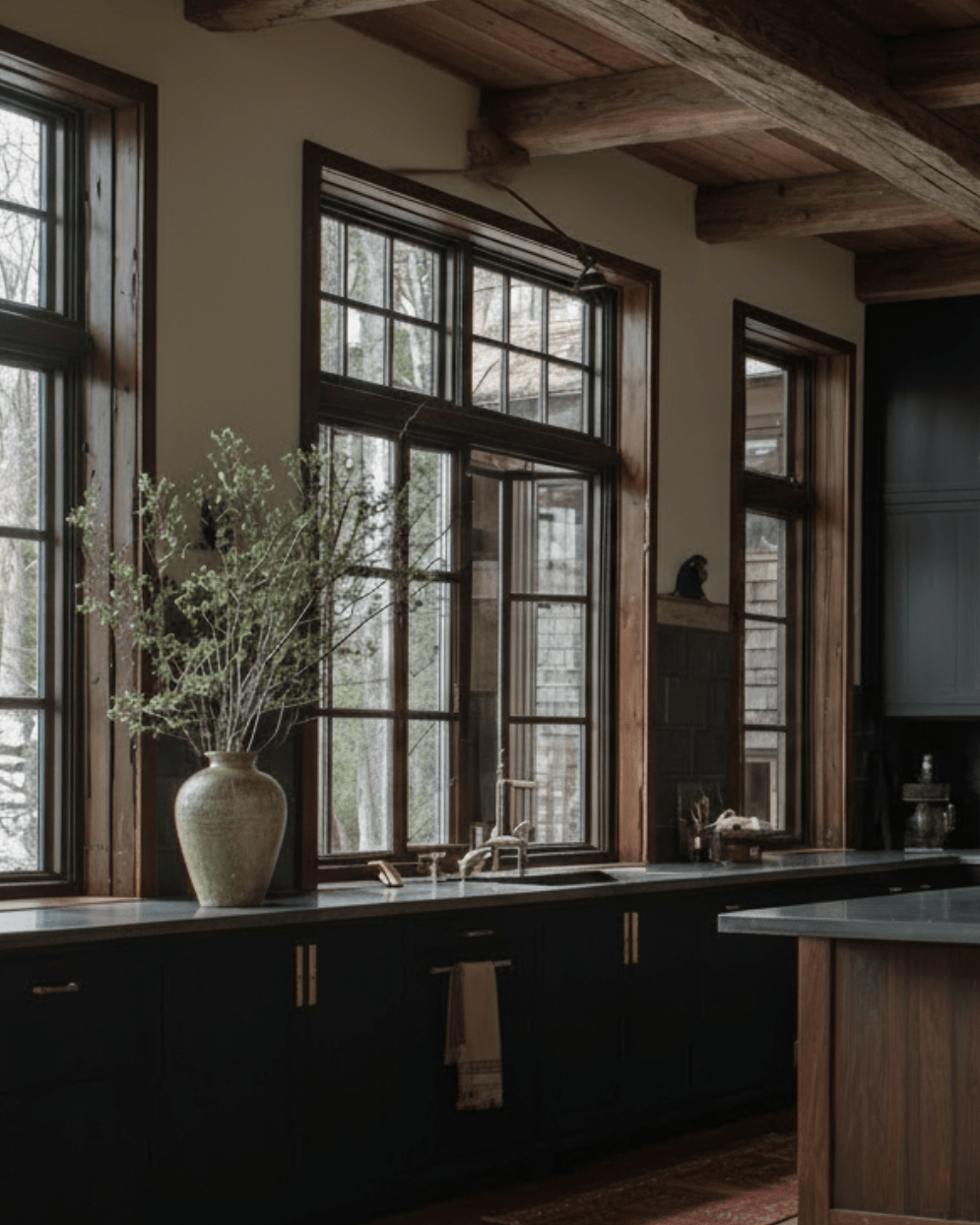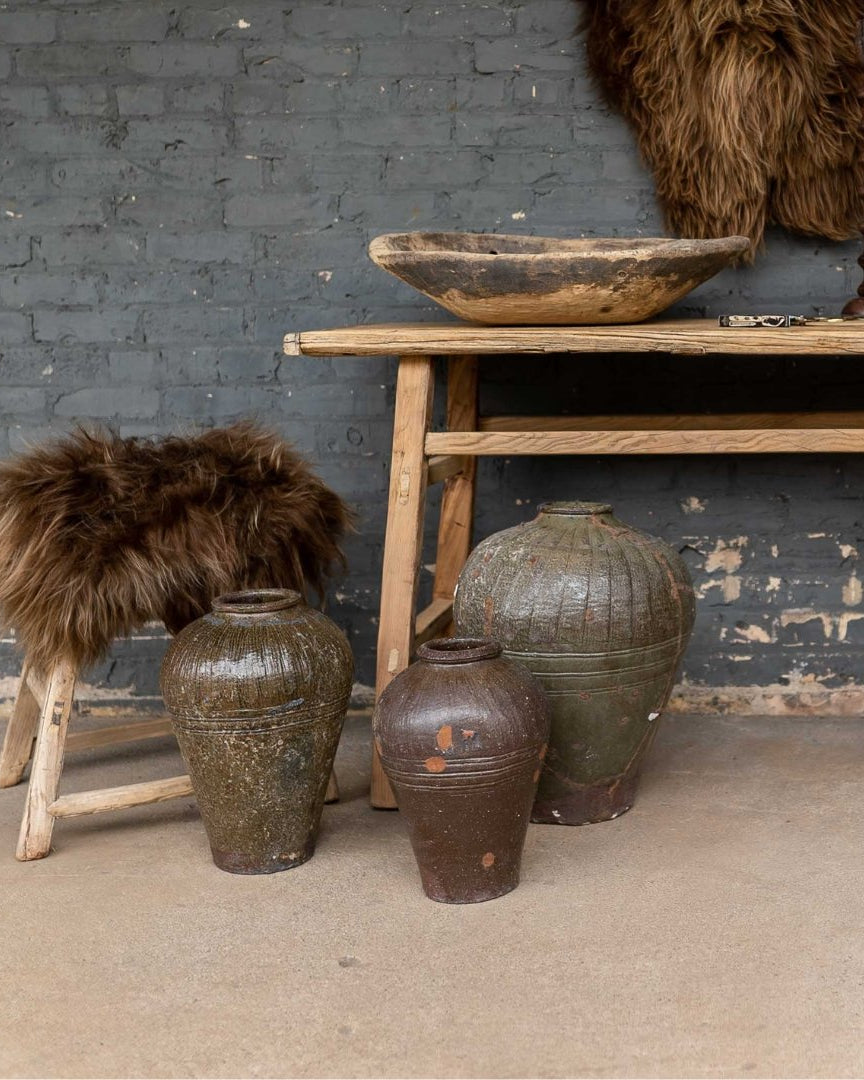








There was a period where every “mountain home” looked like it was trying to survive a lumberjack convention.
Too much reclaimed wood slapped onto every surface. Antlers mounted like personality traits. Faux rustic signs aggressively reminding everyone to “gather.” The rooms were visually heavy but emotionally disconnected.
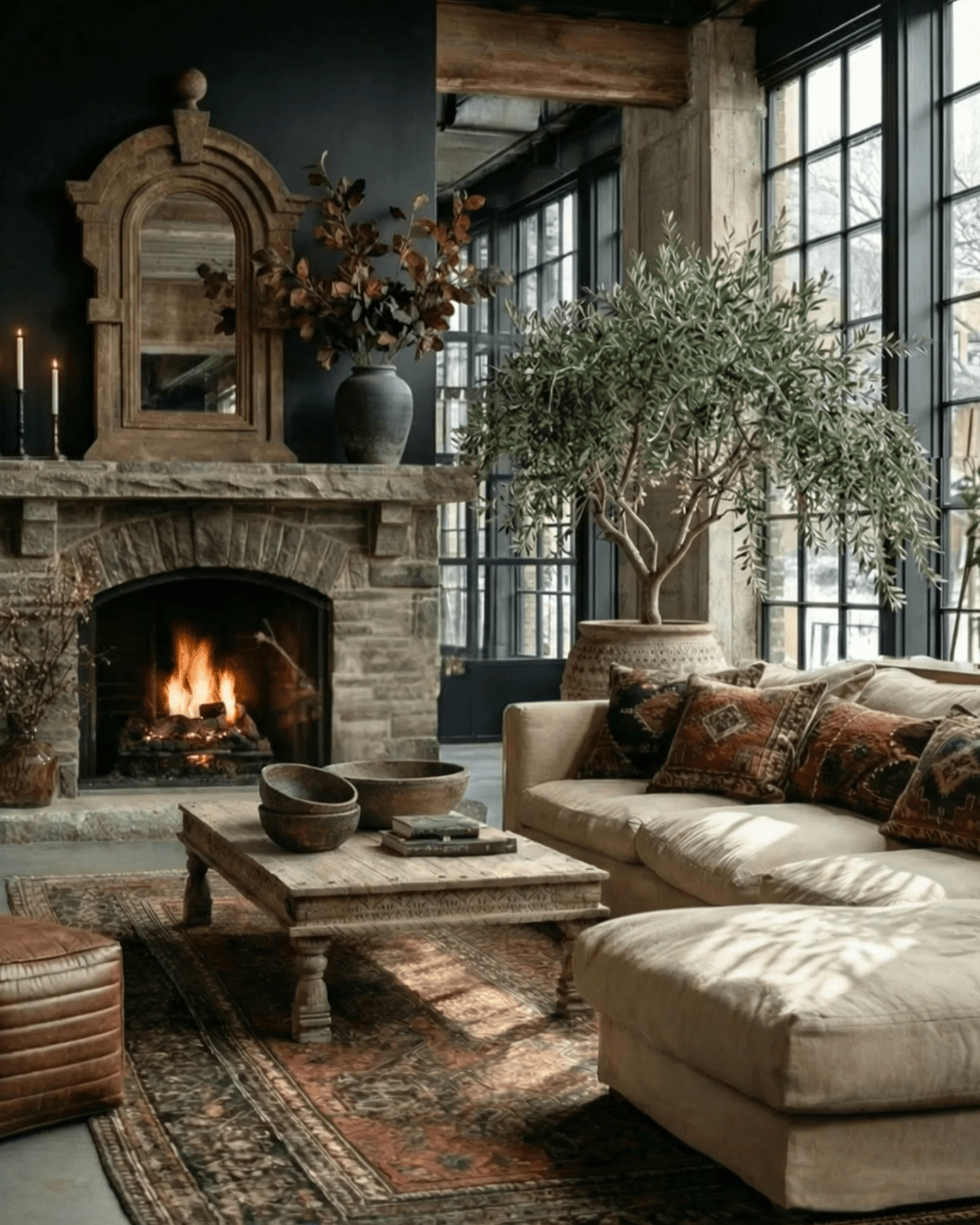
The newer version of the modern mountain home is shifting away from that completely.
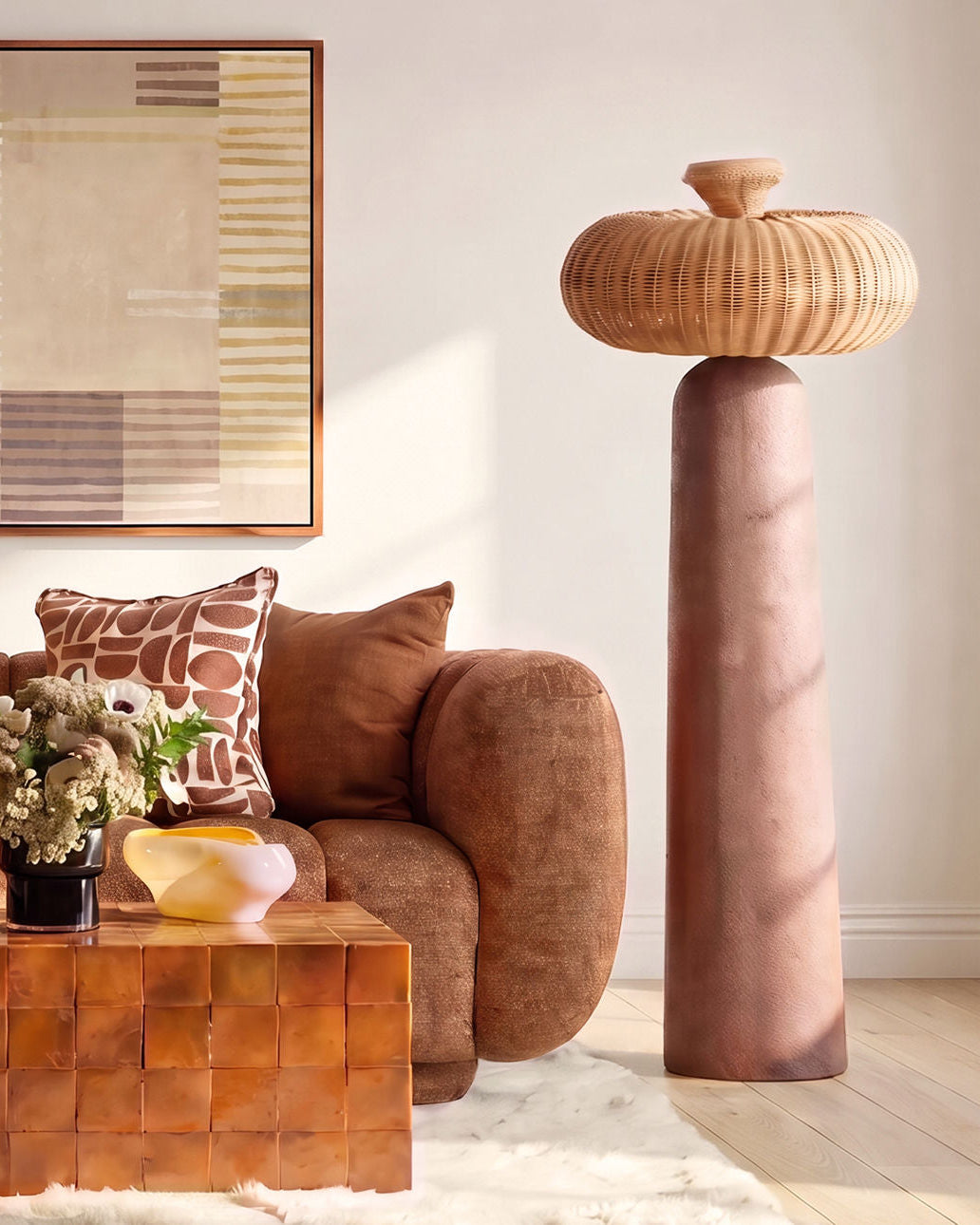
People aren’t looking for rustic performances anymore. They’re looking for regulation. Spaces that soften overstimulation instead of adding to it. Homes that feel grounding without becoming theme parks built around pinecones and plaid.
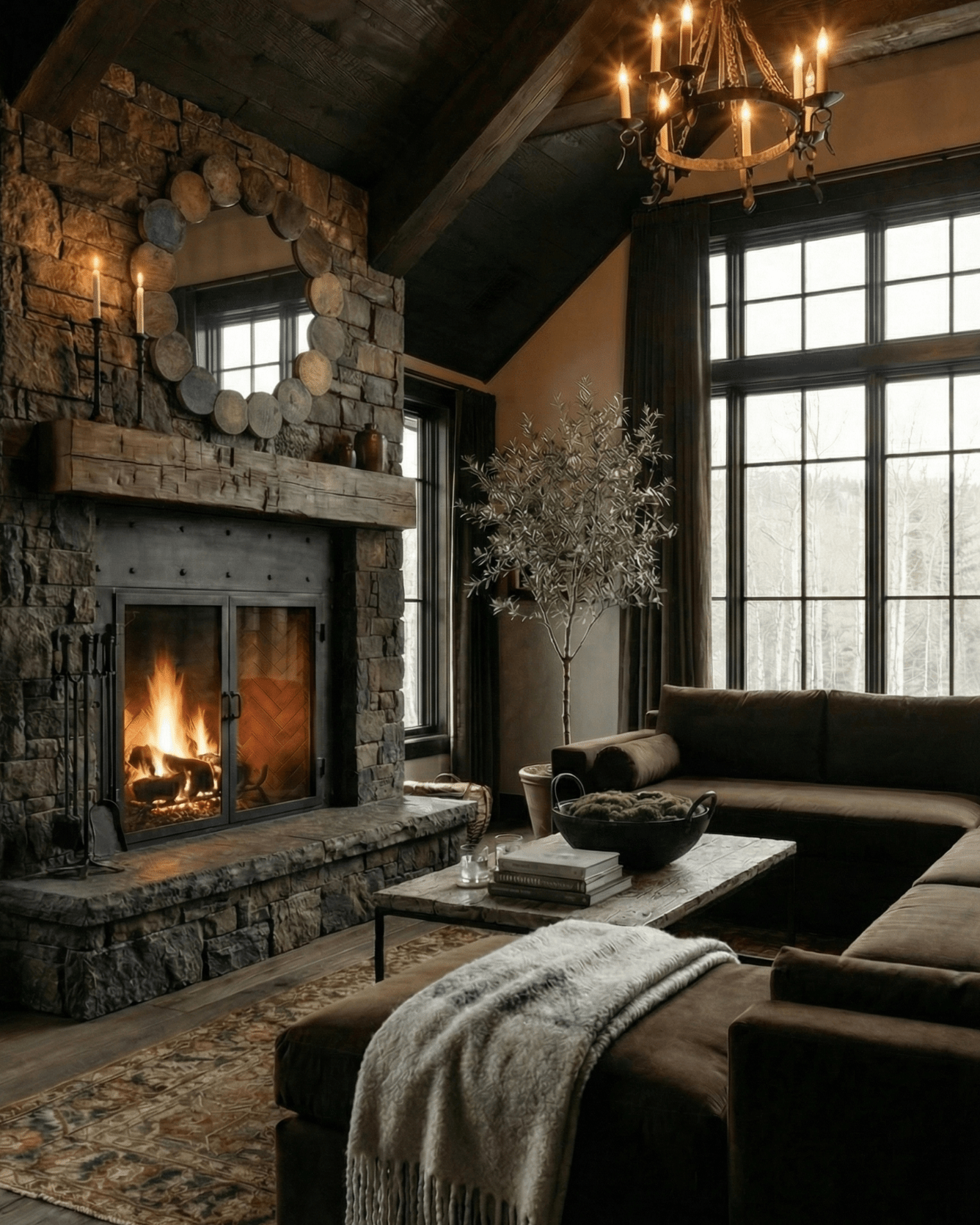
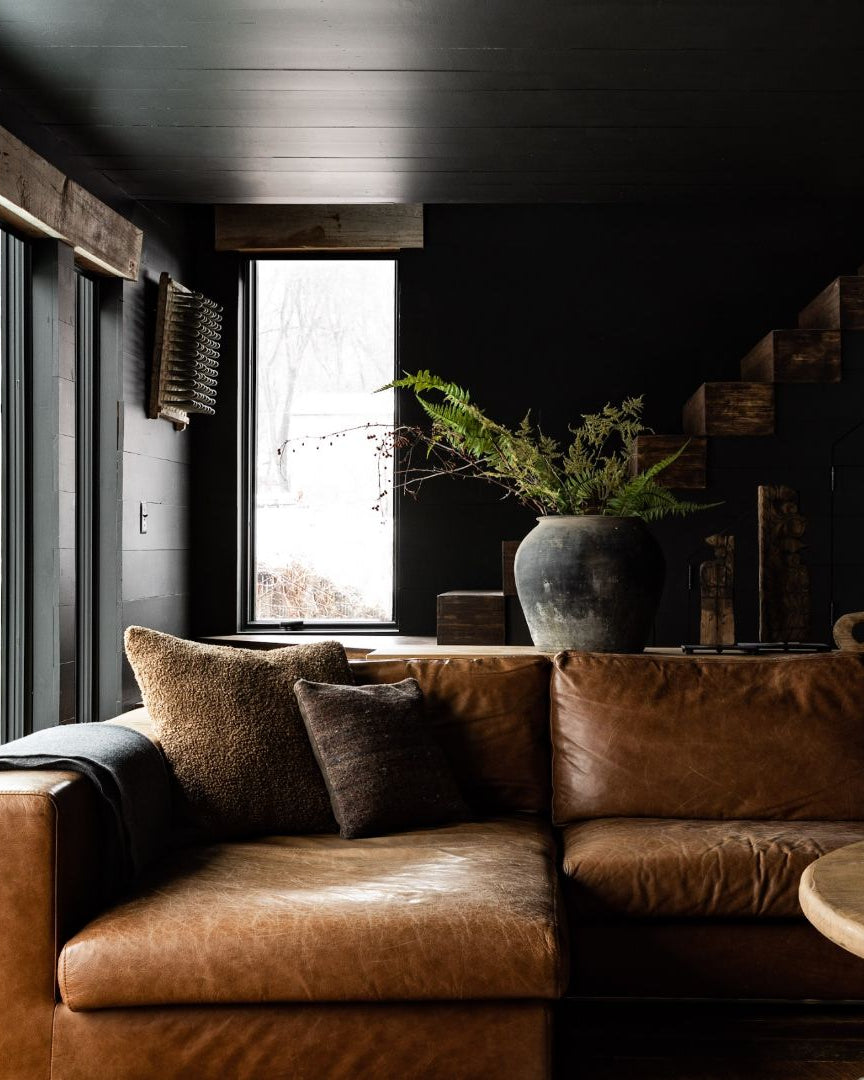
That’s why the best modern mountain interiors today feel quieter, lower, slower, and more intentional. The focus isn’t on recreating a cabin aesthetic. It’s on creating a home that actually supports the nervous system.
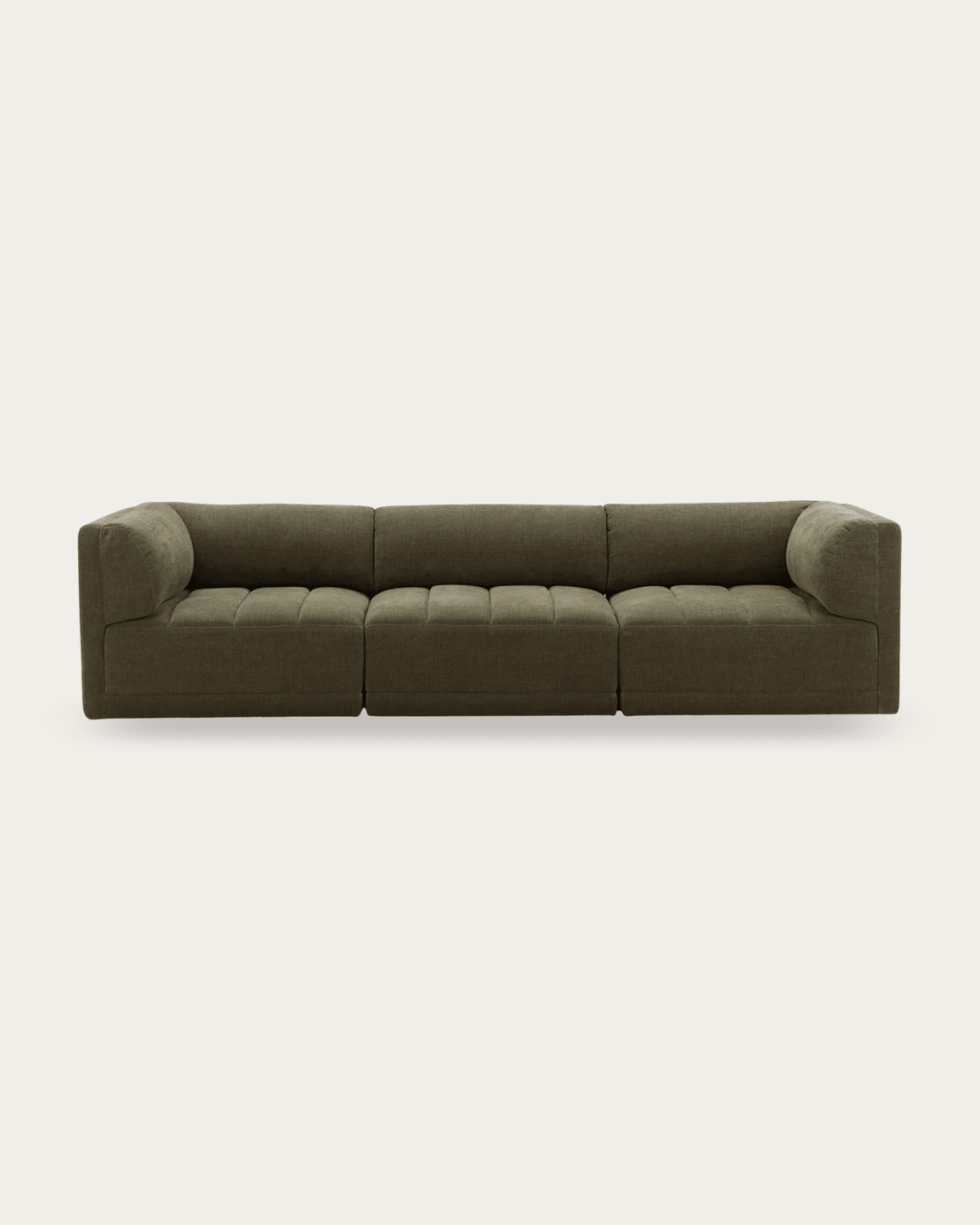
Many of those spaces begin with grounded, lower-profile pieces from the Living room collection that visually settle the room before styling even enters the equation.
The Modern Mountain Home Works Because It Reduces Sensory Friction
Most people assume a room feels stressful because it’s cluttered.
Usually, it’s more layered than that.
The nervous system is constantly scanning for visual interruption, imbalance, harsh contrast, sharp lighting, and unpredictable movement. Rooms with too many competing materials, colors, and object scales create low-level sensory fatigue even when everything technically “matches.”
Modern mountain interiors tend to work because they reduce that friction.
The materials feel grounded.
The furniture carries visual weight.
The lighting softens transitions instead of flattening them.
The palette stays relatively controlled.
The room stops asking the eye to work overtime.
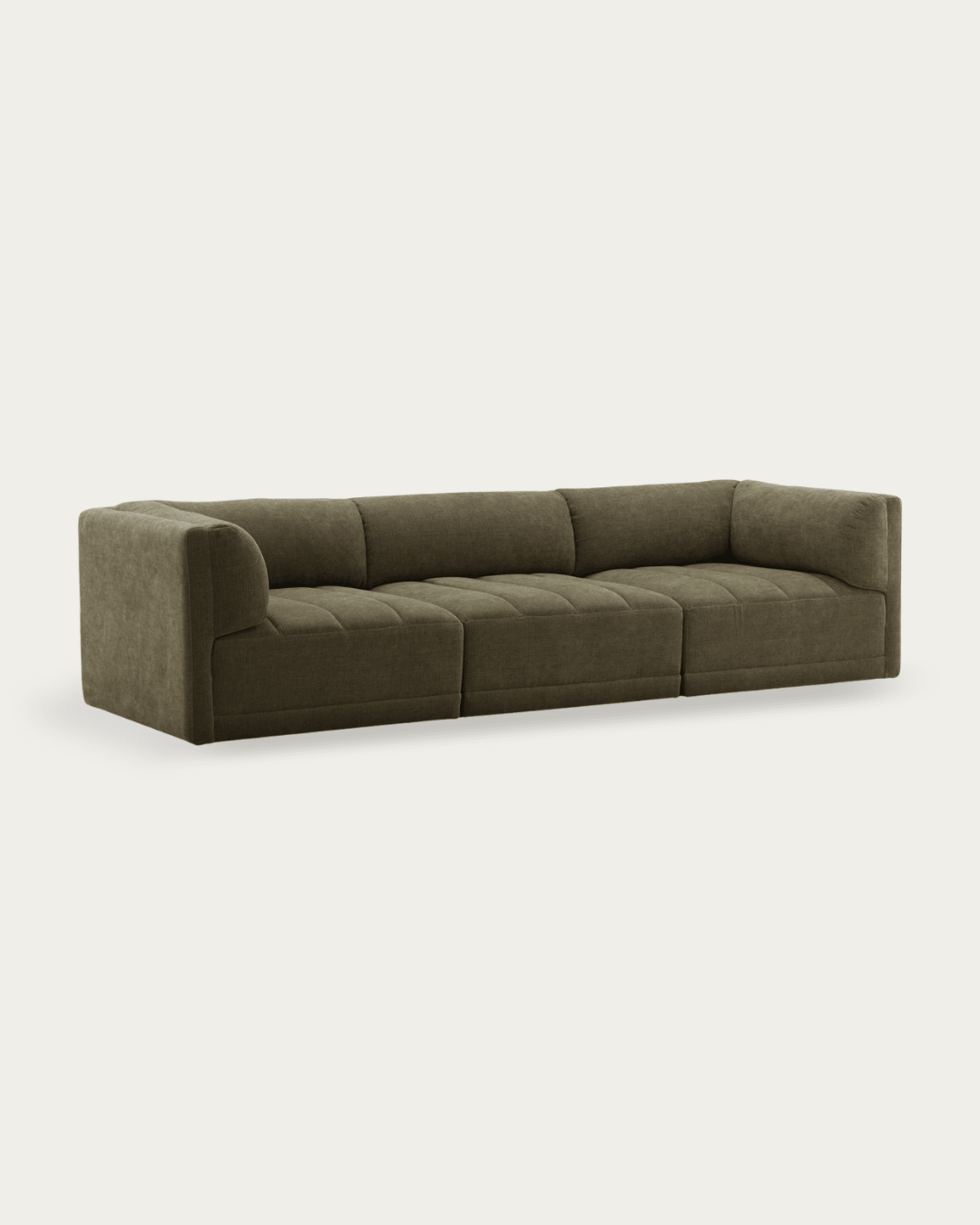
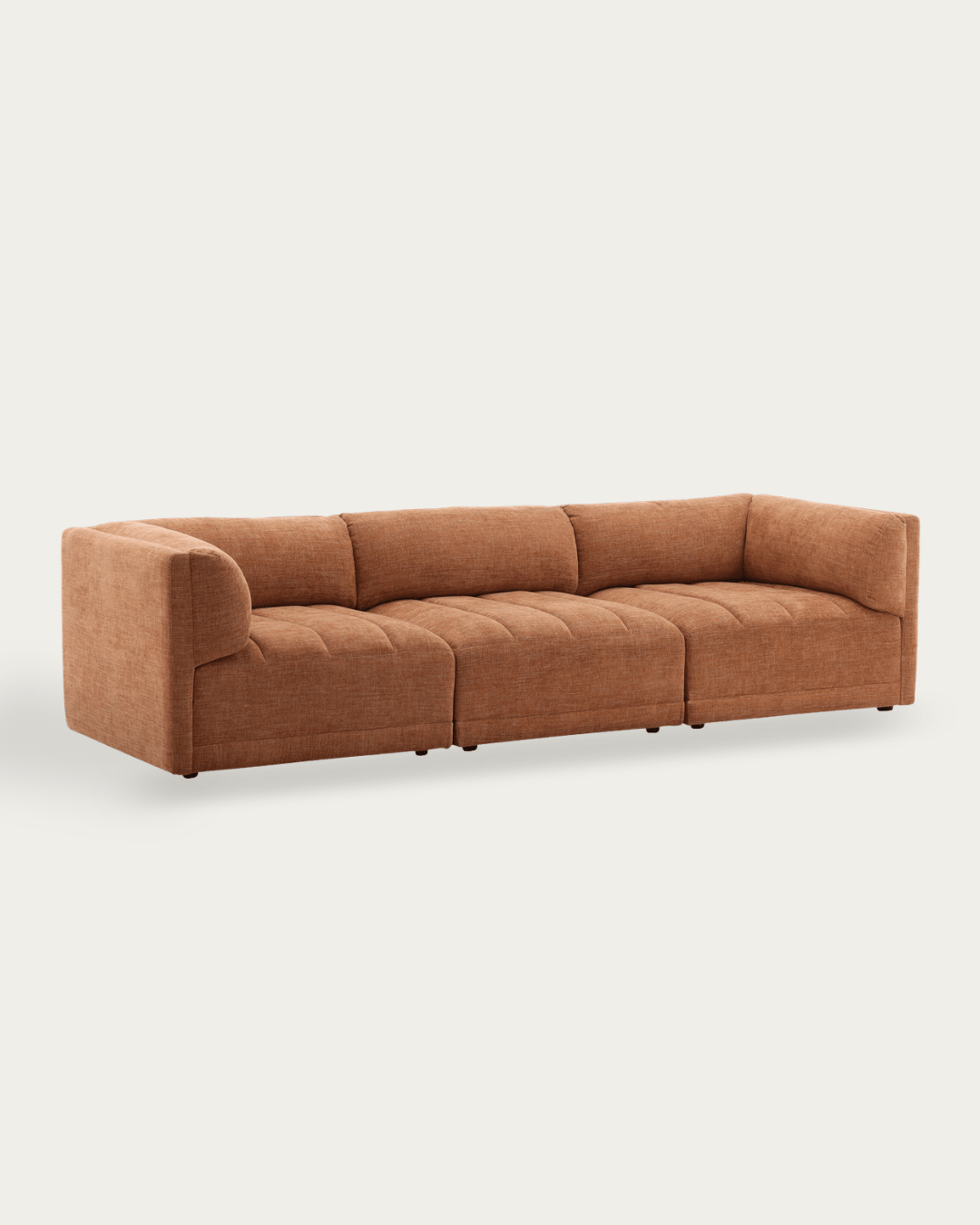
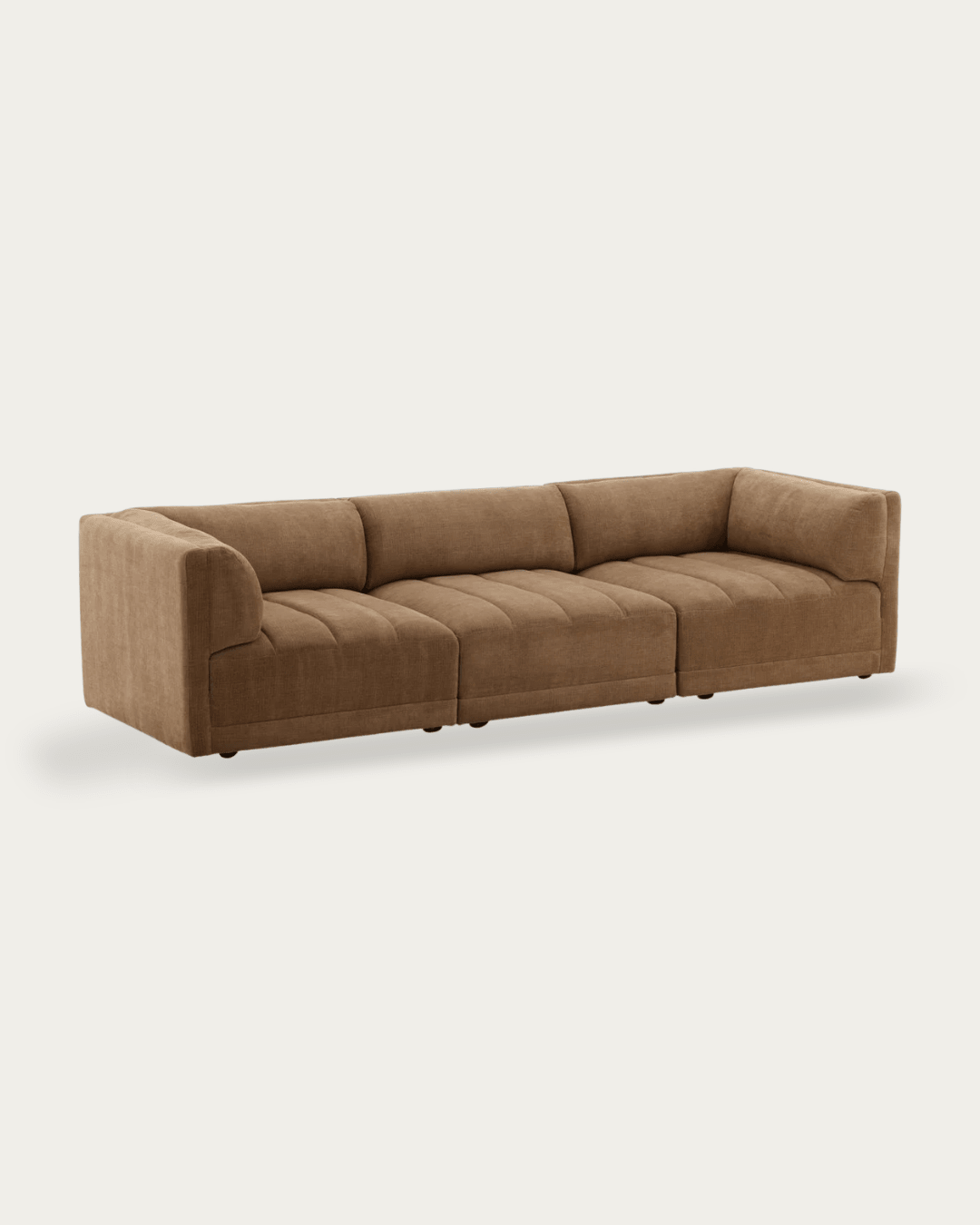
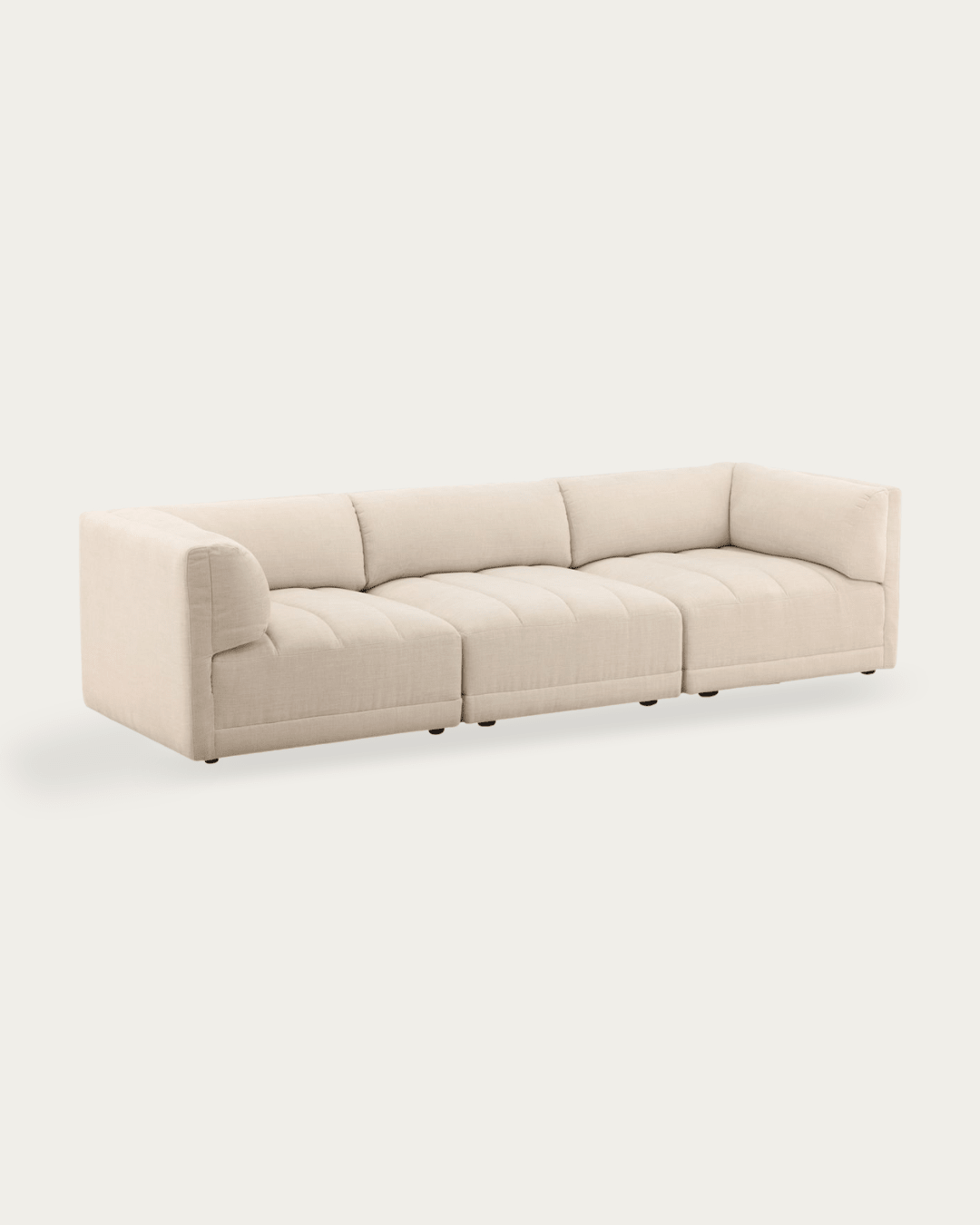
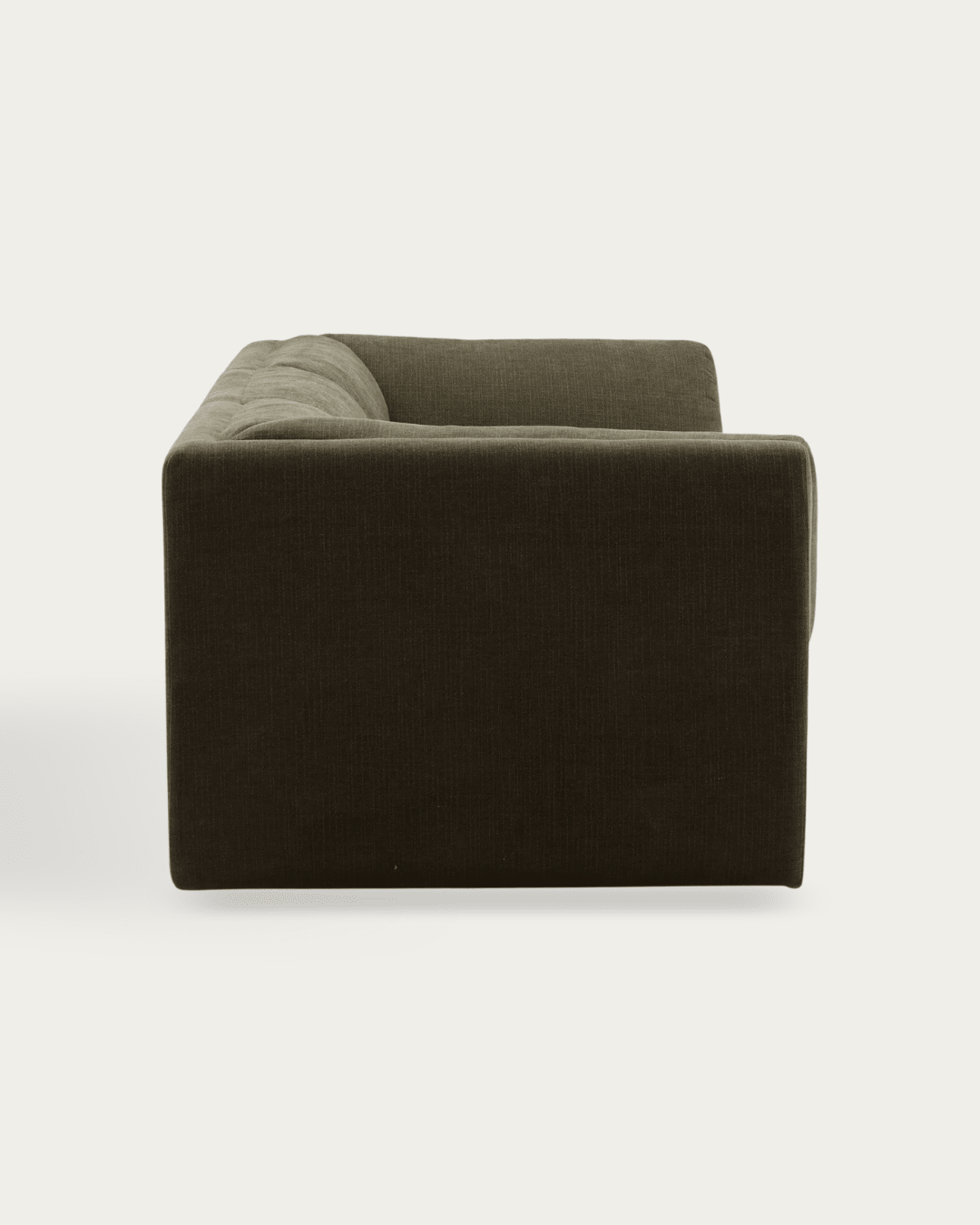
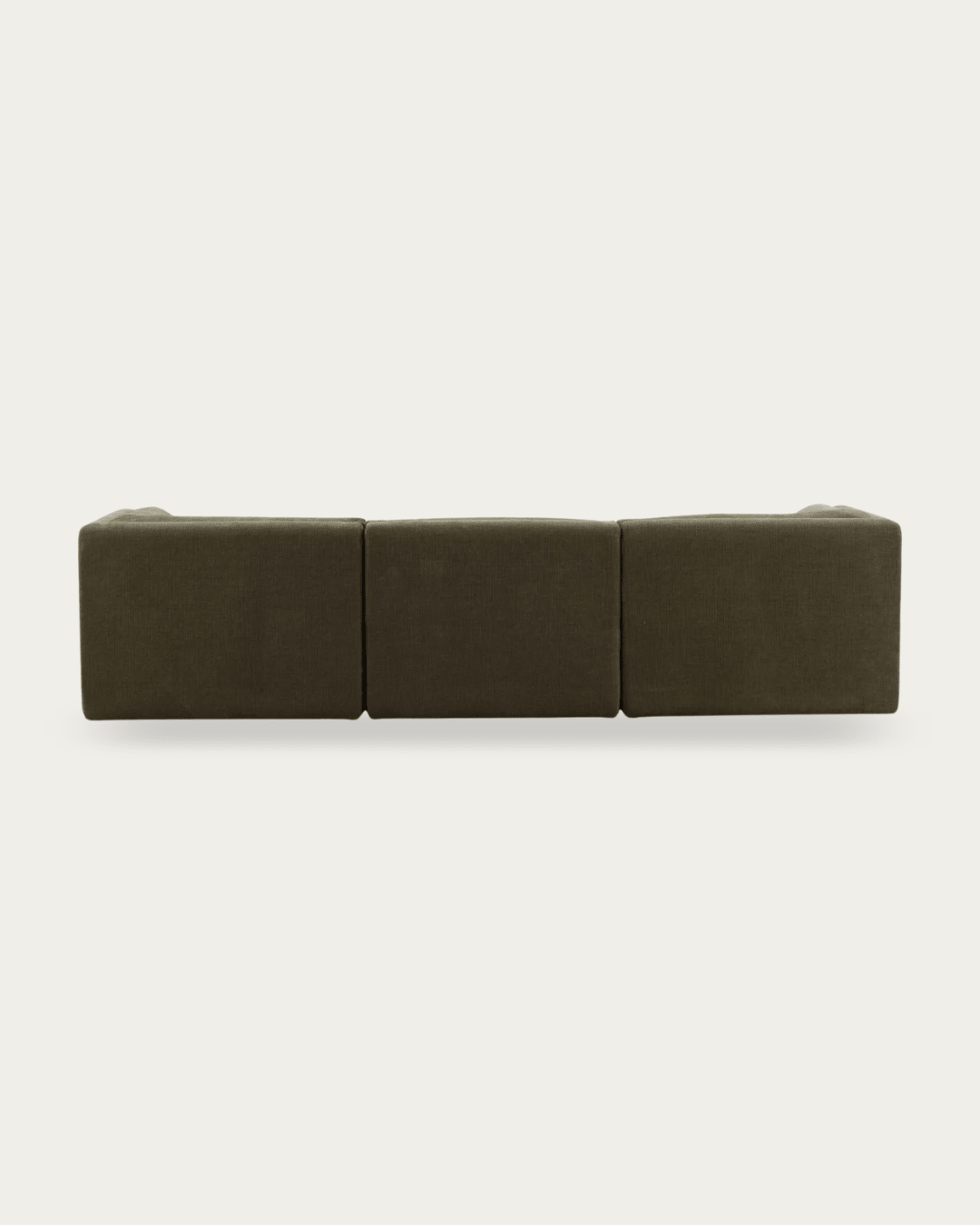
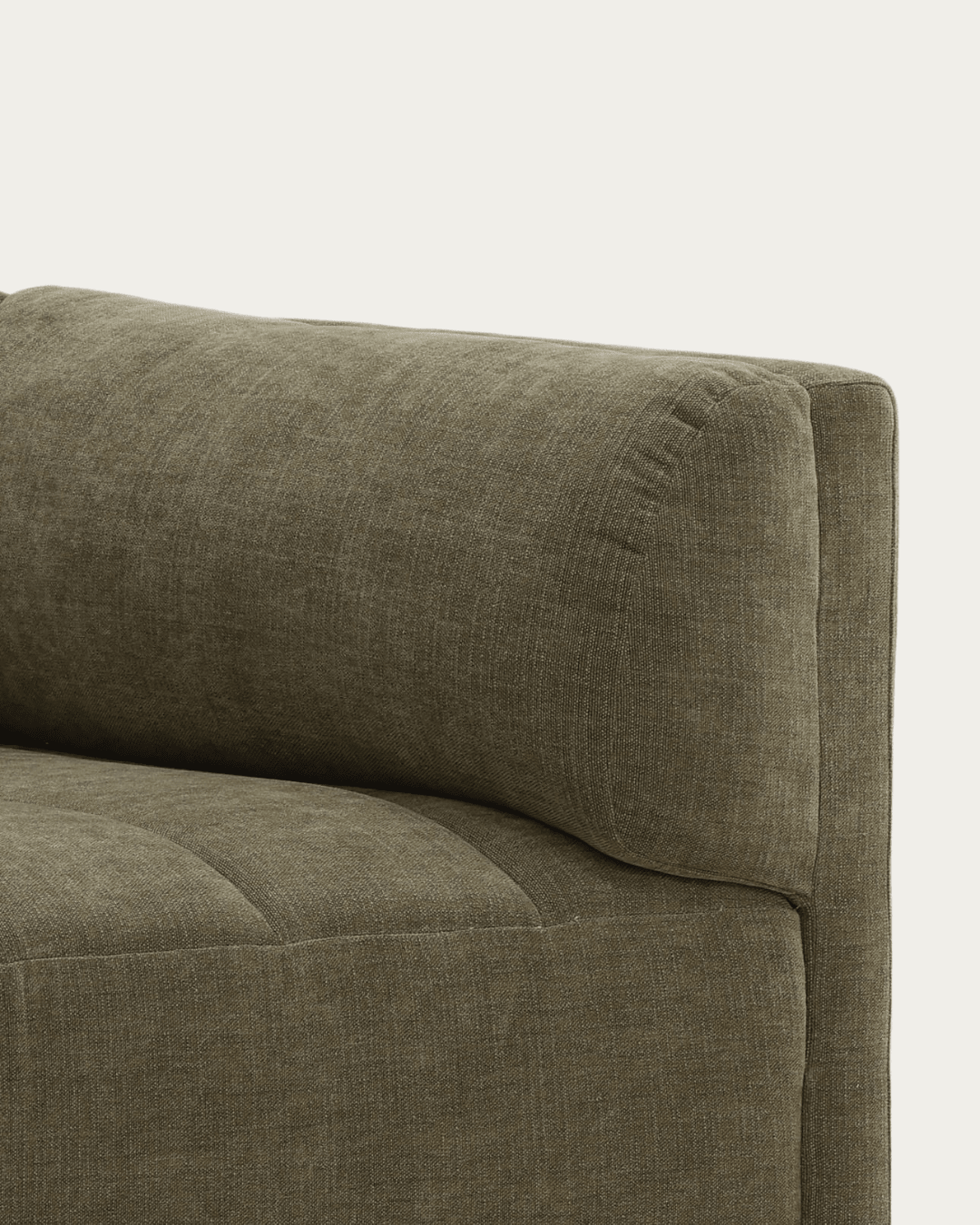
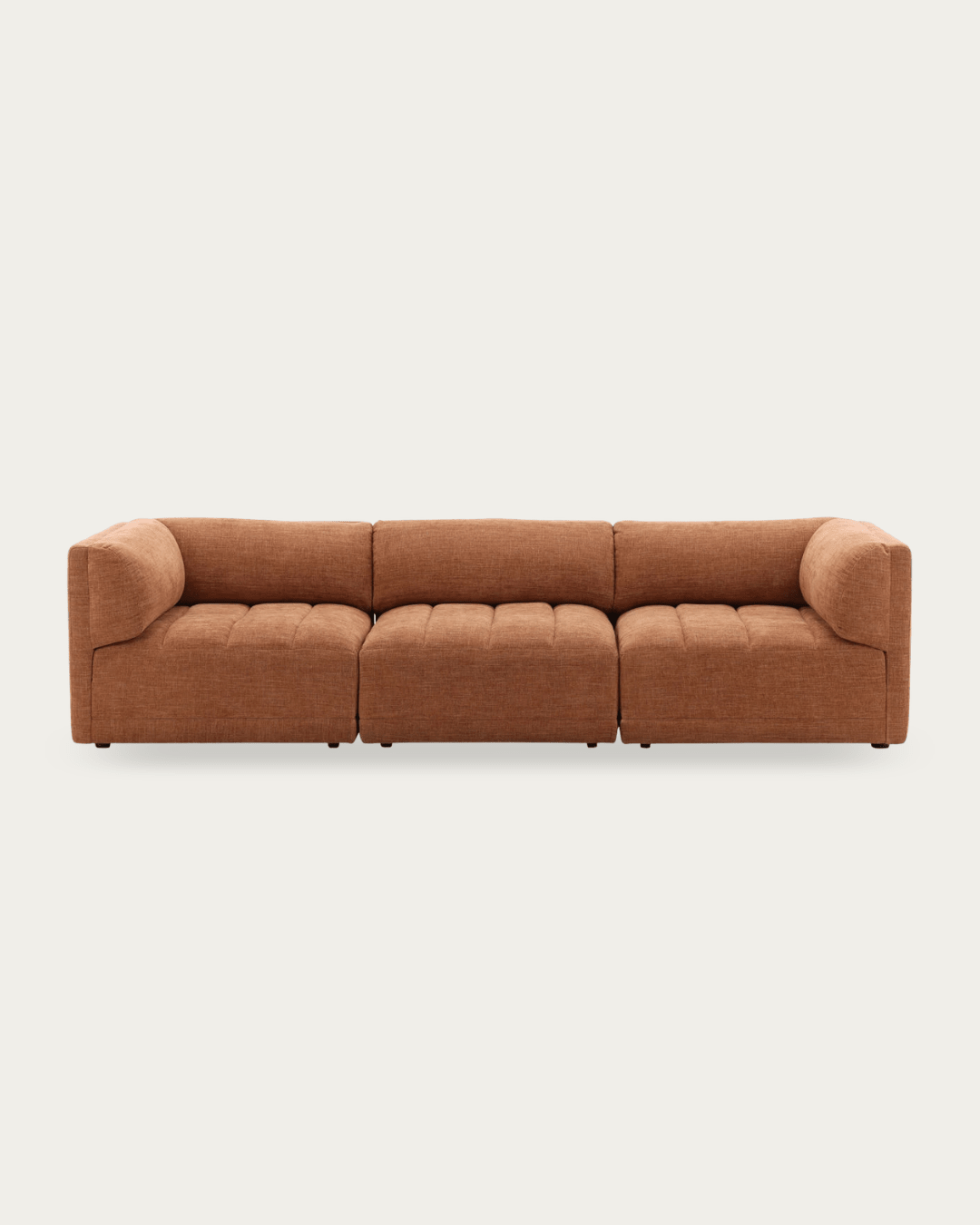
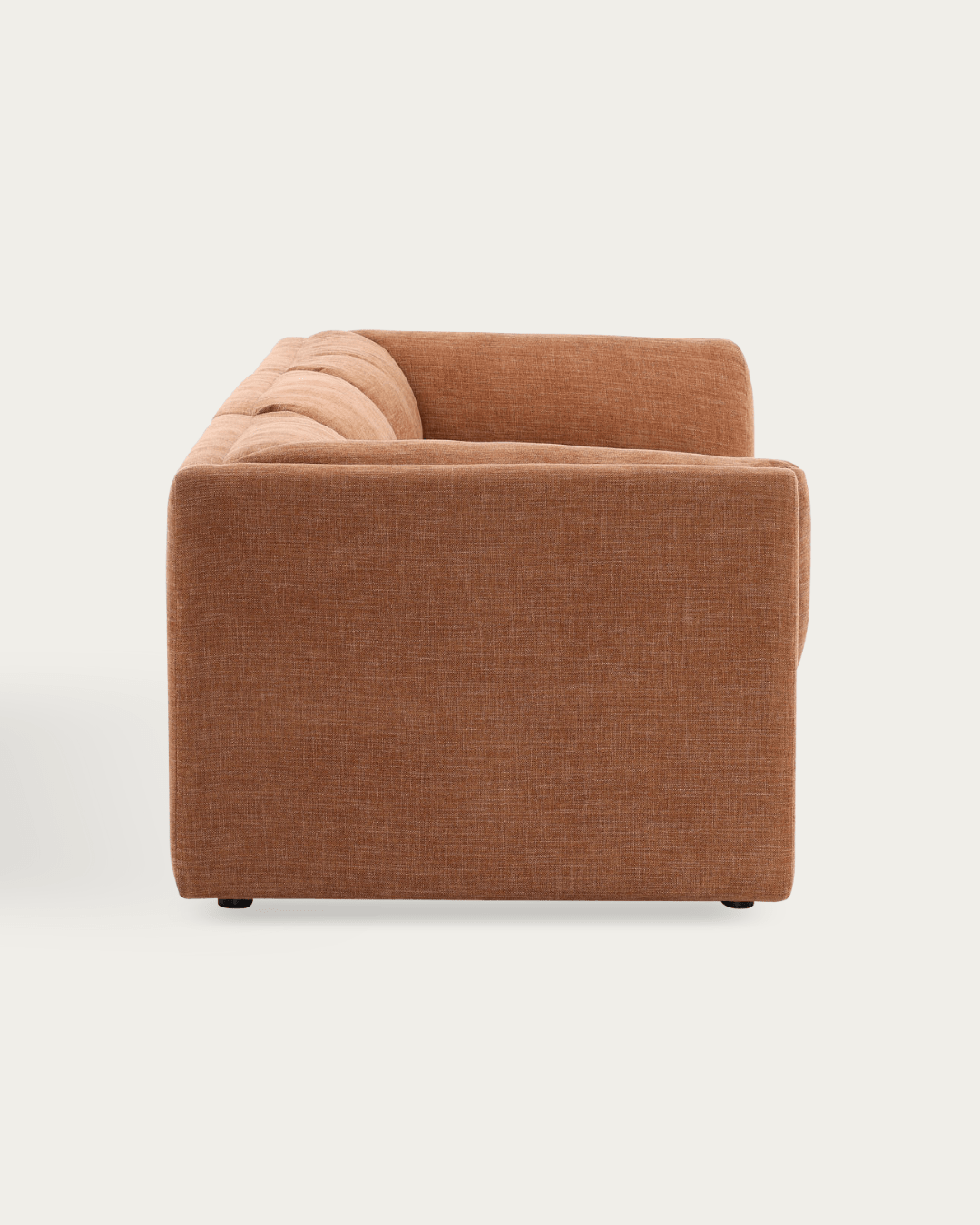
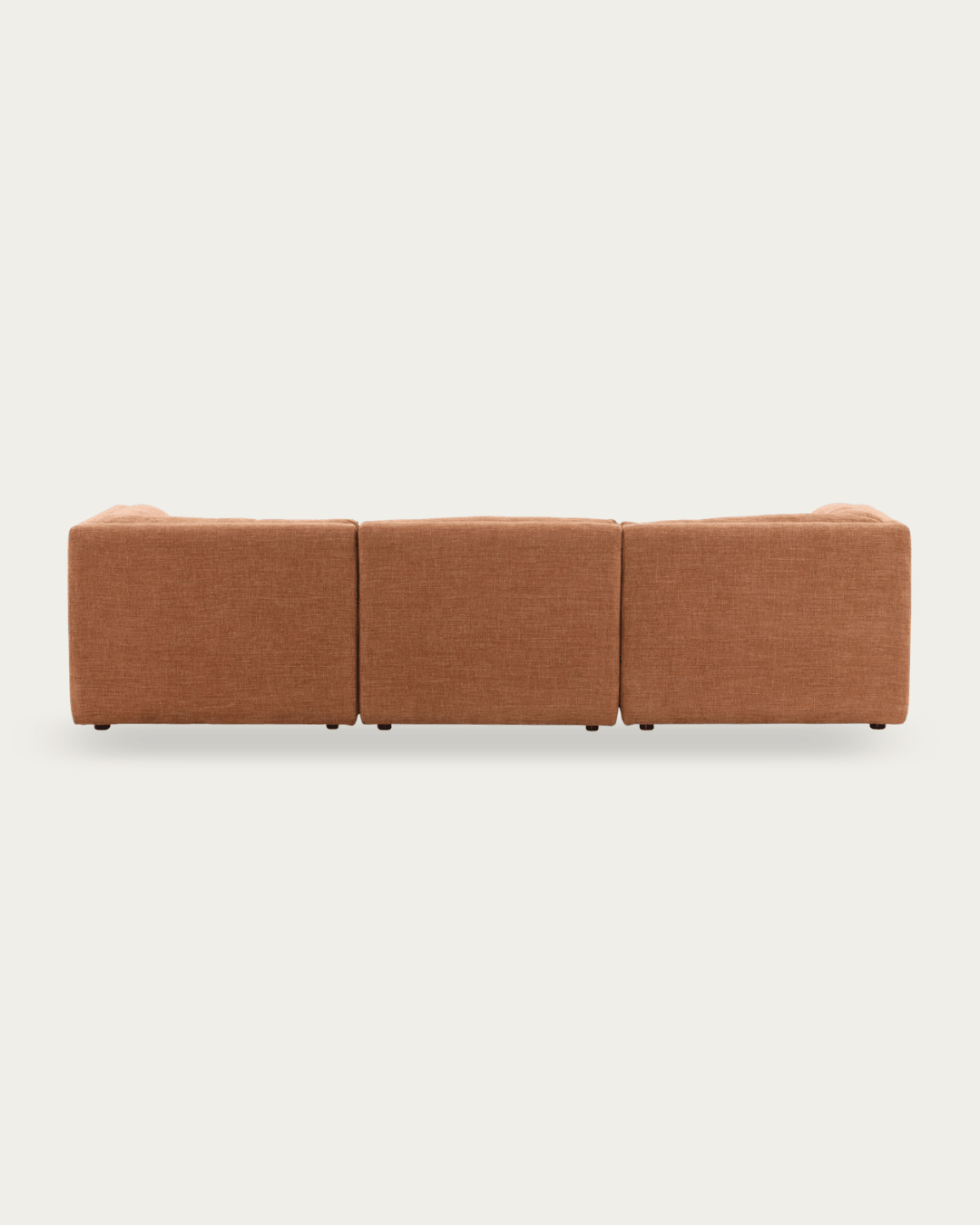
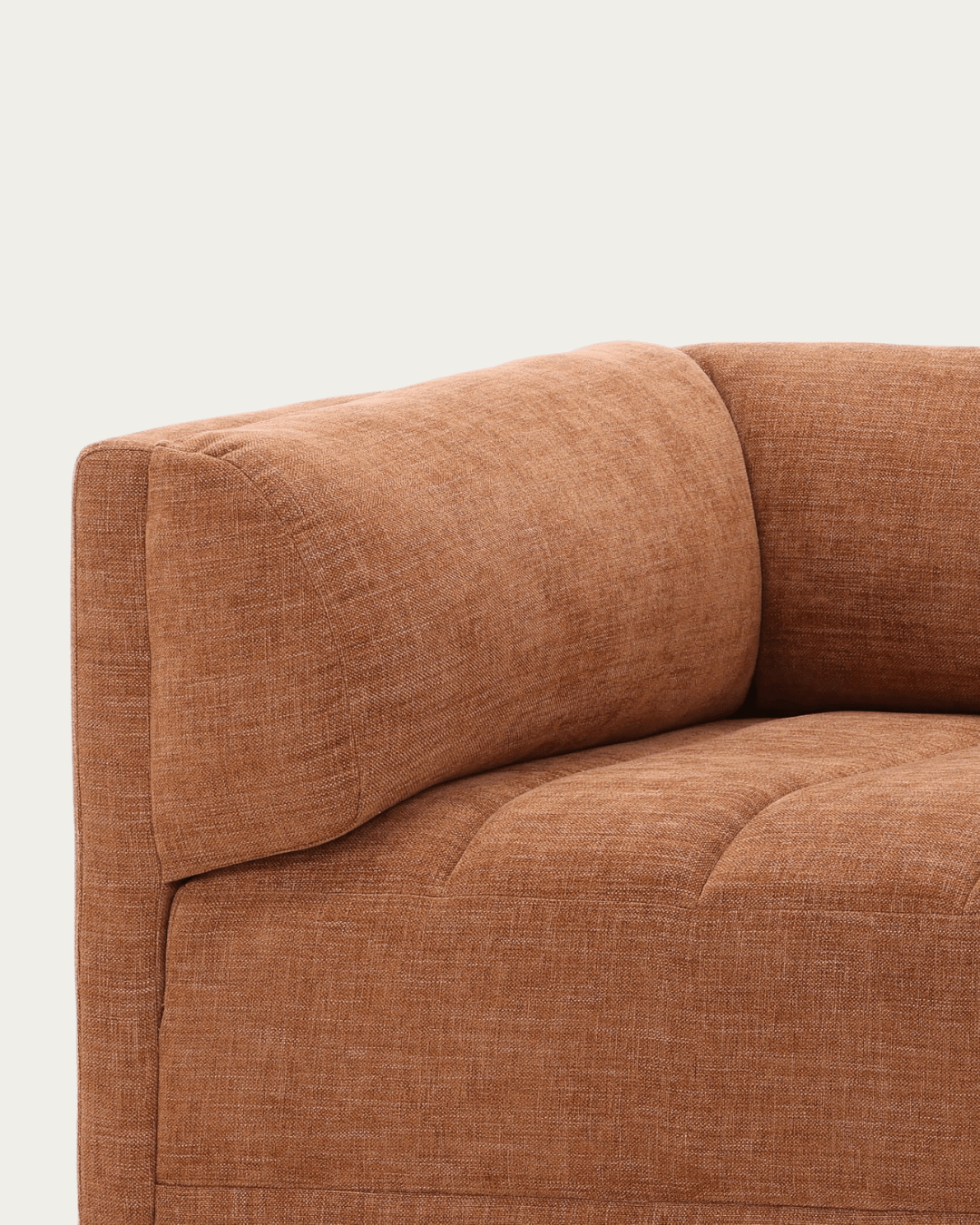
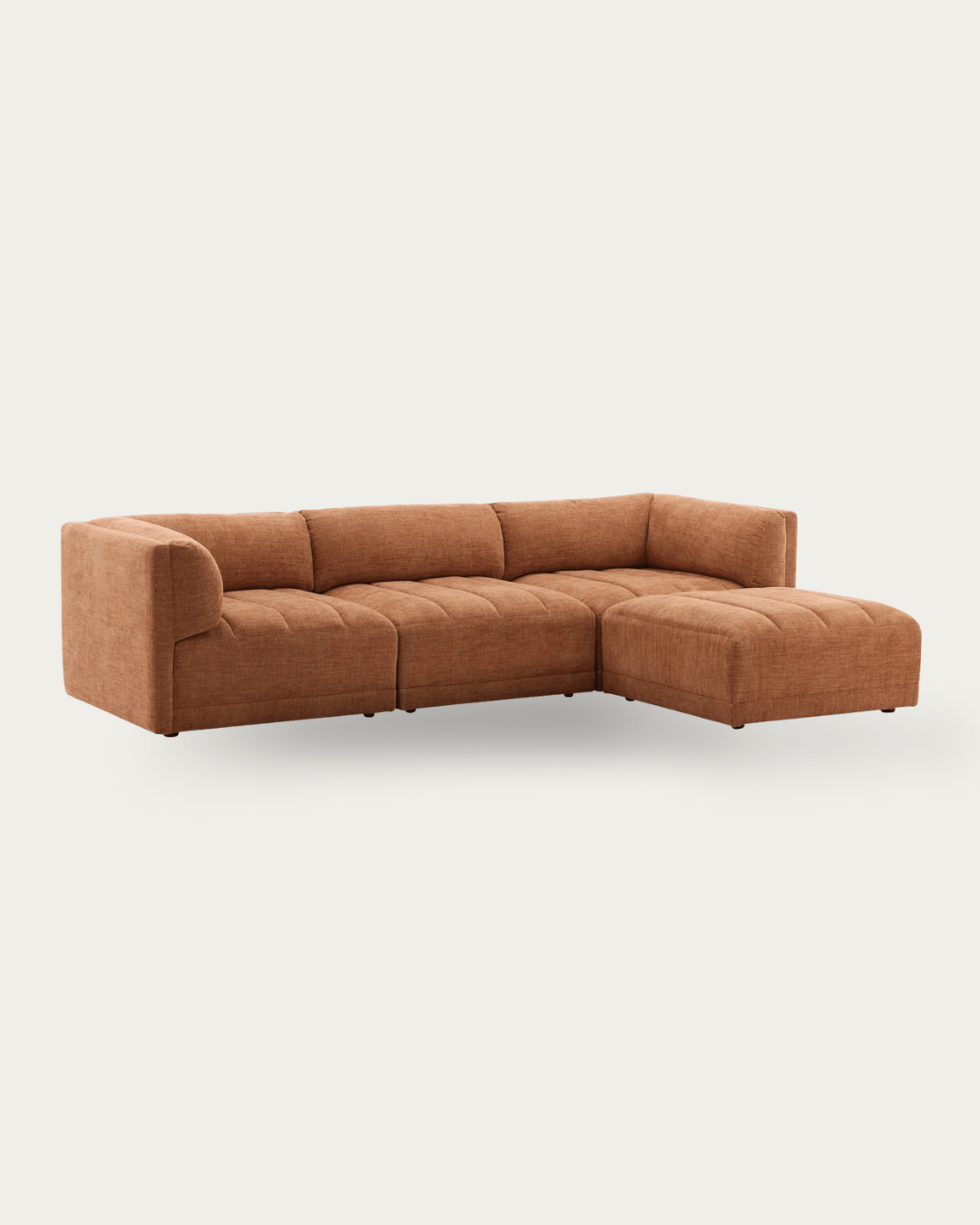
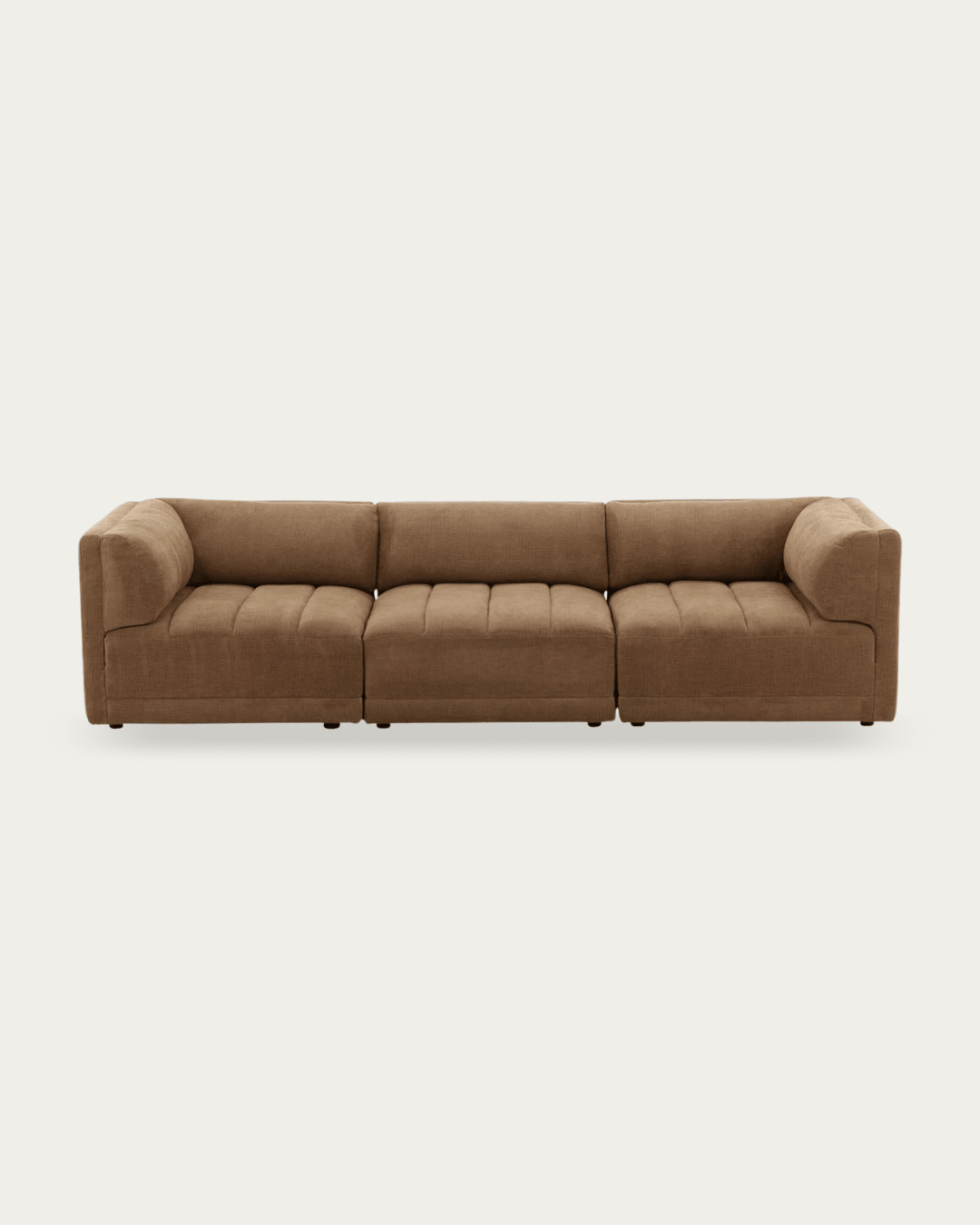
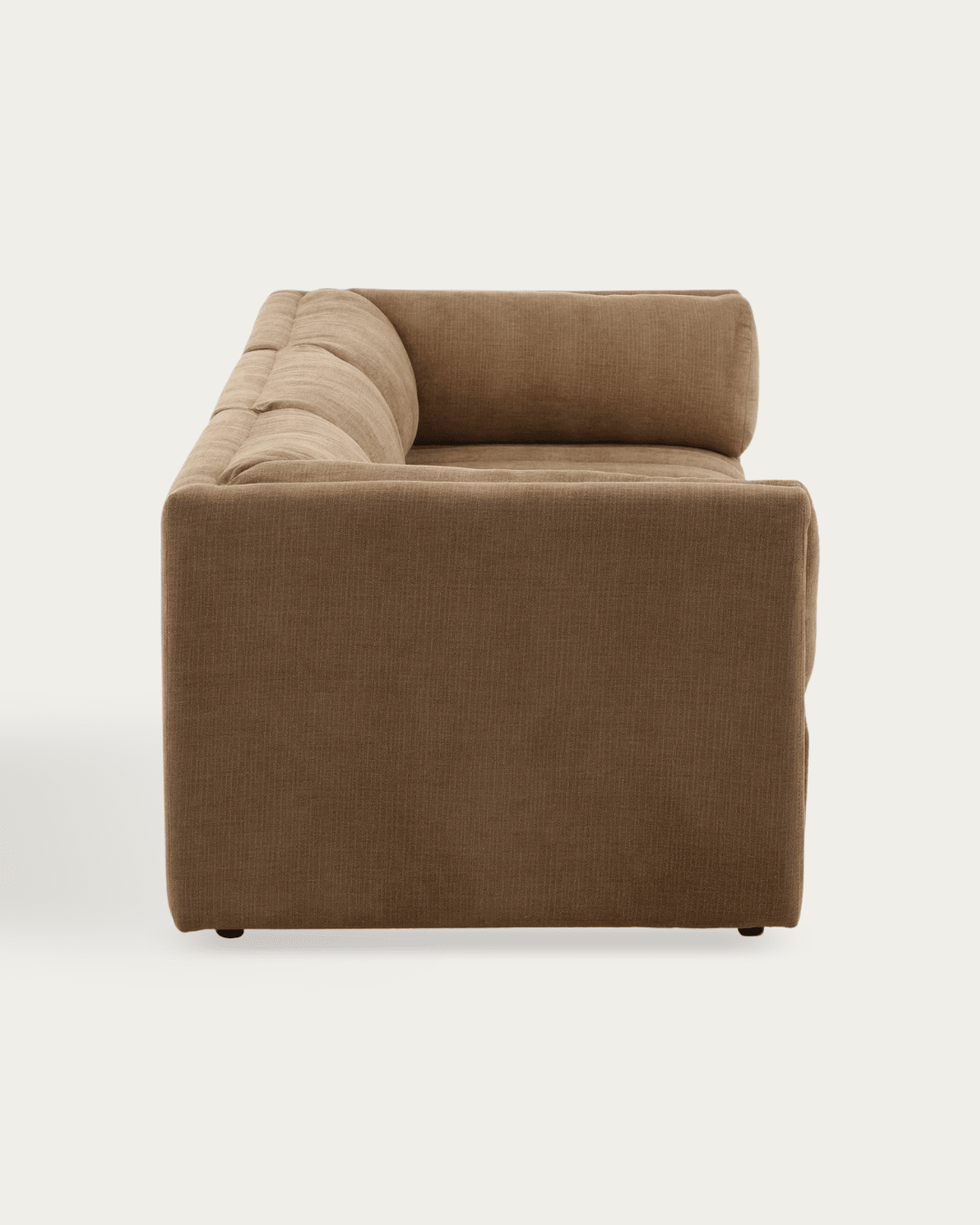
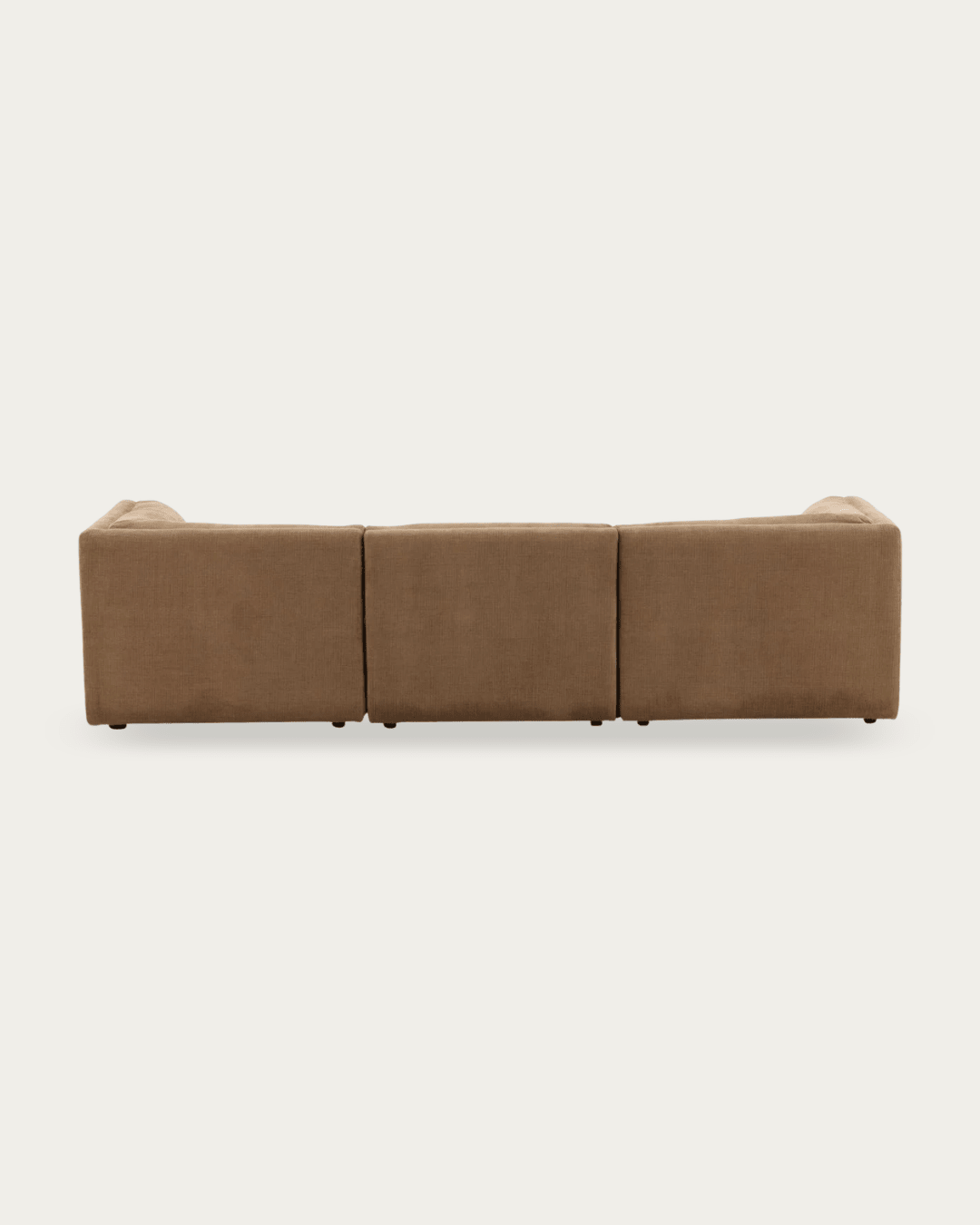
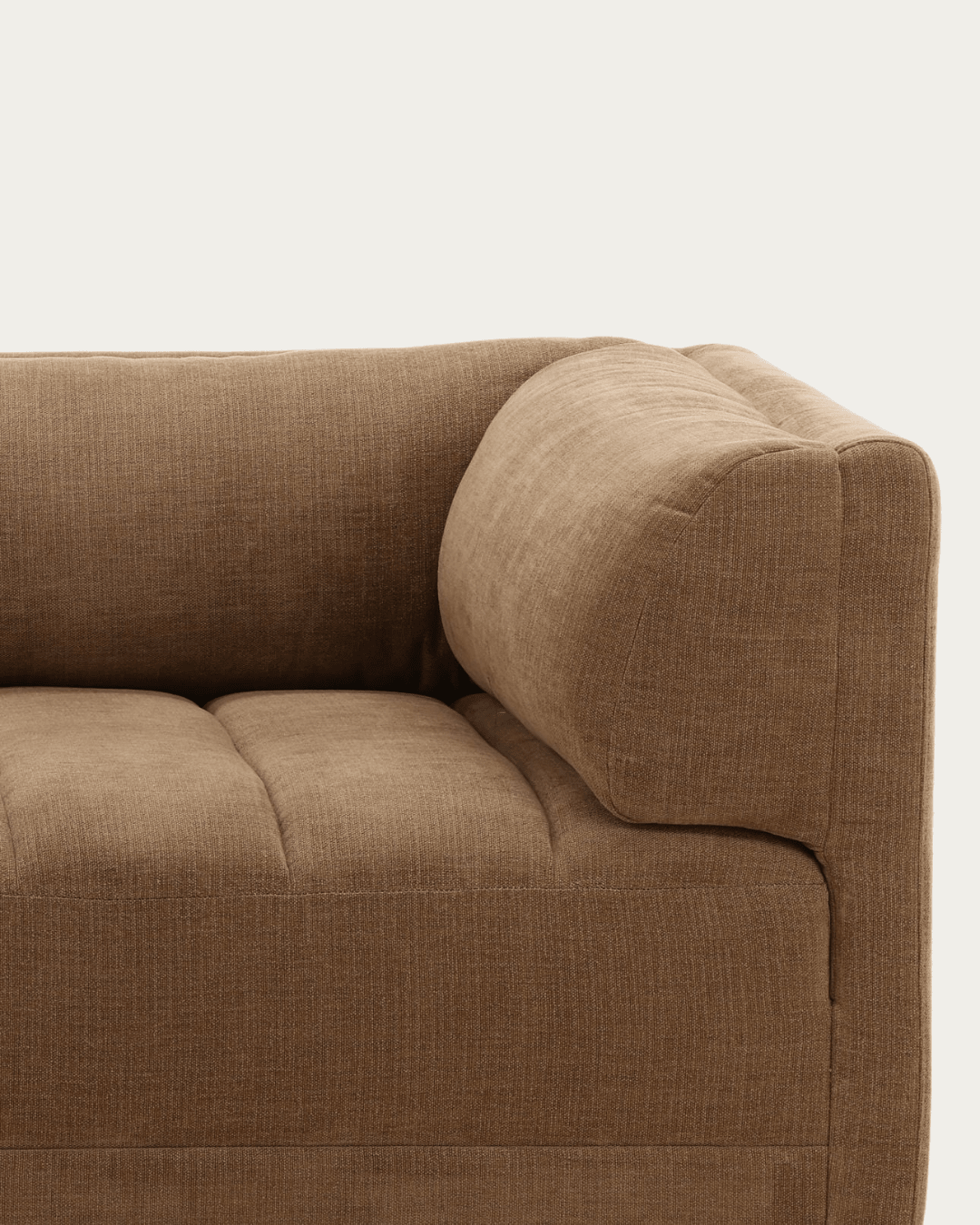
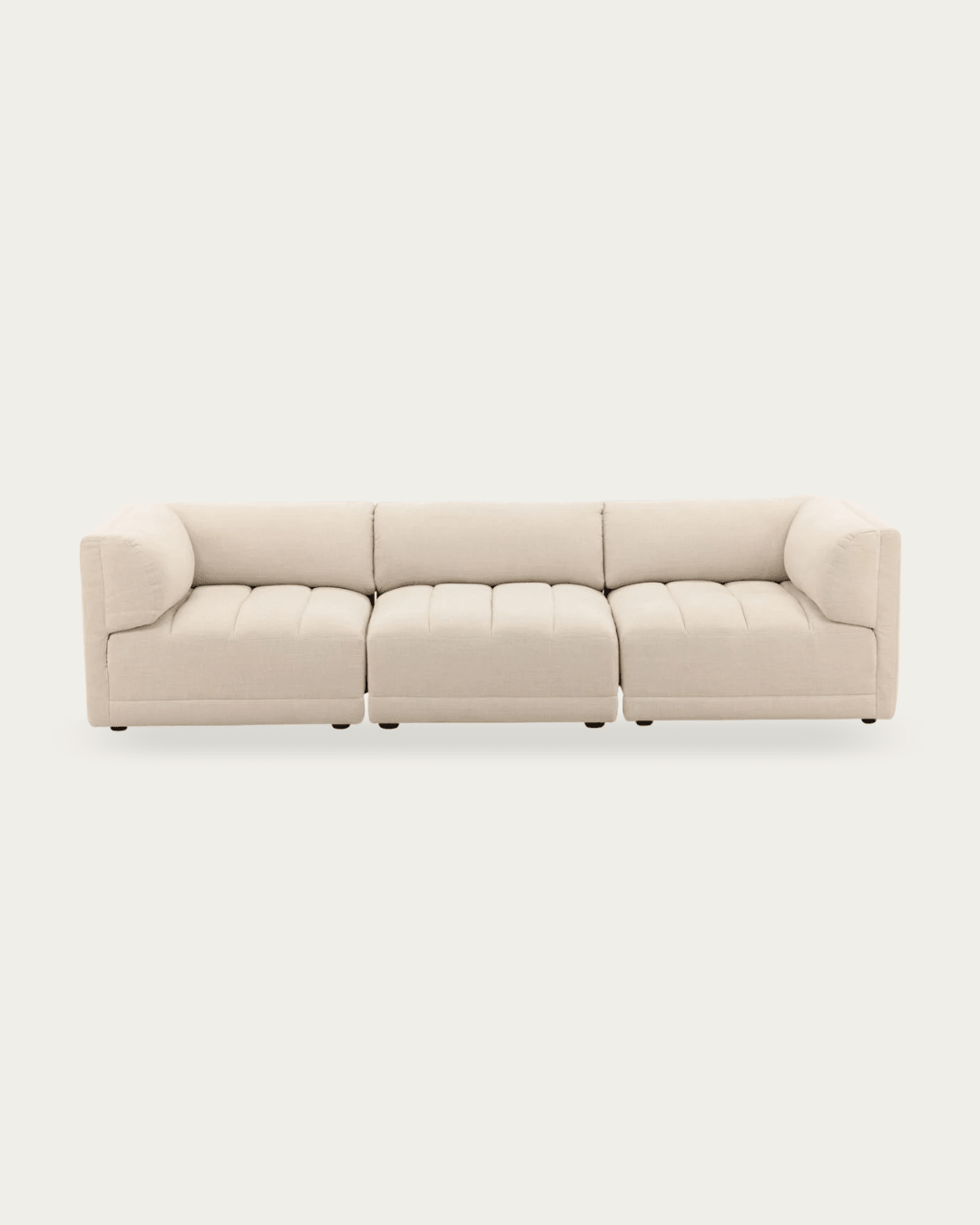
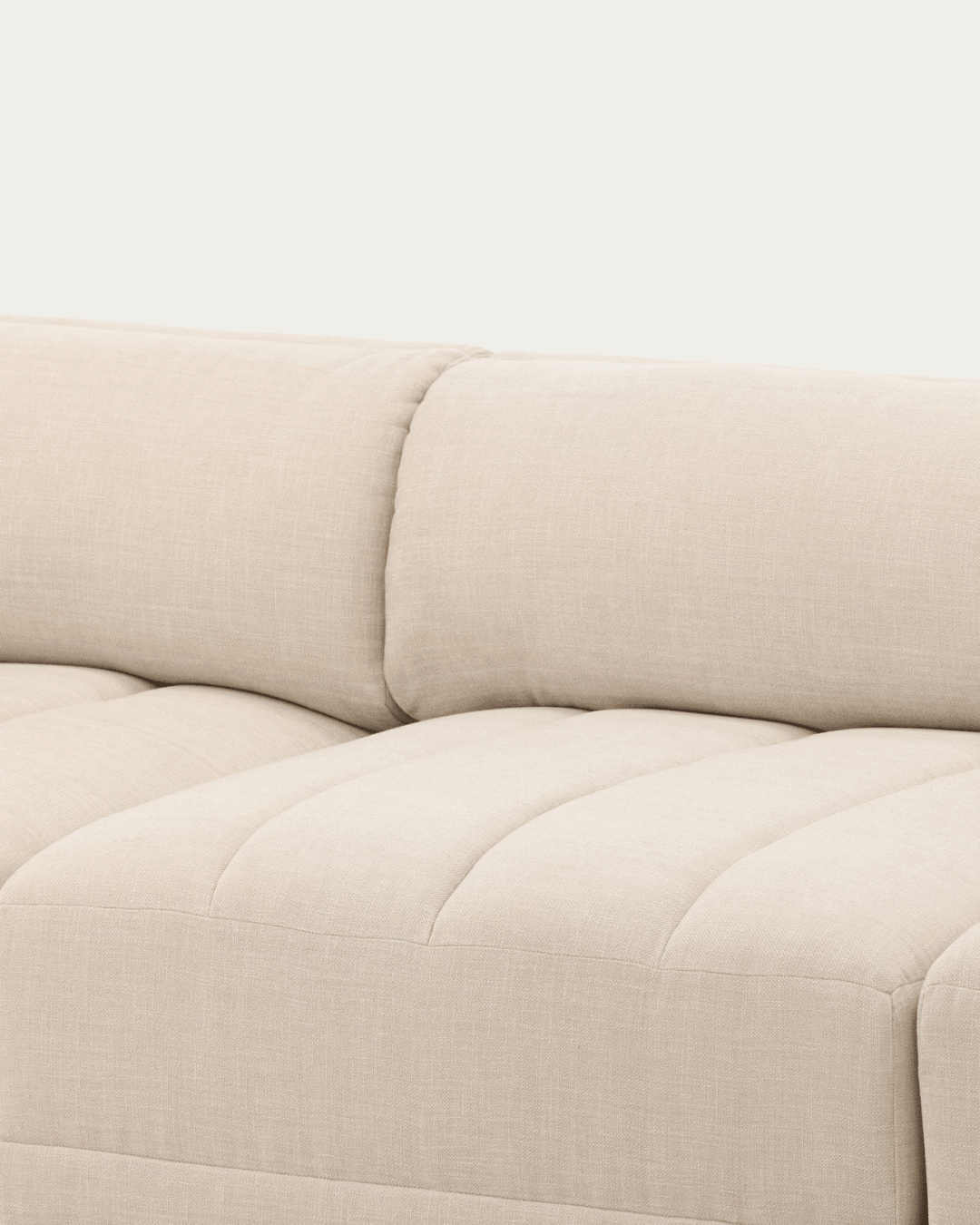
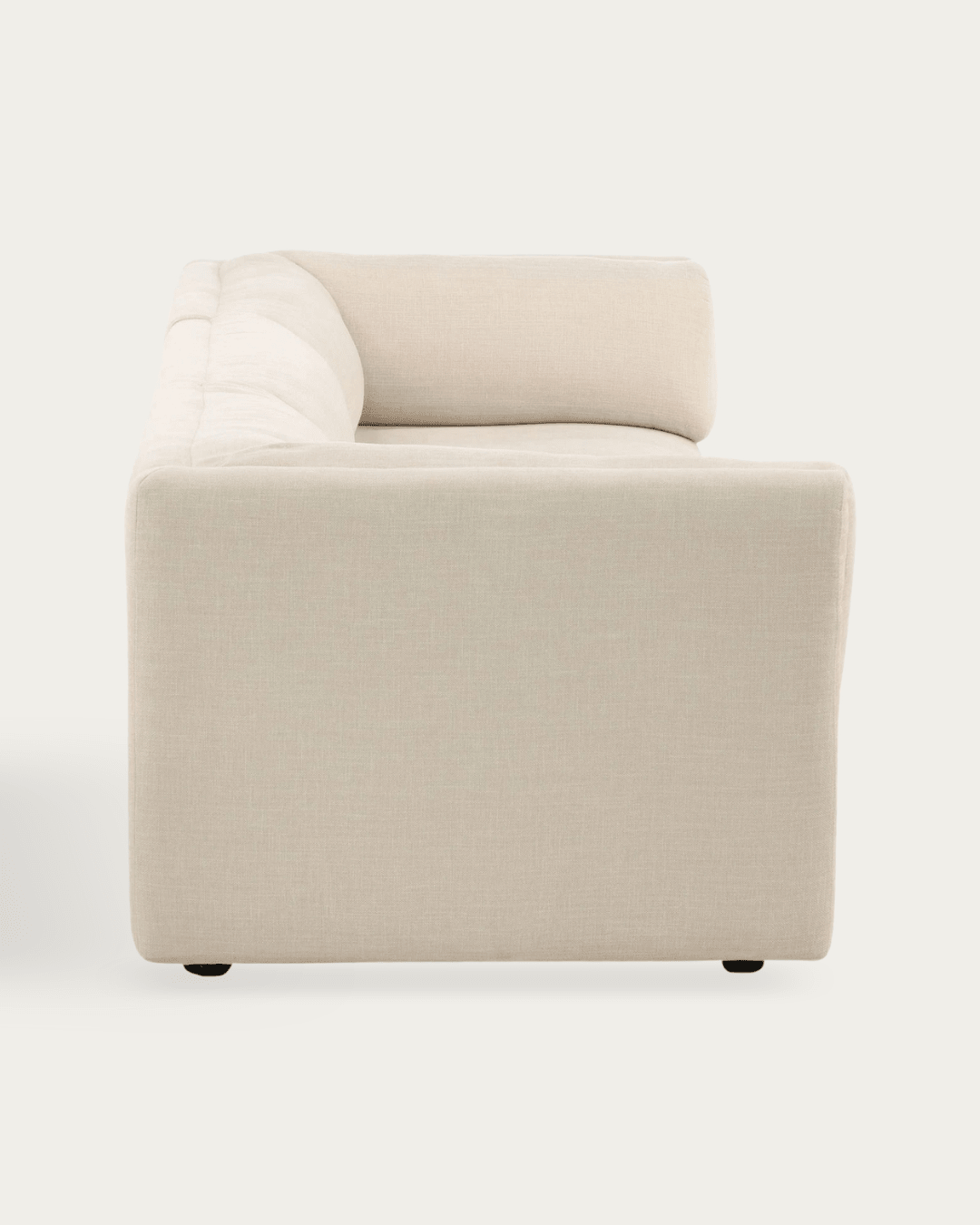
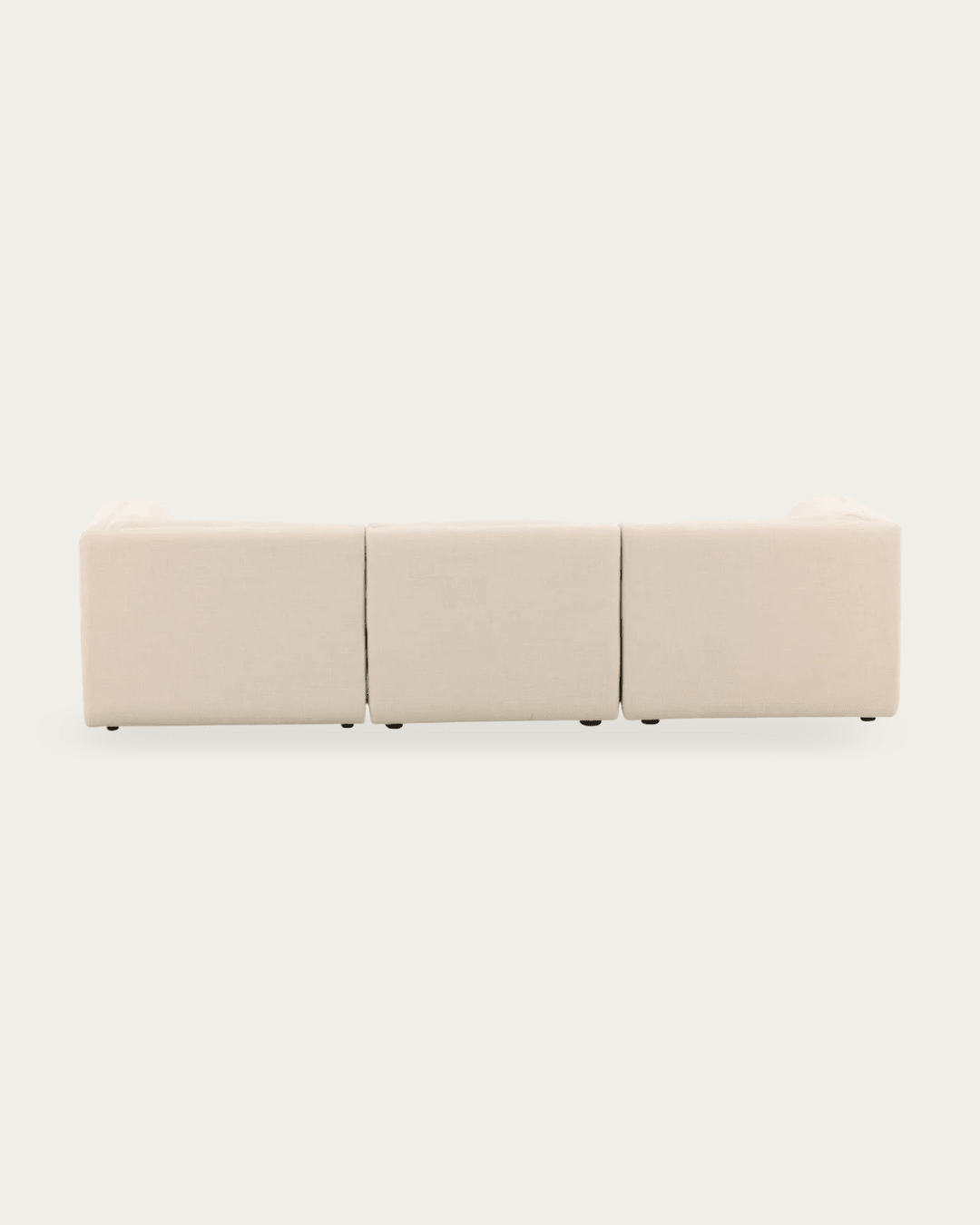
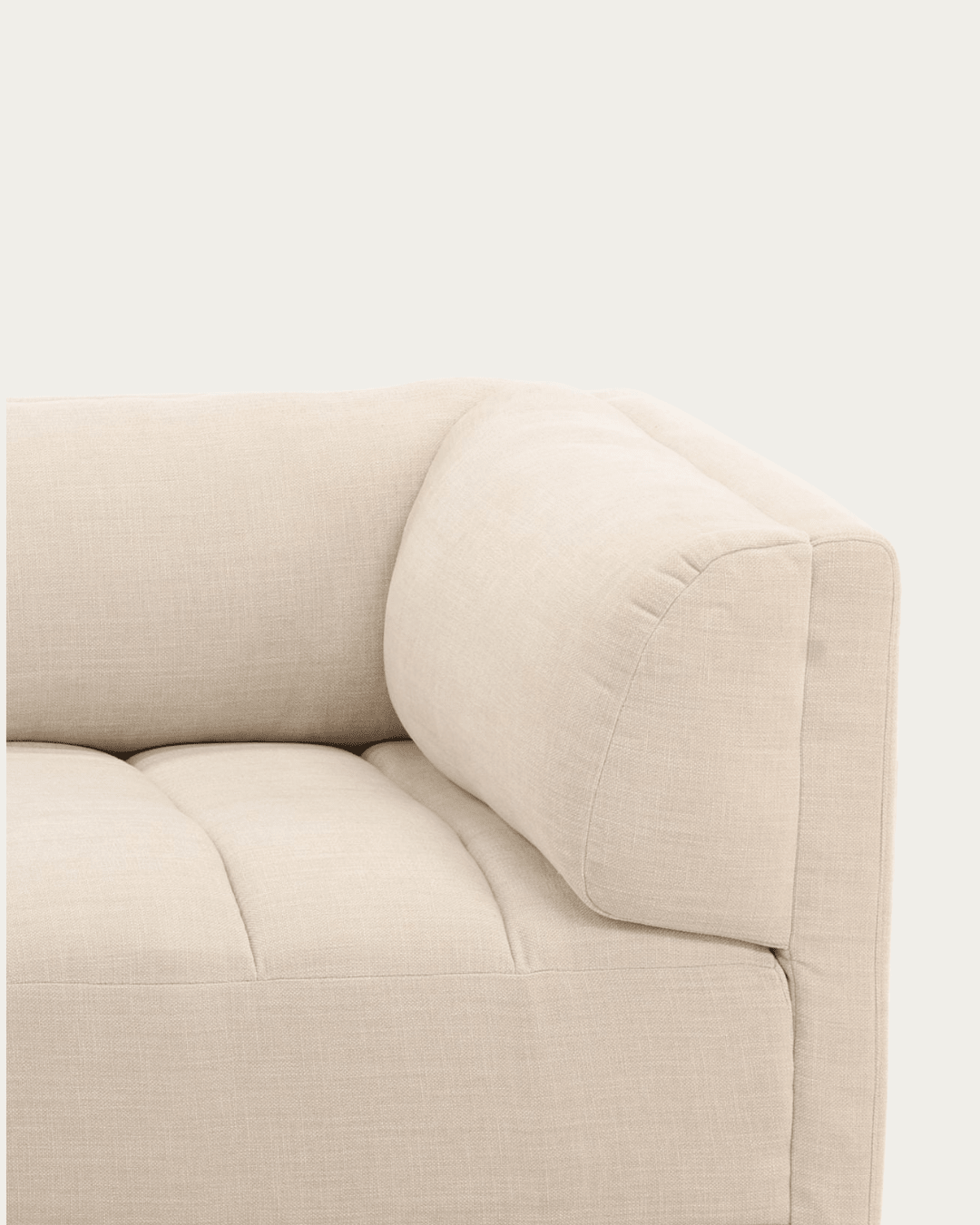
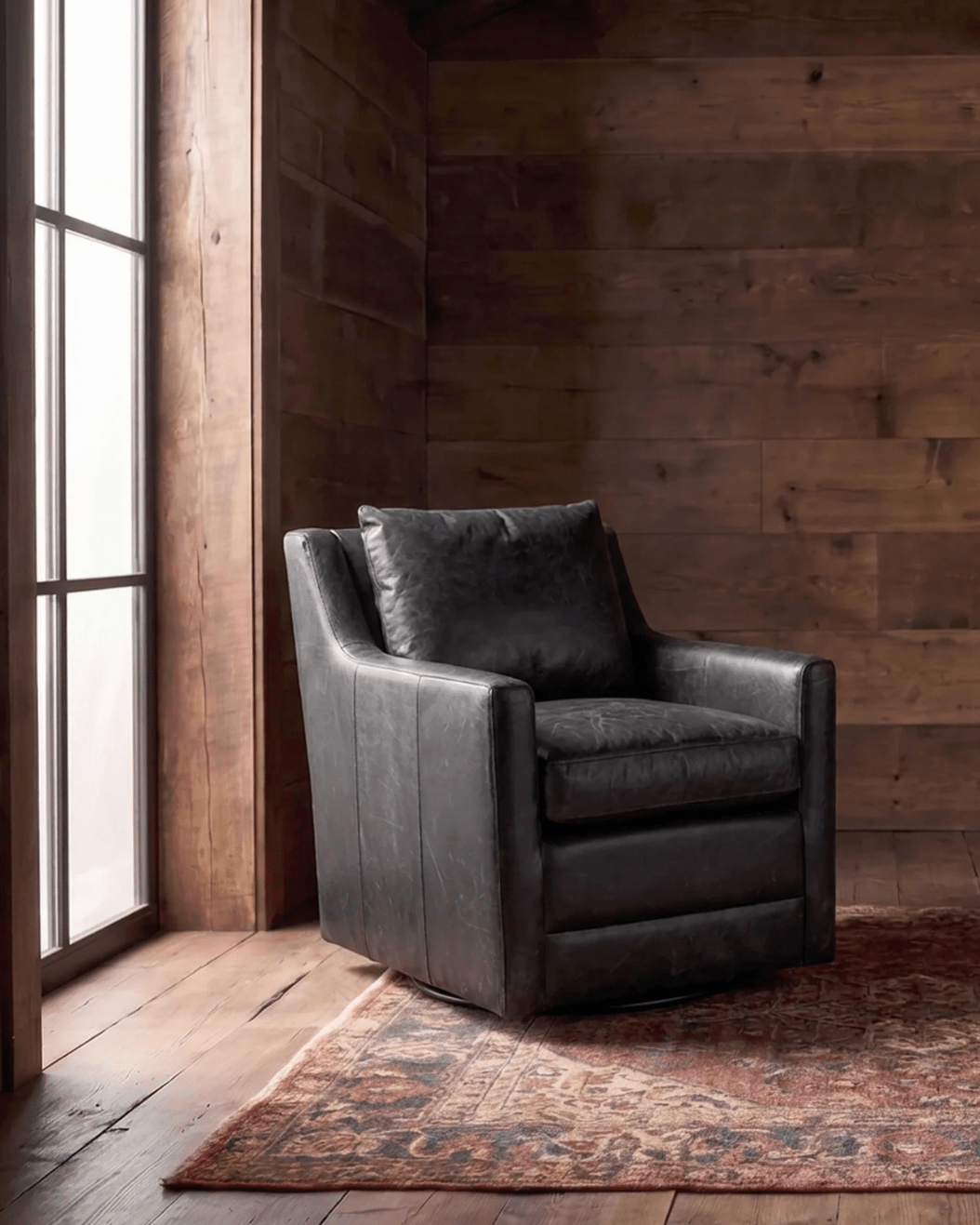
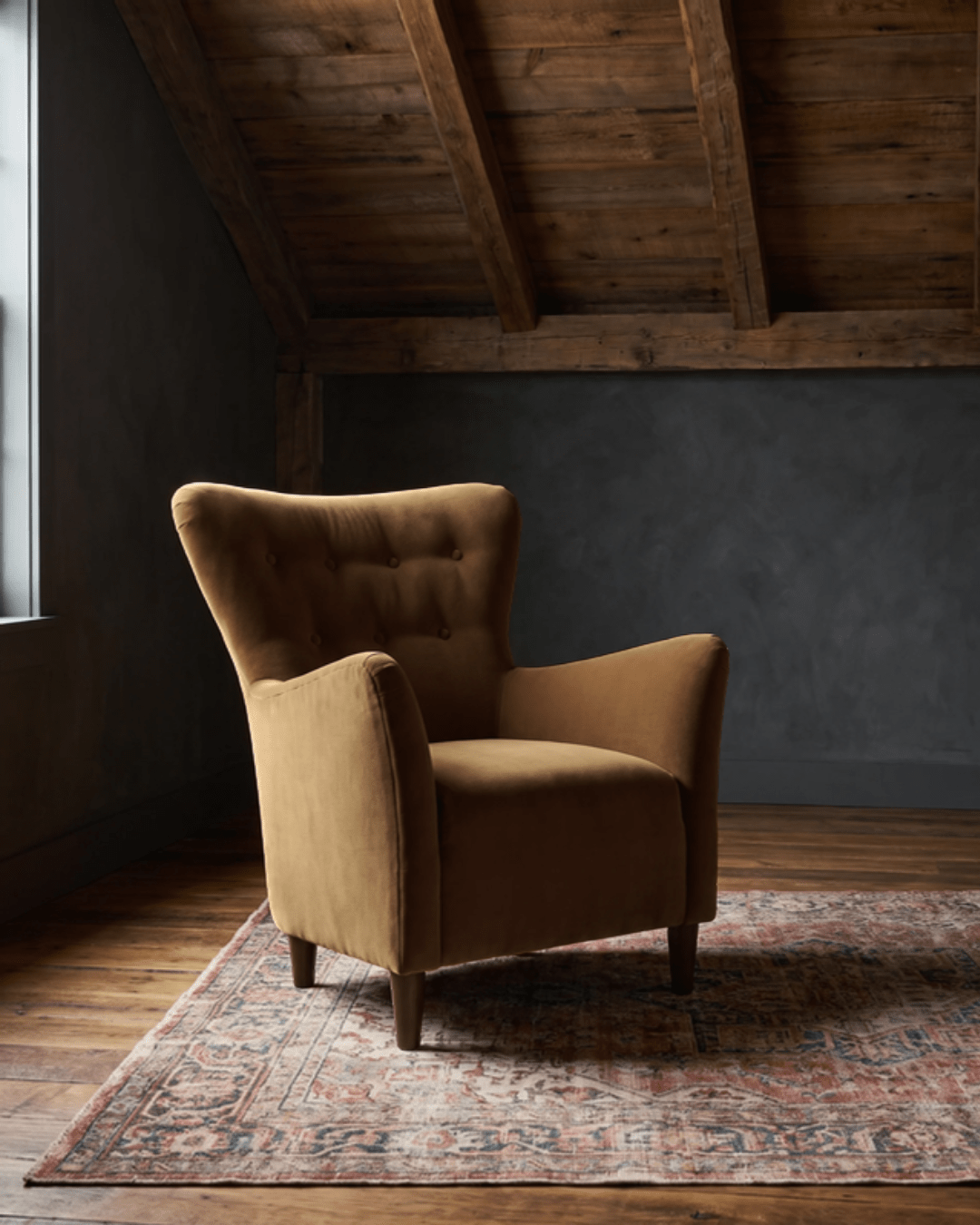
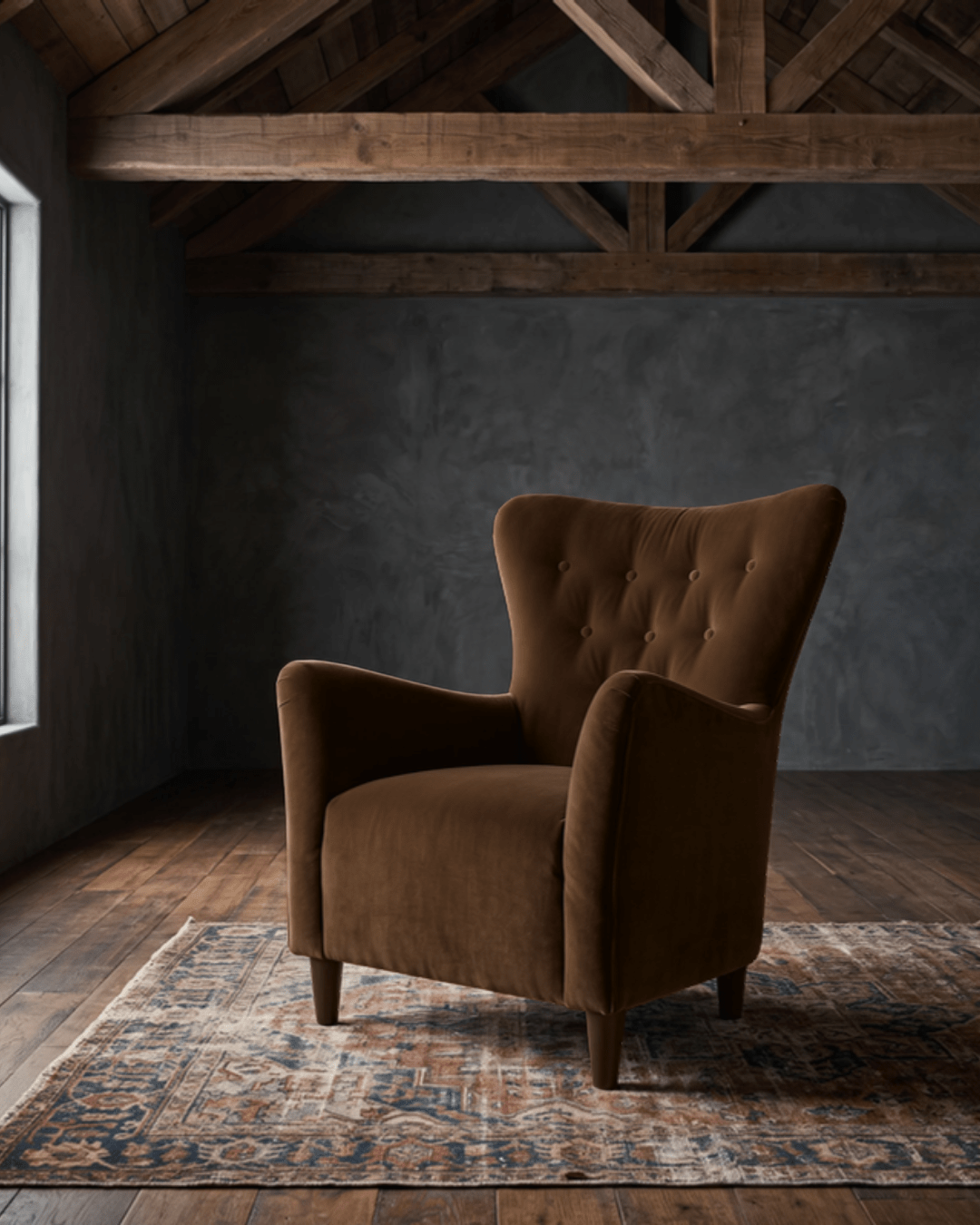
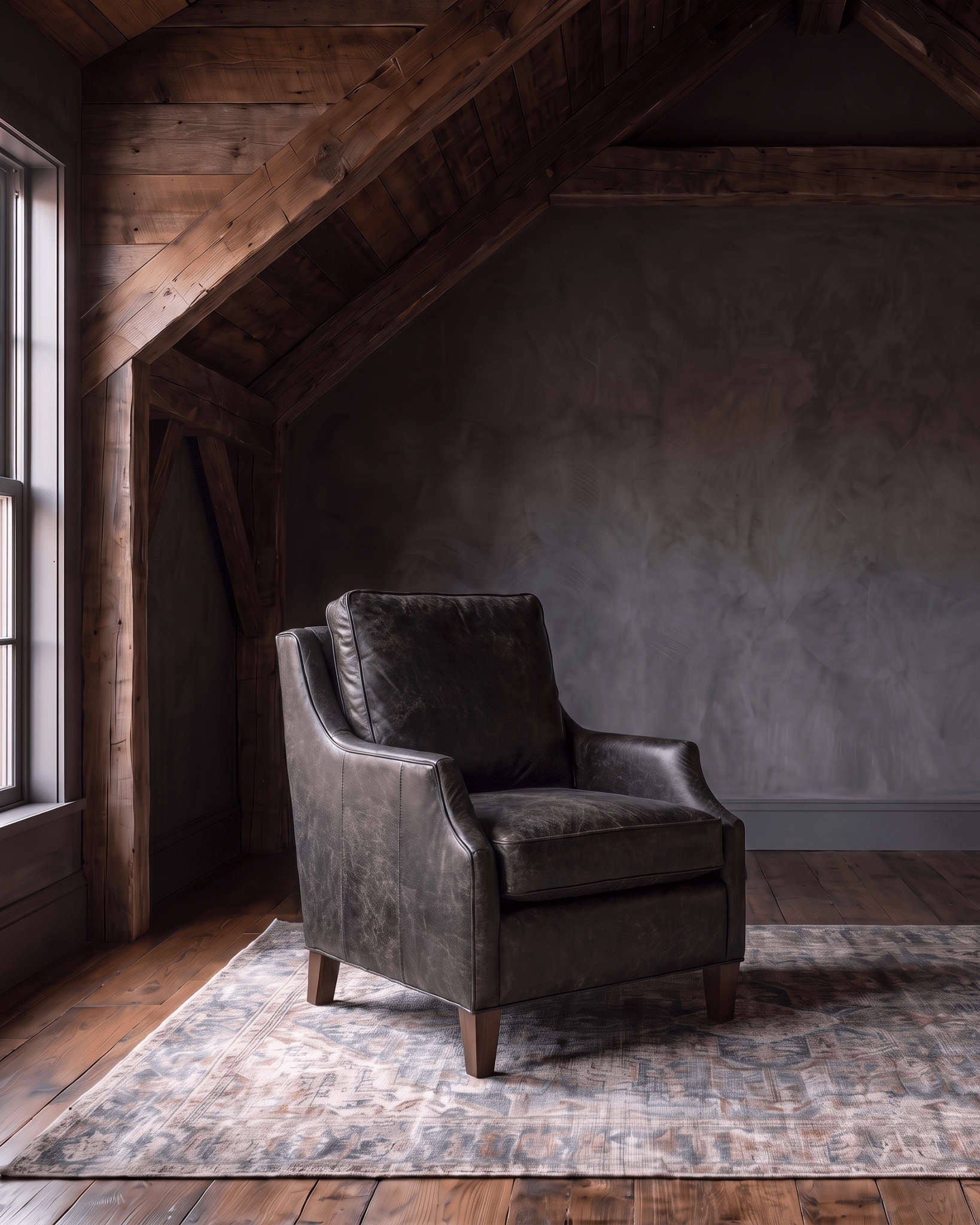
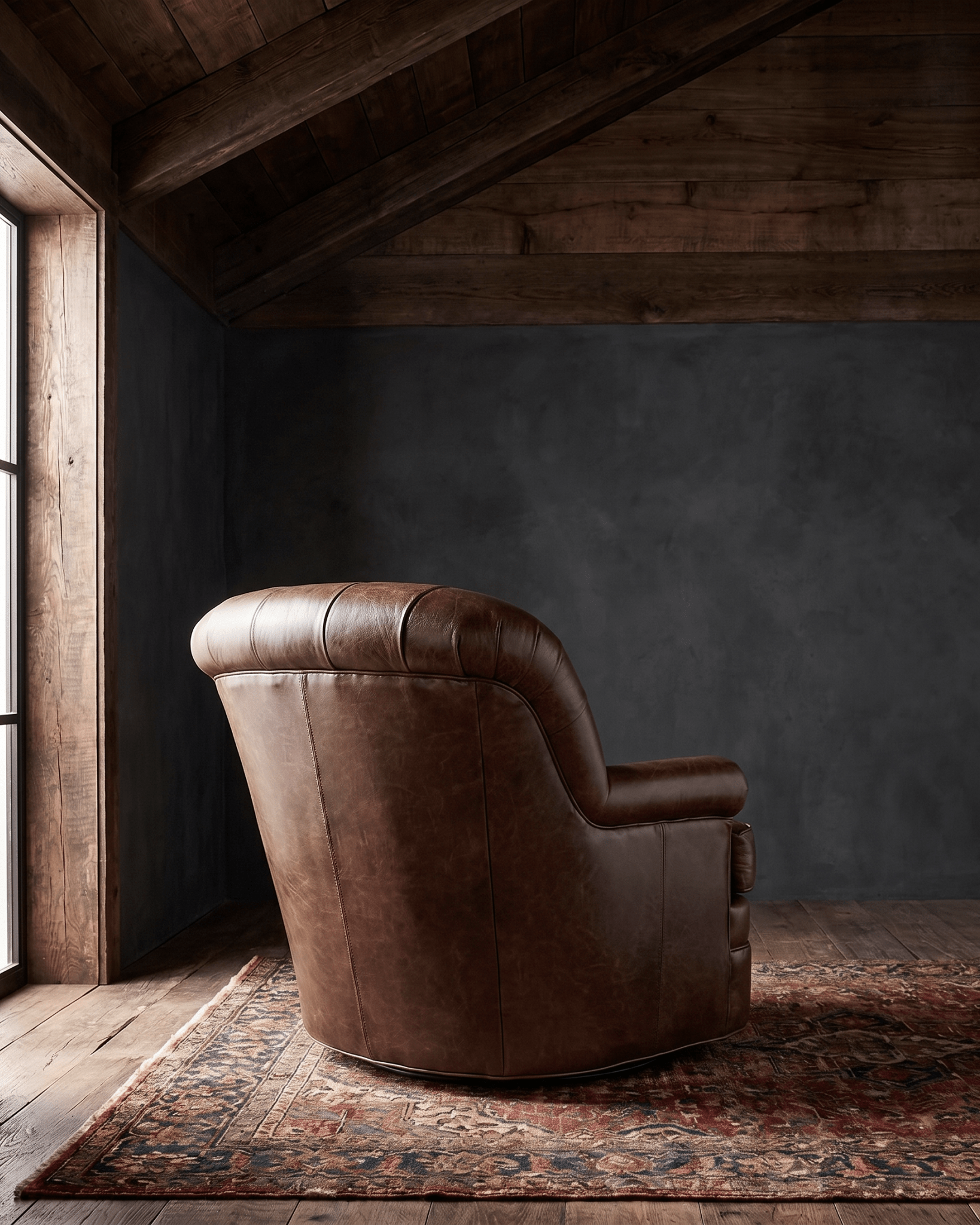
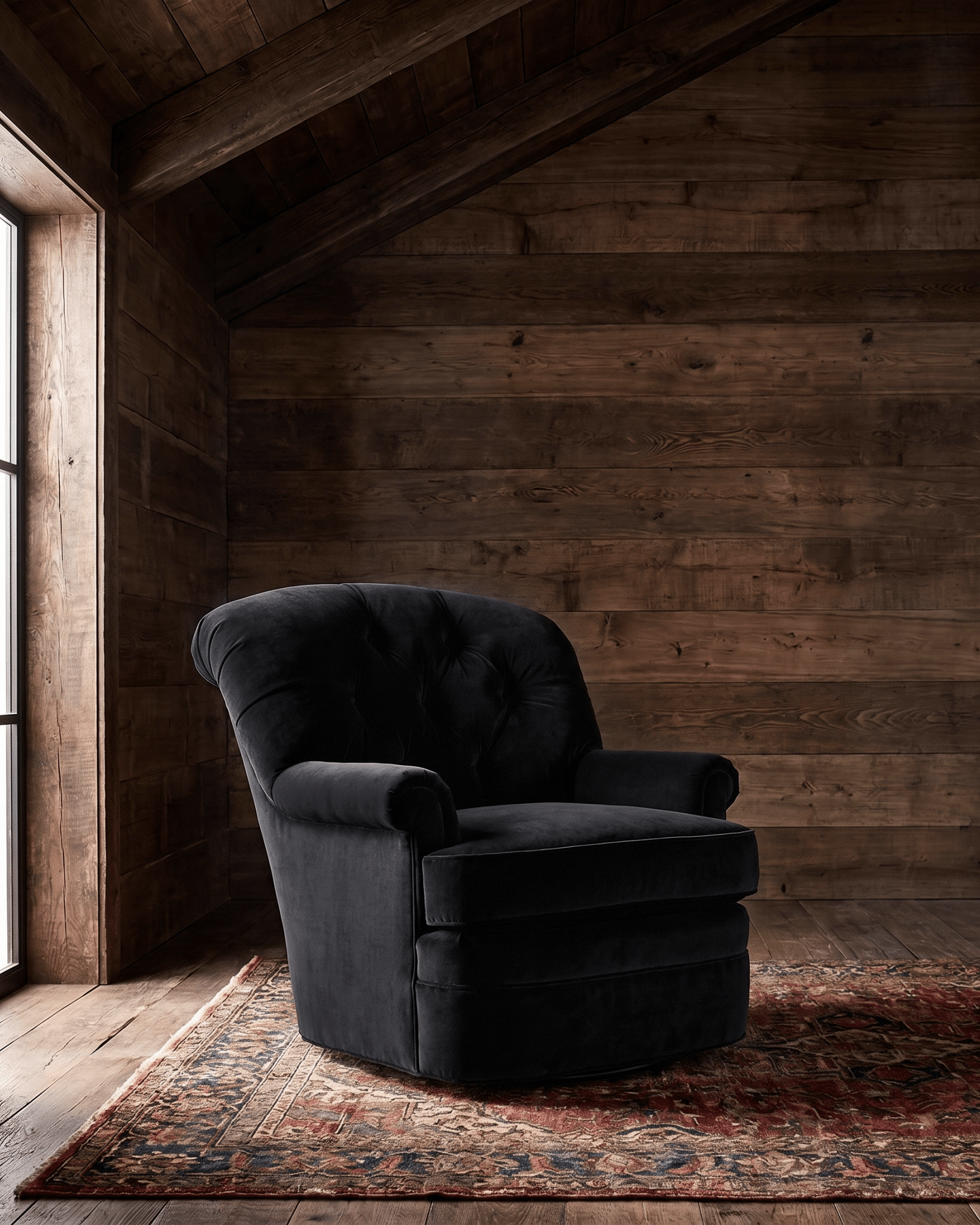
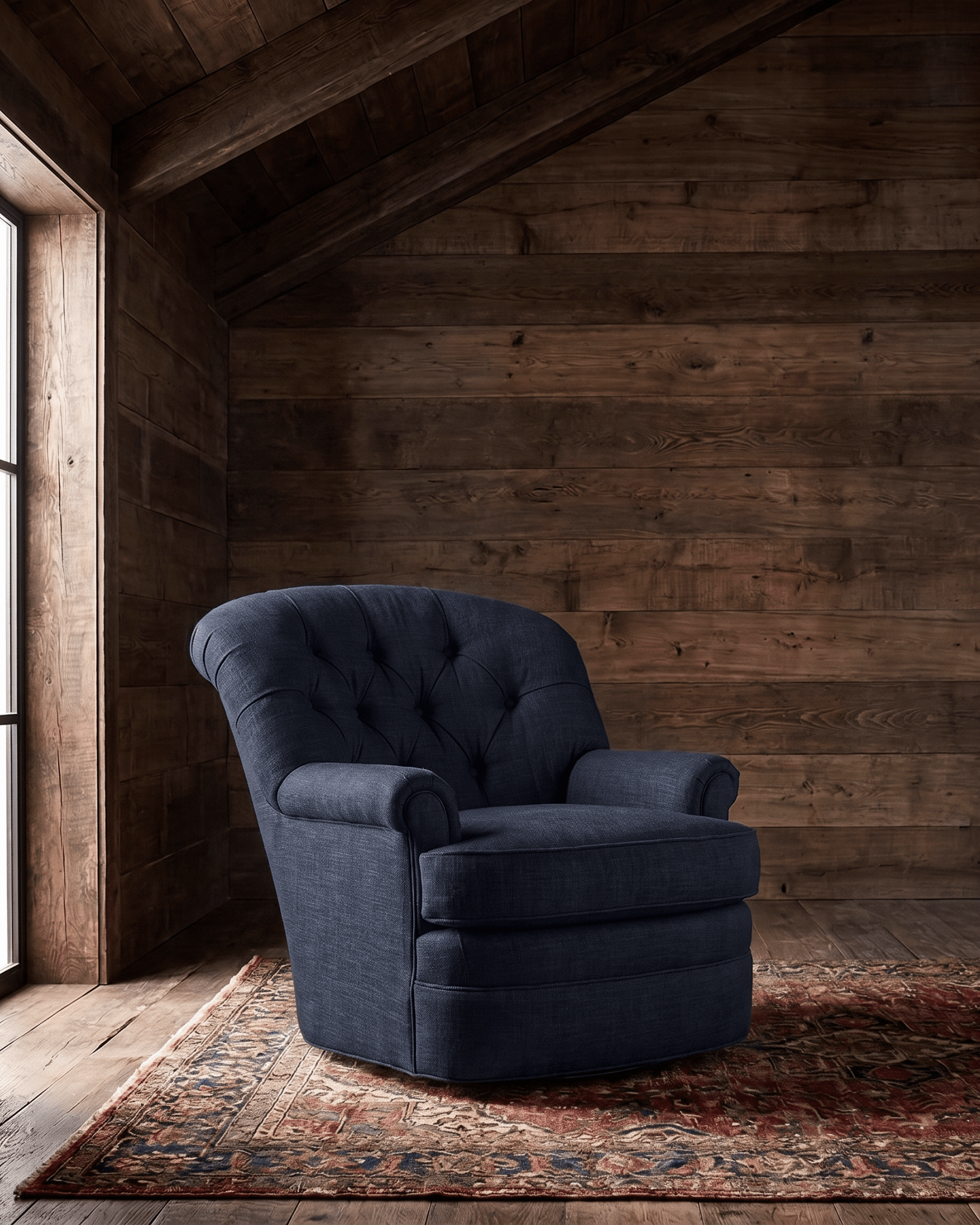
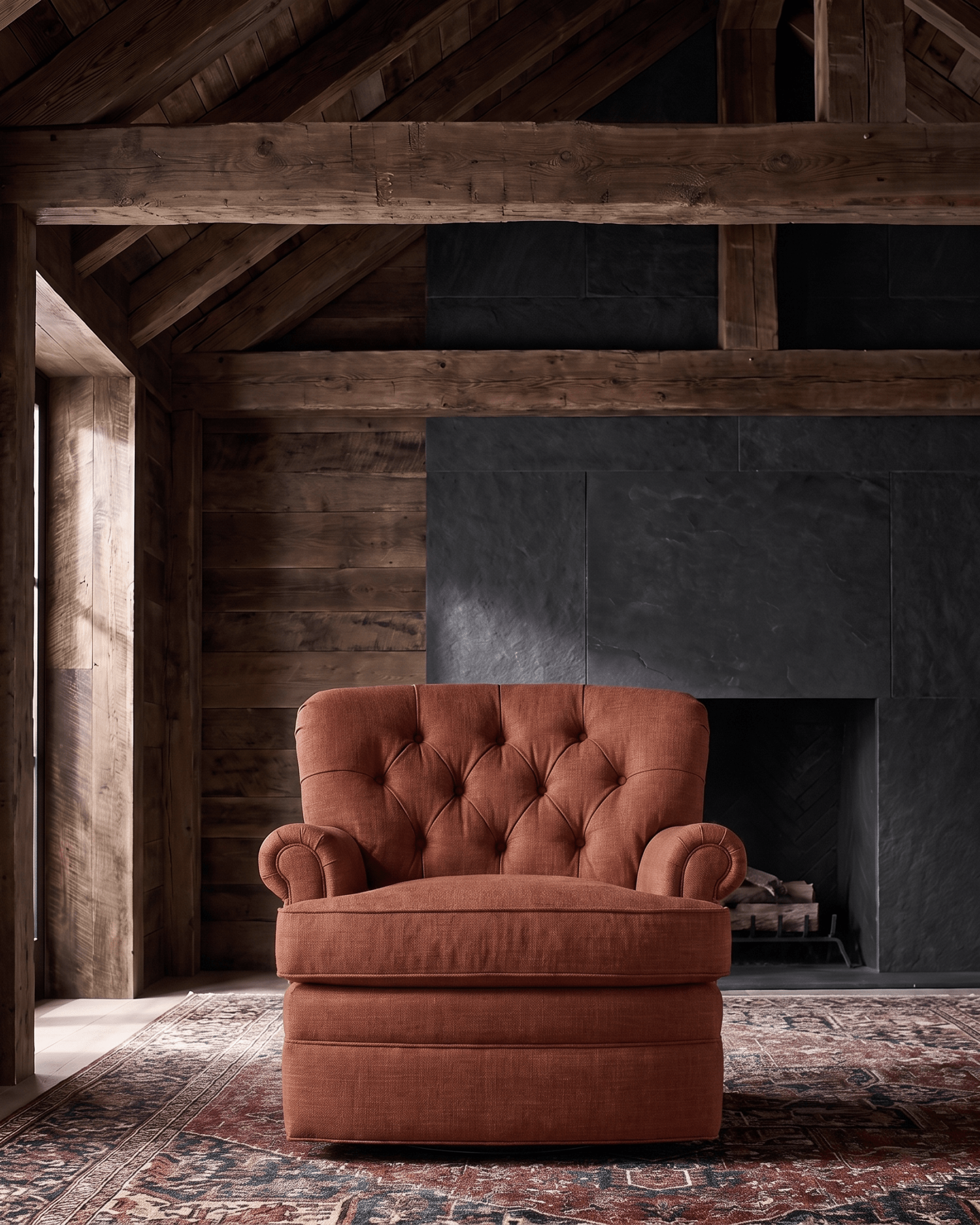
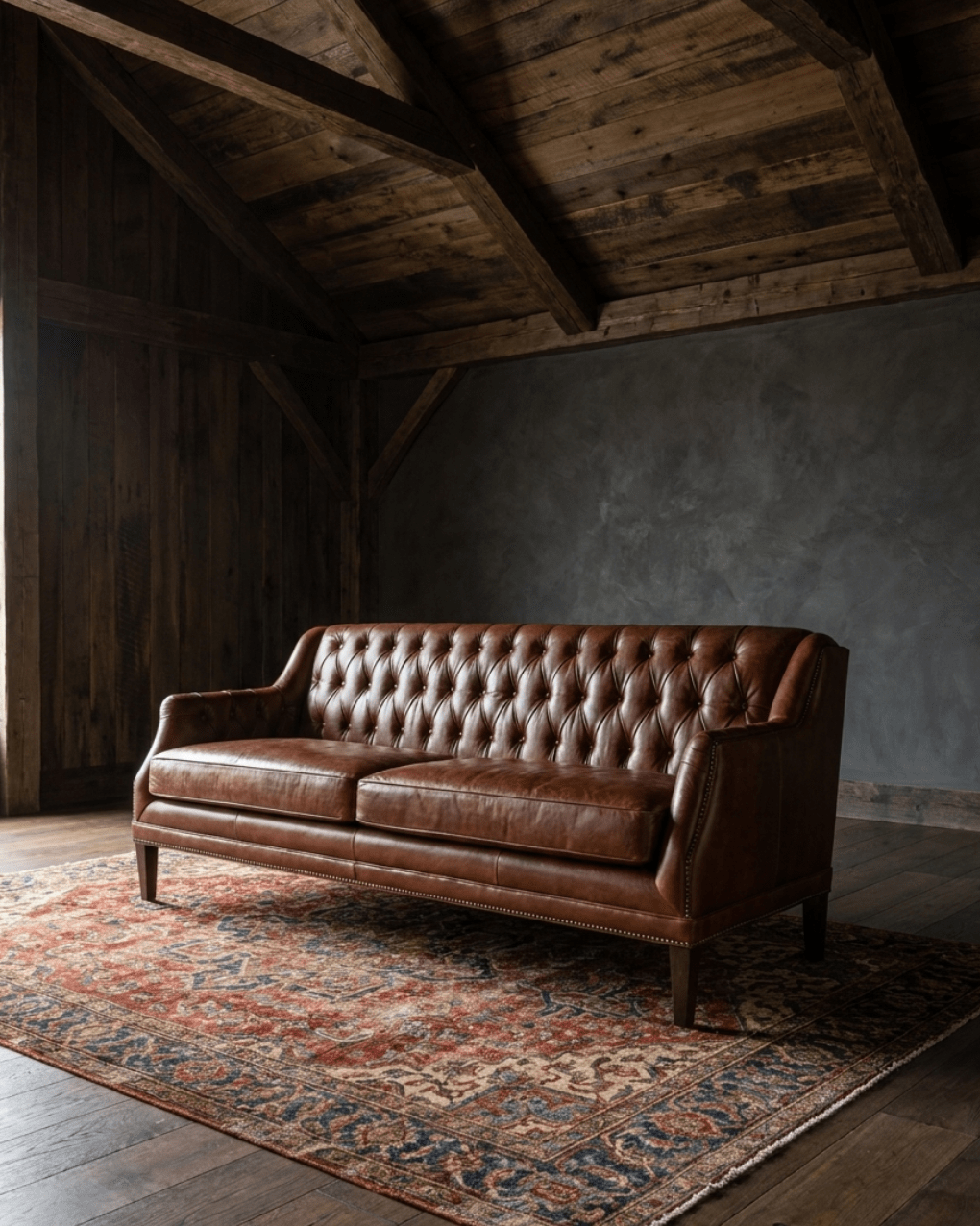
That’s why larger foundational pieces tend to regulate a space more effectively than decorative styling moments. A substantial sectional or oversized lounge chair visually slows the room down because it reduces fragmentation.
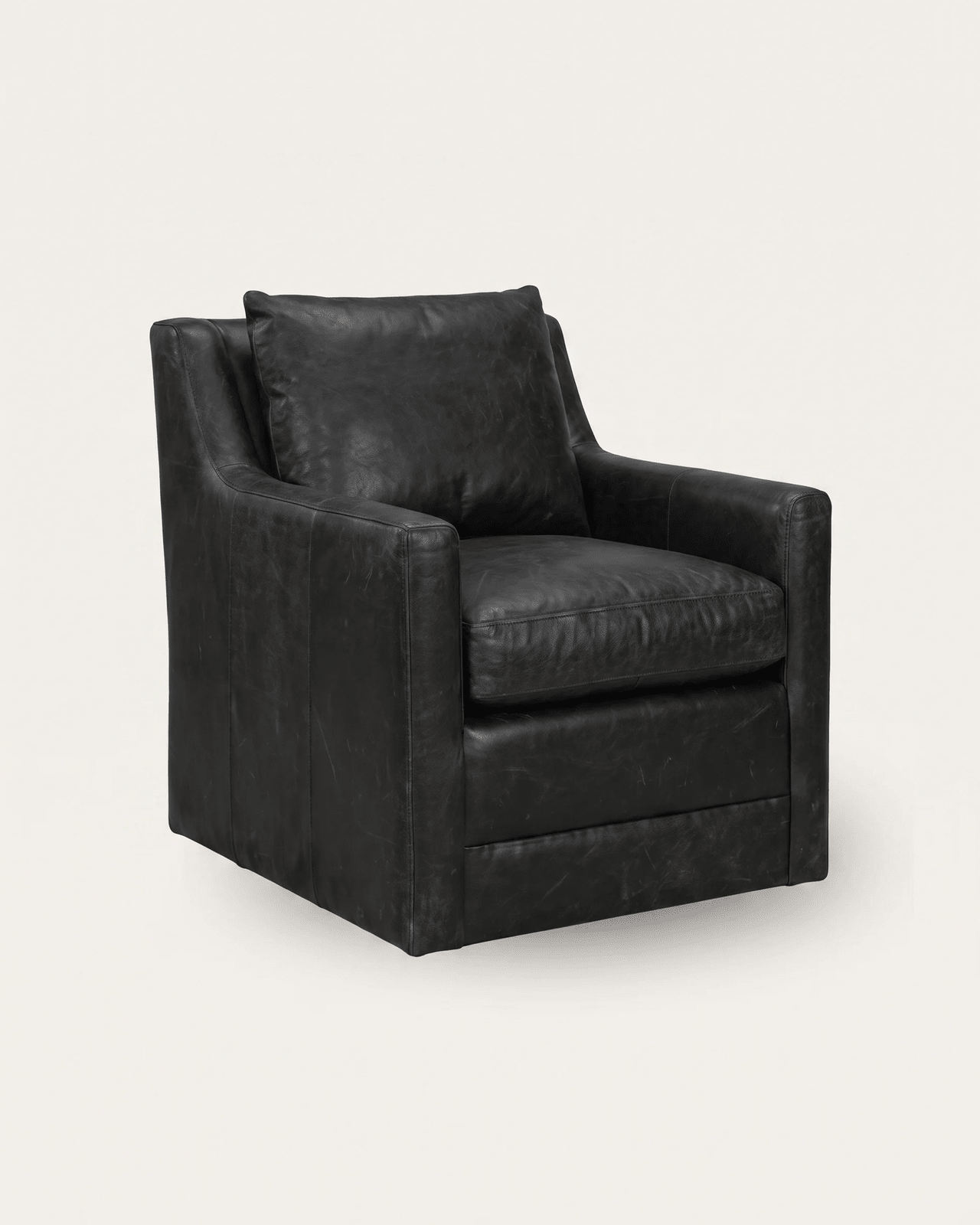
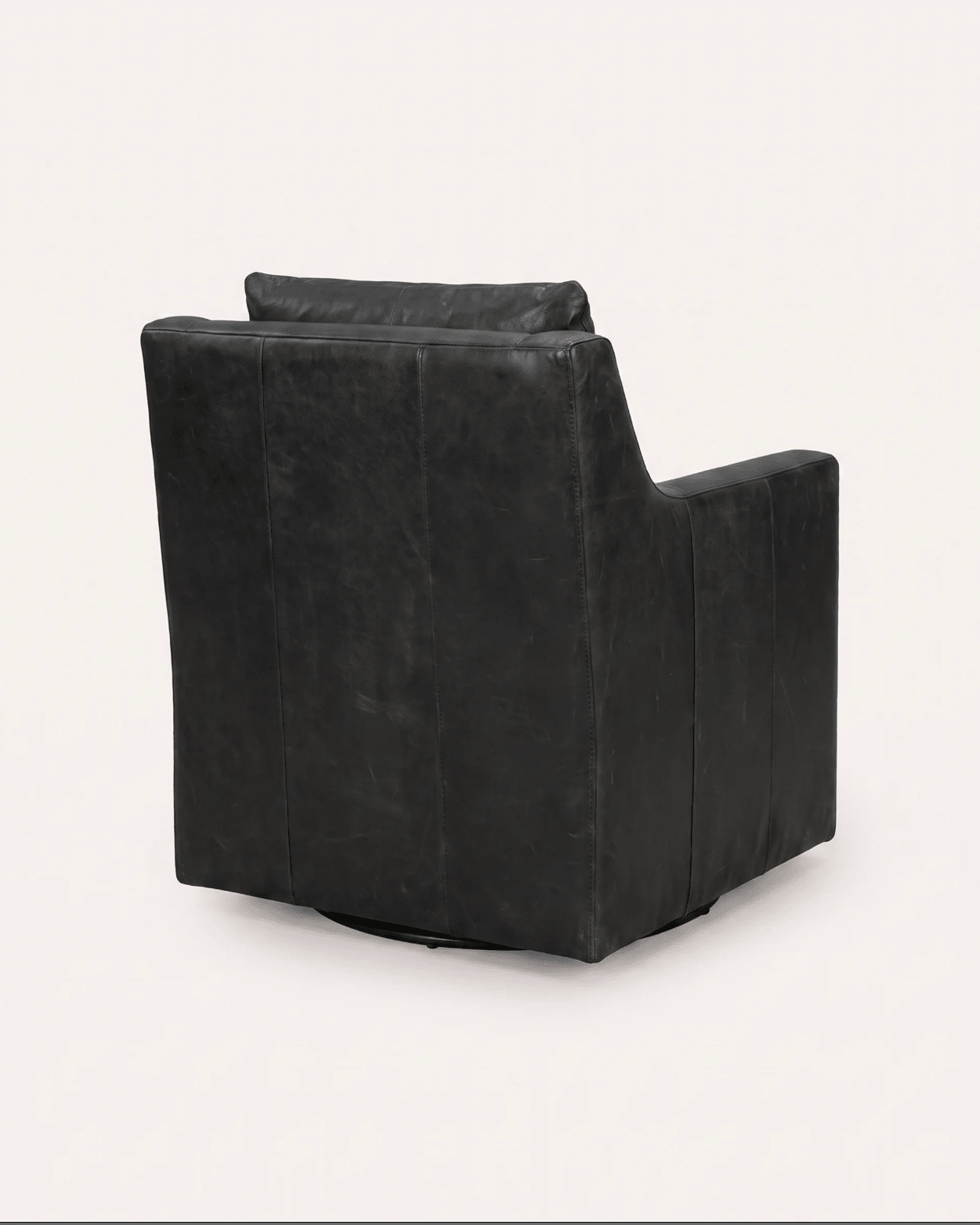
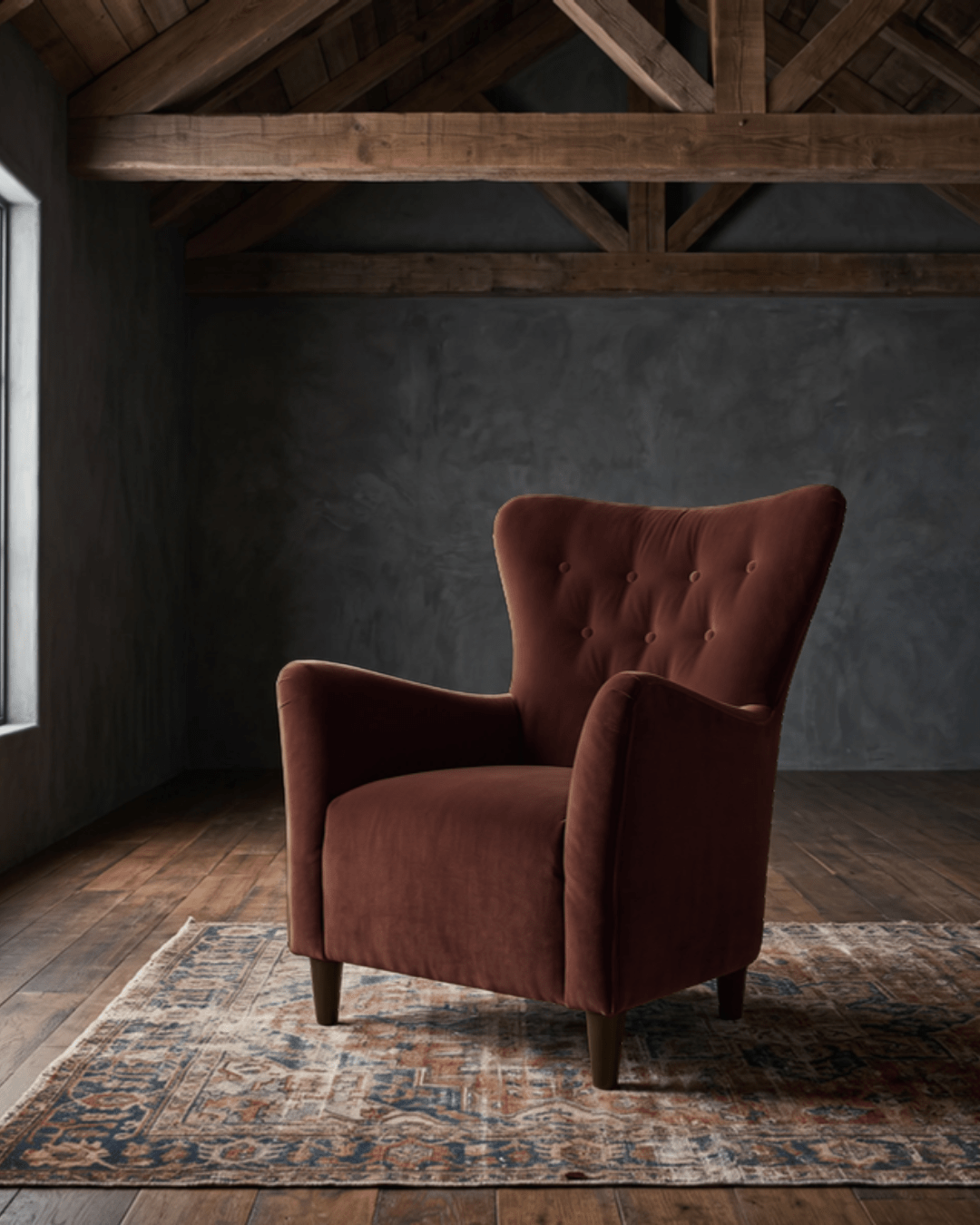
Rooms layered with pieces from the Sofas and sectionals collection and the Lounge chair collection often feel calmer simply because the furniture itself already creates enough presence.
Nothing needs to scream for attention afterward.
Sofas and sectionals collection:
Lounge chair collection:
Texture Matters More Than Color
One of the biggest shifts happening in modern mountain design is the move away from relying on decorative contrast to create interest.
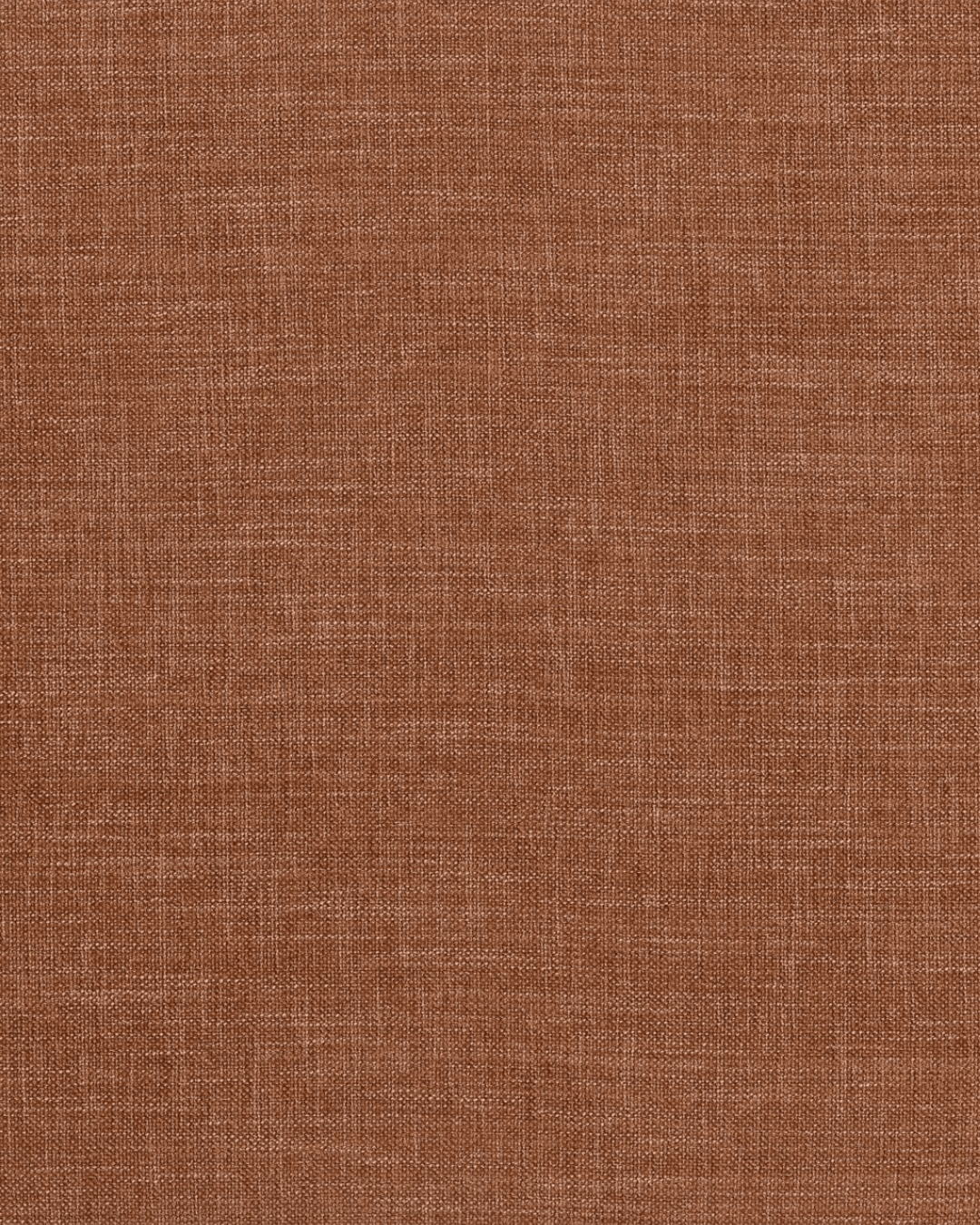
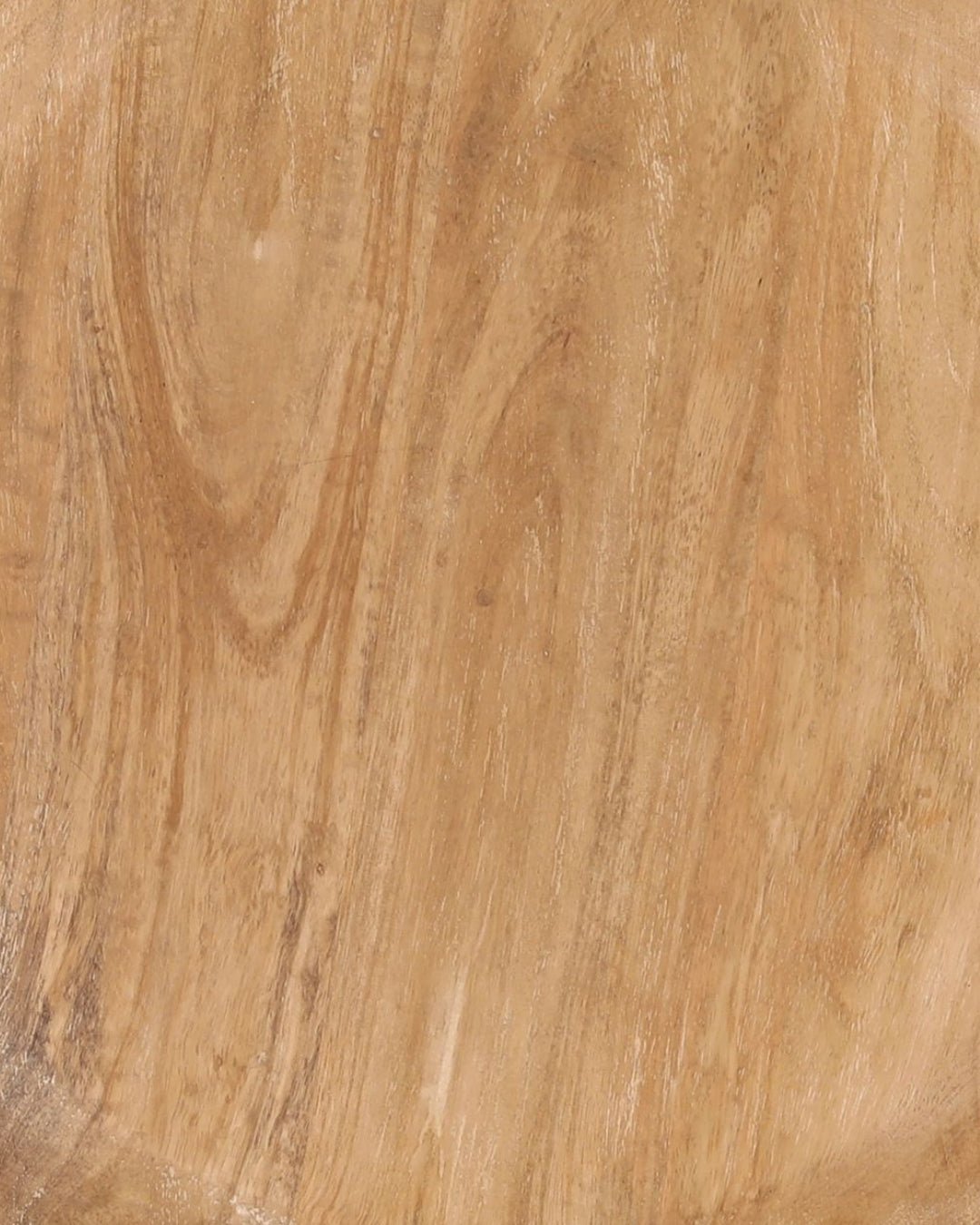
Texture is doing the work now.
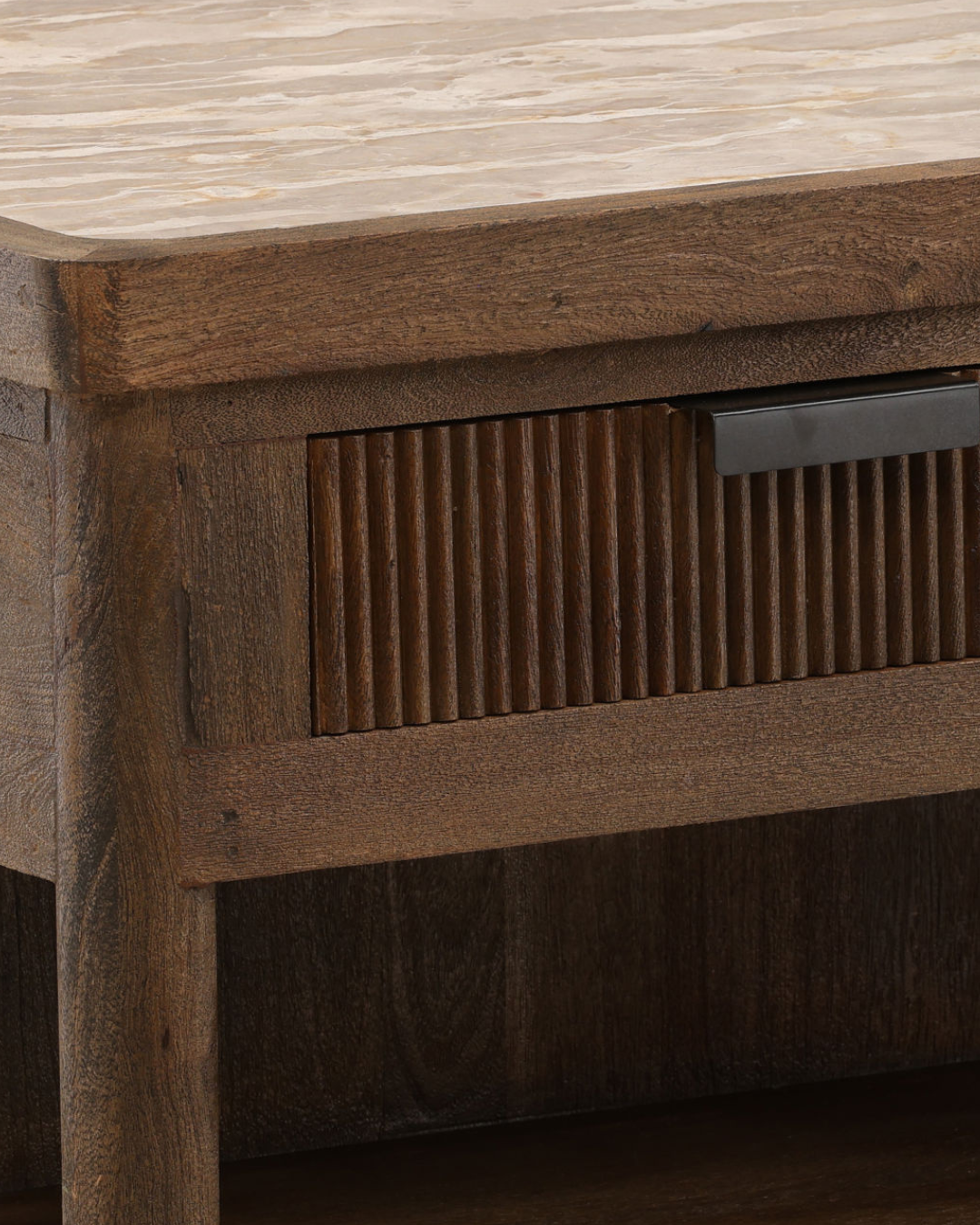
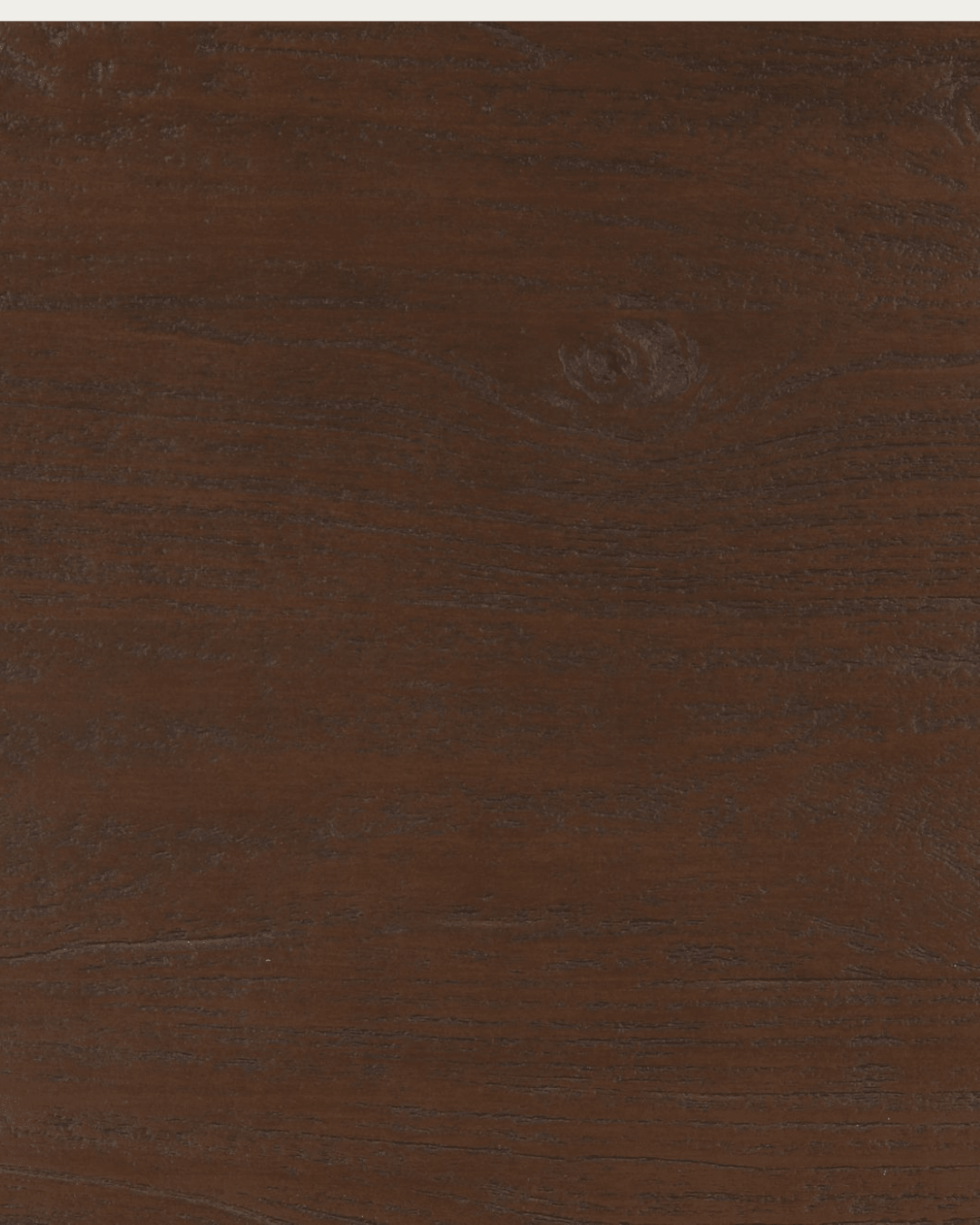
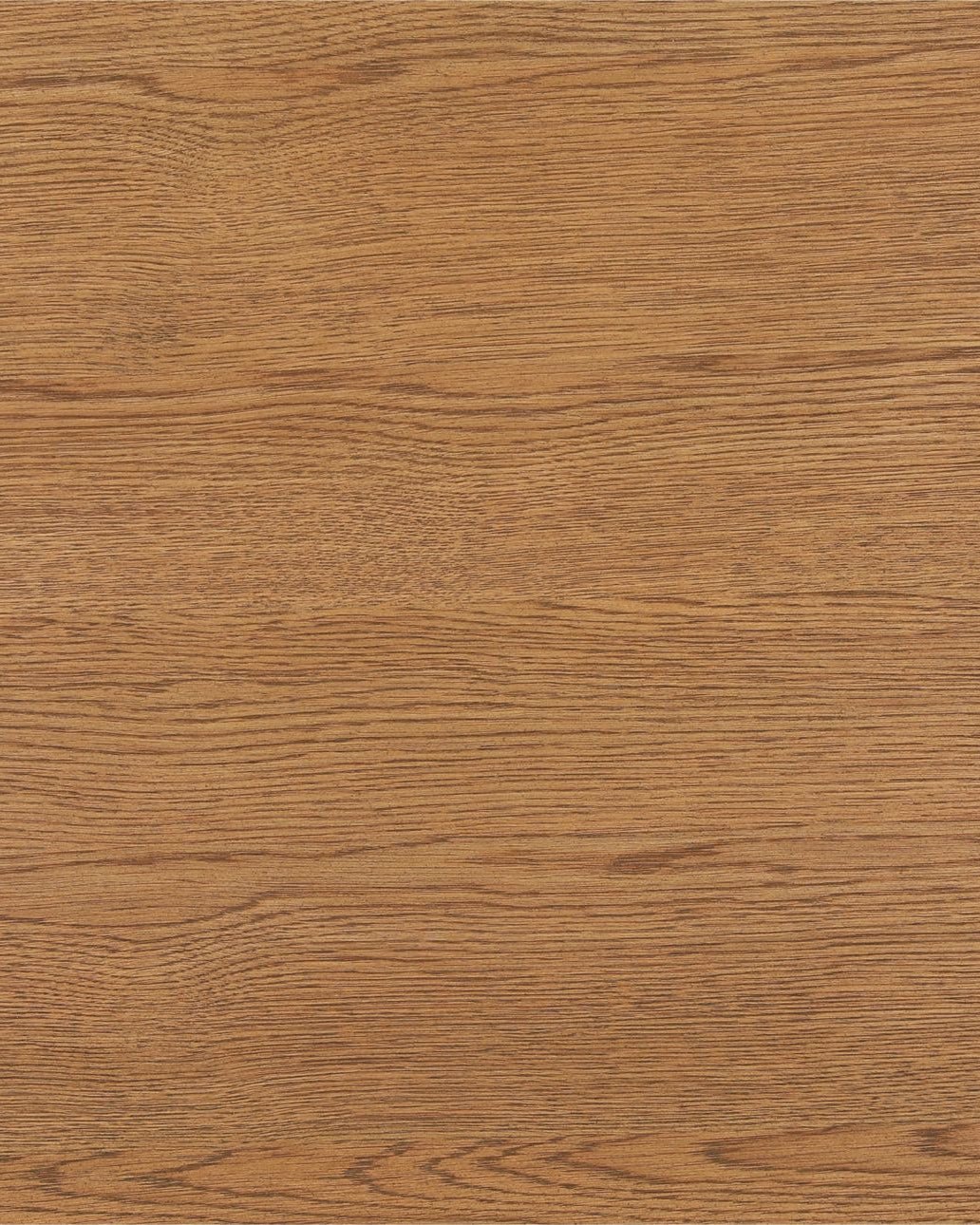
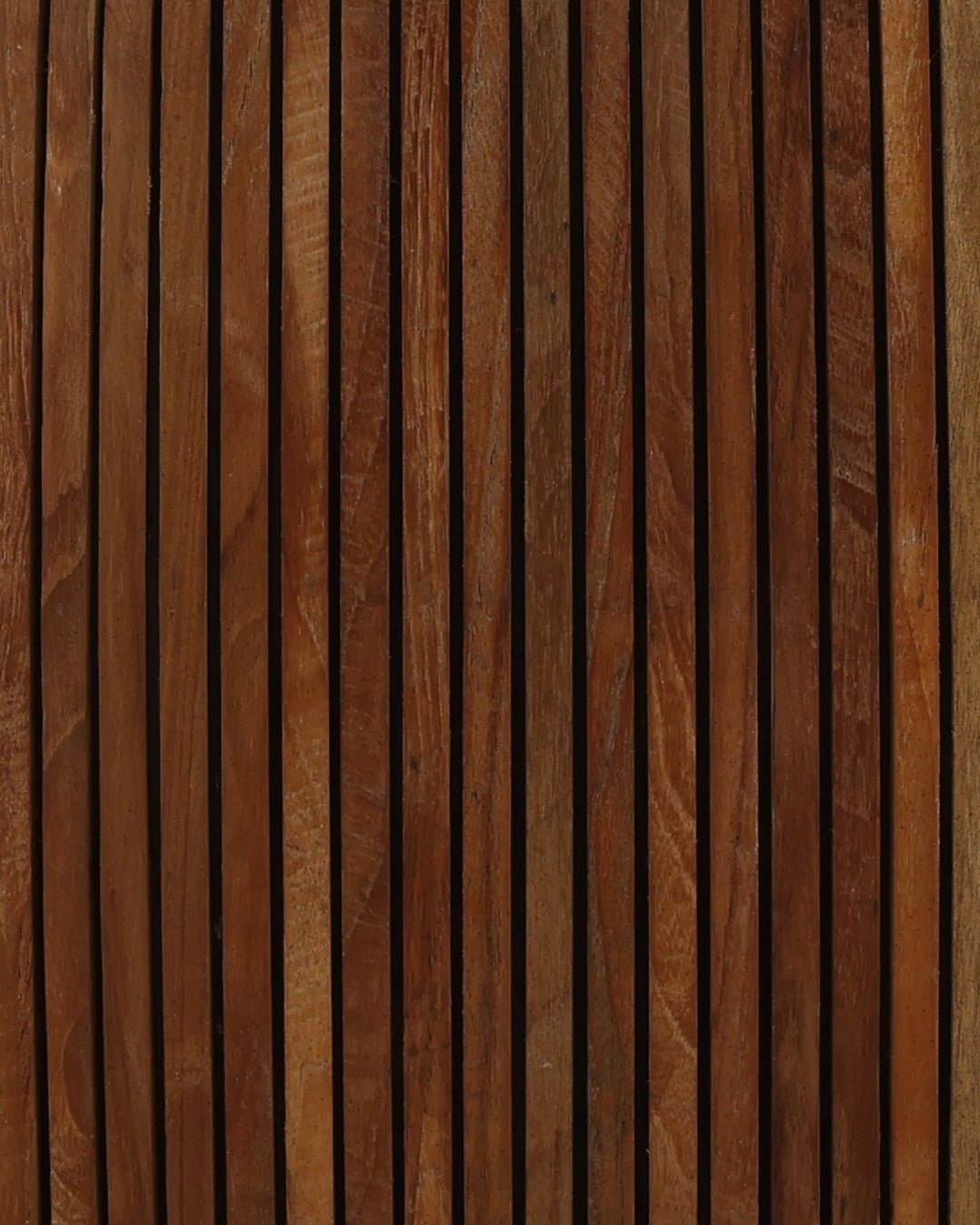
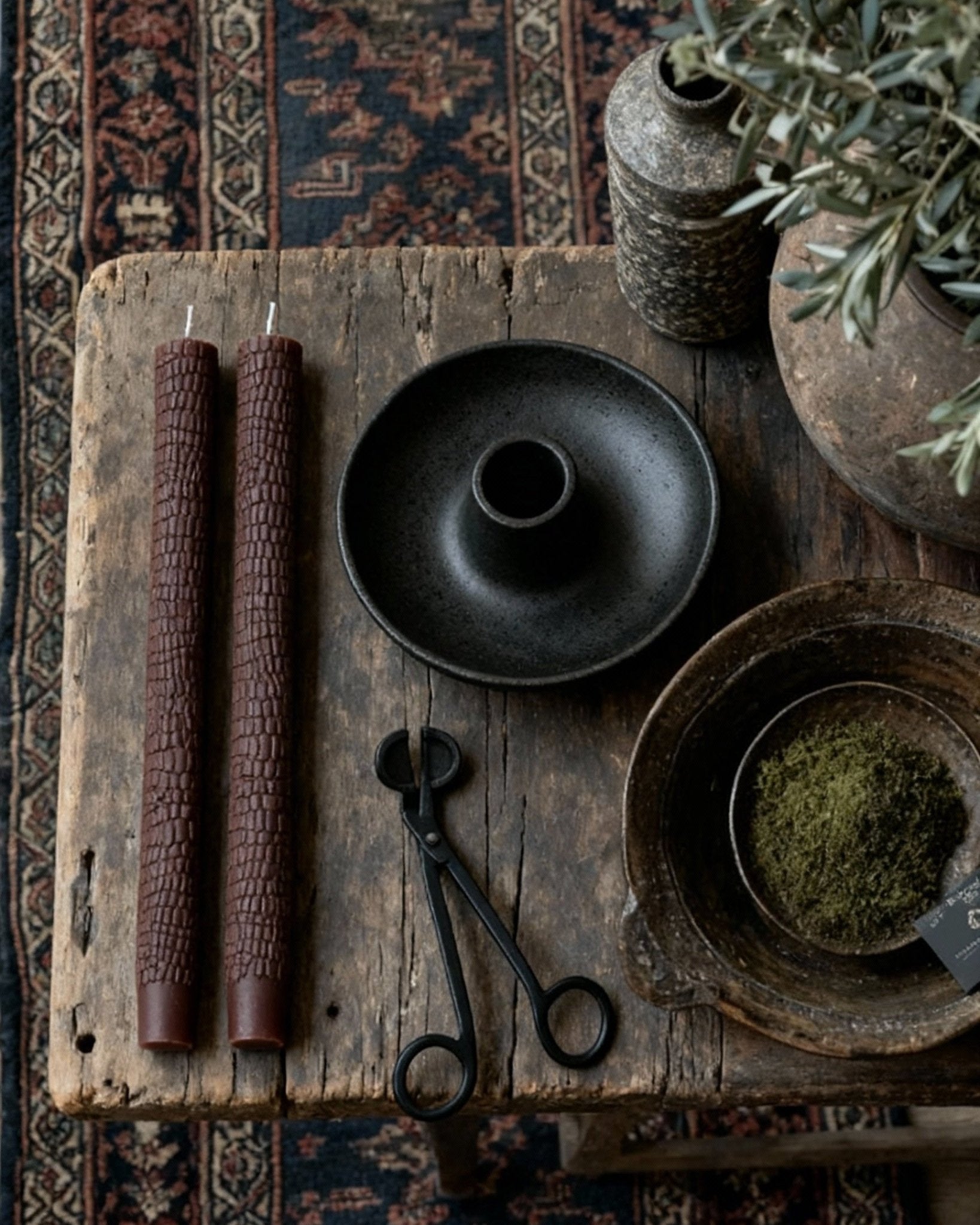
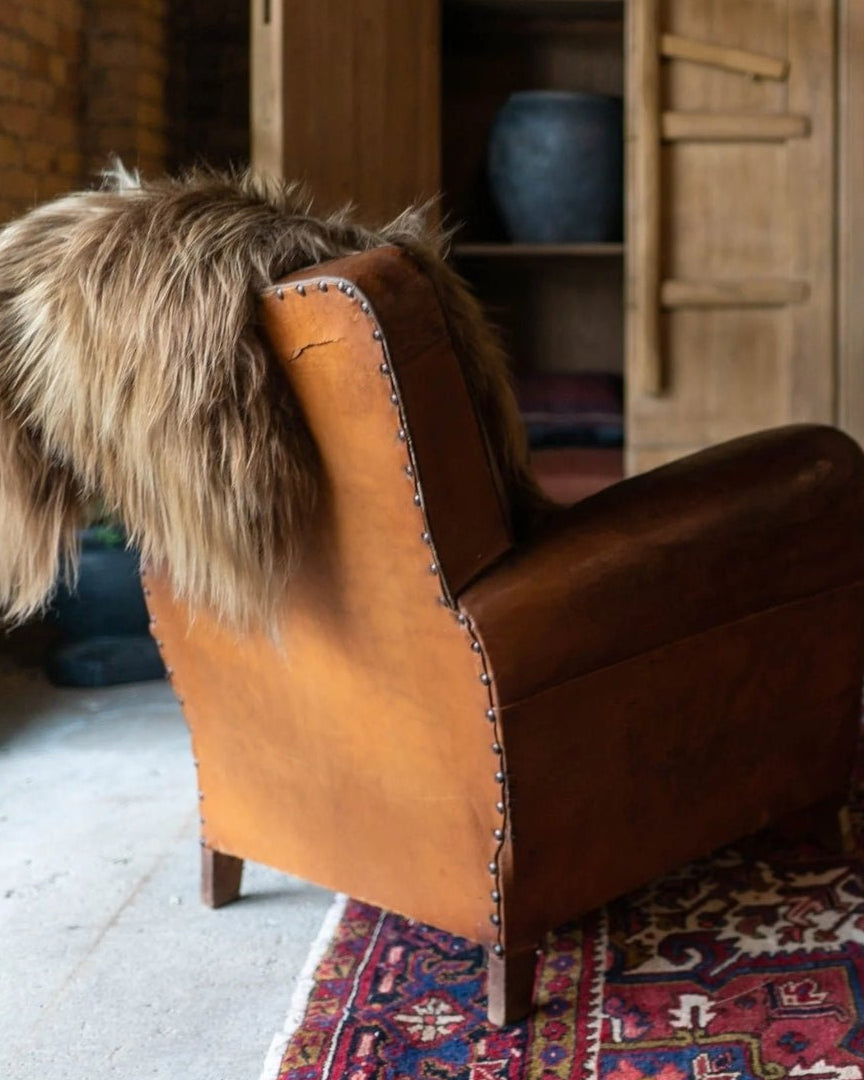
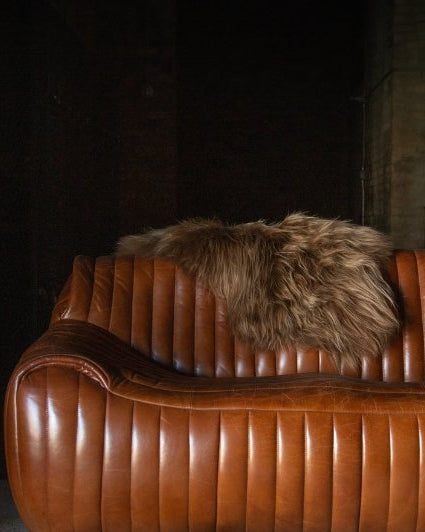
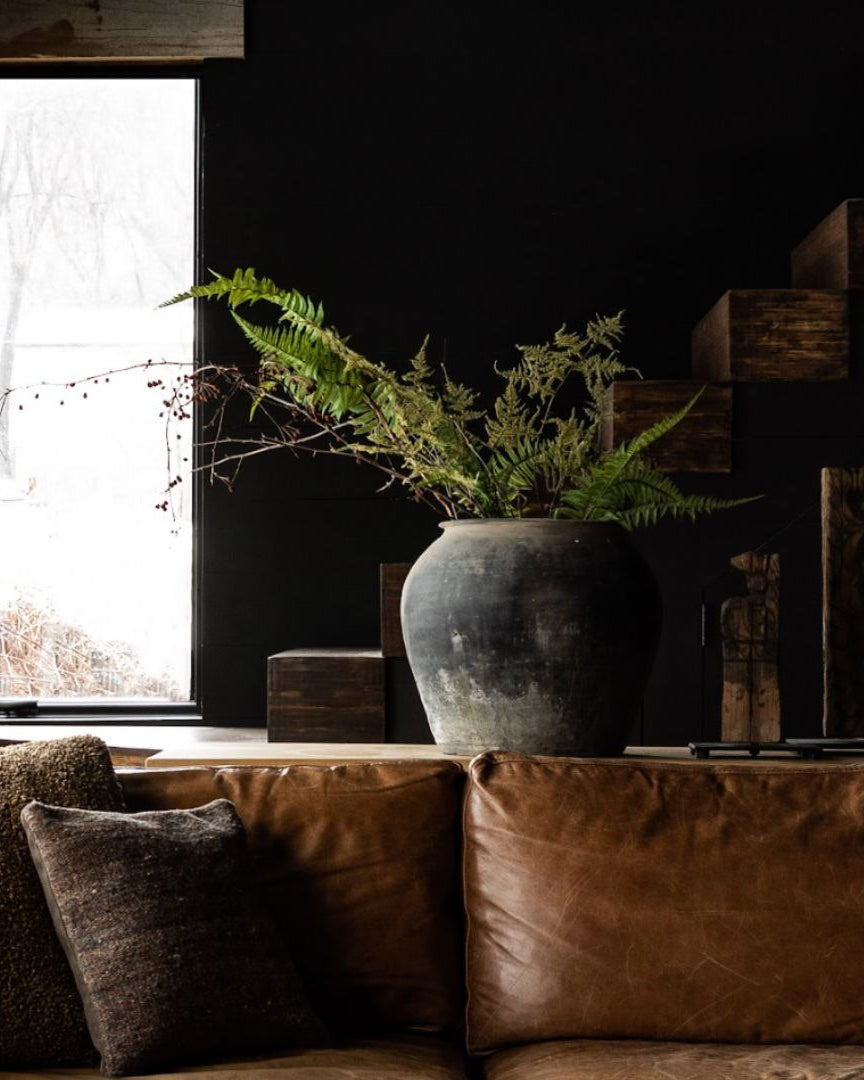
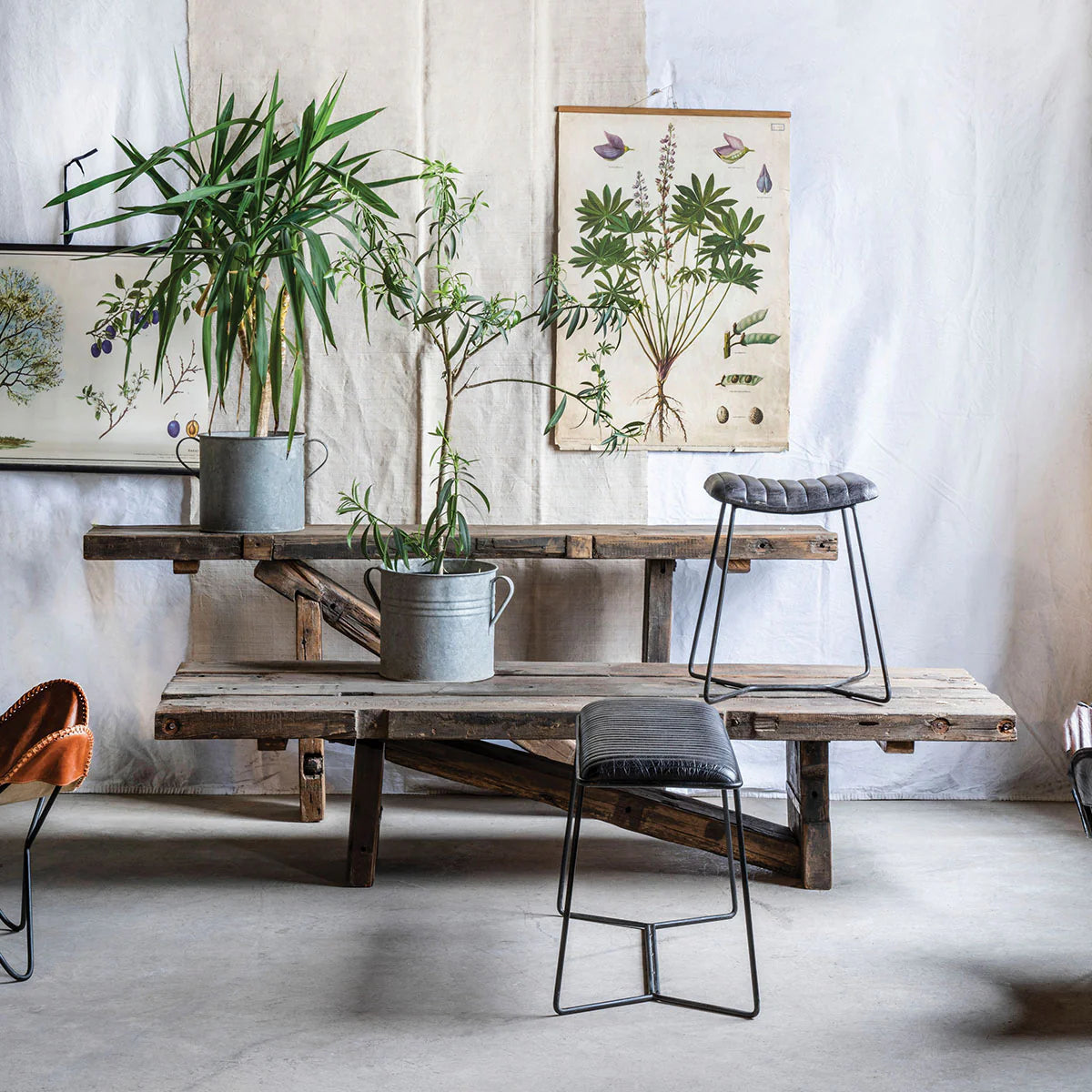
Leather beside reclaimed oak.
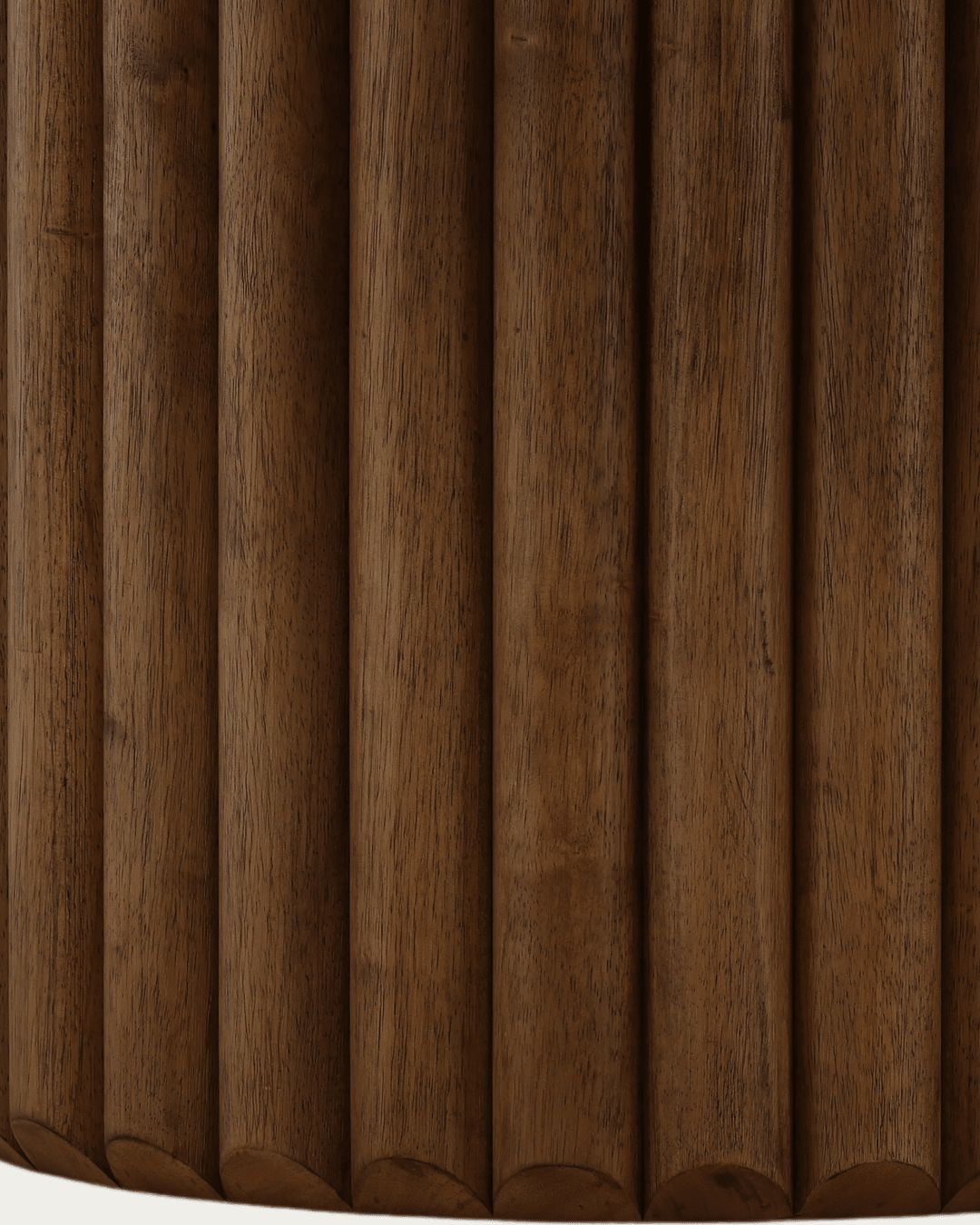
Soft linen against darker wood grain.
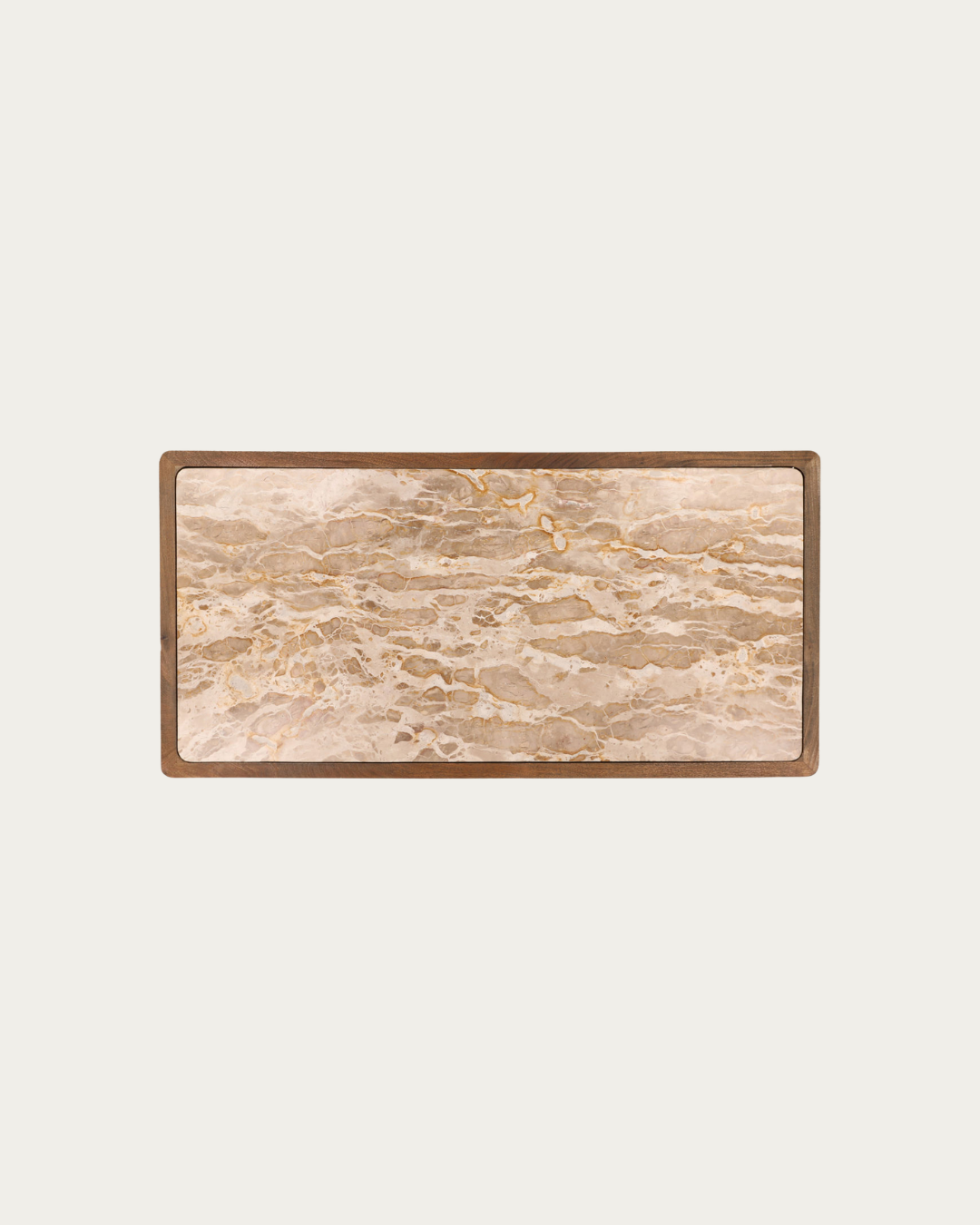
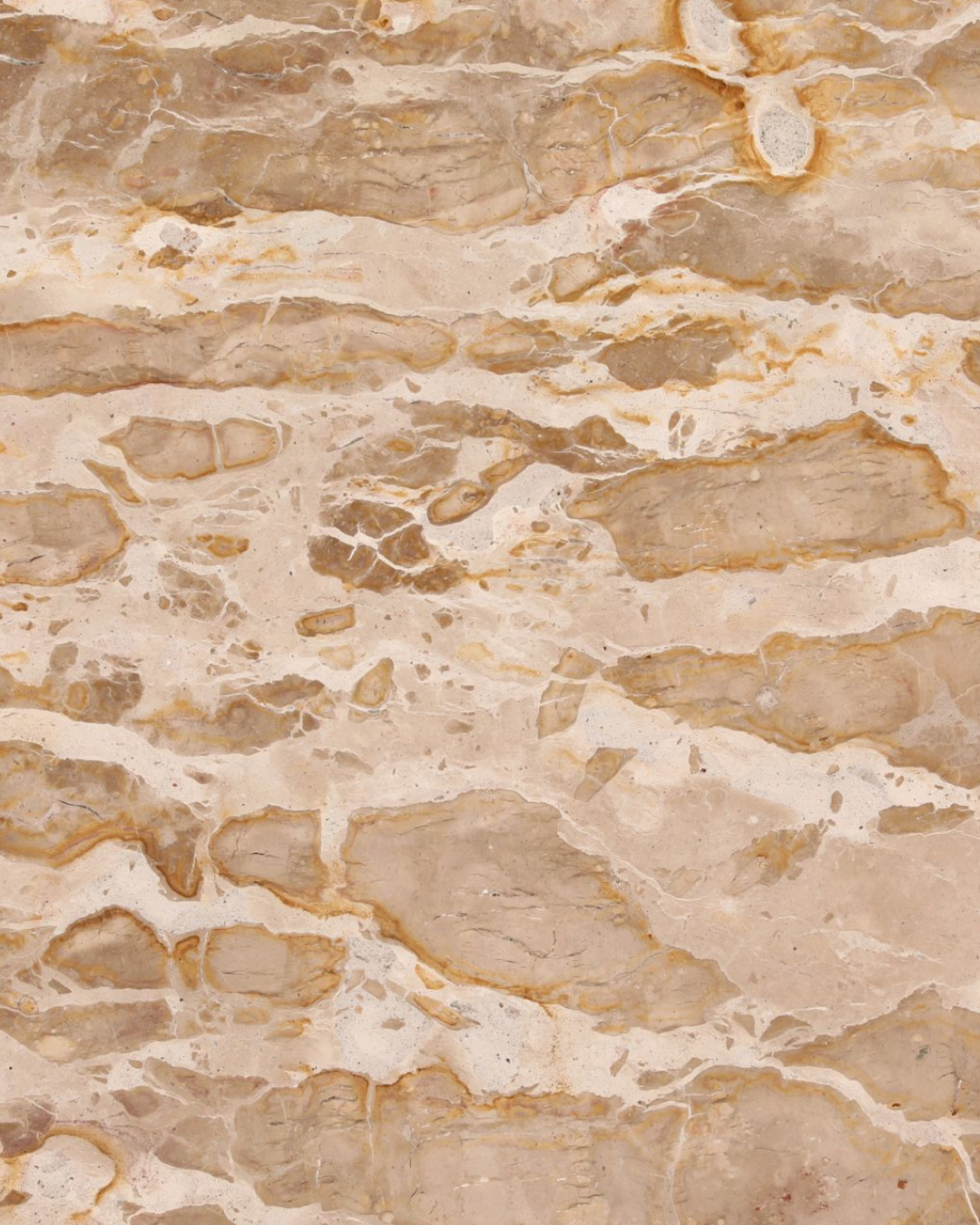
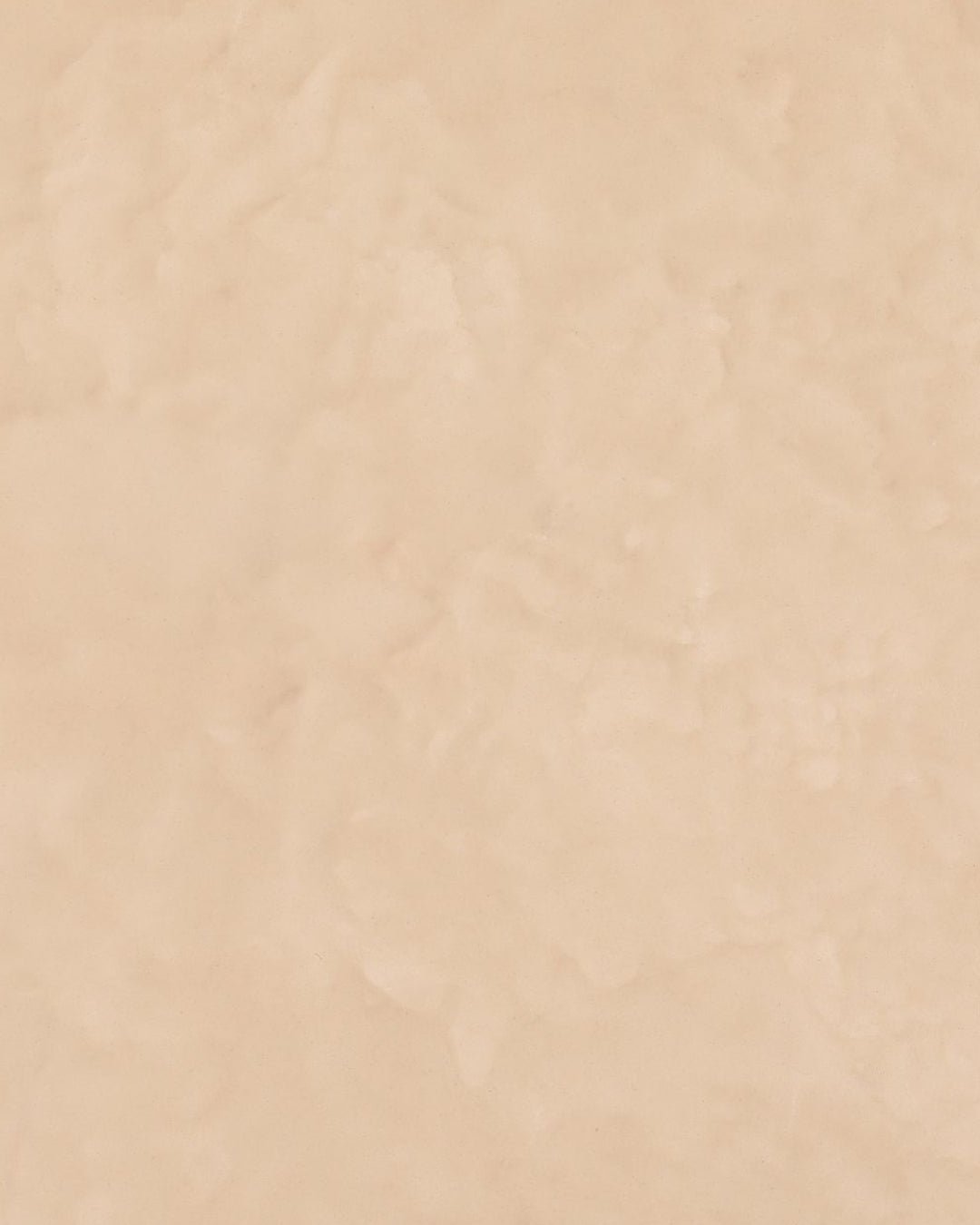
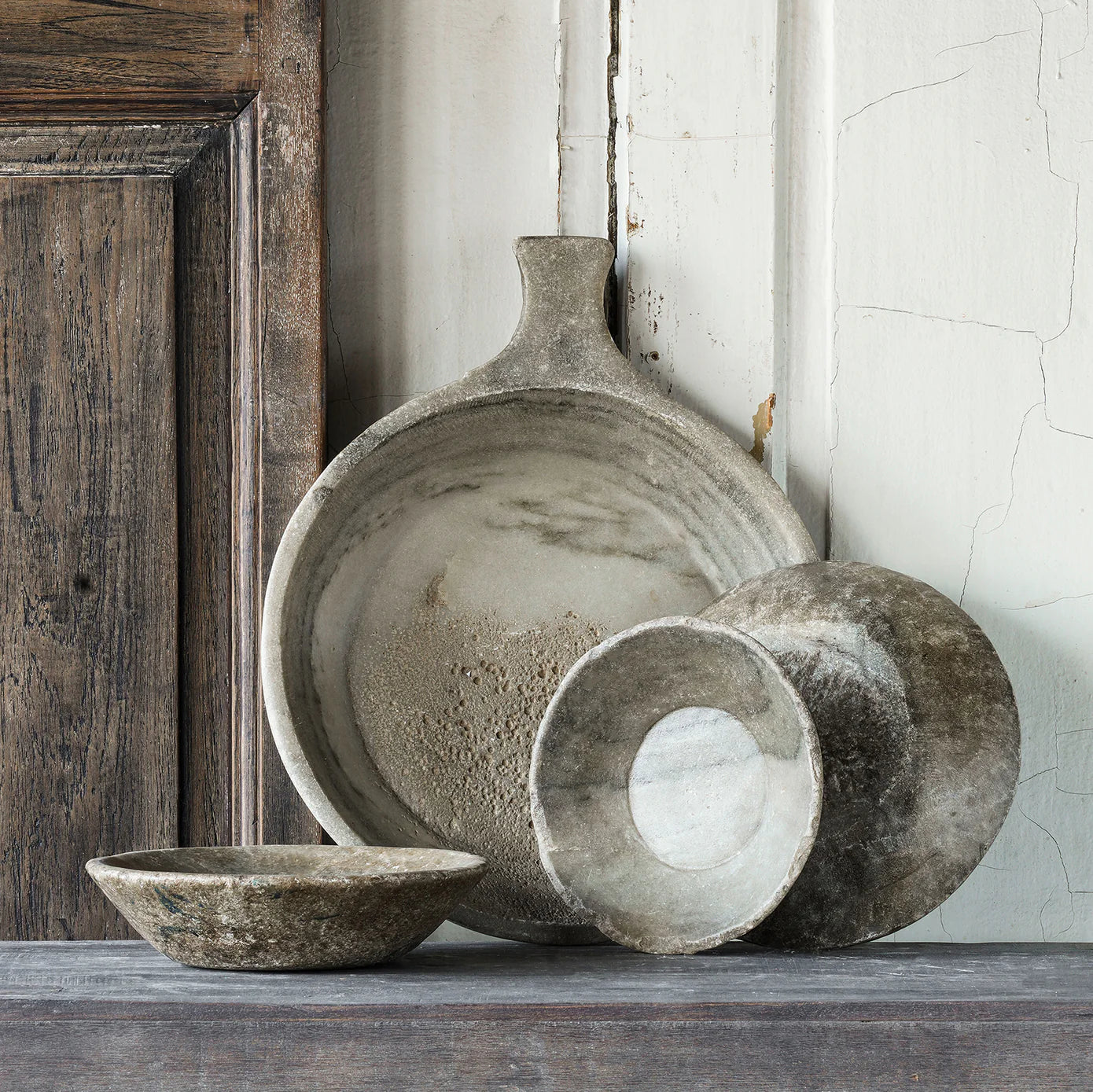
Matte stone beside aged metal.
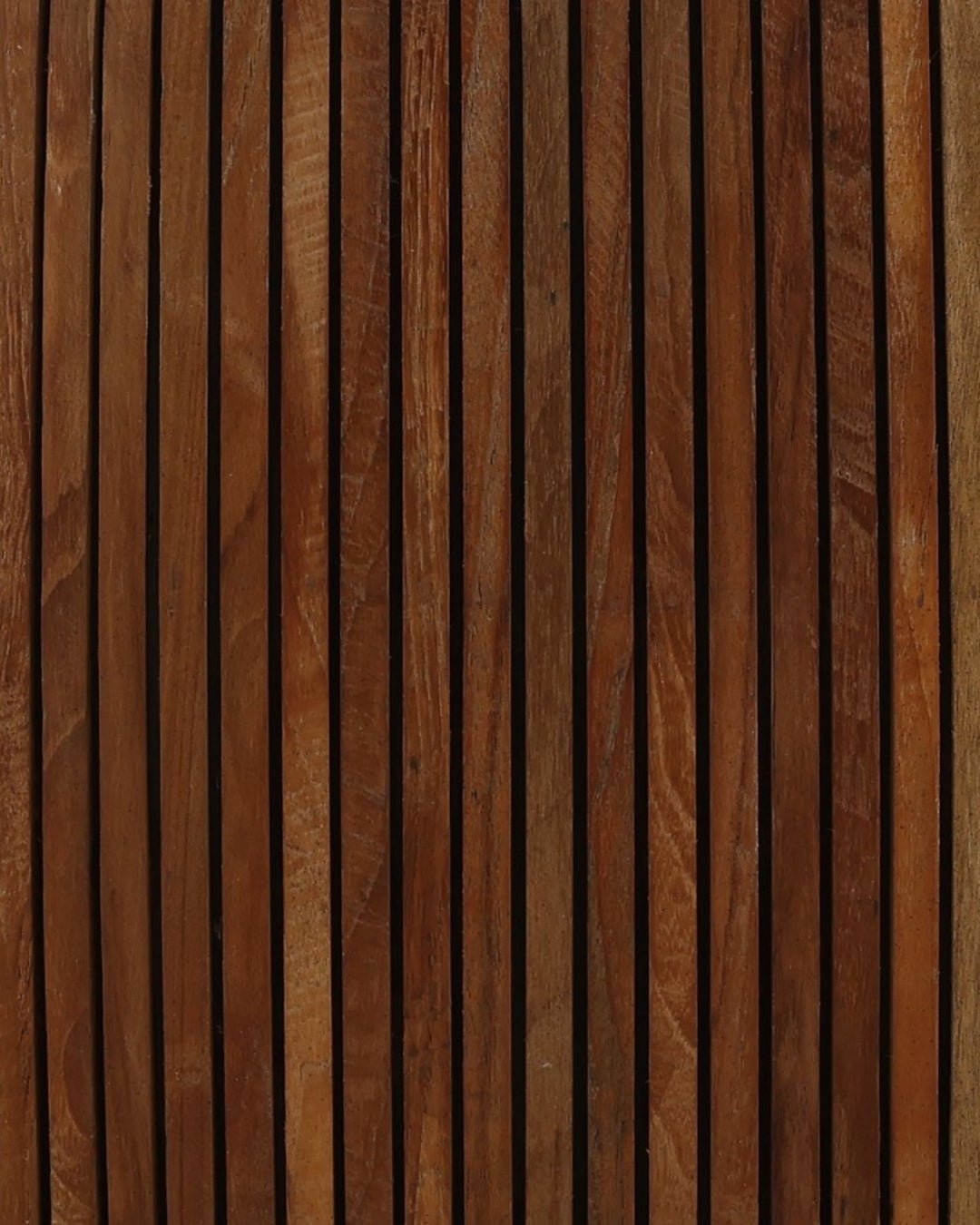
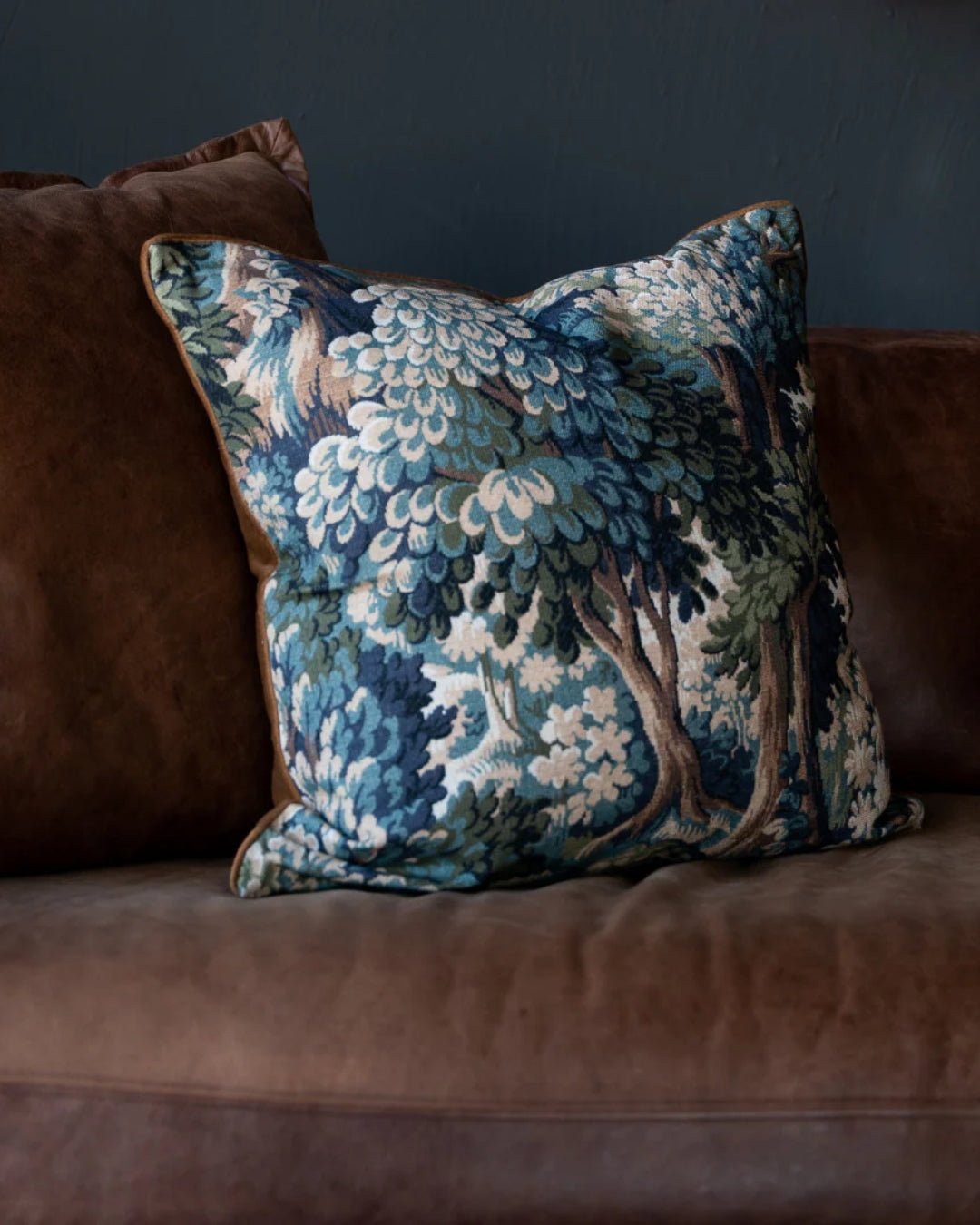
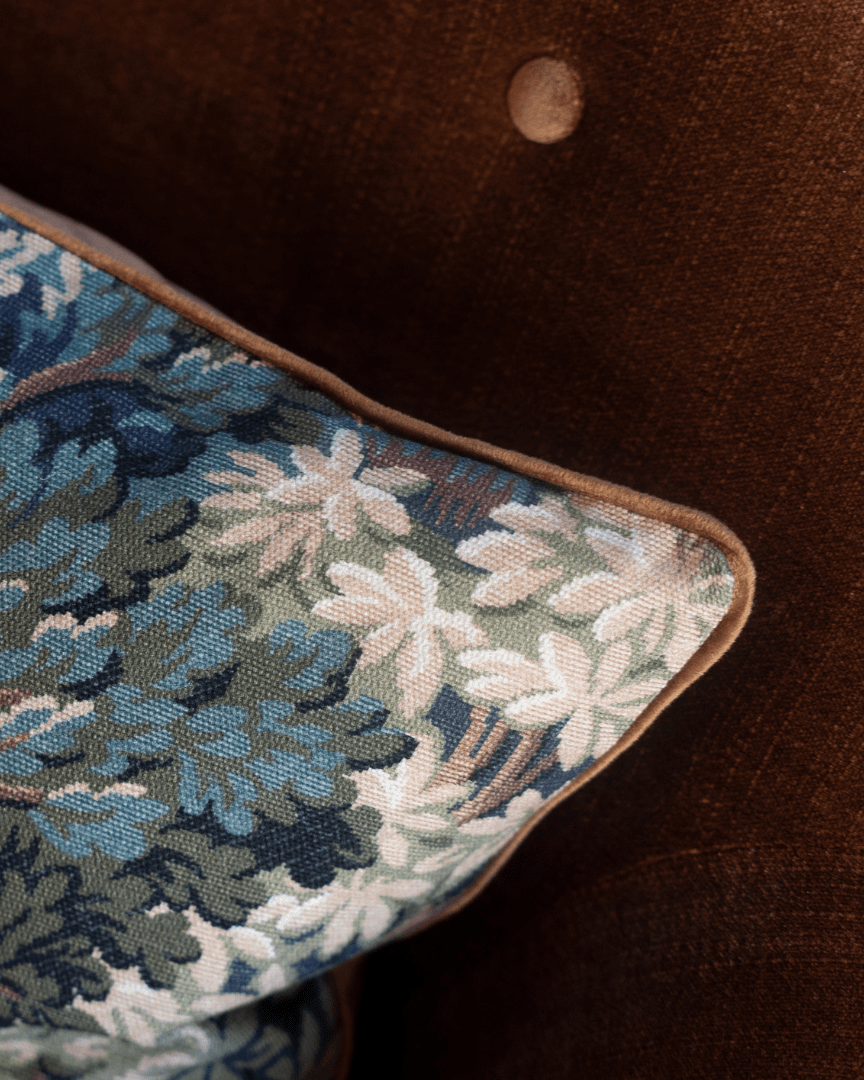
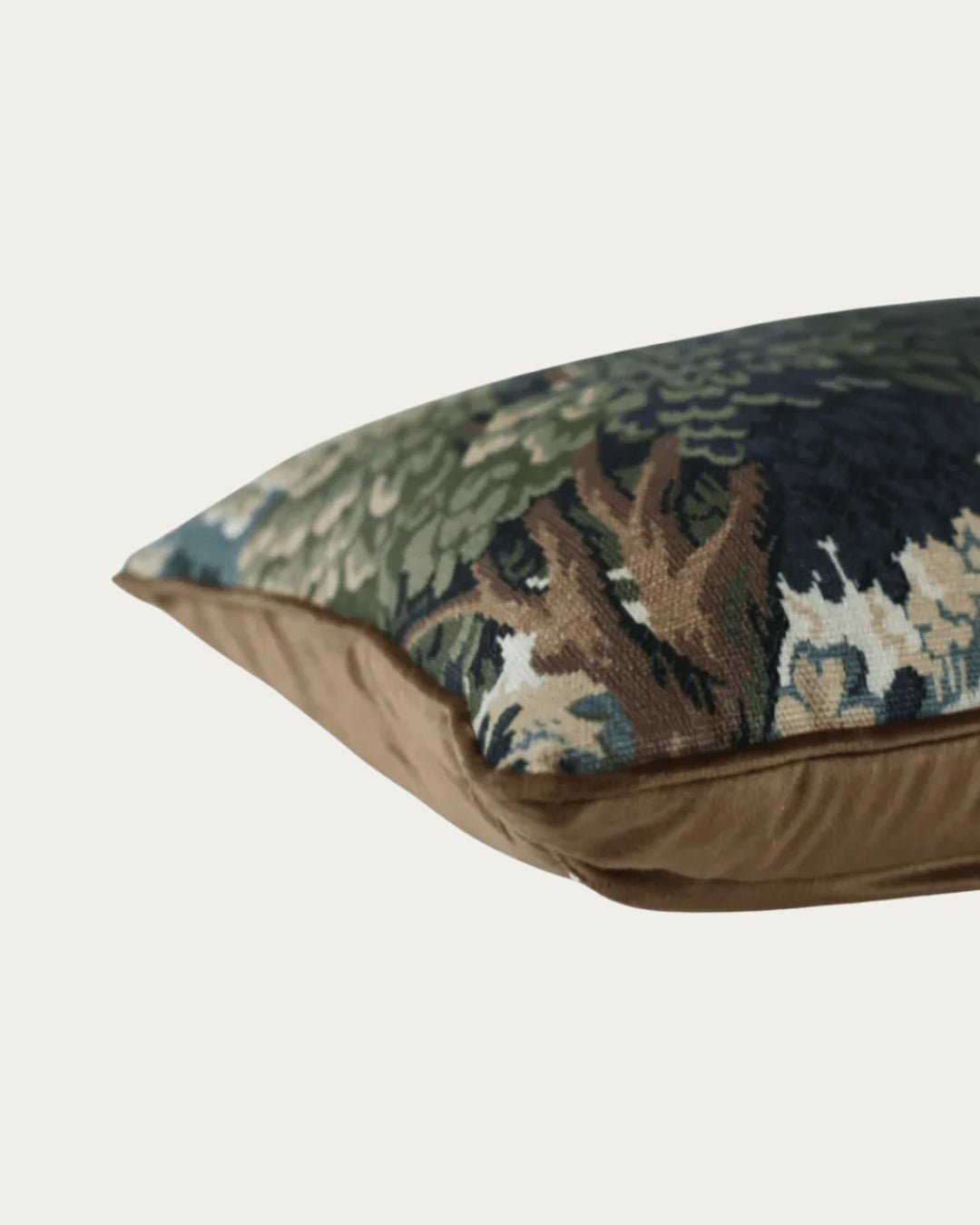
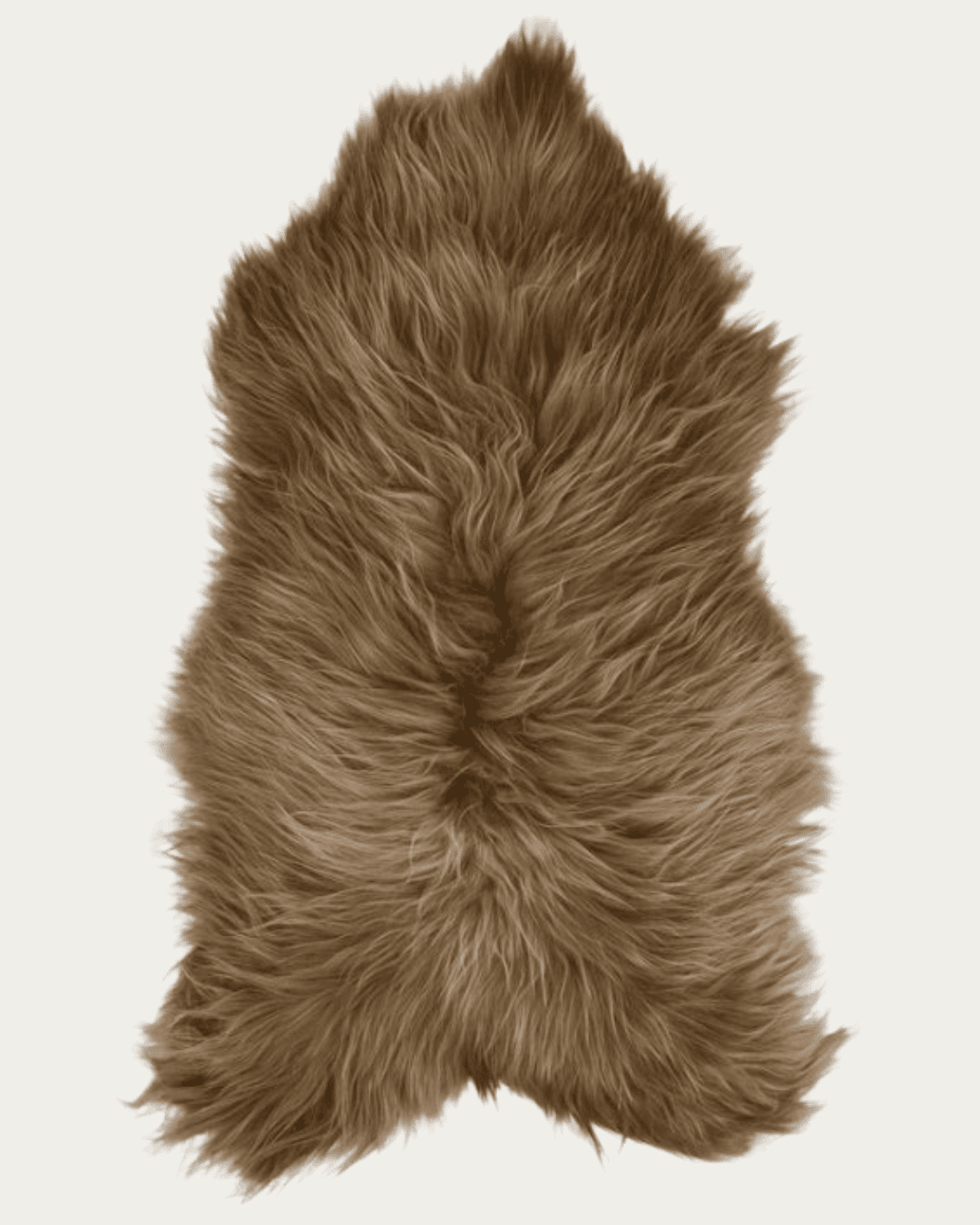
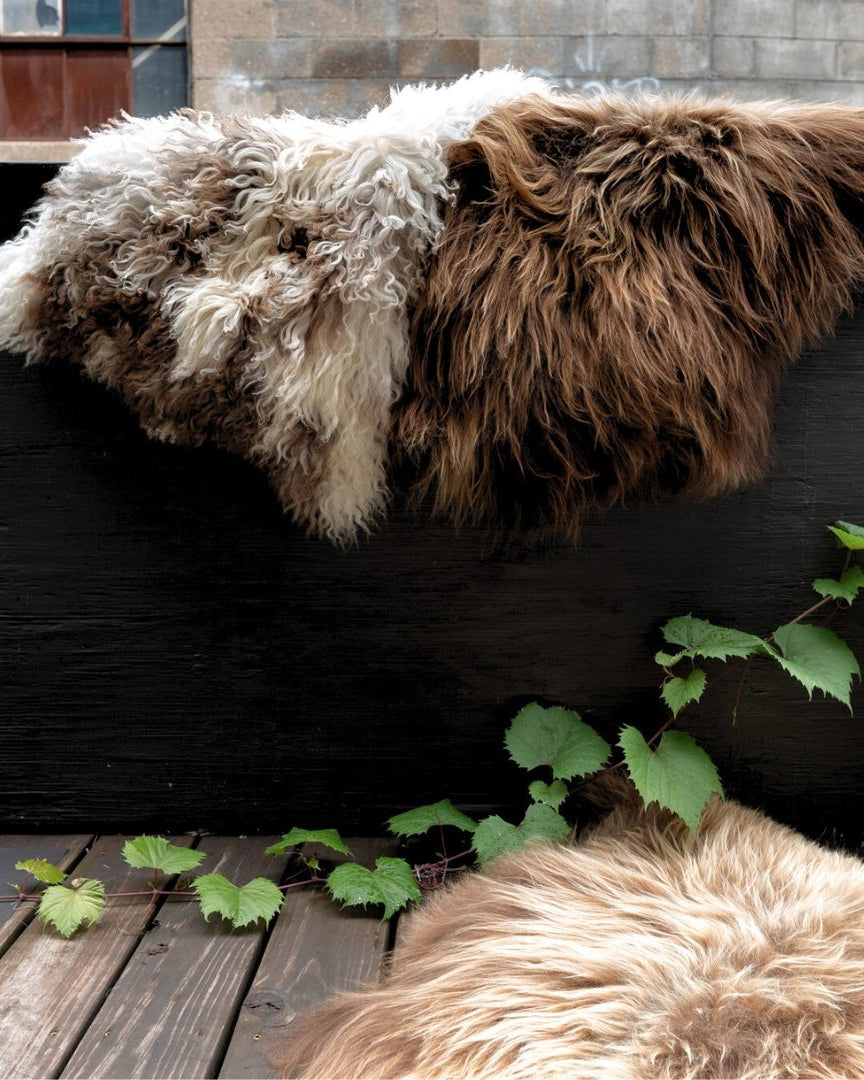
Chunkier woven fabrics layered against smoother surfaces.
These material shifts create variation naturally without visually exhausting the room.
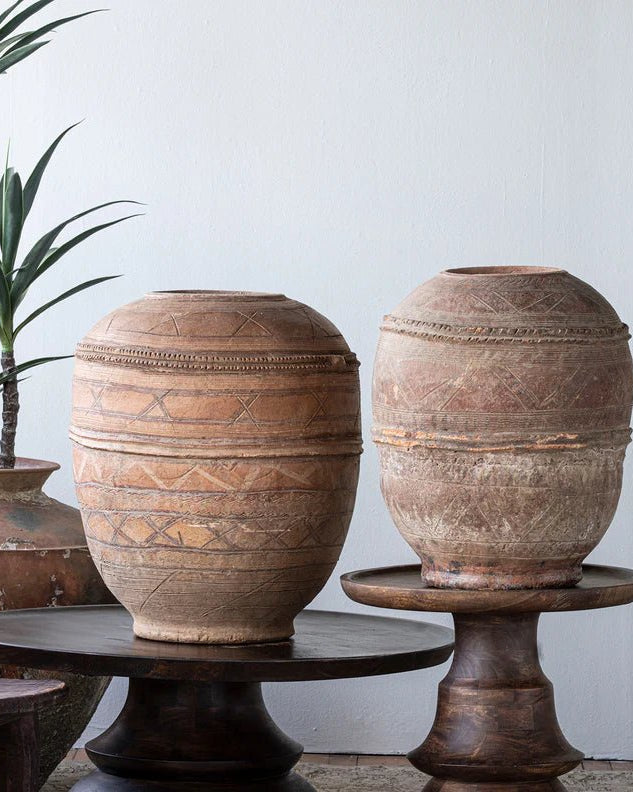
That’s why the strongest modern mountain homes rarely feel overly decorated. The materials already carry enough depth.
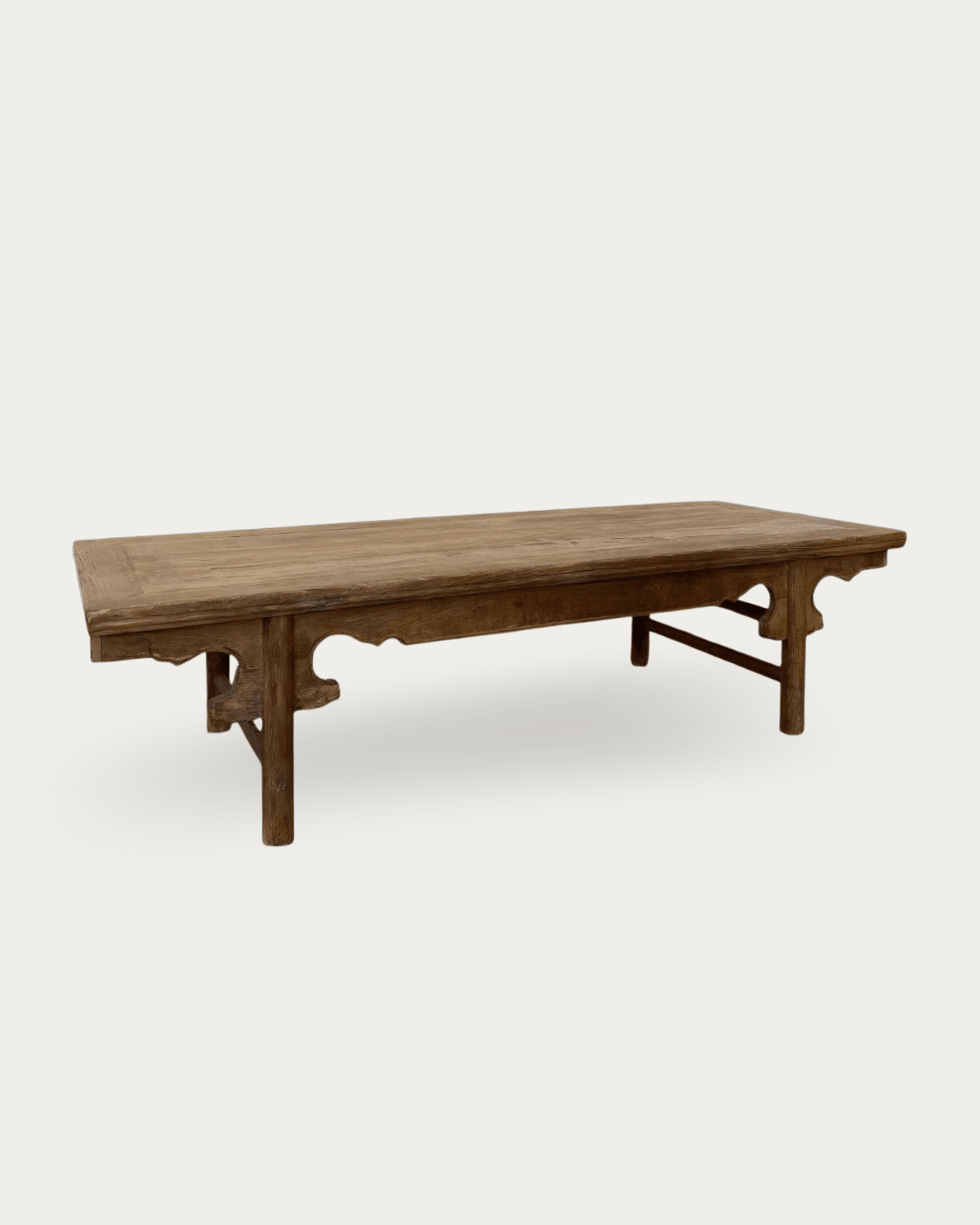
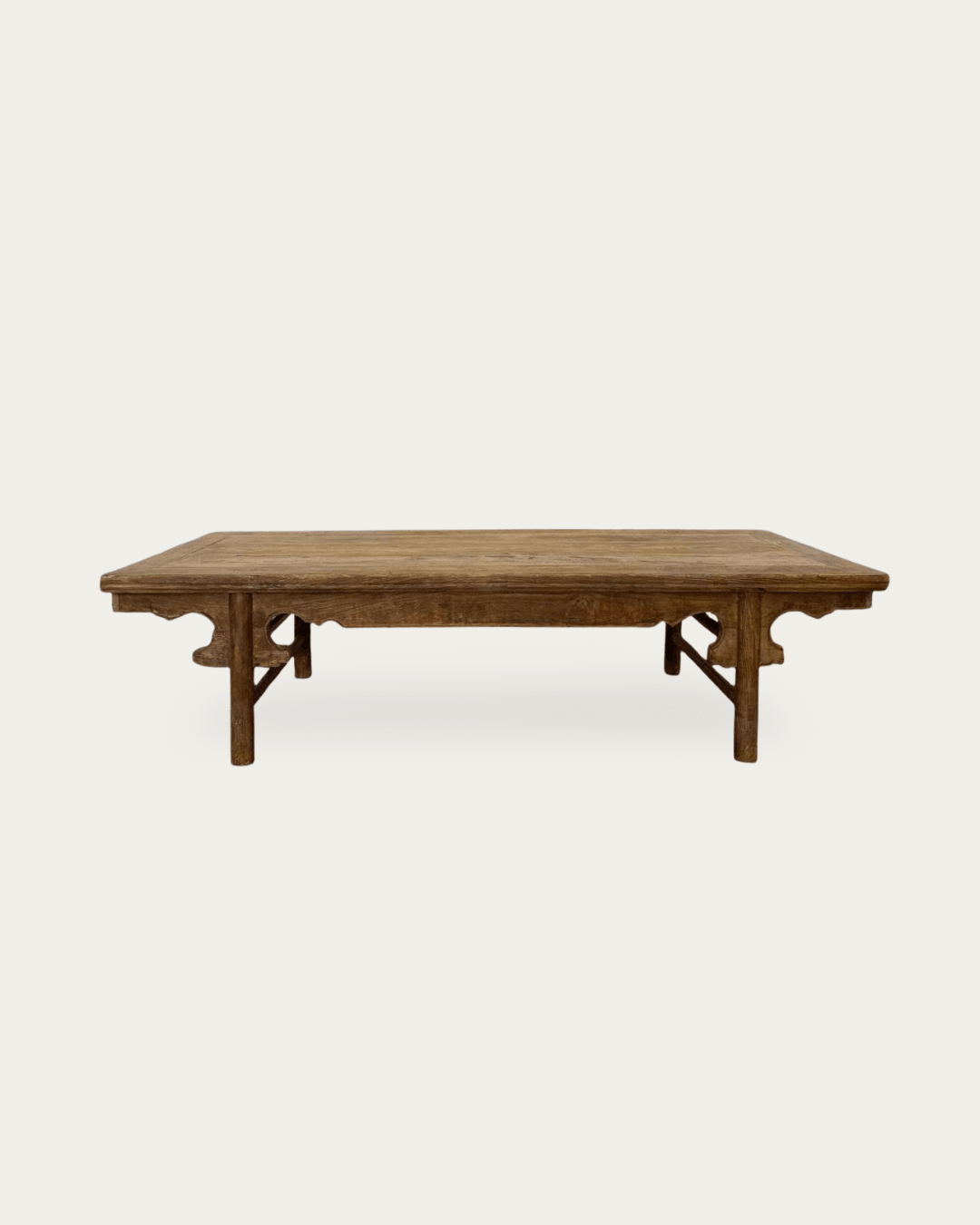
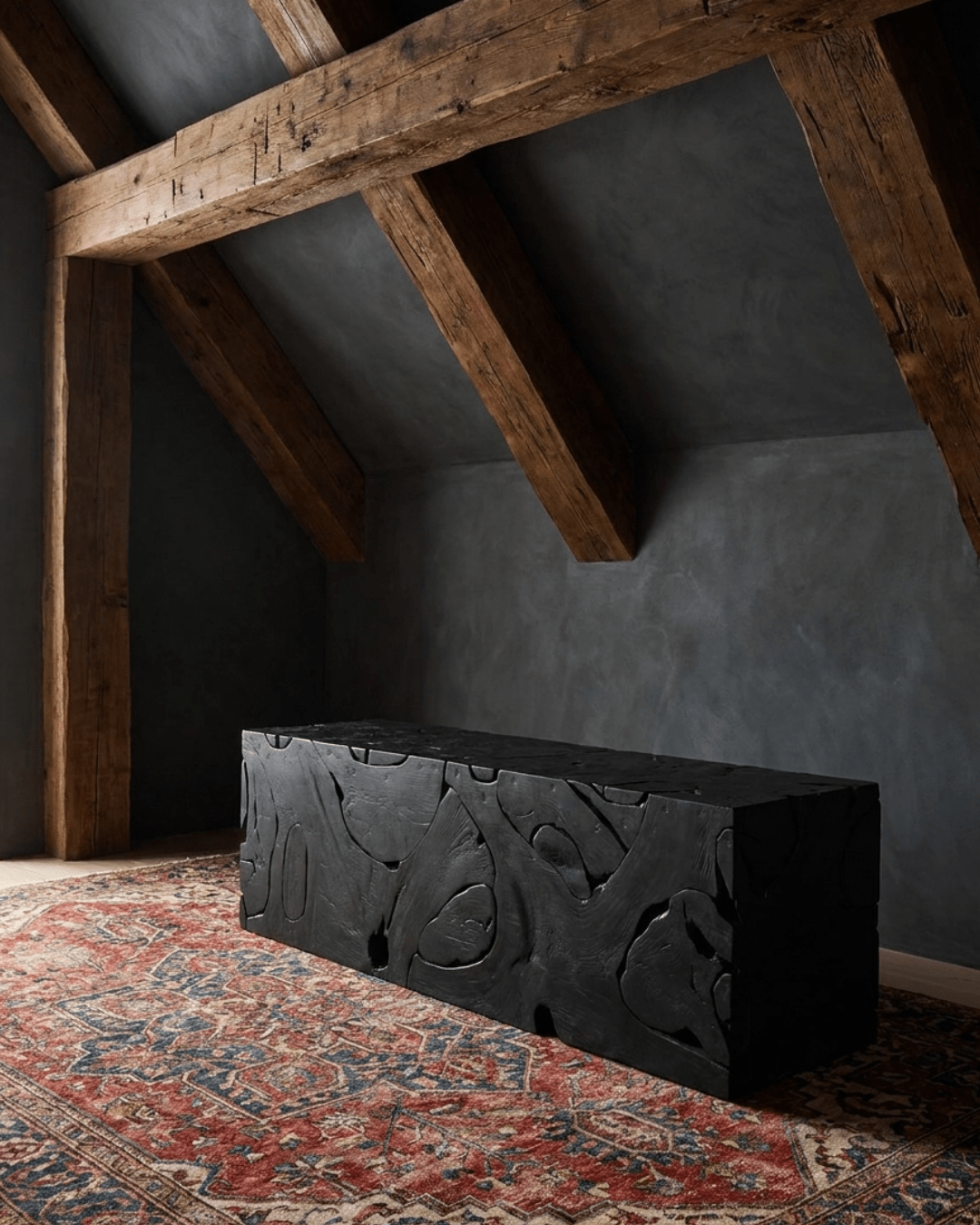
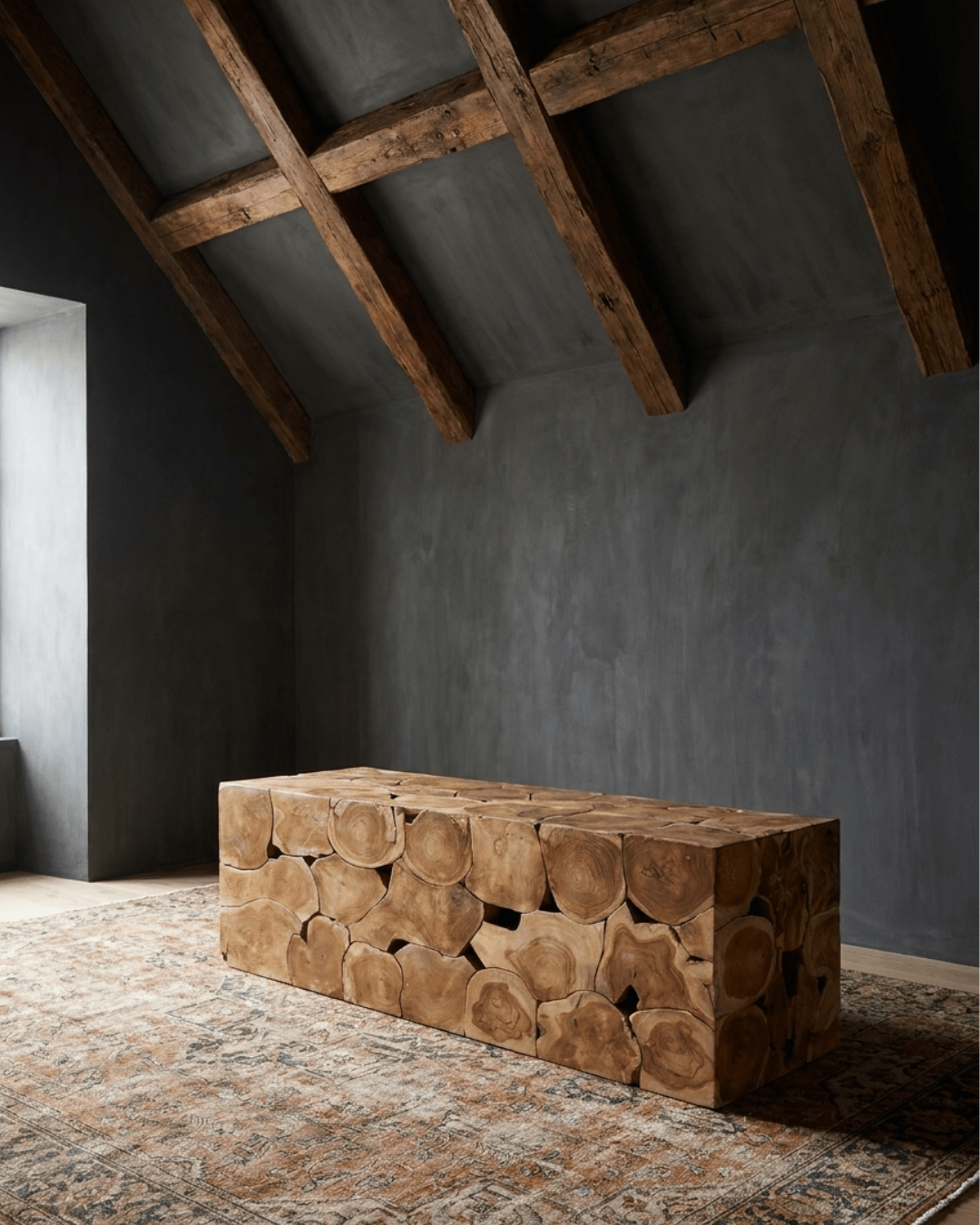
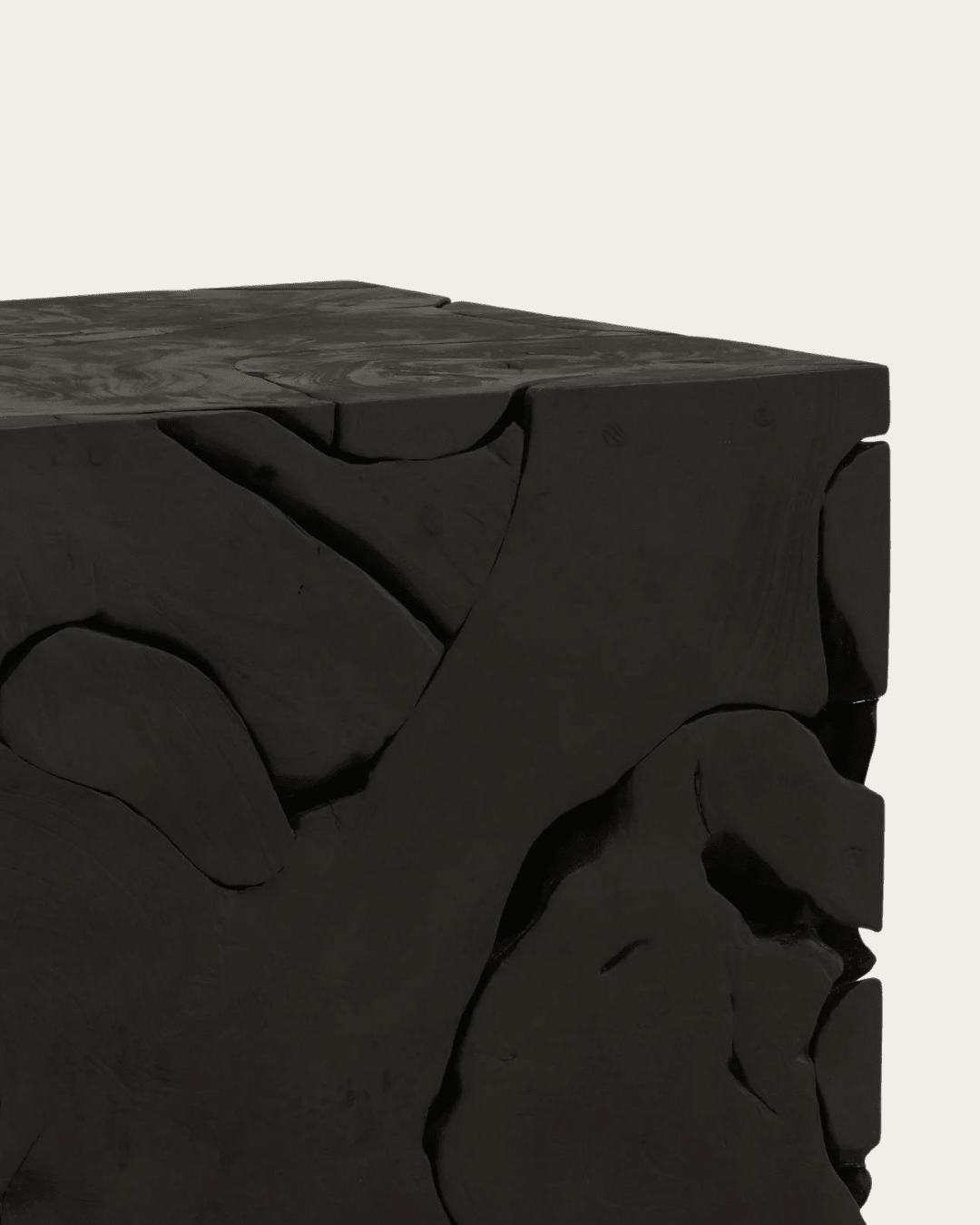
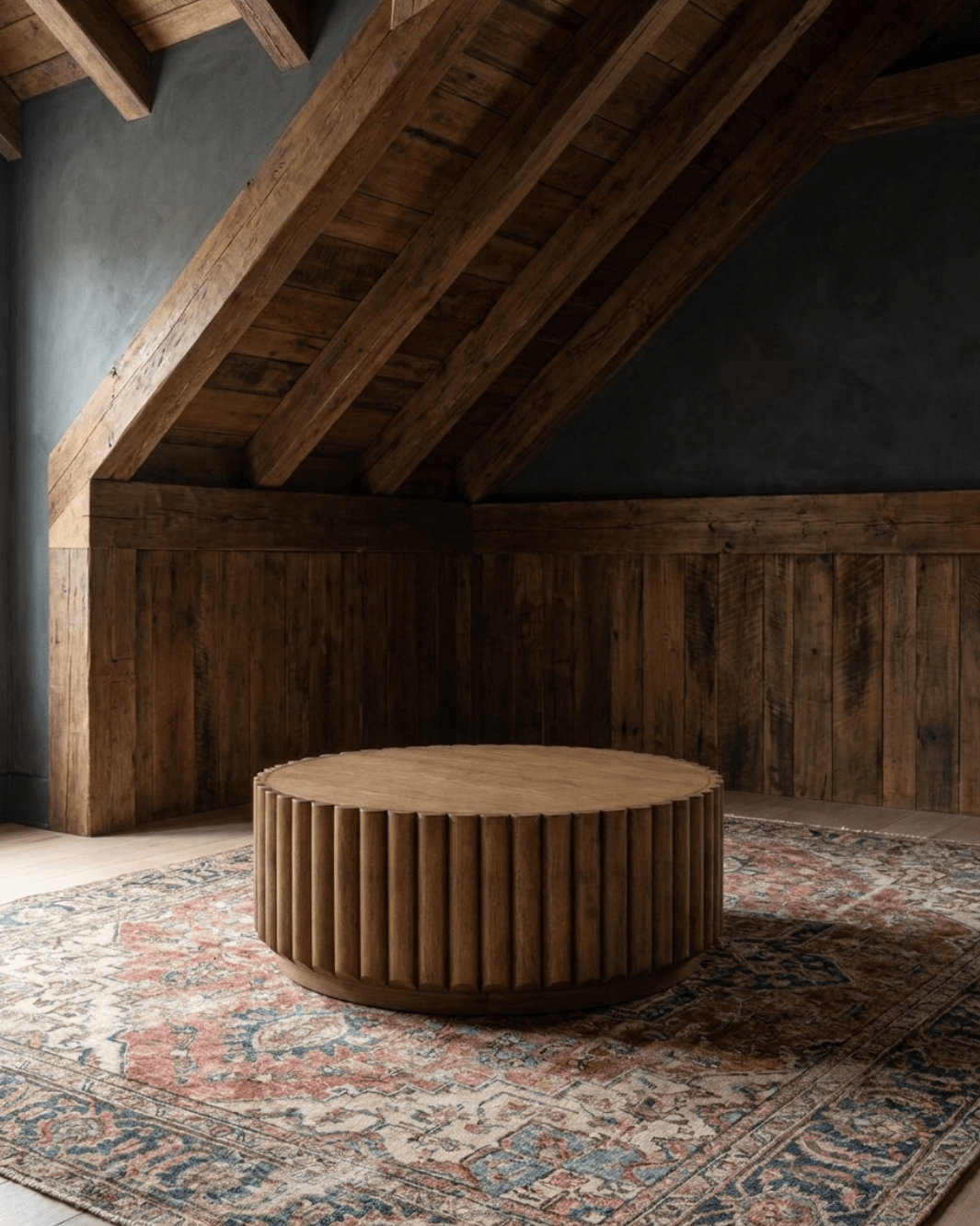
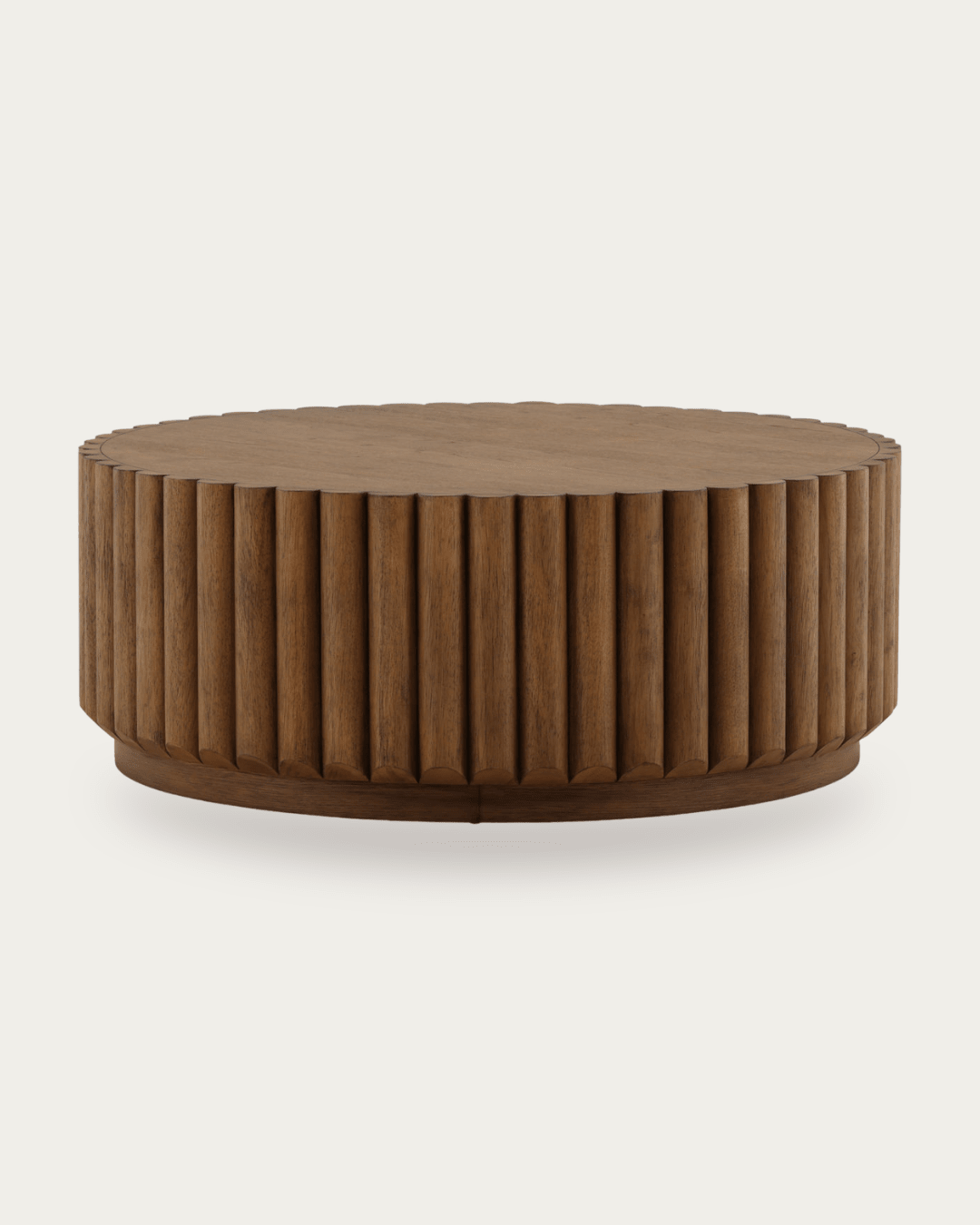
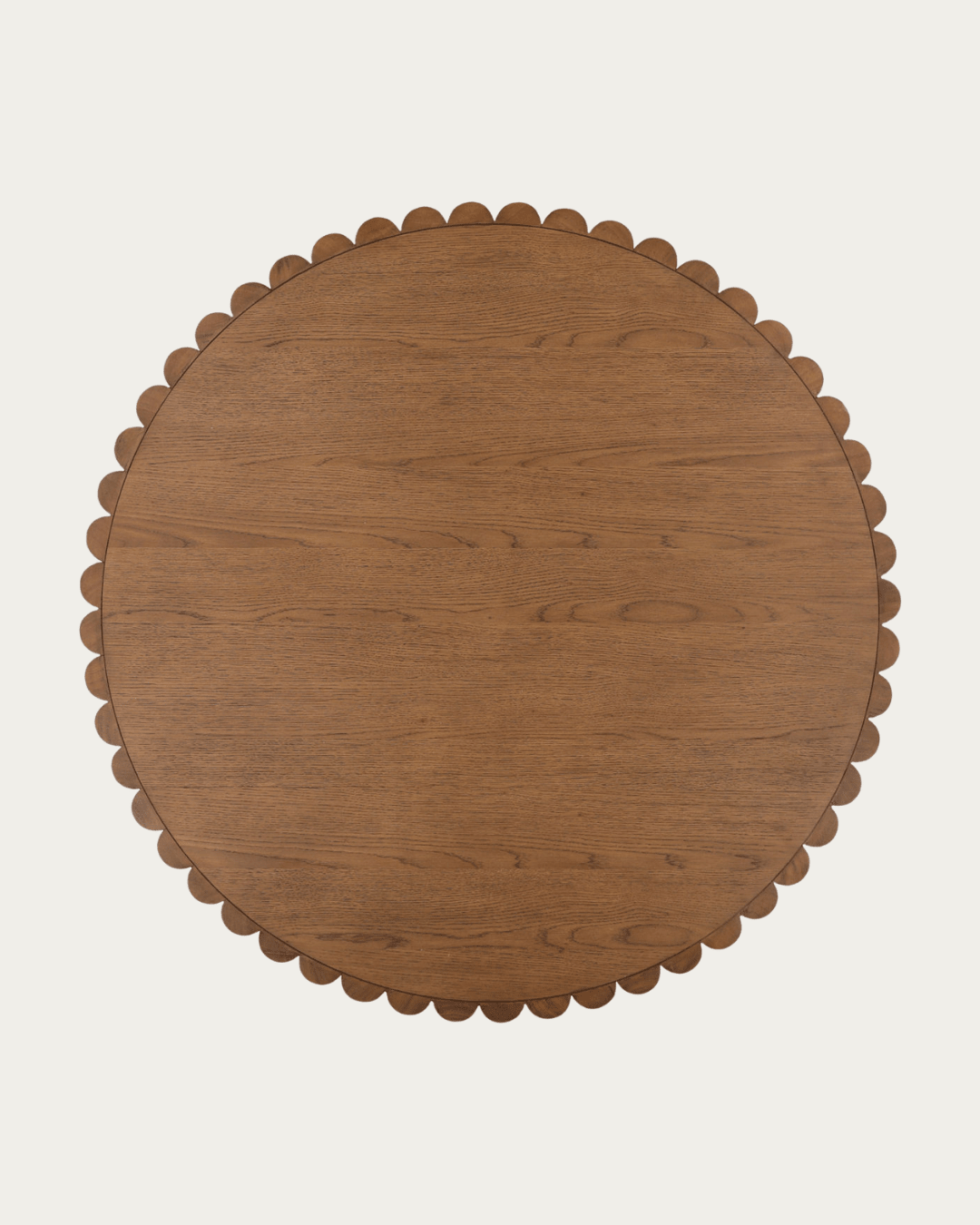
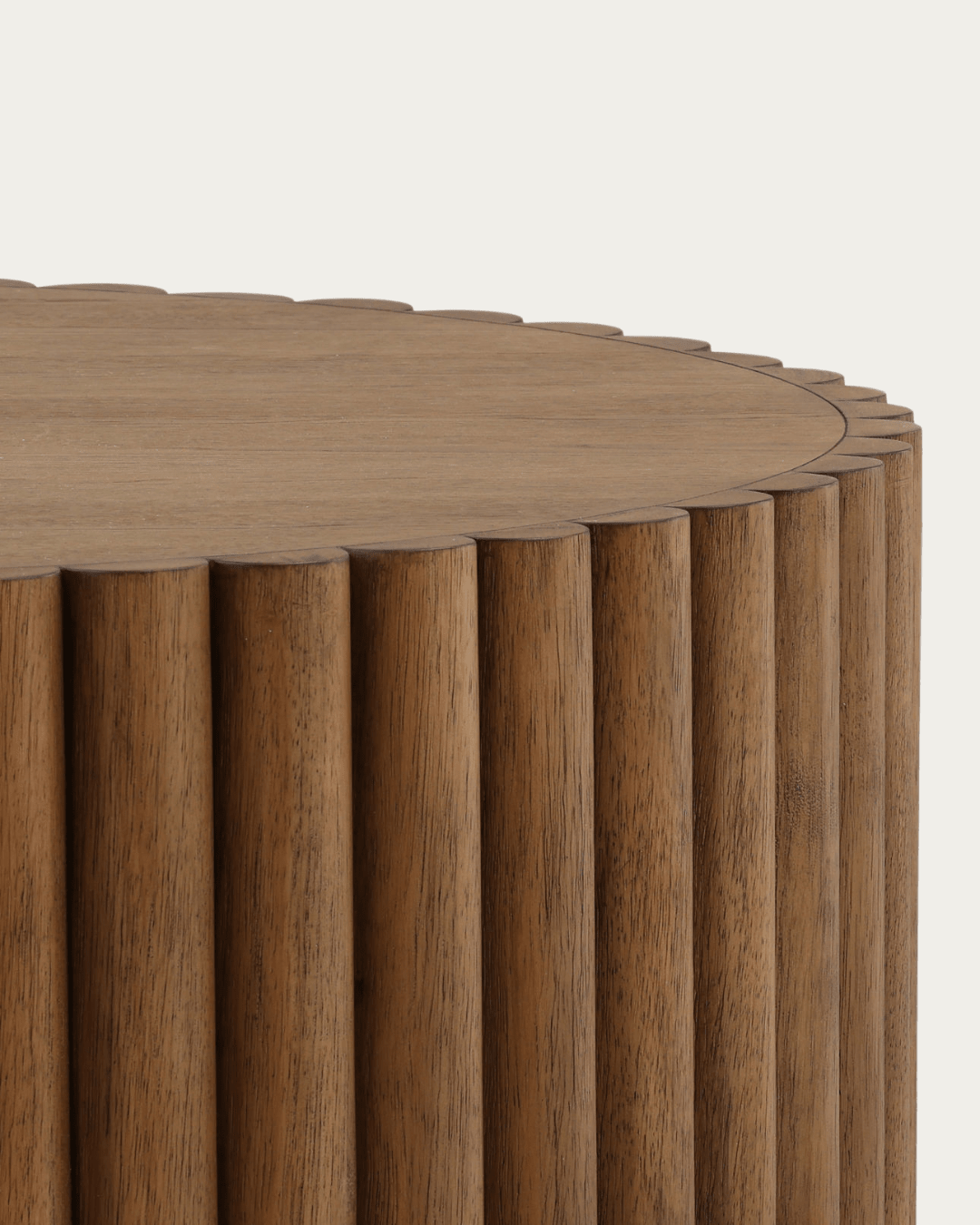
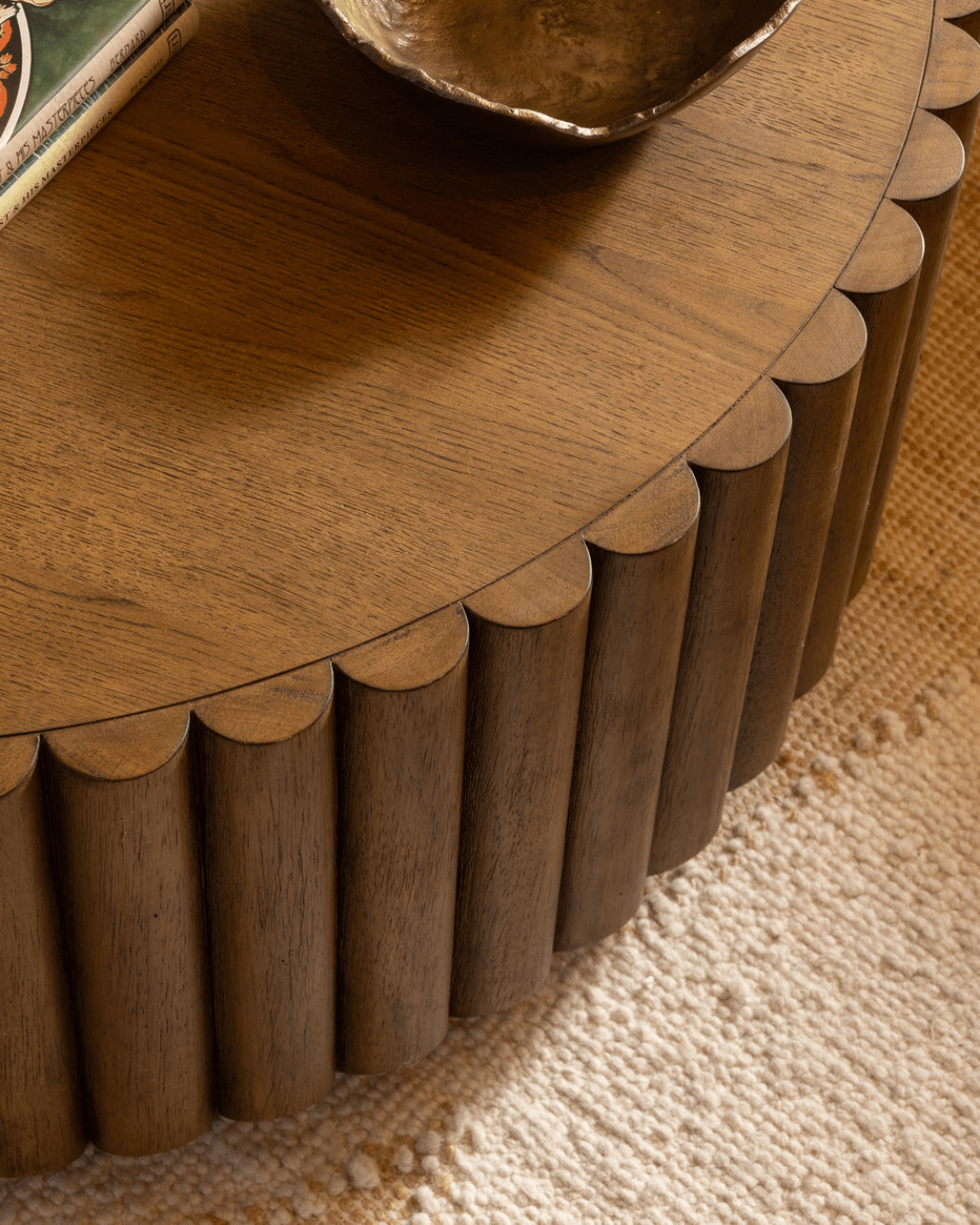
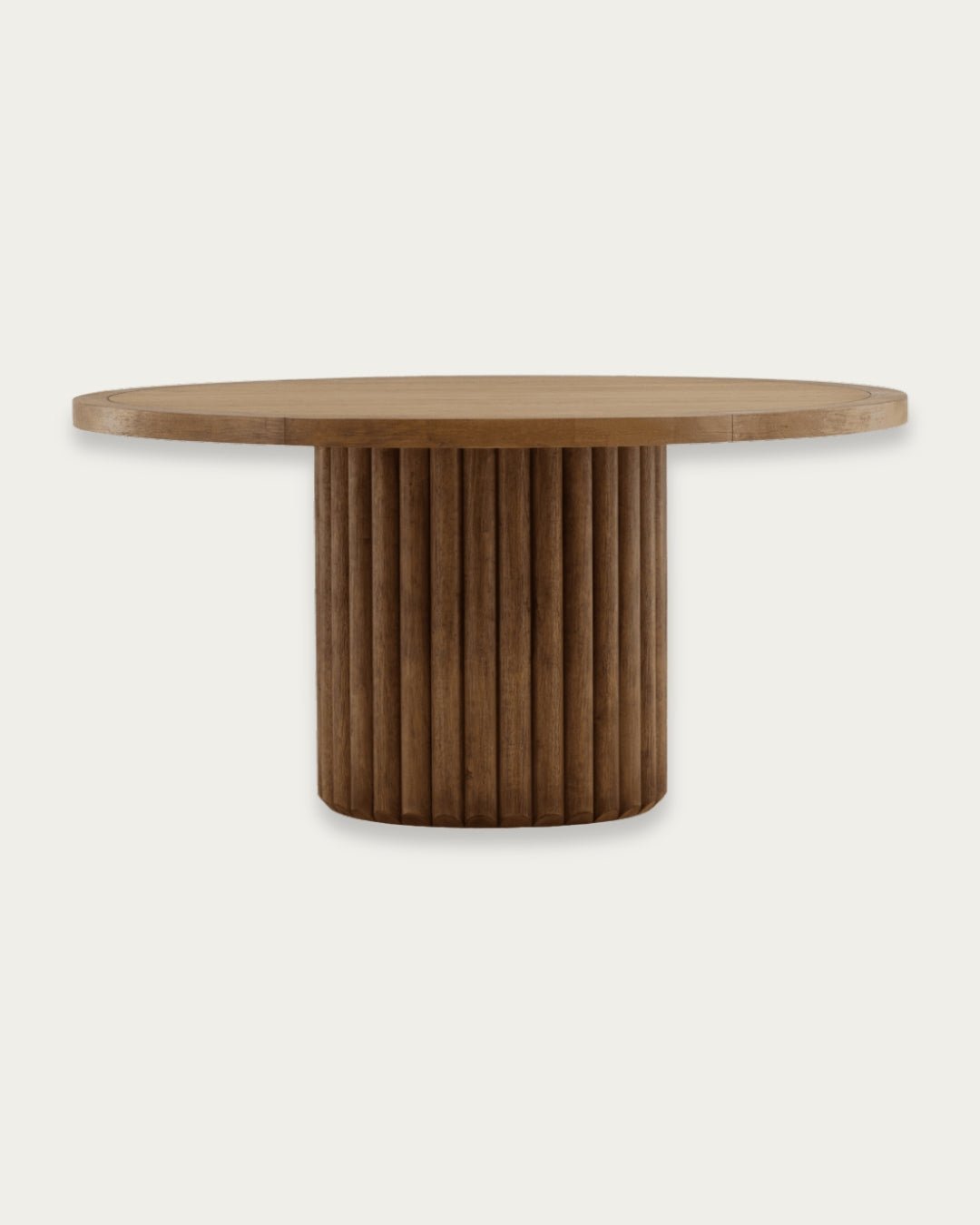
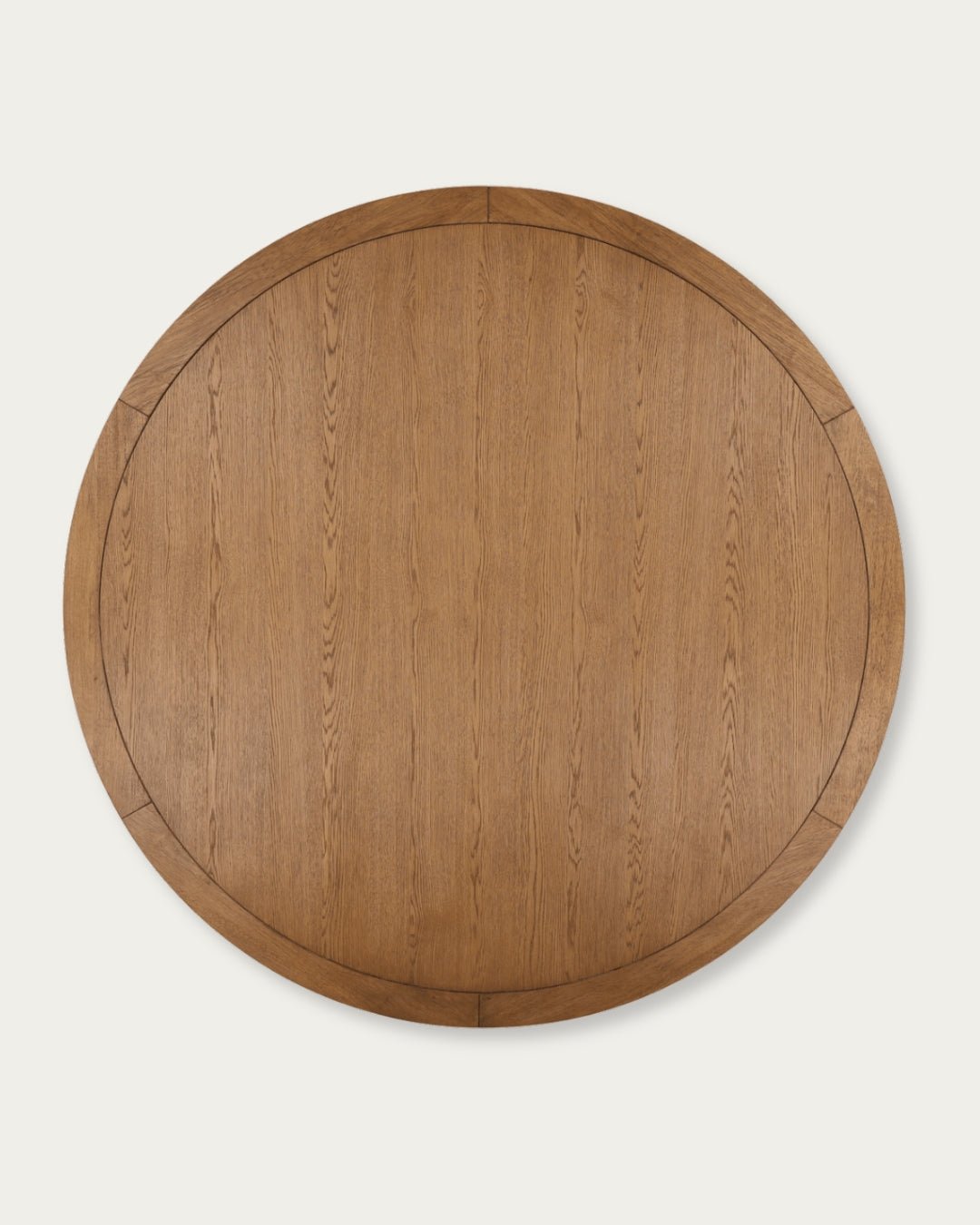
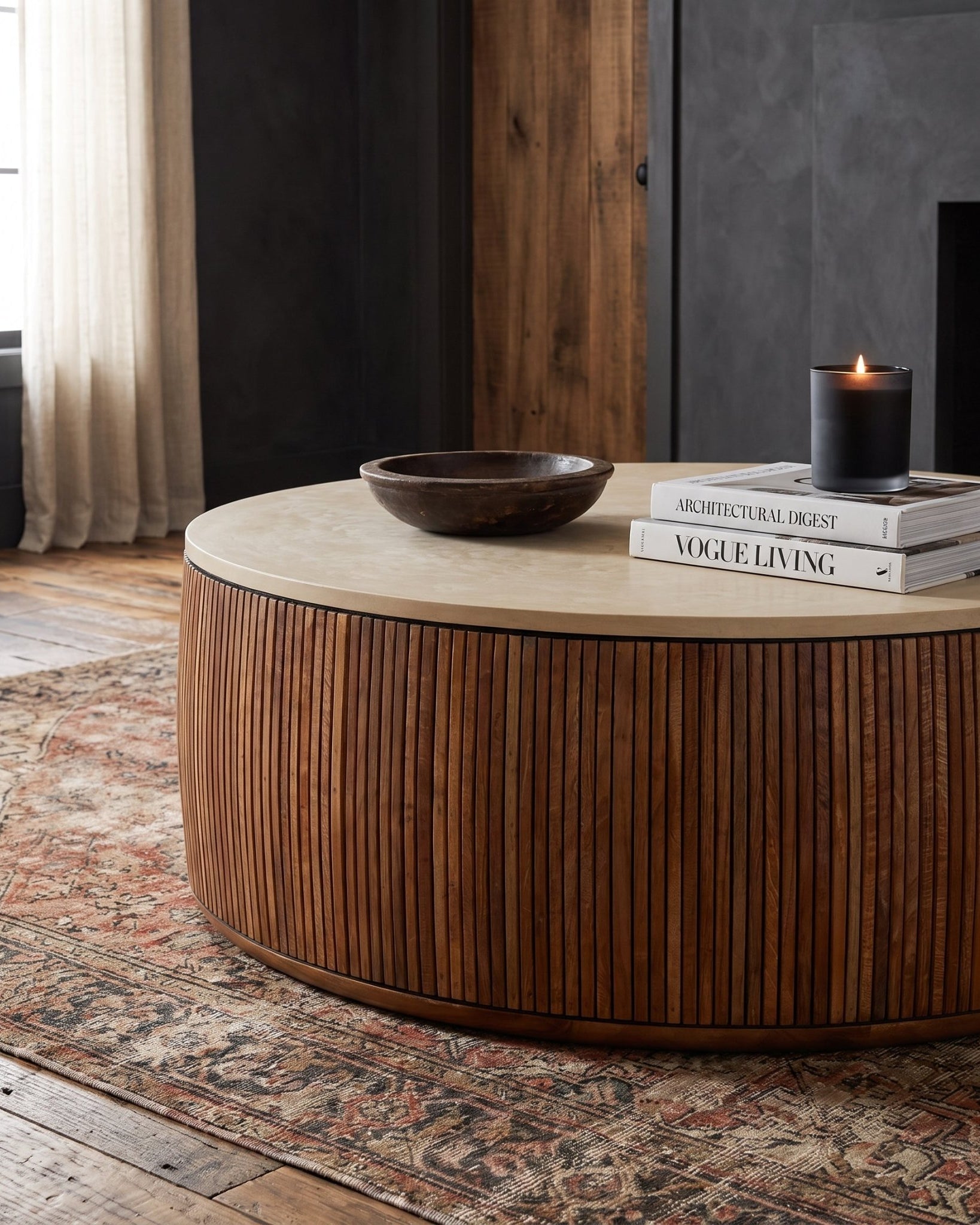
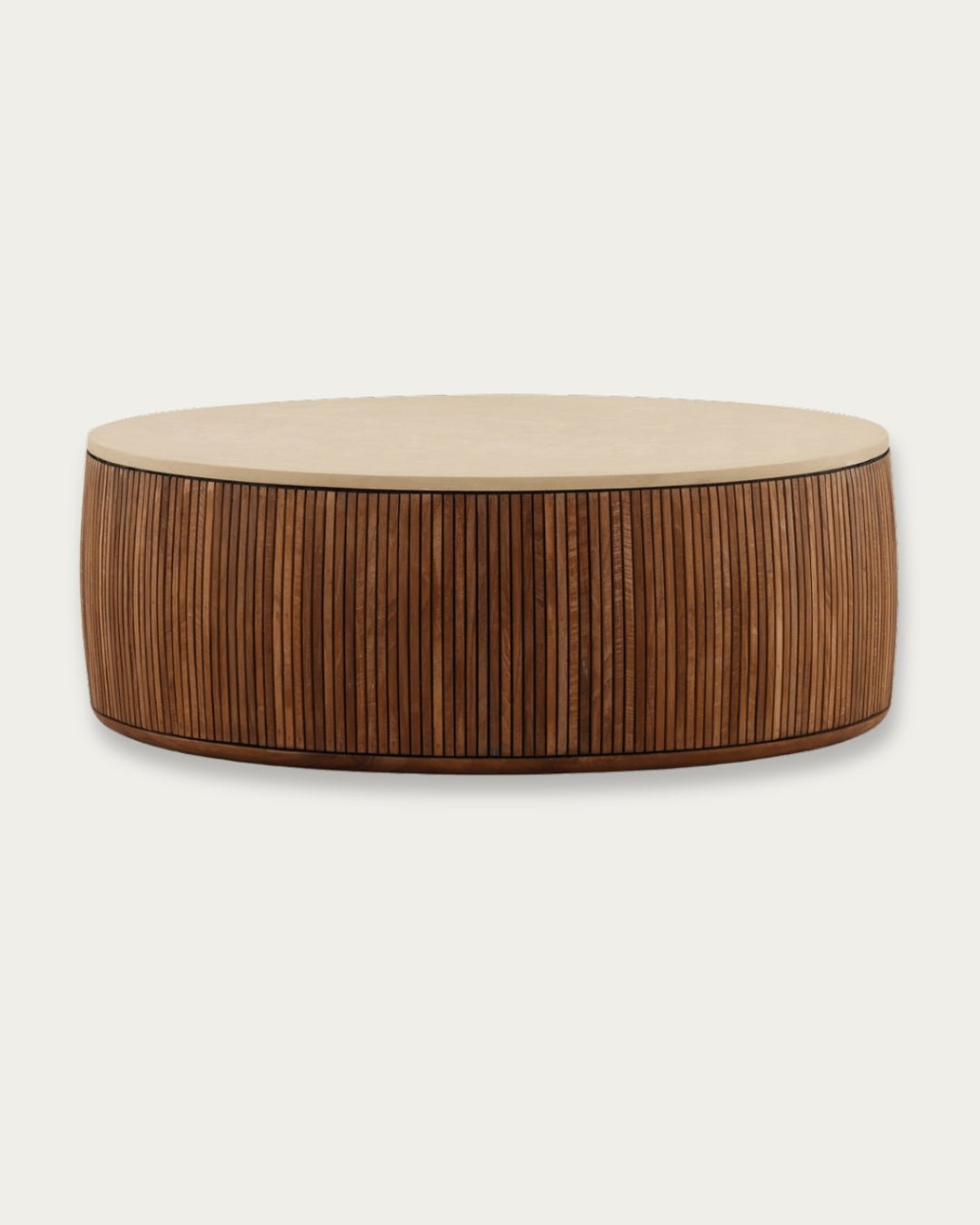
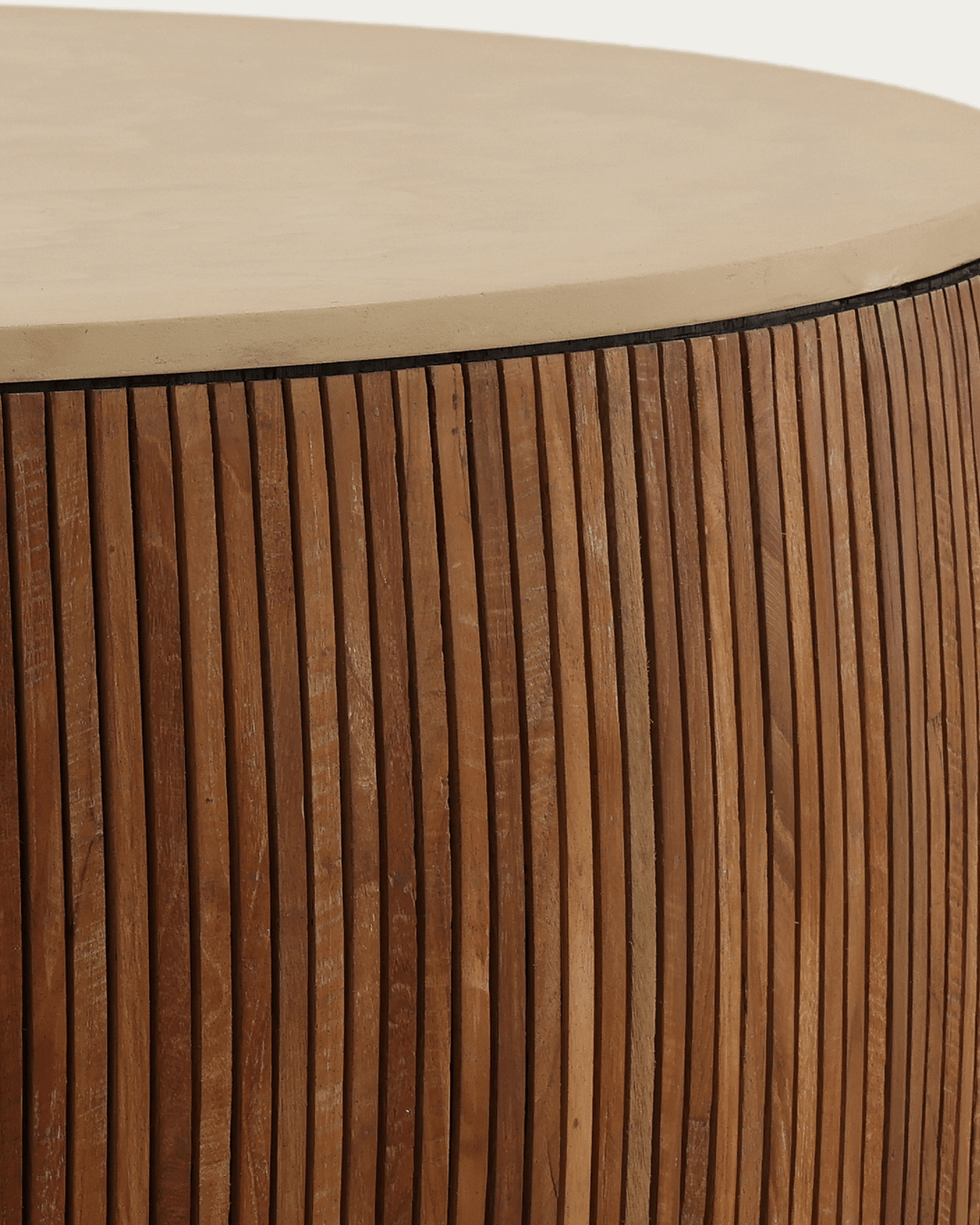
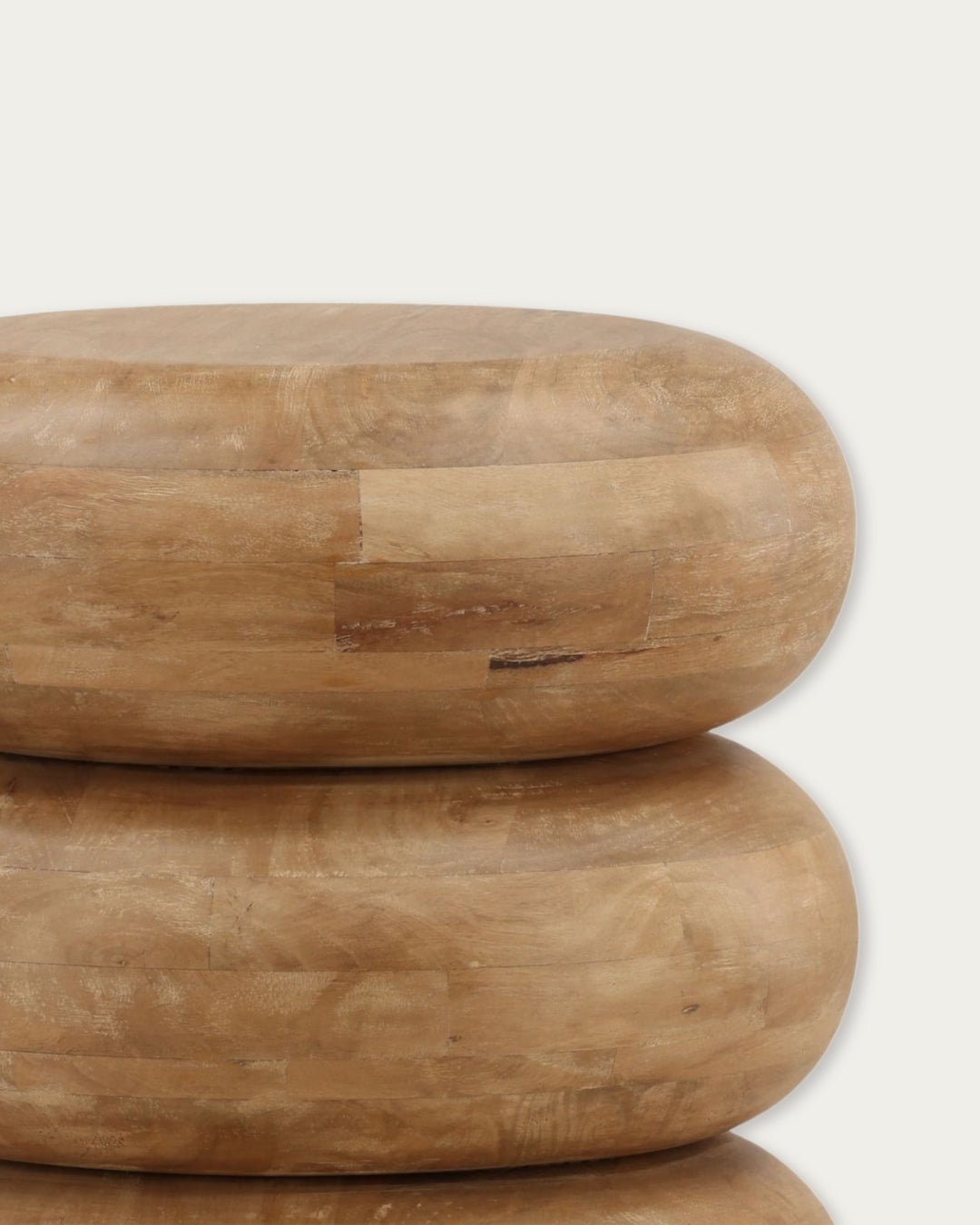
A sculptural piece from the Coffee table collection beside softer upholstery creates more visual balance than stacking shelves full of small decor objects trying to manufacture personality.
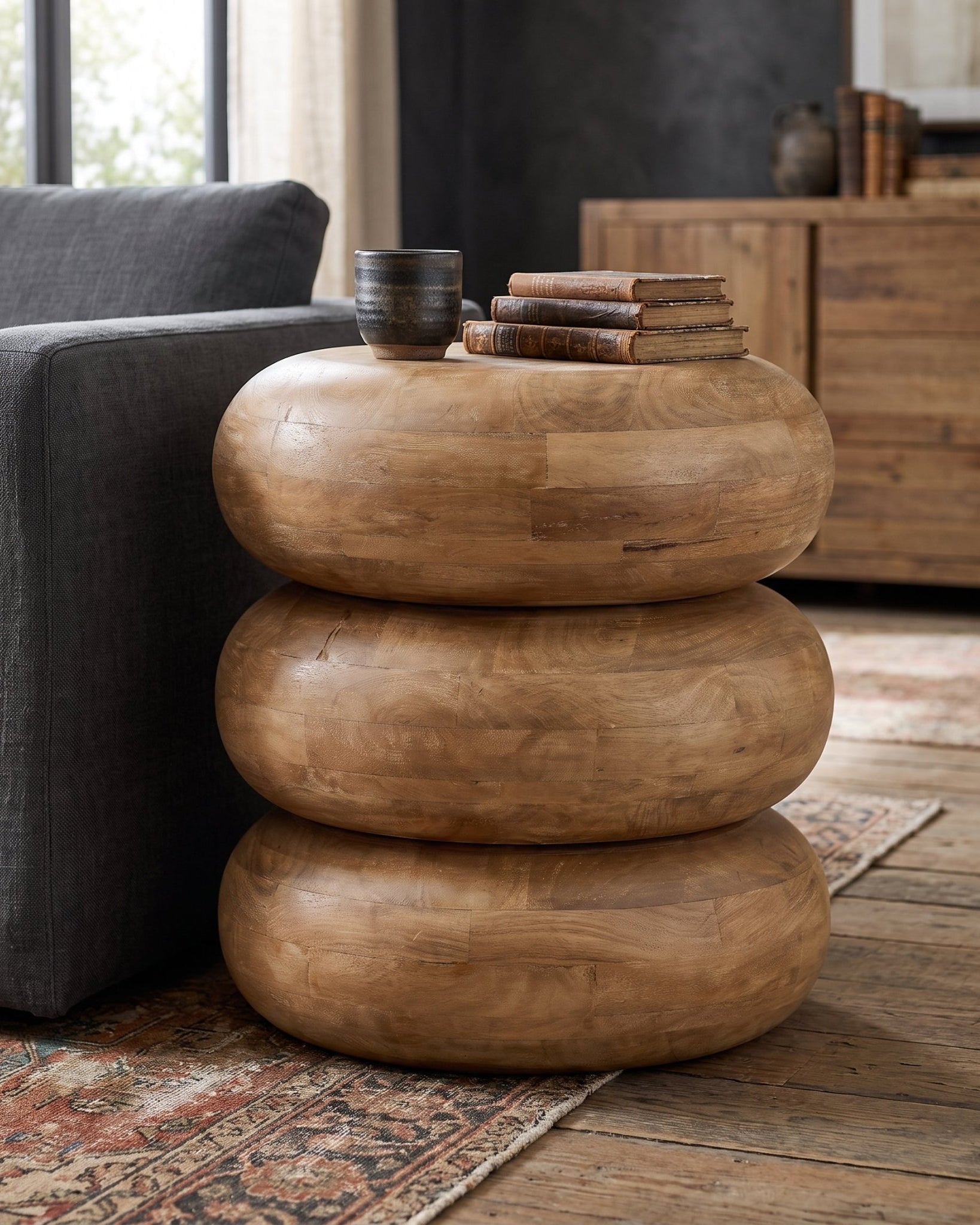
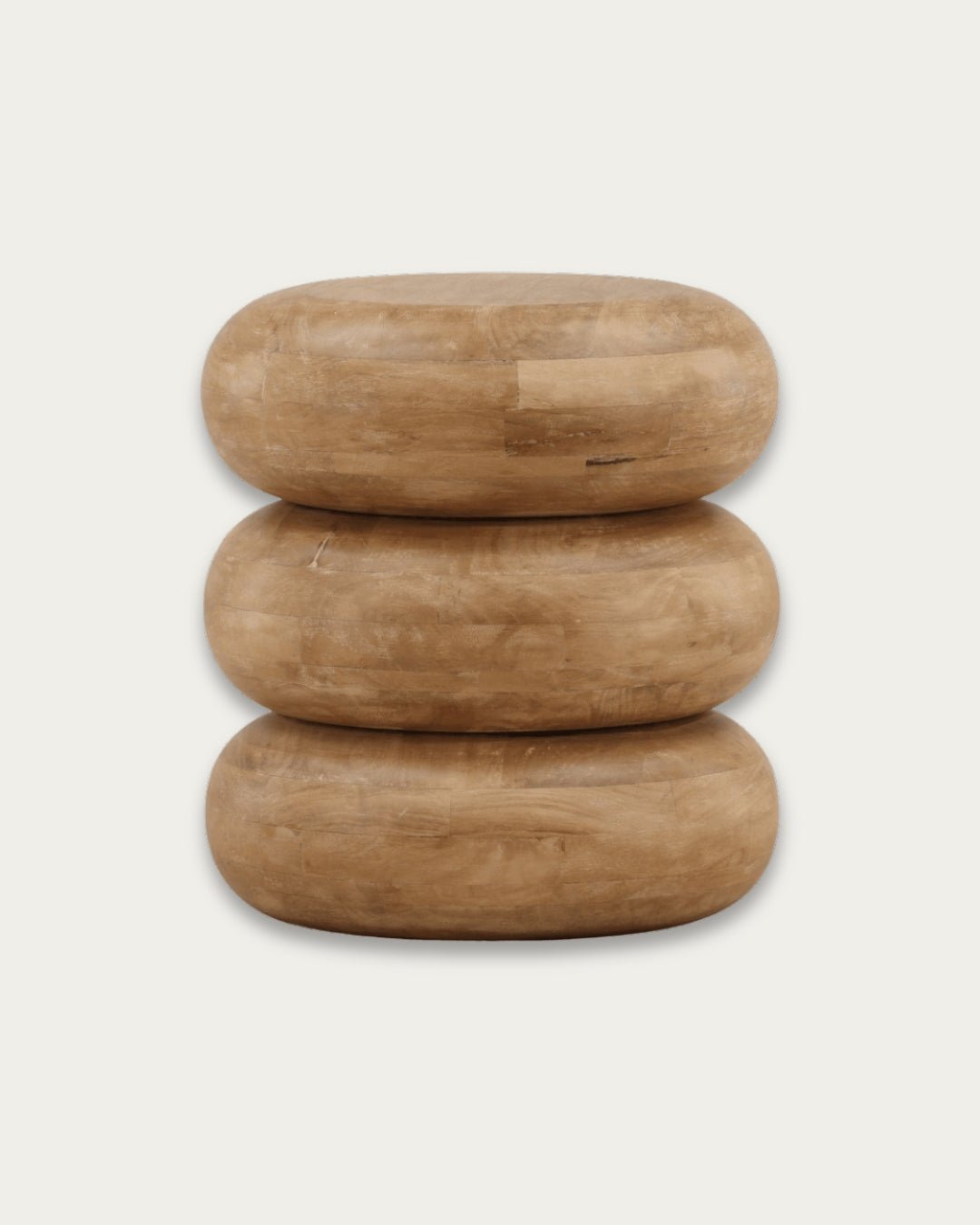
The same thing happens with side tables. Smaller accent pieces with heavier materiality help distribute texture throughout the room without creating clutter.
That’s why rooms often feel more resolved when they incorporate quieter forms from the Side tables collection instead of overly delicate furniture that visually disappears.
The goal isn’t minimalism.
It’s reducing unnecessary stimulation.
Coffee table collection:
Side tables collection:
Lower Lighting Changes the Entire Nervous System Response
A lot of homes aren’t overstimulating because of the furniture.
They’re overstimulating because the lighting feels like a retail dressing room.
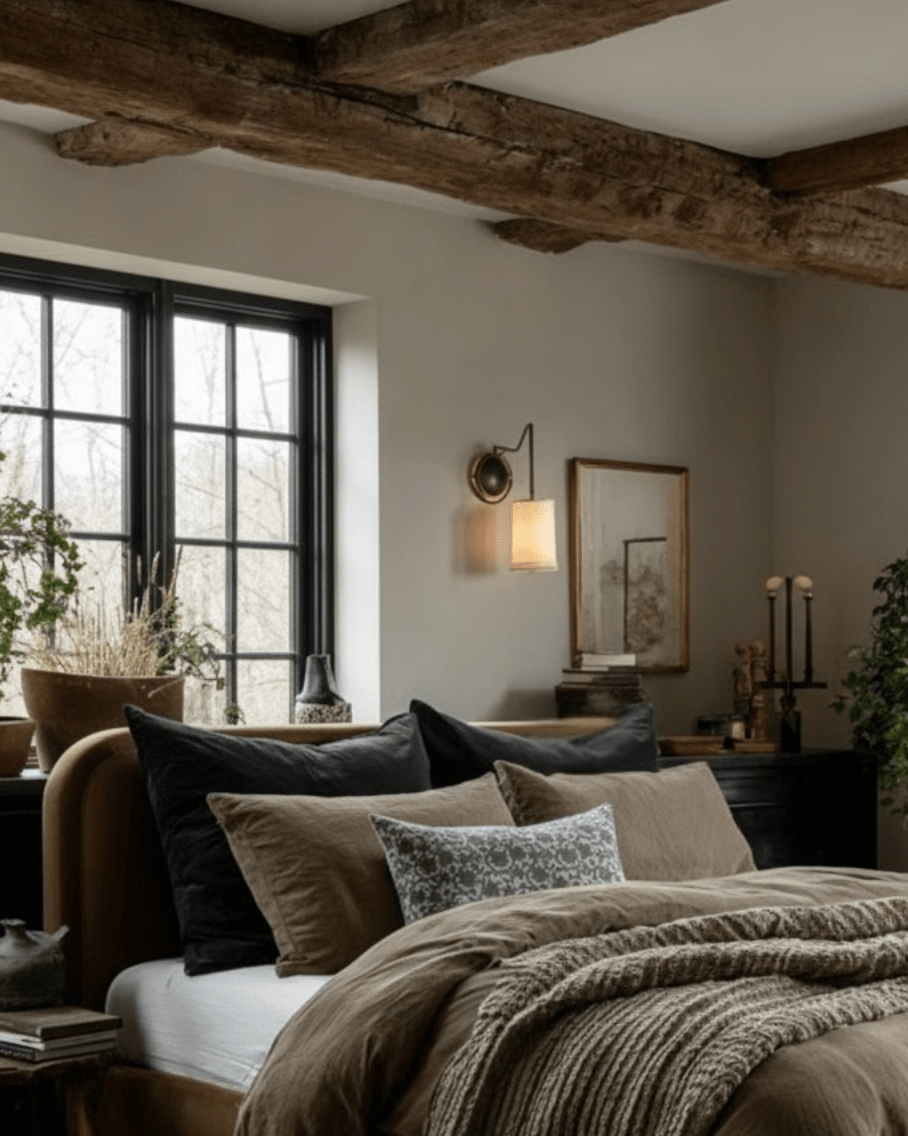
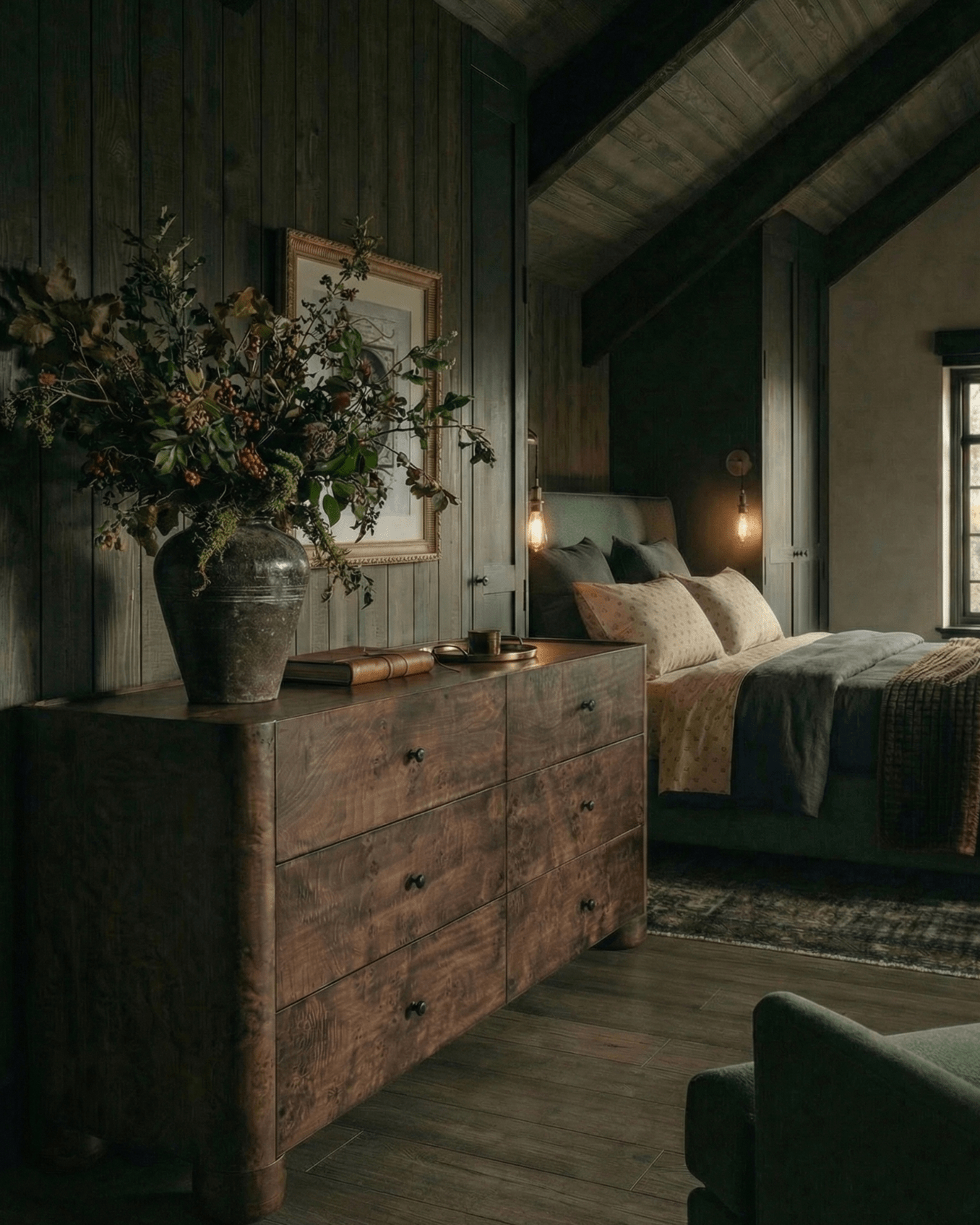
Modern mountain interiors tend to prioritize lower, layered lighting because the nervous system responds differently to softer visual transitions. Pools of indirect light feel safer and calmer than fully illuminated rooms where every surface is exposed equally.
This is why table lamps, sconces, dimmed overheads, and directional lighting consistently outperform bright recessed ceiling lights in these spaces.
The room feels more human.
Lighting also changes how texture behaves. Wood grain becomes deeper. Stone surfaces soften visually. Upholstery absorbs light differently throughout the day instead of looking flat and overexposed.
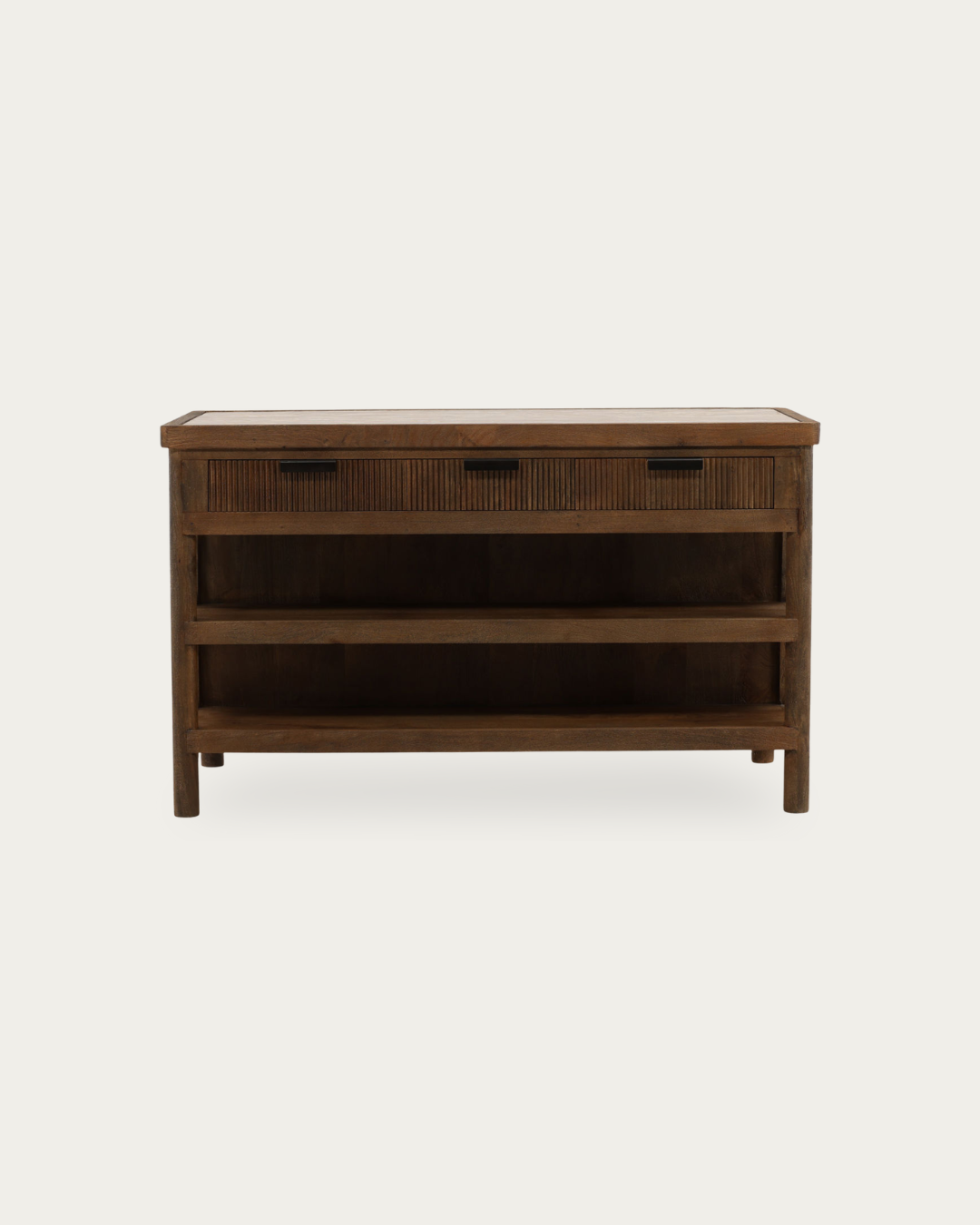
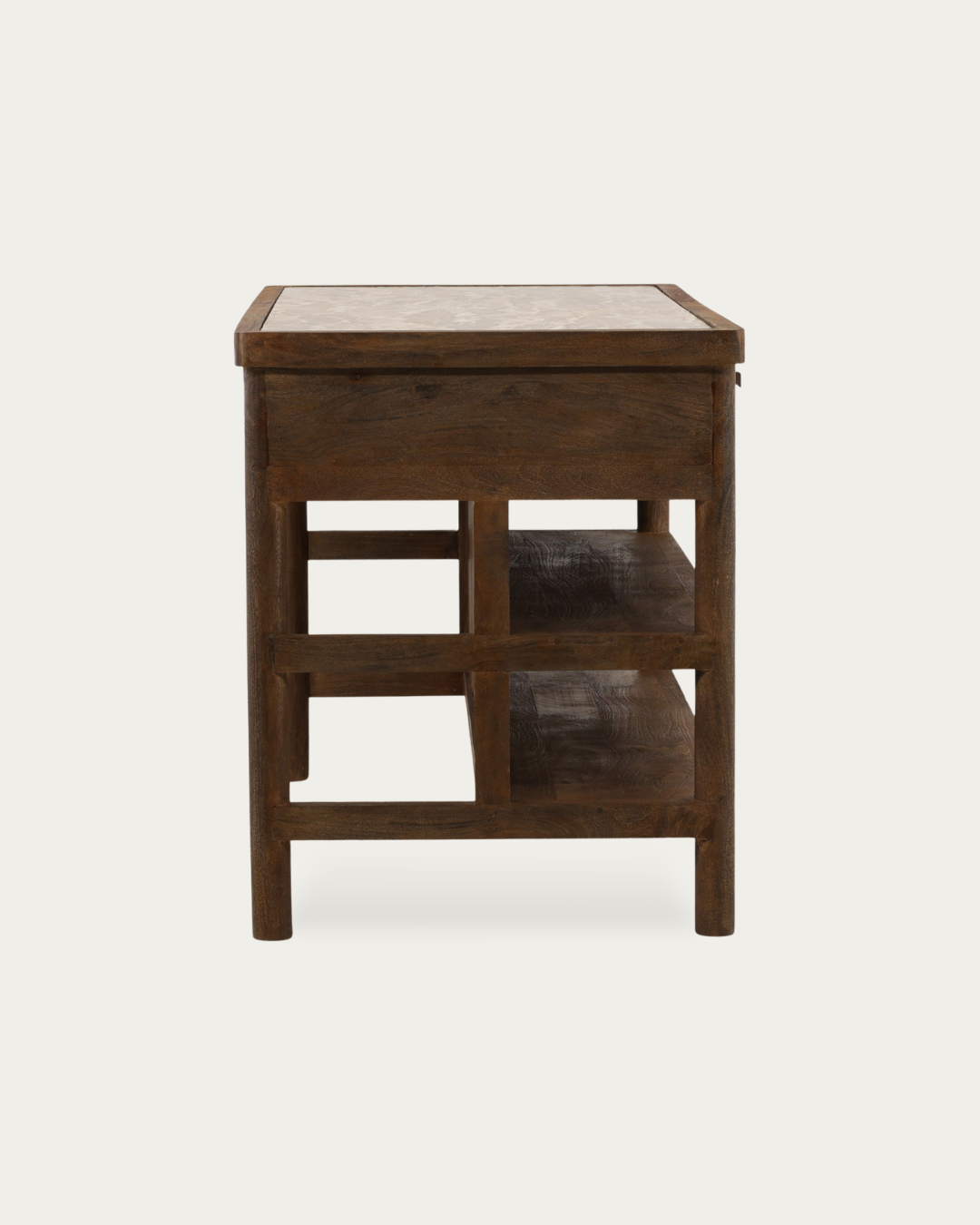
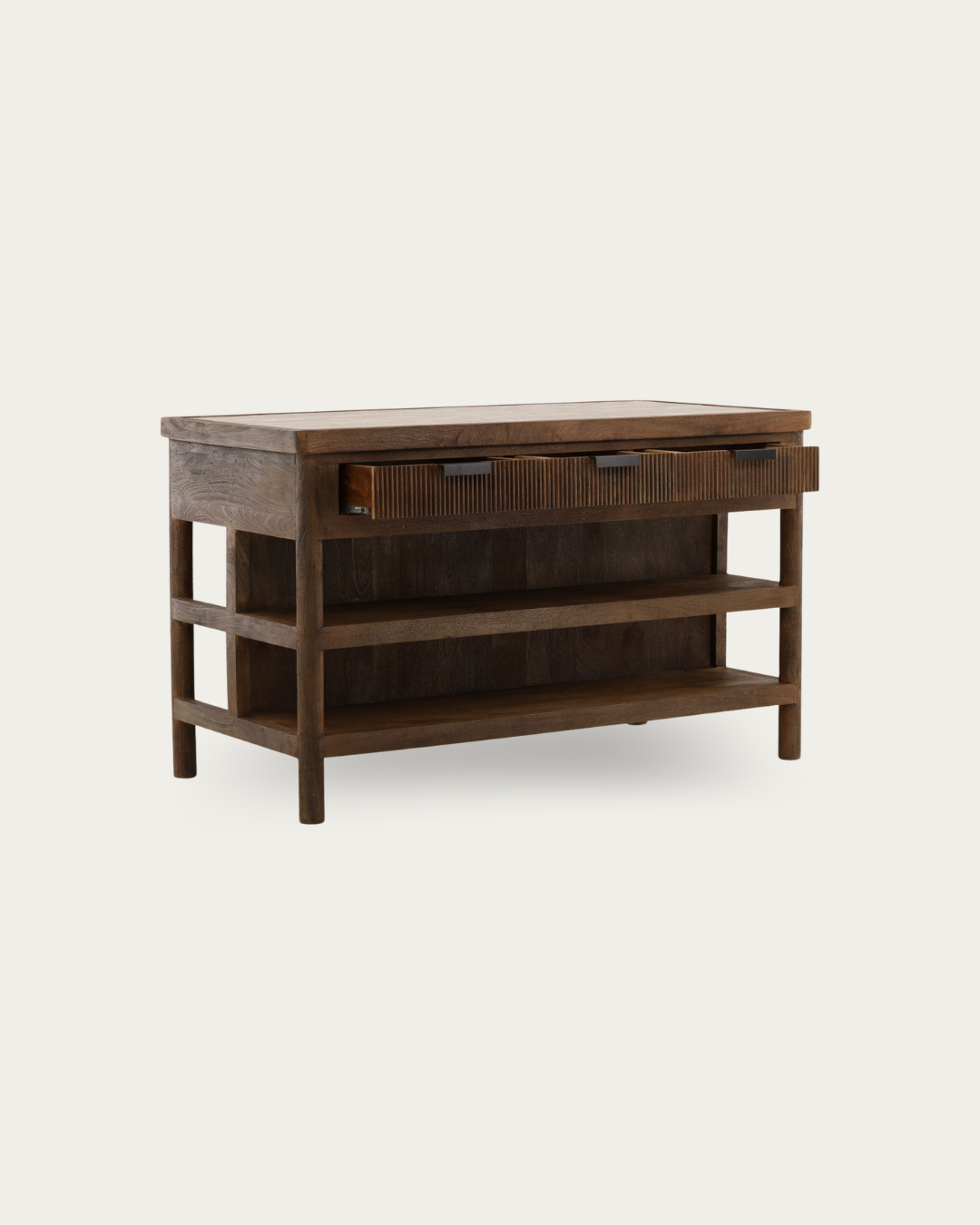
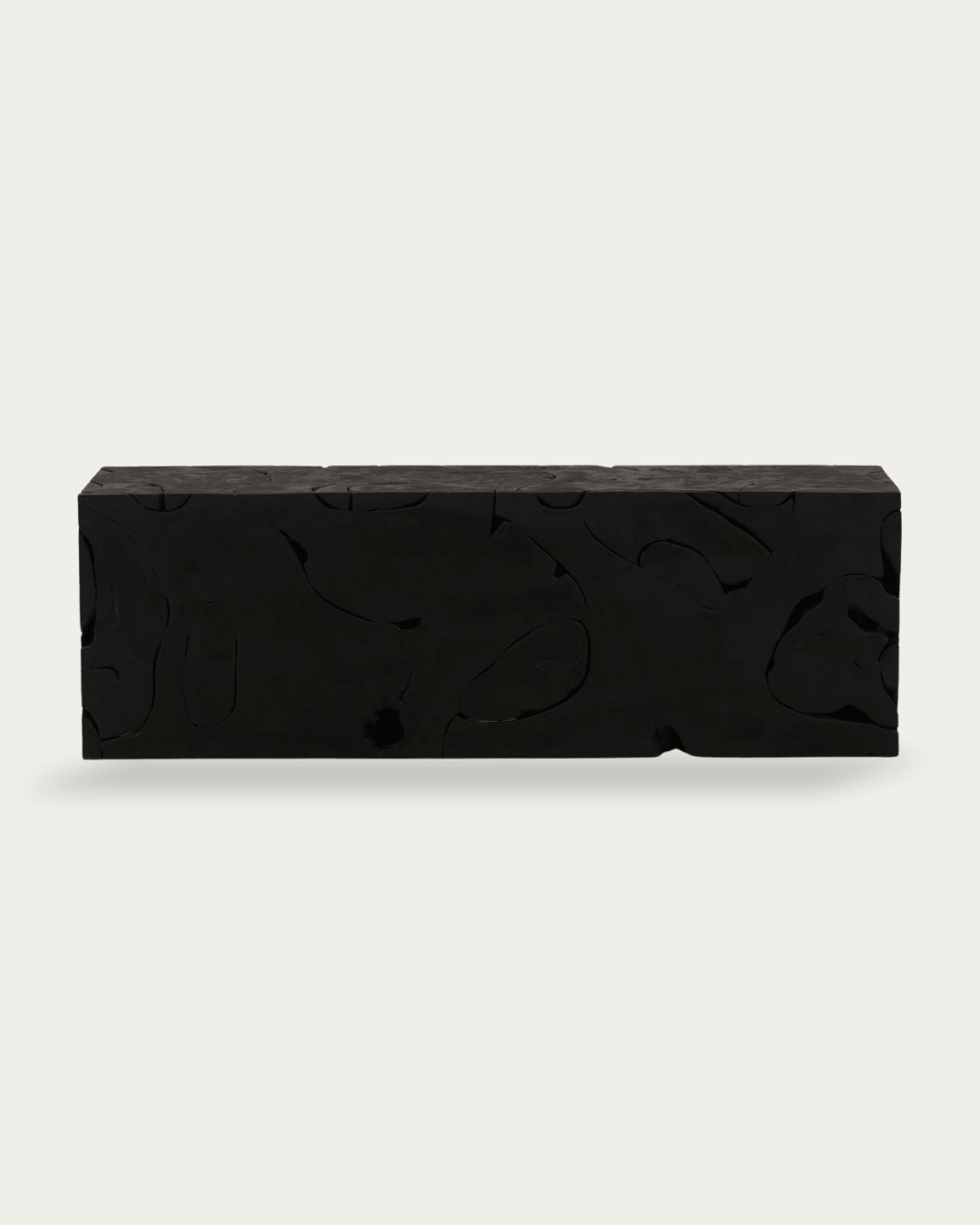
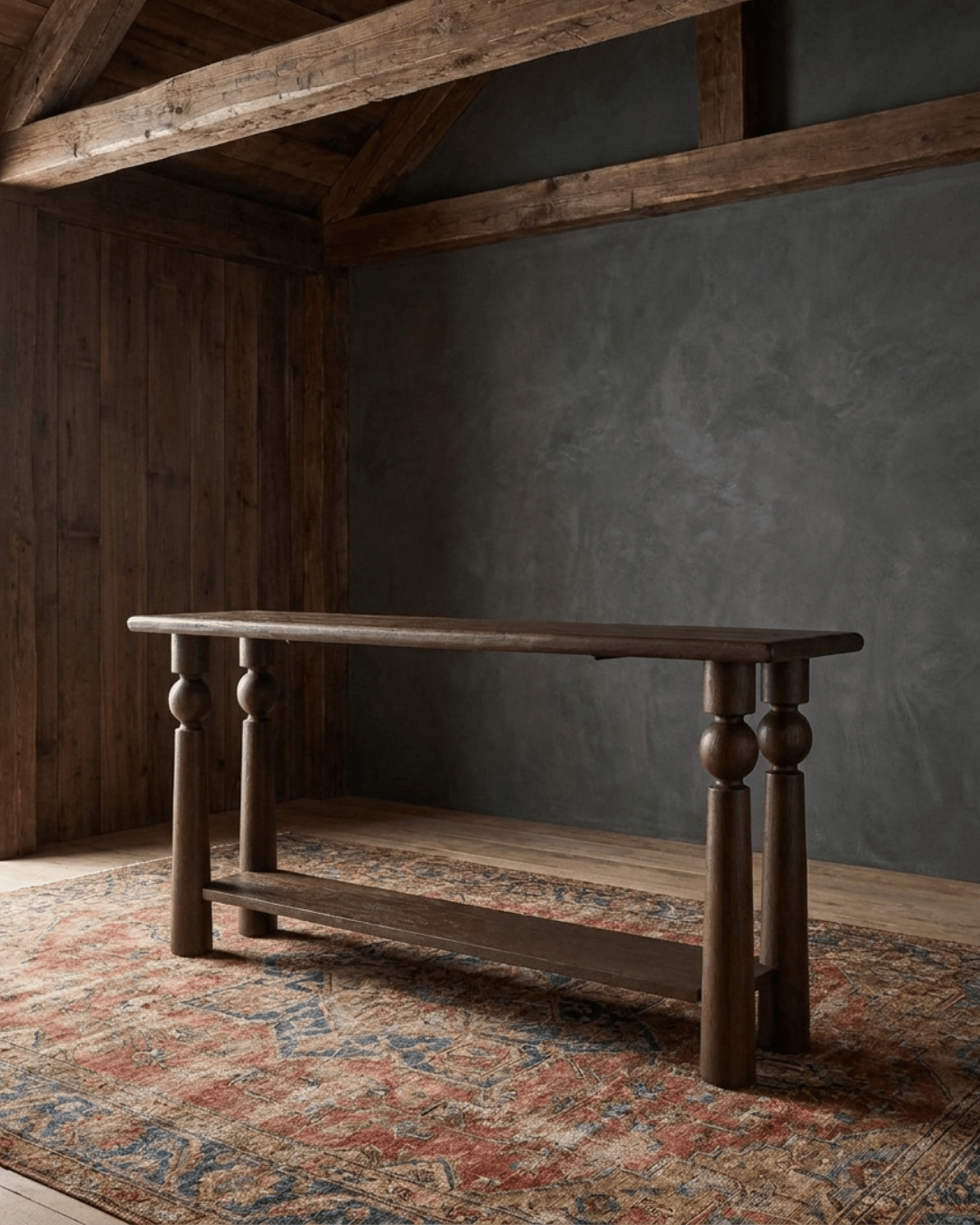
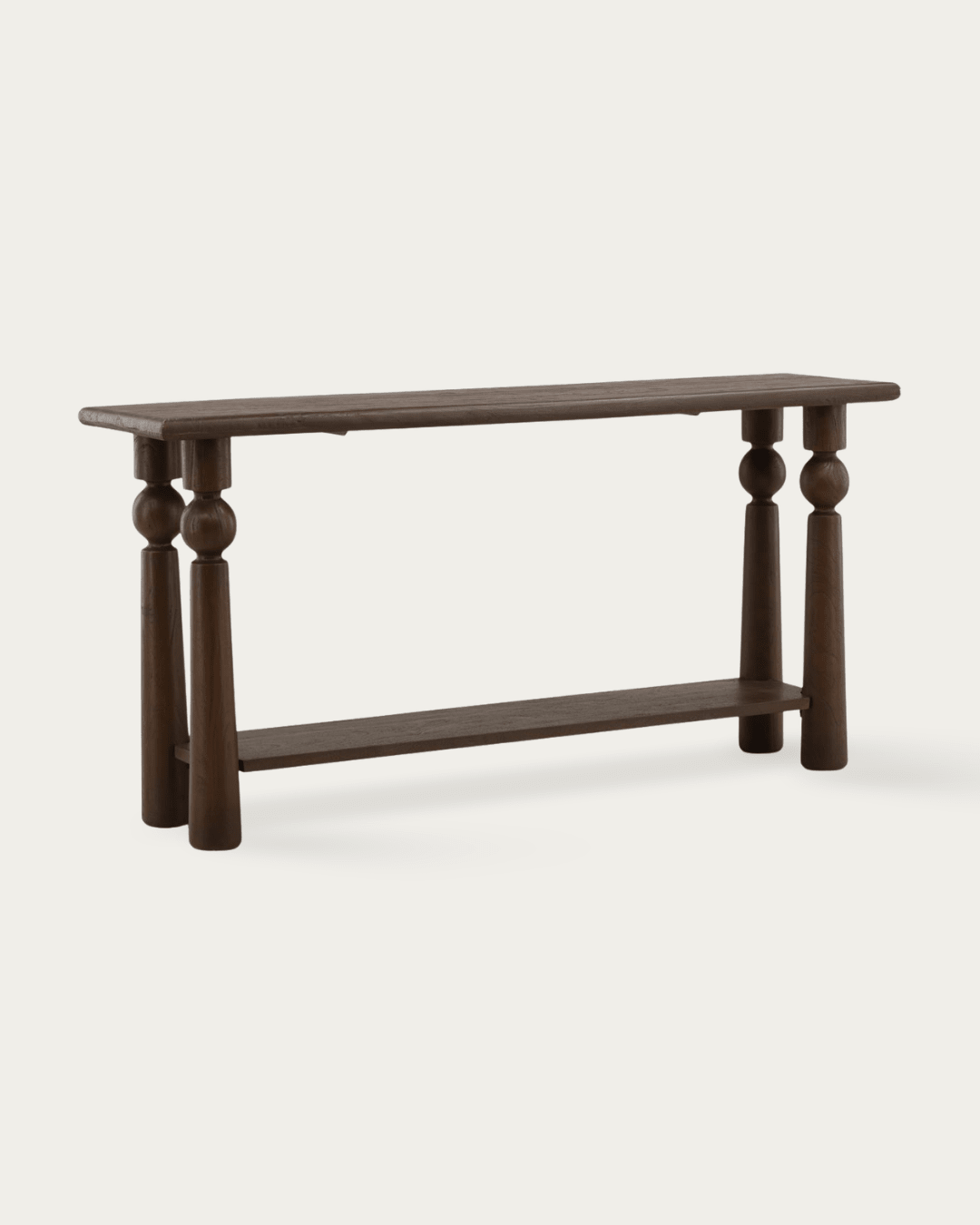
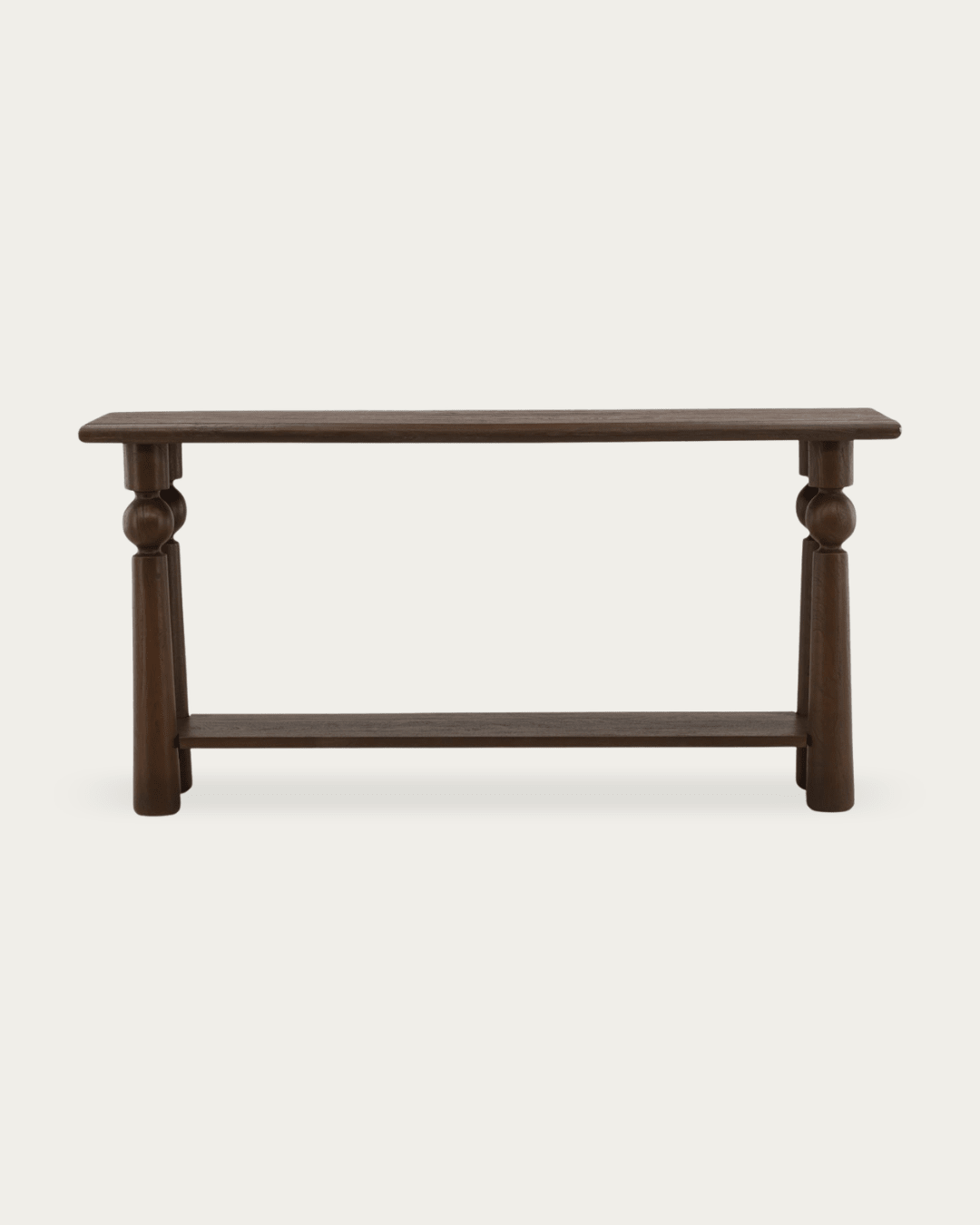
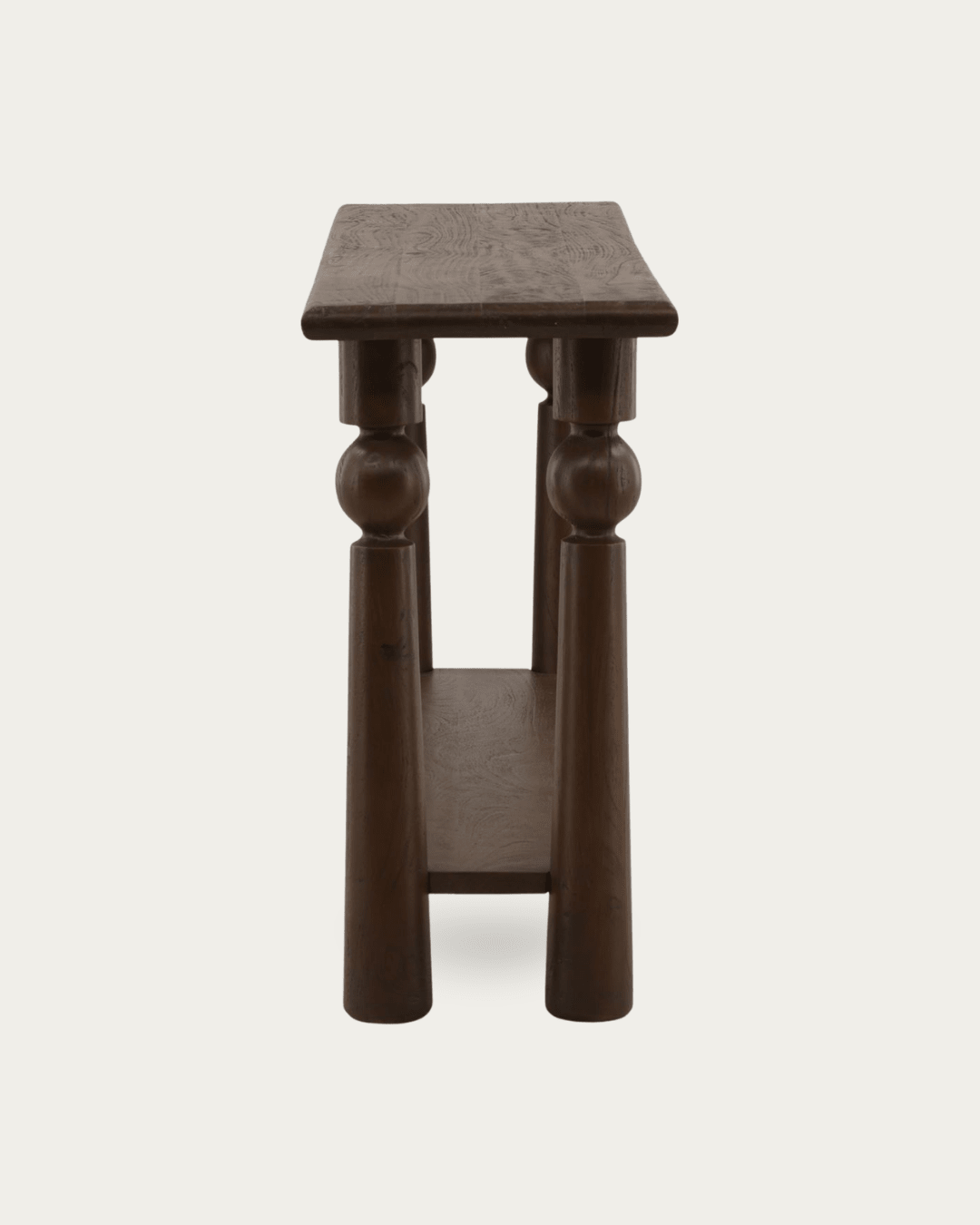
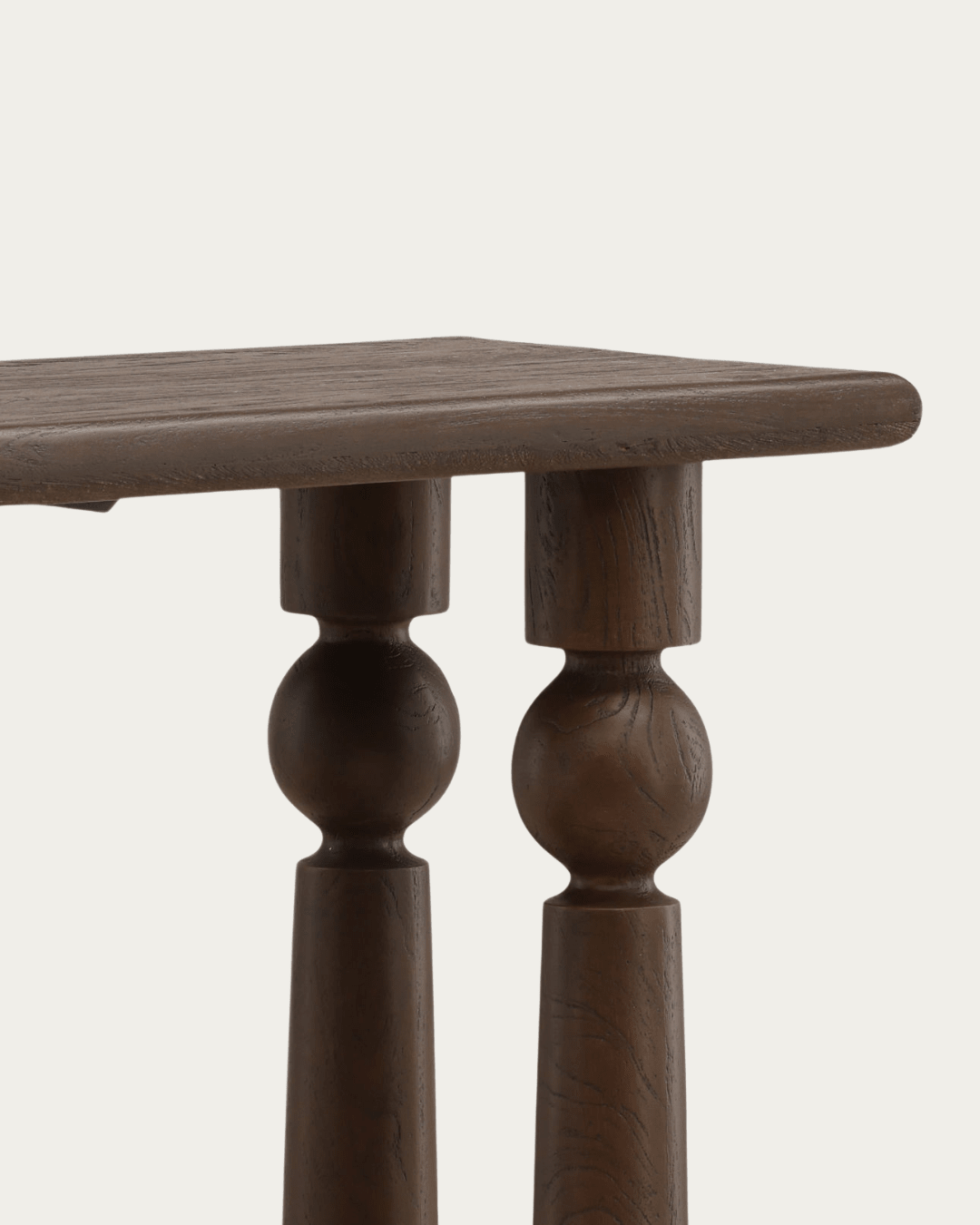
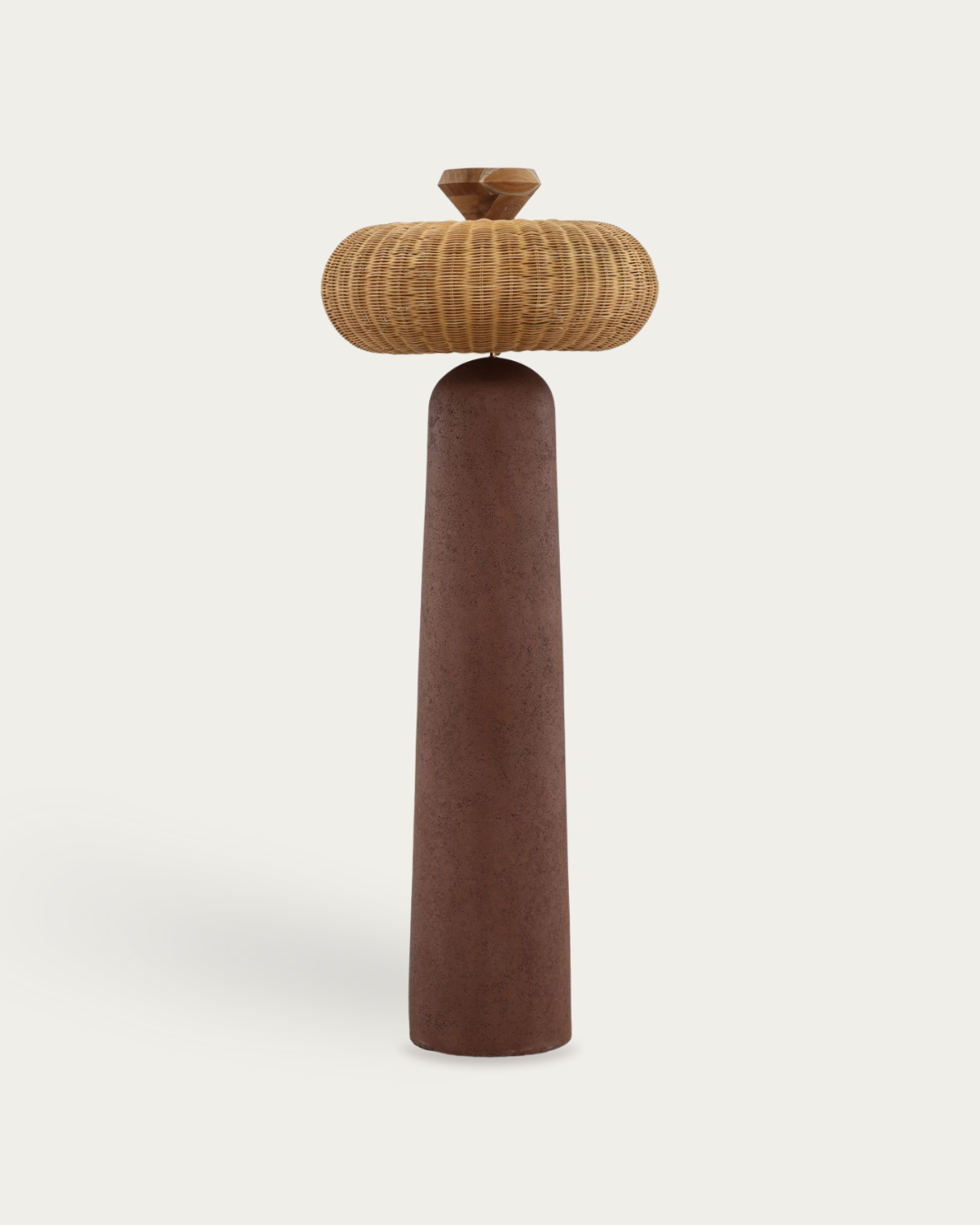
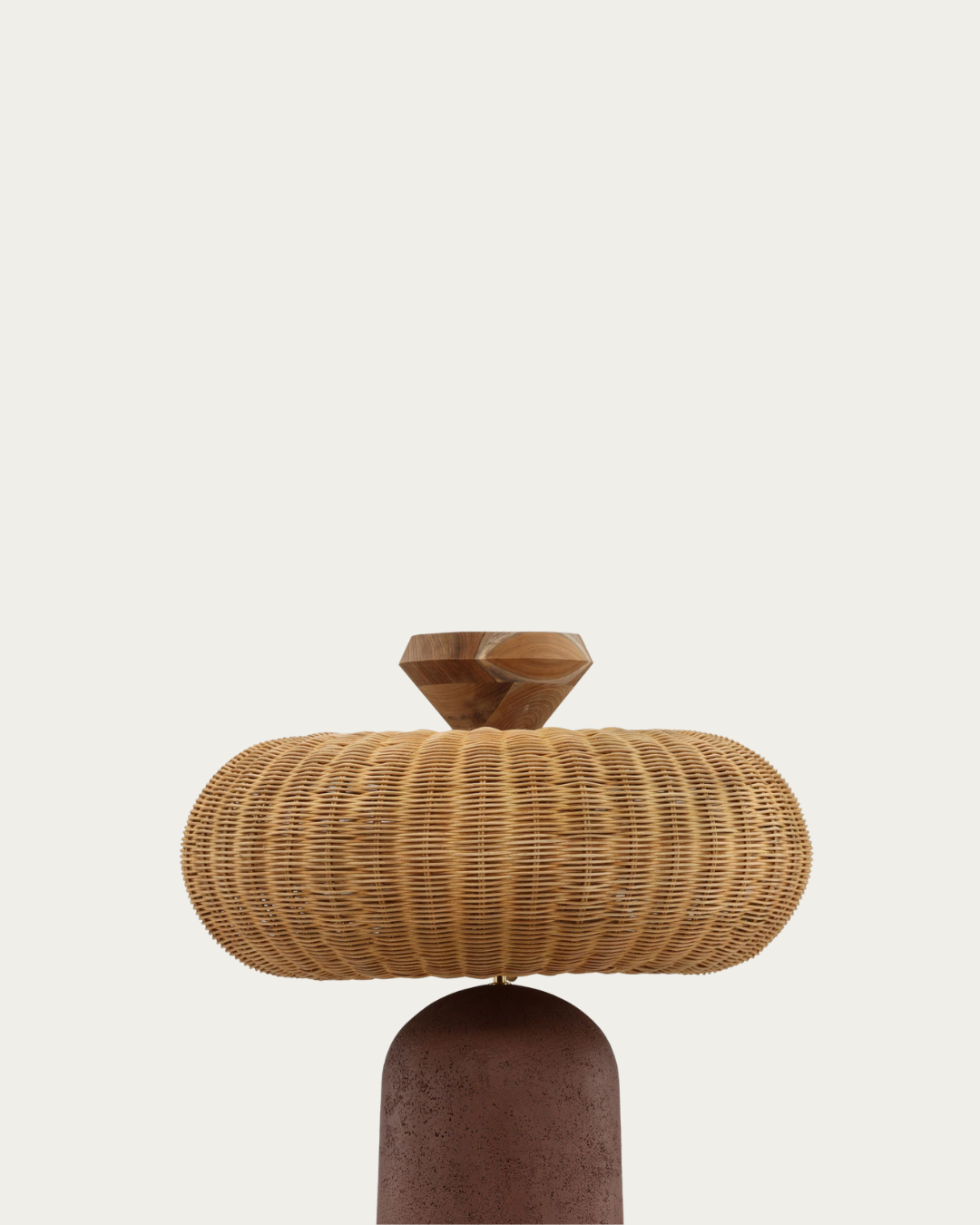
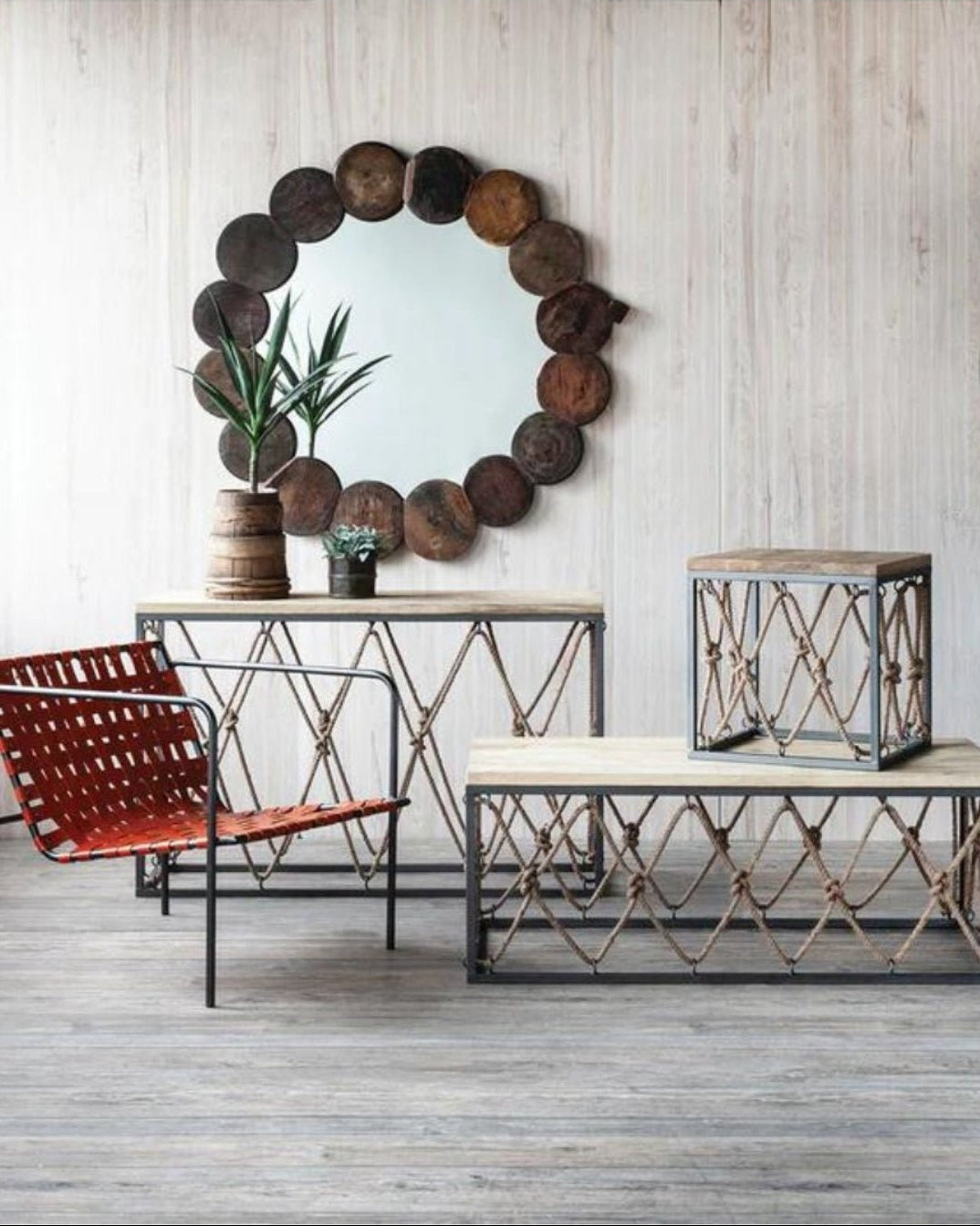
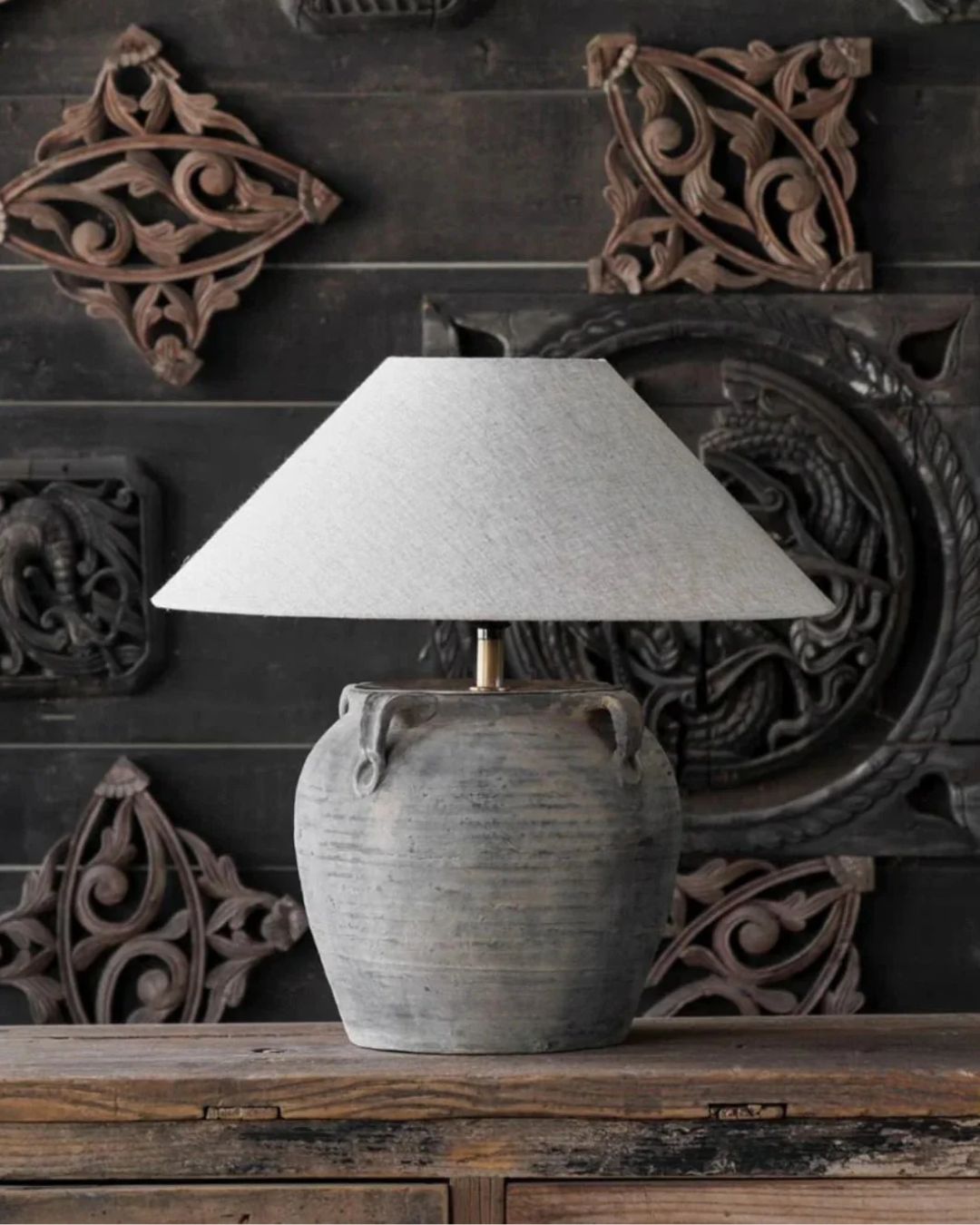
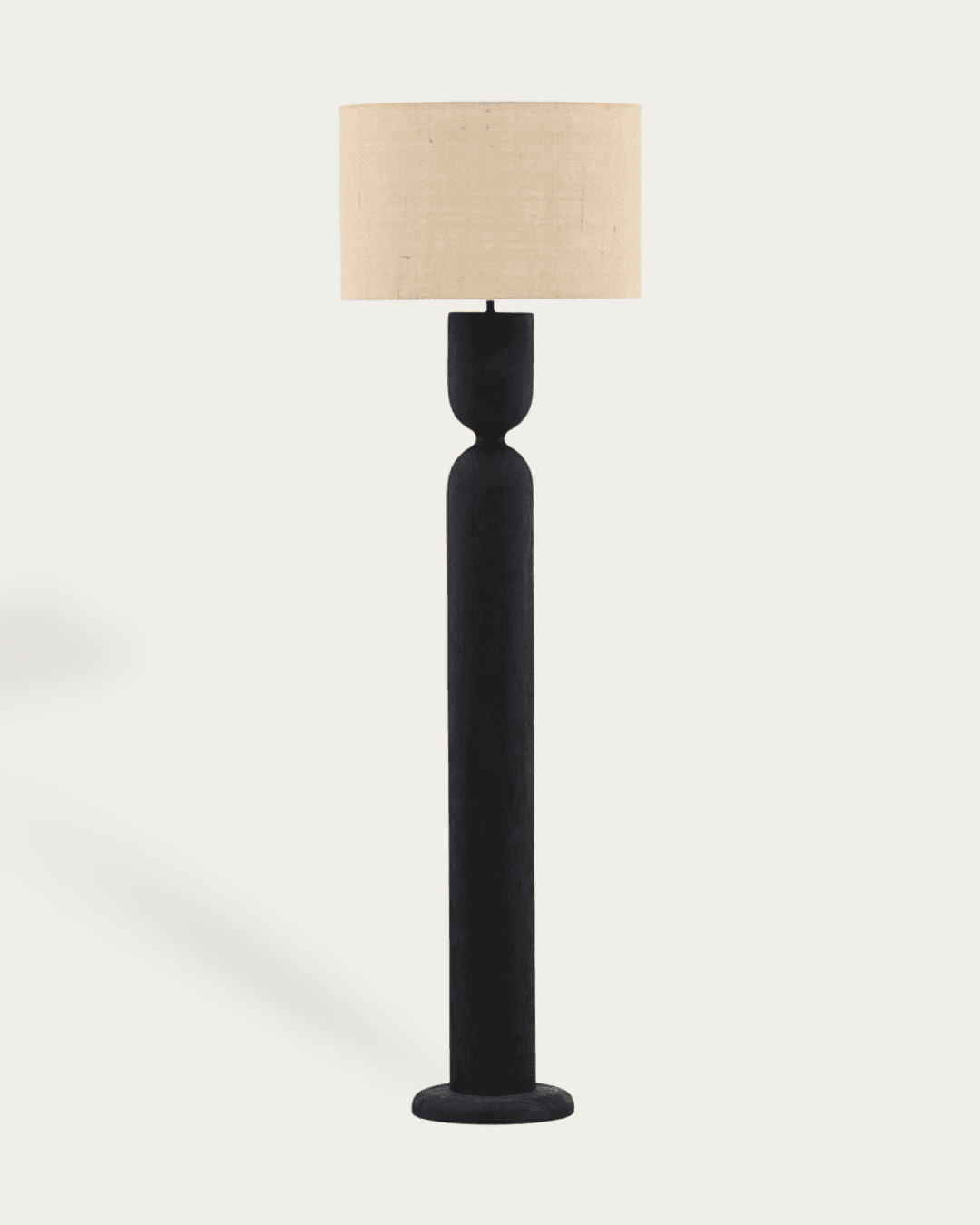
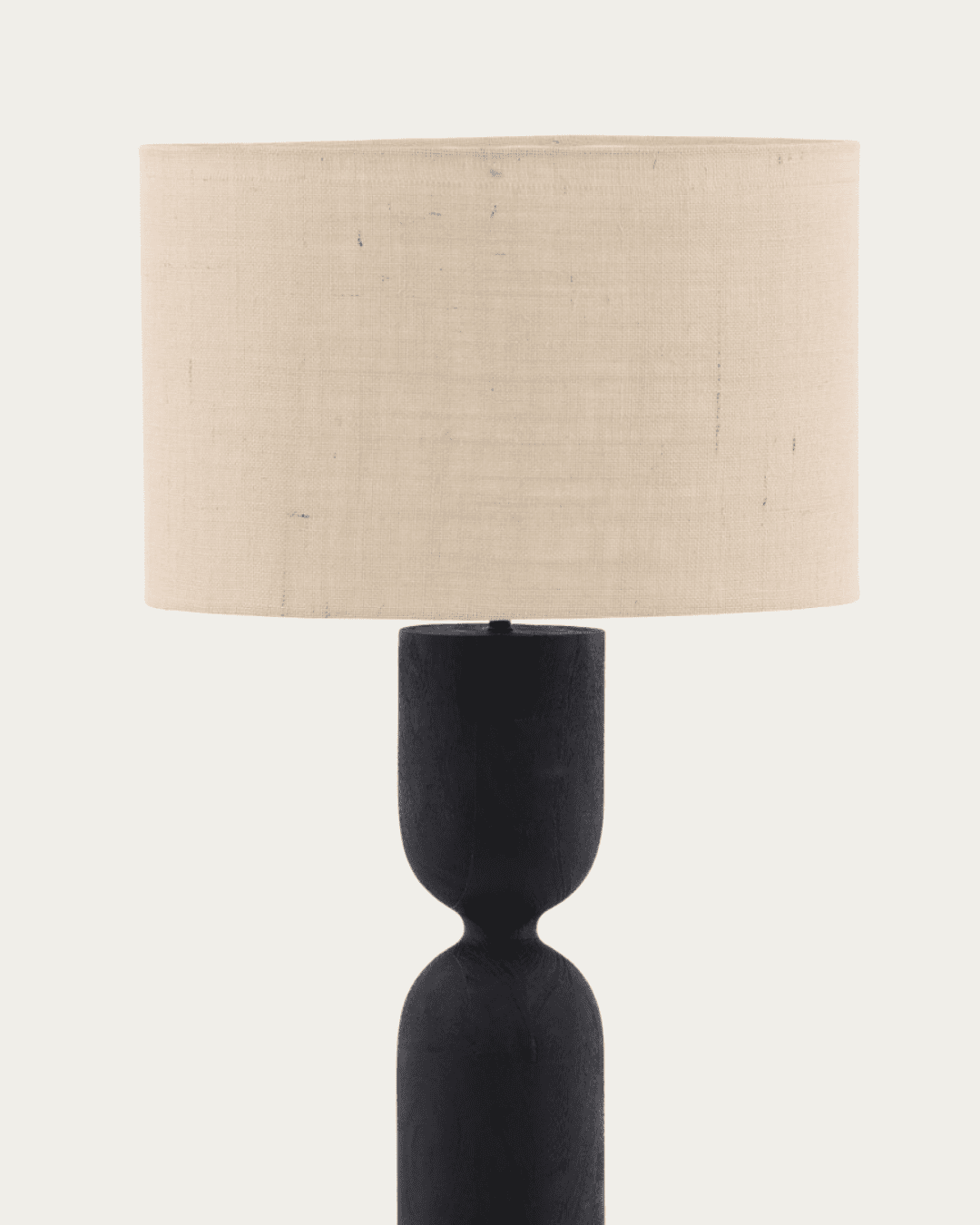
Consoles play an underrated role here because they naturally create opportunities for layered lighting moments throughout the home. A lamp placed on a textured console instantly lowers the visual intensity of a room.
That’s one reason pieces from the Console collection work so well in modern mountain spaces. They help create quieter transitions between furniture, architecture, and light.
The New Modern Mountain Home Prioritizes Weight Over Perfection
There’s a reason heavily grounded spaces often feel safer.
Visual weight creates predictability.
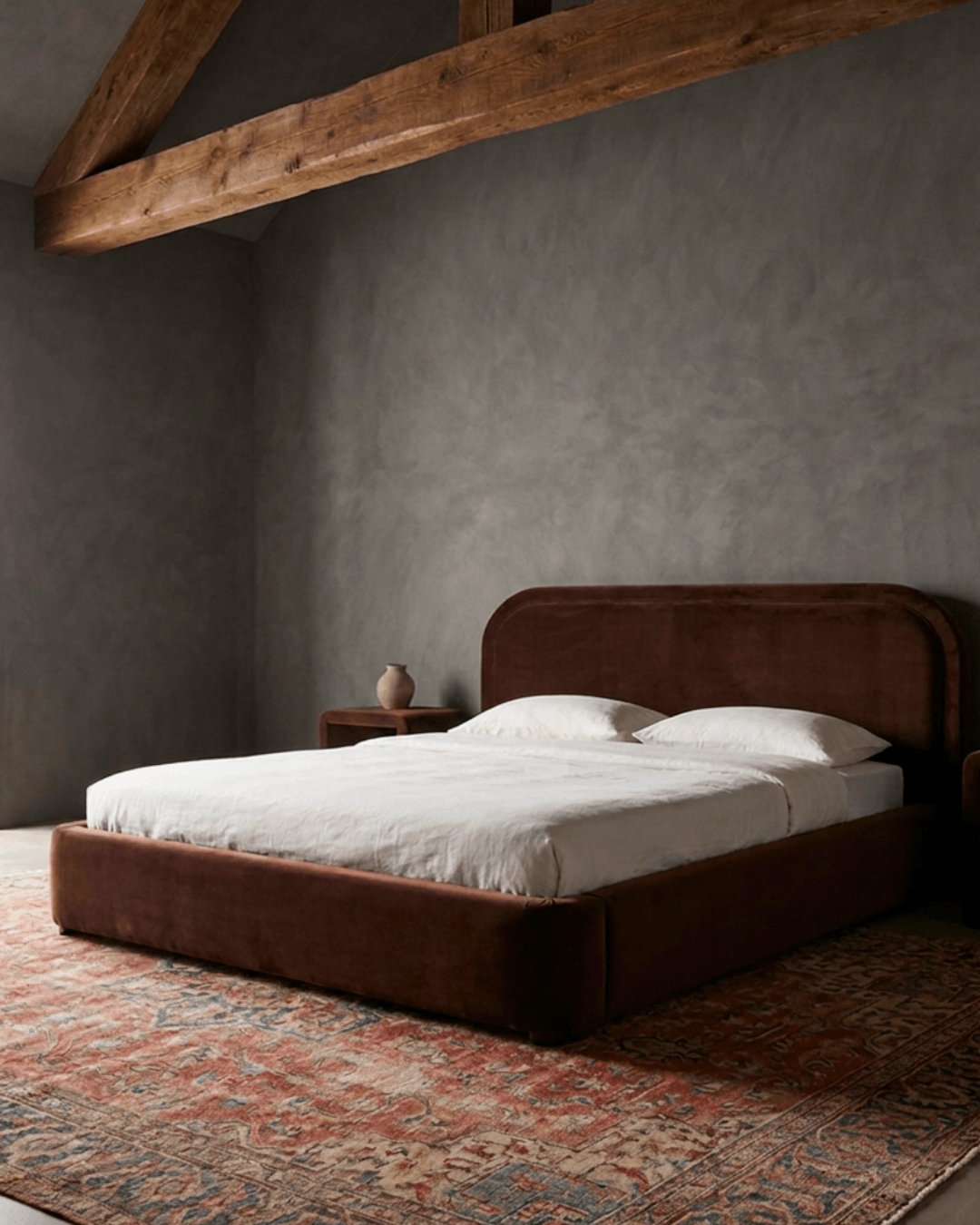
Lower-profile furniture, larger silhouettes, chunkier materials, and denser textures help anchor the room physically and psychologically. The eye understands where to settle instead of bouncing around constantly searching for resolution.
This is where proportion becomes critical.
A coffee table that’s too small.
A sofa floating awkwardly in the room.
Tiny accent furniture scattered everywhere.
Those things create low-level visual tension whether people consciously notice it or not.
That’s partly why made-to-order furniture works so well in mountain-inspired homes. Scale can respond directly to the architecture instead of forcing the architecture to adapt to standard furniture dimensions.
Larger rooms with taller ceilings often need furniture with enough visual mass to hold the space together properly.
That flexibility is part of why the Made-to-order furniture collection becomes especially useful in modern mountain interiors where proportion matters as much as style.
Clutter Isn’t Always Physical — Sometimes It’s Visual
A room can technically be clean and still feel noisy.
That’s usually visual clutter.
Too many sharp transitions.
Too many small objects.
Too many competing shapes.
Too many open storage areas exposing constant visual information.
Modern mountain interiors often feel calming because they naturally reduce visual fragmentation.
RUTED Tip: If your room feels mentally loud, stop adding decor and start reducing visual edges. Fewer object outlines usually calm a room faster than buying another throw pillow ever will.

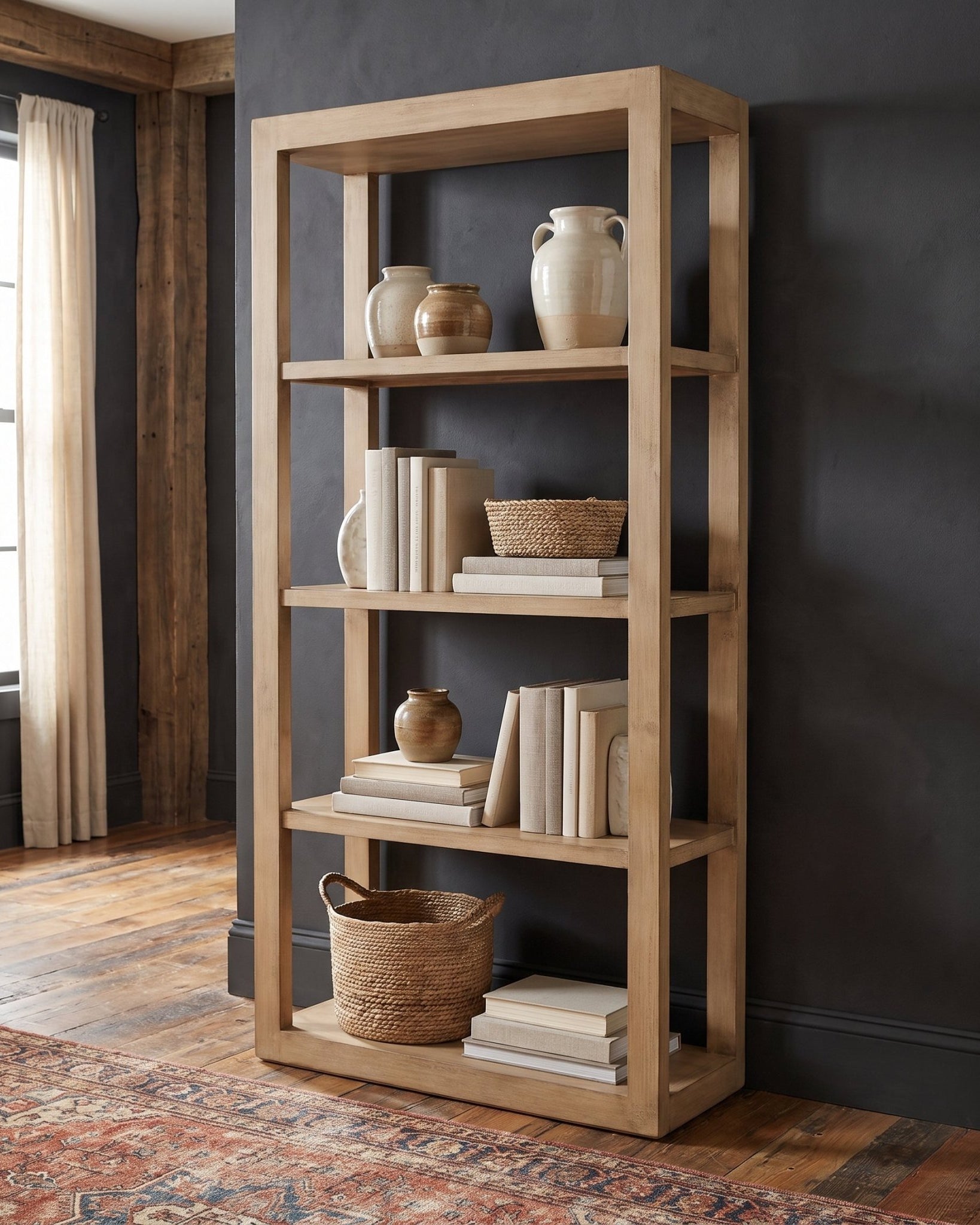
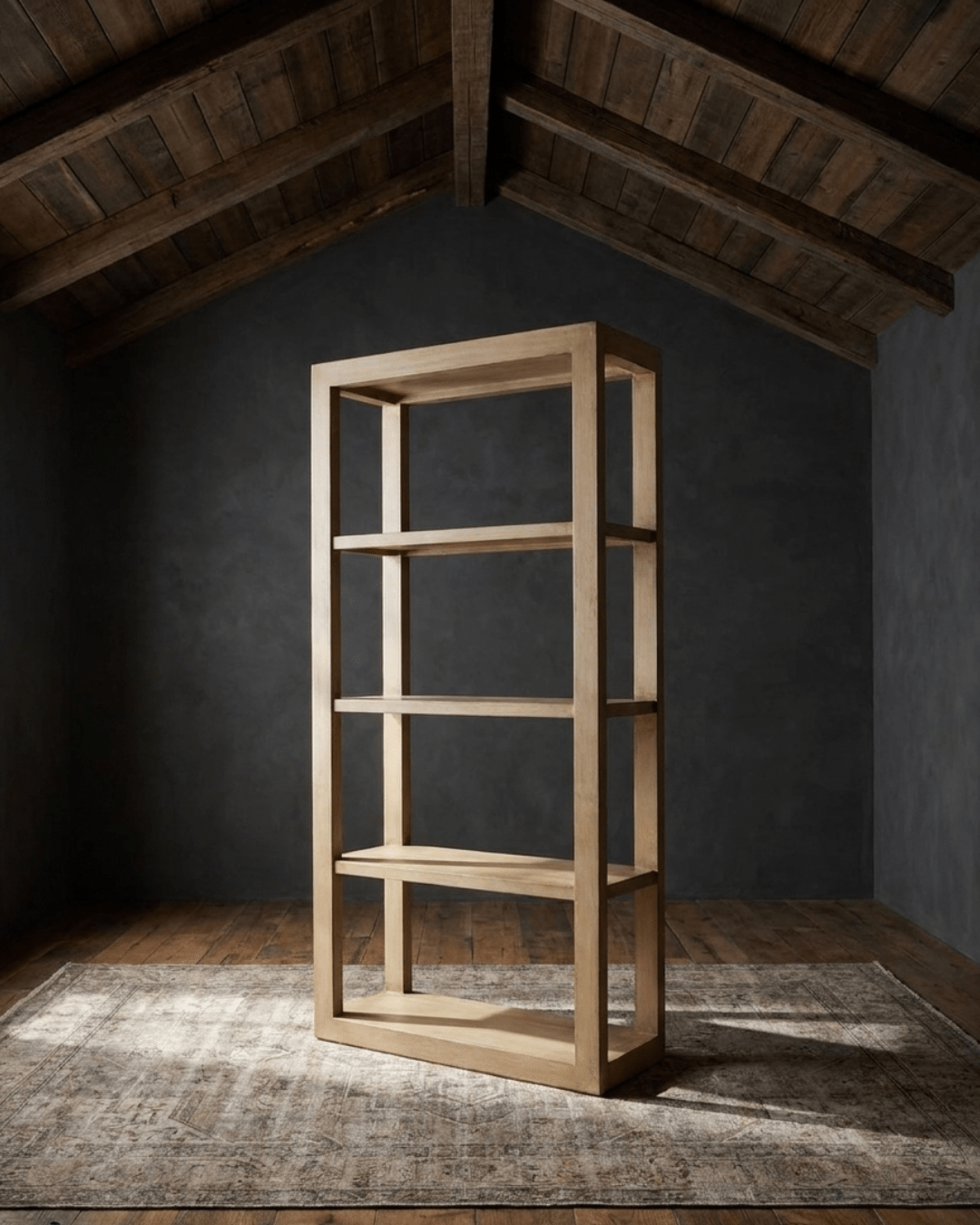
Storage becomes important here for that exact reason.
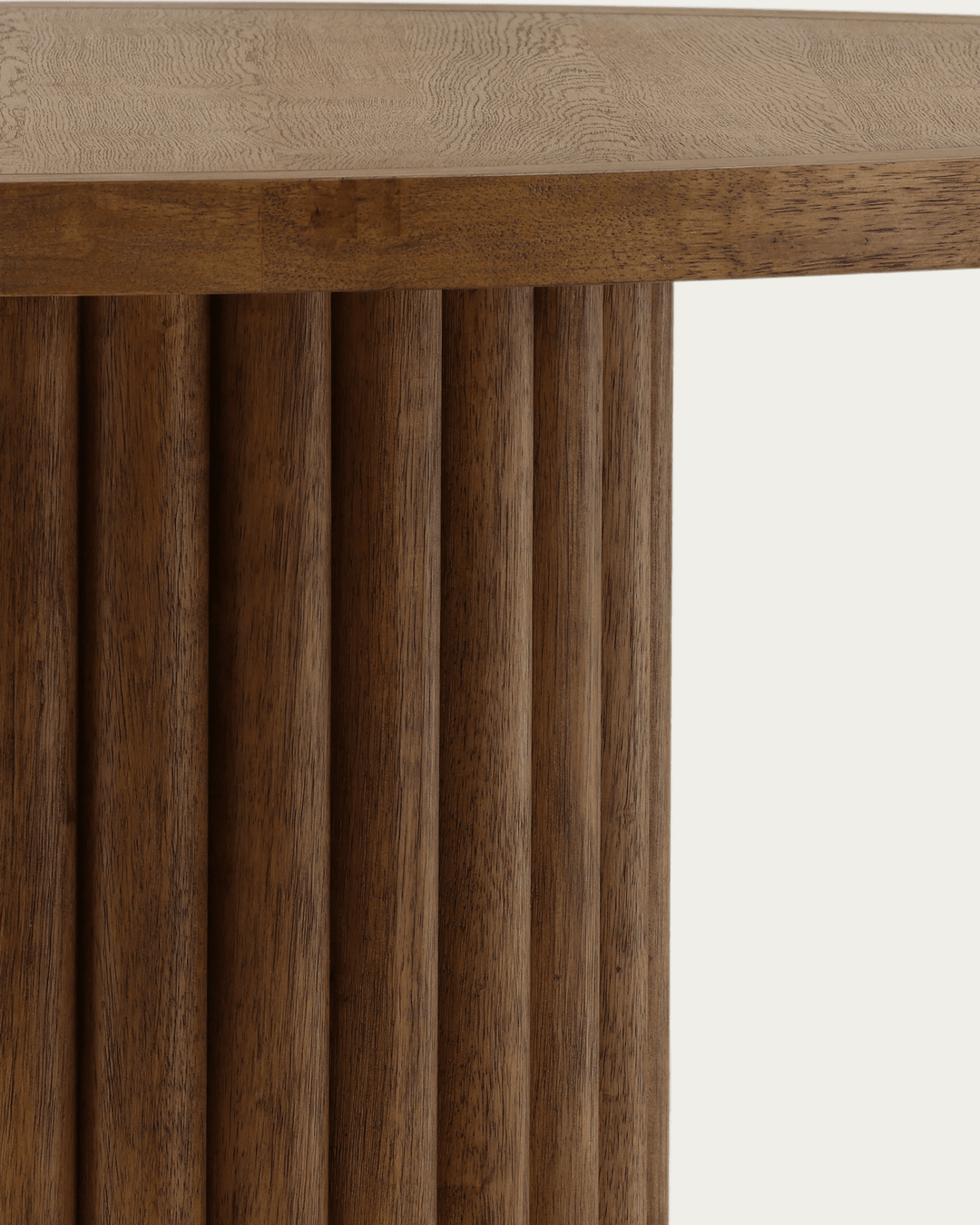
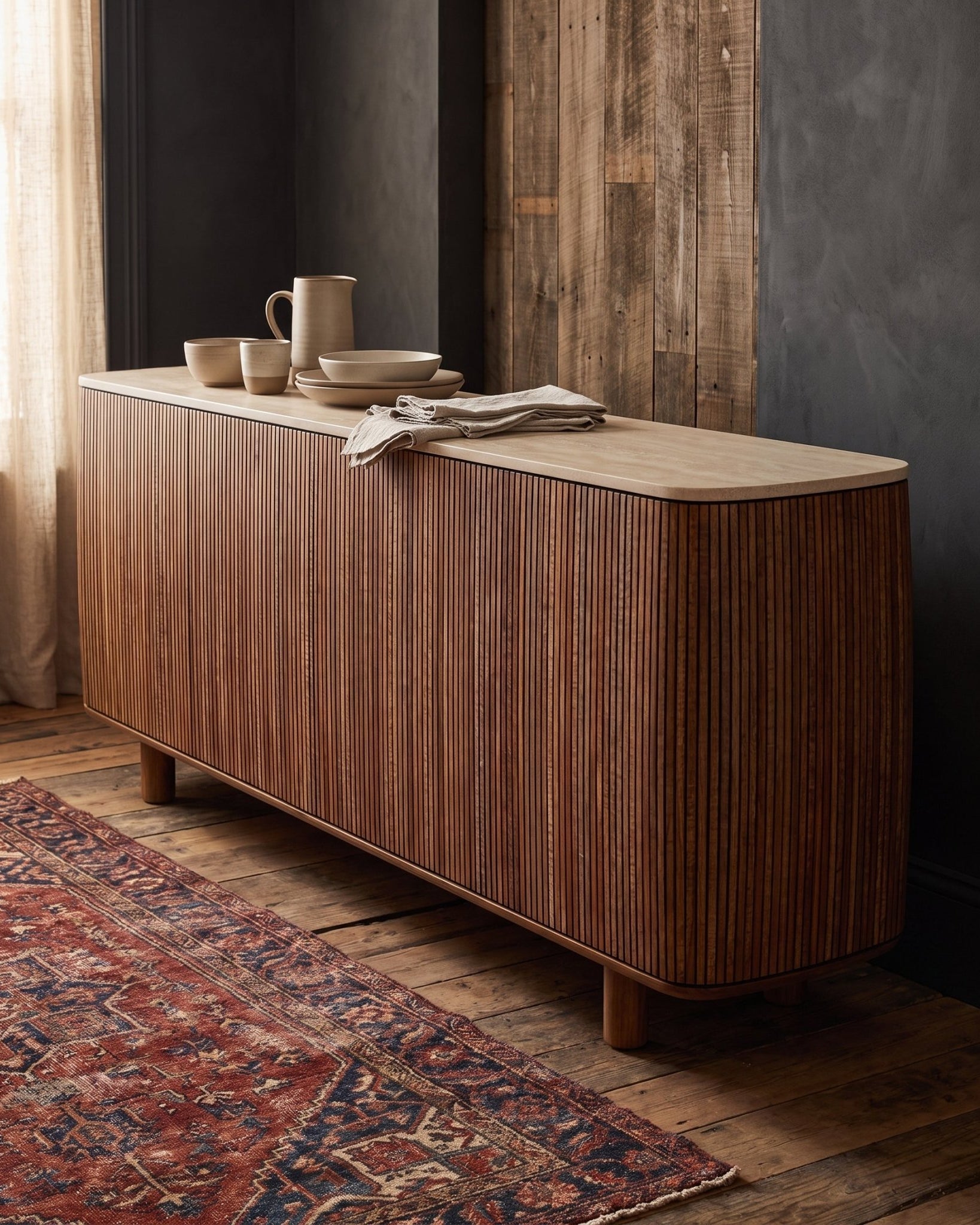
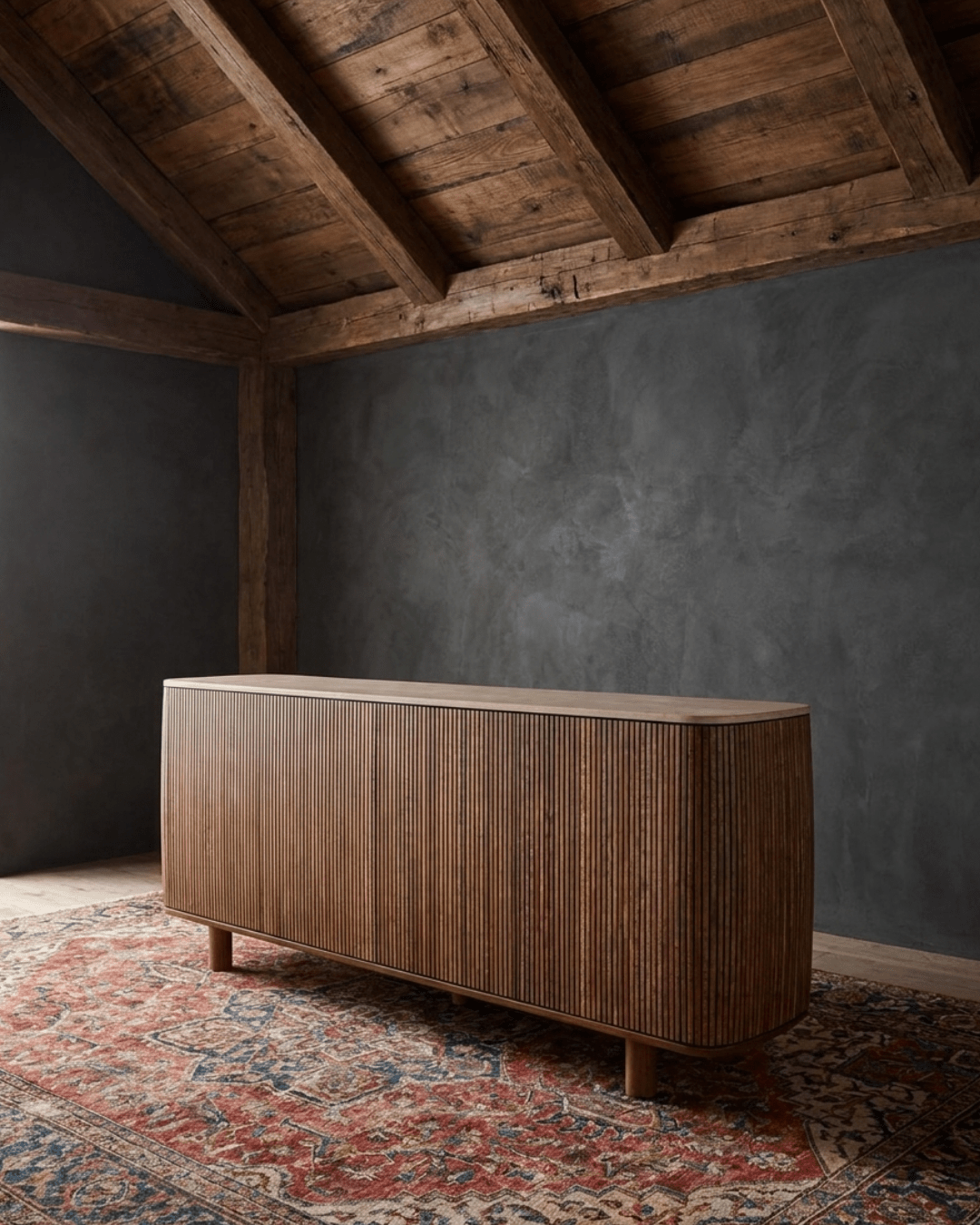
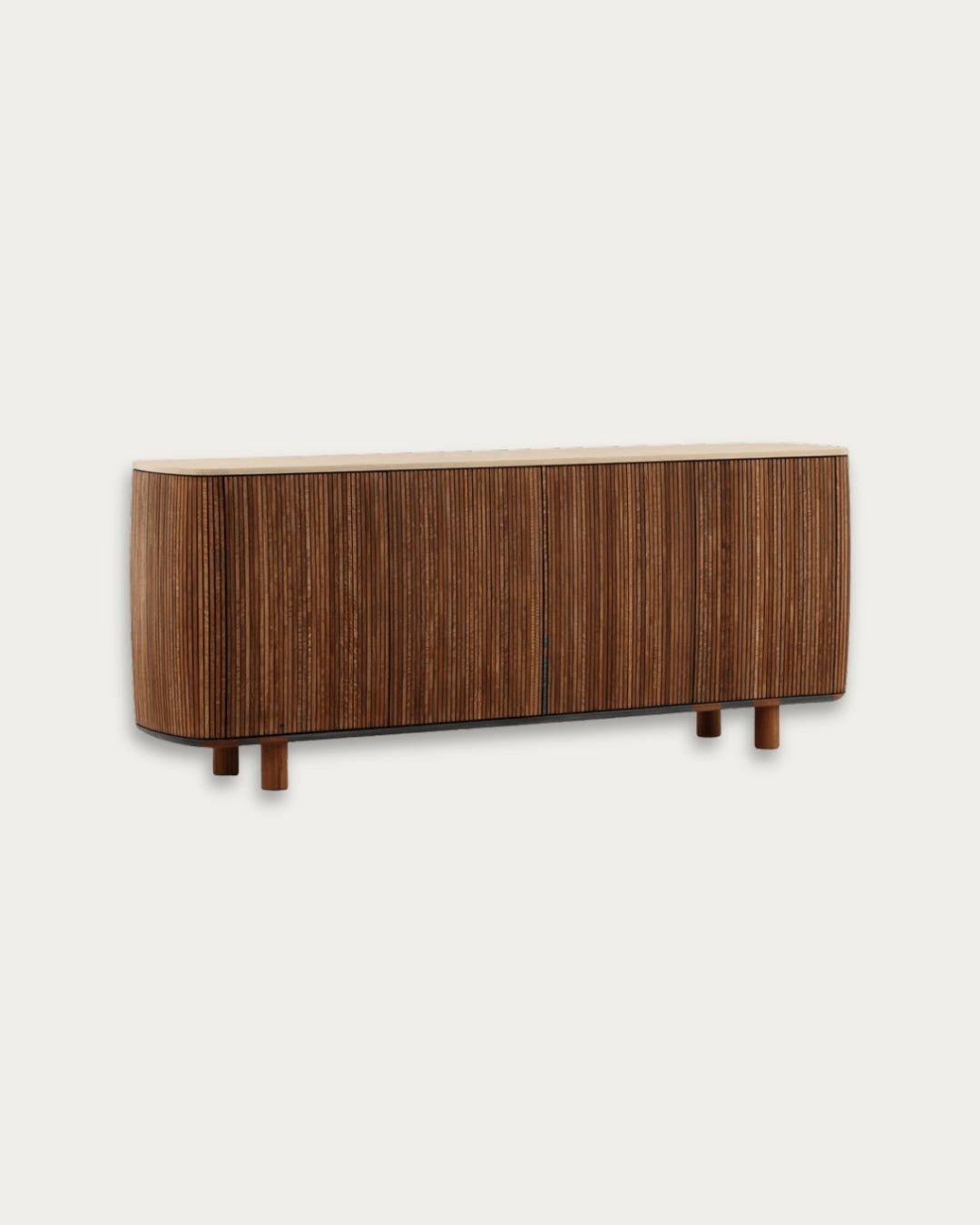
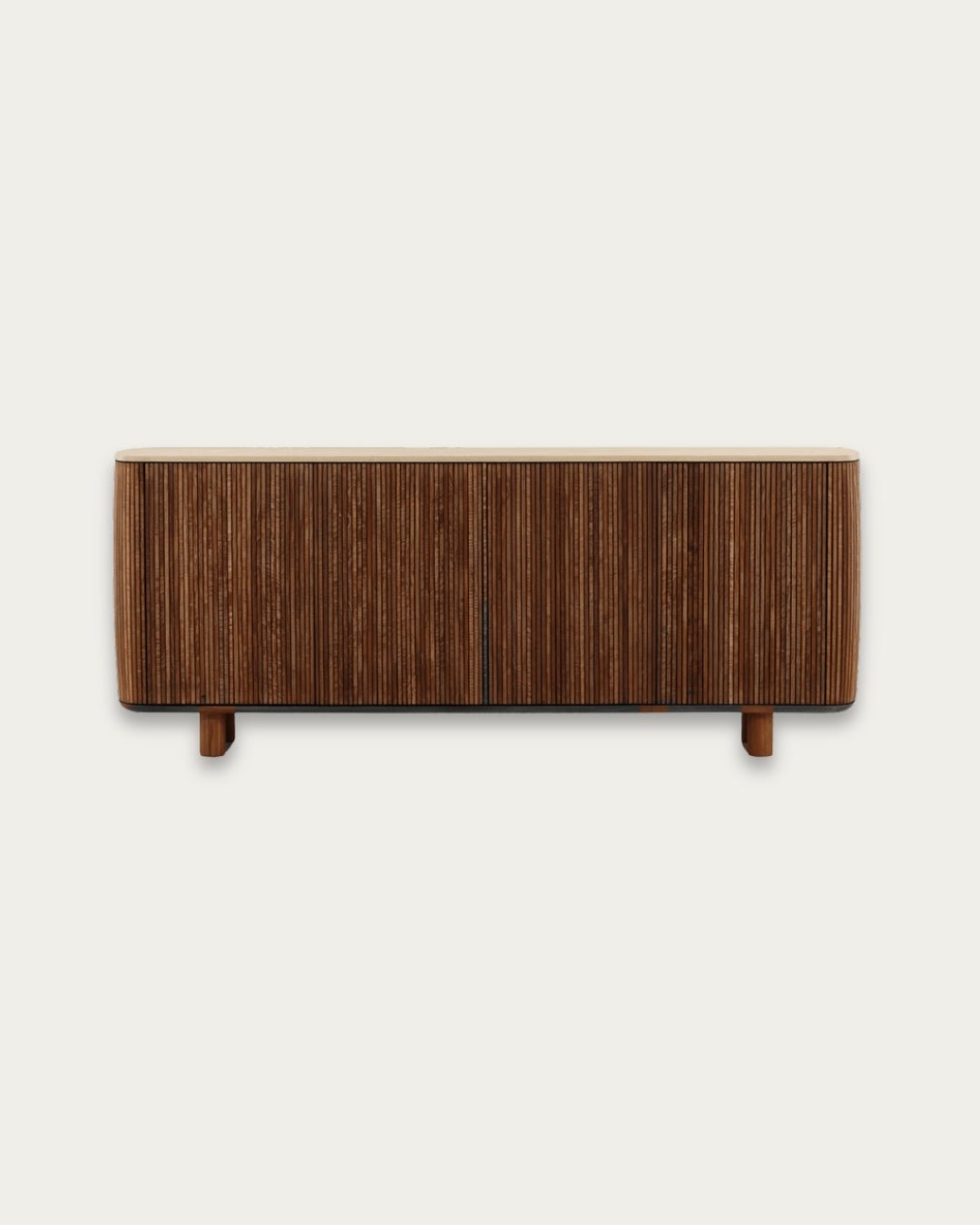
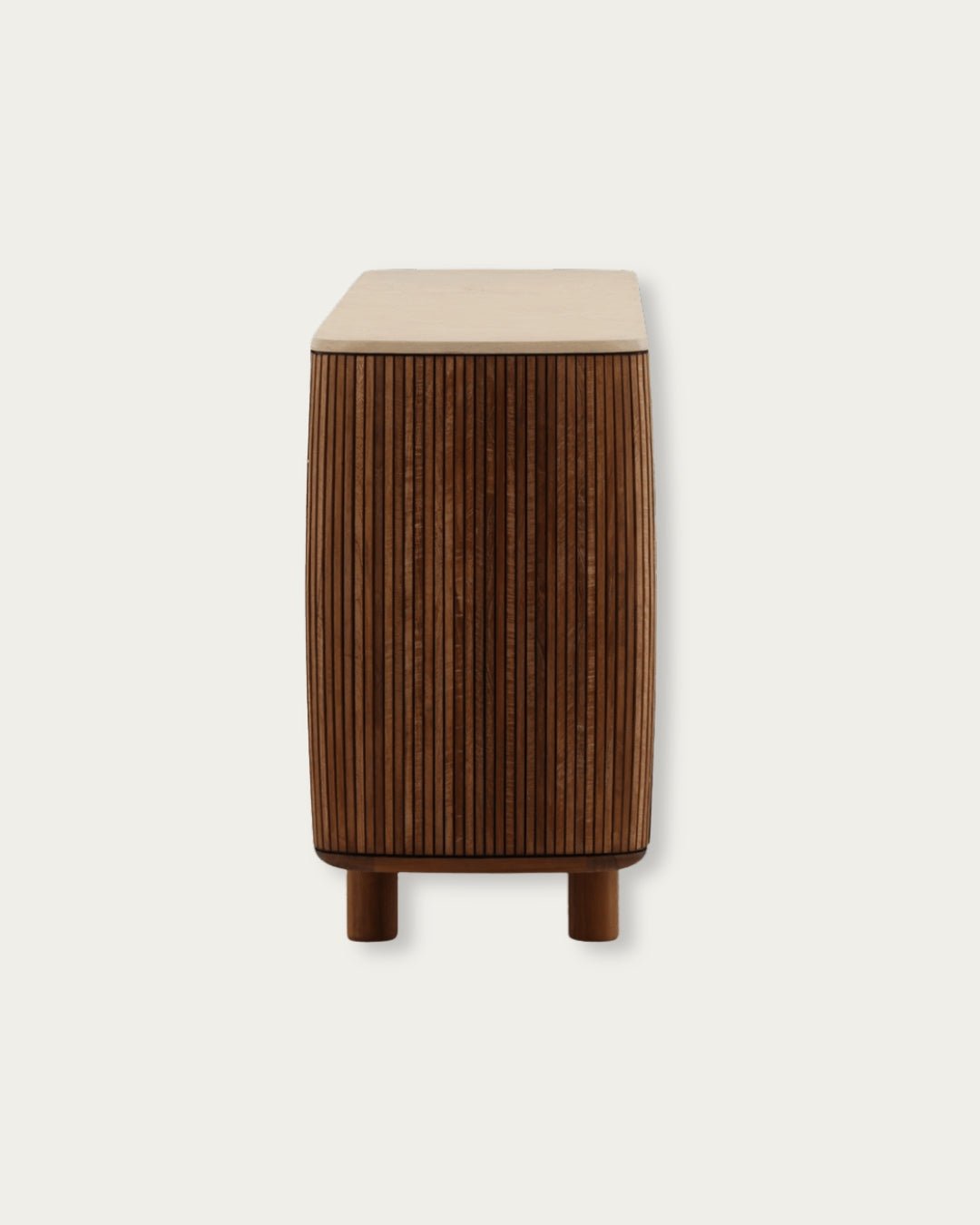
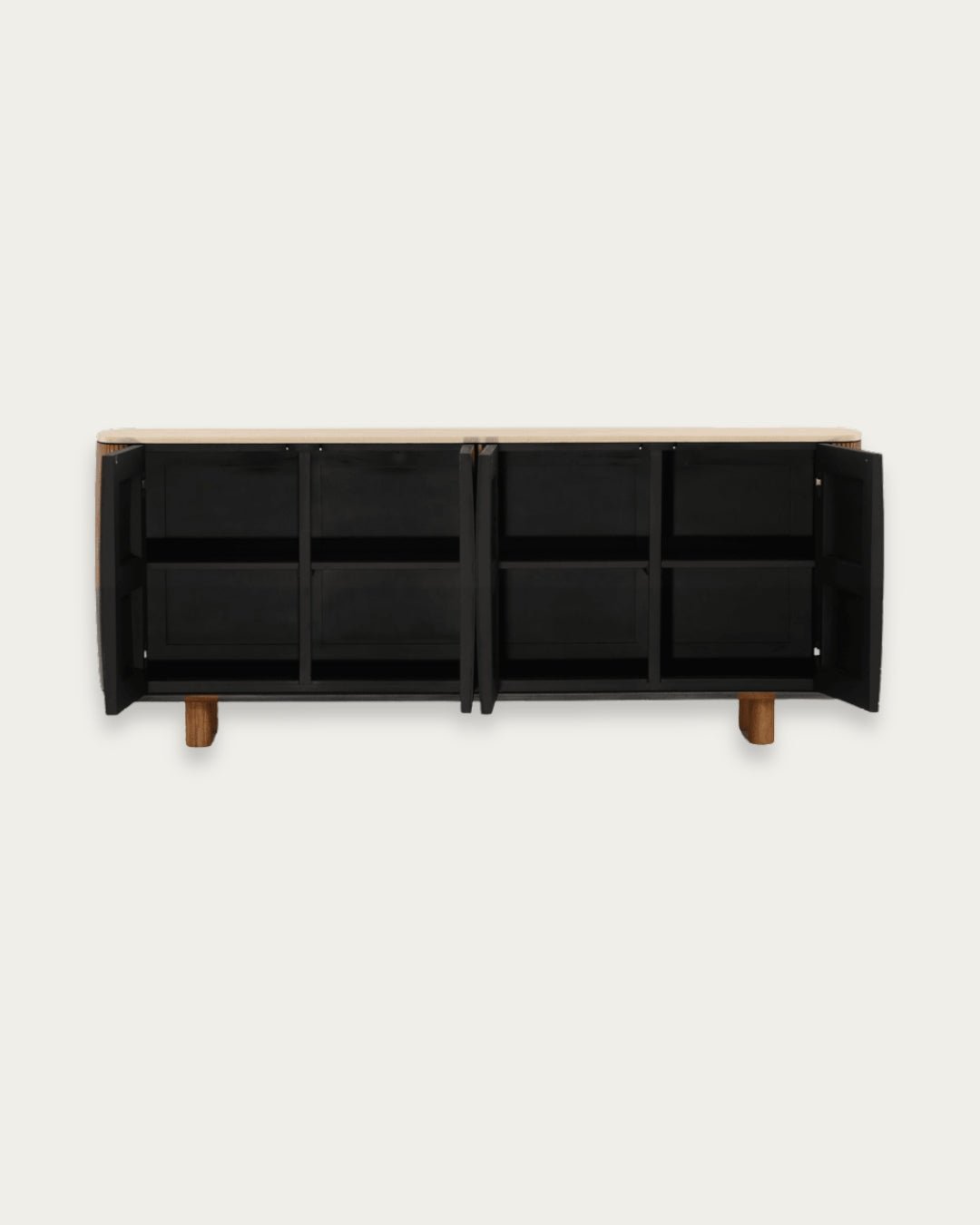
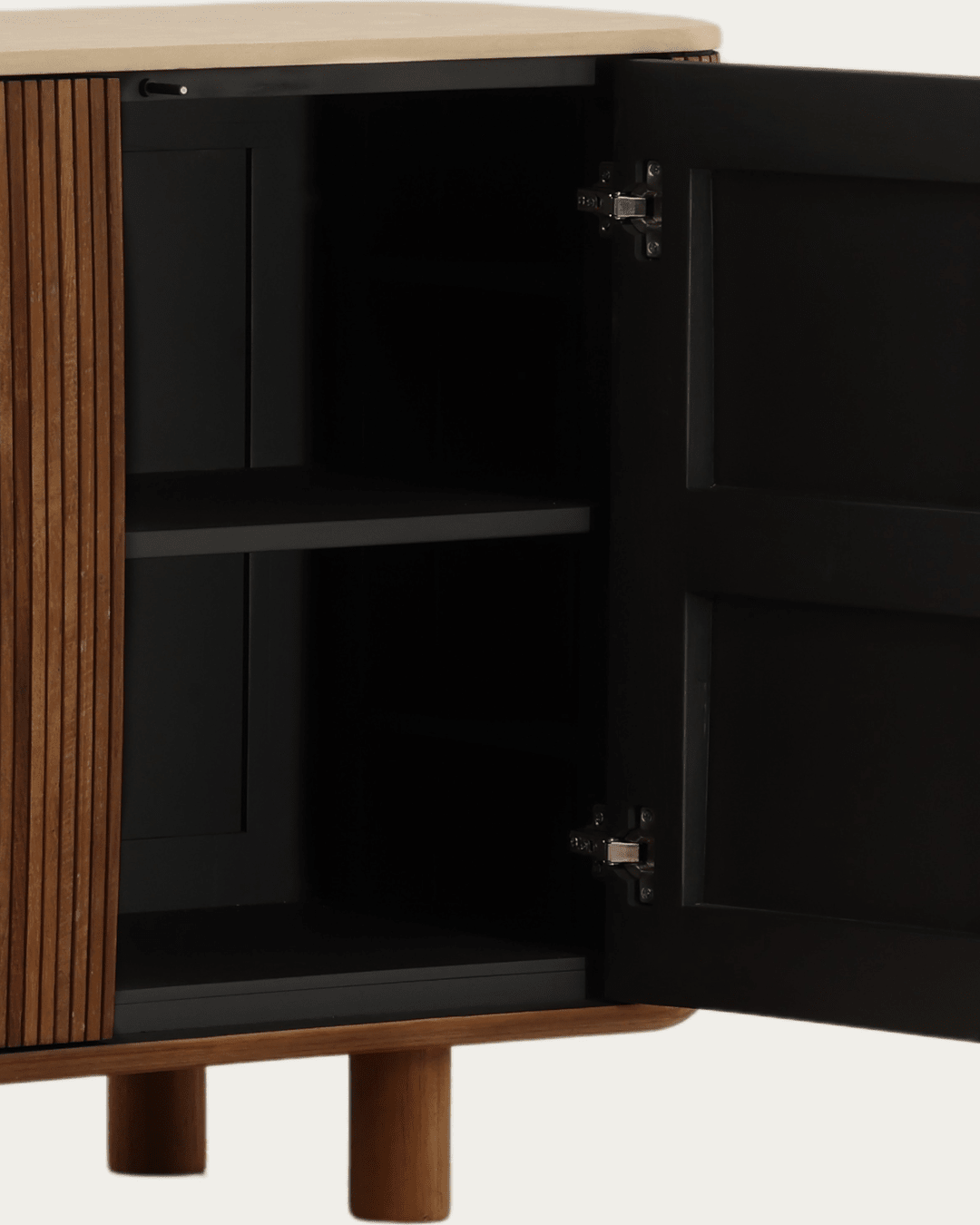
Closed cabinetry helps conceal visual interruptions and creates larger uninterrupted surfaces for the eye to rest on. Even the materiality of the storage matters. Heavier woods and softer finishes tend to regulate a room more effectively than glossy or highly reflective surfaces.
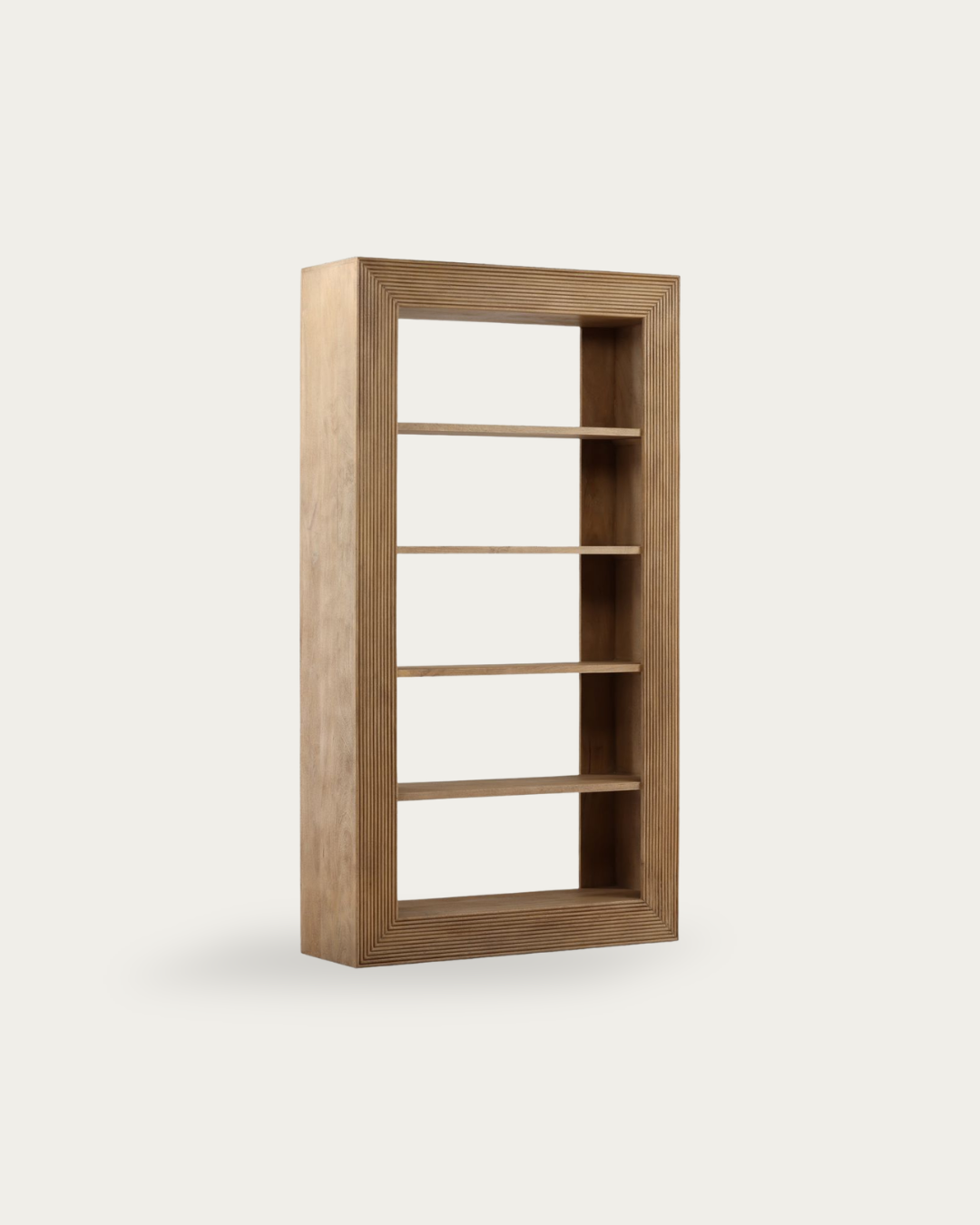
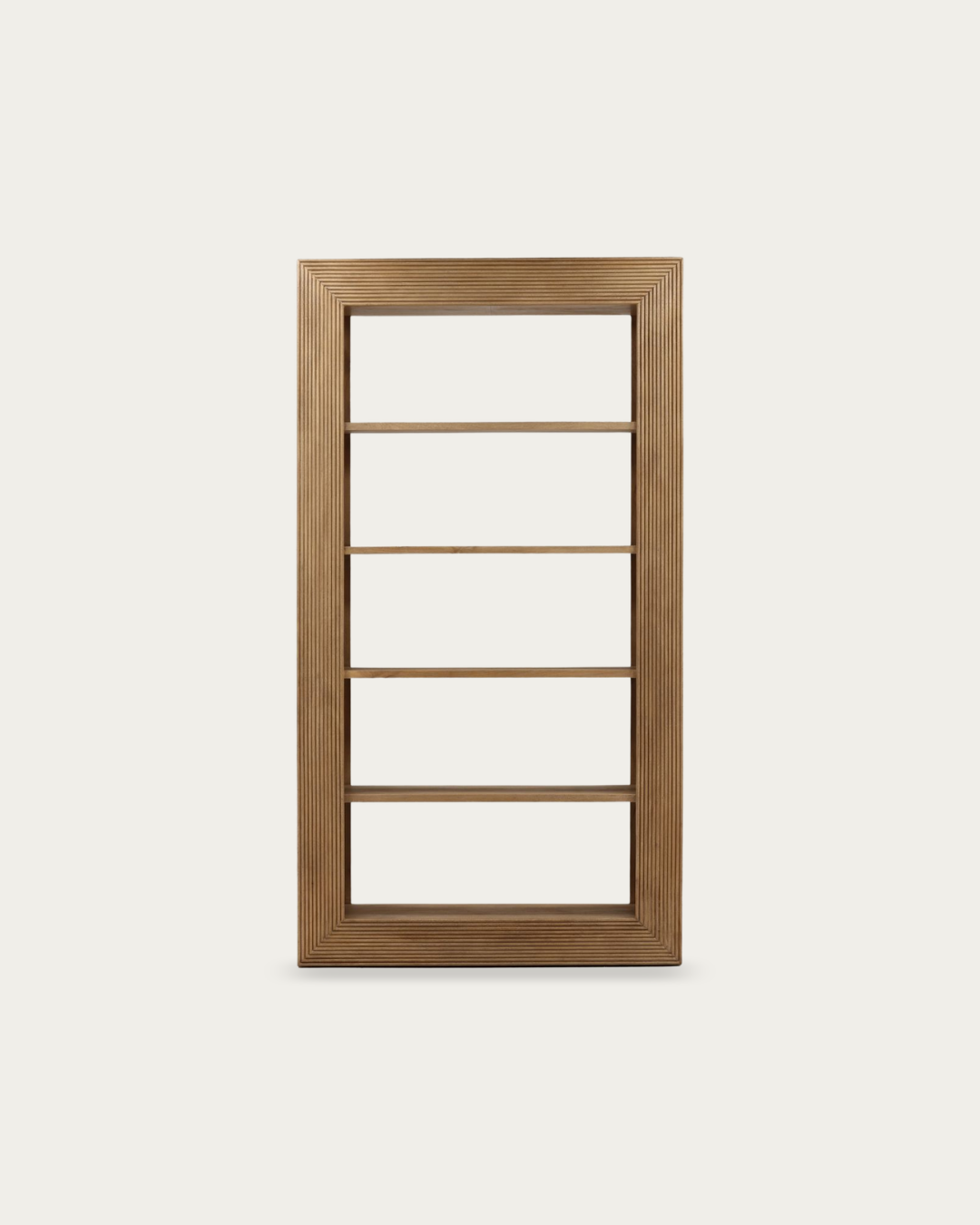
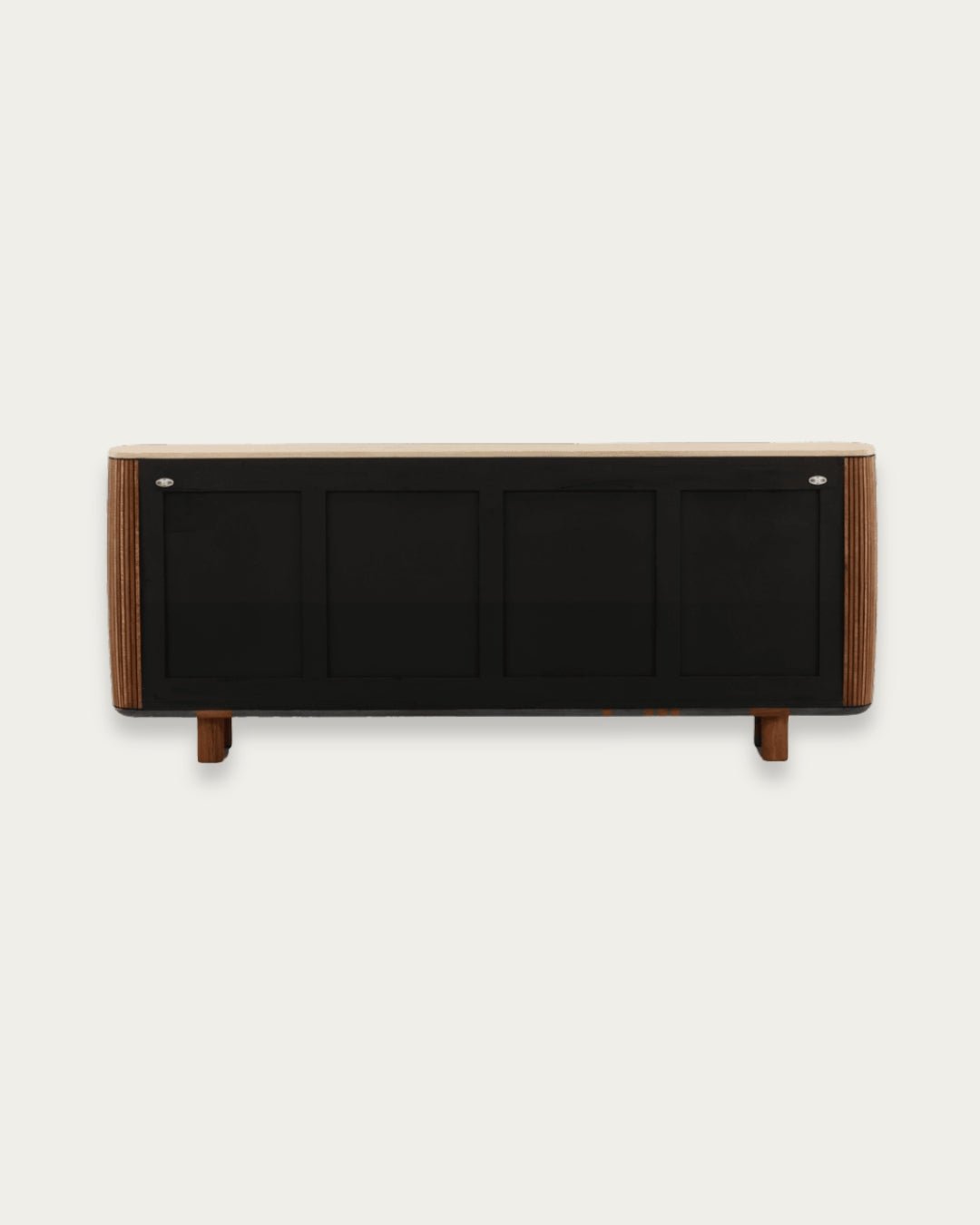
That’s why pieces from the Cabinets and storage collection often contribute more to a room’s emotional atmosphere than people initially expect.
The room starts feeling edited instead of constantly active.
Regulation Is Replacing Perfection in Design
The modern mountain home is becoming less about image and more about function on a nervous-system level.
People want homes that support decompression after constantly being overstimulated everywhere else.
That changes how interiors get designed.
Rooms are becoming:
lower contrast
more tactile
less performative
more grounded
more materially driven
less trend dependent
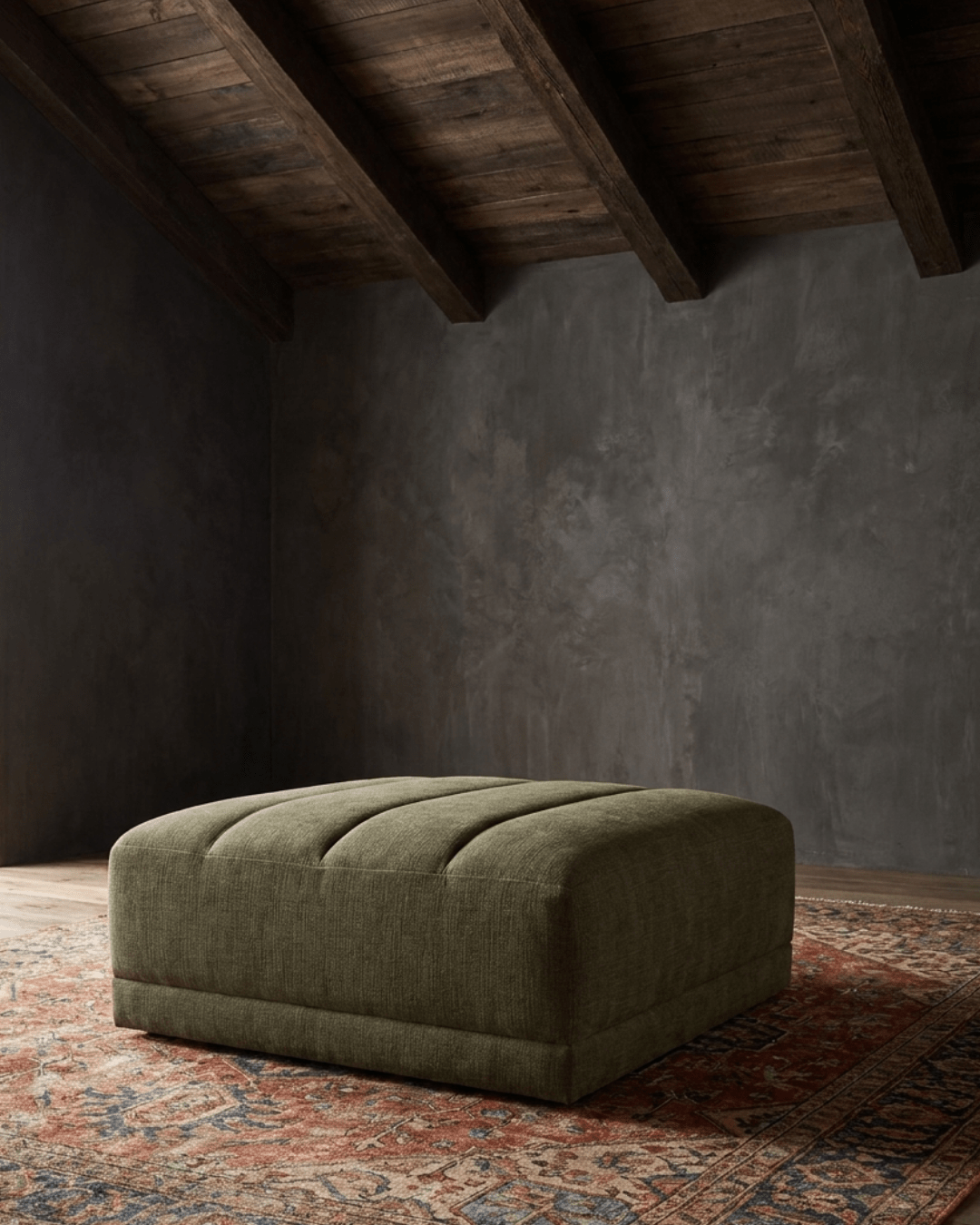
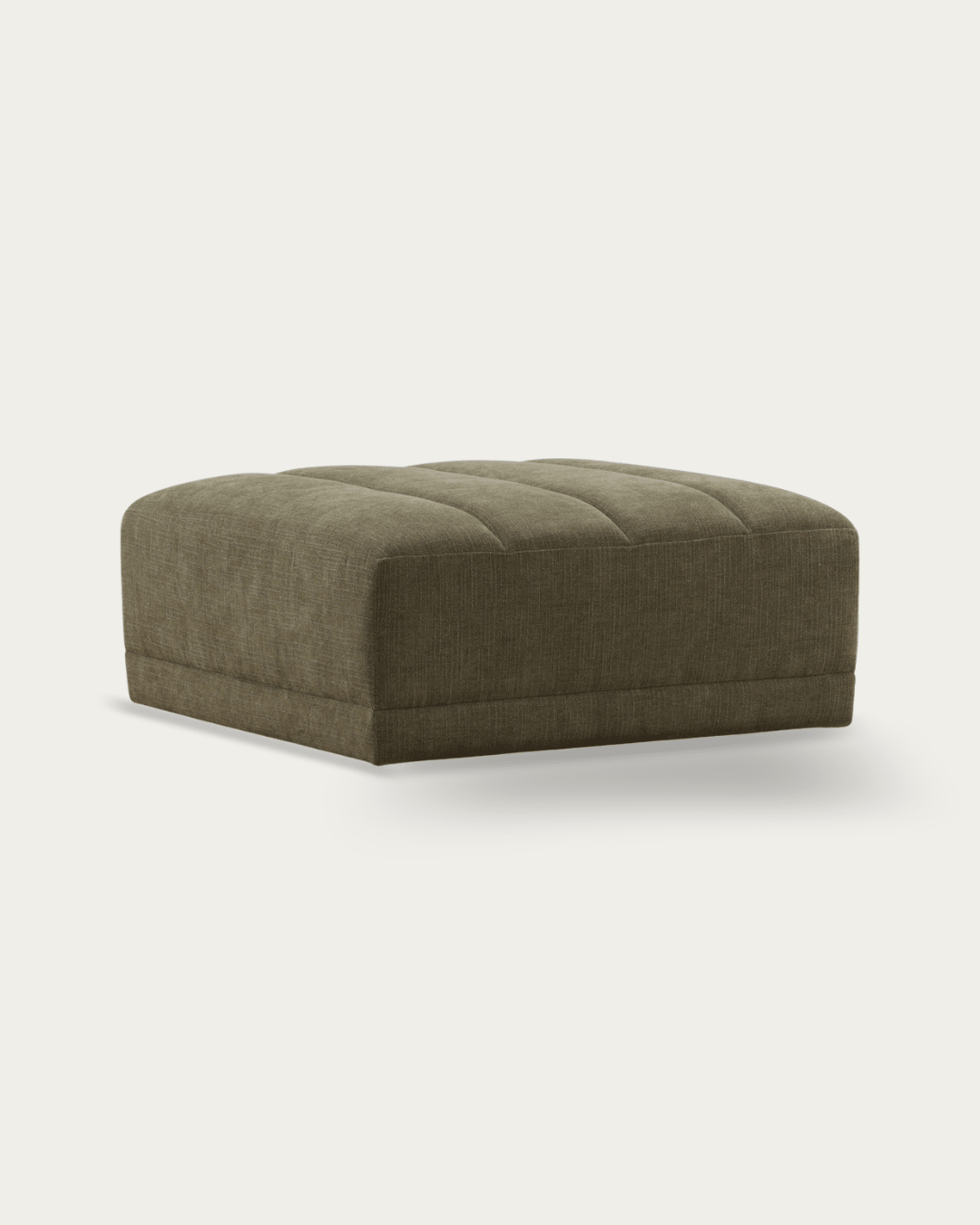
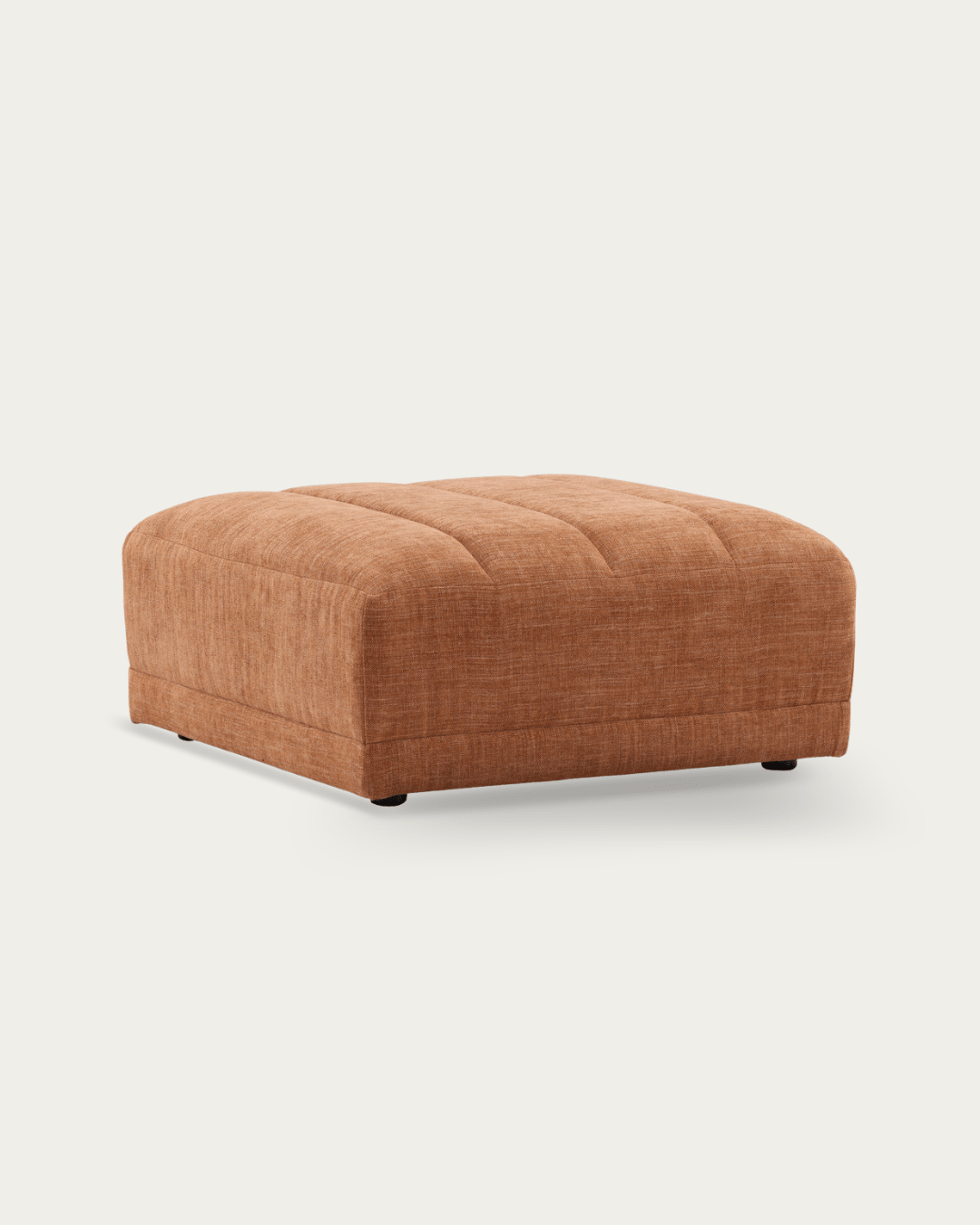
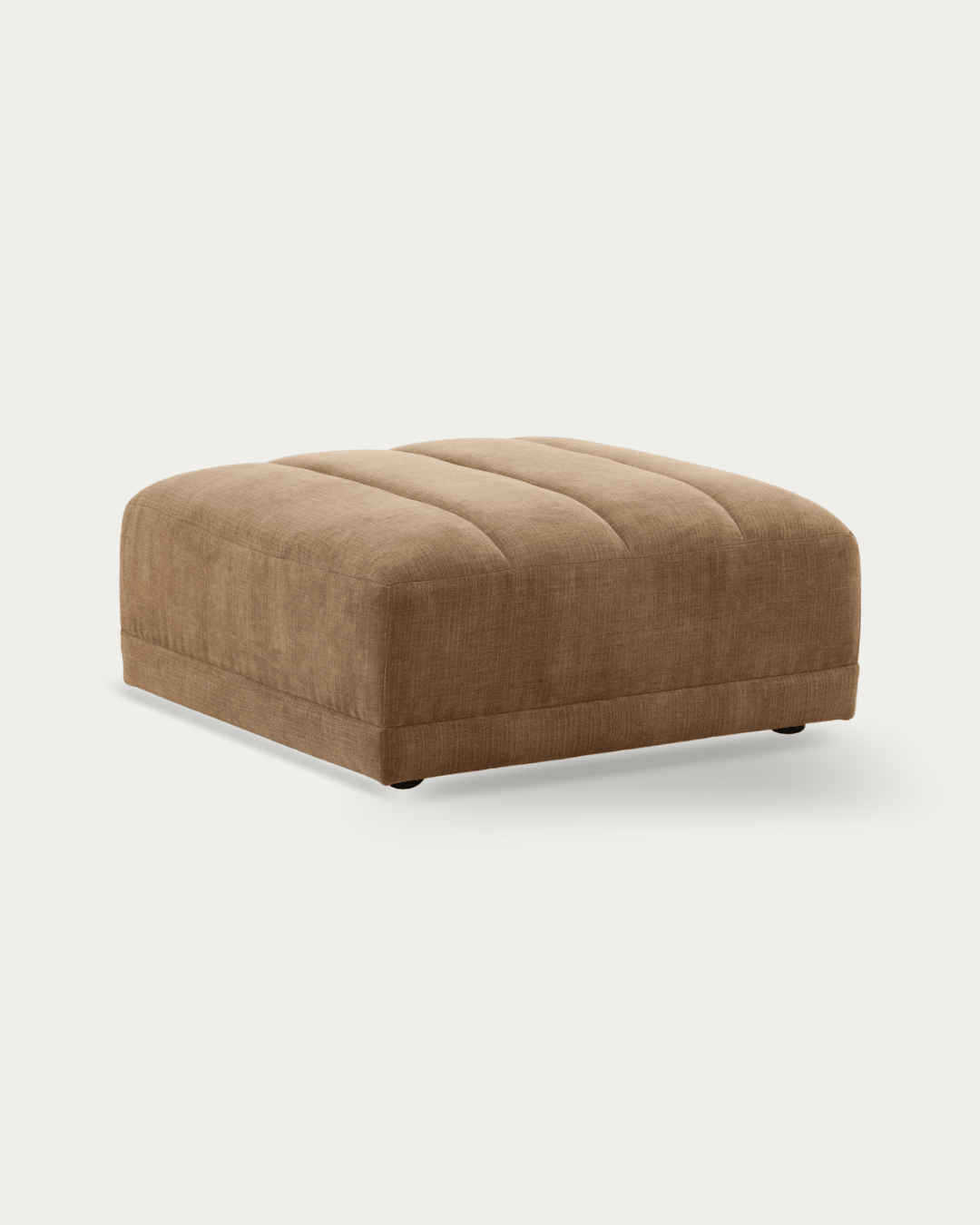
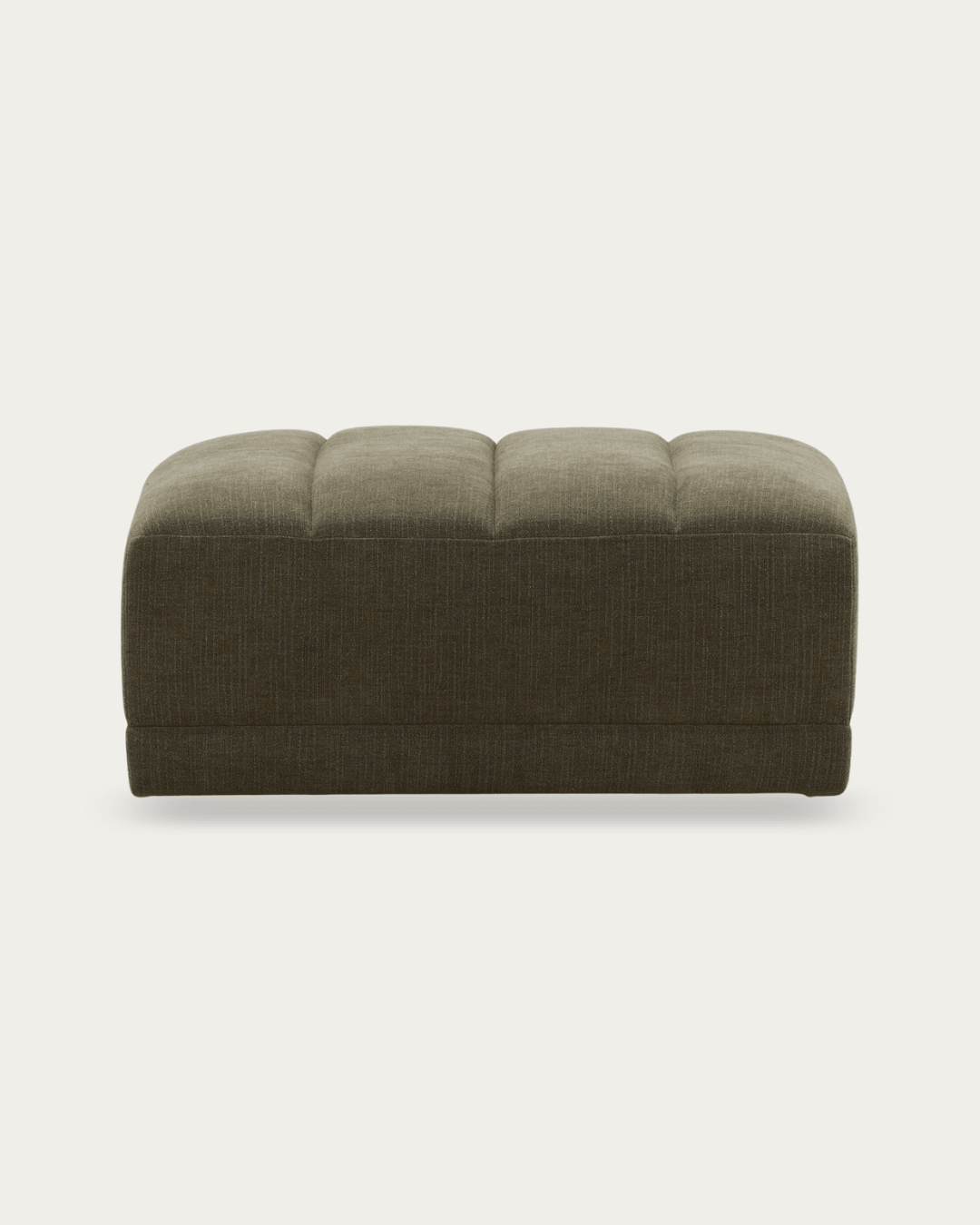
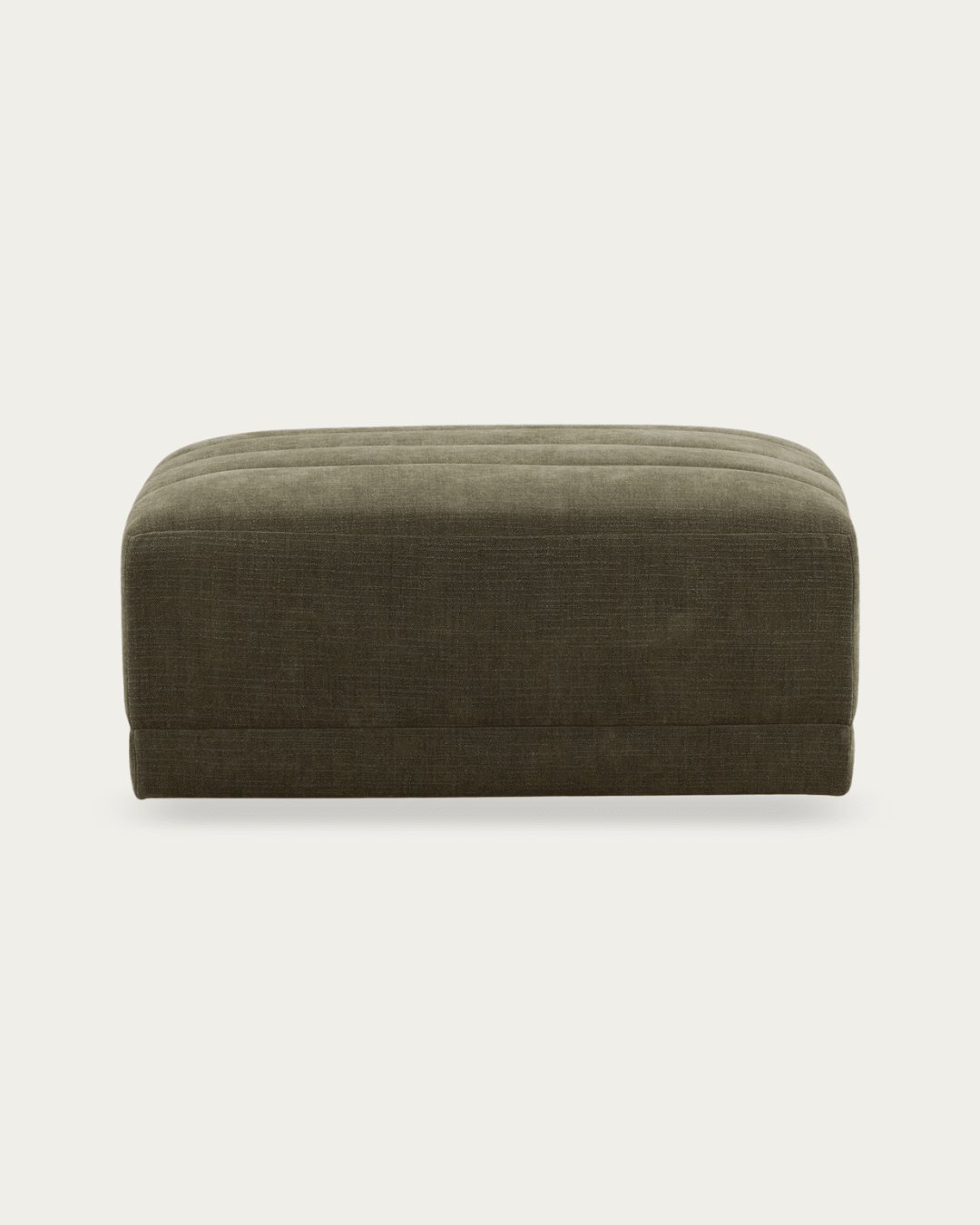
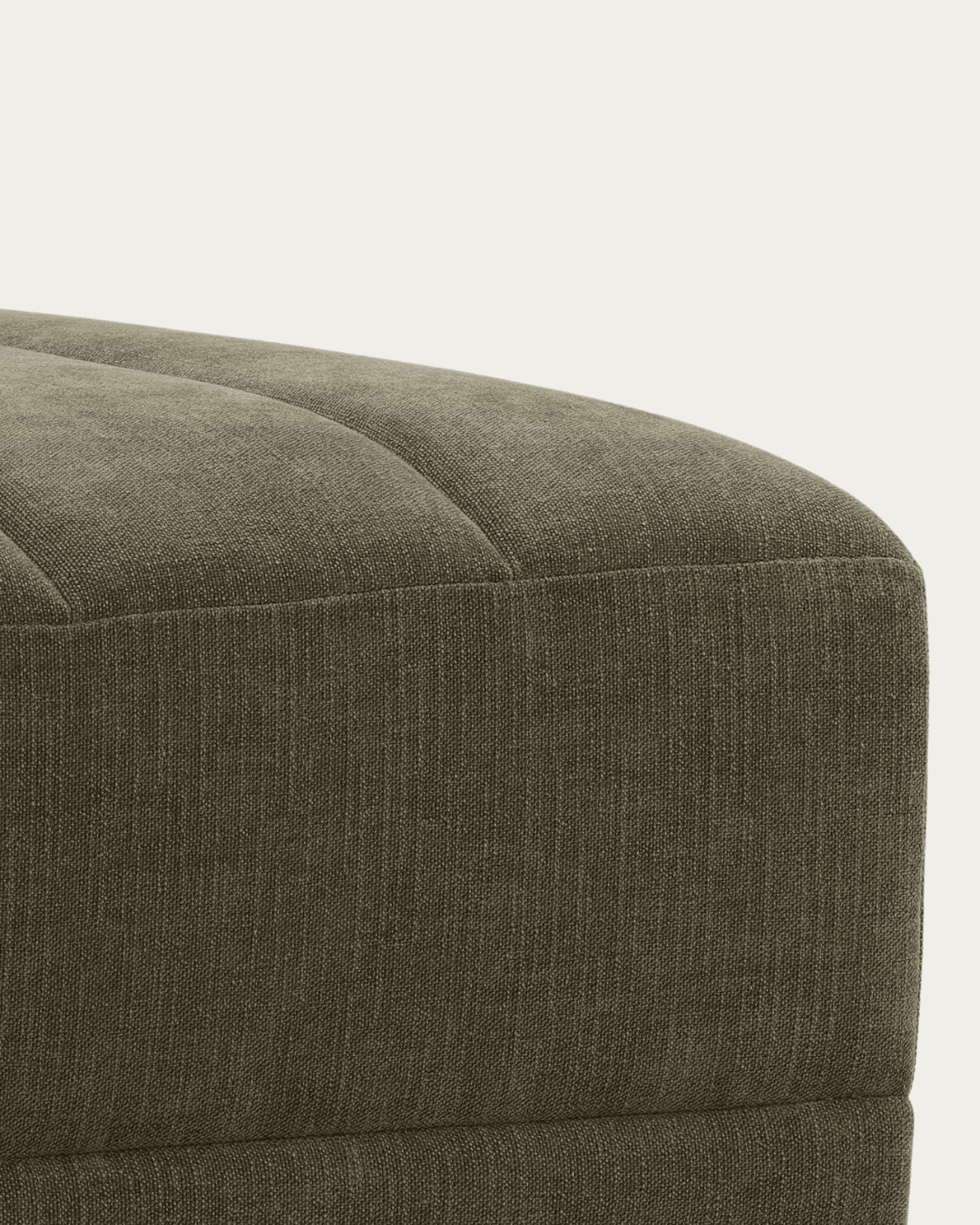
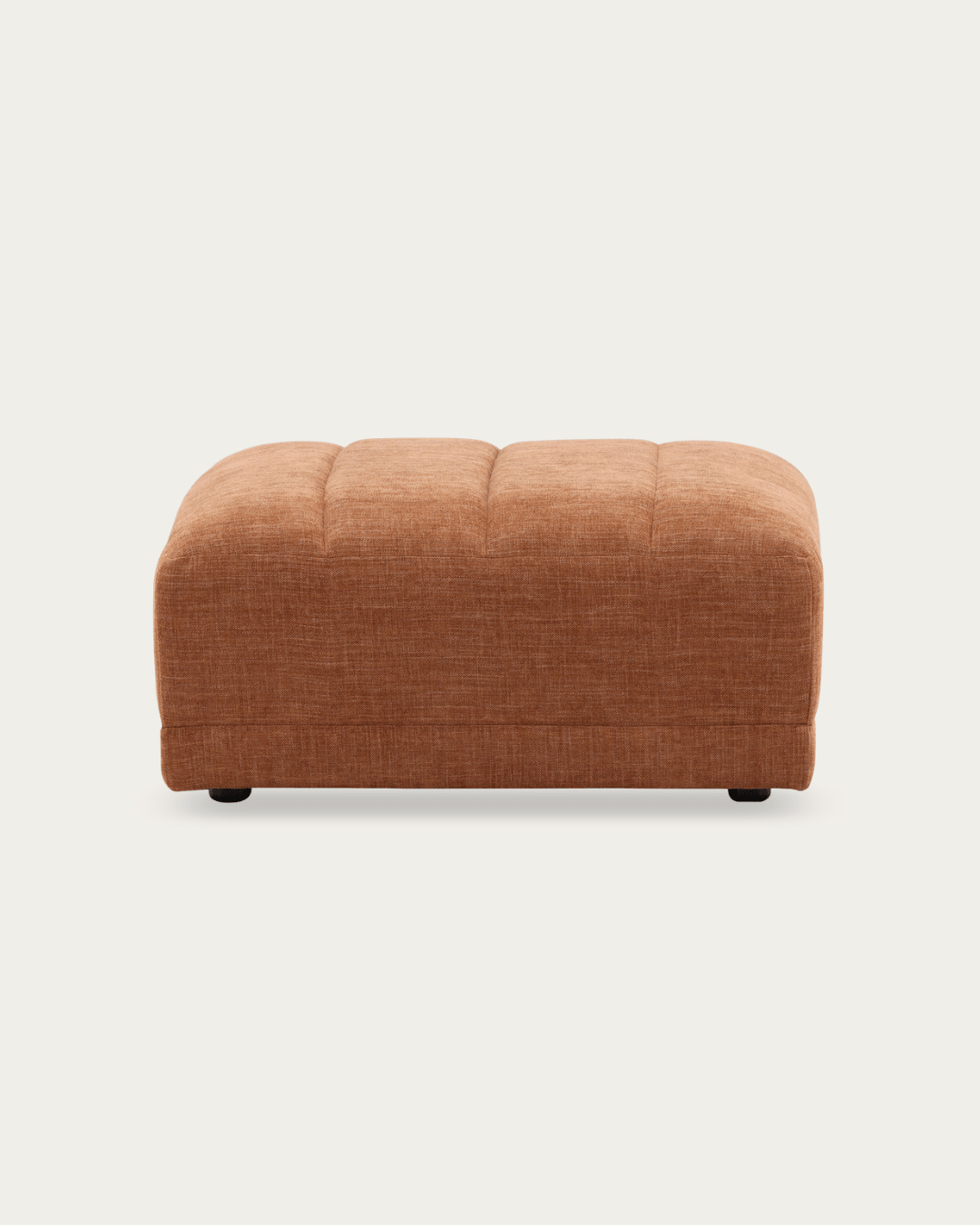
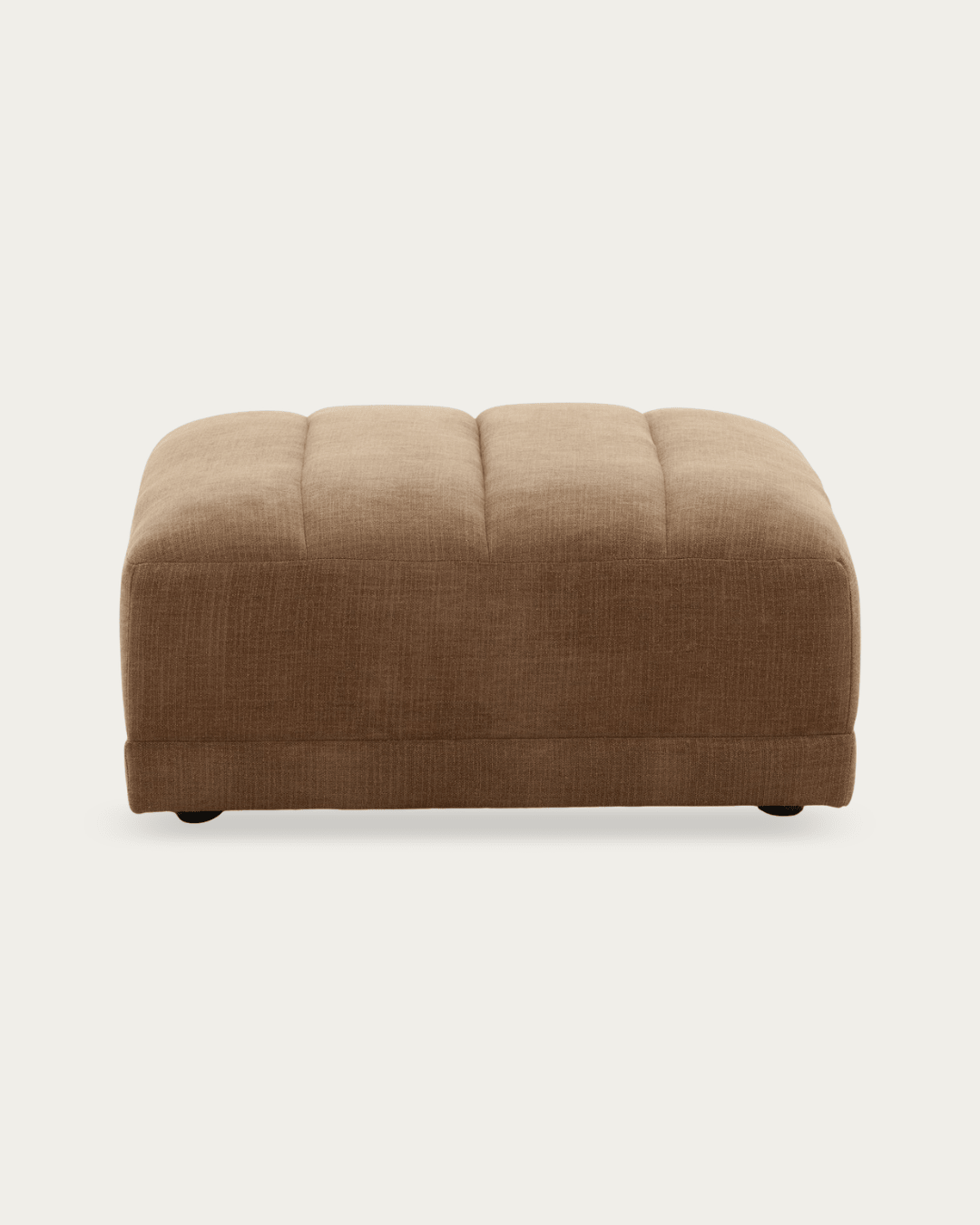
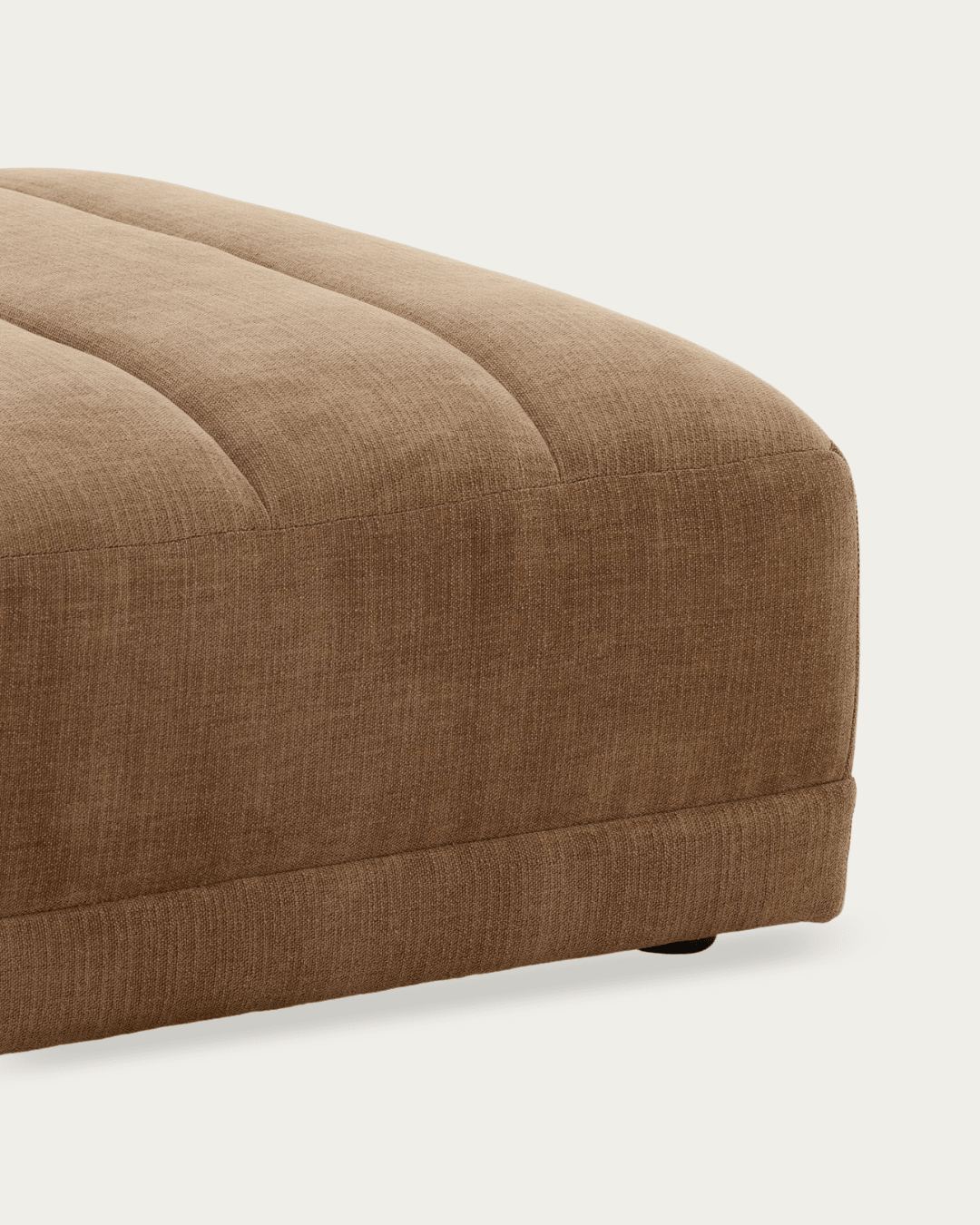
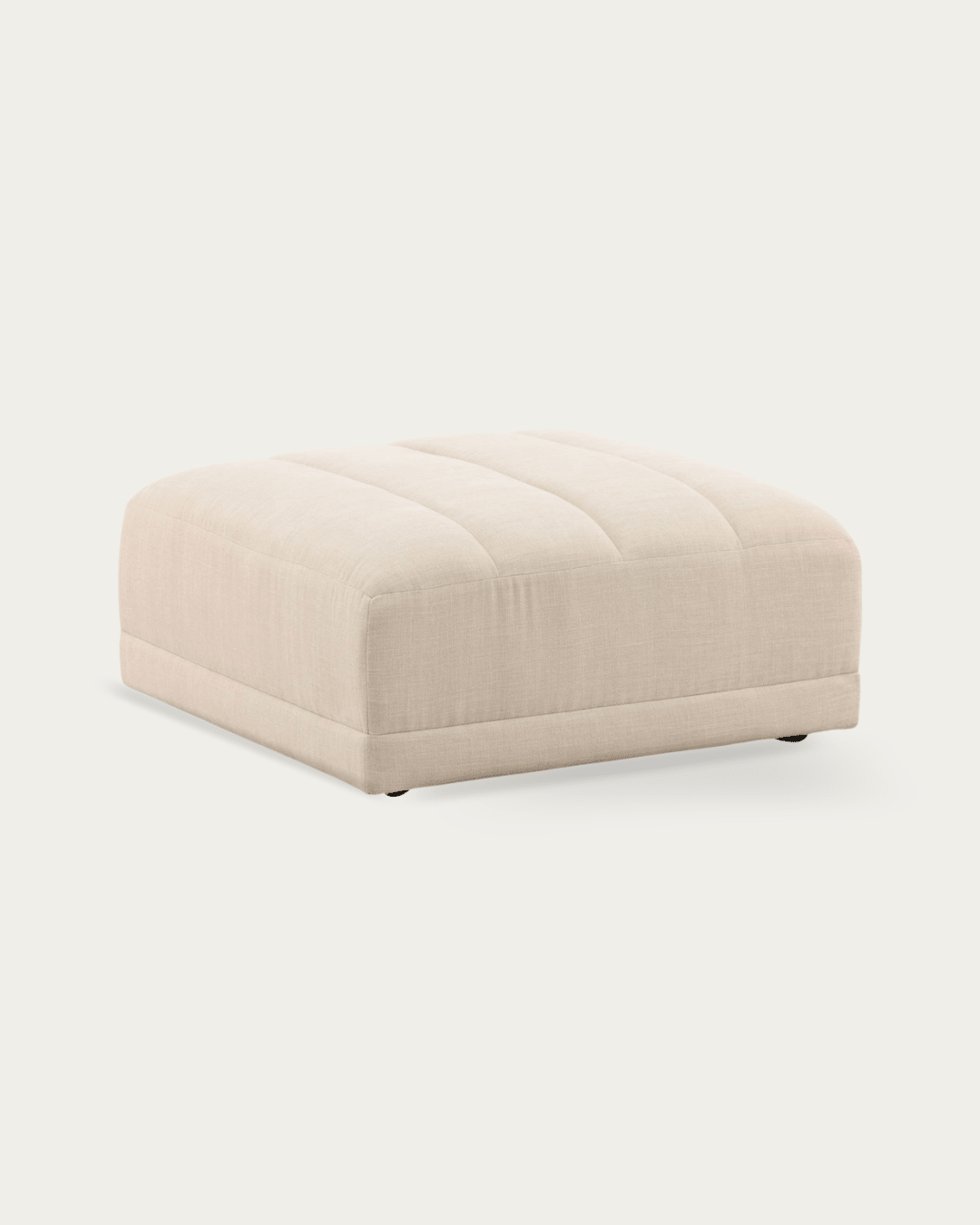
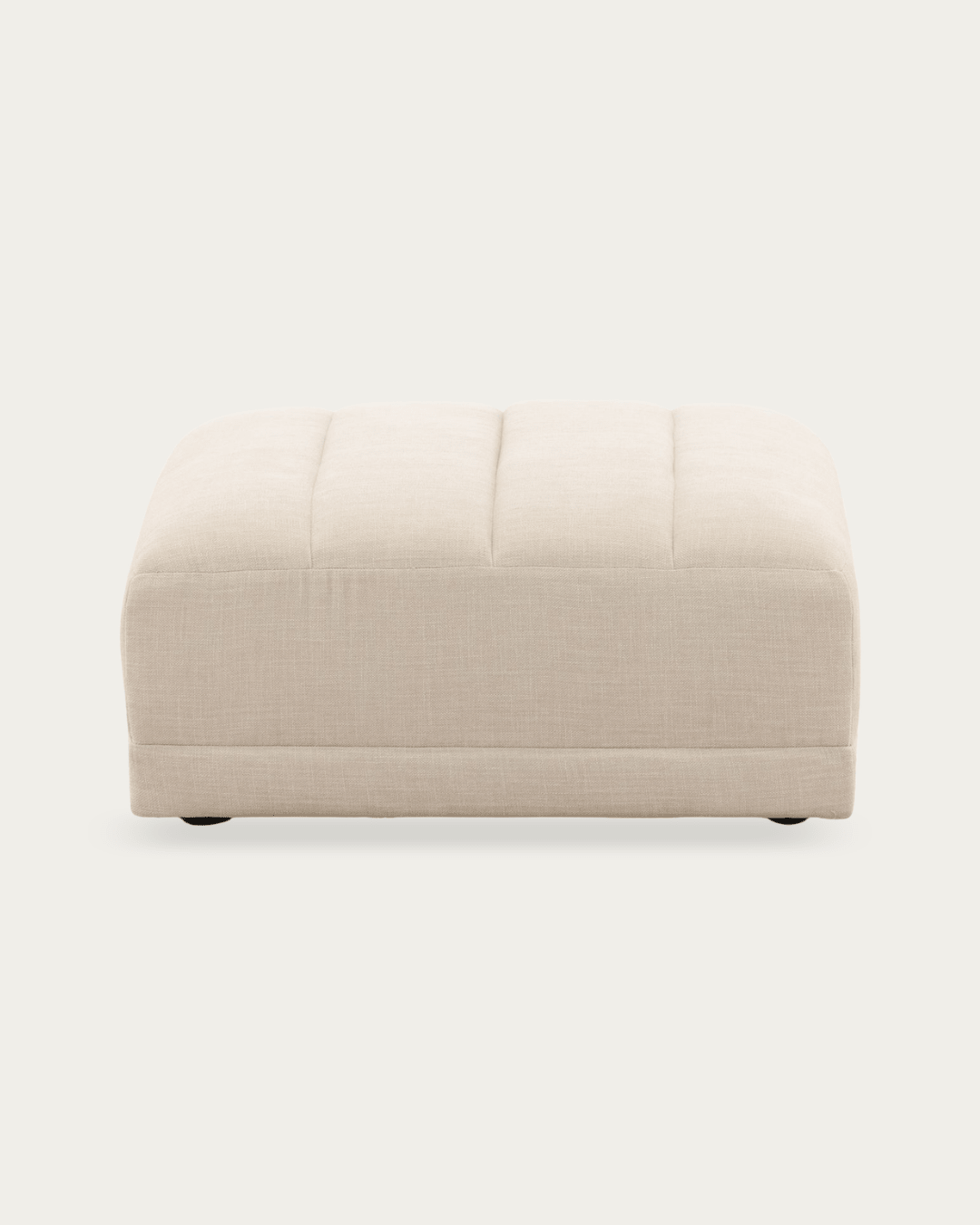
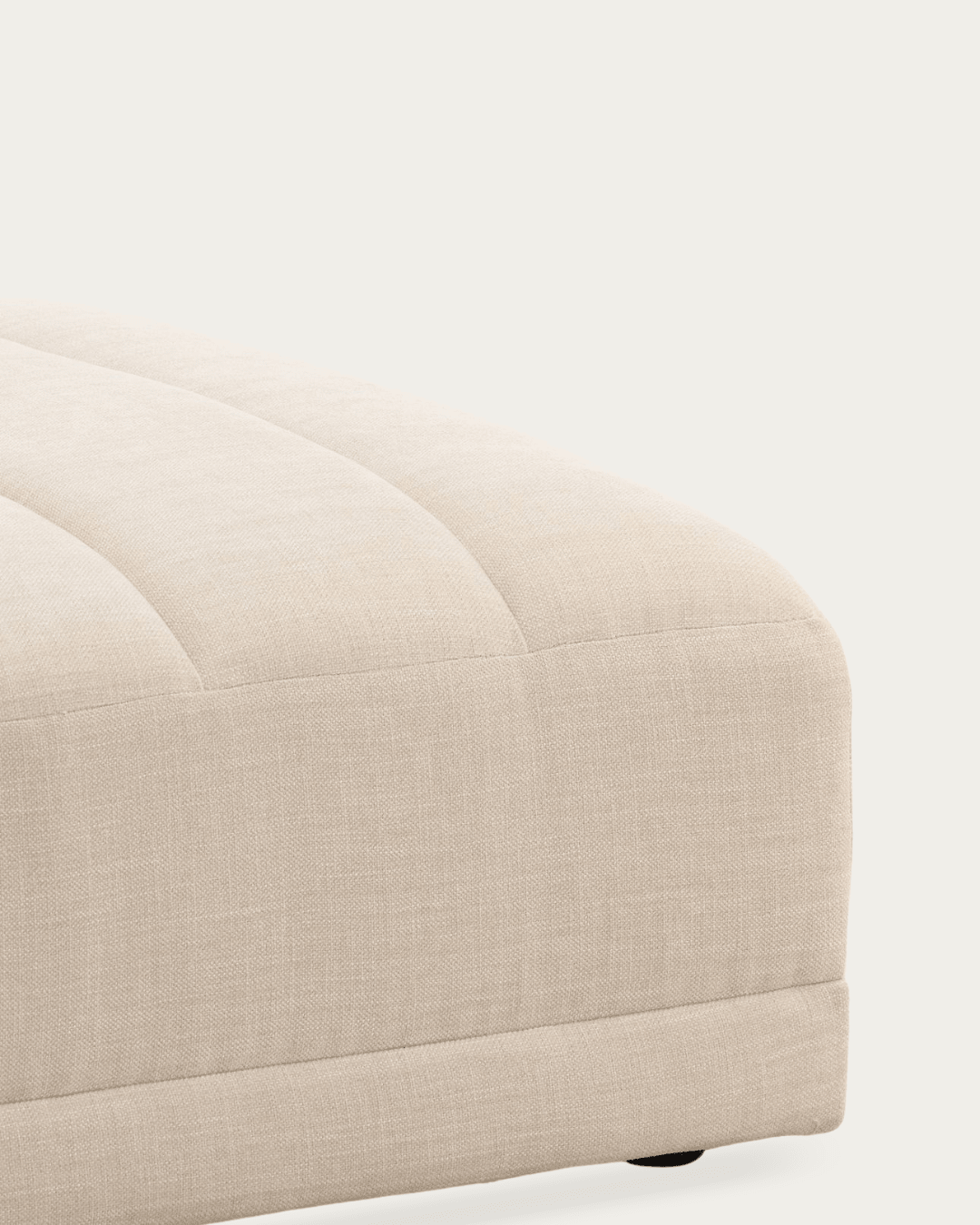
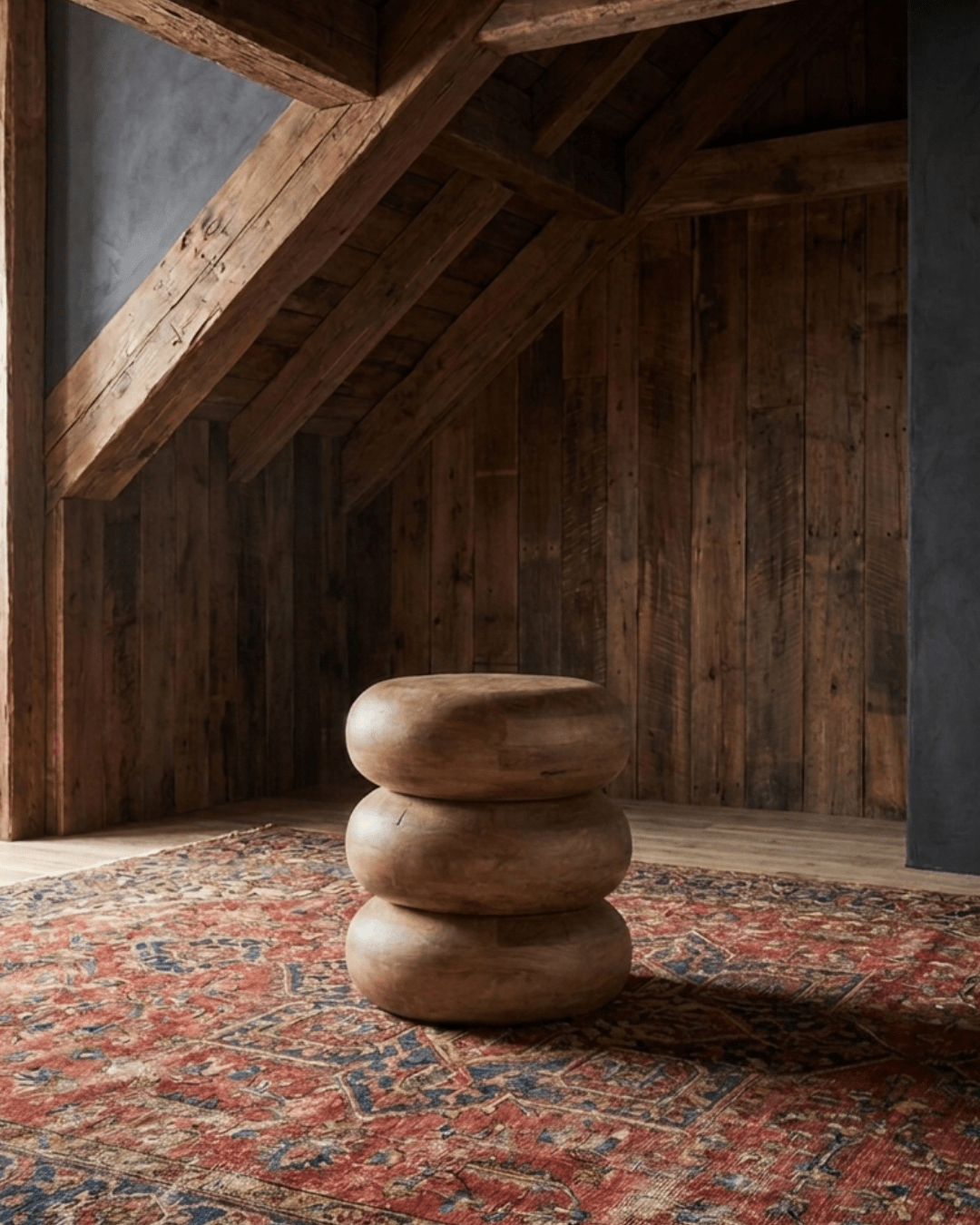
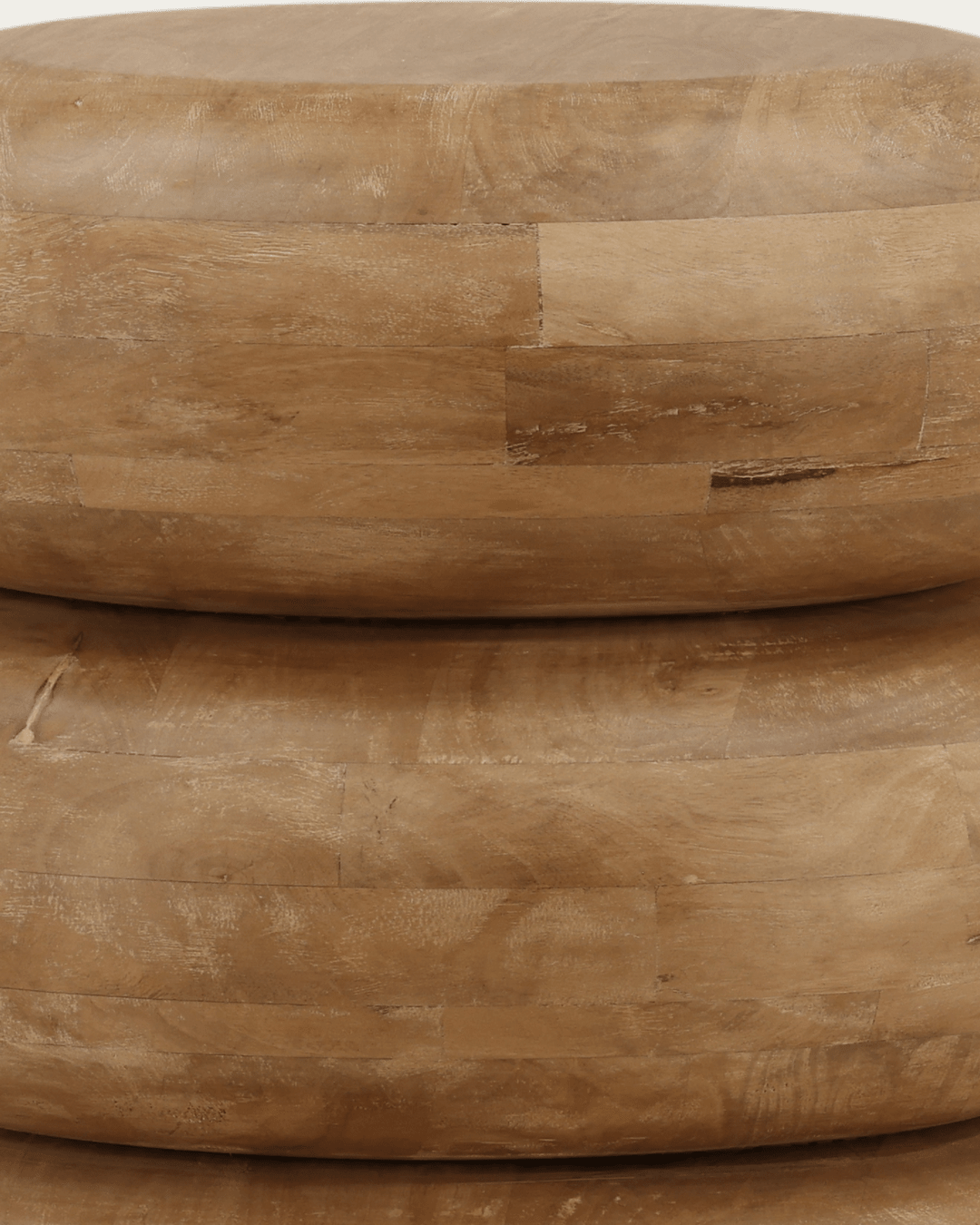
Even smaller pieces are shifting in purpose. Stools and poufs aren’t just decorative fillers anymore. They soften layouts, lower visual rigidity, and create more casual movement throughout a room.
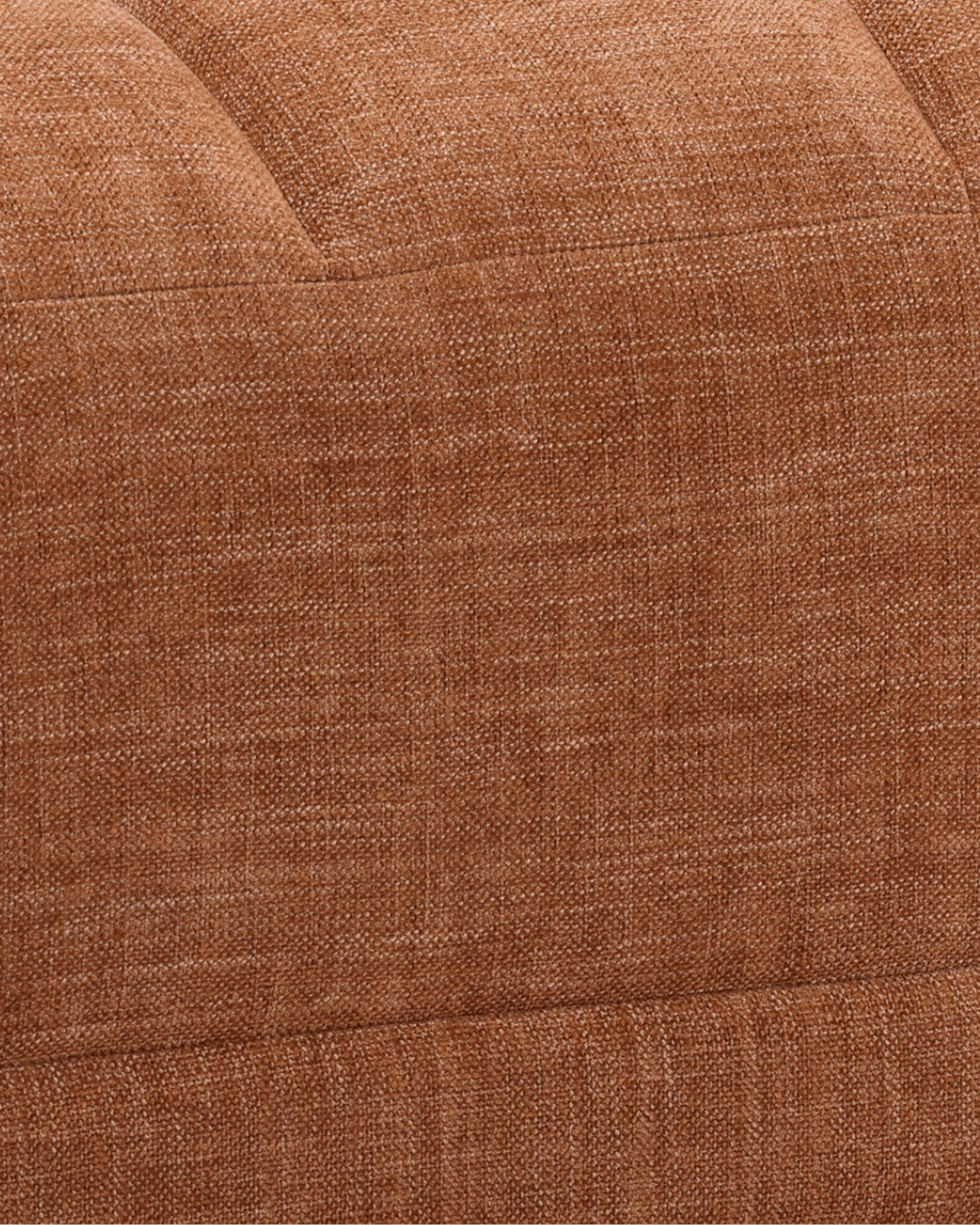
A textured piece from the Stools and poufs collection can completely change how formal or relaxed a seating arrangement feels without adding more visual chaos.
The newer version of mountain design understands something older versions often missed:
A home should support the body, not just impress visitors.
The Rooms That Feel Best Usually Feel the Quietest
The most regulating spaces rarely rely on dramatic styling tricks.
They feel grounded because the materials carry enough depth on their own. The furniture feels connected to the architecture. The lighting softens instead of exposing everything equally. The room leaves enough breathing room for the nervous system to stop scanning constantly.
That’s the real shift happening inside the modern mountain home.
Less rustic performance.
Less visual noise.
Less decorating for approval.
More regulation.
More texture.
More weight.
More spaces designed for actual living.
Explore more grounded furniture, layered materials, and modern mountain-inspired pieces throughout the Living room collection and create a home that feels slower to exist inside — not just better to photograph.