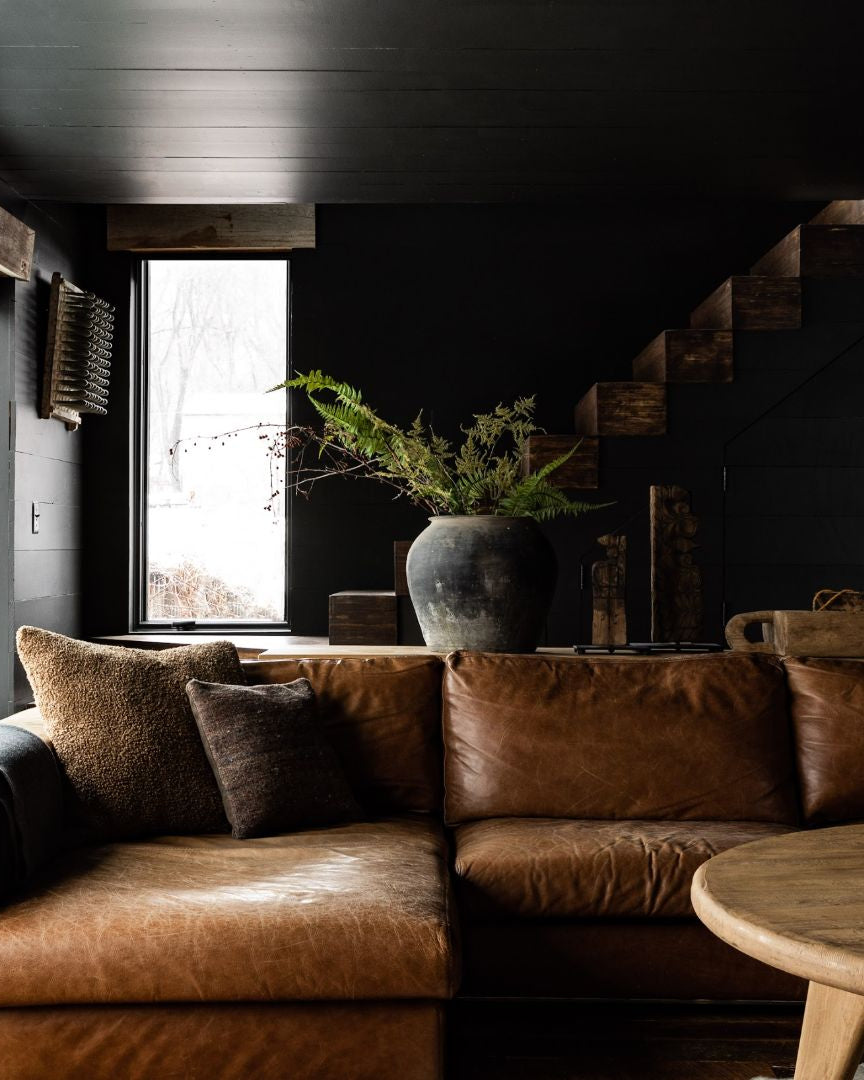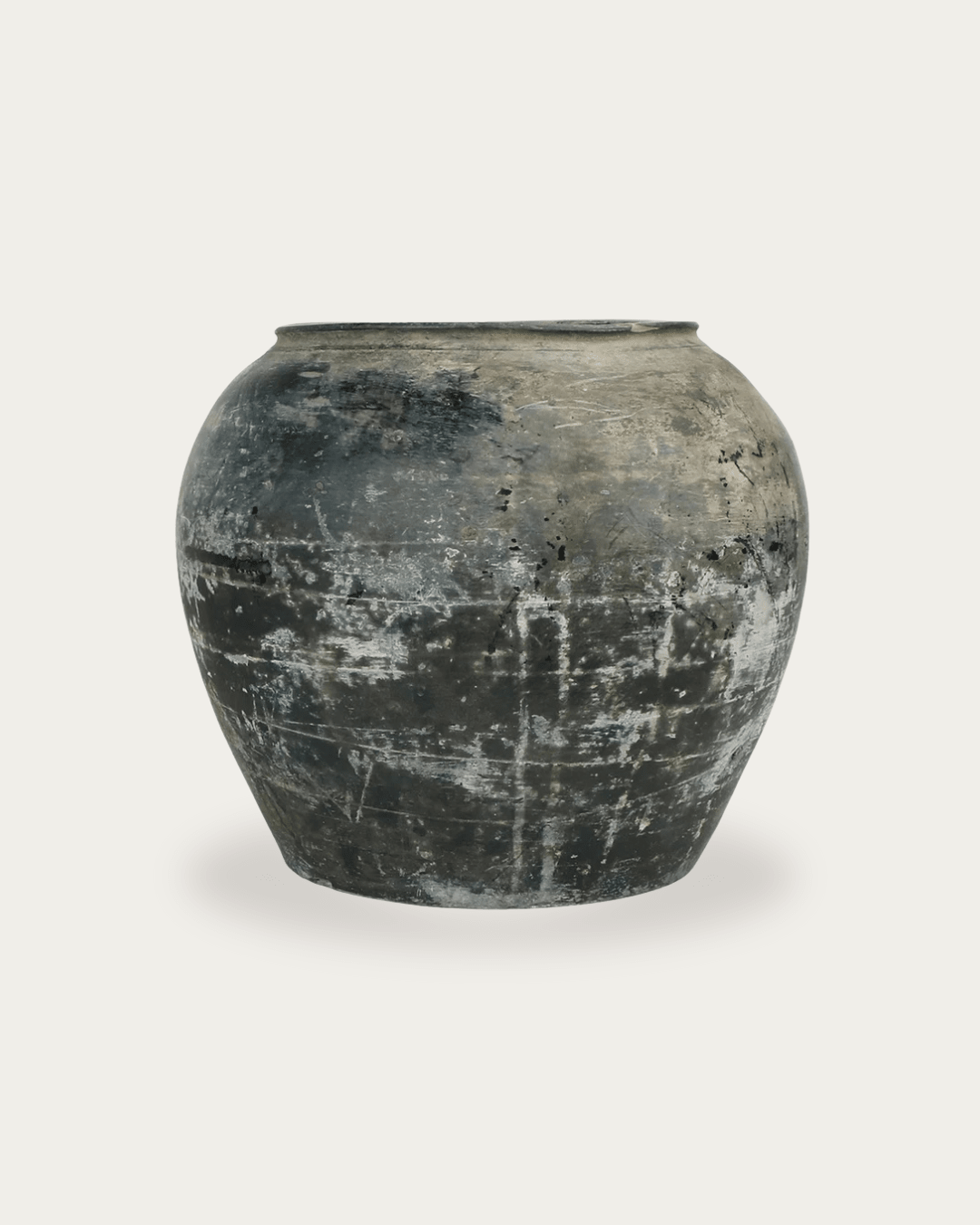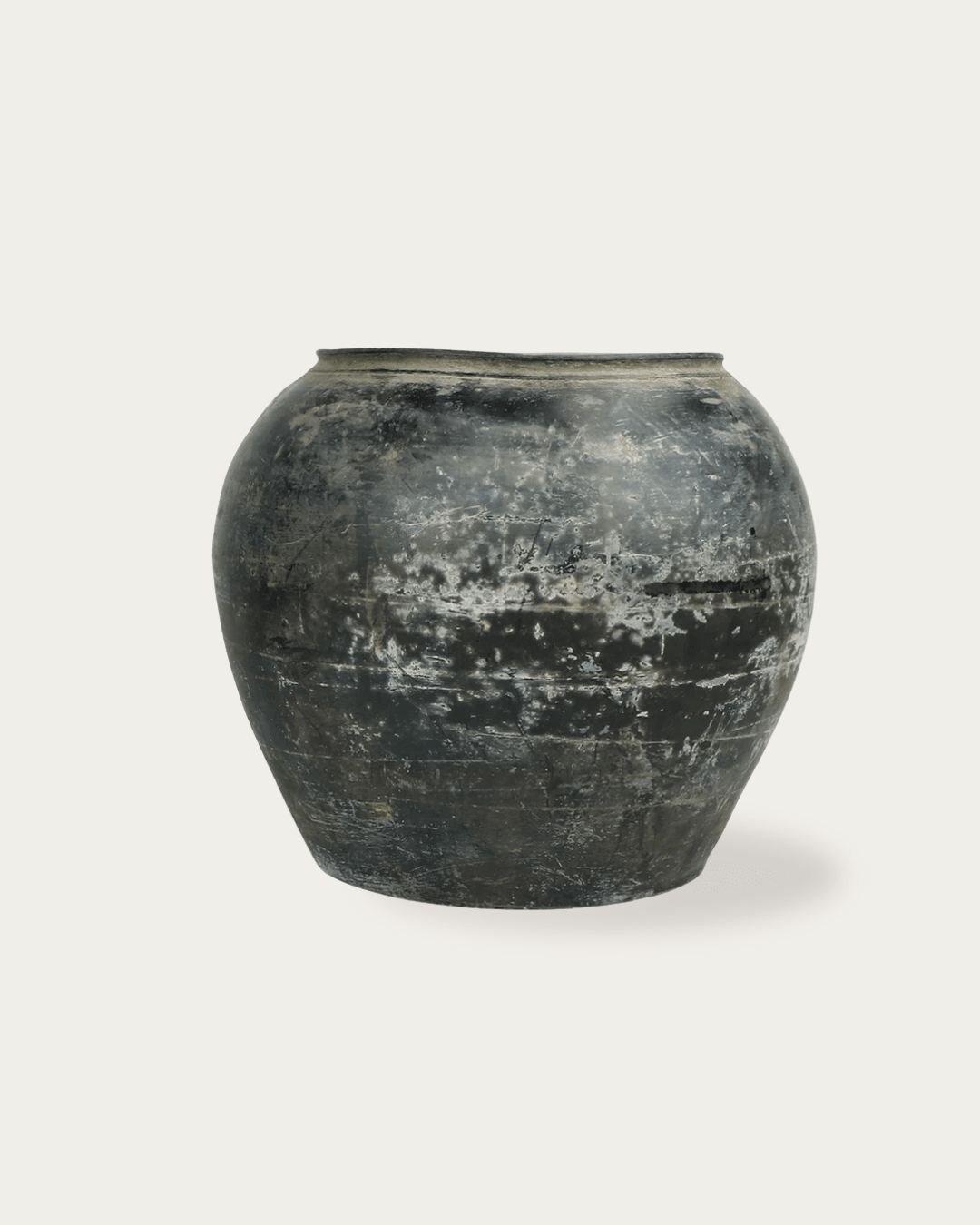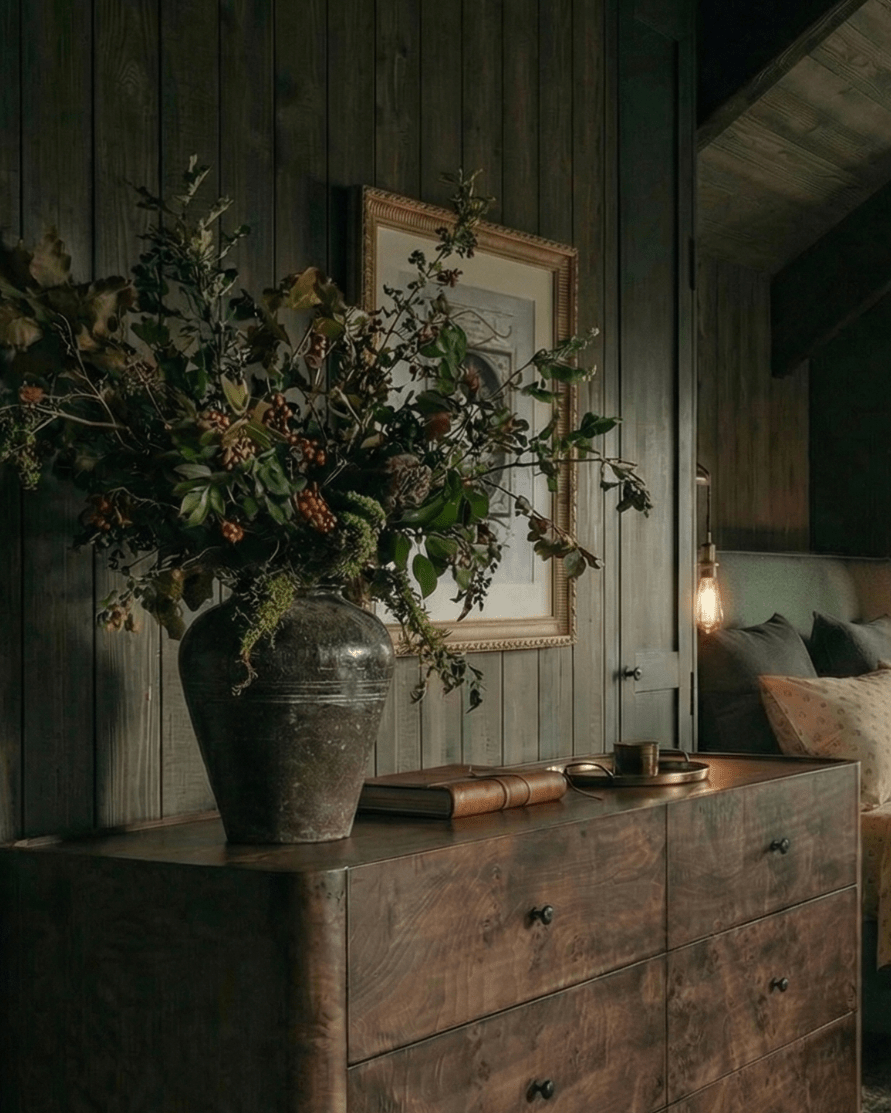







What Deserves to Be Seen? 5 Rules for Styling Vintage Shelves
|
|
The bowl you brought home from a trip and the router you need for work may share a shelf. They probably shouldn’t share top billing. Vintage storage gives you somewhere to put things, but styling begins with deciding which belongings deserve a place in the room’s visible story. The rest still need a convenient home. Preferably one that doesn’t require moving a vase whenever the Wi-Fi acts up.
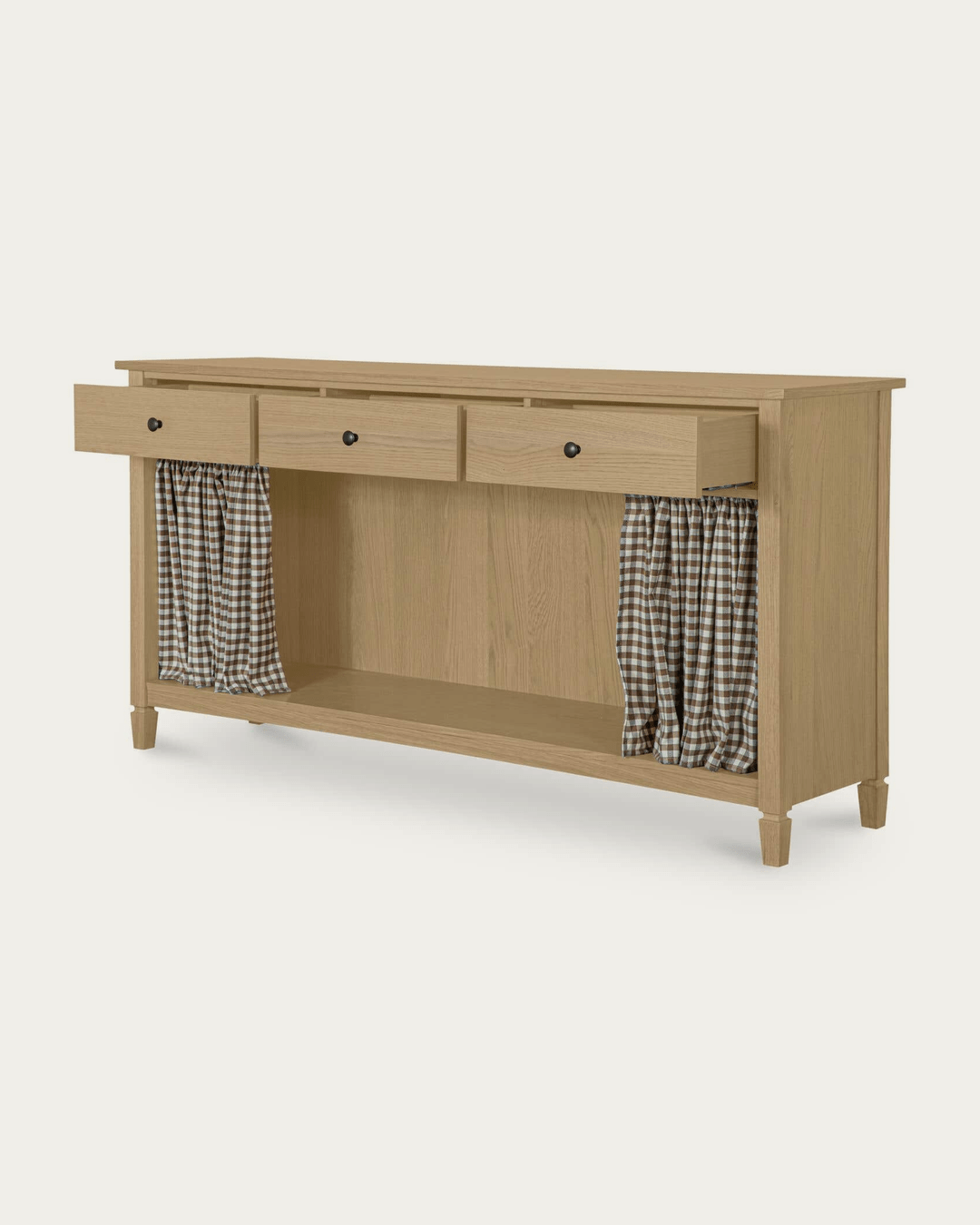
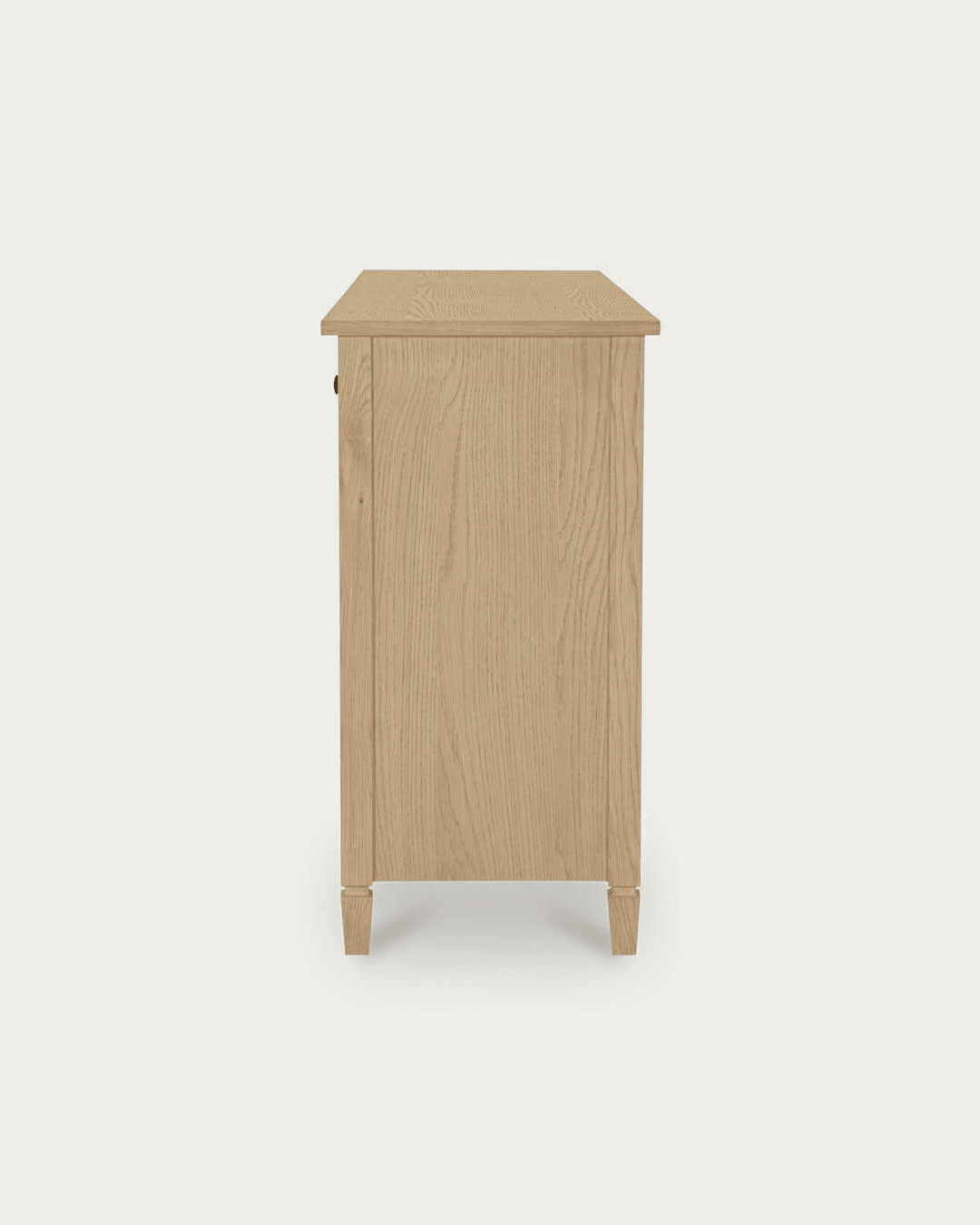
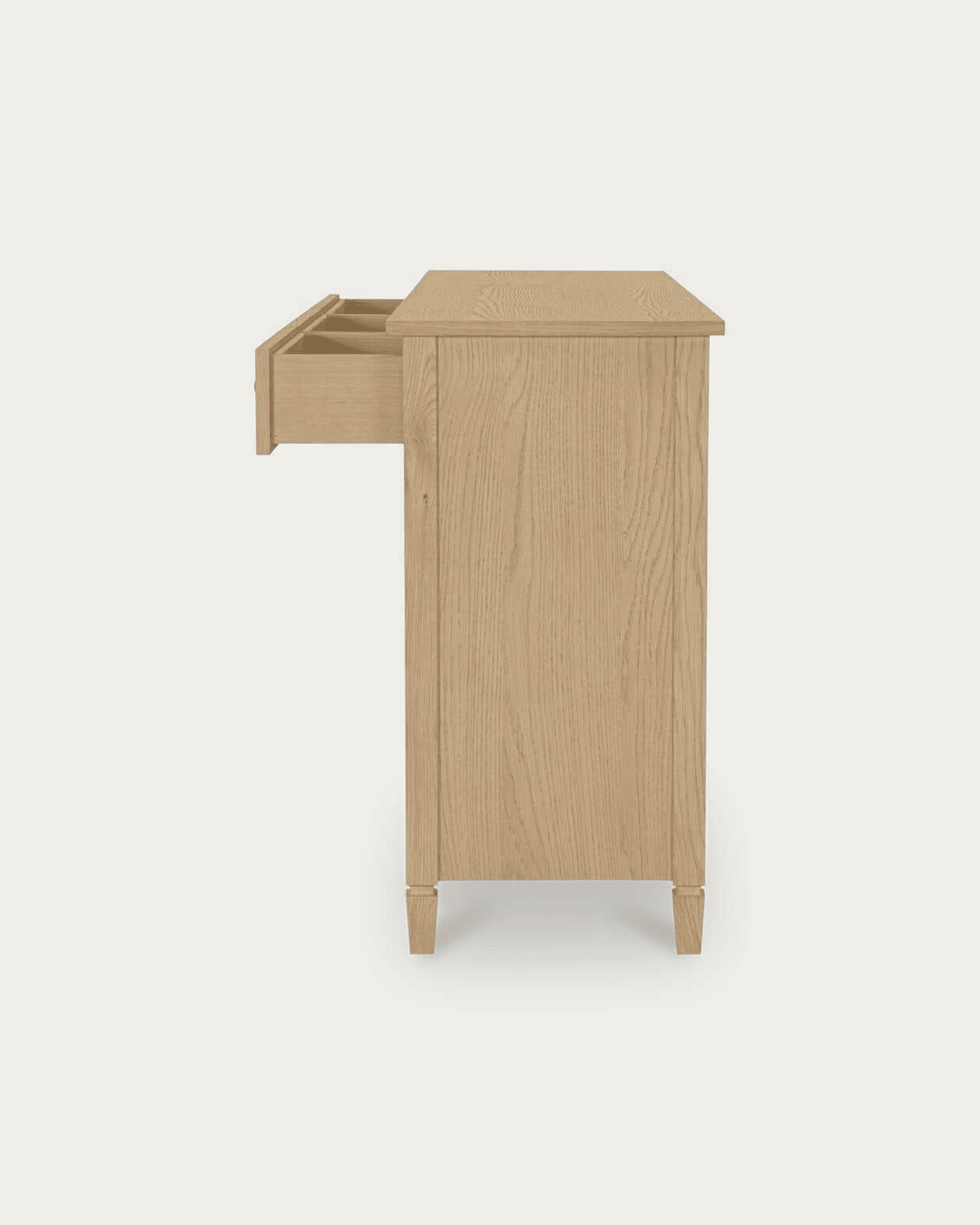
Explore Hello Norden’s vintage furniture for shelves, cabinets, and sideboards that support both display and everyday storage.
A well-arranged shelf can hold books, photographs, ceramics, and useful household objects. What matters is whether the arrangement makes sense: where your eye lands, which pieces belong together, and how easily you can reach what you need.
There’s a useful neuroscience connection here. Research shows that simultaneously visible objects compete for representation in the visual cortex, while attention and perceptual grouping influence that competition. Applying those findings to shelf styling is an interpretation: recognizable groups and clear focal points may make a display easier to take in. The research doesn’t prescribe a perfect number of books or bowls.
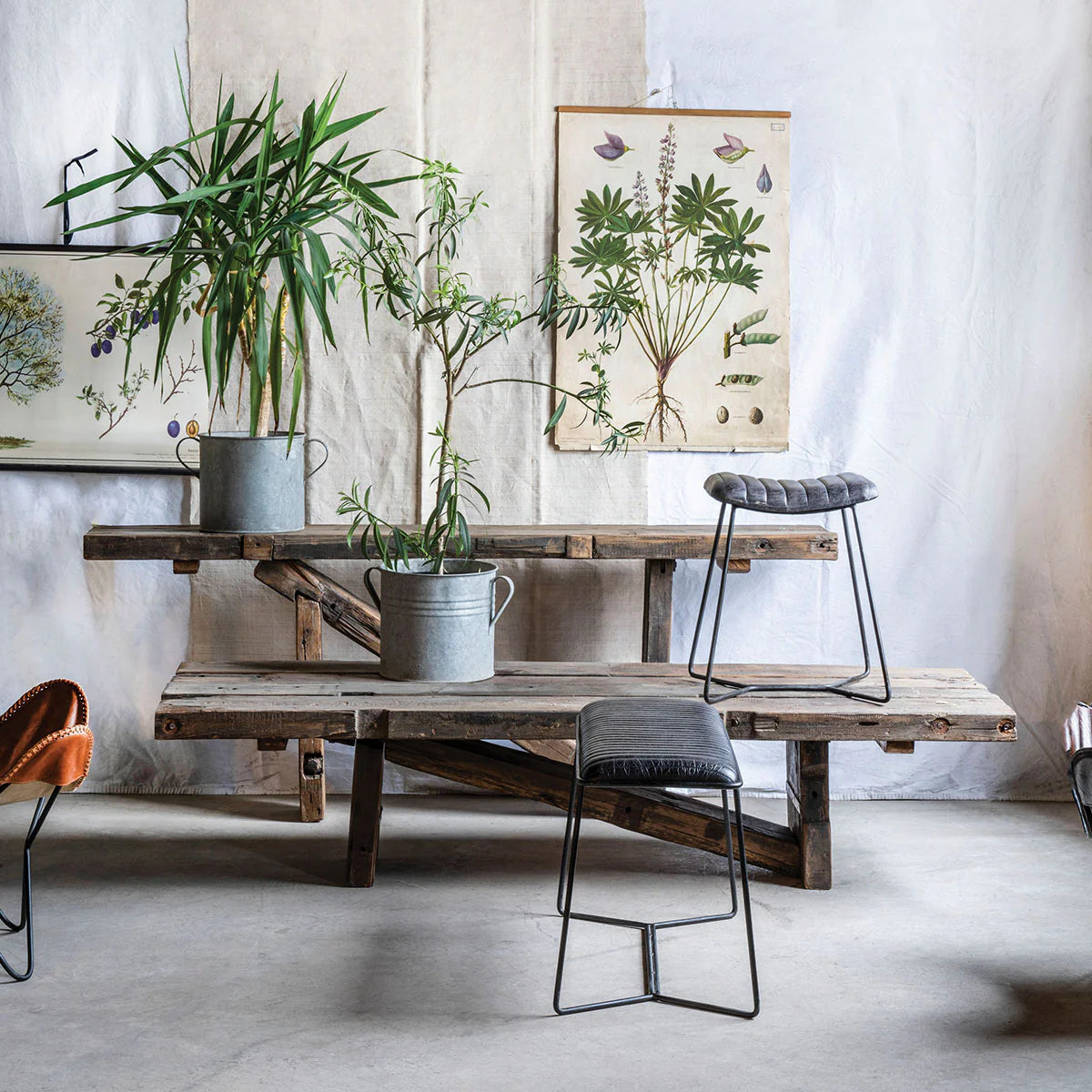
Think of your shelves as an arrangement you can adjust around your interests and routines. These five rules help you choose what stays visible, give the materials room to register, and keep the furniture useful.
Start with the contents before thinking about the composition.
Take everything off one shelf and sort it into three groups: things you enjoy seeing, things you use regularly, and things you need to keep but rarely touch. Some objects will belong in more than one category.
A favorite photograph may earn its place through personal meaning. A cookbook may earn its place because you reach for it every week. A ceramic vessel might contribute a shape or surface you particularly enjoy. Each gives you a clear reason to include it.
The Brynjar shelf is made from solid reclaimed elm with a natural finish and four wide shelf nooks. Those openings provide a useful structure for separating books, baskets, and objects into distinct areas.
Choose a primary purpose for each nook. One could regularly read books. Another could contain a basket for small essentials. A third might display a vessel alongside a photograph.
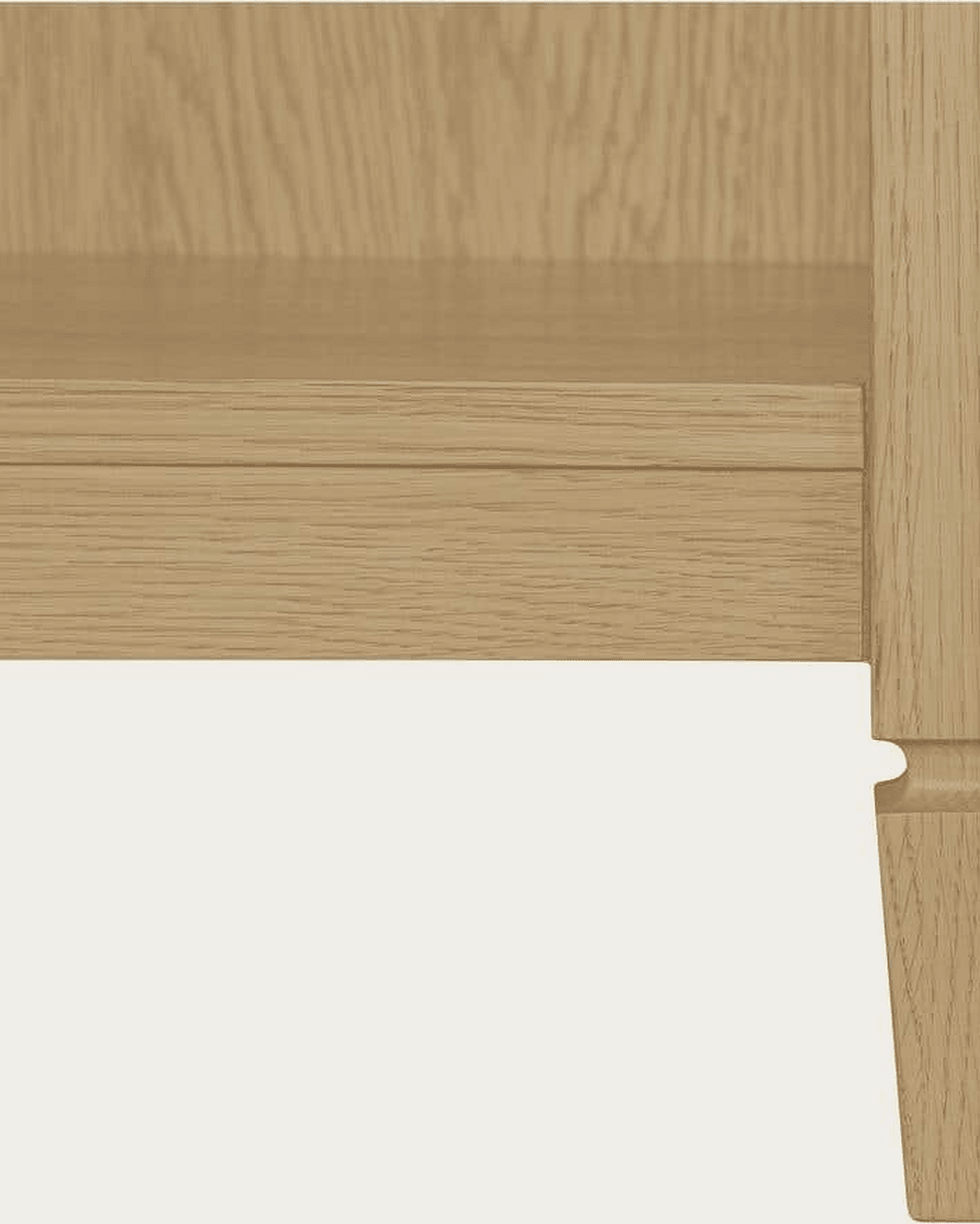
Let the elm remain visible around the contents. Its grain already contributes texture, so you can work with the furniture’s material rather than covering every board.
Think about the physical movement involved in using the shelf. Keep heavier books where you can lift them comfortably. Place a basket so you can remove it without catching neighboring objects.
If retrieving a book requires dismantling the arrangement, adjust the arrangement. The book has an appointment with you; the decorative bowl can wait.
You can also rotate occasional display pieces. Keep a few favorites visible and change them when your interests or routines shift. That gives the collection room to develop without requiring every object to appear at once.
Once you’ve chosen what stays, organize it into groups that make sense visually and practically.
A connection helps separate one part of the shelf from another. Books can sit together by subject or use. A pair of vessels might share a color or curve. Several small belongings can sit inside one suitable container.
You’re making the relationships easy to recognize while allowing each object to retain its own character.
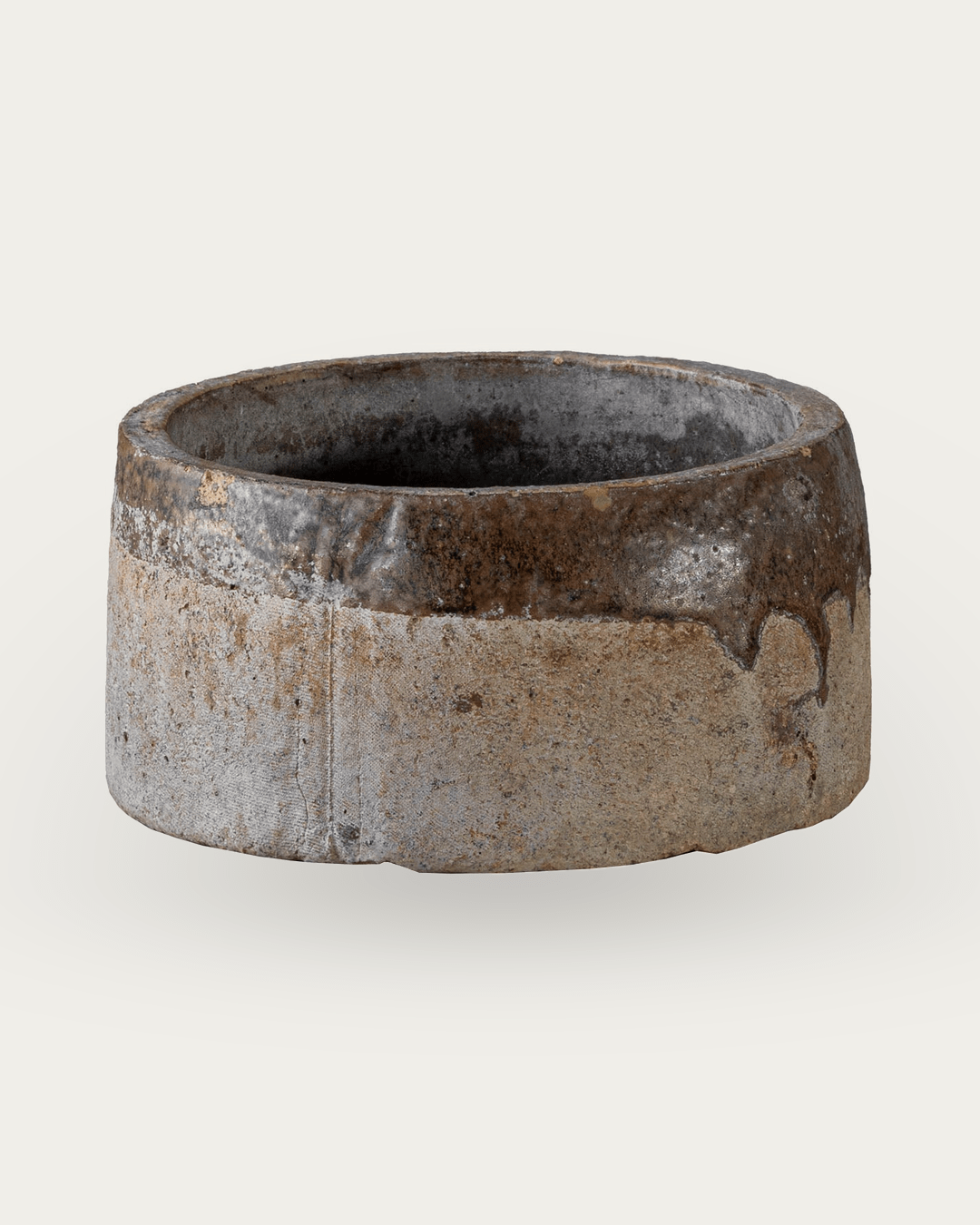
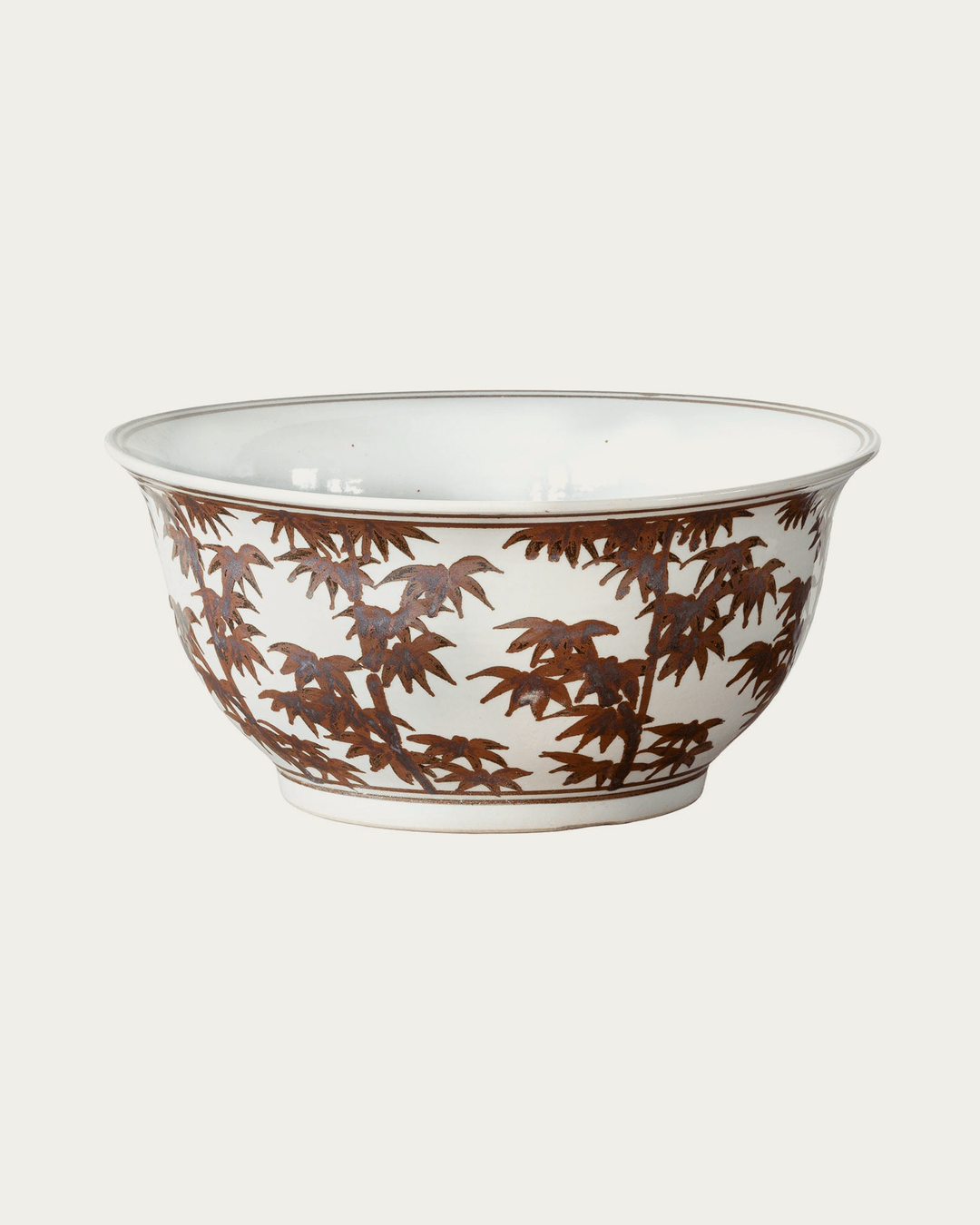
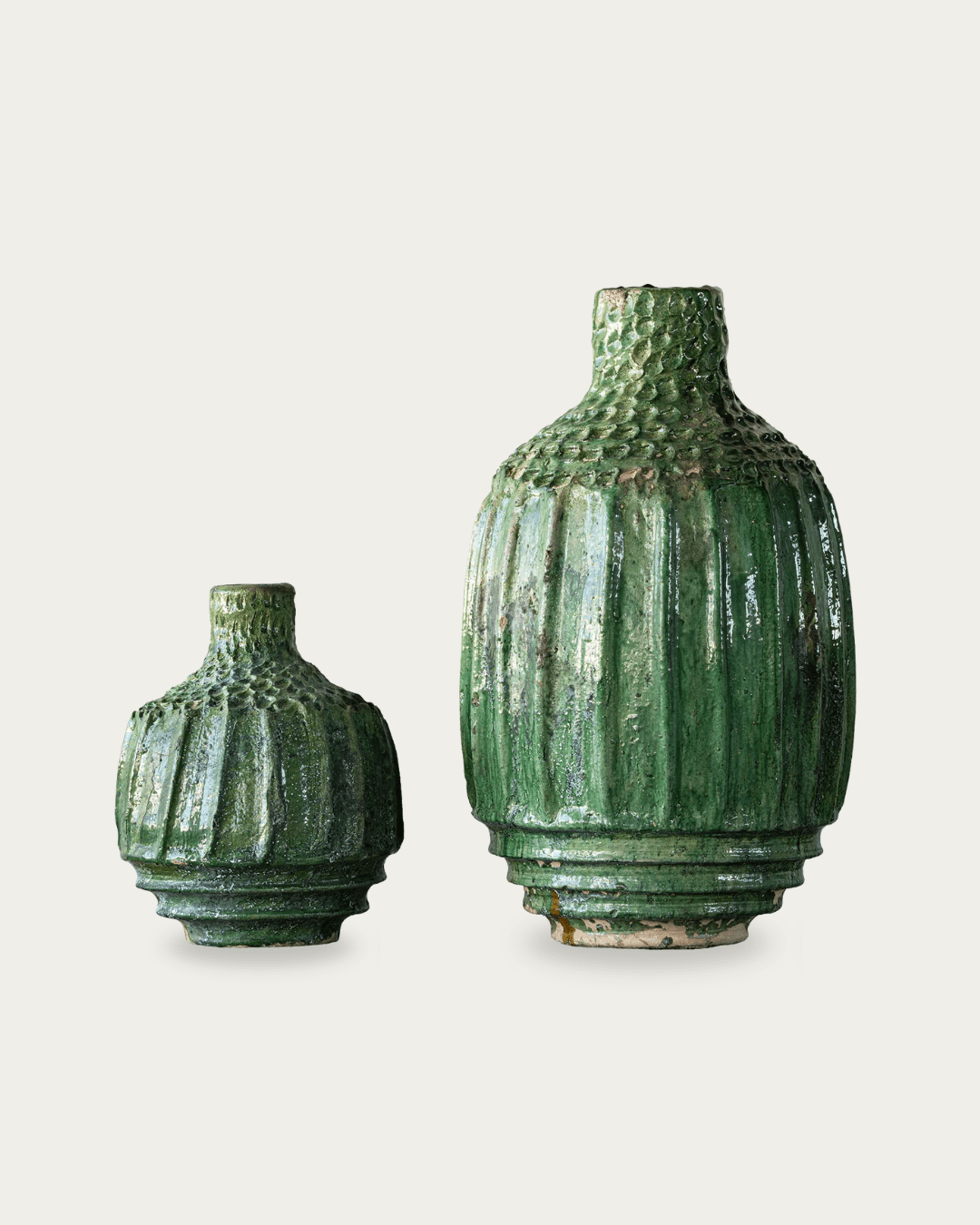
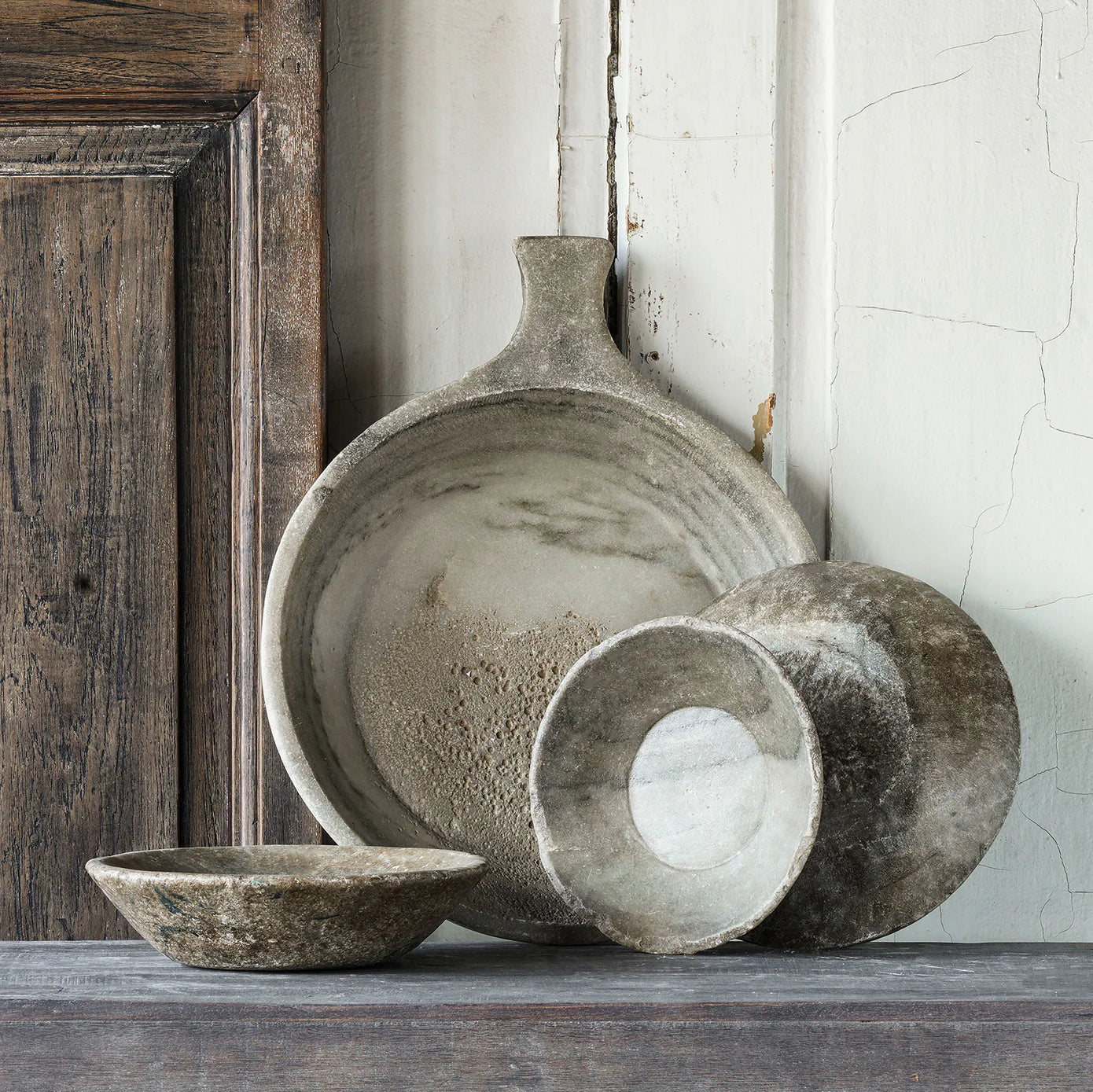
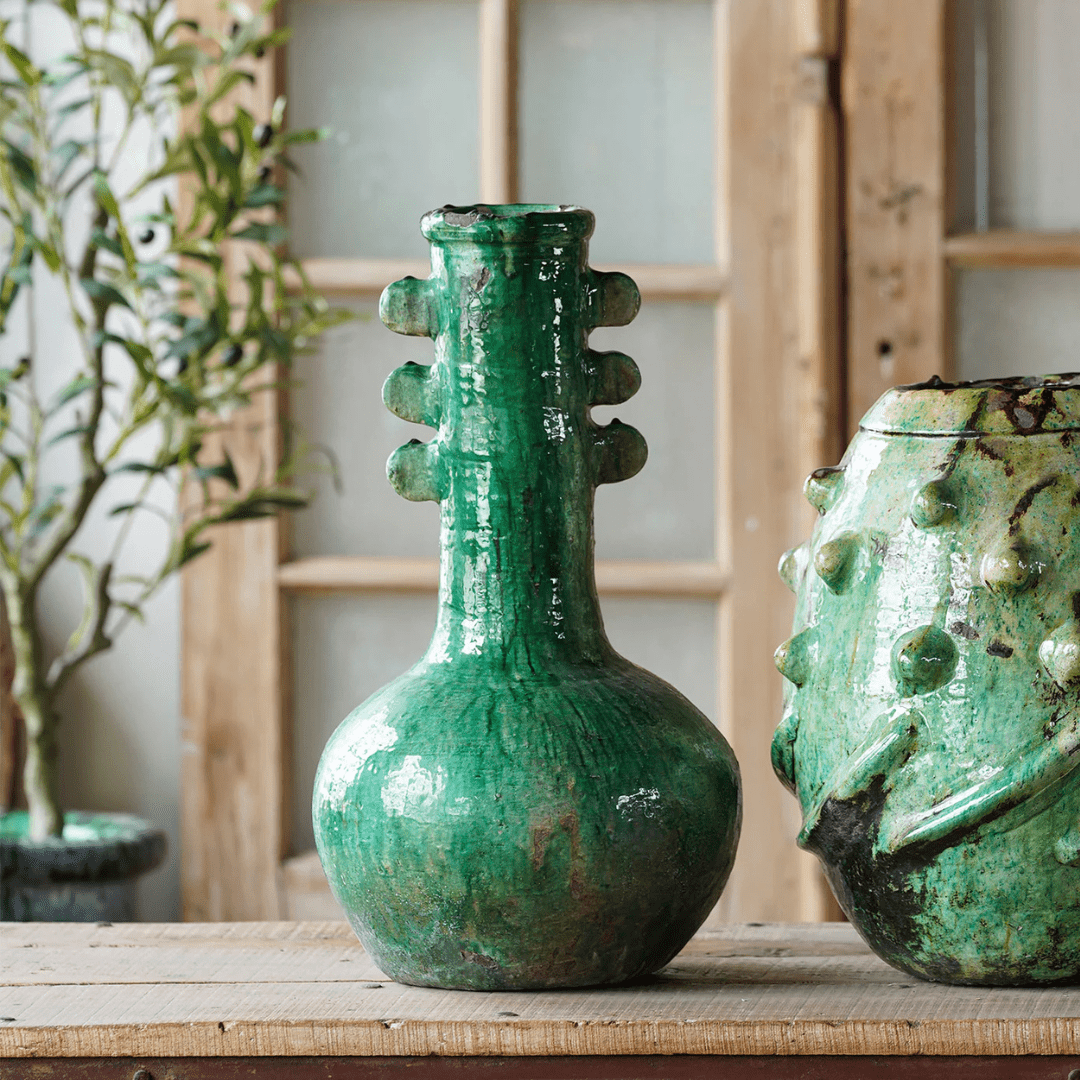
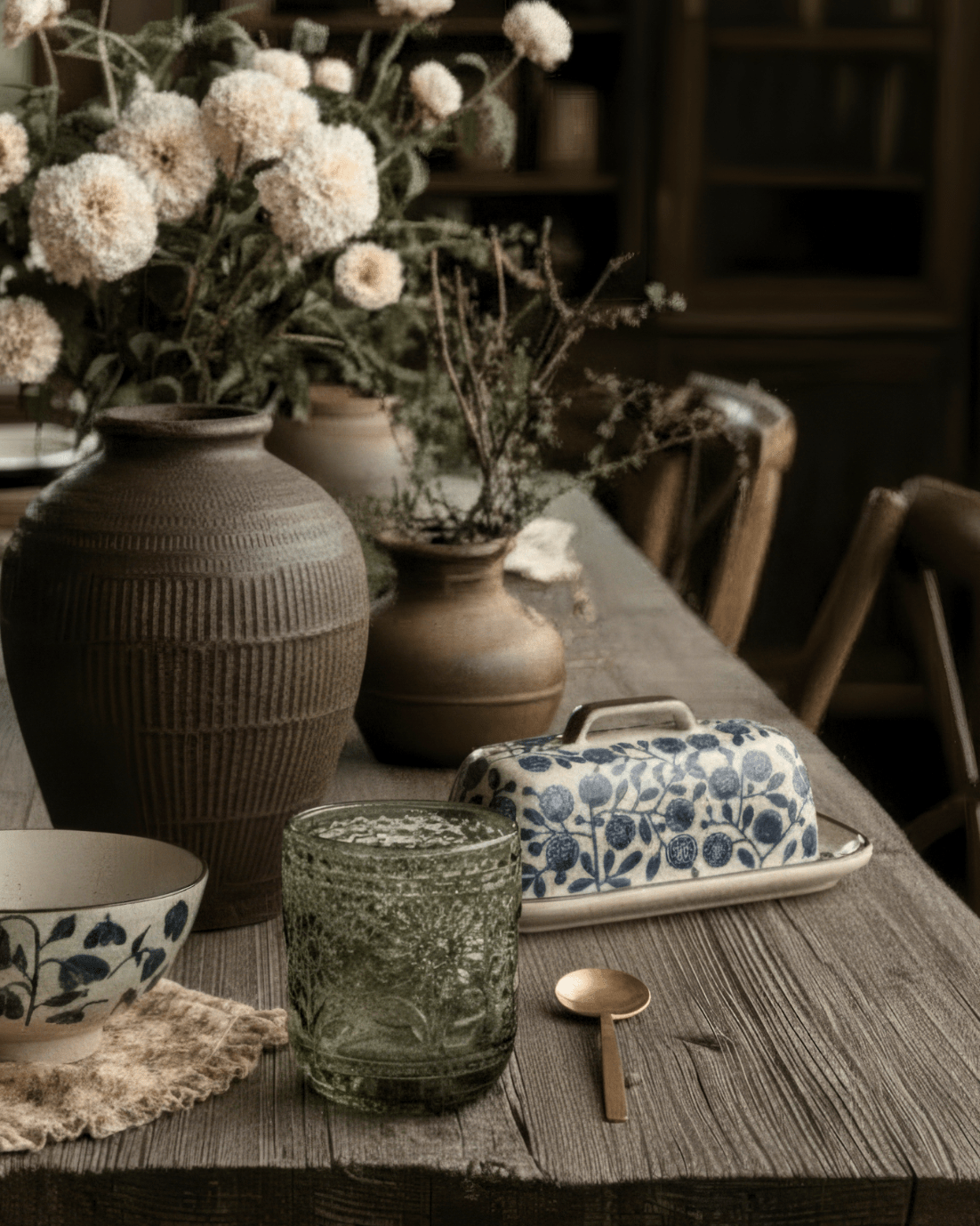
Try grouping ceramics with related colors but different heights. Or pair a woven basket with books whose covers pick up one of its tones.
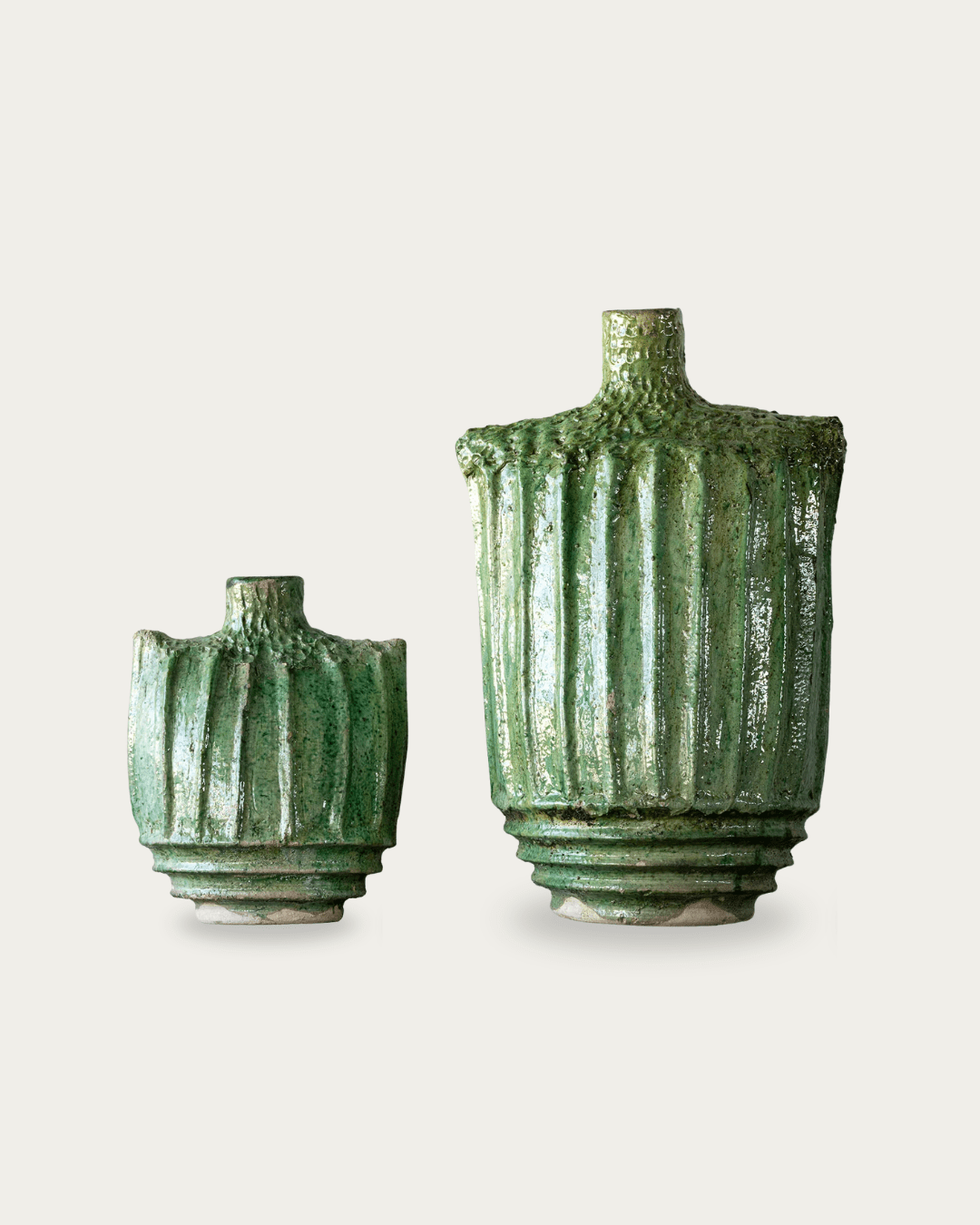
Varying height helps individual shapes remain visible. Repeating a color or material gives them something in common. Together, those choices create a group with enough consistency to feel connected and enough variation to hold your interest.
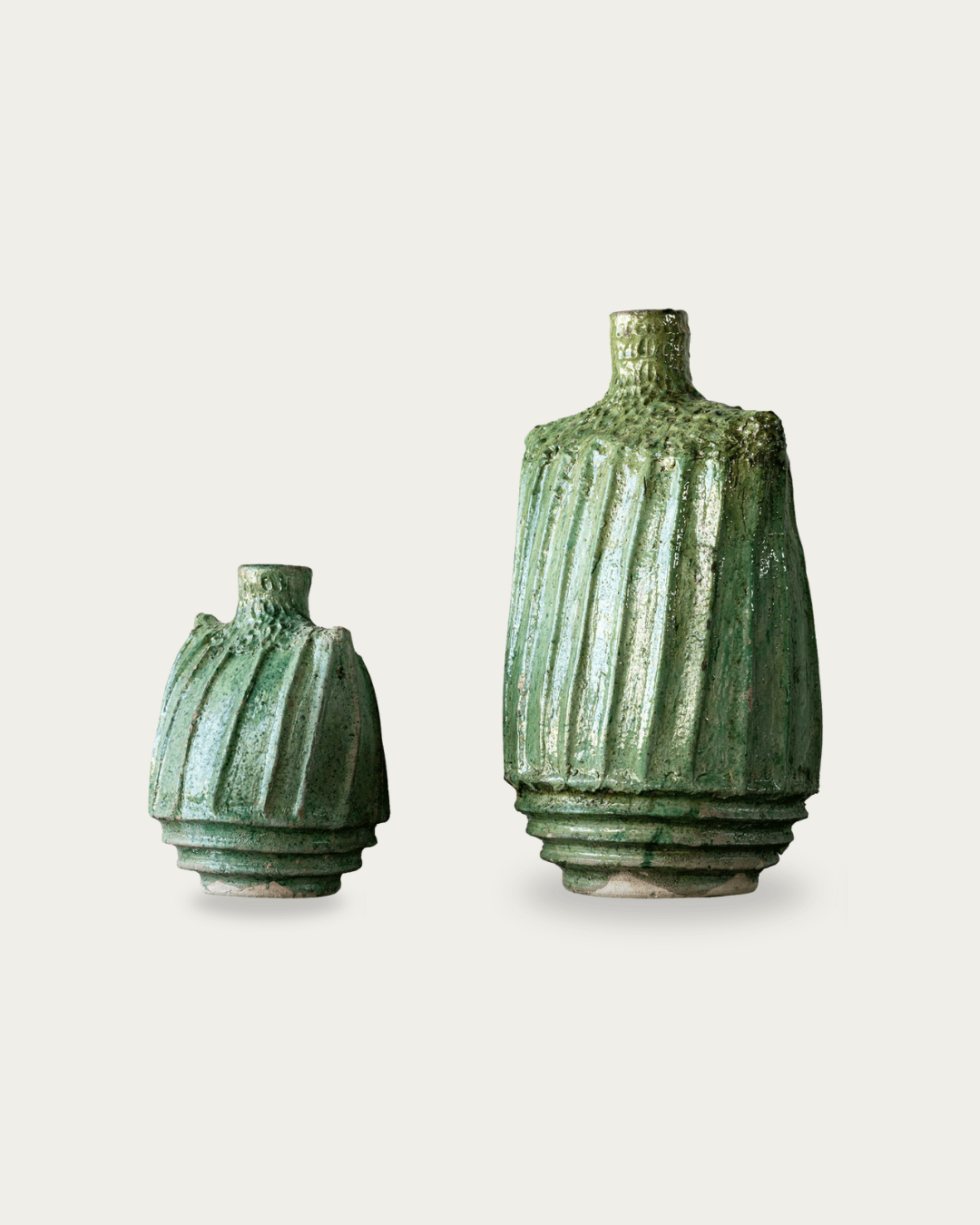
Wood, ceramics, paper, and woven fibers each bring different surface qualities. Choose a few material relationships you enjoy, then see whether the arrangement needs anything else.
Position the largest object first, then place its companions around it. A tall vessel might sit beside a shorter book stack. A broad bowl could occupy its own area with a smaller object nearby.
Keep the outlines readable. If one piece hides most of another, move them slightly apart or change their depth.
Check stability as carefully as appearance. Book stacks should sit securely, vessels need dependable bases, and smaller objects should stay clear of edges.
Keep function in the grouping, too. Store books you consult together in the same area. Put a frequently used container where it comes out easily. A visually coherent shelf should also be straightforward to navigate.
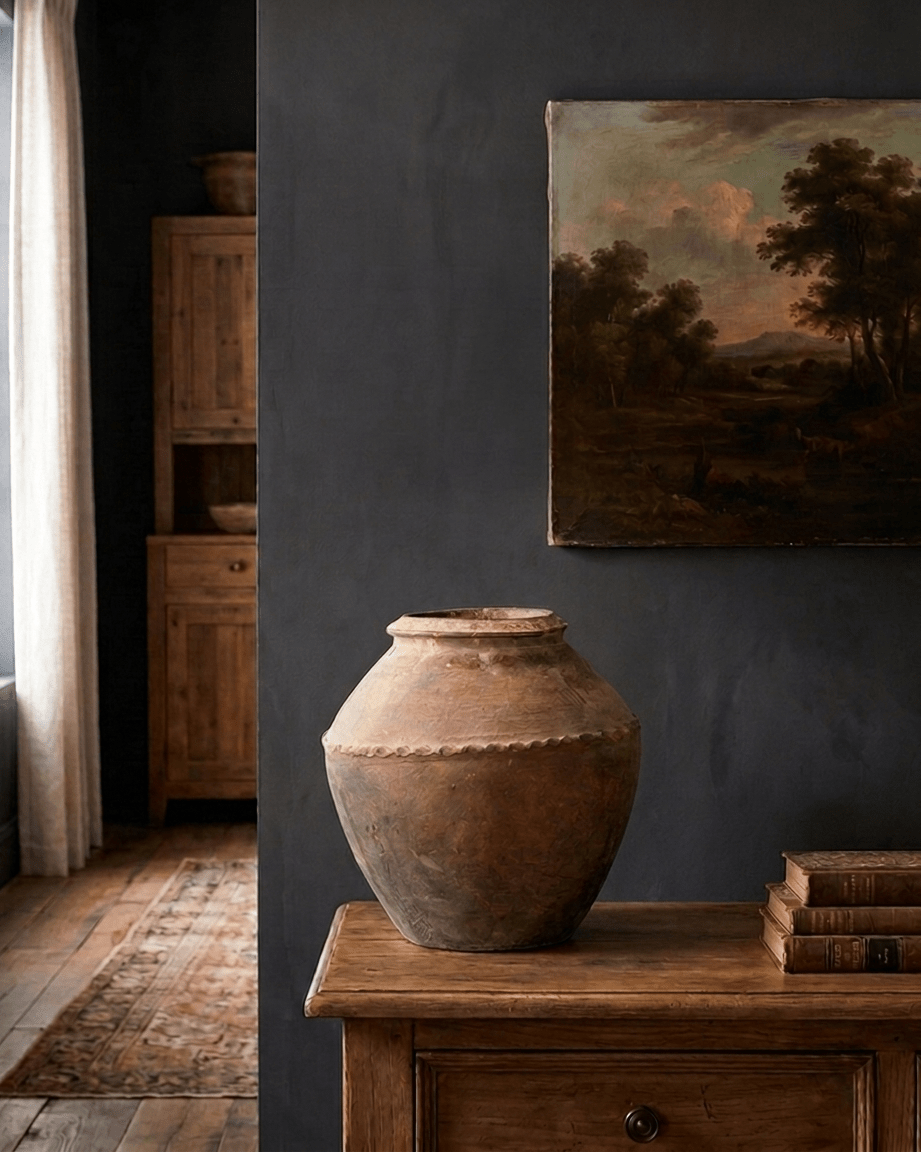
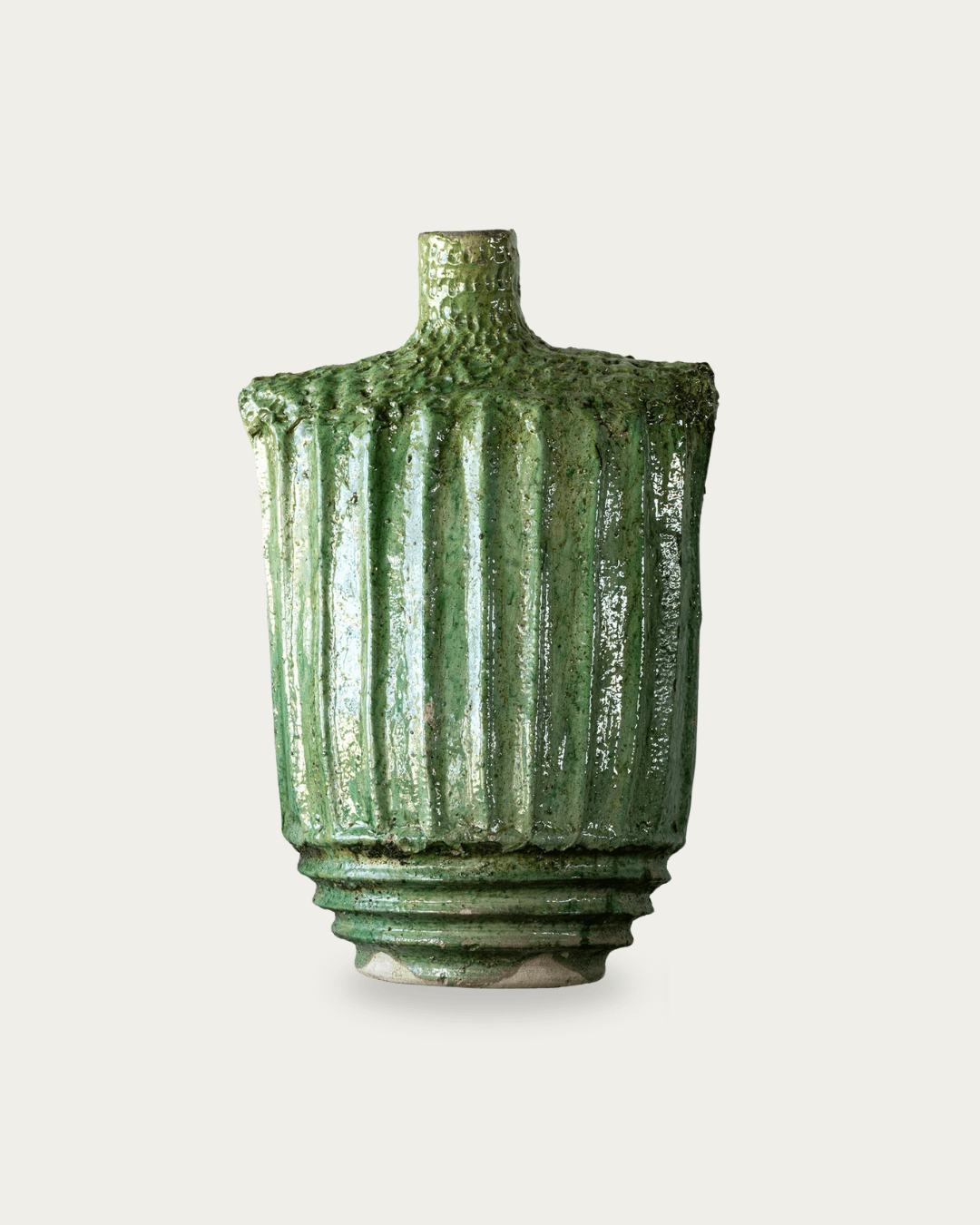
An object’s outline is part of what makes it interesting. Give it enough room to remain visible.
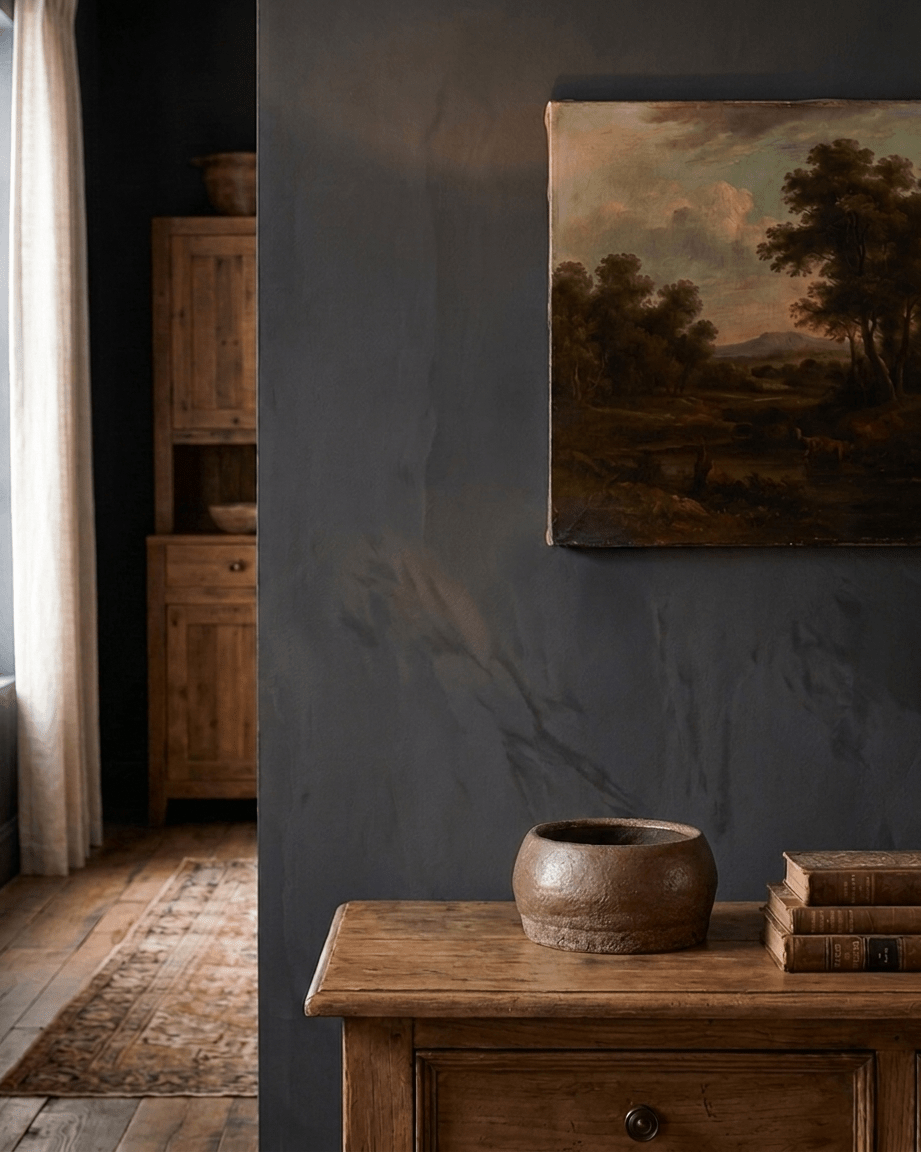
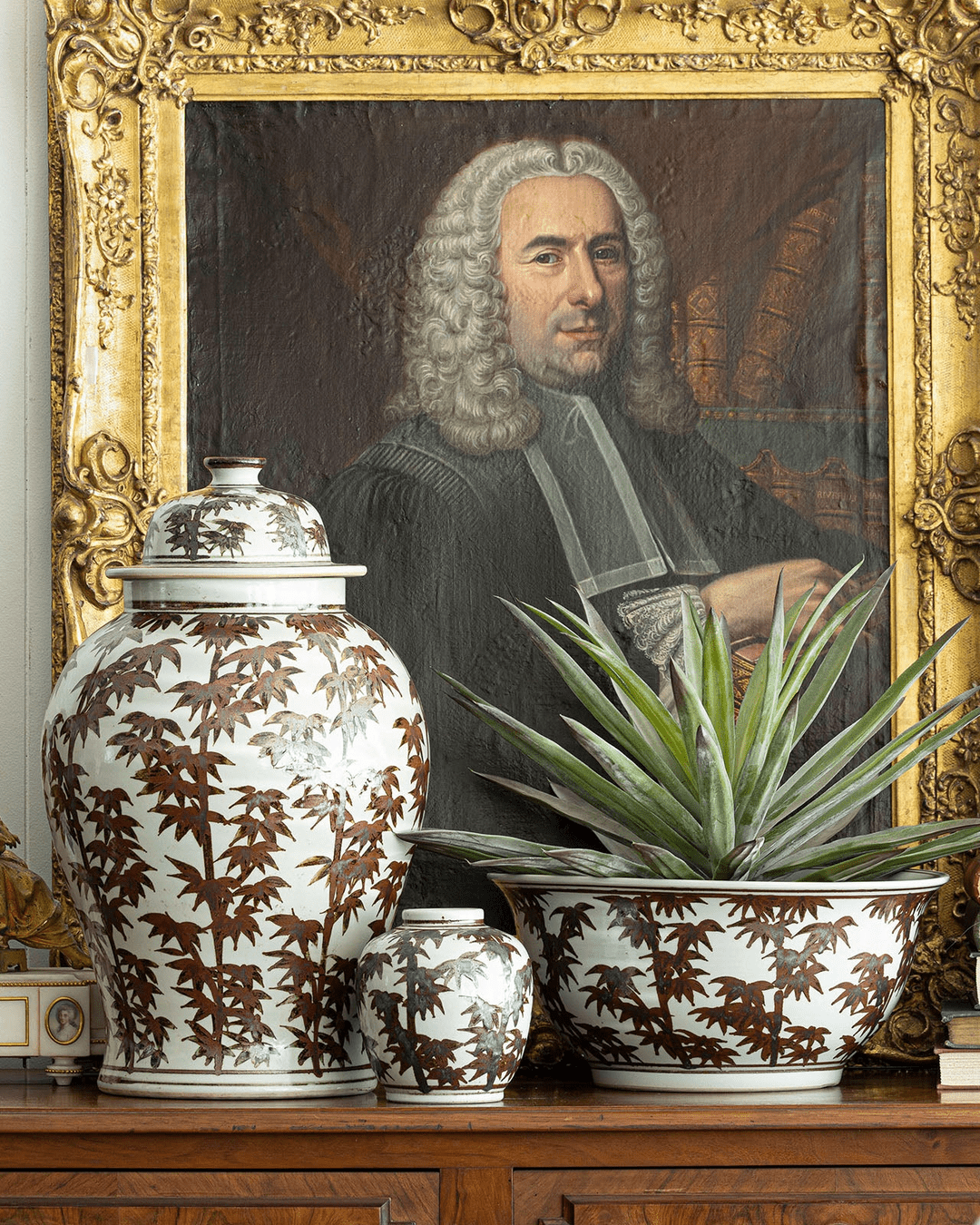
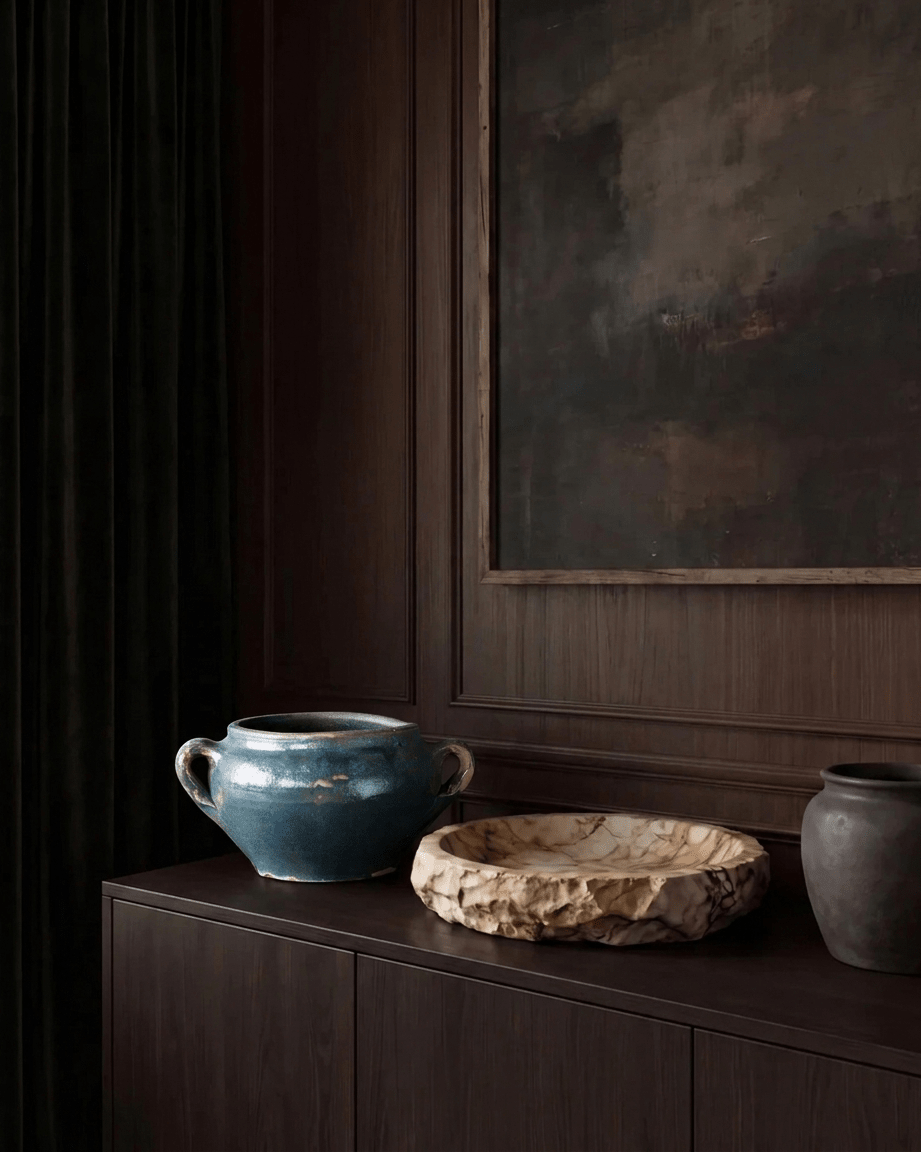
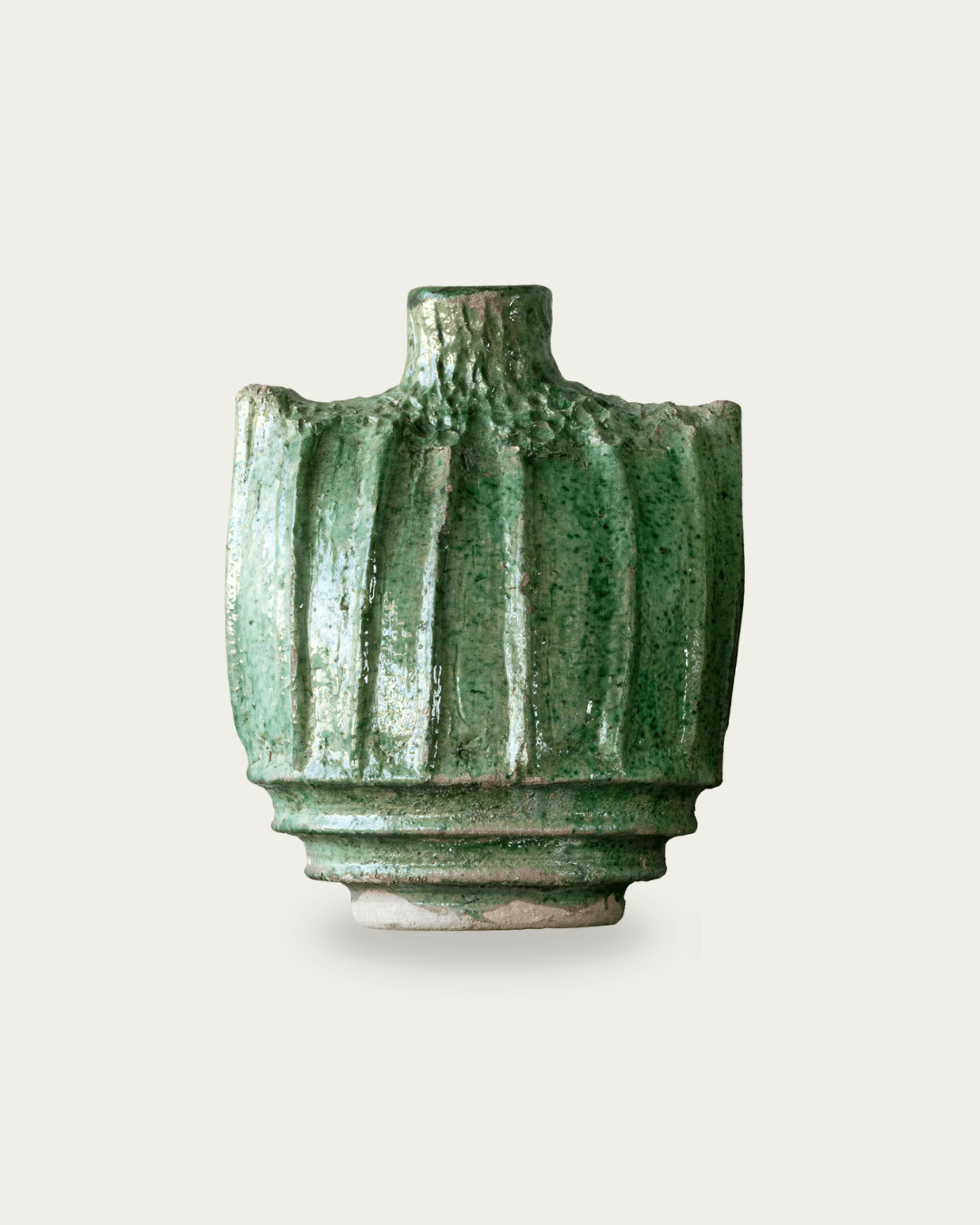
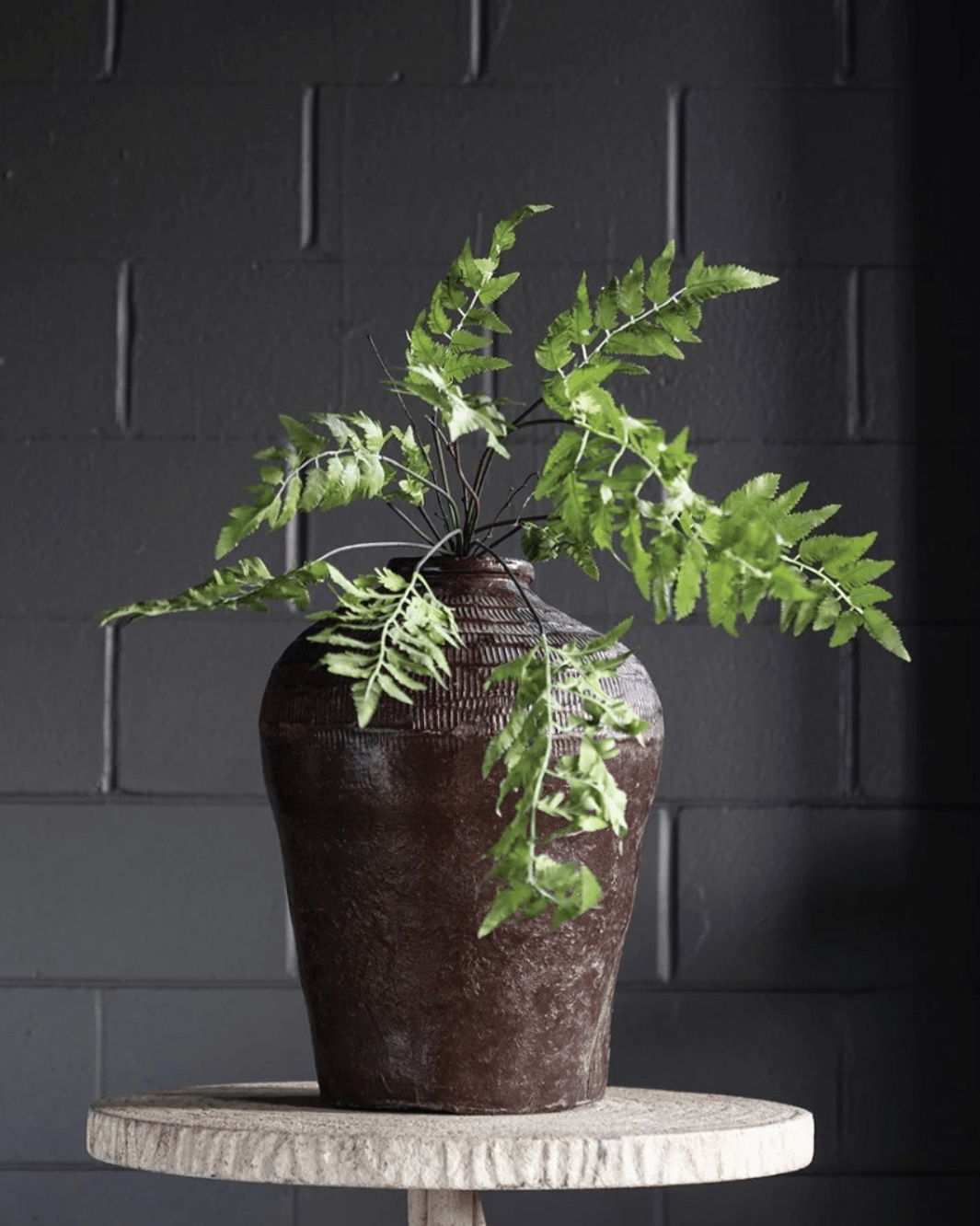
A vessel pressed between books and a frame loses some of its shape. A small sculpture against a detailed background may be harder to distinguish. Moving its neighbors can reveal the features that made you choose it.
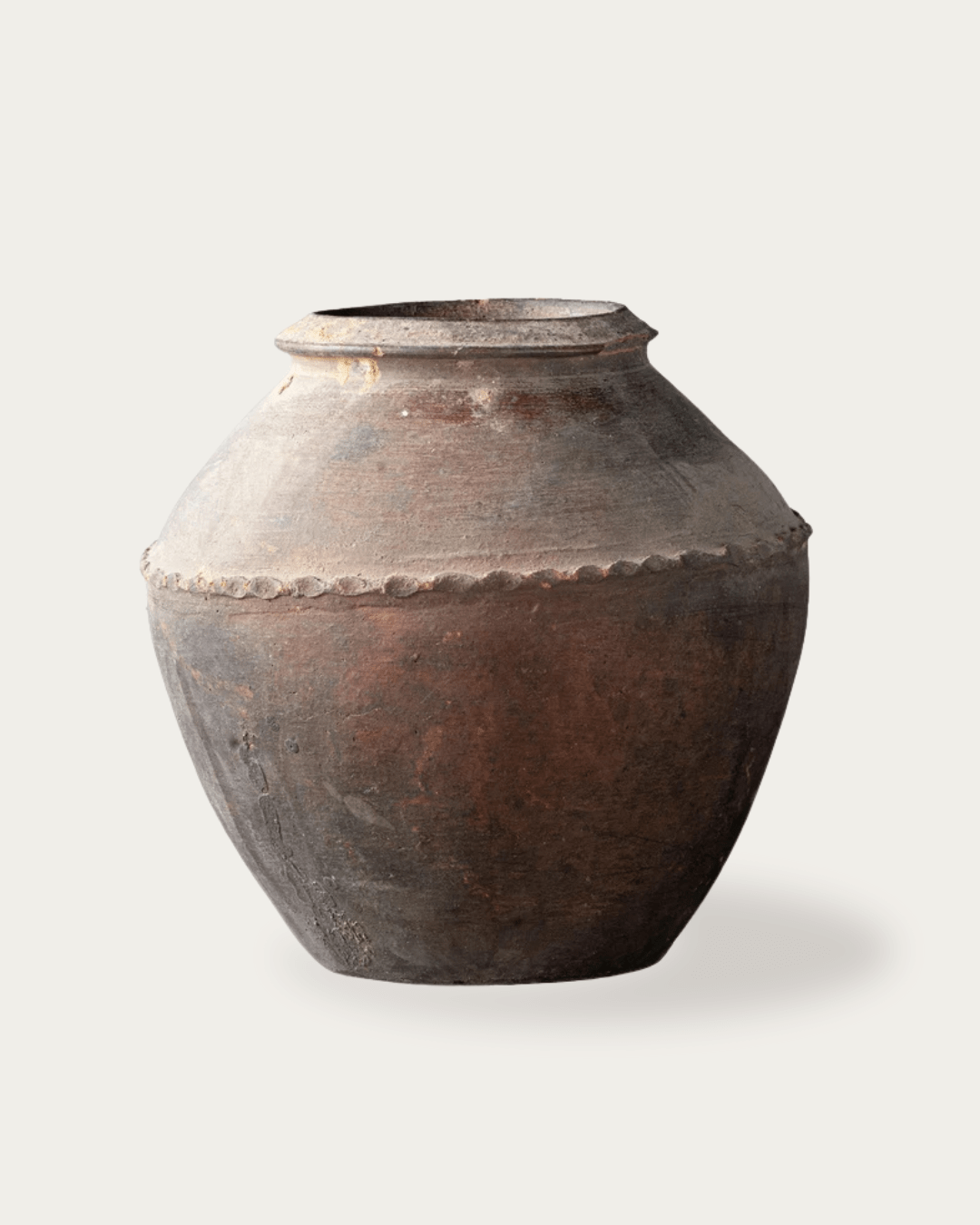
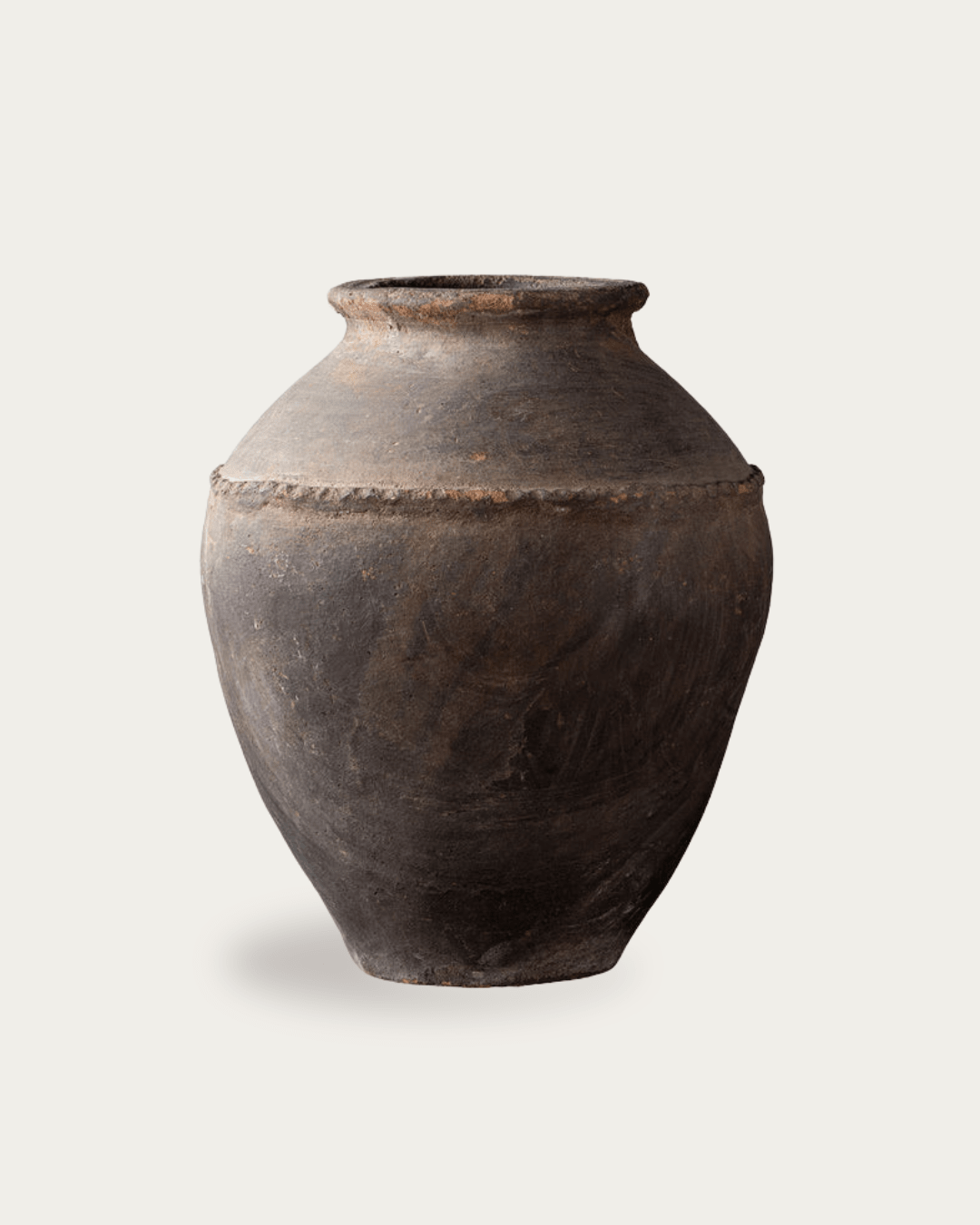
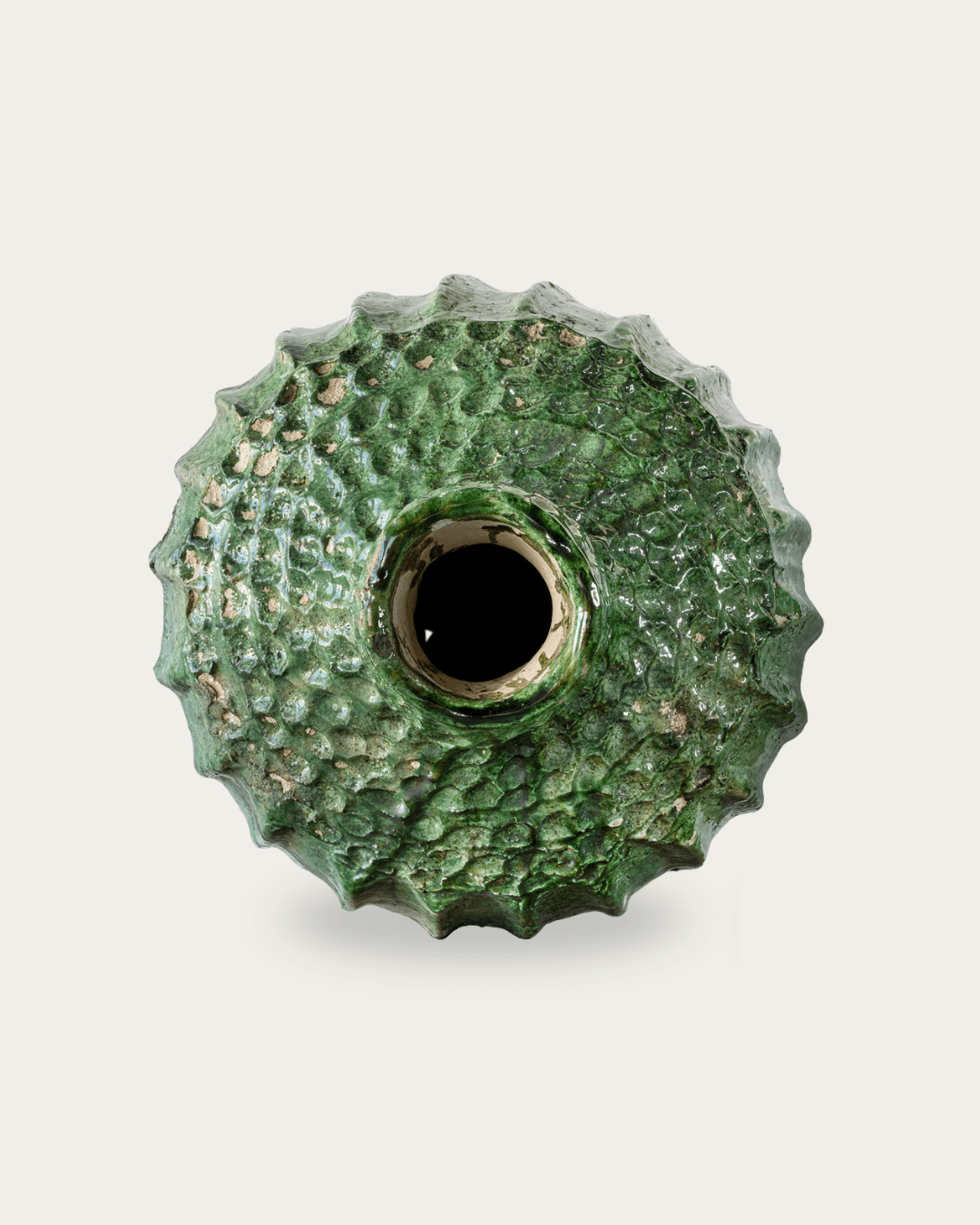
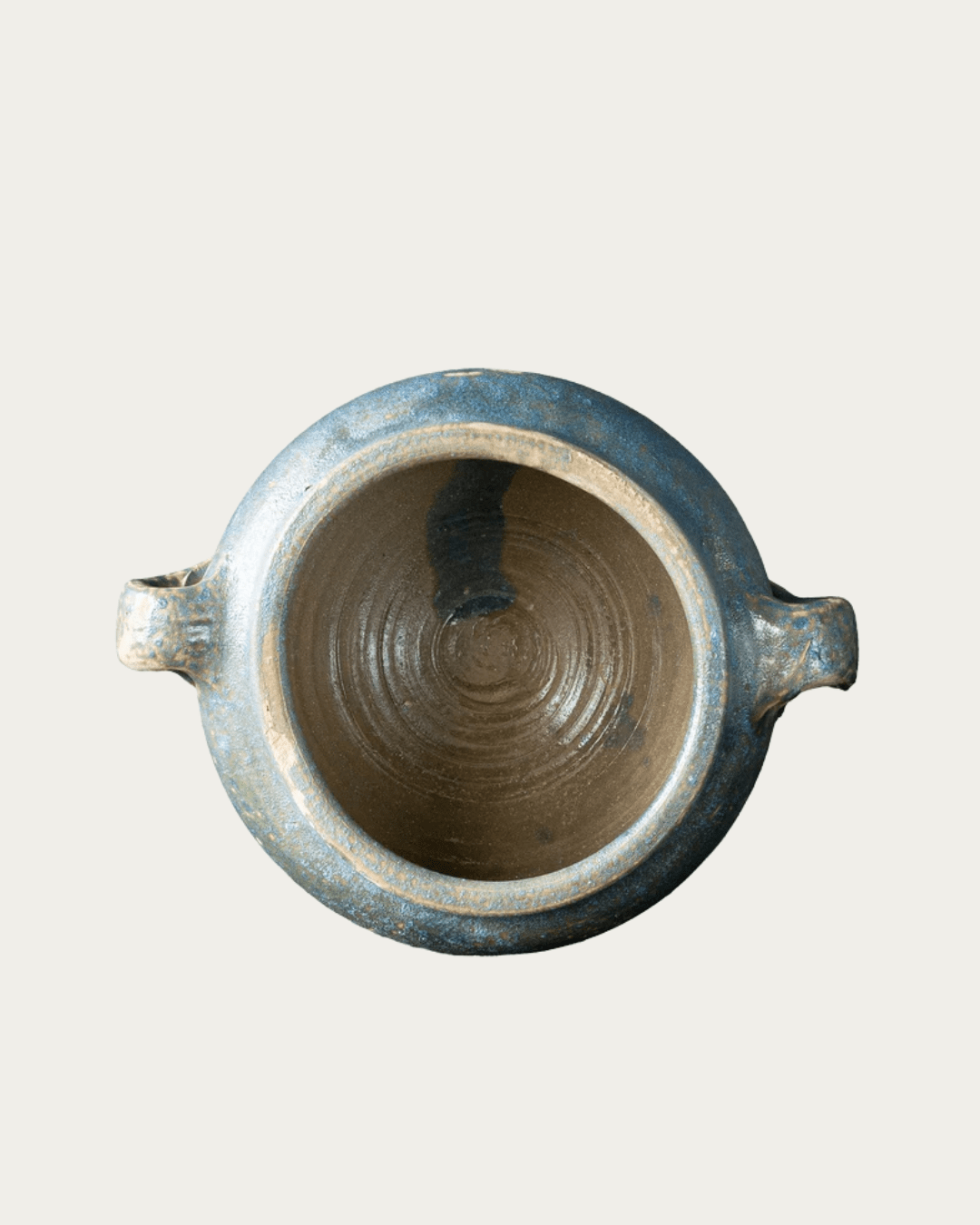
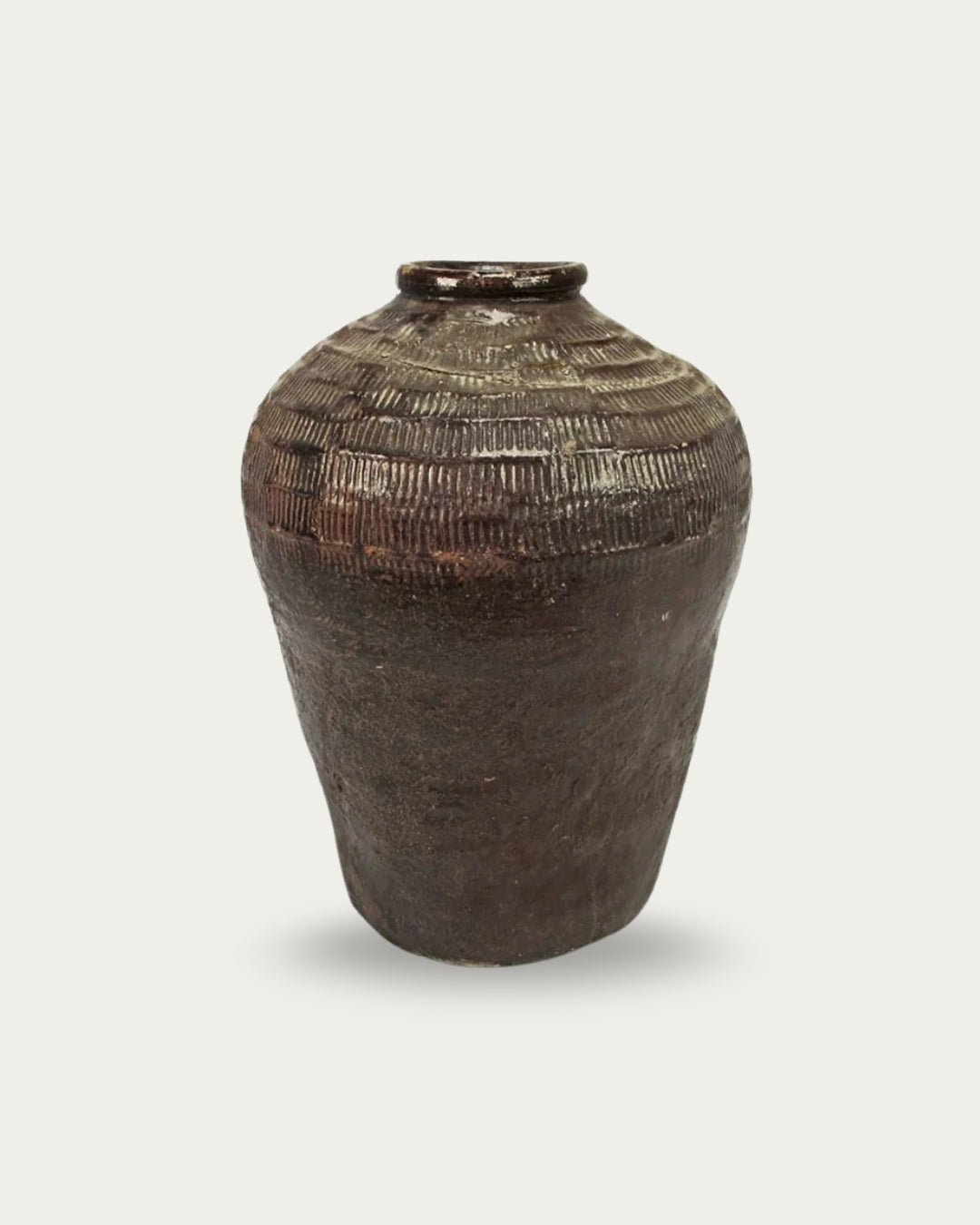
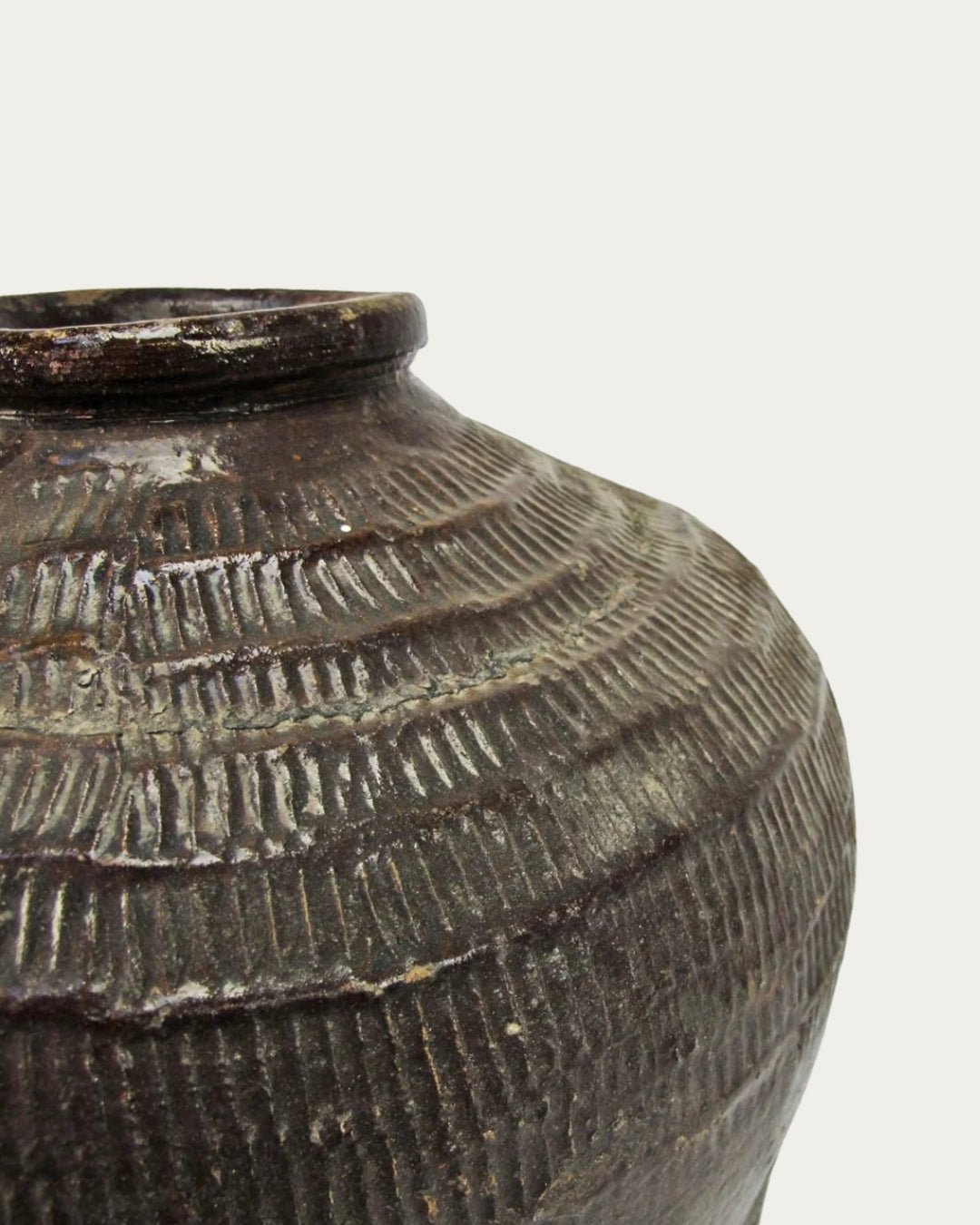
Spacing is especially useful with vintage pieces because their surfaces may already contain grain, wear, carving, or varied finishes.
After arranging a shelf, step back and look for clear divisions. Can you see where one group ends and another begins? Can you distinguish the main object from its surroundings?
Move a book stack a few inches. Shift a vessel forward slightly, provided it remains secure. Try leaving one section open so the wood and the wall behind it become part of the composition.
There’s no universal percentage of a shelf that must stay empty. The right amount depends on the furniture, the contents, and your preferences.
RUTED Tip: Before buying another shelf accessory, move two things farther apart. Sometimes the finishing touch is a gap. The wood grain gets a vote, too.
Leave enough clearance to lift a vessel, remove a basket, and dust around the display. An arrangement that is easy to maintain is easier to enjoy over time.
Open space also gives the shelf some flexibility. You can accommodate a newly finished book or something you genuinely want to display without redesigning every section.
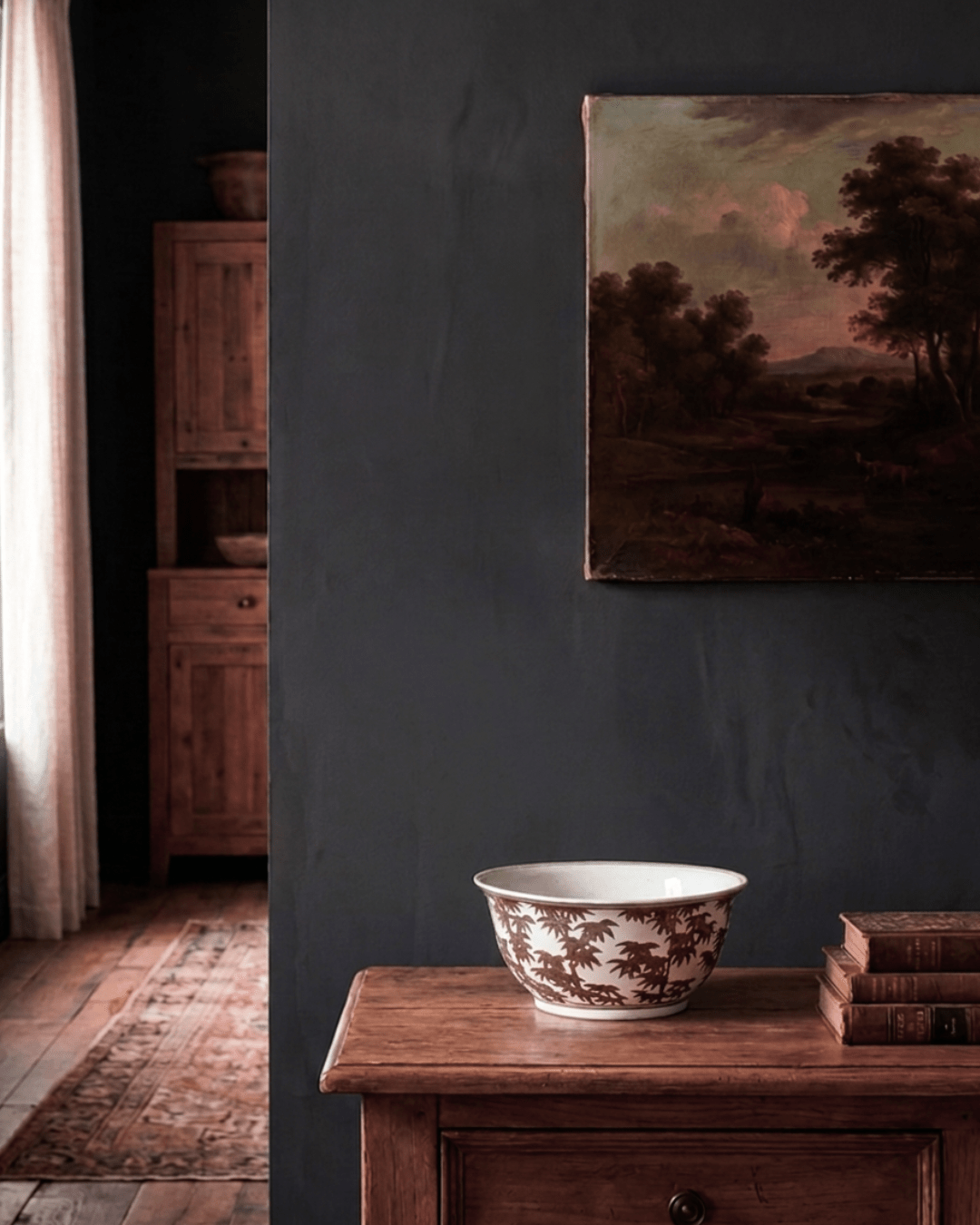
Look at the background as well. If the shelf sits against patterned wallpaper or near detailed artwork, a simpler arrangement may make the individual objects more apparent.
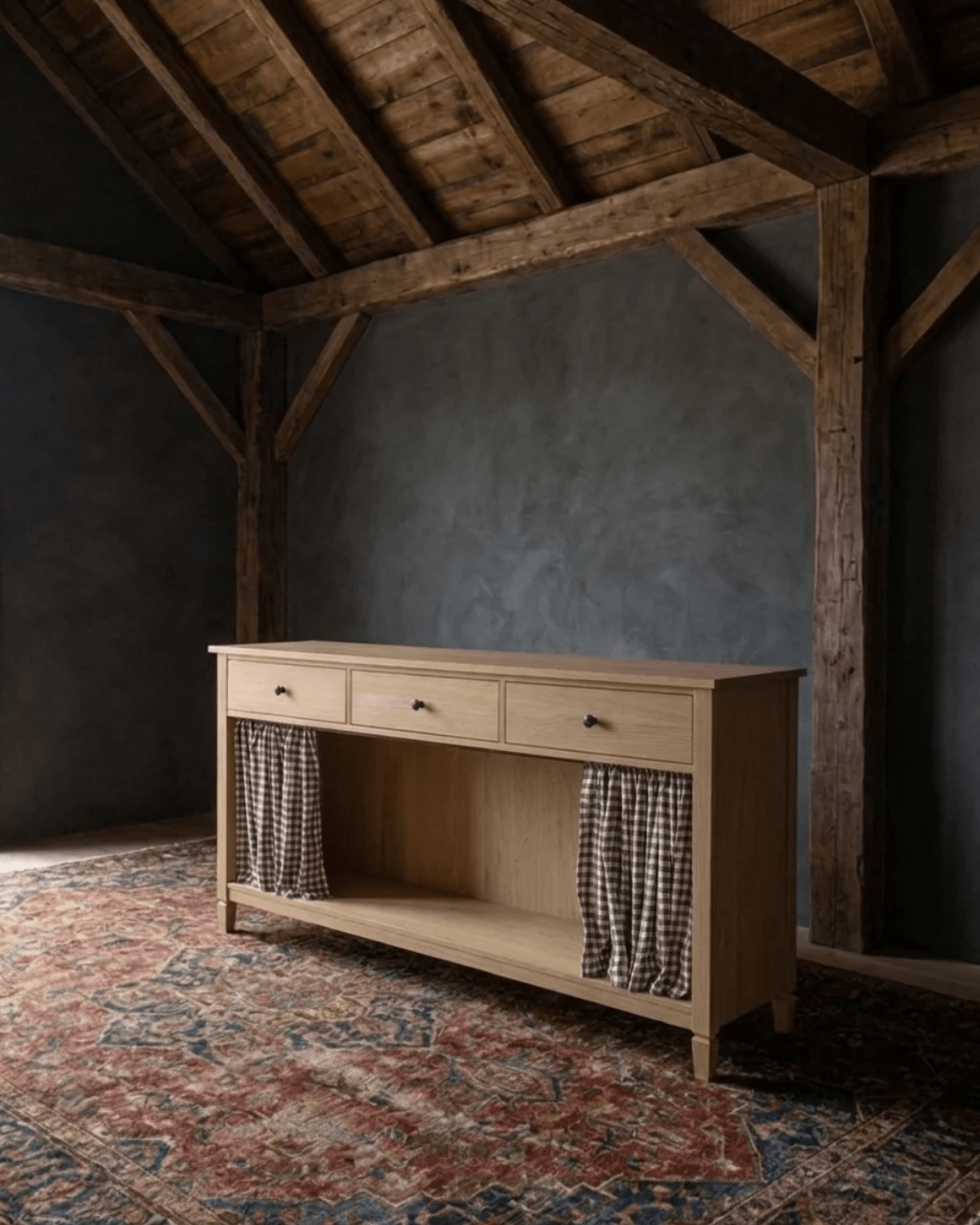
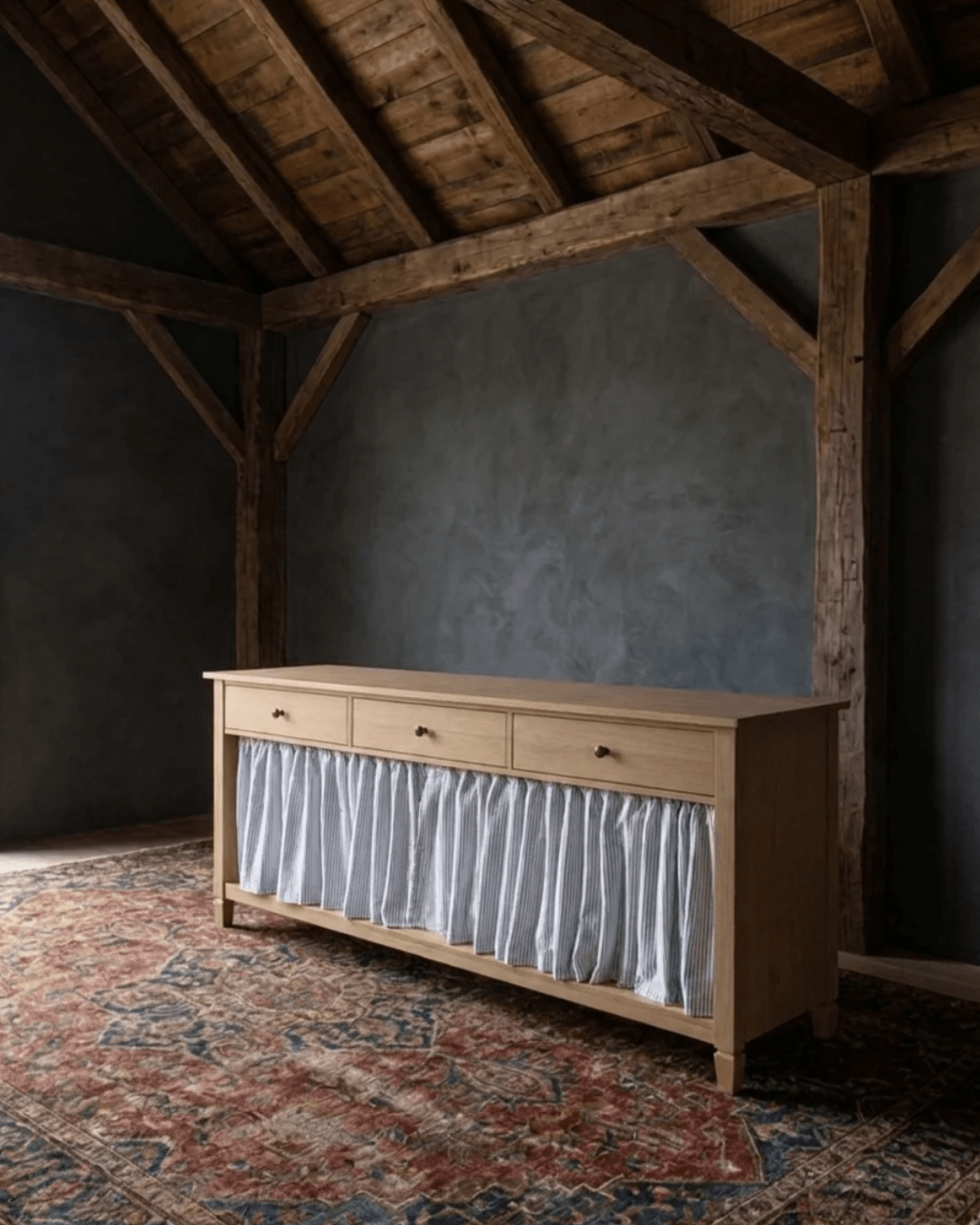
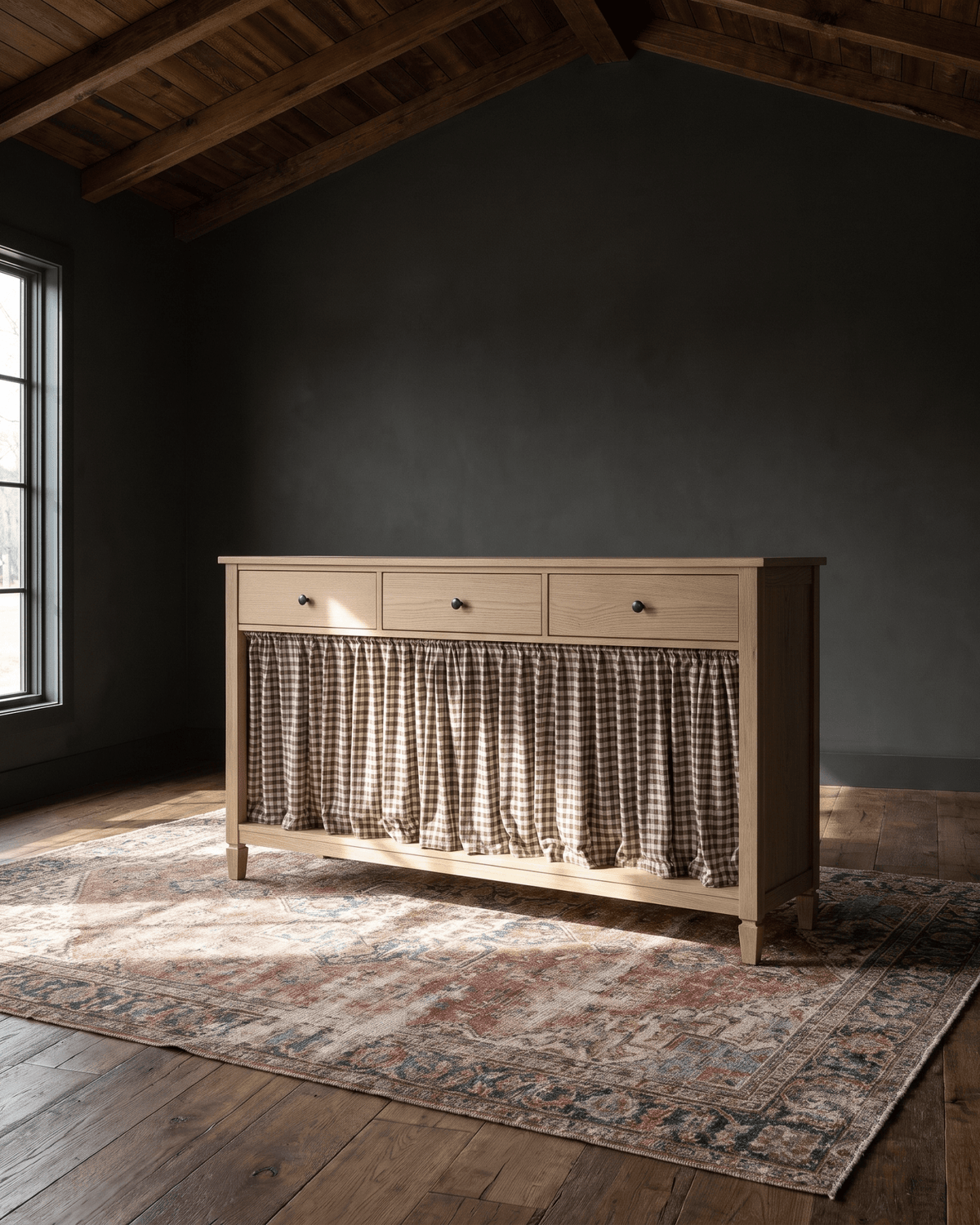
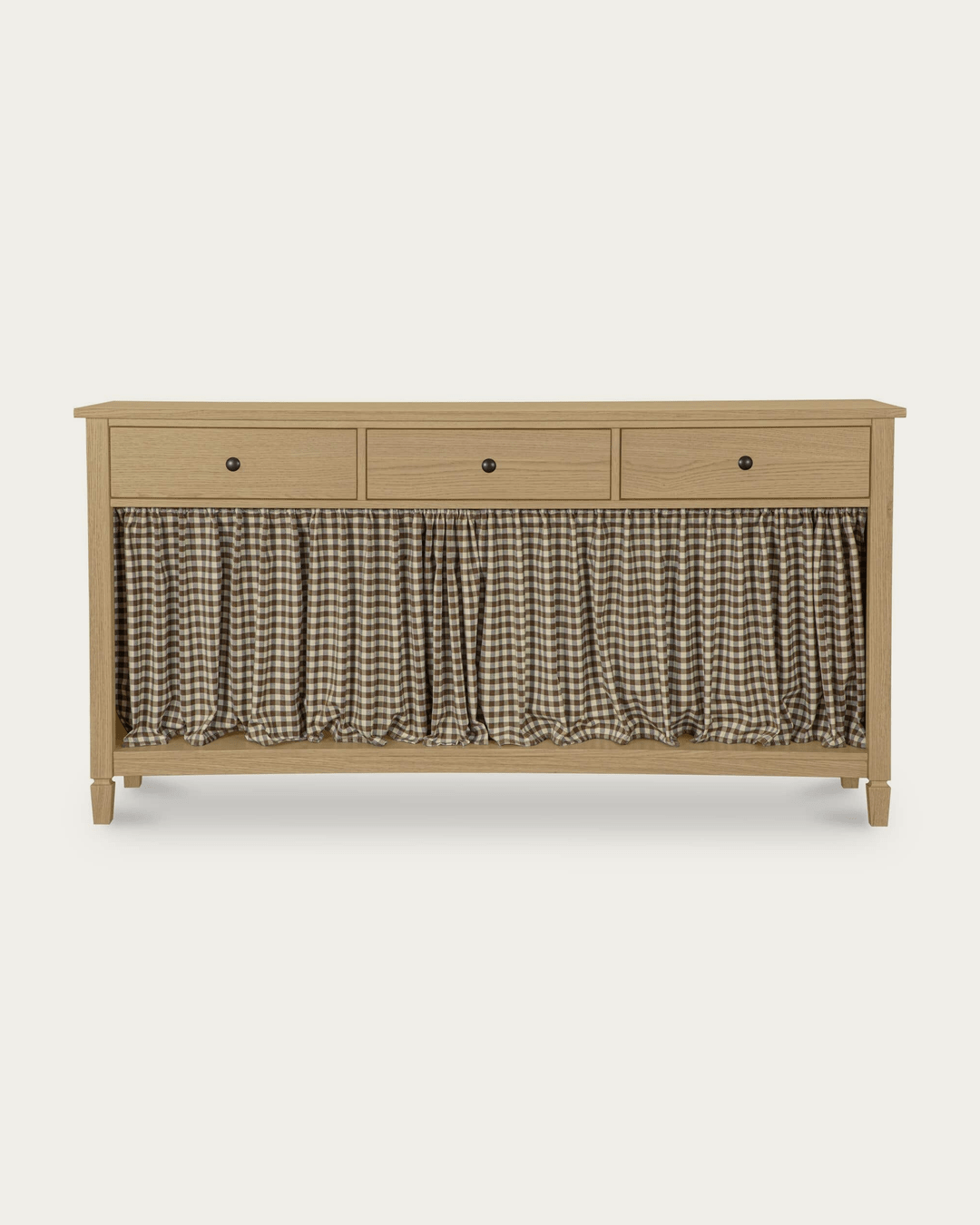
Open shelving and closed storage work well together because they serve different purposes.
Shelves let you see and reach selected belongings. Cabinets contain items you need without making every charger, receipt, and spare cable part of the room’s composition.
Deciding what belongs behind a door can be more useful than repeatedly rearranging the same crowded shelf.
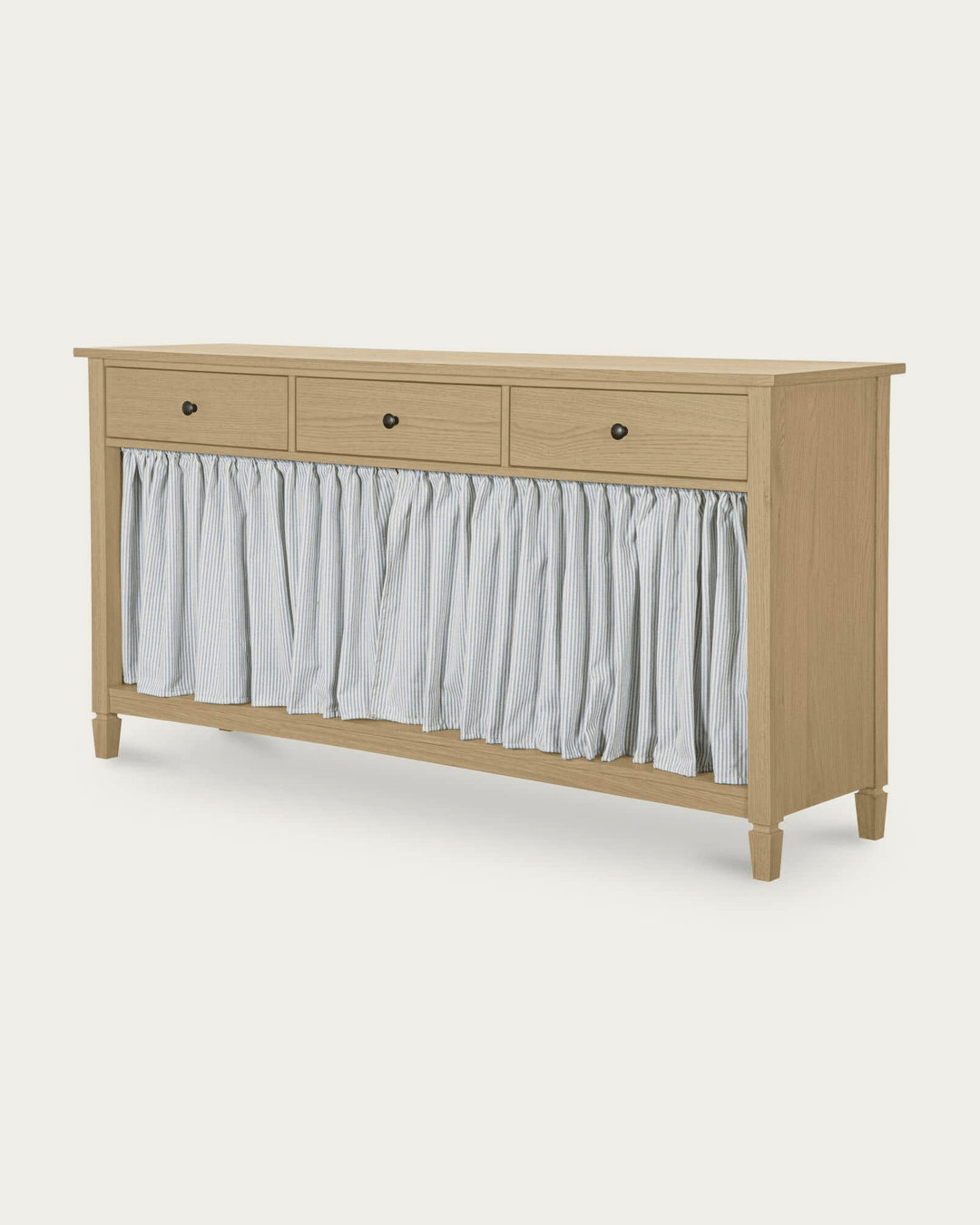
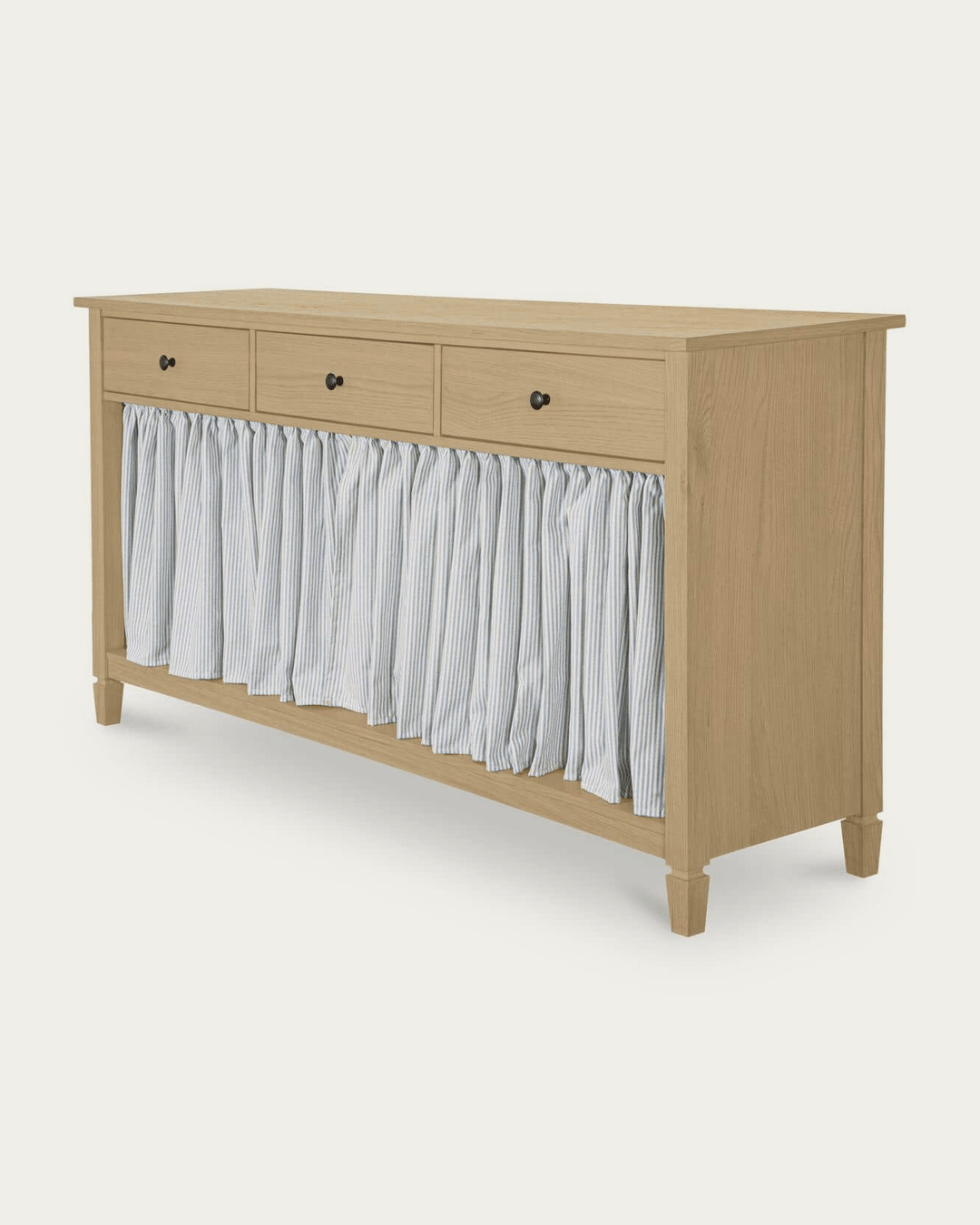
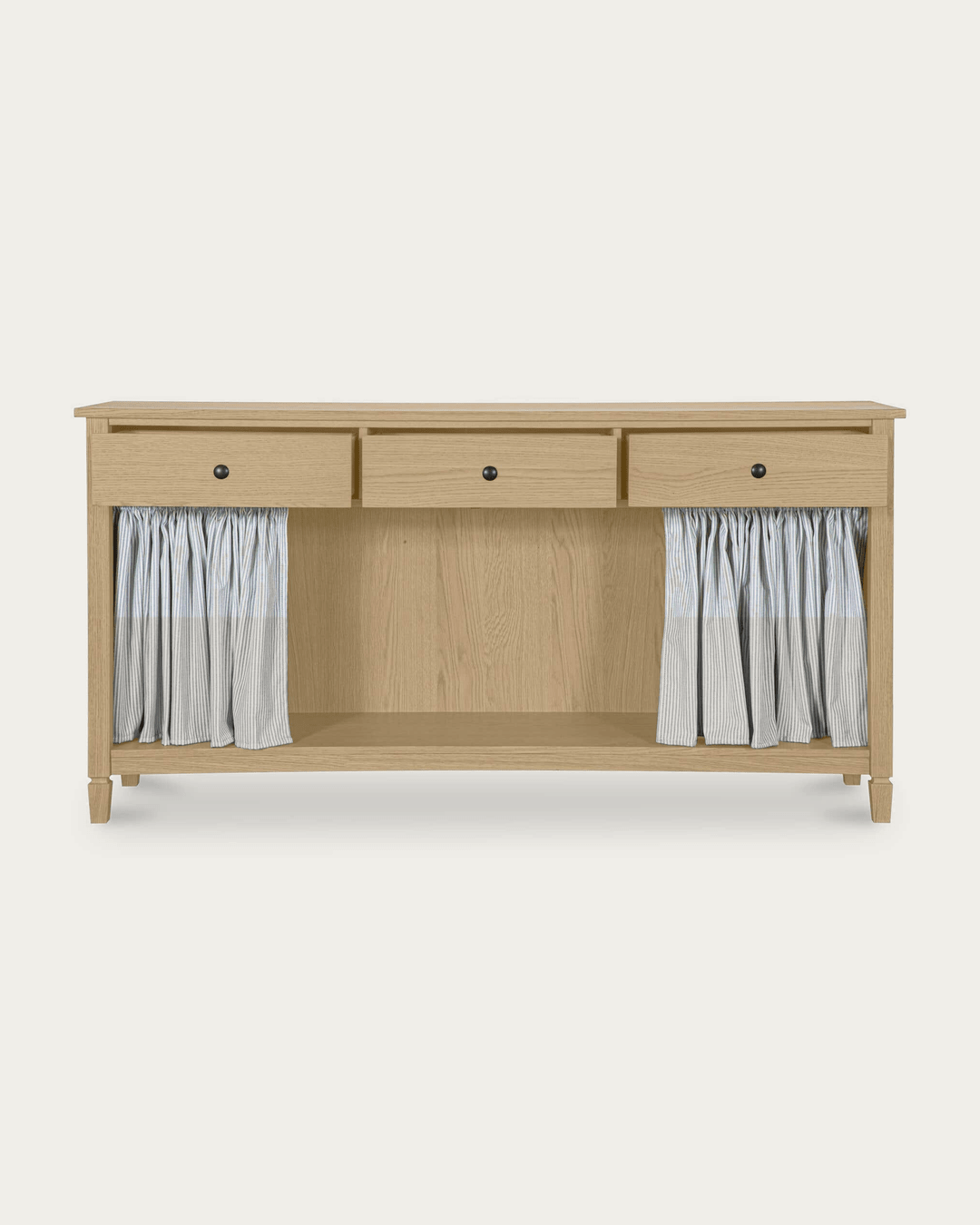
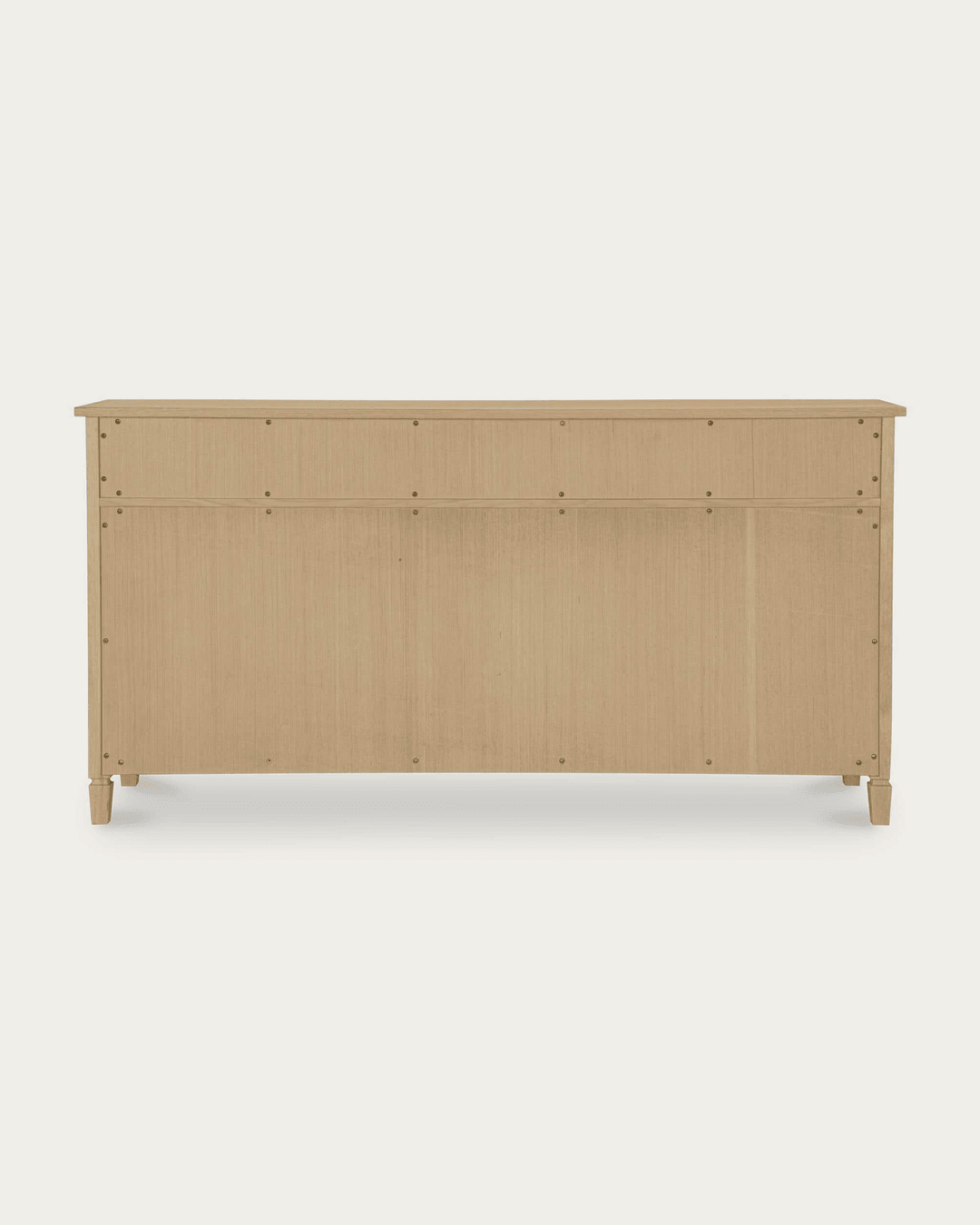
The Berglind sideboard has storage behind two front doors, with reclaimed pine, hand-carved detail, and a whitewashed finish on the exterior. Its material detail can carry visual interest while household essentials stay tucked away.
Use suitable internal containers to separate cables, paperwork, table linens, or other categories. Measure the available space first and keep frequently used items near the front.
When considering the Agnes wood cabinet, compare its dimensions and interior arrangement with the belongings you want to store. Check access and door clearance alongside its appearance in the room.
Place storage near the activity it supports. Table linens belong within easy reach of the dining area. Reading supplies work well near seating. Household paperwork needs a location you’ll actually use.
Let the wood connect with nearby furniture or flooring through tone or texture. Then keep the top surface purposeful: a lamp, a small display, or a clear landing area.
A cabinet becomes useful when returning something is simple enough to become part of the routine.
A shelf belongs to a room, so assess it alongside furniture, artwork, lighting, and walking routes.
Finish by looking from the doorway and your usual seat. These views can reveal overlapping shapes or several equally prominent arrangements that you miss while standing directly in front of the display.
The Junia vintage wood sideboard features hand-carved wood, a worn patina, and three to four reassembled doors. Its exterior supplies considerable detail, which is useful to consider when arranging nearby shelves.
If a detailed sideboard sits beneath or beside shelving, try a simpler display above it. Give one area the main emphasis while connecting the other through related colors or materials.
Check the arrangement in daylight and under your evening lighting. Reflections on glass or glaze may become more noticeable, while other objects become less distinct.
Can you reach your books, open the doors, and return things easily? Do you enjoy the view from where you spend time?
Some people prefer fuller collections; others appreciate more open space. Treat the arrangement as something to assess personally rather than a guaranteed way to regulate the nervous system.
Live with it for a few days. Keep what you enjoy seeing and adjust anything that gets in the way.
What deserves to be seen will differ from home to home. Choose deliberately, give those objects clear relationships, and keep everyday storage convenient.
Start with one shelf. Edit its contents, adjust the spacing, and check the view from where you actually sit.
When you explore Hello Norden’s vintage furniture, look for pieces that give your belongings a useful home and your favorite objects a place to be noticed.