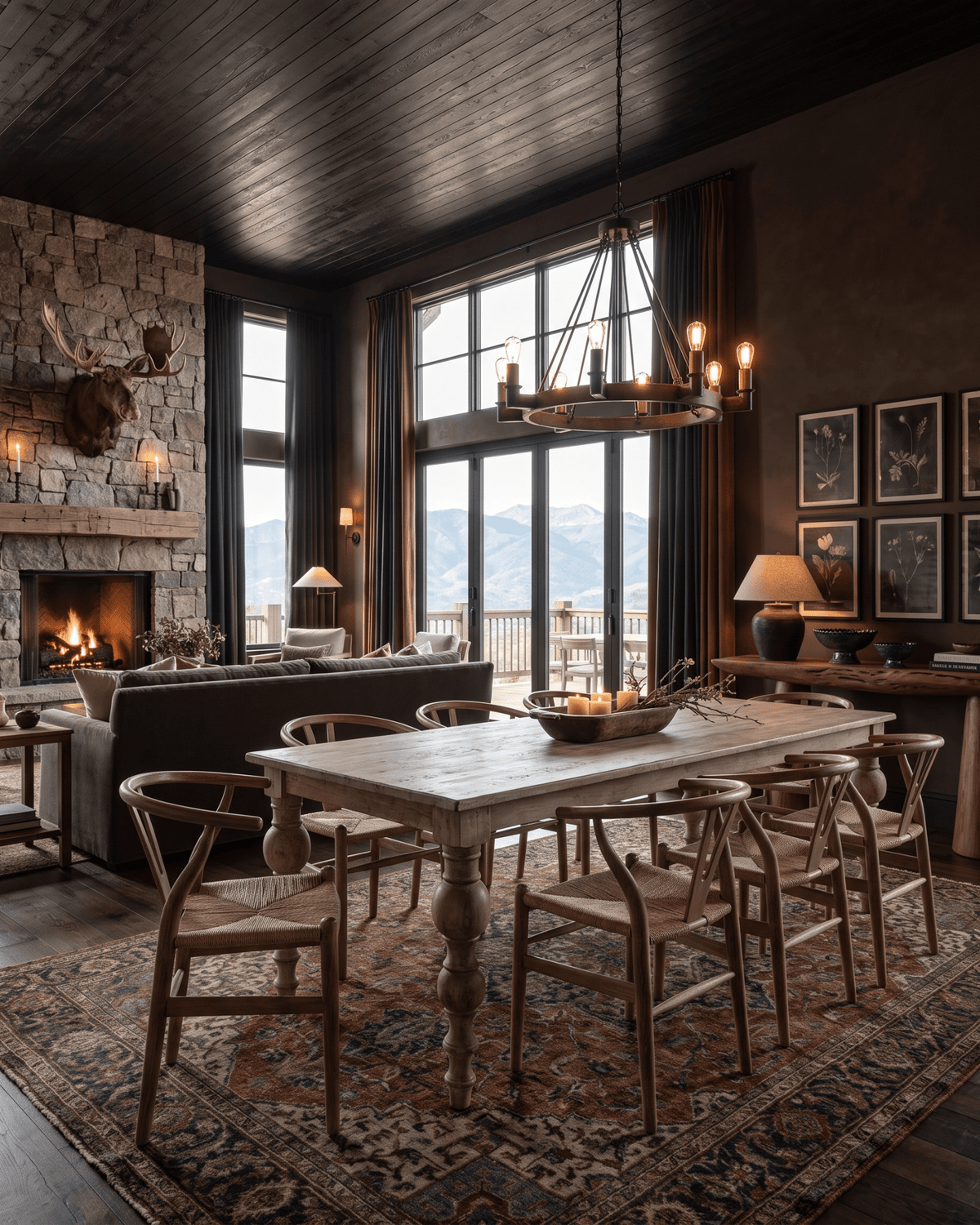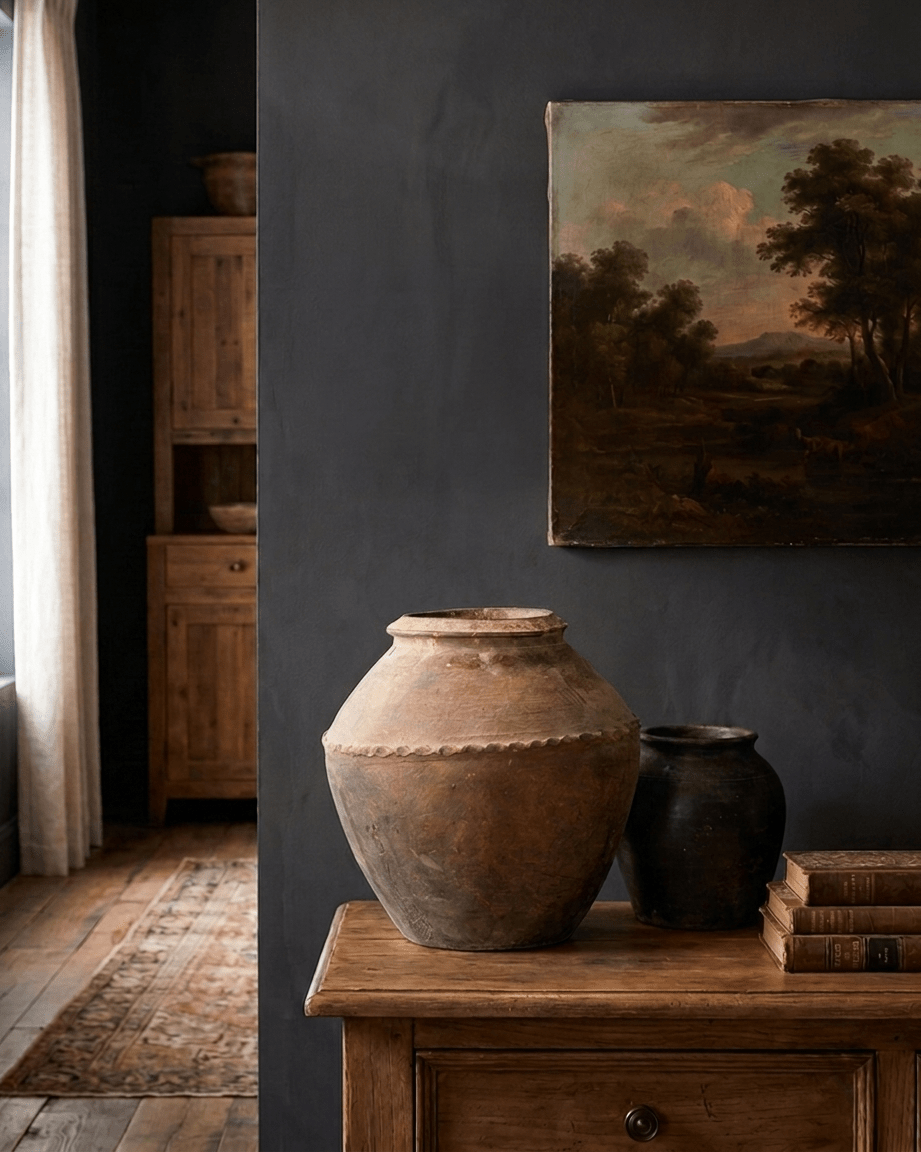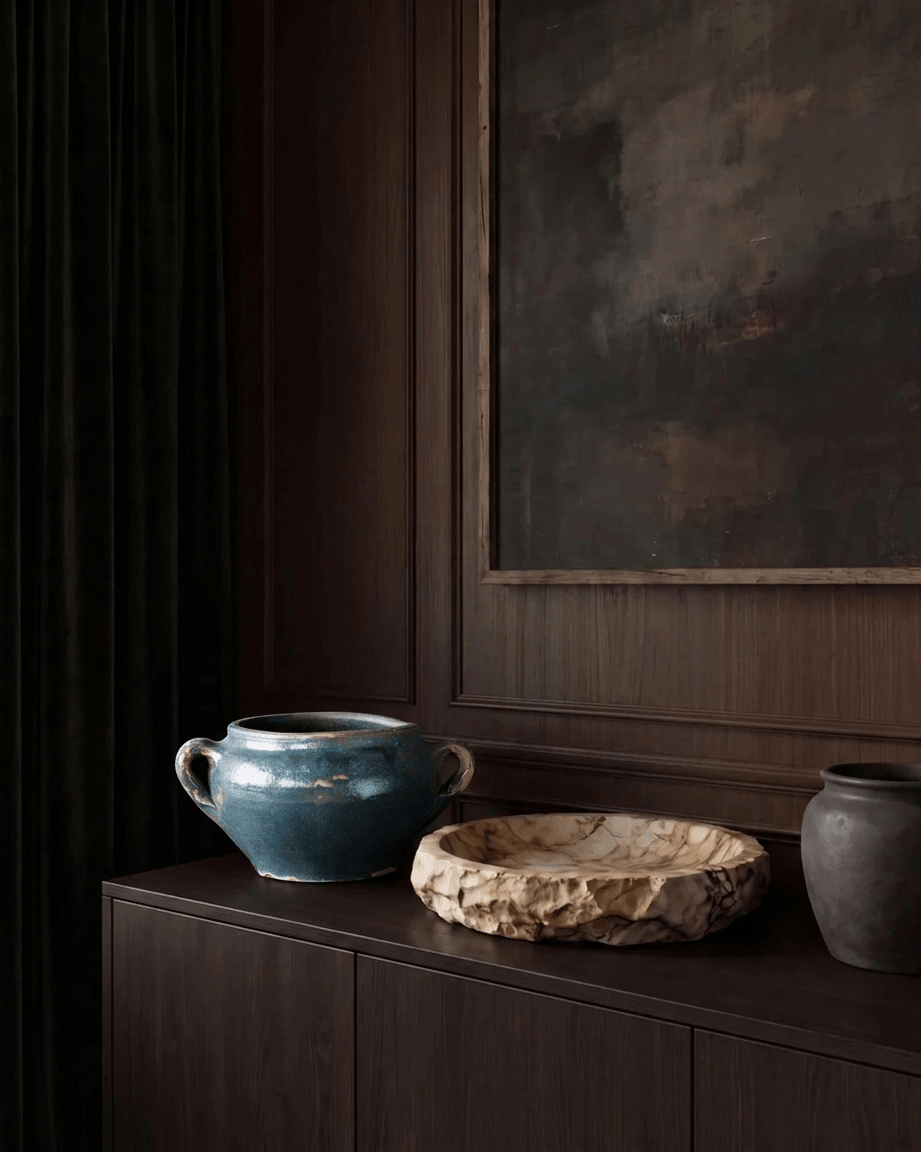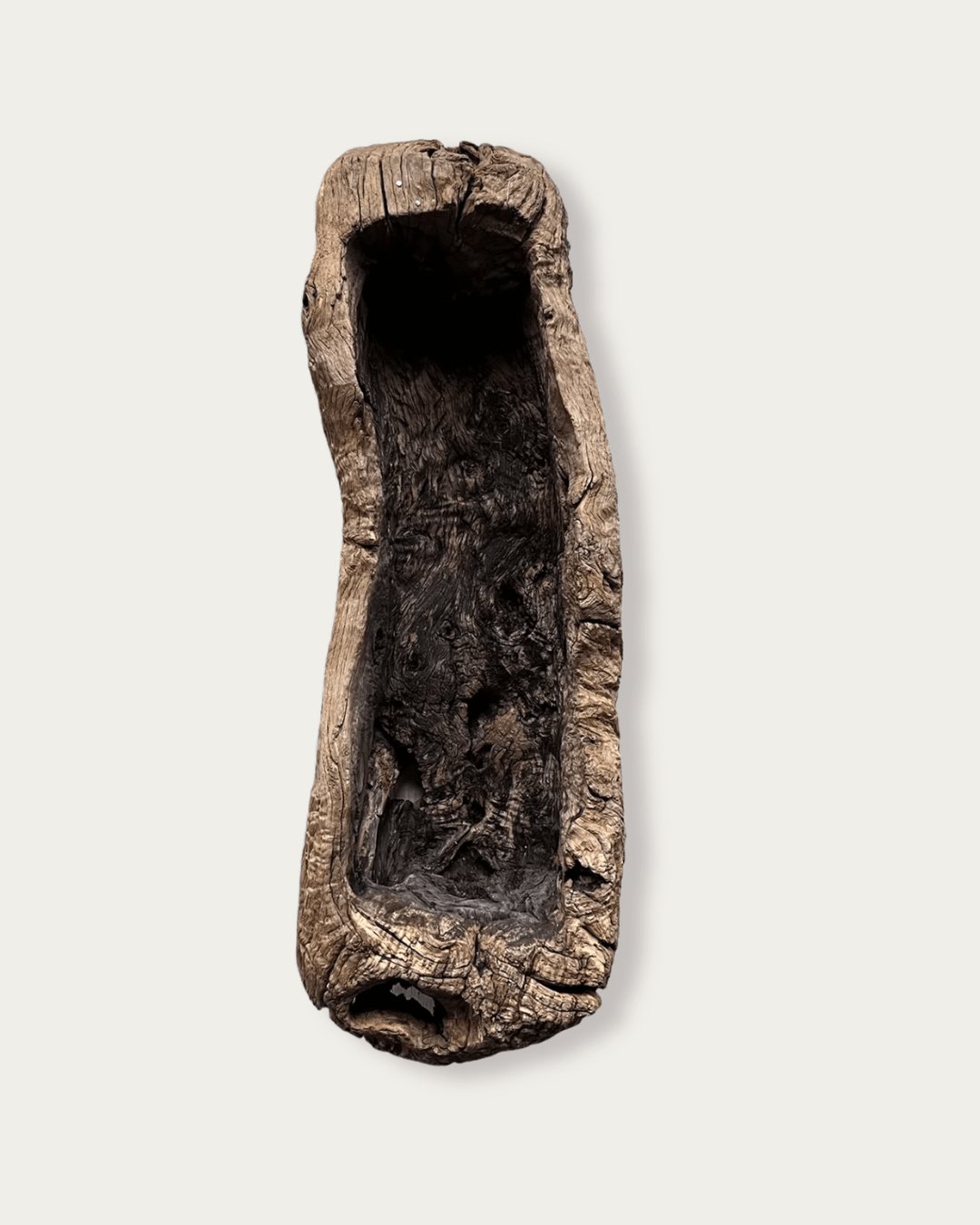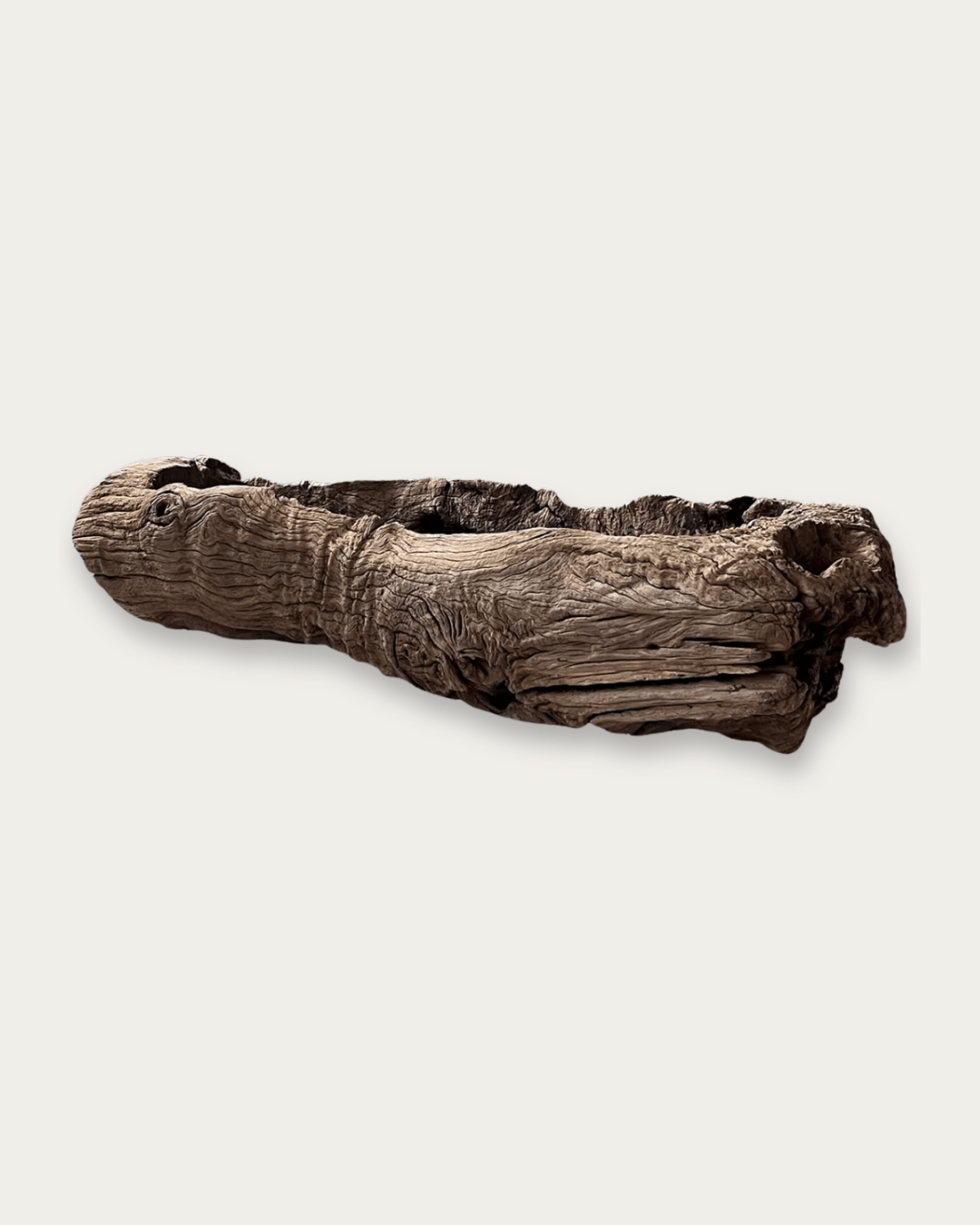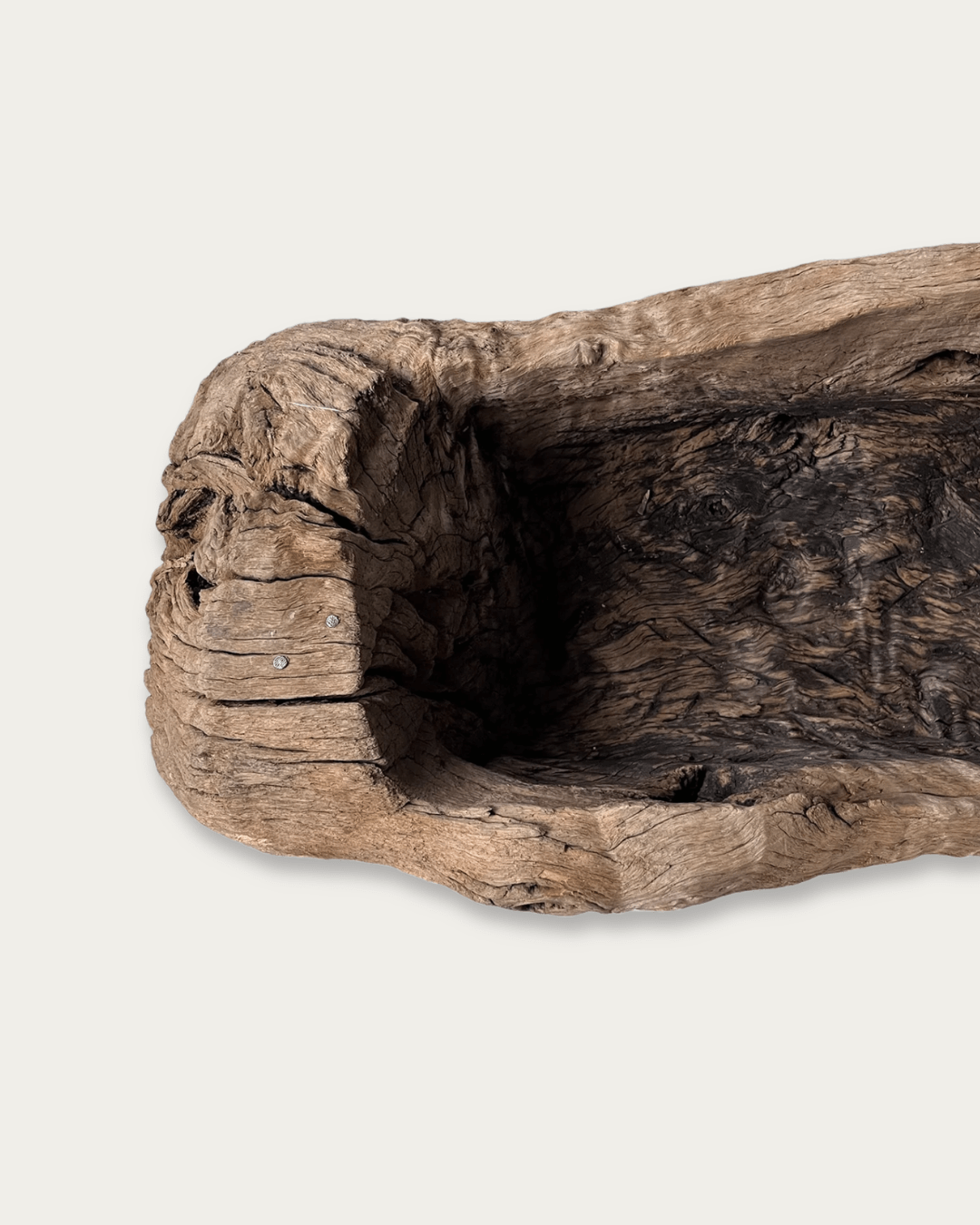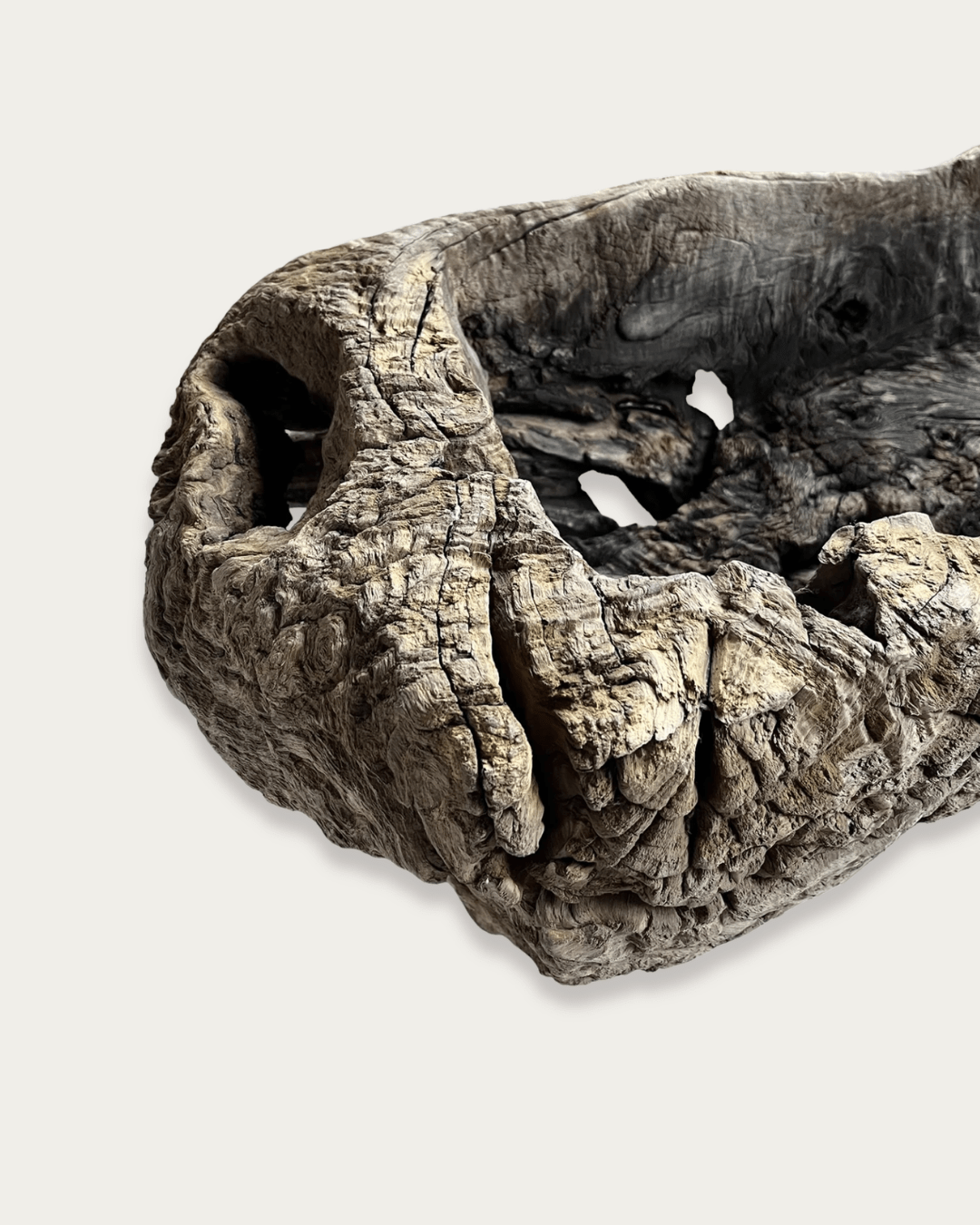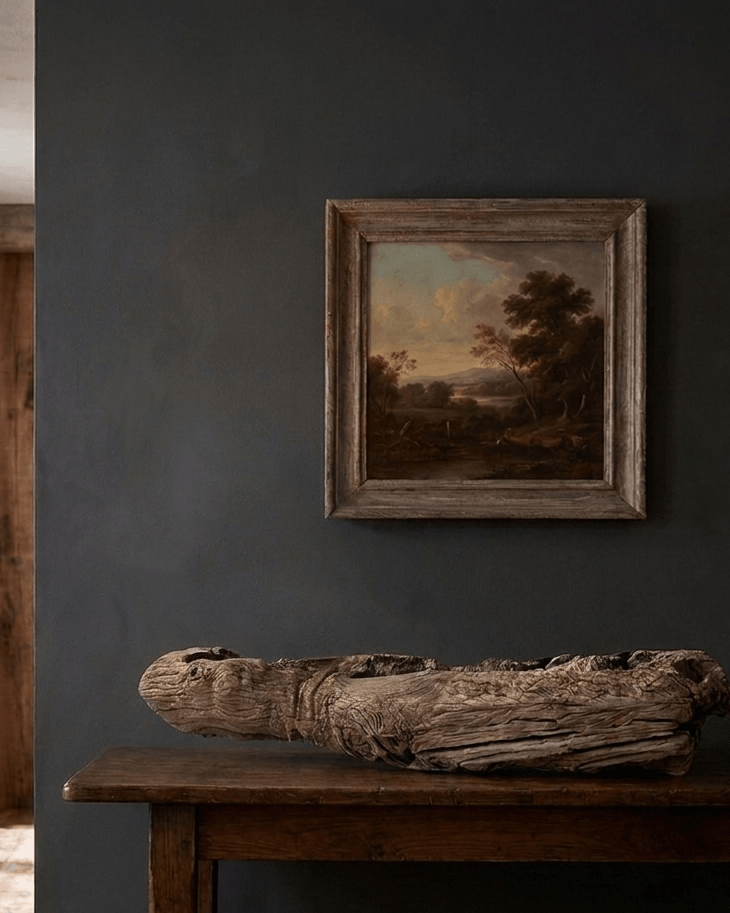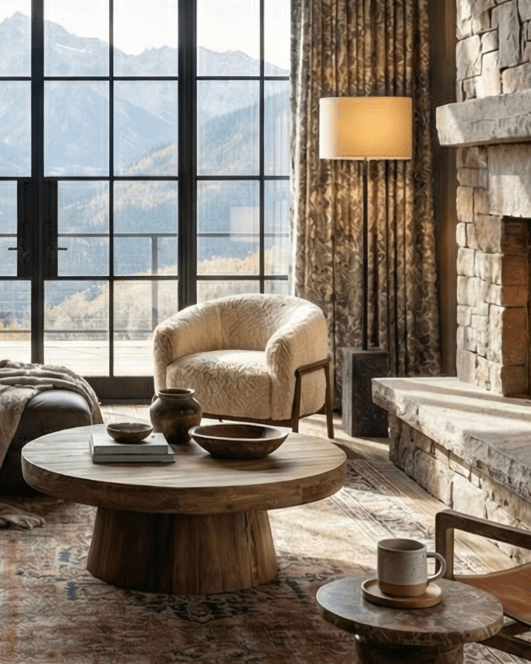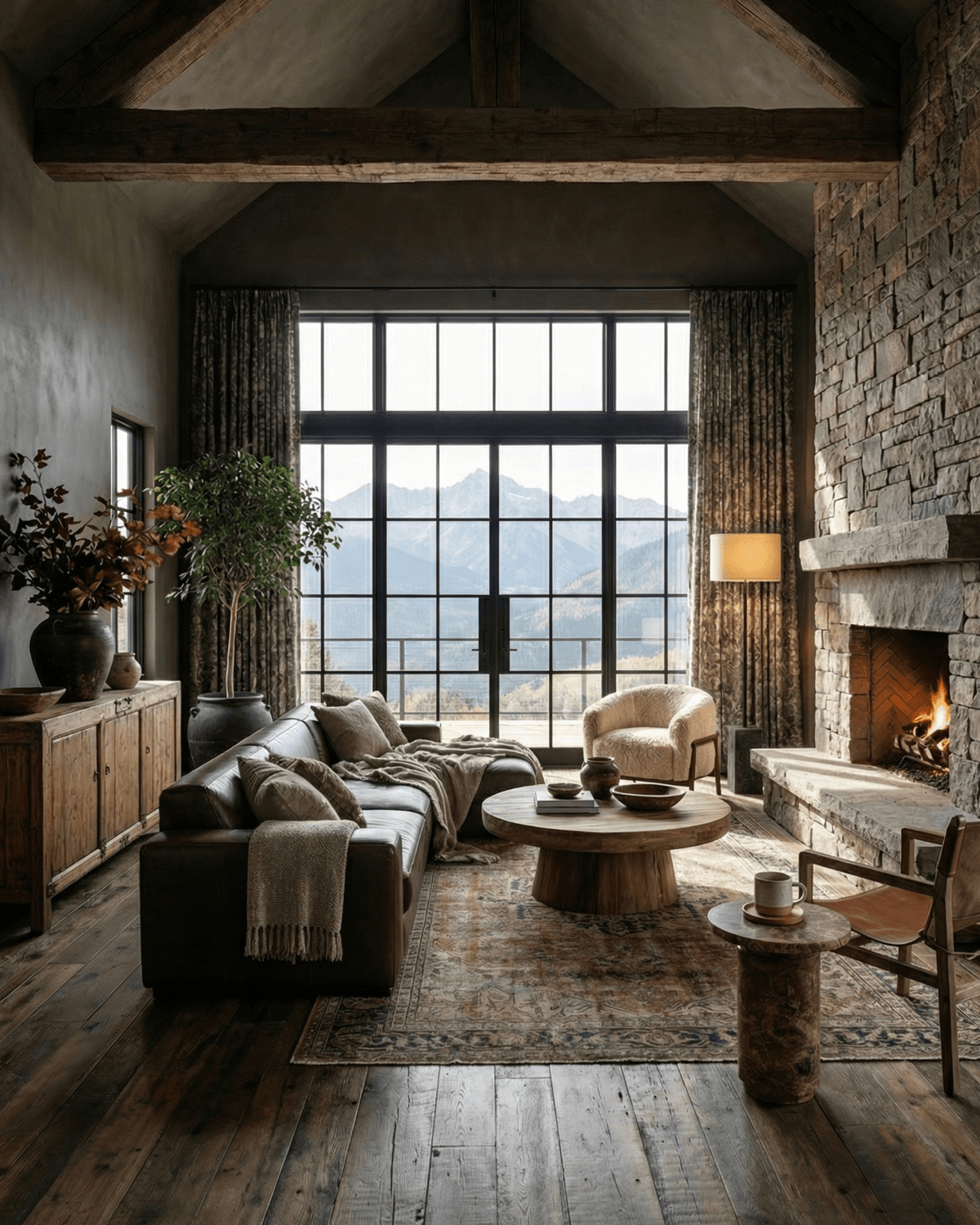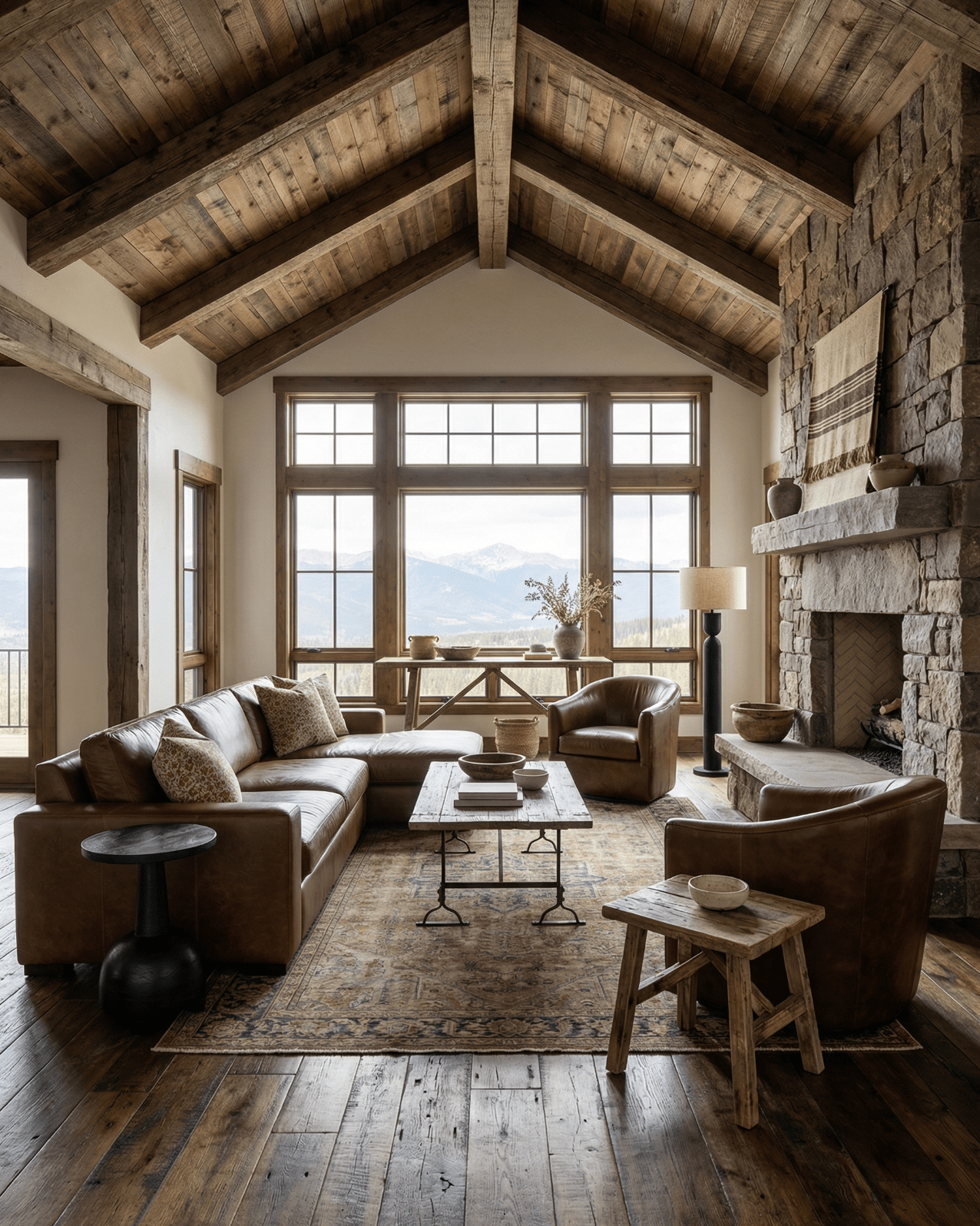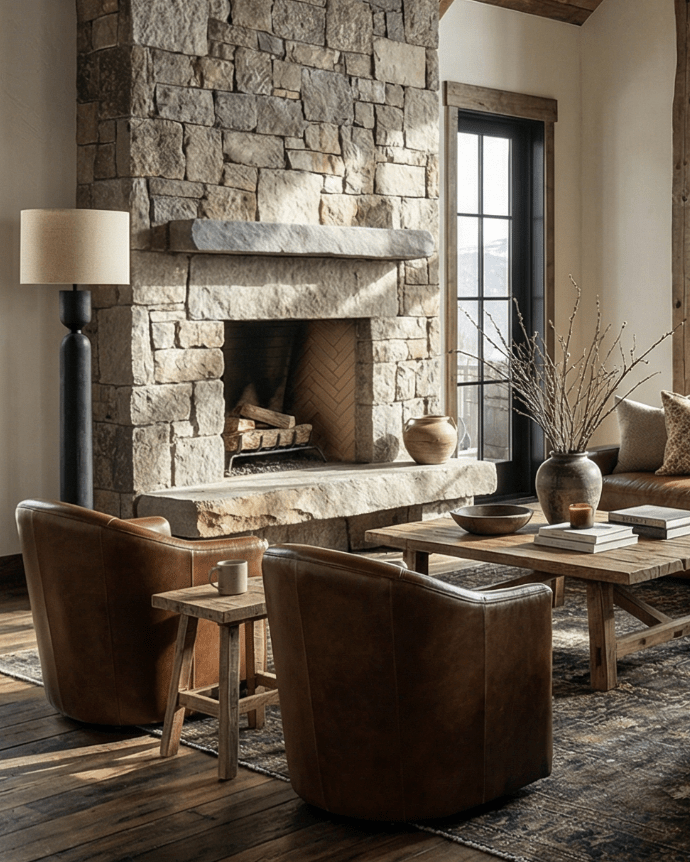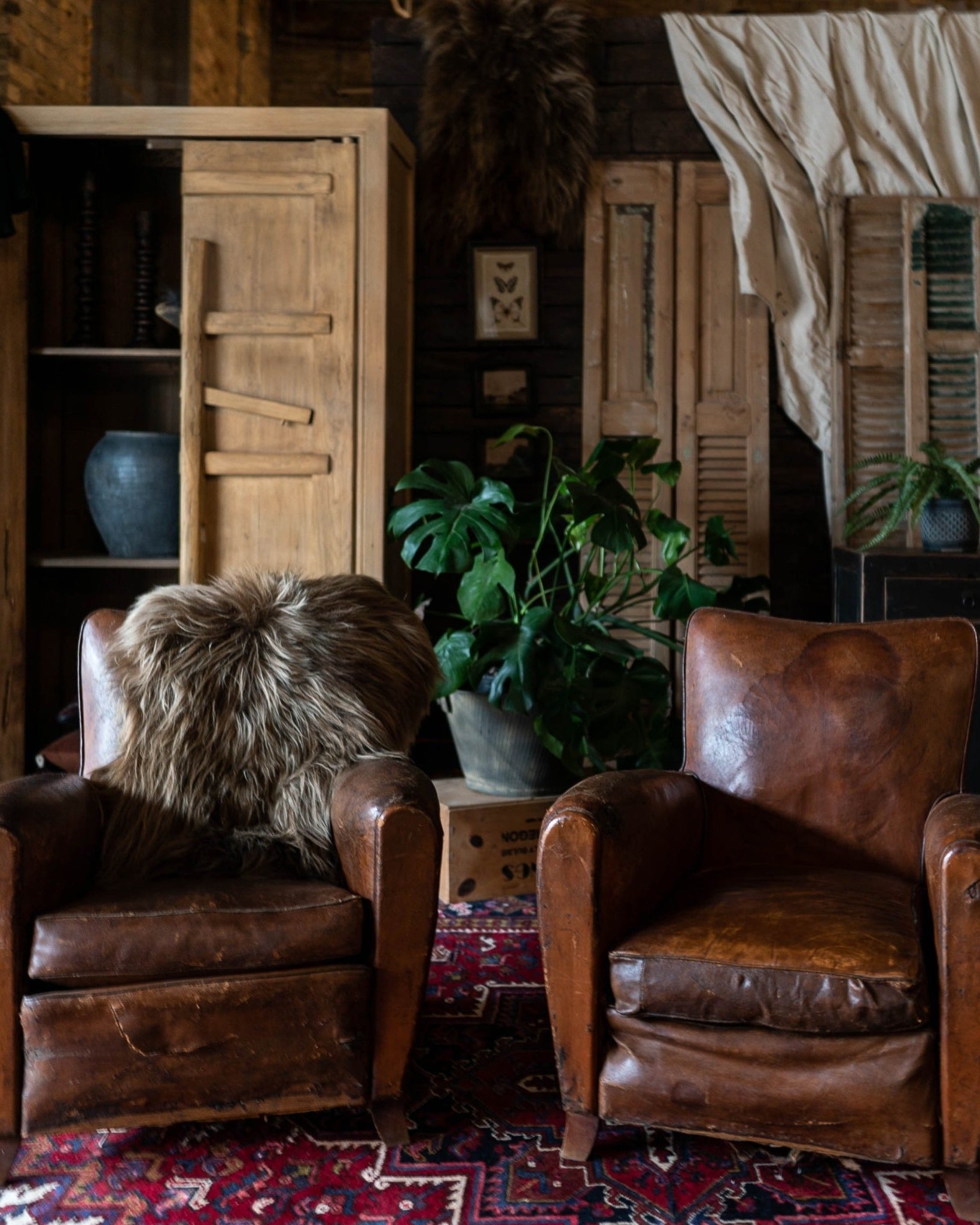







Most homes don’t suffer from a lack of personality. They suffer from too many small decisions. If you’ve ever rearranged shelves, stacked objects, stepped back—and still felt like the room was floating—you’ve already met the problem. Vintage decor works best when it stops whispering from the sidelines and starts doing structural work.
Anchors, not accents. That’s the shift.
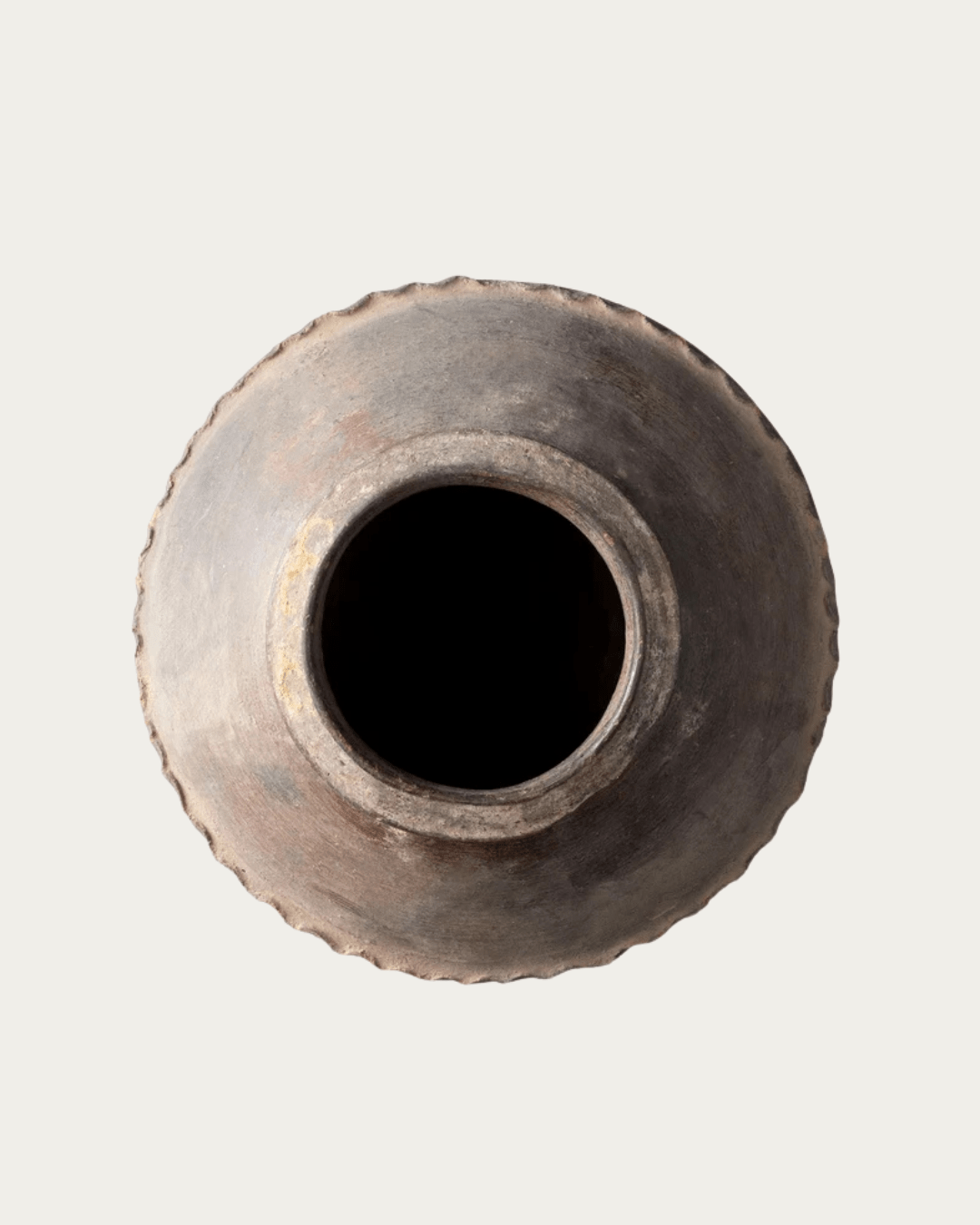
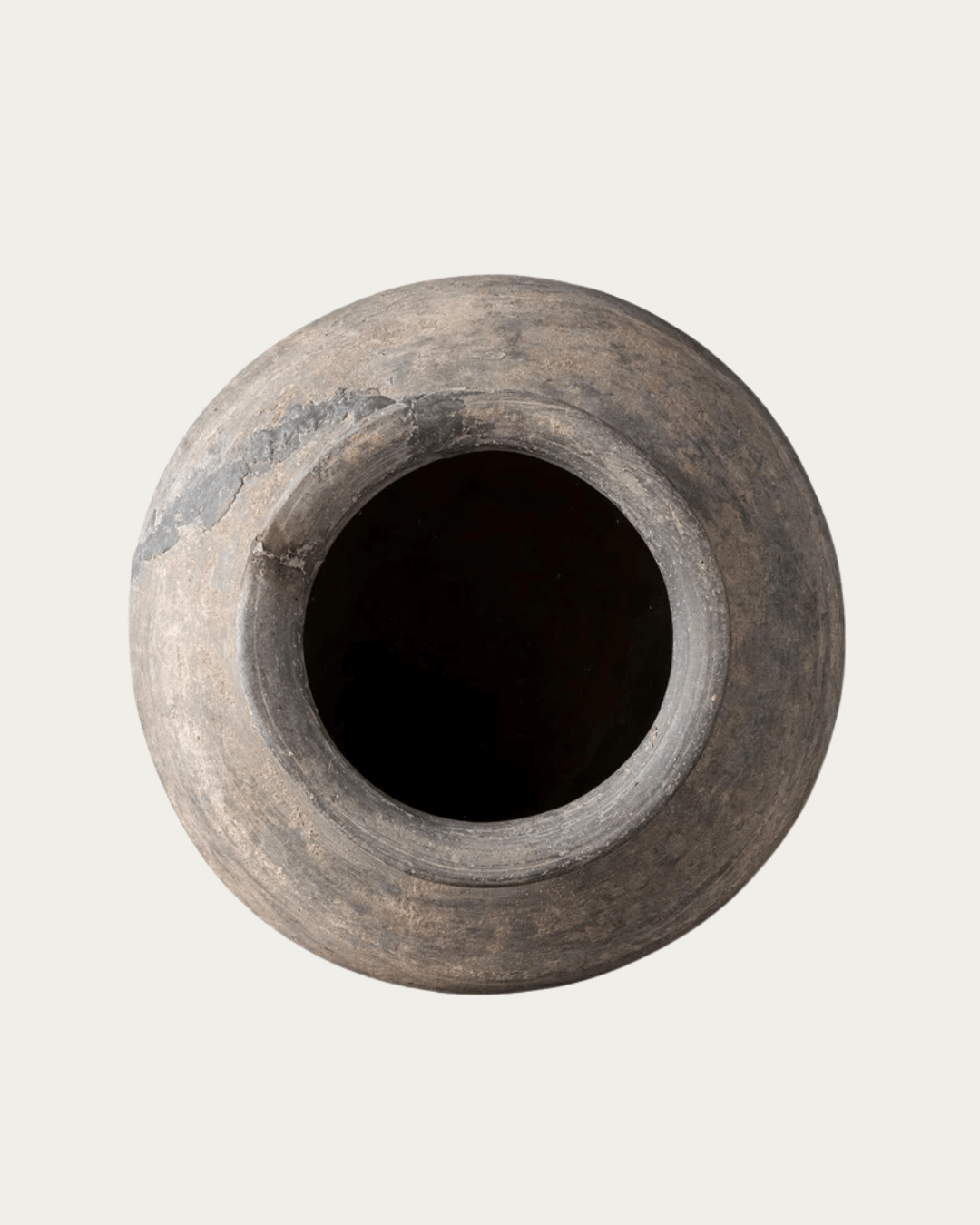
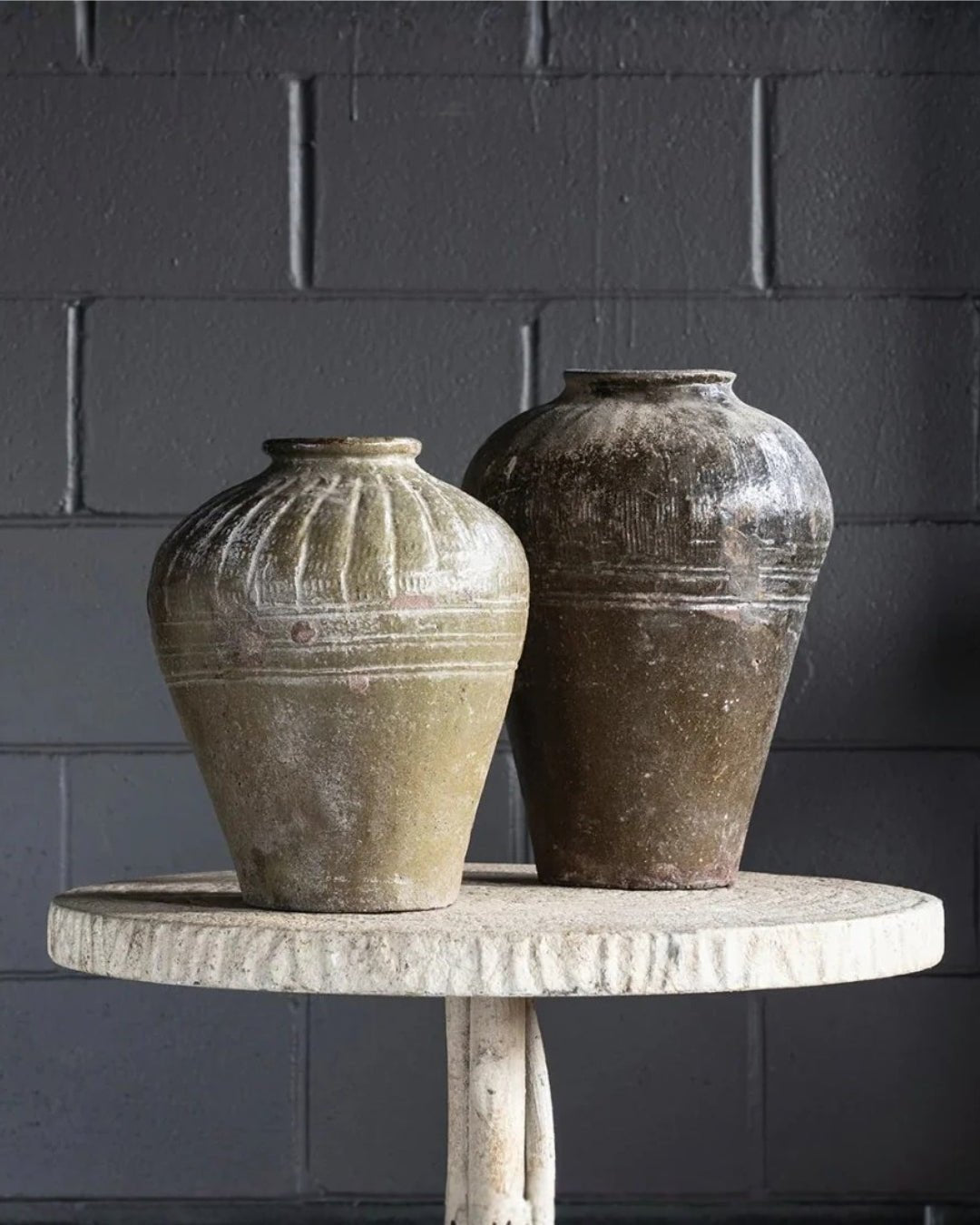
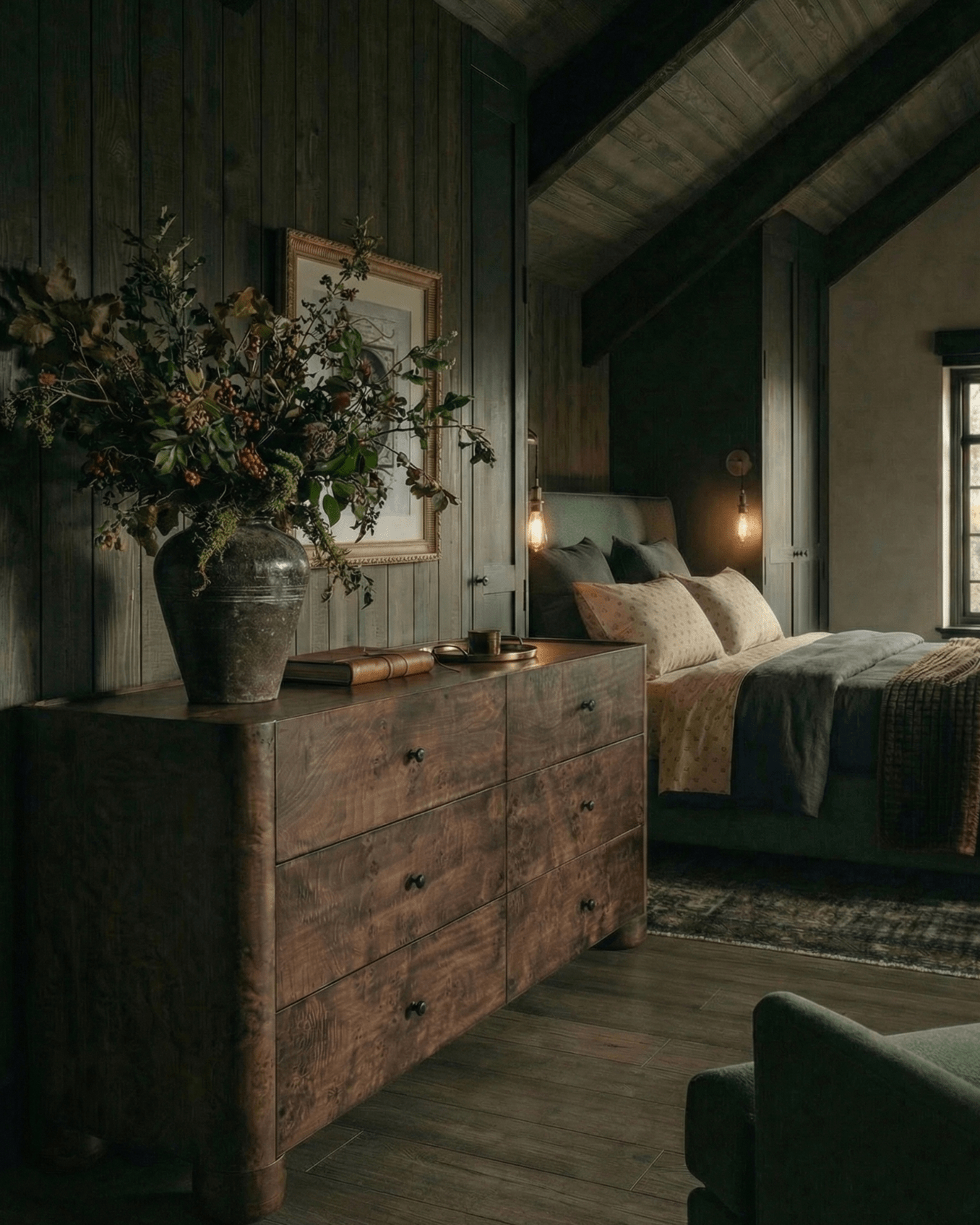
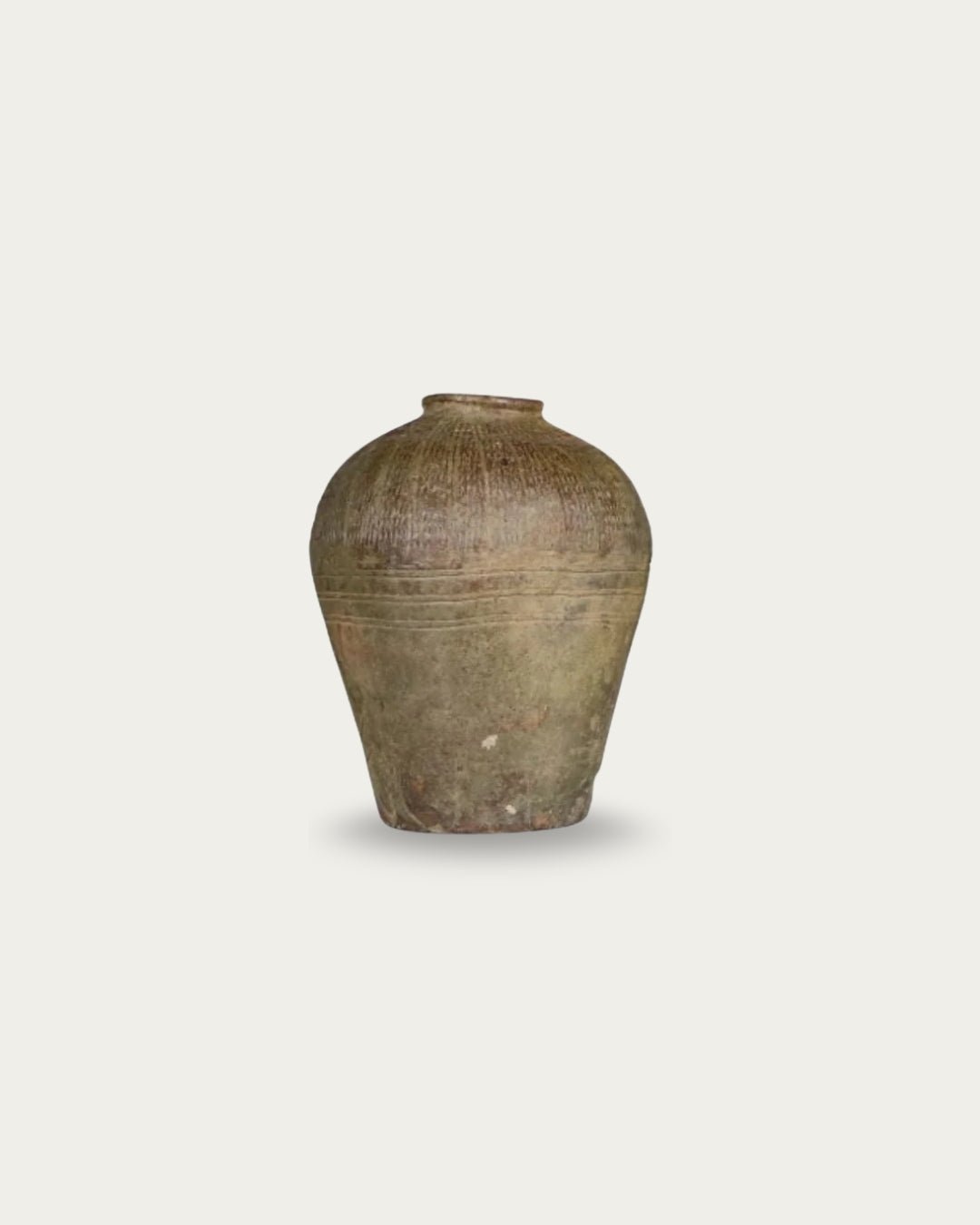
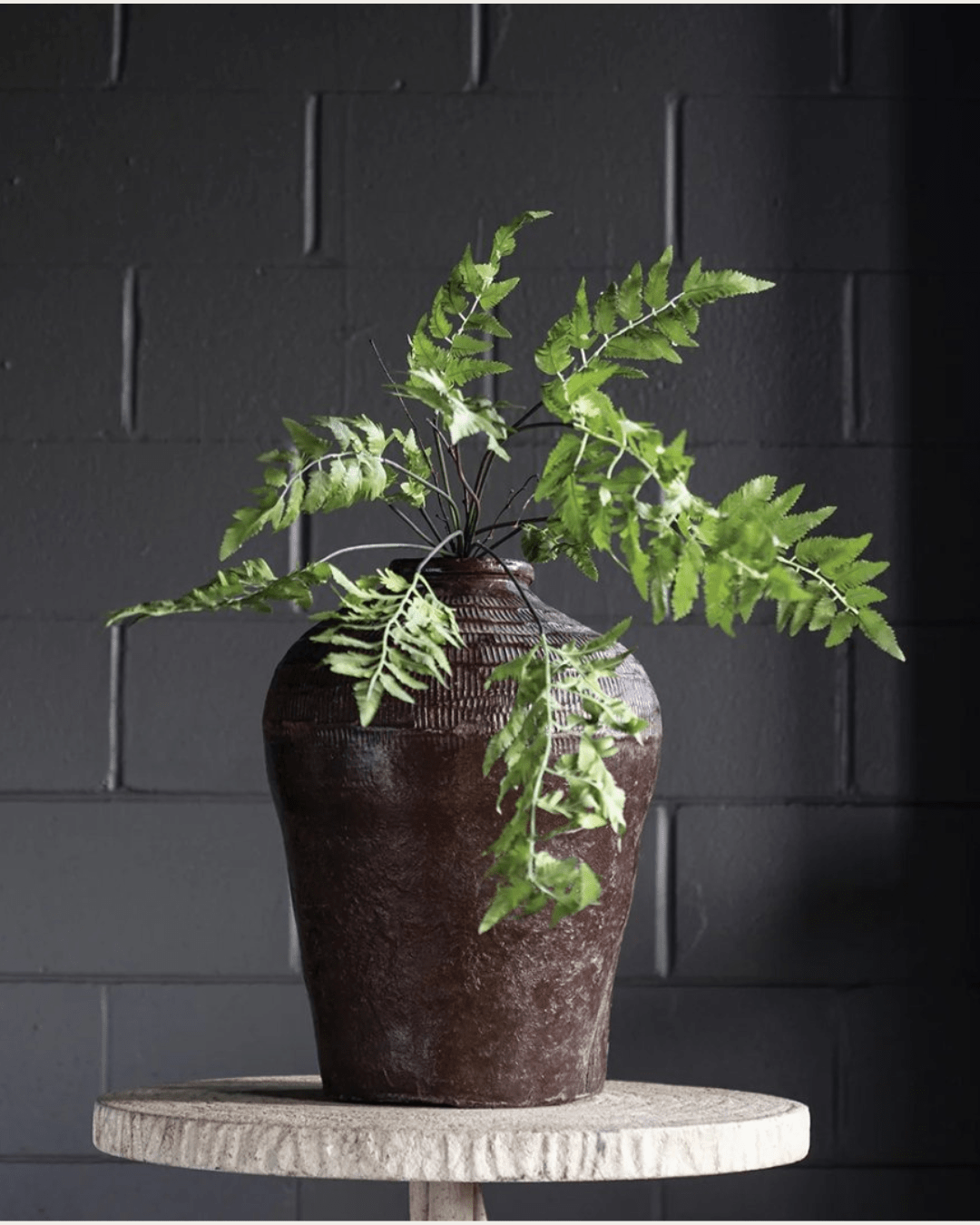
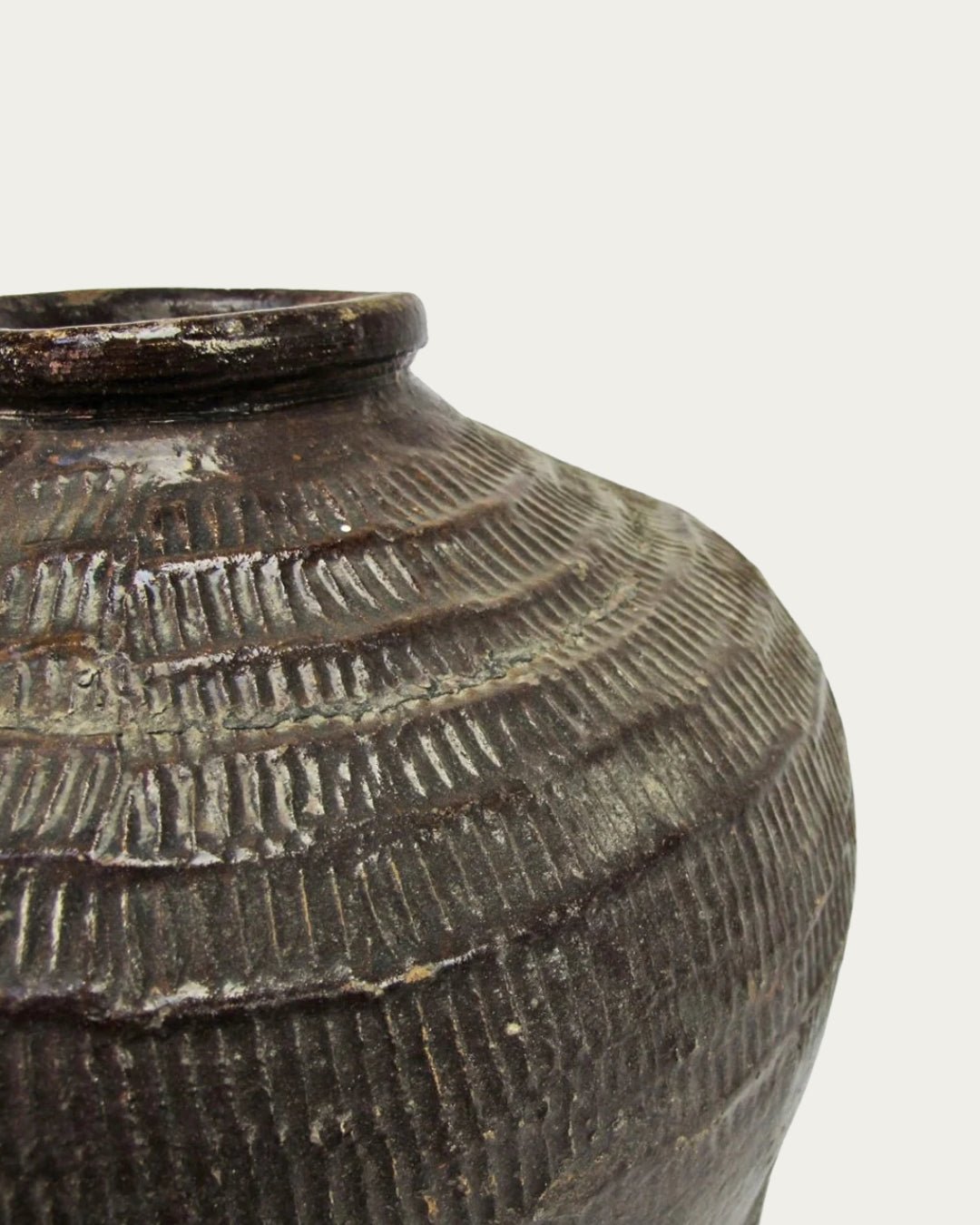
Large-scale vintage pots and planters were never meant to be filler. Historically, they held water, grain, tools and olive oil. They lived on floors, against walls, near doors. They grounded spaces because they had a job. When used the same way today, they bring visual weight, rhythm, and calm—without clutter.
Why Anchors Matter More Than Accents in Vintage Decor
Accents decorate. Anchors organize.
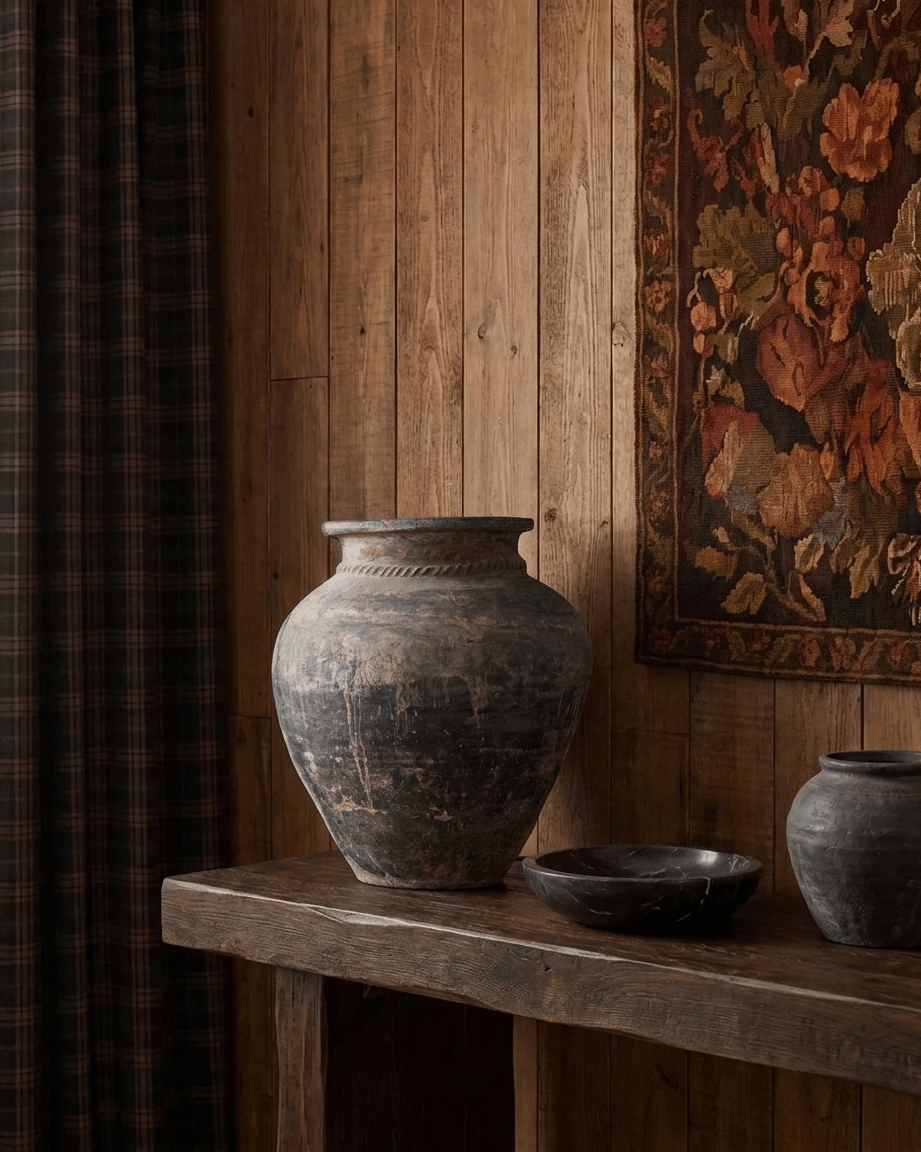
In vintage home decor, accents are the small things we scatter—bowls, frames, curios—hoping they’ll add interest. Anchors do the opposite: they simplify the visual field. A single grounded object gives your eye a place to land, which immediately makes the rest of the room feel more intentional.
Large pots and planters excel here because of three traits: mass, material, and history. Their scale creates balance. Their surfaces absorb light instead of bouncing it. Their wear tells a story without asking for attention.
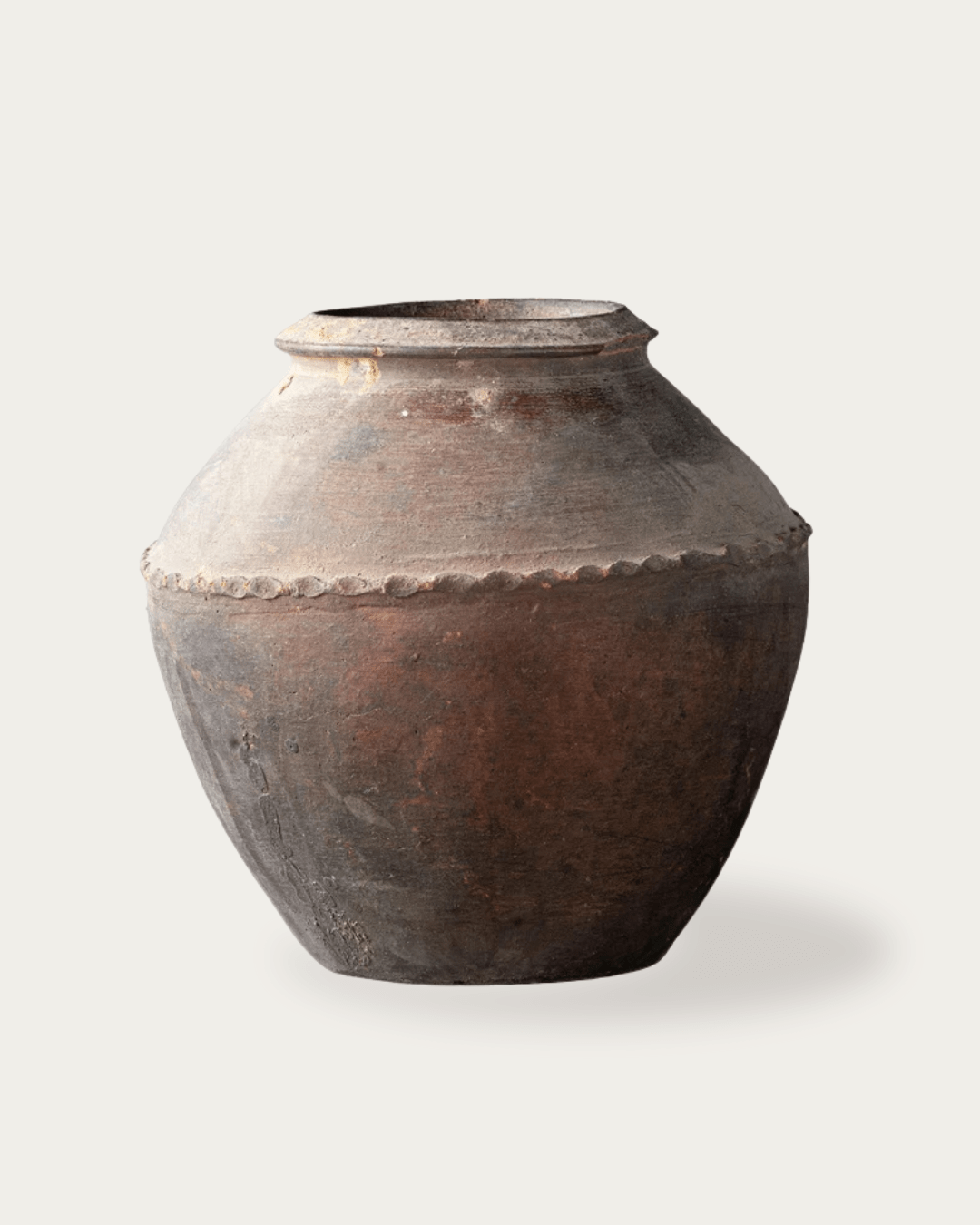
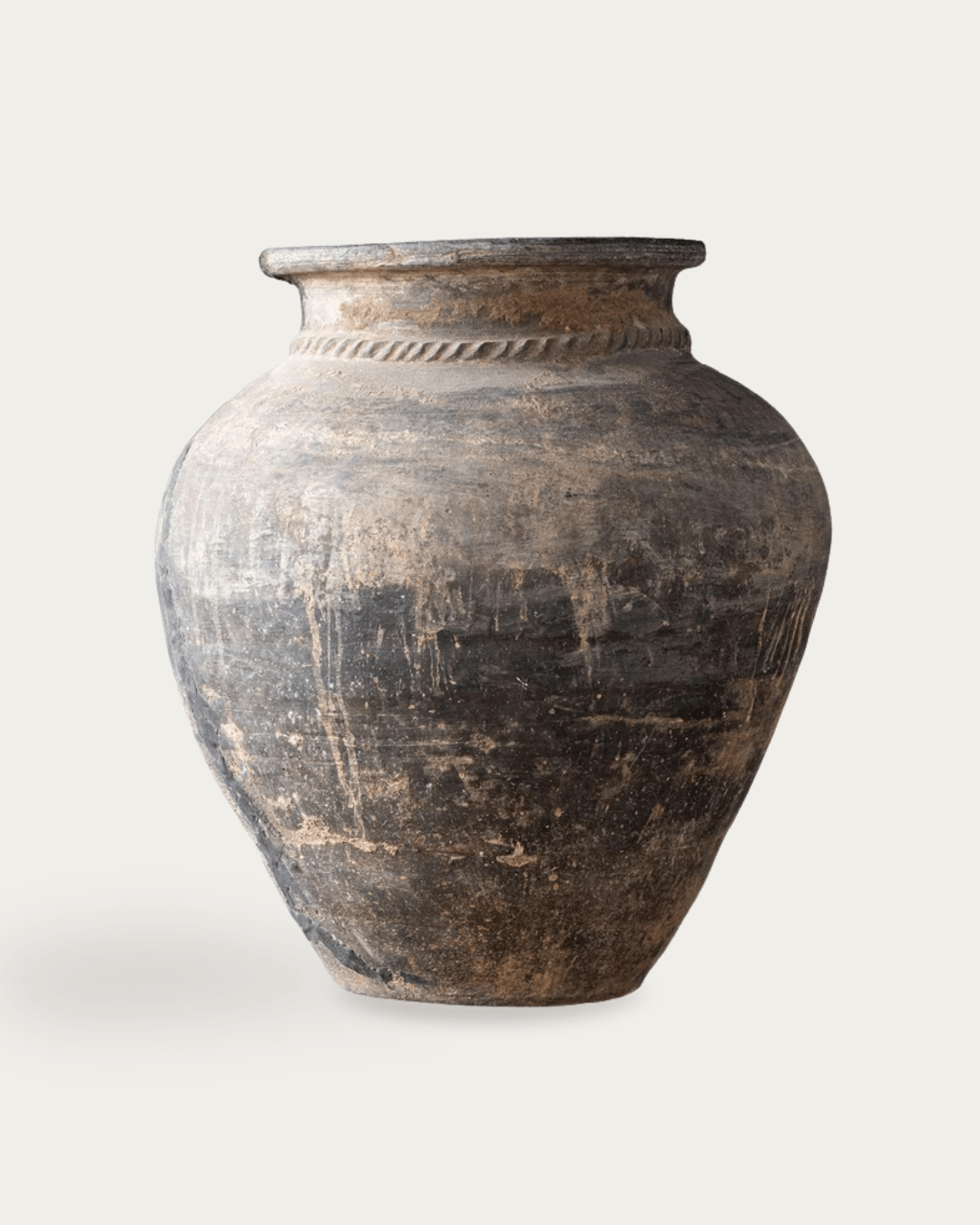
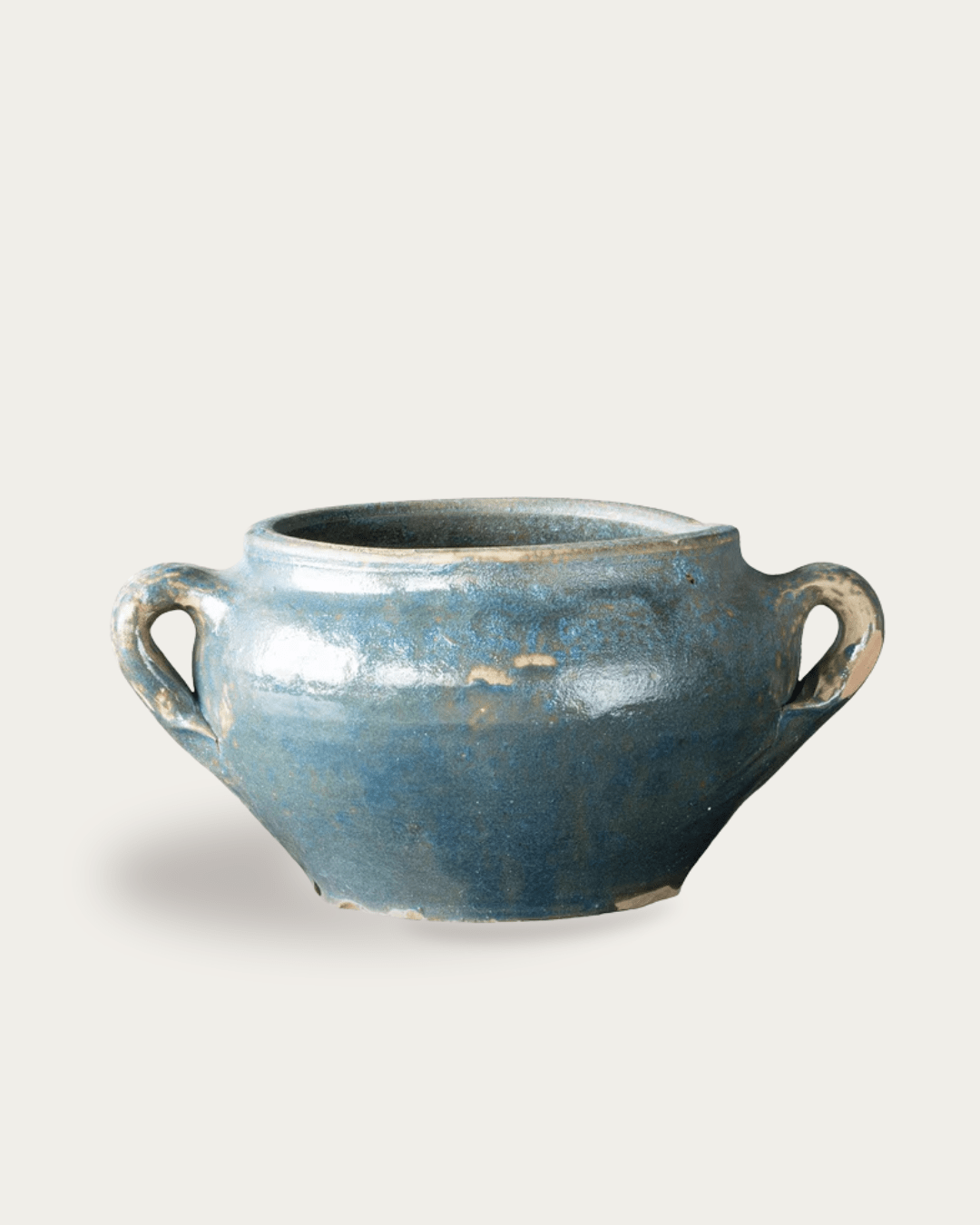
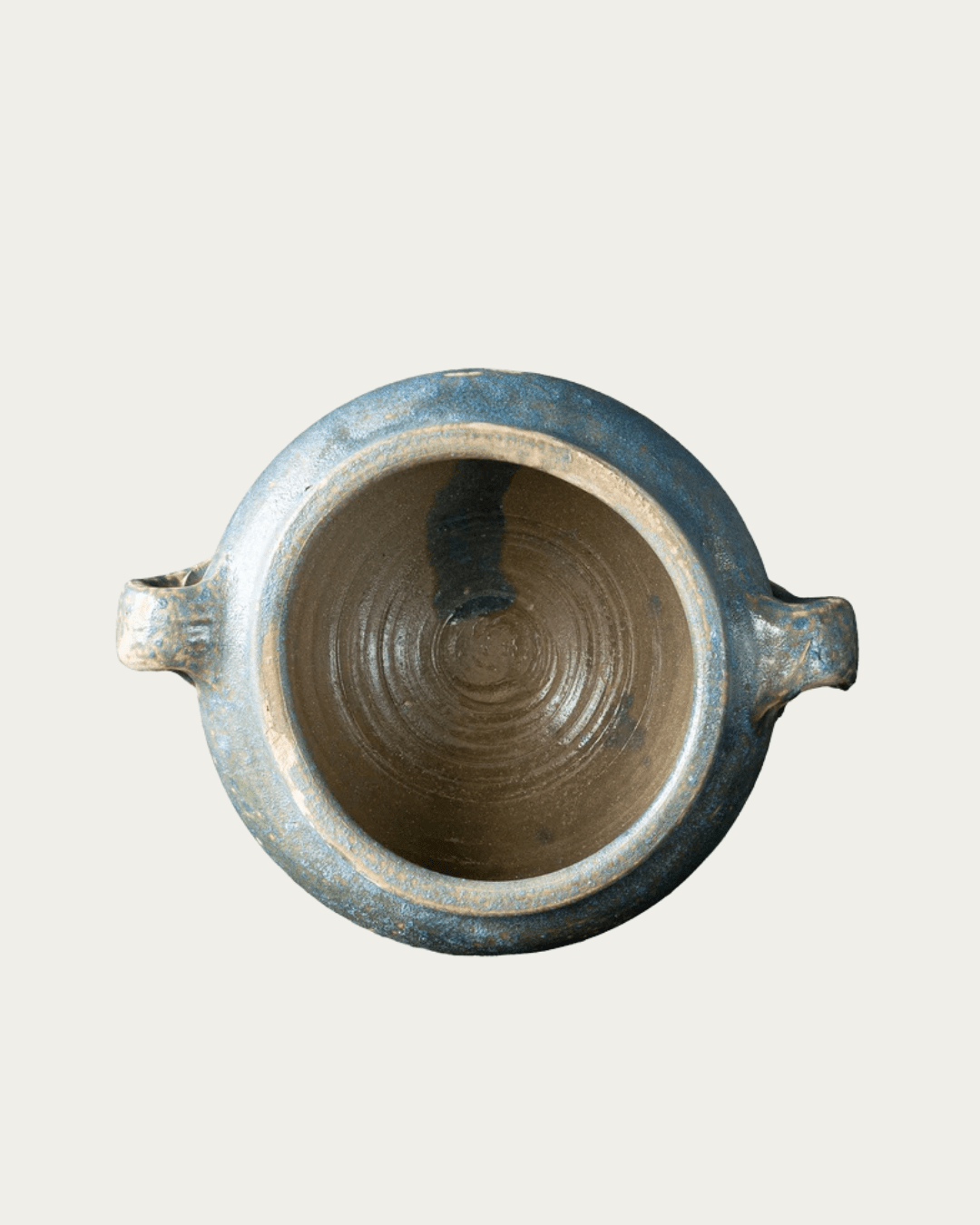
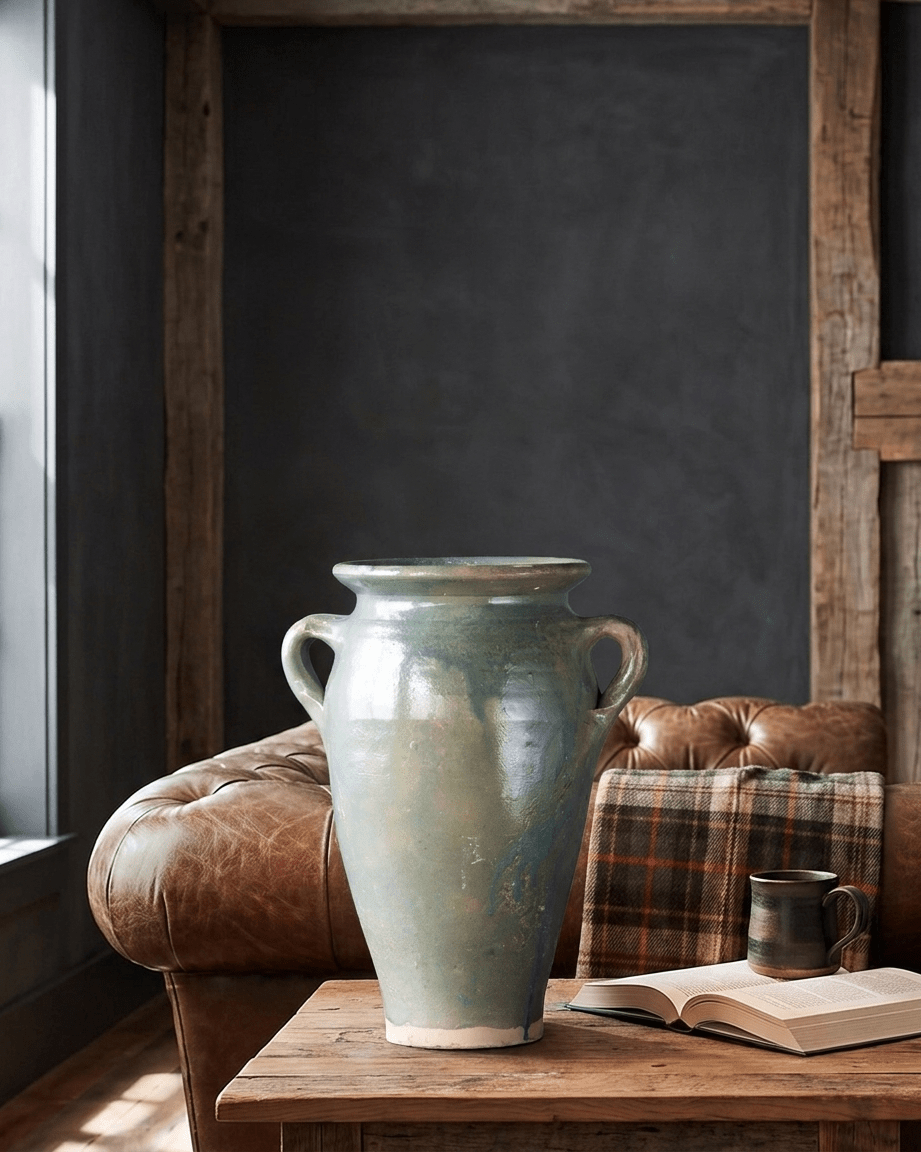
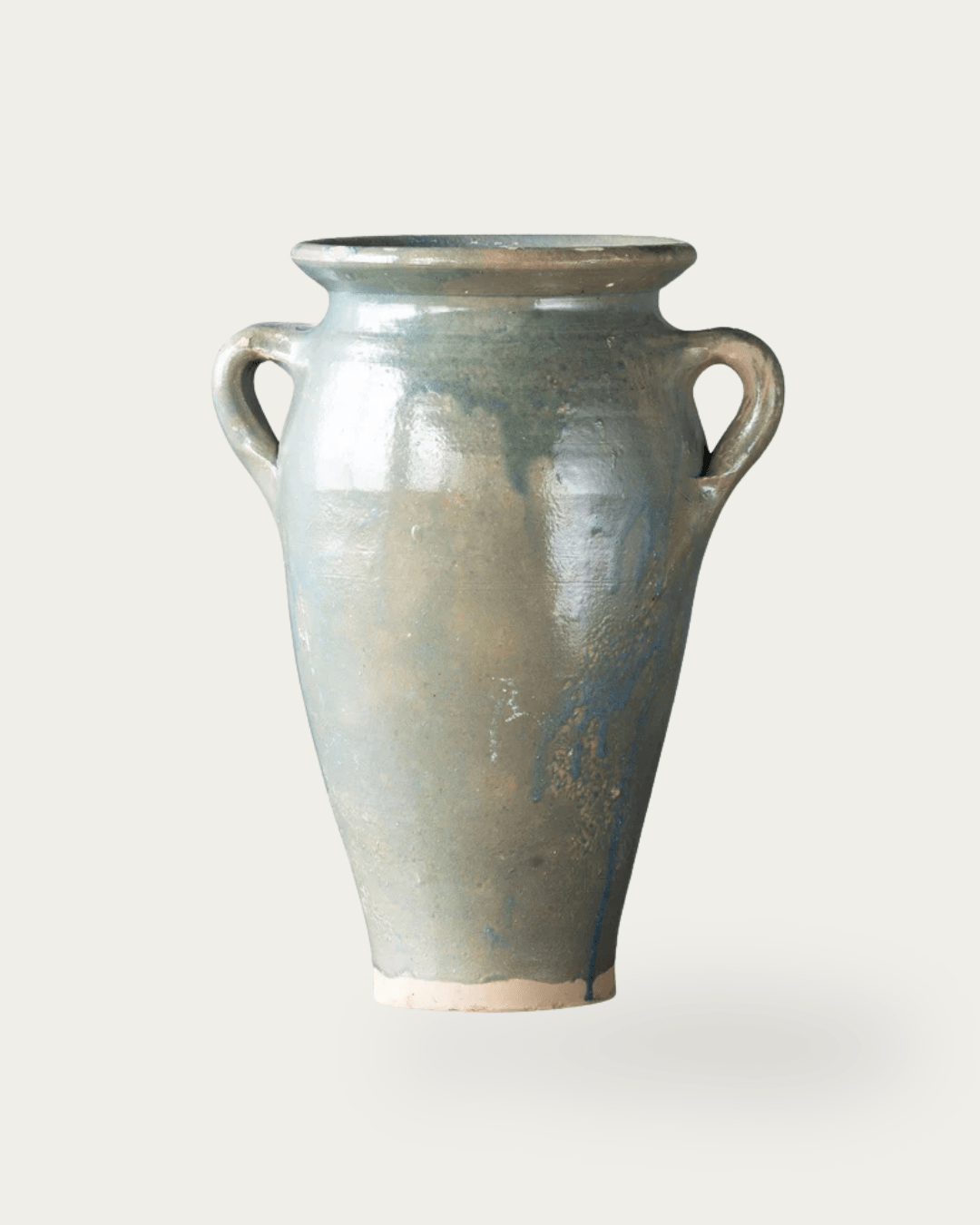
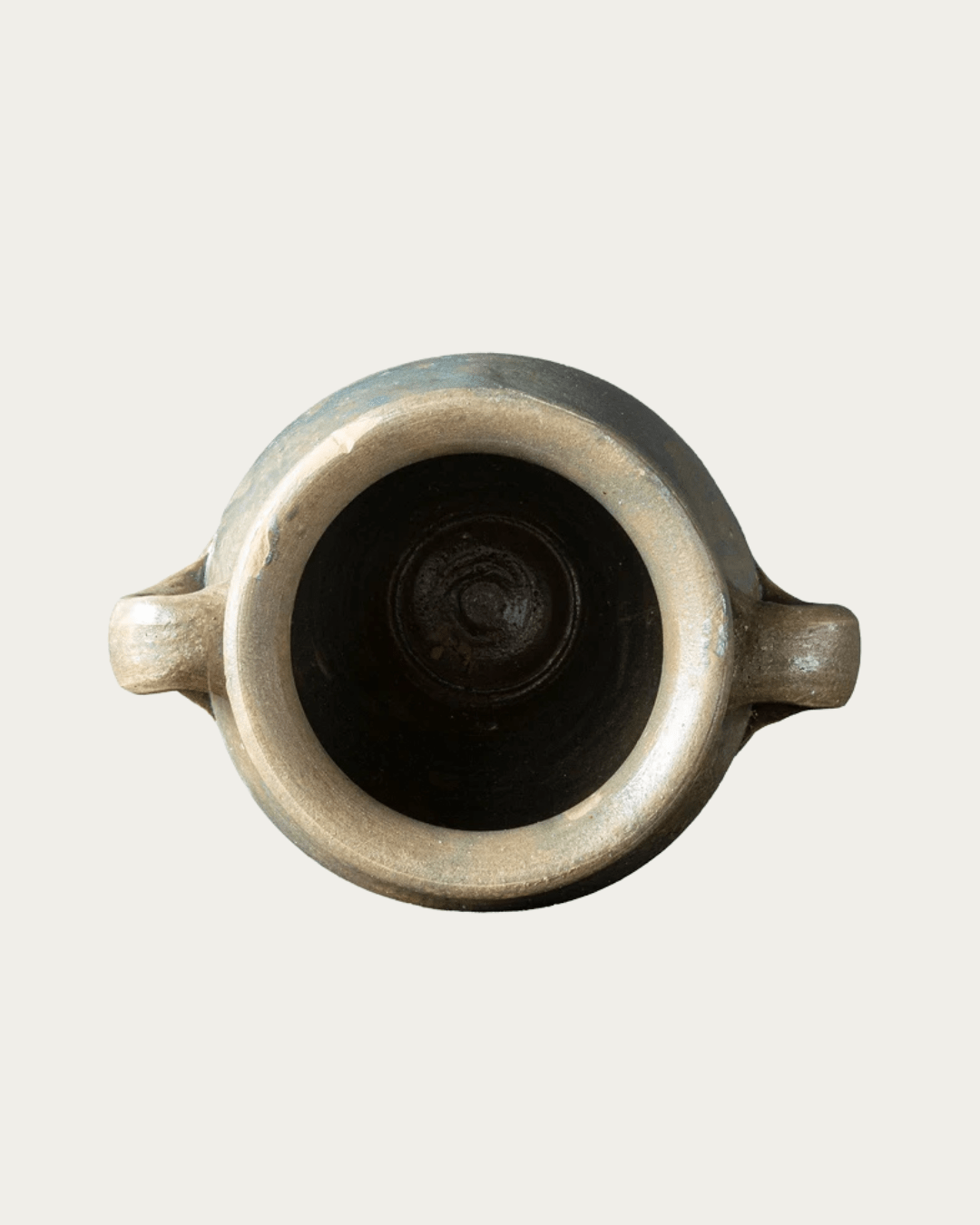
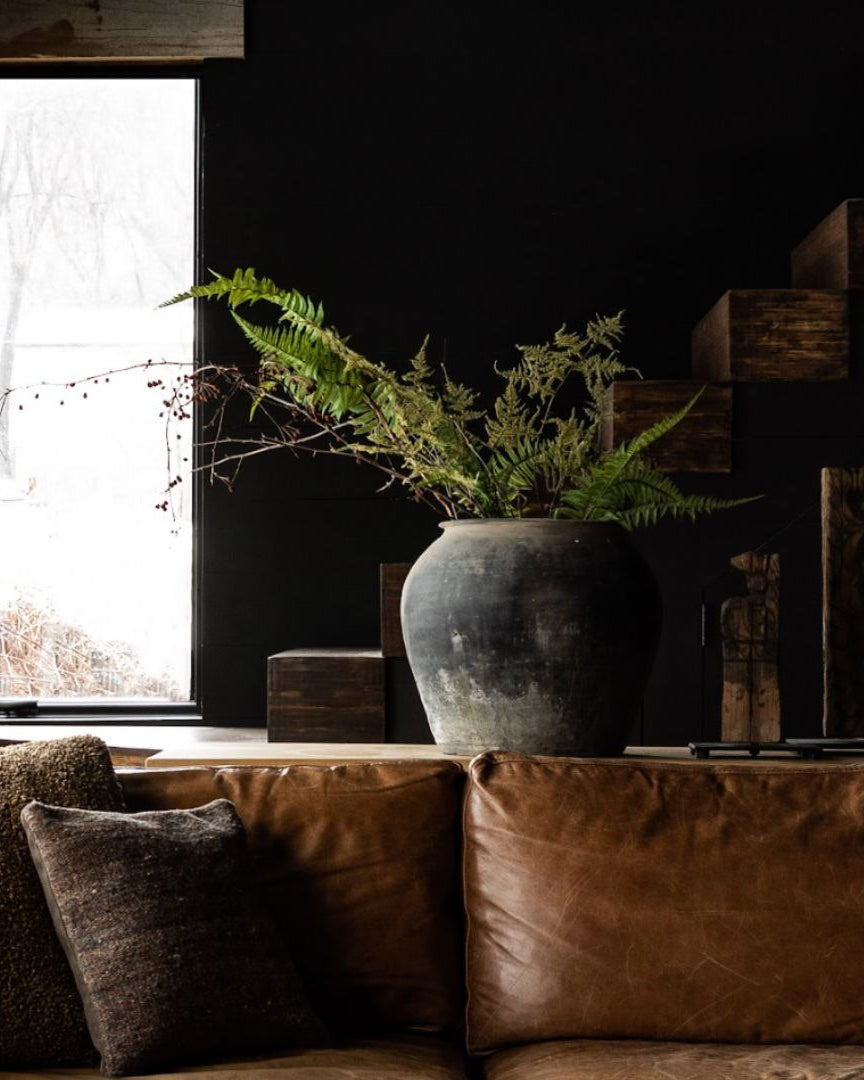
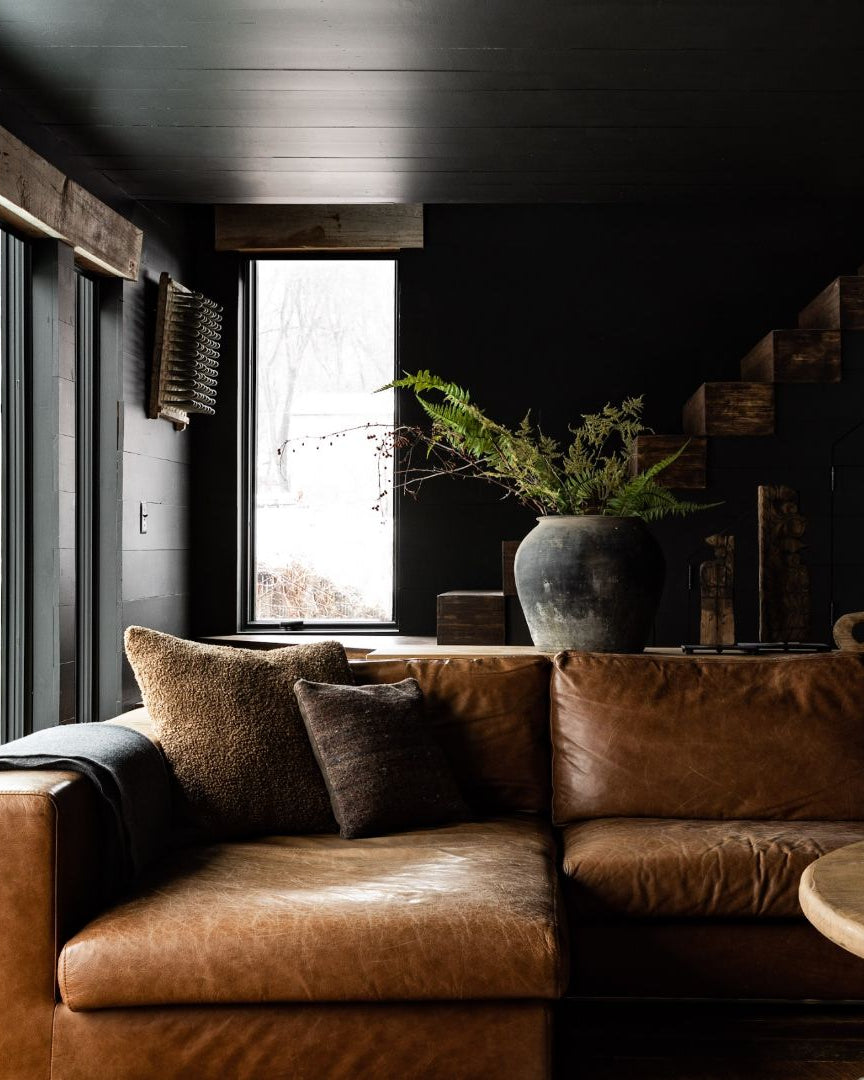
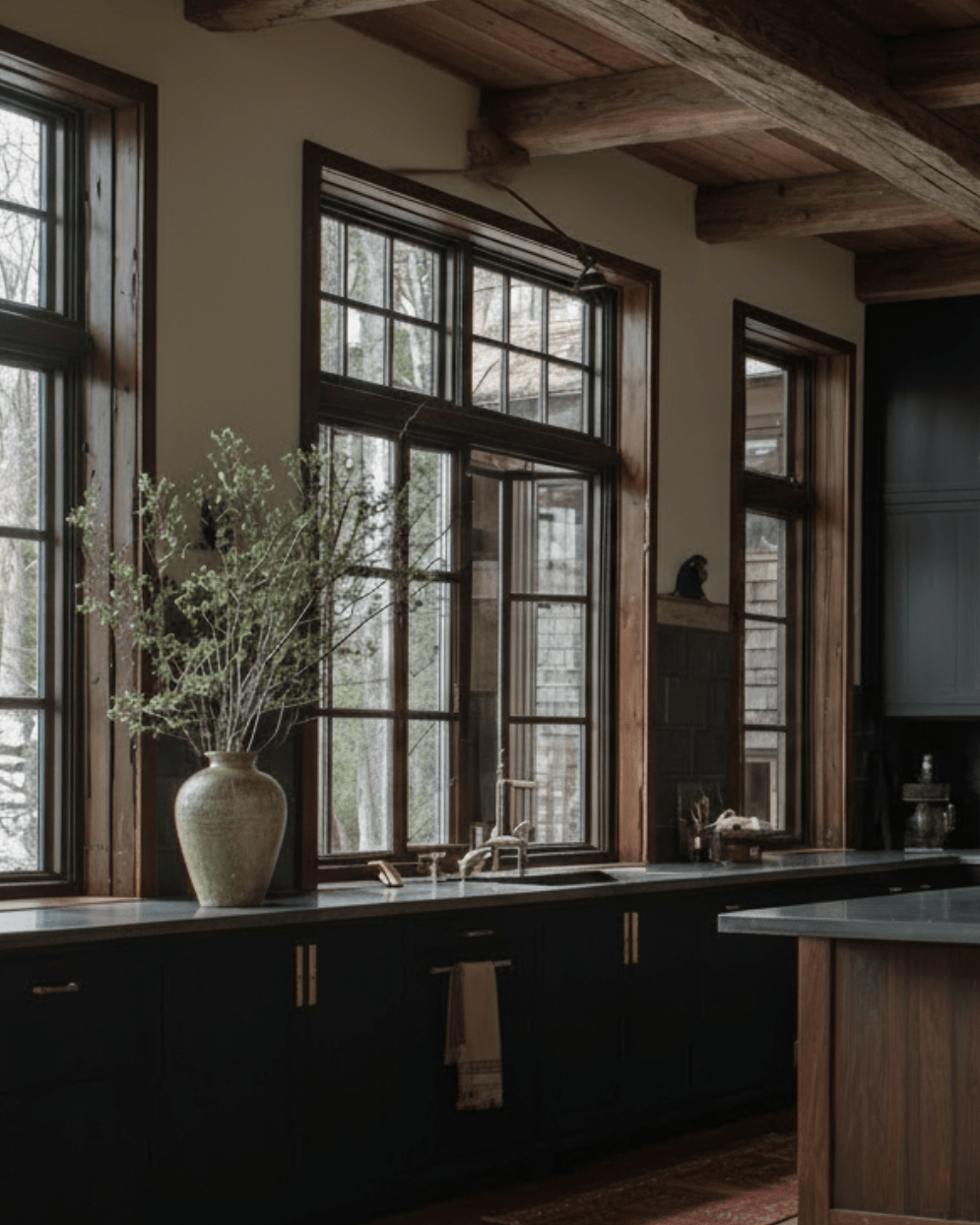
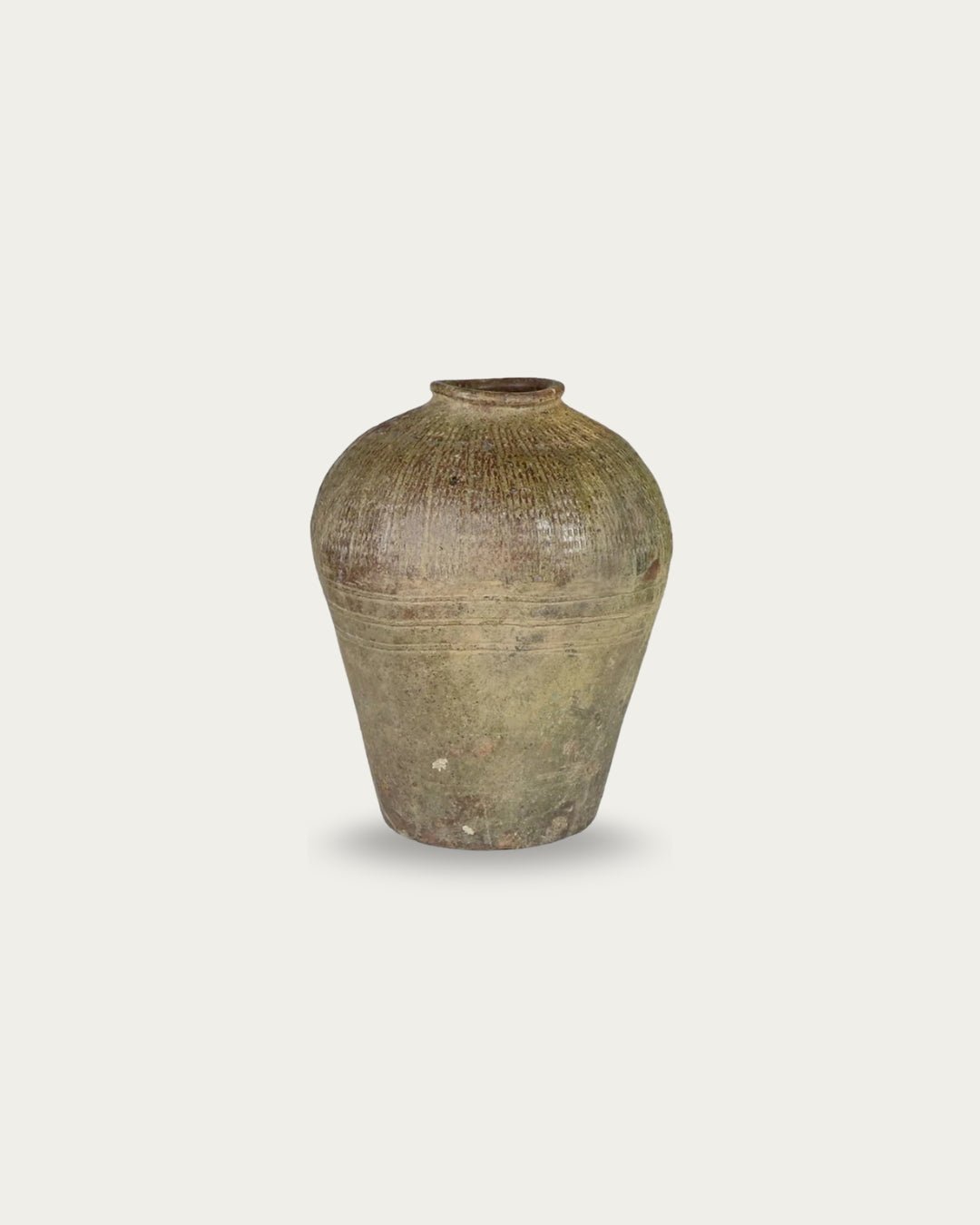
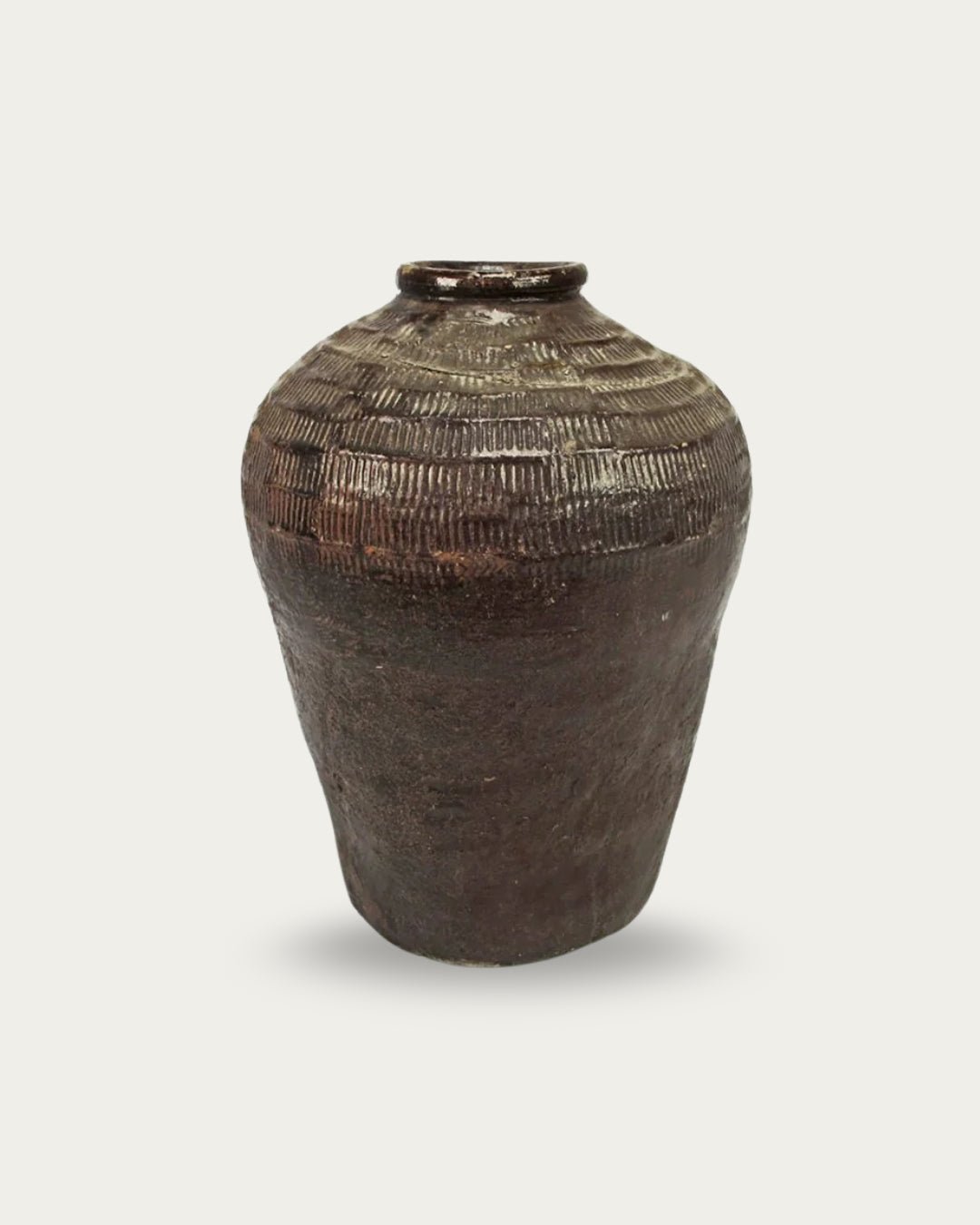
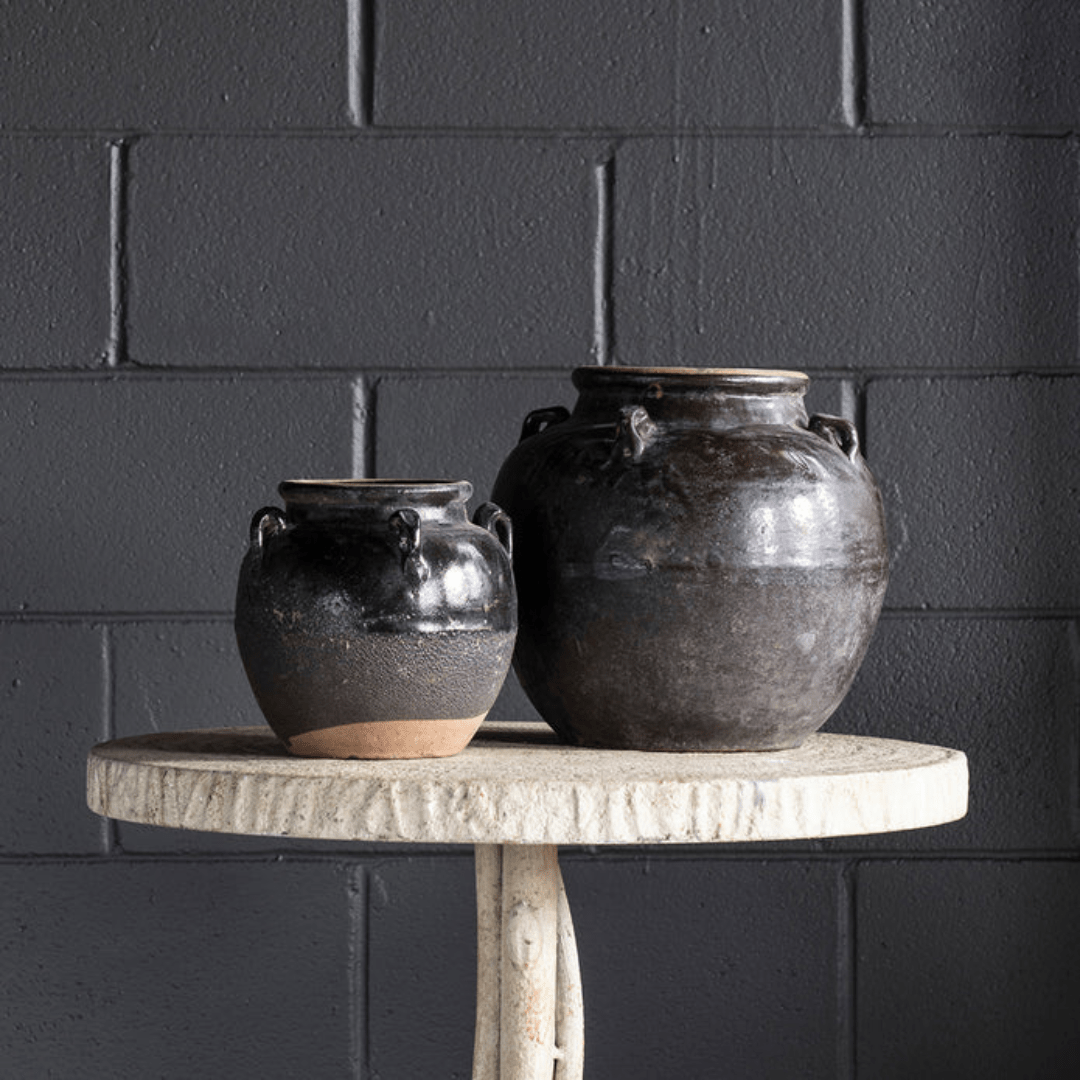
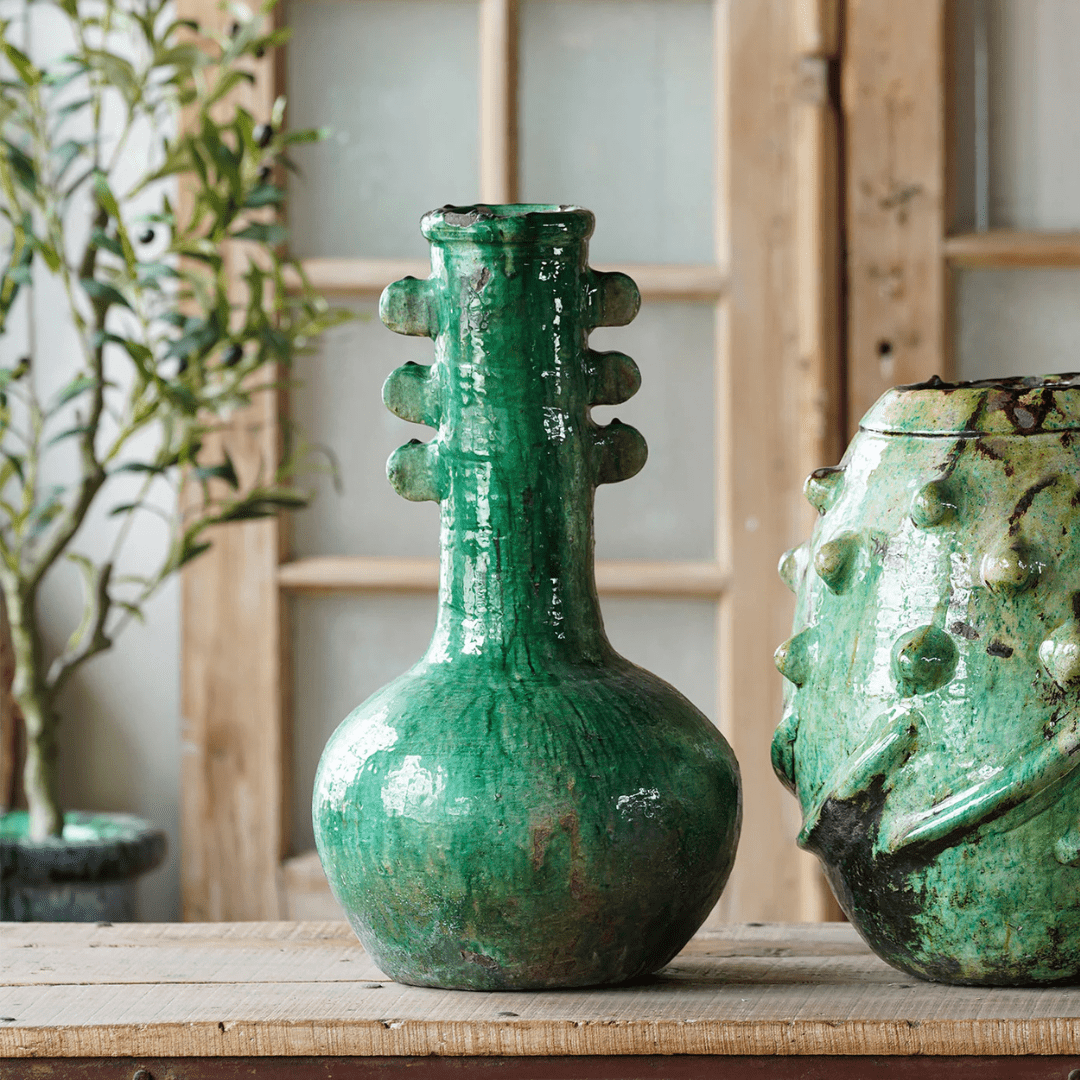
A piece like the Chinese water pot with handles works as a visual pause. Placed near a hearth, sofa, or window wall, it quietly offsets furniture lines and prevents the space from feeling top-heavy.
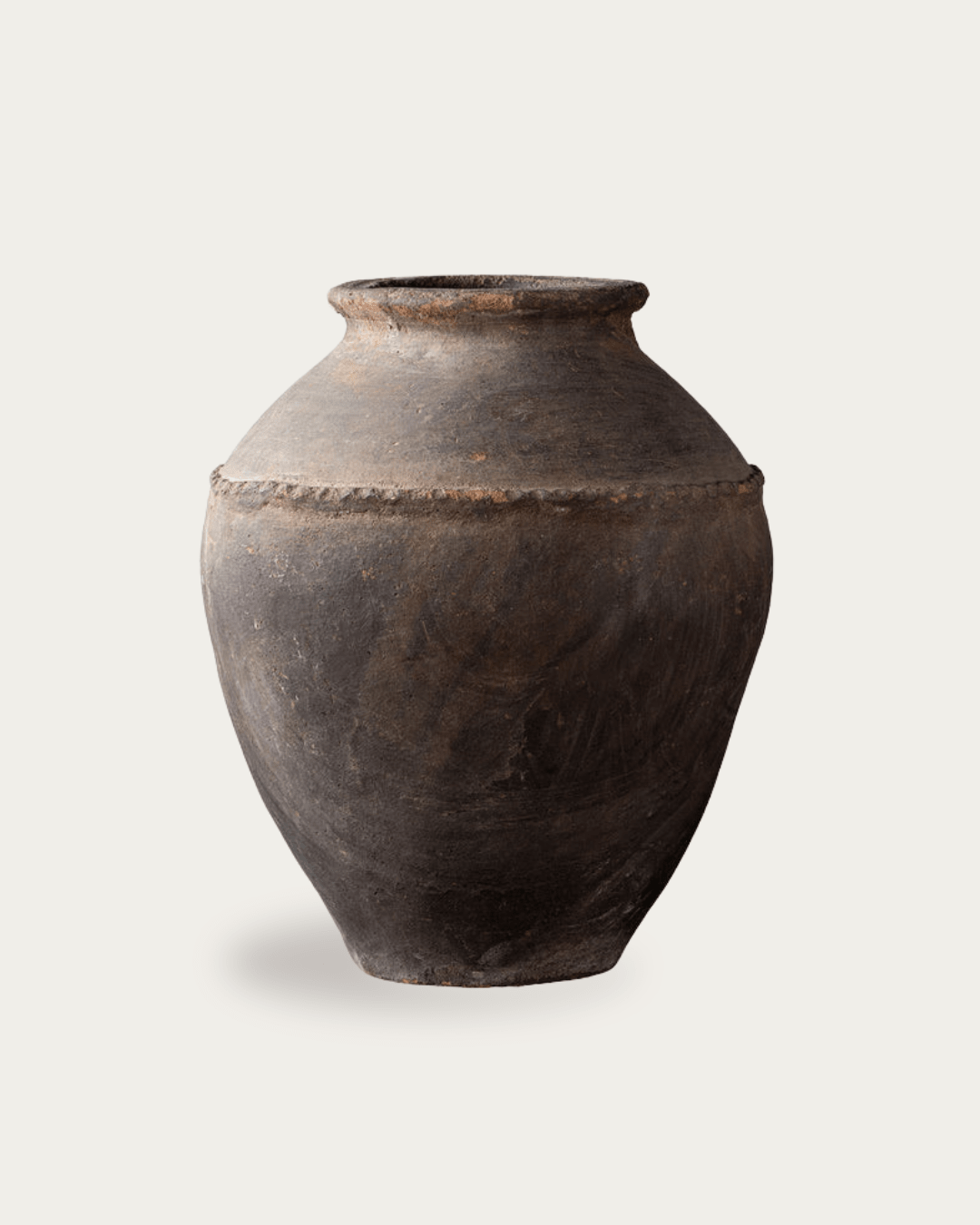
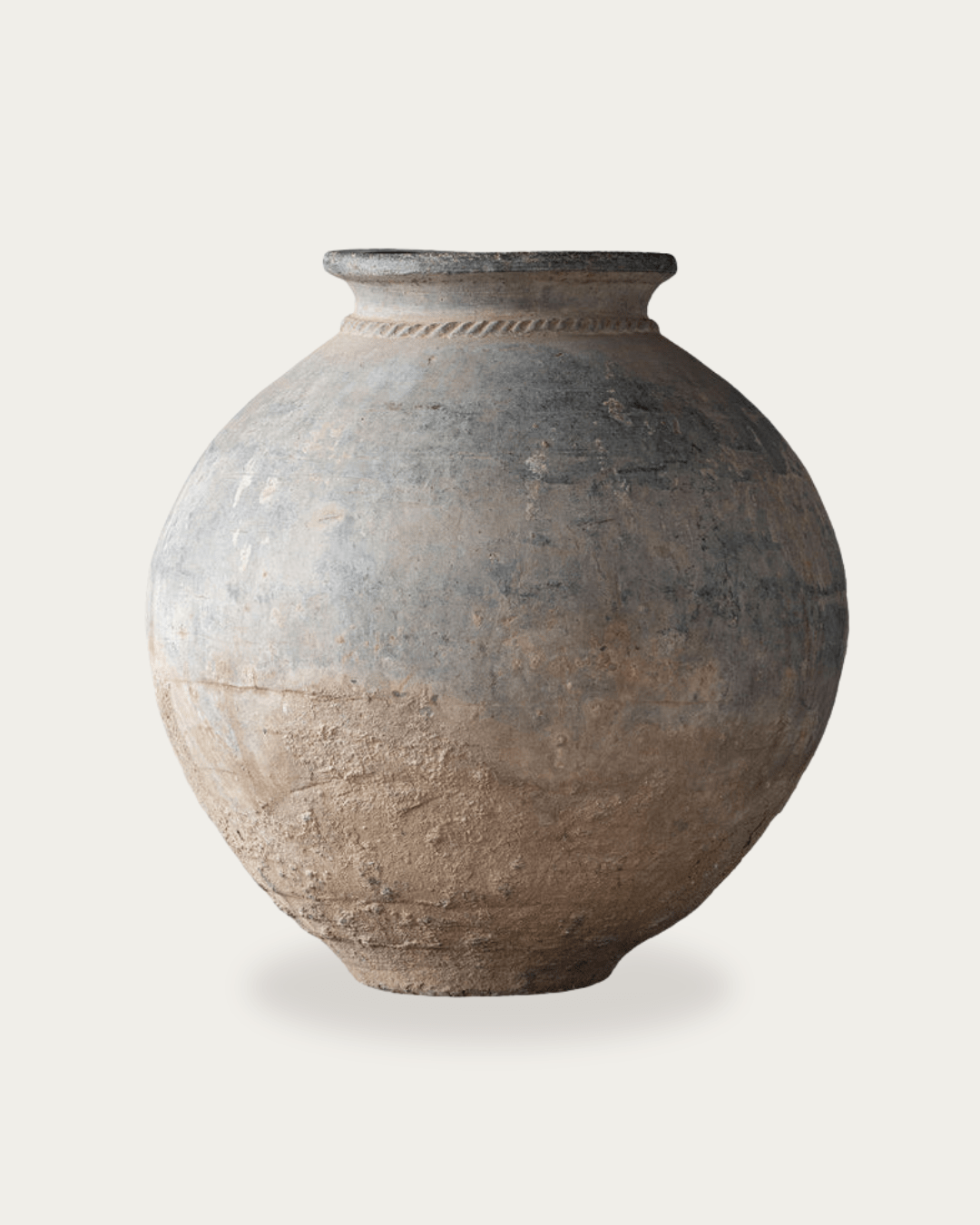
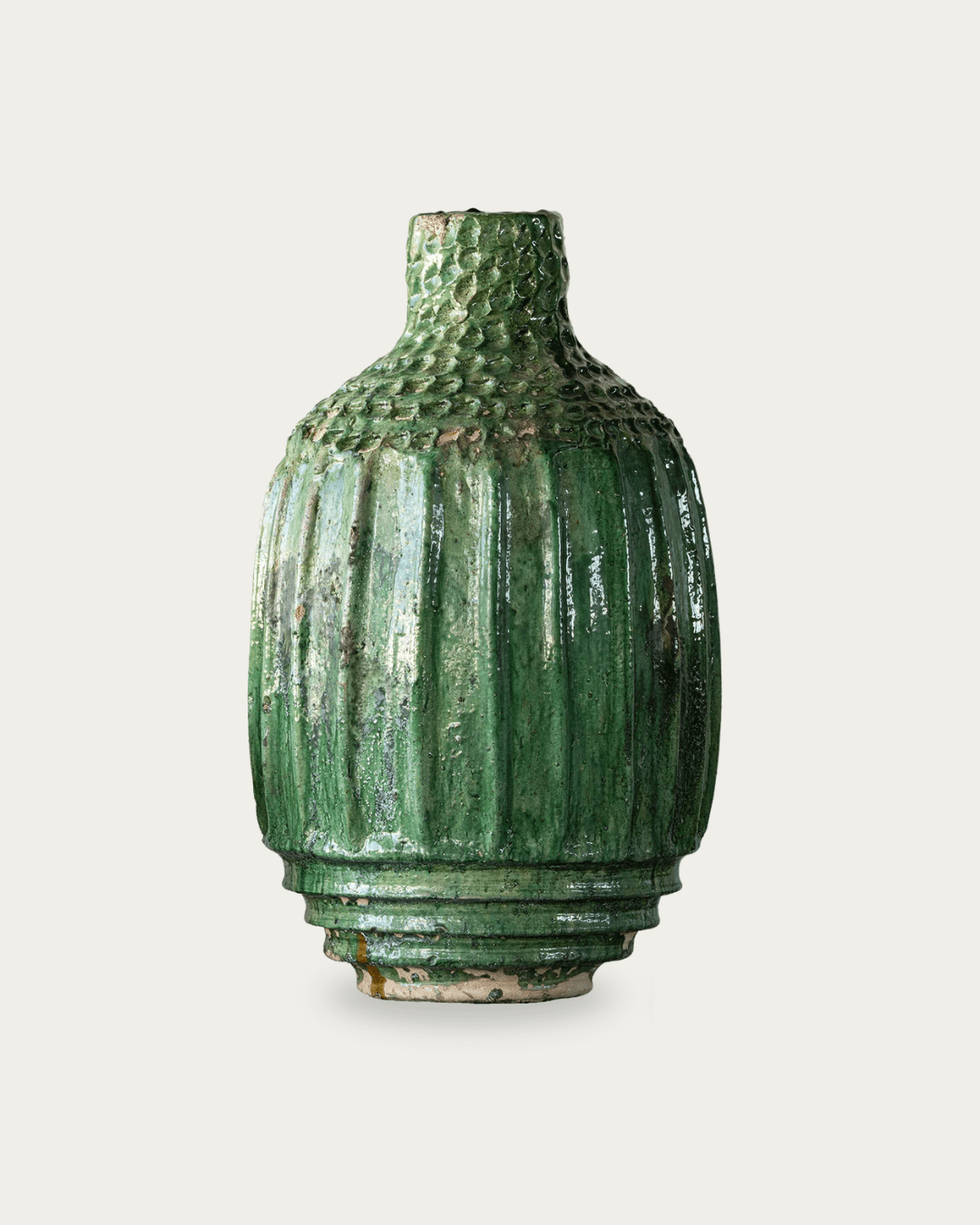
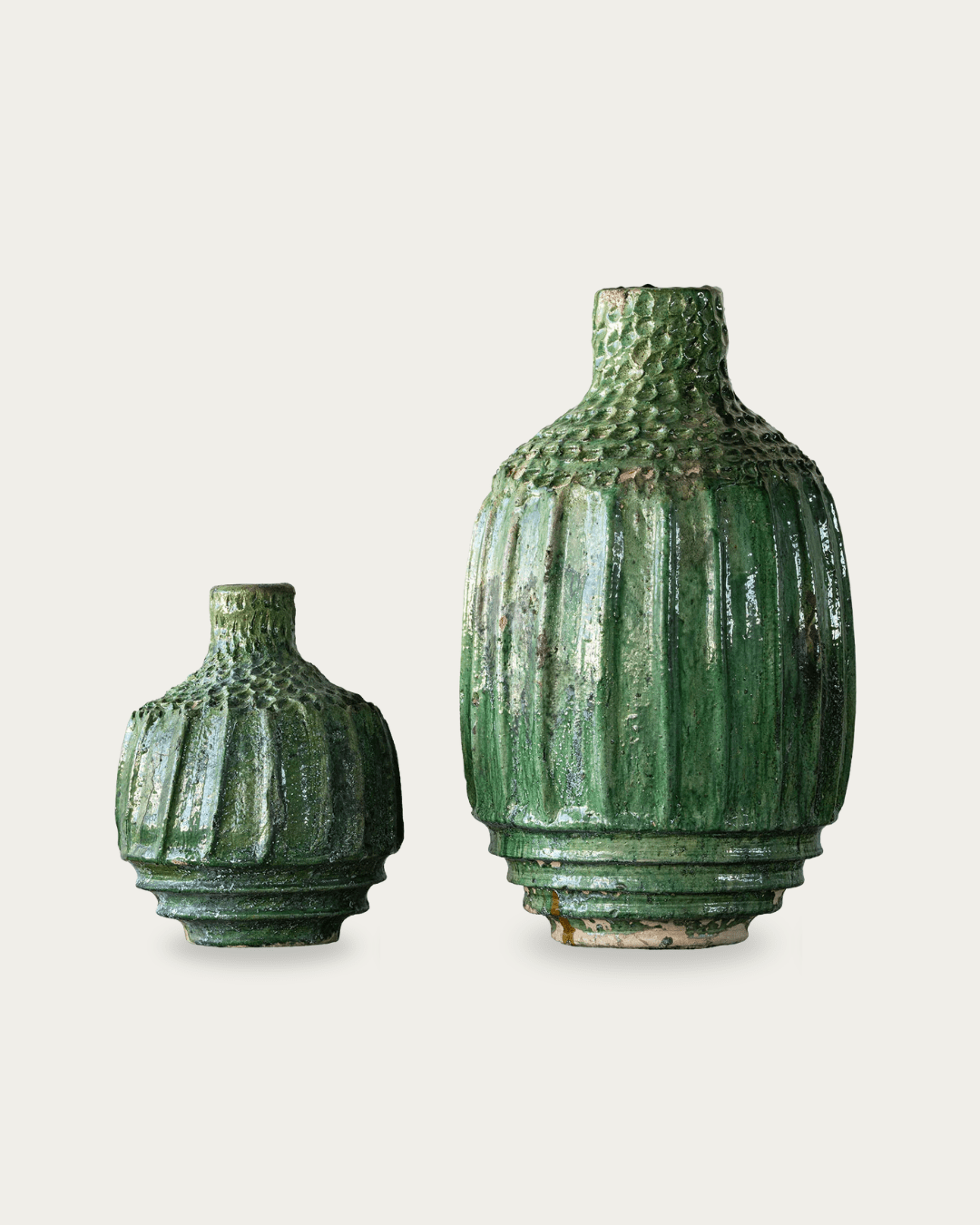
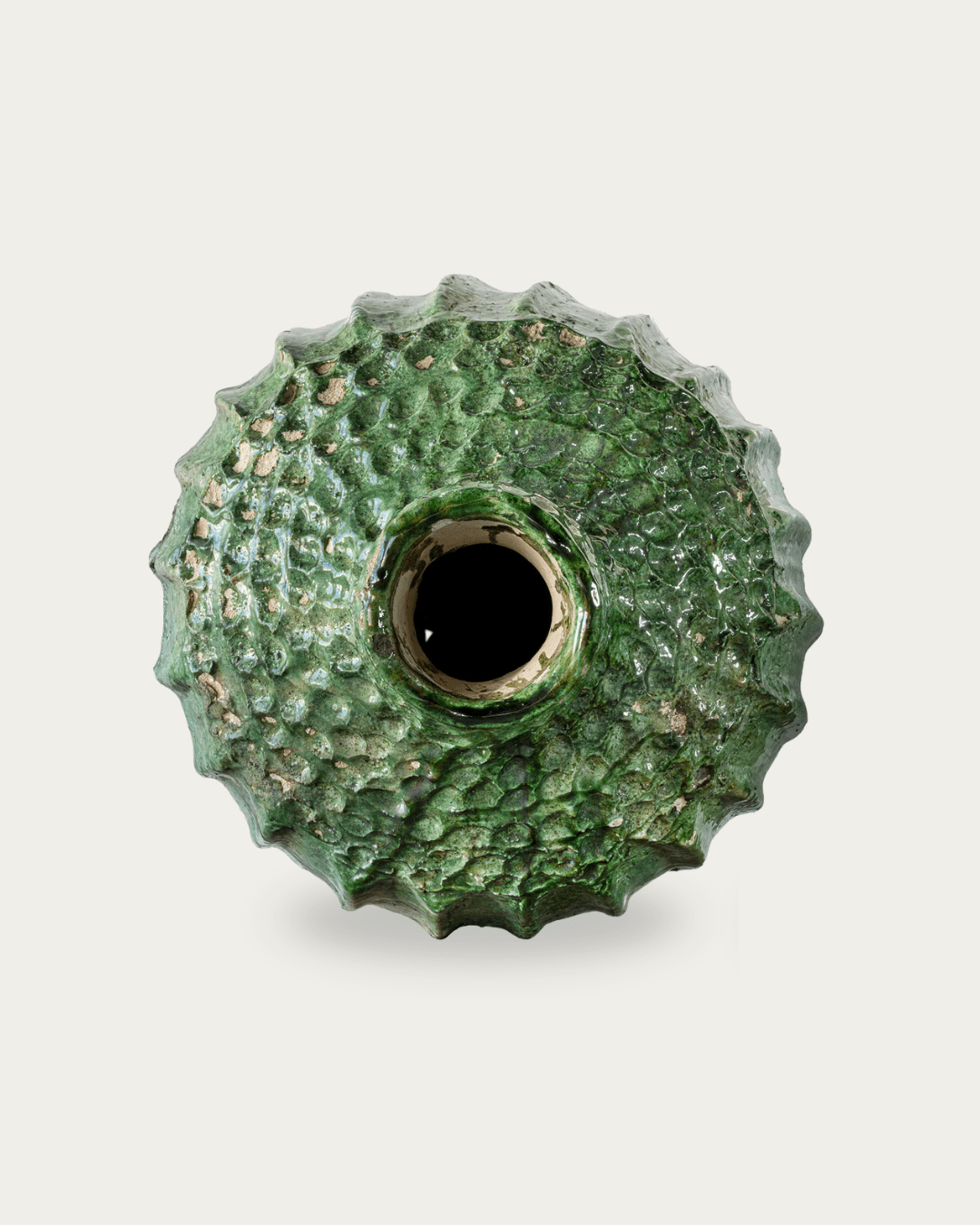
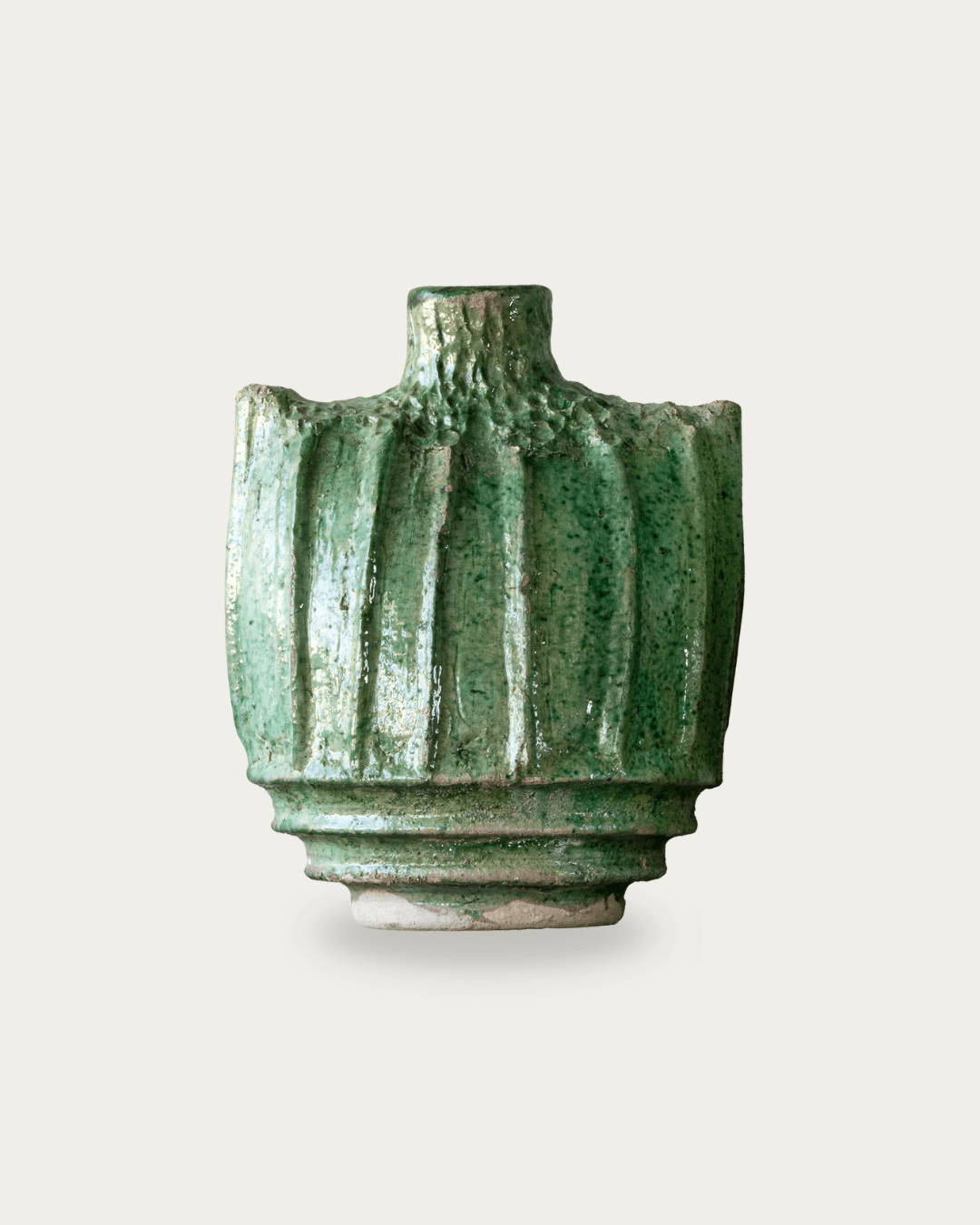
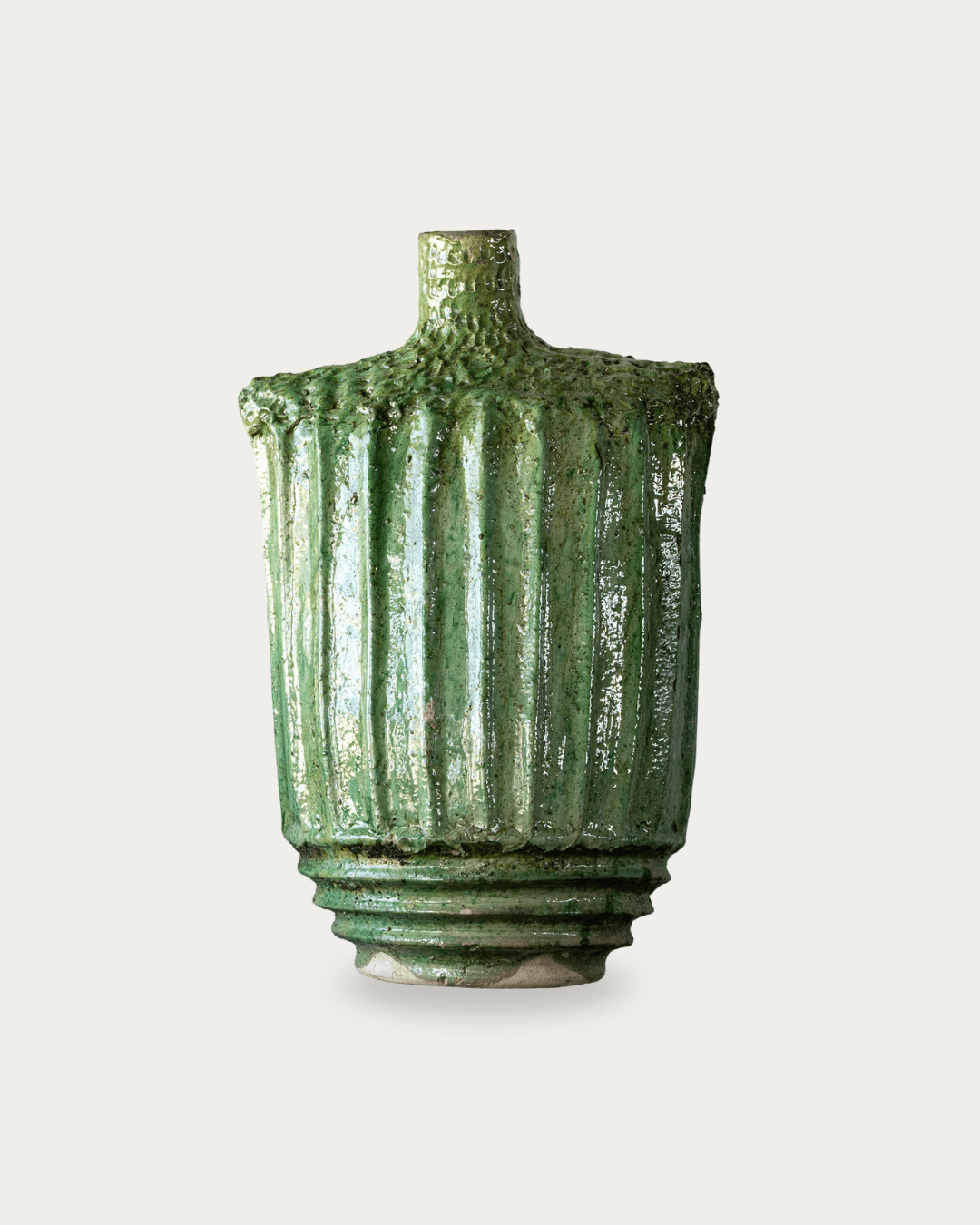
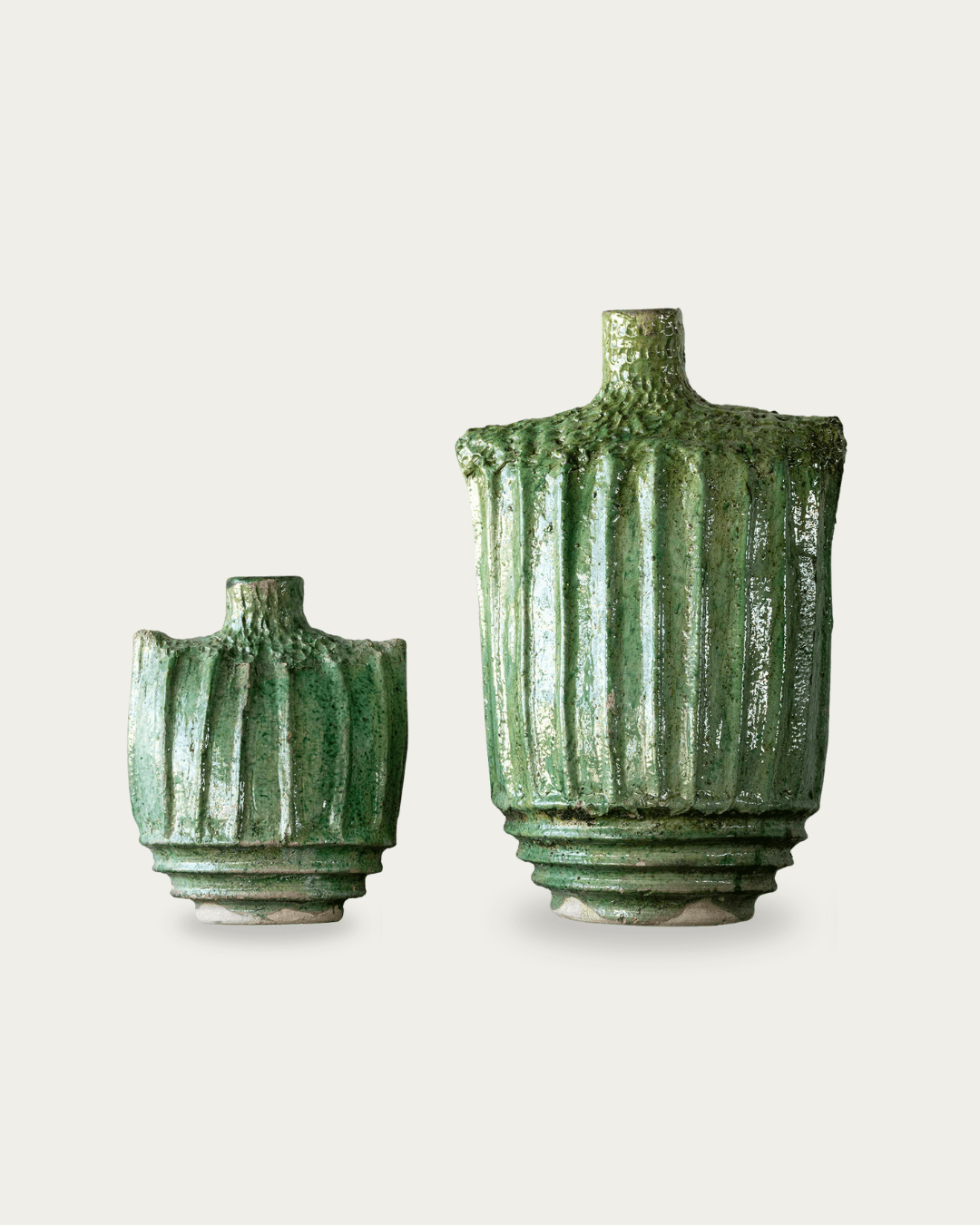
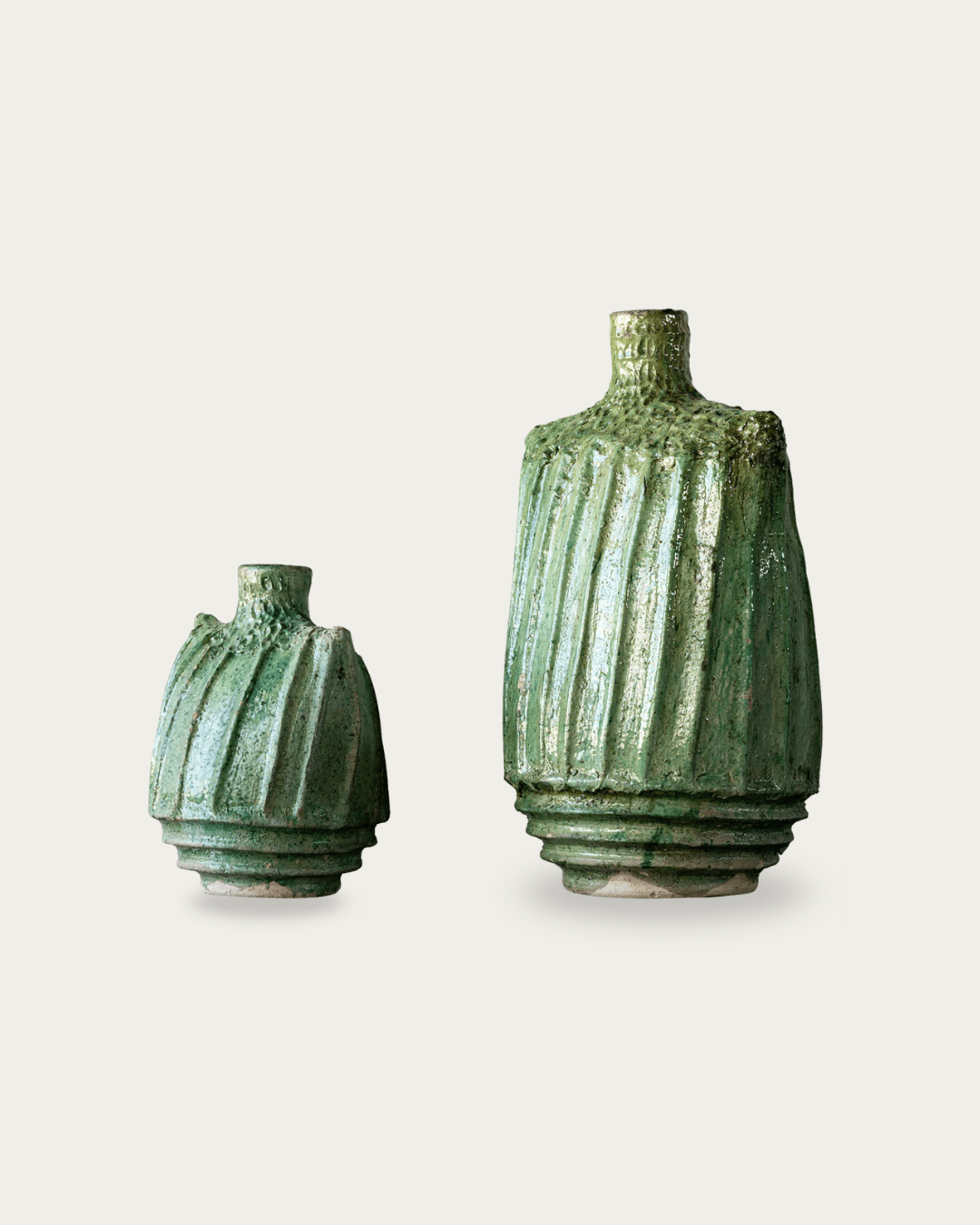
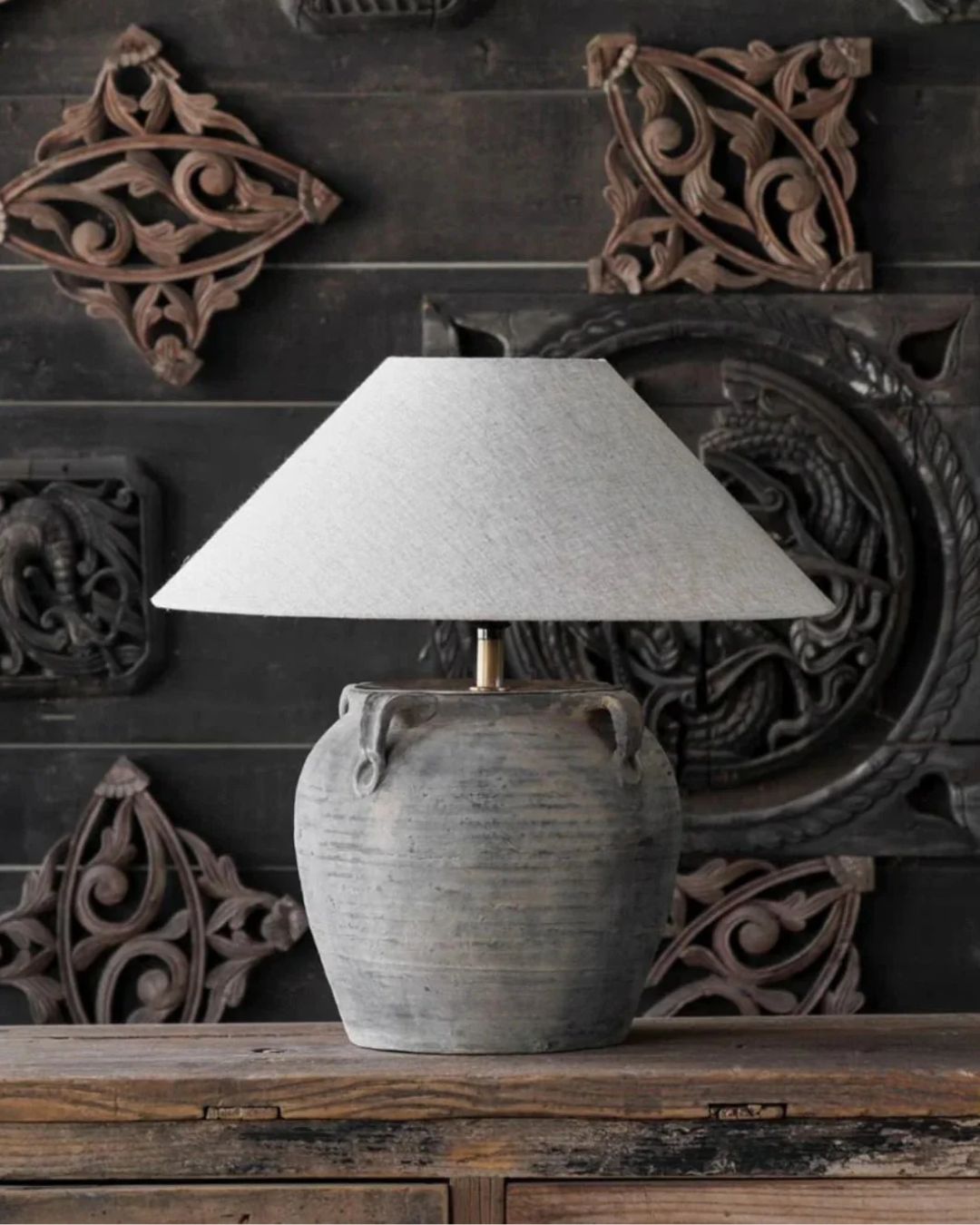
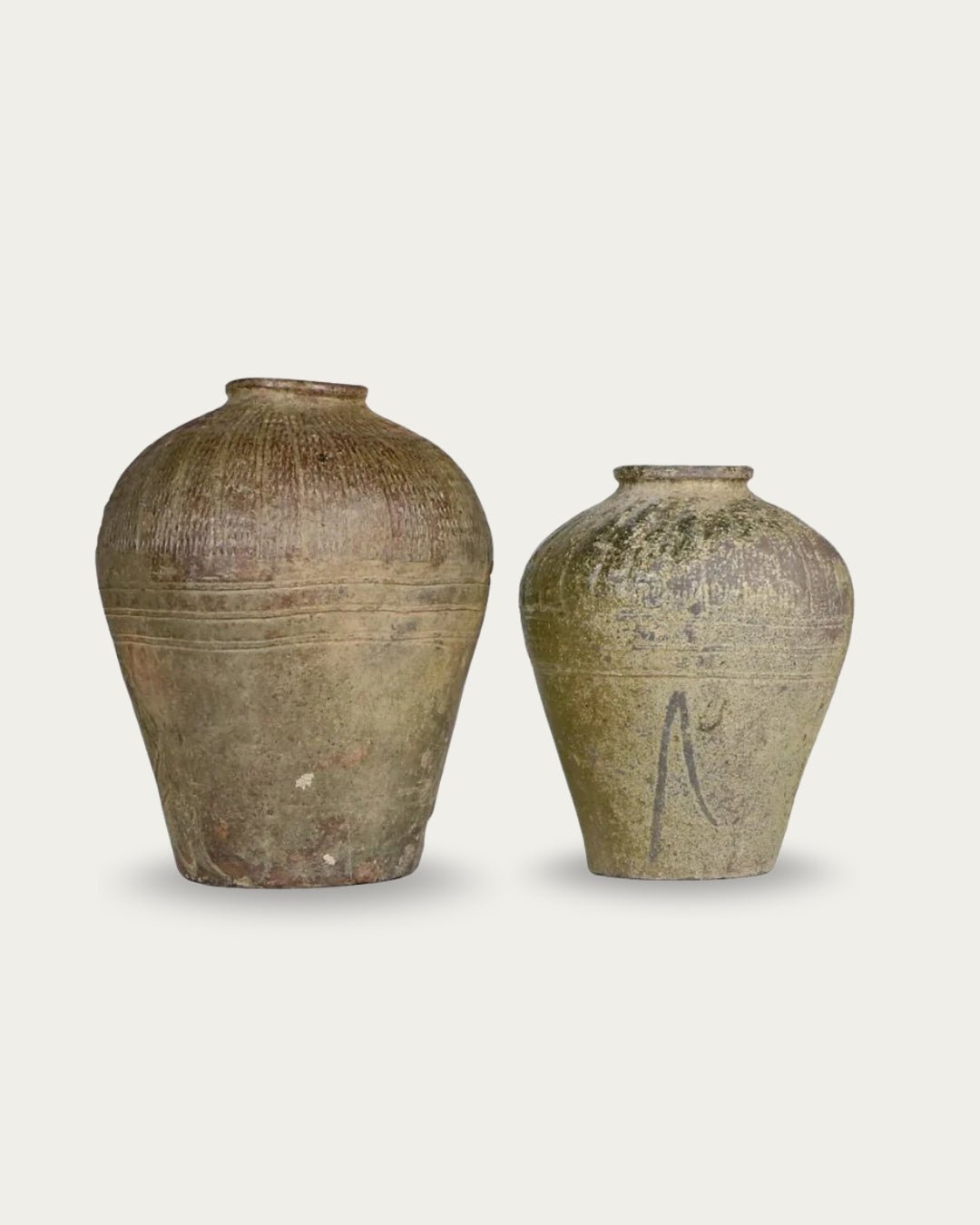
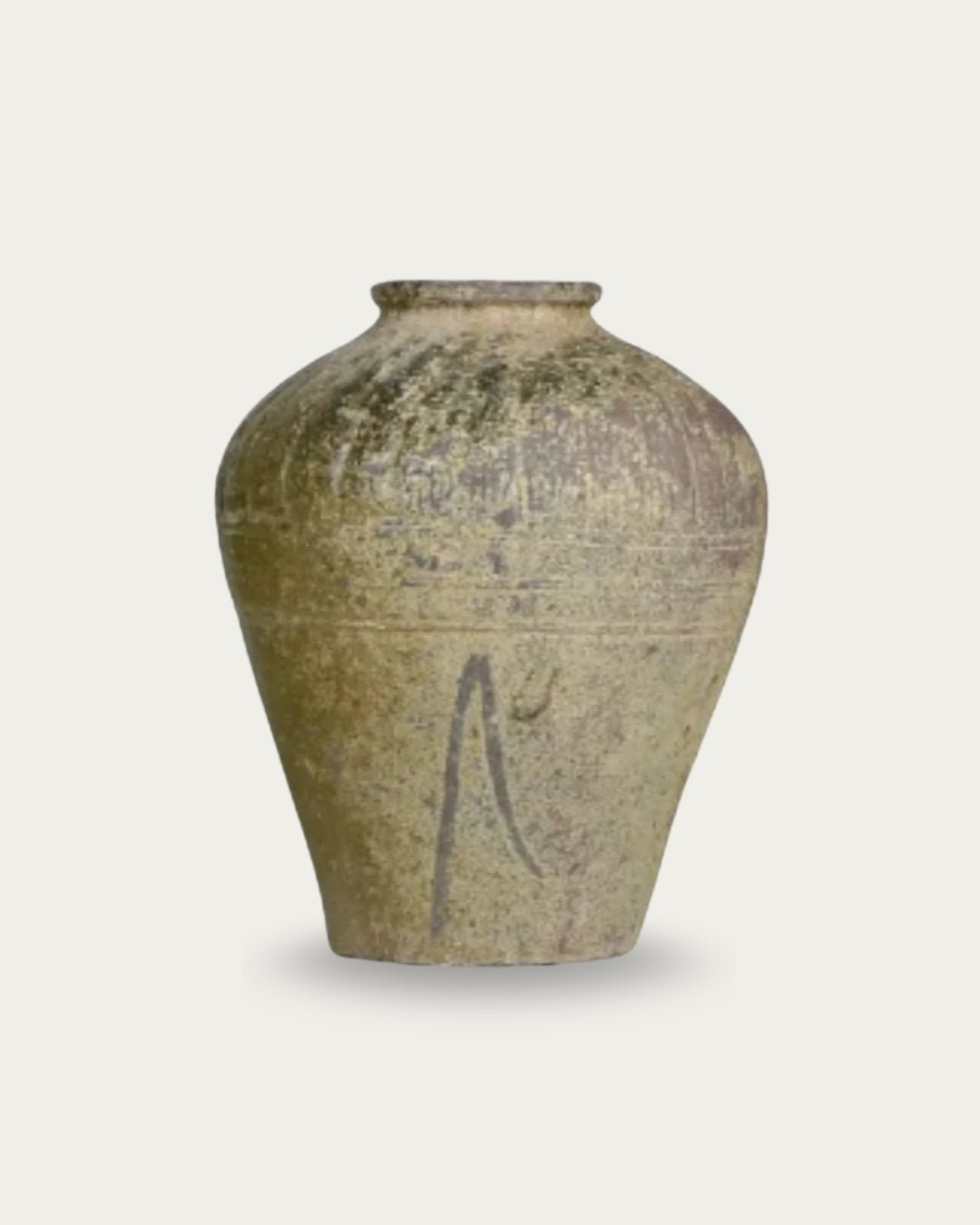
For smaller rooms, the Kaija pot offers the same anchoring effect in a tighter footprint. Its proportions still read as substantial, but it doesn’t overwhelm.
RUTED Tip: If a room feels busy but empty at the same time, you don’t need more objects—you need one object that can carry visual responsibility.
Floor First: Let Vintage Pots Live Where They Were Meant To
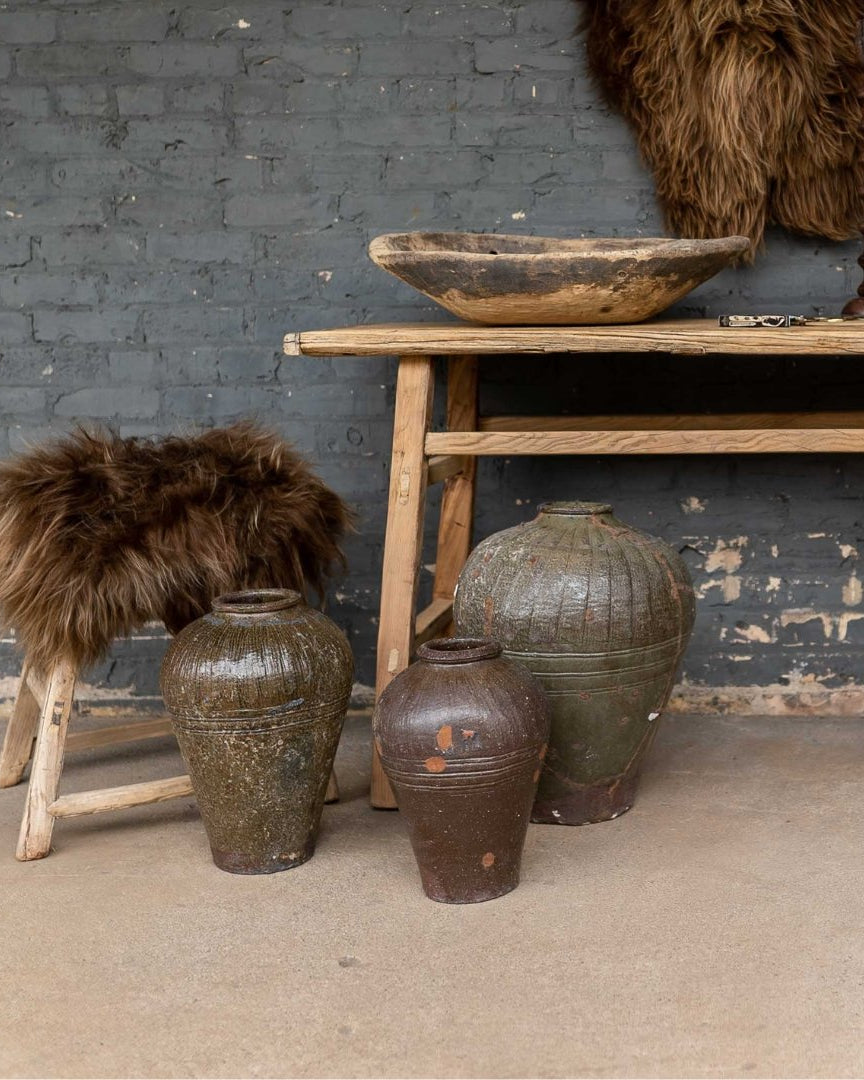
One of the most common mistakes in antique home decor is lifting everything onto shelves and tables. Historically, the most important vessels lived on the floor. Not because they were decorative—but because they were heavy, functional, and used daily.
Floor placement does two important things. First, it lowers the visual center of gravity, making rooms feel settled. Second, it frees up surfaces, which instantly reduces noise.
A lidded form like the Chinese water pot with lid works beautifully near entryways or fireplaces. The lid adds structure, while the rounded body softens surrounding lines.
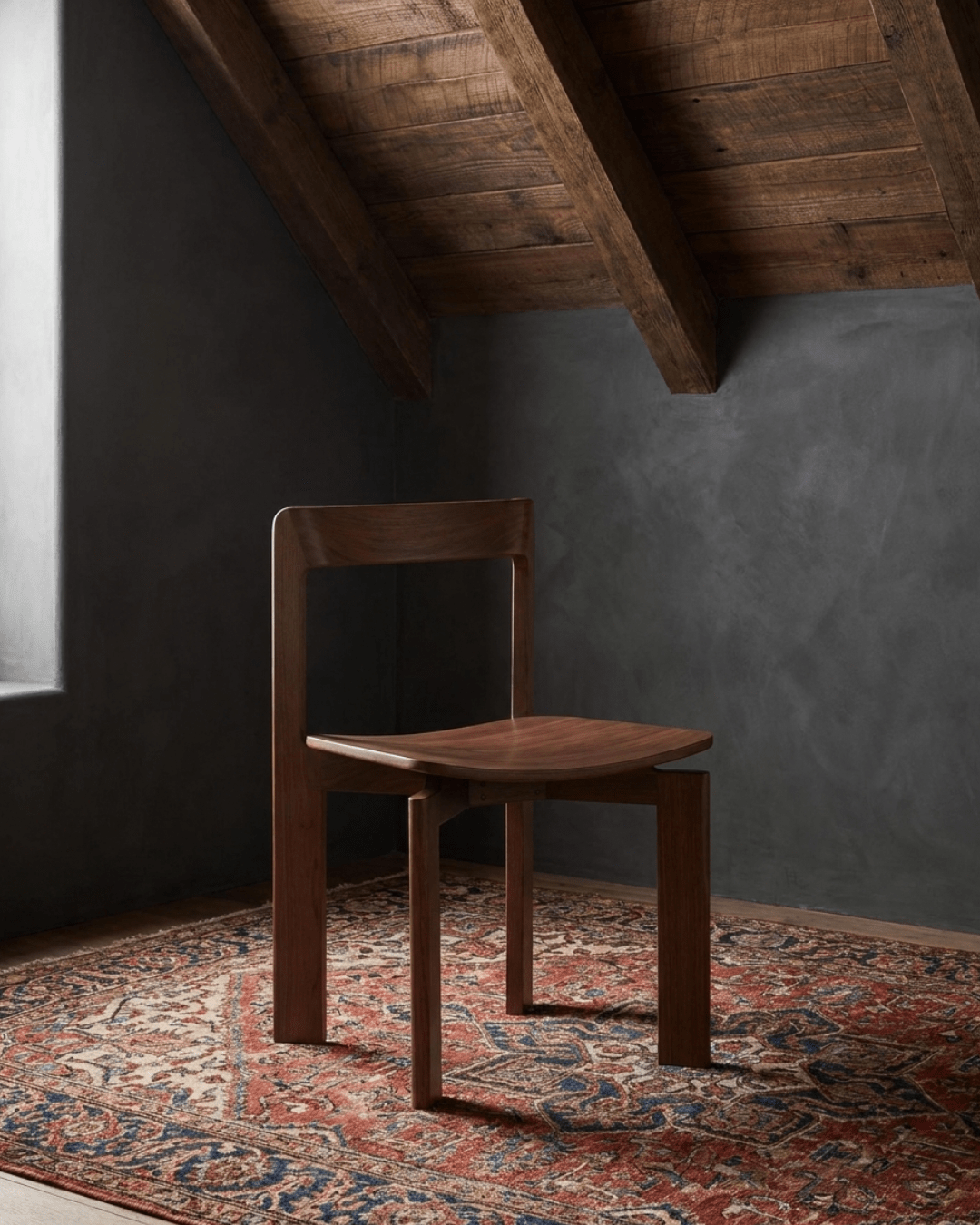
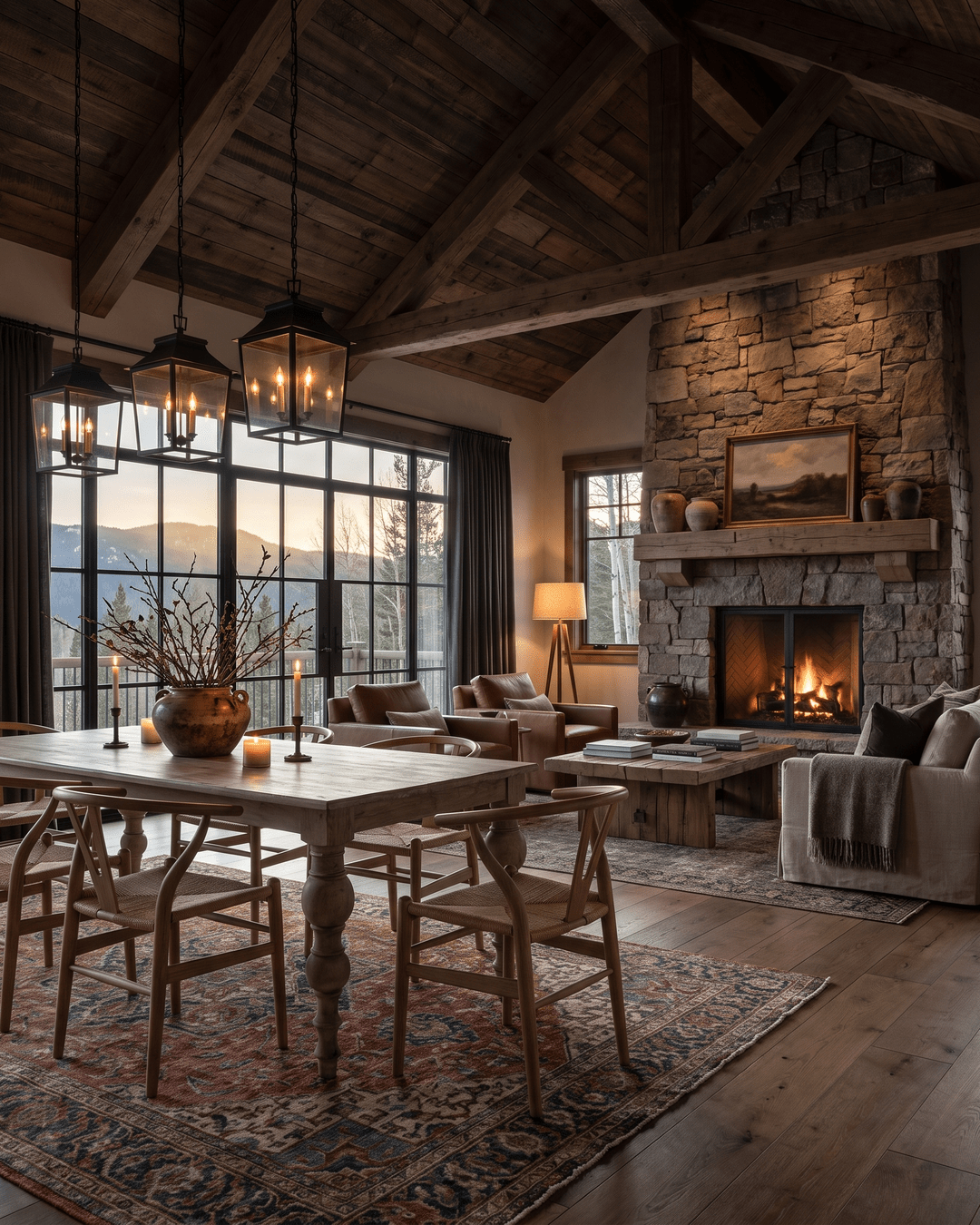
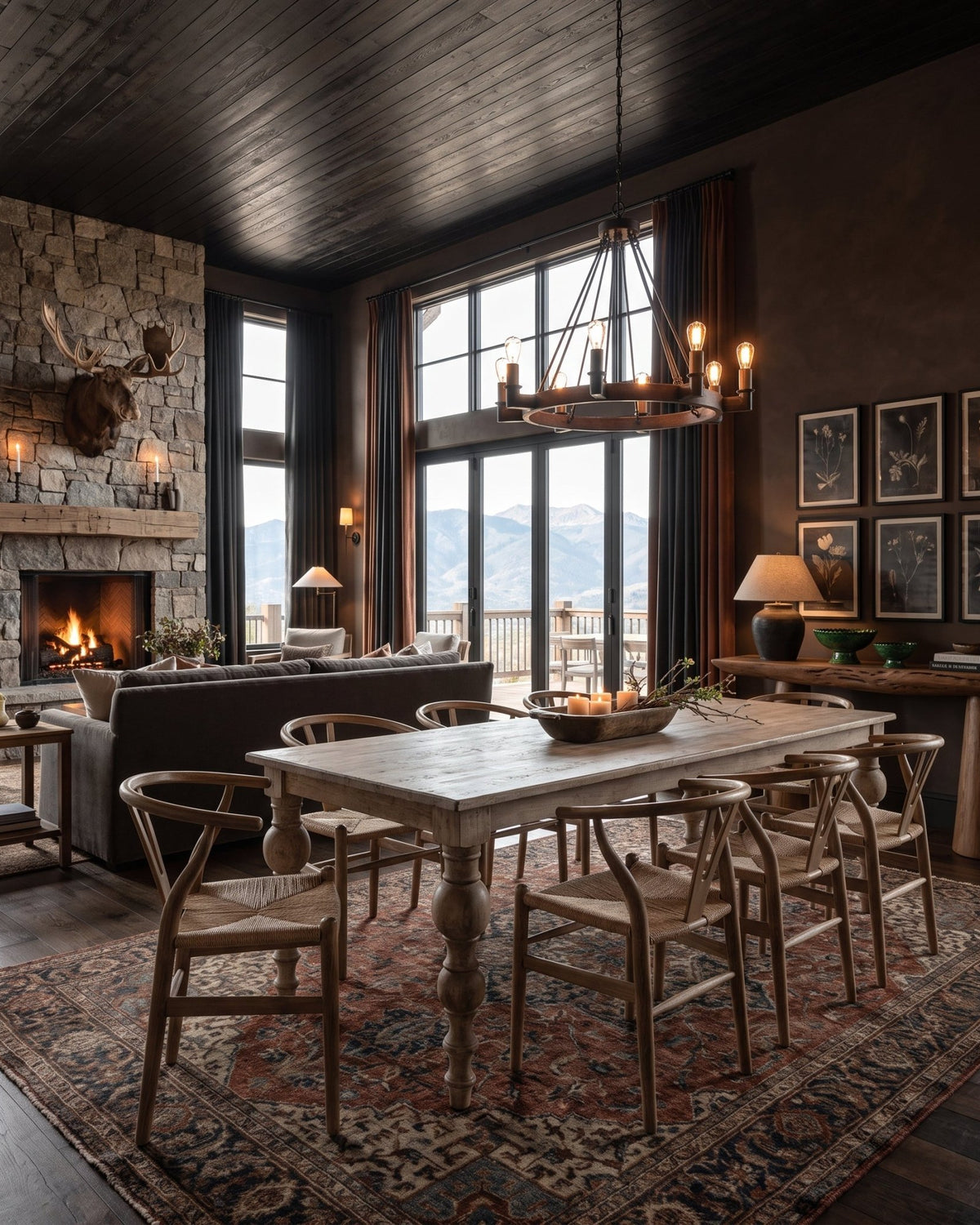
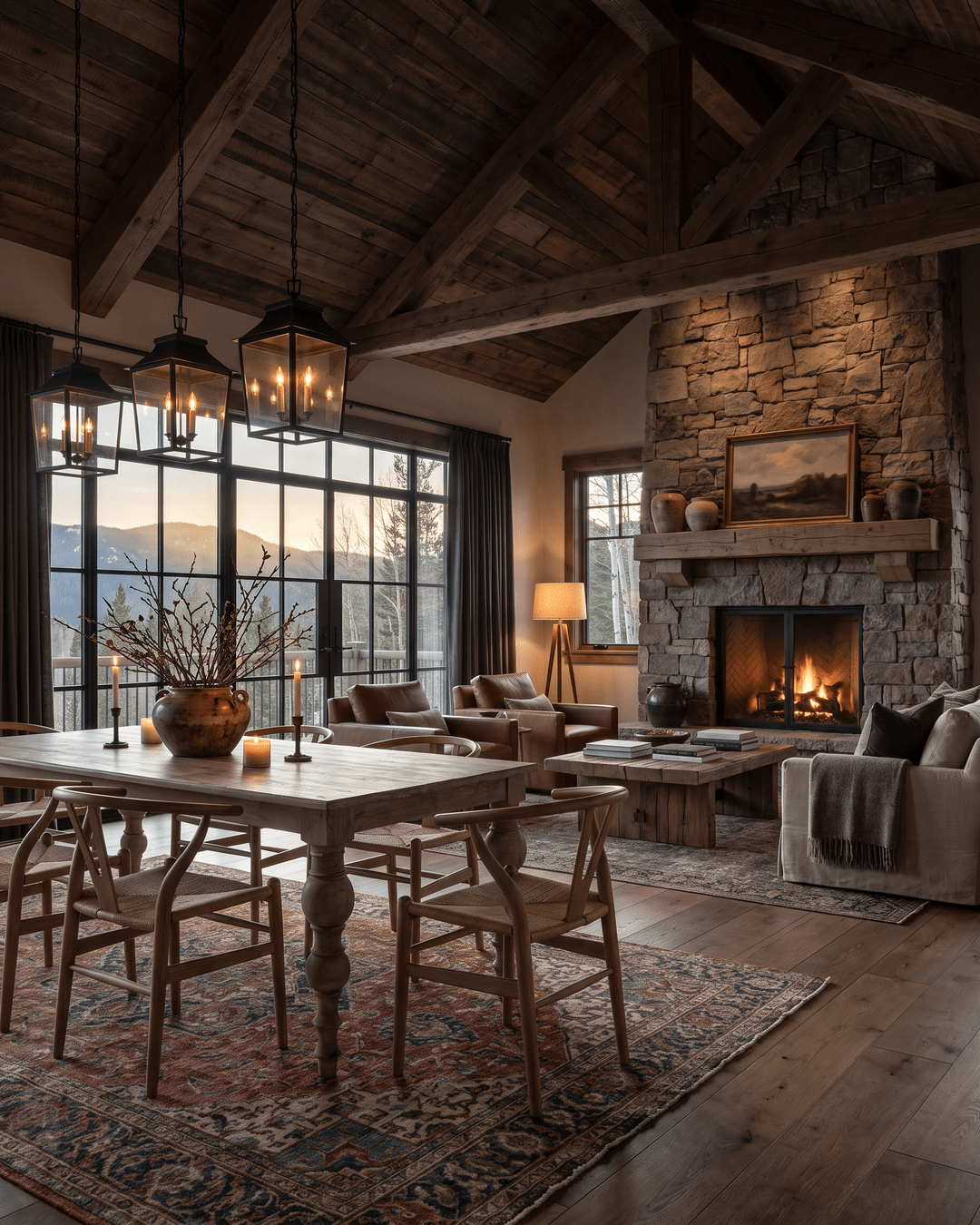
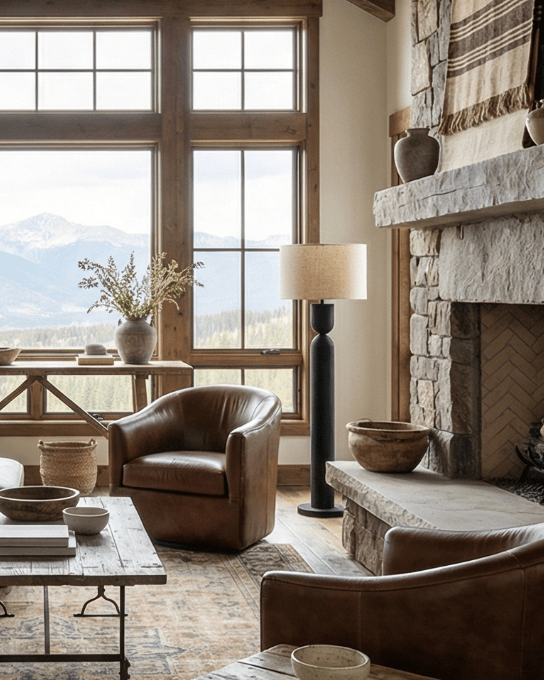
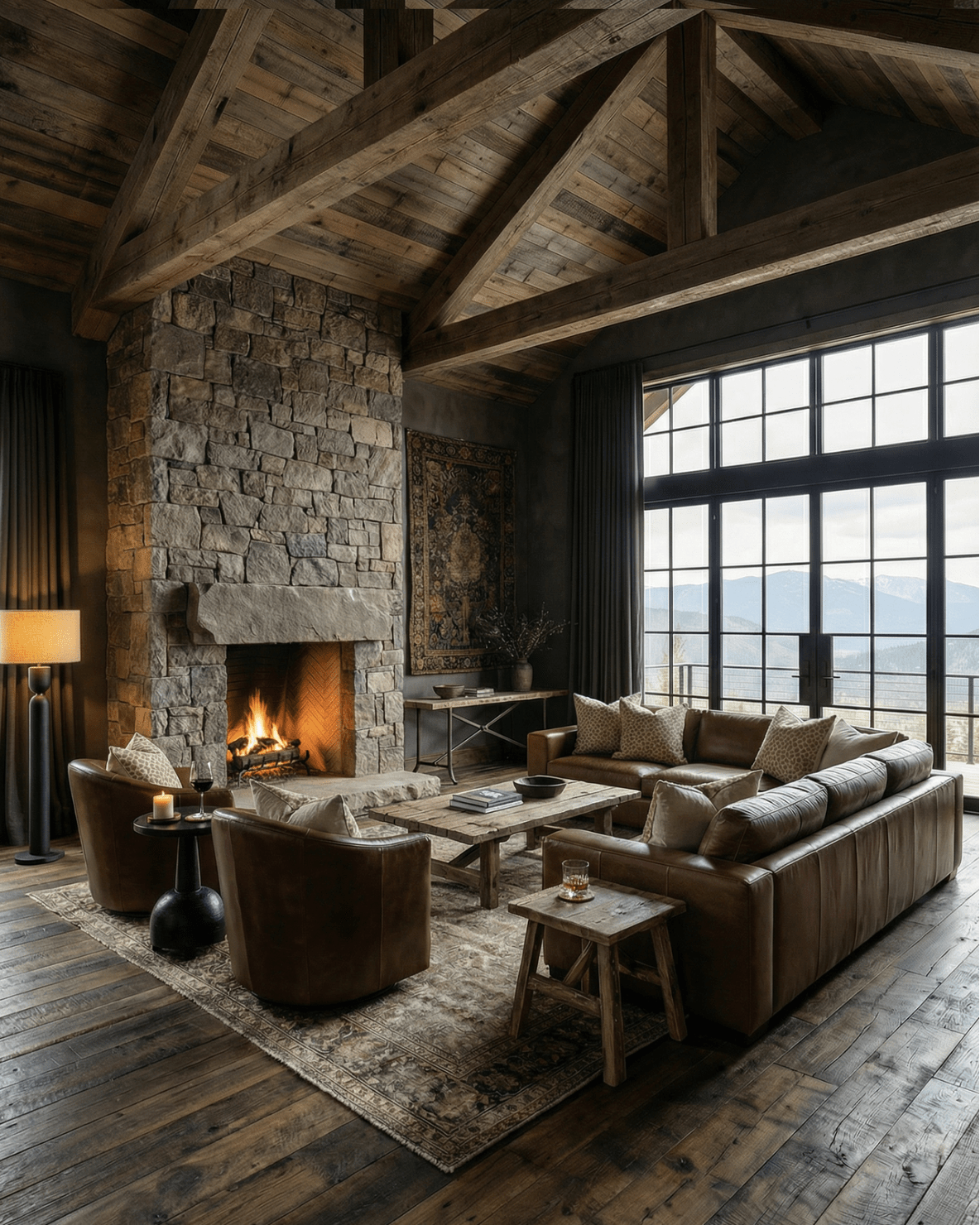
In more open layouts, a classic Water pot can sit beside a console or armchair, acting as a quiet boundary without blocking flow. It’s especially effective in rooms with tall ceilings or exposed beams, where vertical elements need grounding.
The rule of thumb: if something feels like it’s floating, bring the eye down. Floor-level vintage pieces do that naturally.
Material, Patina, and Why Old Surfaces Calm a Space
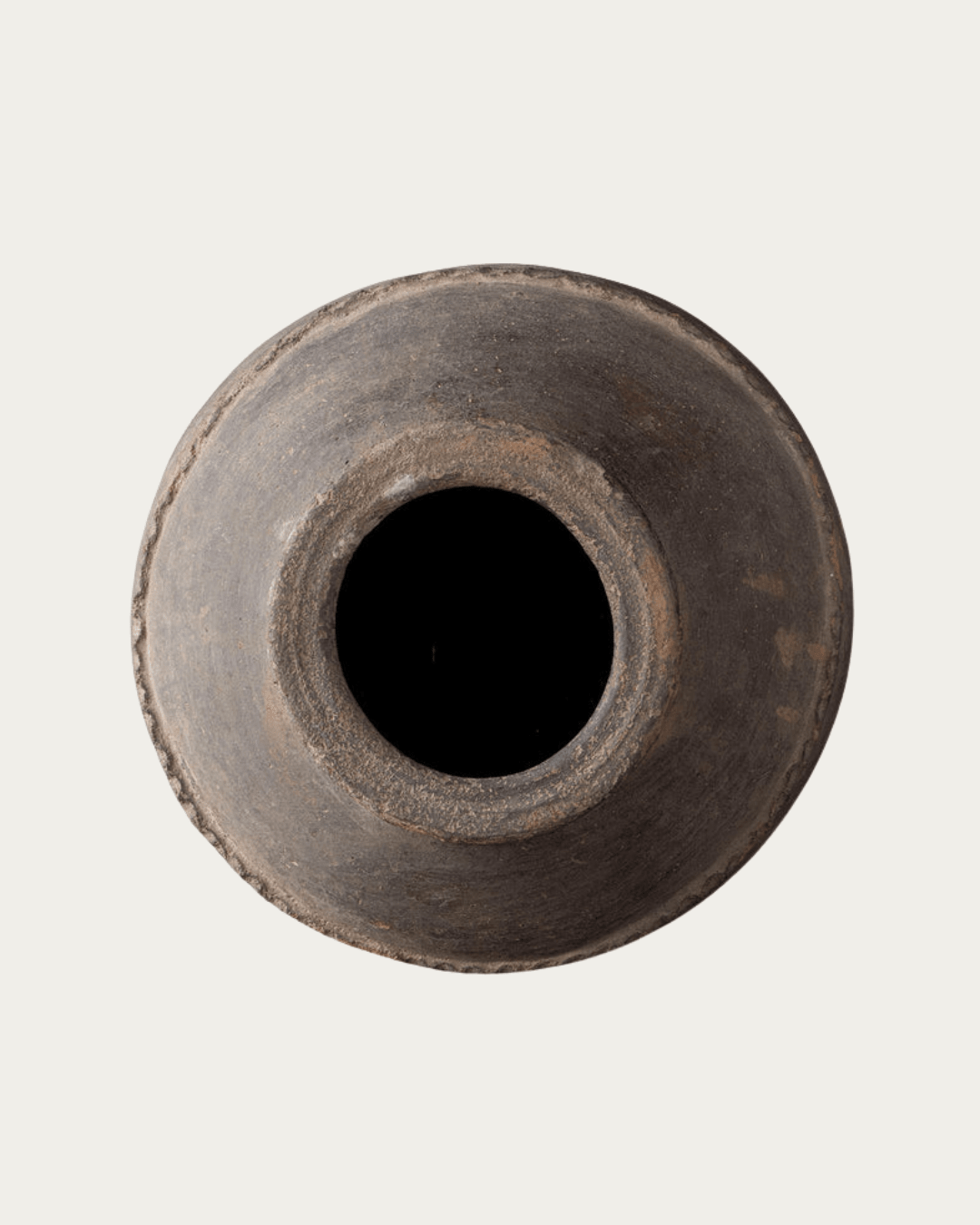
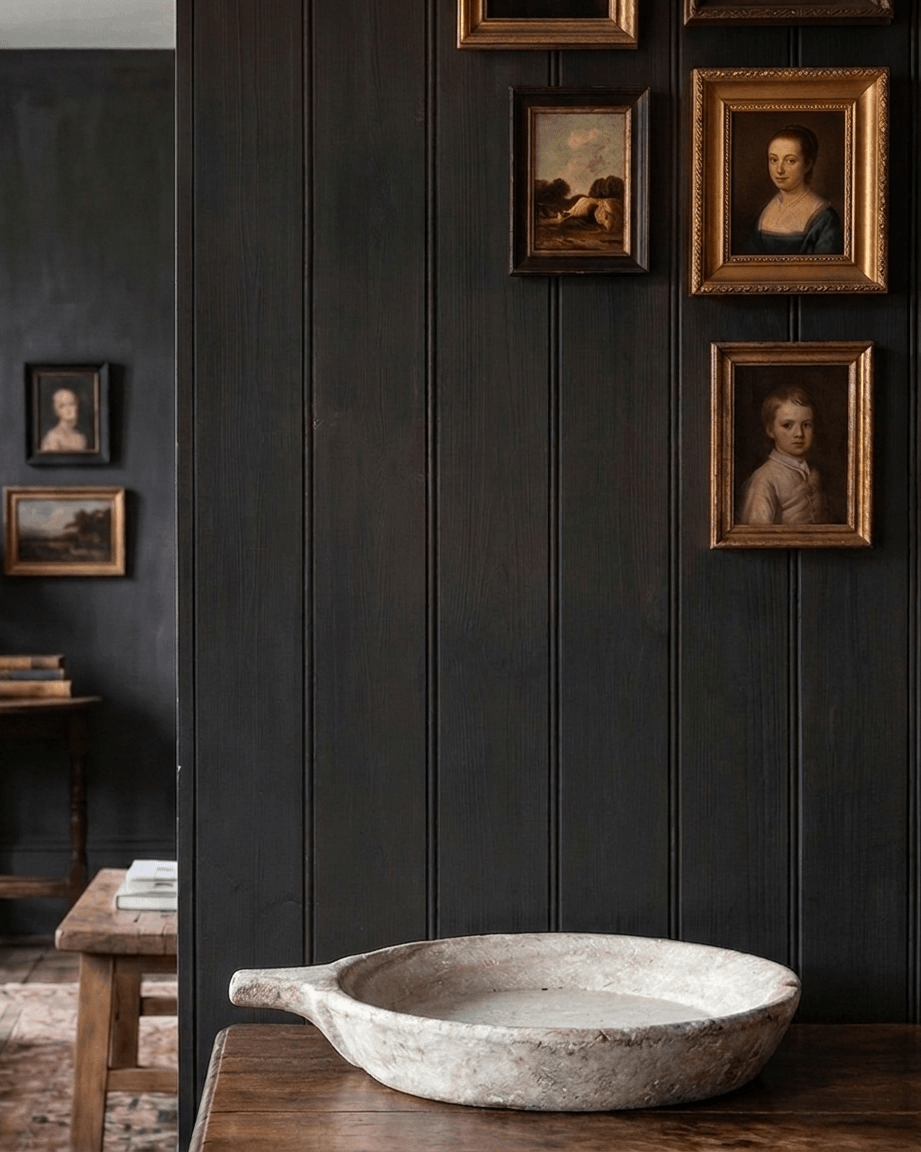
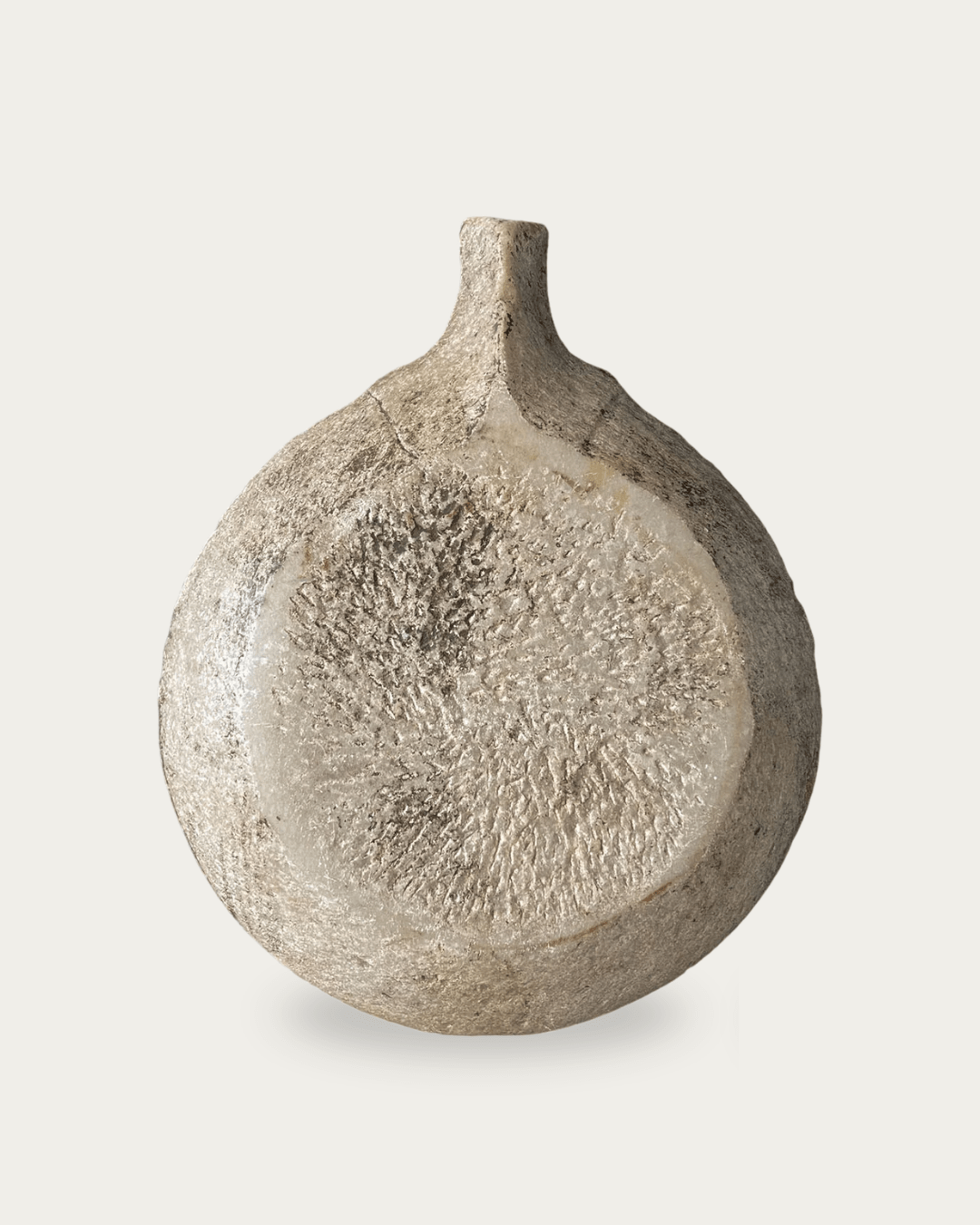
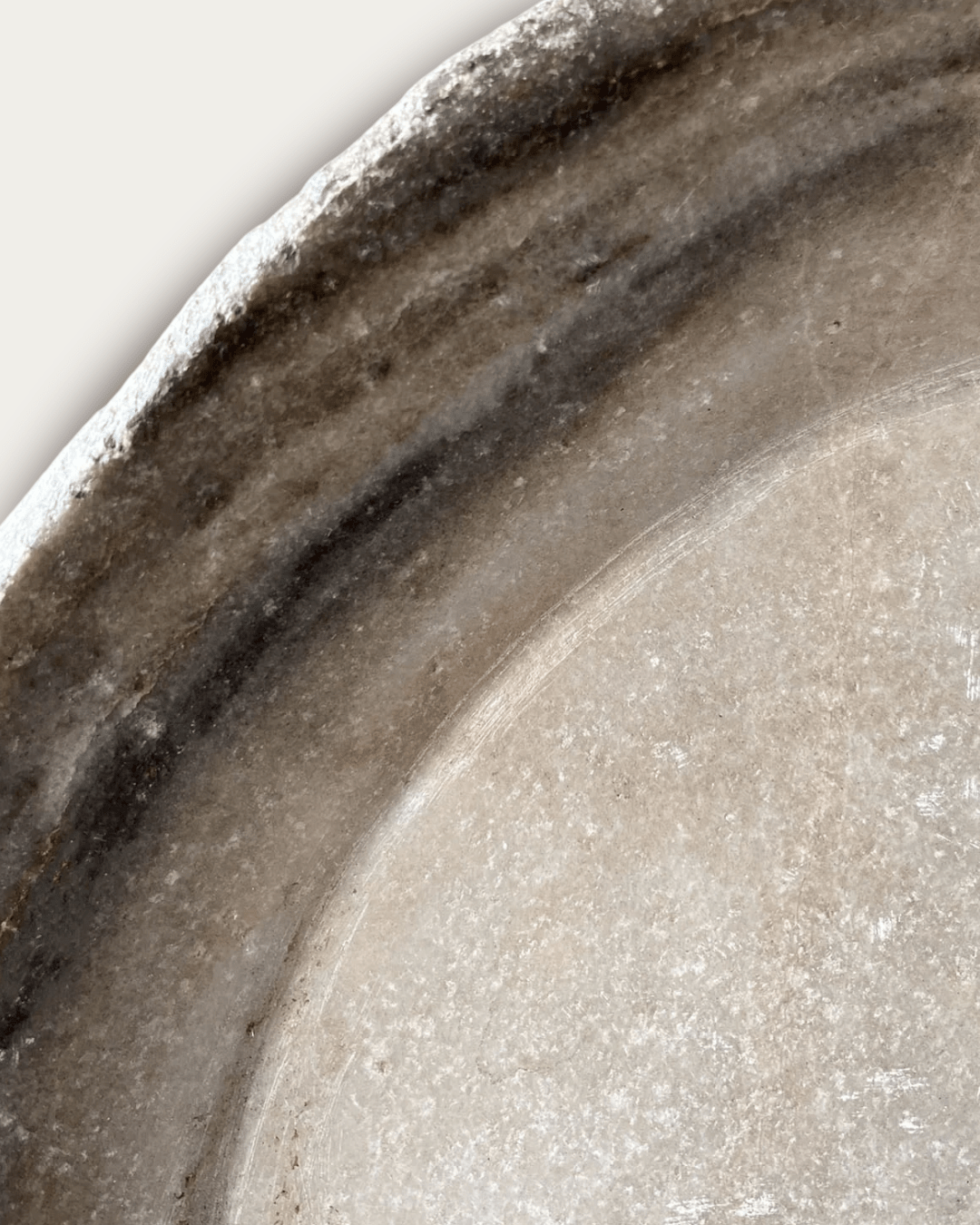
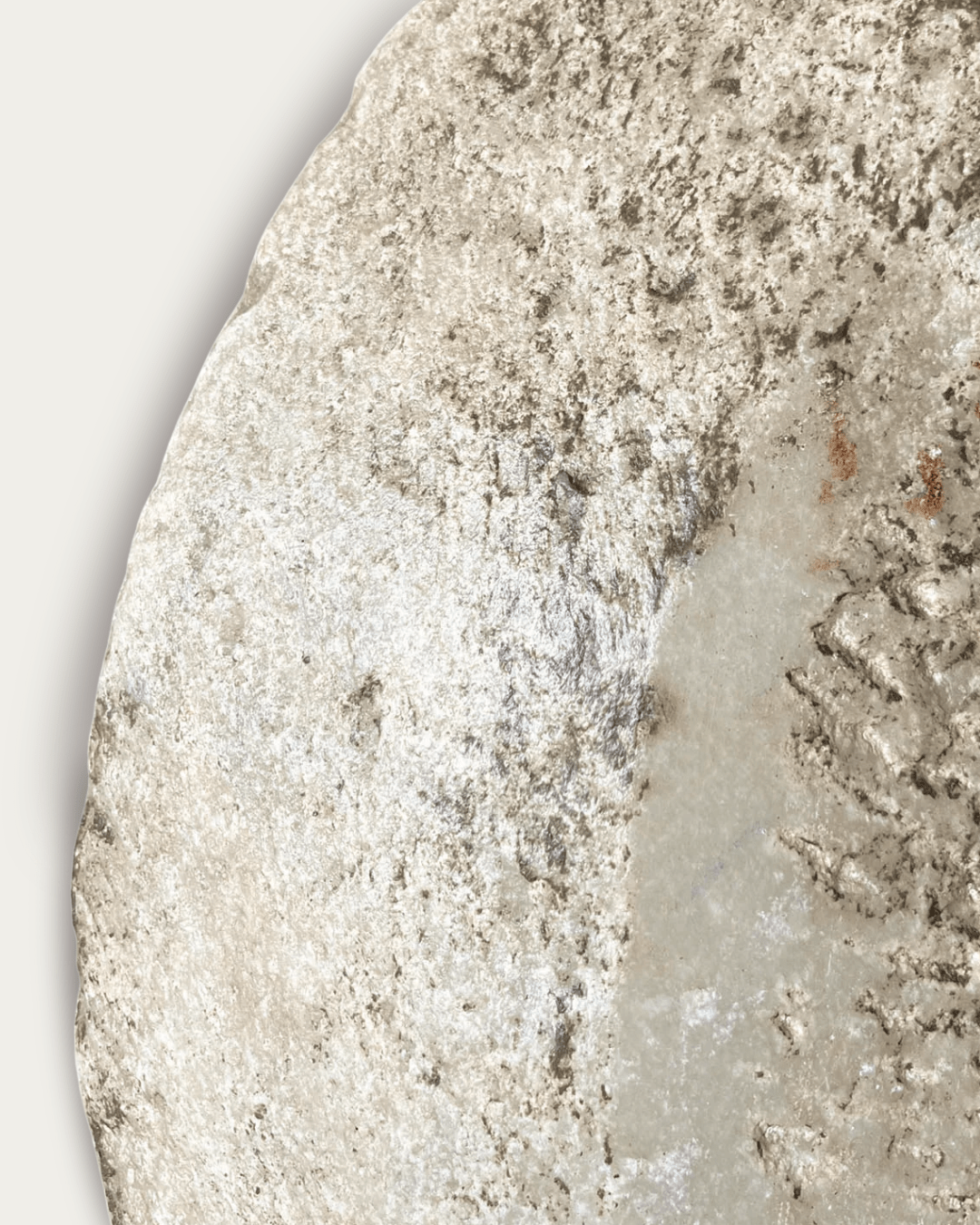
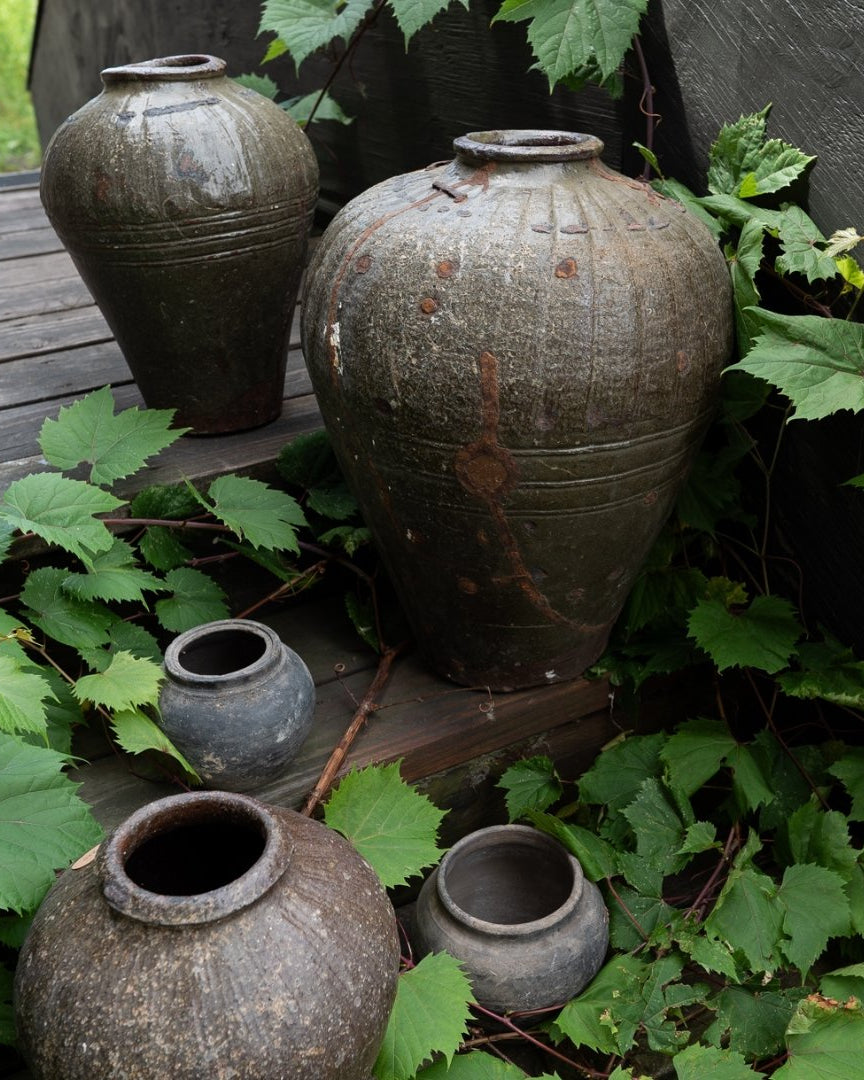
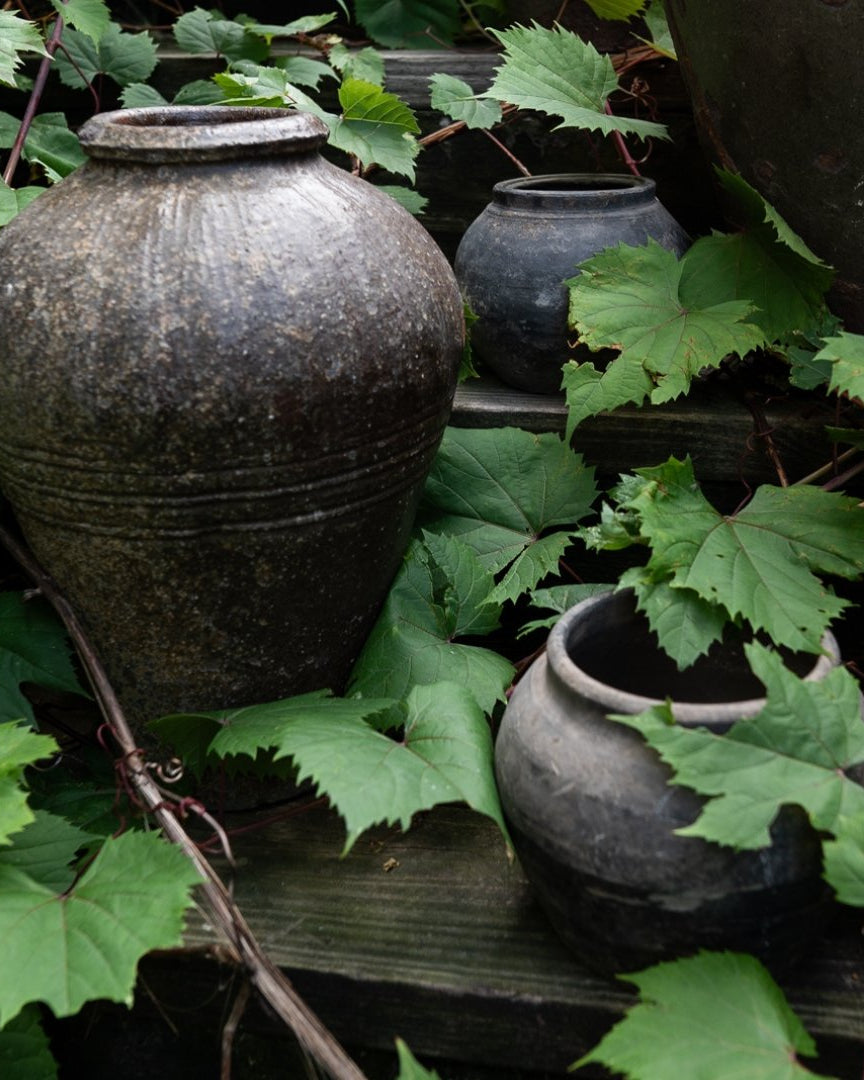
Vintage decor isn’t just about age—it’s about surface behavior. Old clay, iron, and stone absorb light differently than new finishes. They don’t glare. They don’t reflect sharply. They soften edges without softening form.
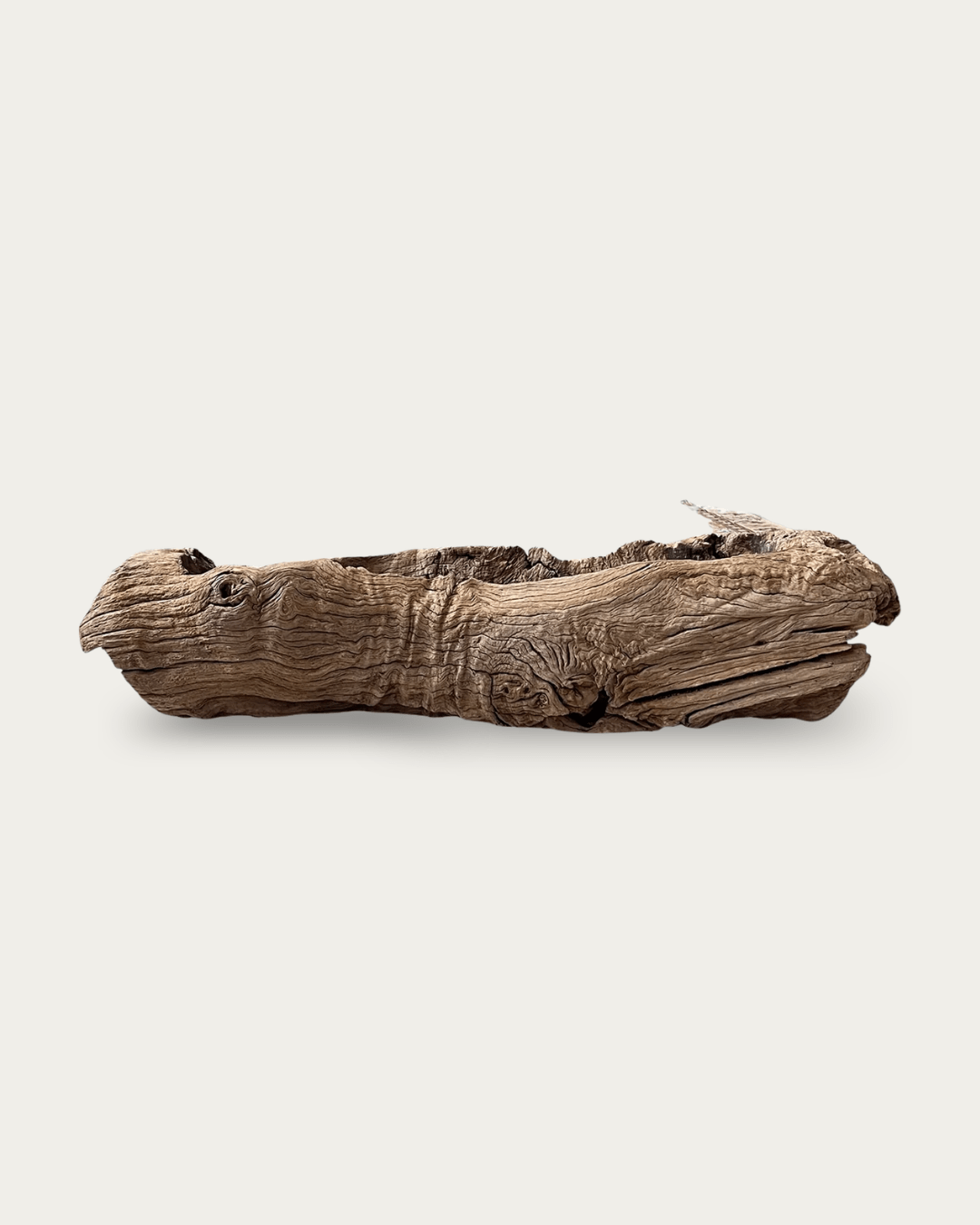
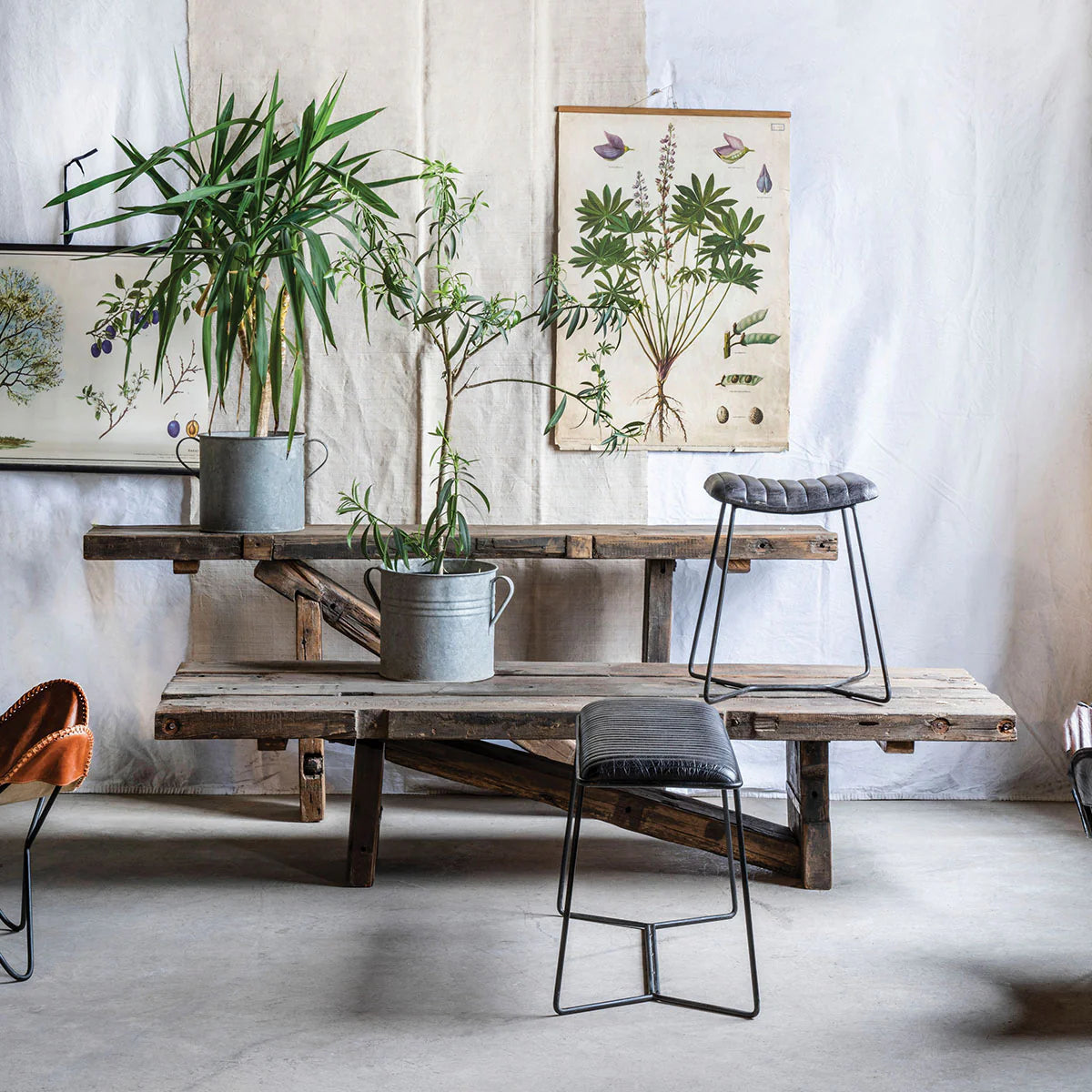
That’s why a piece like the Vintage dairy bucket can stabilize a room all on its own. Its wear isn’t decorative; it’s evidence. Every mark breaks up uniformity, which keeps the eye from scanning endlessly.
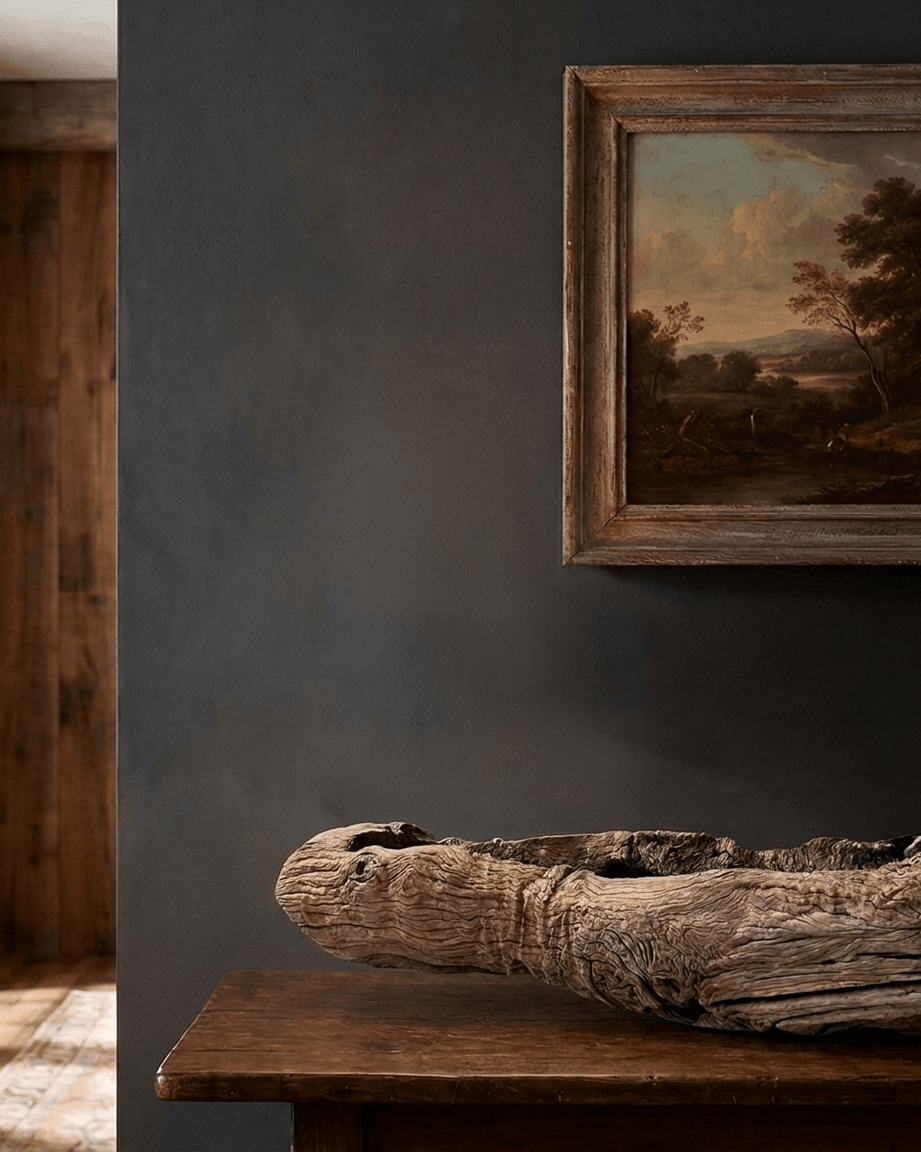
When paired thoughtfully, these materials work as visual counterweights. A smooth plaster wall benefits from a rough vessel. Clean-lined furniture needs something irregular nearby to keep the space from feeling too controlled.
Even when reused, a substantial form like the Chinese water pot with handles plays this role well. The handles interrupt the silhouette just enough to add interest, while the bulk keeps everything grounded.
Using Pots as Functional Design, Not Just Containers
The best vintage home decor pieces earn their place by being useful—even if that use is subtle. Pots and planters don’t need to hold plants to be functional. They can store firewood, umbrellas, throws, or simply act as spatial punctuation.
A larger Water pot near seating can hold rolled blankets or branches, adding texture without adding clutter. The key is restraint: one object, one purpose.
Smaller but weighty pieces like the Kaija pot work well in transitional spaces—at the edge of a room, near a doorway, beside a bench. They signal intention without shouting for attention.
This is where vintage decor quietly outperforms new. These forms were designed for use, so they feel right when given responsibility again.
Final Thoughts: Let One Piece Do the Work
Vintage decor doesn’t need layering, stacking, or constant adjustment. It needs trust. When you allow a single pot or planter to act as an anchor—on the floor, in the corner, beside a threshold—the rest of the room relaxes around it.
Less styling. Fewer decisions. Better balance.
If you’re ready to simplify your space with pieces that carry weight instead of noise, explore the vintage planters and pots collection and start with one object that can hold the room together.